So, what exactly is digital dentistry?
Think of it as swapping out old-school, hands-on dental techniques for highly precise, computer-driven technology. It’s a move away from goopy physical molds and manual guesswork toward crystal-clear digital scans and computer-guided fabrication. This shift delivers treatments that are faster, more accurate, and a whole lot more comfortable for you.
A Simpler Way to Understand Digital Dentistry
Let's use an analogy. Remember the days of film cameras? You'd take a picture, wait to get the film developed, and hope for the best. Today, your smartphone gives you an instant, perfect digital image. That's the same leap we're seeing in dentistry.
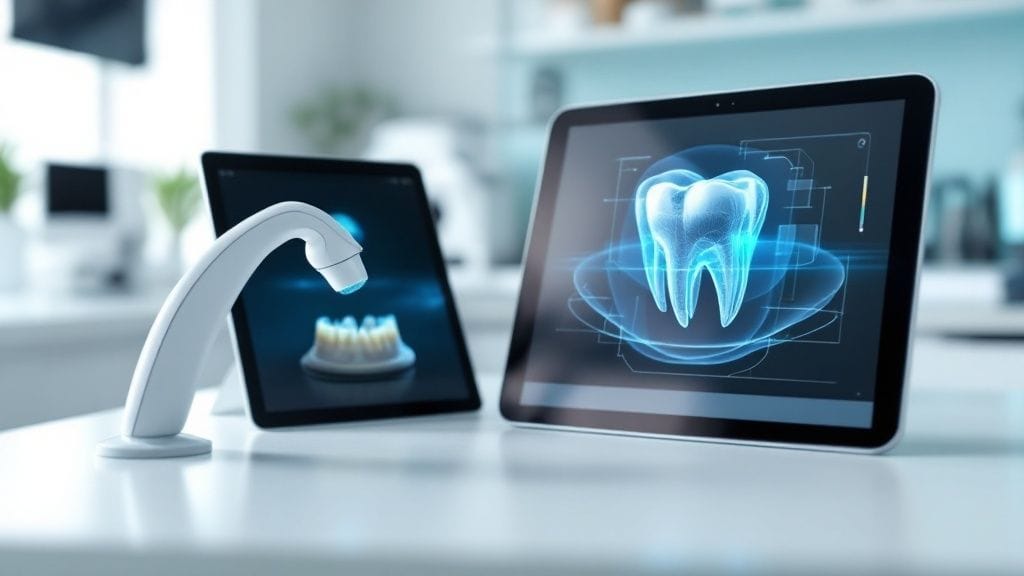
Where we once used messy impression putty to get a model of your teeth, we now use a small, comfortable wand—an intraoral scanner—to create a perfect 3D model on a screen in just minutes. This shift from analog to digital is the heart of it all. It’s not about one fancy gadget; it's a completely connected workflow designed to give you better, more predictable care.
This modern approach uses sophisticated tools to elevate everything from a routine checkup to a full smile reconstruction. It makes the entire process more predictable, which means you get fantastic results with fewer visits to the office.
The Driving Force Behind the Change
The dental world is embracing these new methods at an incredible pace. Thanks to huge leaps in scanning technology, design software, and in-office fabrication, digital dentistry is quickly becoming the new gold standard. This isn't just a fleeting trend; it’s a major movement.
The numbers tell the story. The global digital dentistry market was valued at around USD 6.96 billion in 2023 and is on track to hit an estimated USD 17.20 billion by 2032. You can find more details in various industry market analysis reports that track this rapid expansion. This kind of growth shows just how profoundly technology is reshaping our field for the better.
At its core, digital dentistry is about using technology to eliminate guesswork. It brings a level of precision and foresight to treatment planning that was simply out of reach with older methods, which translates directly to a better experience for you and superior results.
Key Benefits You Can Expect
Instead of the long, drawn-out processes of the past, digital workflows bring some clear advantages you’ll notice right away. These improvements are all about making your treatment more efficient, comfortable, and reliable.
- Unbelievable Accuracy: Digital scans capture every tiny detail of your teeth. This precision means that crowns, veneers, and implants fit perfectly the first time, virtually eliminating the need for frustrating follow-up adjustments.
- A More Comfortable Experience: Say goodbye to those goopy, gag-inducing impression trays. A quick, easy scan with a small handheld wand is all it takes to get a flawless model of your mouth.
- Faster Turnaround Times: In many cases, restorations like crowns can be designed, created in an in-office mill, and permanently placed in a single visit. No more temporary crowns or waiting weeks for the lab.
At Serena San Diego Dentist, we've built our practice around this modern philosophy. You can explore our specific dental technology to see exactly how these tools work for our patients every day.
The Core Technologies Behind Modern Dentistry
Digital dentistry really boils down to three game-changing pieces of technology. While they sound complex, they actually work together seamlessly to make your dental care faster, more comfortable, and incredibly precise.
Let's pull back the curtain on how each one works.
Intraoral Scanners: The Digital Impression
First up is the tool you'll experience directly: the intraoral scanner. Forget those messy, goopy impression trays that make you gag. This is a small, high-tech wand that completely replaces them.
In just a couple of minutes, the scanner zips around your mouth, capturing thousands of images per second. It then instantly stitches them together into a perfect 3D digital model of your teeth and gums. The process is not only way more comfortable, but the accuracy is worlds beyond what old-school putty impressions could ever achieve.
This image gives you a sense of how the sleek device creates a flawless digital map of your mouth, which becomes the foundation for everything that follows.
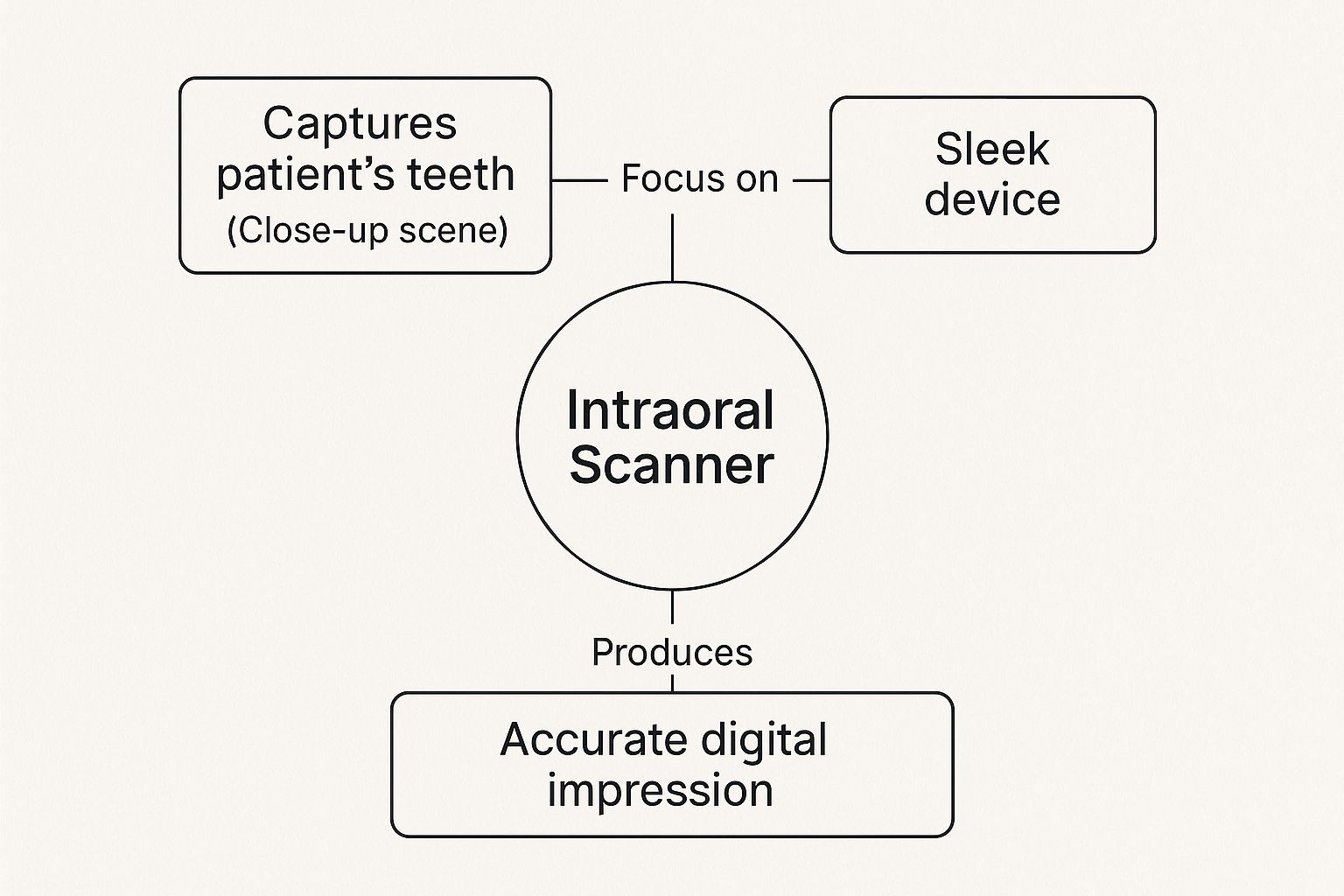
This detailed 3D blueprint is what allows us to design everything from a single crown to a full set of clear aligners with pinpoint accuracy.
CAD/CAM Technology: Designing and Milling Restorations
With your digital impression loaded up, we move on to CAD/CAM (Computer-Aided Design/Computer-Aided Manufacturing). This is where your dentist essentially becomes a digital sculptor for your new tooth.
- CAD (Computer-Aided Design): Using powerful software, your dentist meticulously designs your restoration—be it a crown, inlay, or veneer—right on the 3D model. We can adjust the shape, size, and bite down to the micron, ensuring a perfect fit before anything is ever made.
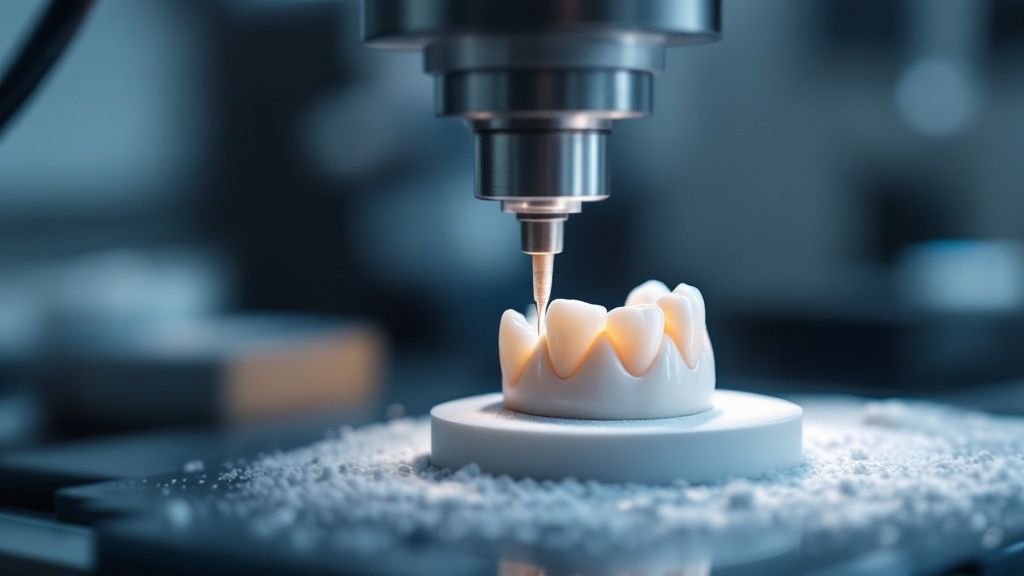
- CAM (Computer-Aided Manufacturing): Once the design is finalized, it’s sent wirelessly to an in-office milling machine. This sophisticated machine takes a solid block of beautiful, tooth-colored ceramic and carves out your custom restoration, often in as little as 15-20 minutes.
This tight integration of digital design and on-site fabrication is what makes same-day dentistry possible. It eliminates the long waits, temporary crowns, and potential errors that came with sending molds to an off-site lab.
3D Printing: Additive Manufacturing for Dentistry
While milling is a subtractive process (carving from a block), 3D printing is an additive one, building an object from the ground up, one tiny layer at a time. This technology has opened a whole new toolbox for creating highly complex and customized dental appliances right in our office.
We routinely use 3D printers to create:
- Surgical Guides: These ensure dental implants are placed with absolute precision.
- Custom Nightguards: A perfect, comfortable fit molded exactly to your bite.
- Dental Models: For planning out complex cosmetic work or orthodontic treatments.
- Temporary Restorations: To protect a tooth while a permanent one is being finalized.
To really get a feel for how different these methods are, checking out a technical comparison of subtractive vs. additive manufacturing can be enlightening. These tools often work together with other advanced tech; for instance, many modern procedures combine digital scanning and 3D printing with the precision of dental lasers. You can learn more about how laser dentistry complements these digital workflows for even better patient outcomes.
How Digital Workflows Actually Improve Your Dental Visit
It's one thing to hear about new technology, but what does it really mean for you when you're in the dental chair? The answer is simple: a much better experience. Digital dentistry isn't just about fancy gadgets; it translates directly into real-world benefits you'll feel from start to finish.
Ultimately, it all boils down to a smoother, more predictable, and more engaging journey to a healthier smile. These advantages can be broken down into four key areas that directly impact your care, comfort, and final results.
Unmatched Precision for a Perfect Fit
Remember the old-school physical molds? They were messy, uncomfortable, and surprisingly prone to tiny distortions. Even a slight imperfection could mean a new crown or implant that just doesn't feel right, sending you back to the office for round after round of adjustments.
Digital dentistry takes the guesswork out of the equation. Intraoral scanners capture a perfect 3D model of your mouth, giving your dentist the ability to design restorations with micron-level accuracy.
This means your new crown, veneer, or implant fits perfectly the first time. The bite feels natural, the contacts between teeth are spot-on, and the whole thing feels seamless. That precision minimizes time spent on adjustments and gives you a comfortable restoration built to last.
Digital precision isn't just a technicality. It’s the difference between a crown that feels like a foreign object in your mouth and one that feels like it’s always been there. It’s about getting it right on the first try.
The Sheer Convenience of Same-Day Dentistry
Perhaps the most dramatic change for patients is how much time digital workflows save. In the past, getting a crown was a multi-week ordeal. It meant wearing a flimsy temporary crown and scheduling at least two separate, long appointments.
Digital workflows have completely changed the game. Thanks to in-office CAD/CAM milling, you can get a permanent, high-quality ceramic crown in just one visit.
A typical same-day crown appointment looks like this:
- Quick Digital Scan: After your tooth is prepared, we take a fast, comfortable scan. No goo required.
- Digital Design: While you relax, your custom crown is designed on a computer right in front of you.
- In-Office Milling: The milling machine gets to work, carving your new crown from a solid block of ceramic in about 15-20 minutes.
- Permanent Placement: Your beautiful, final crown is bonded into place, and you’re done. You walk out with a permanent restoration—no temps, no follow-up visits needed.
A New Standard of Patient Comfort
Let's be honest, nobody enjoys biting down on a tray full of goopy impression putty. For many people, especially those with a sensitive gag reflex, it's the worst part of a dental appointment.
Intraoral scanners have made that miserable experience a thing of the past. The process is clean, quick, and totally comfortable. A small digital wand is all it takes to capture a flawless impression, making your visit far more pleasant. This massive leap in comfort is a huge part of what makes what is digital dentistry such a welcome change for patients everywhere.
Better Communication and "Smile Co-Design"
Digital tools are fantastic because they bring you into the process. You're no longer a passive patient; you become an active partner in designing your own smile. Instead of trying to imagine what the final result will look like, you can actually see it before any work begins.
Using digital smile design software, your dentist can show you a 3D preview of your new smile. Want to see how a different tooth shape or shade would look? We can show you instantly. This collaborative approach eliminates surprises and ensures you're completely confident and excited about the treatment plan. You get to co-design the smile you've always wanted.
Common Dental Treatments Transformed by Technology
To really understand what digital dentistry is, let's look at how it makes a real difference in treatments you might already know. This isn't just about fancy gadgets; it’s about fundamentally changing the experience and results of everyday dental care for the better.
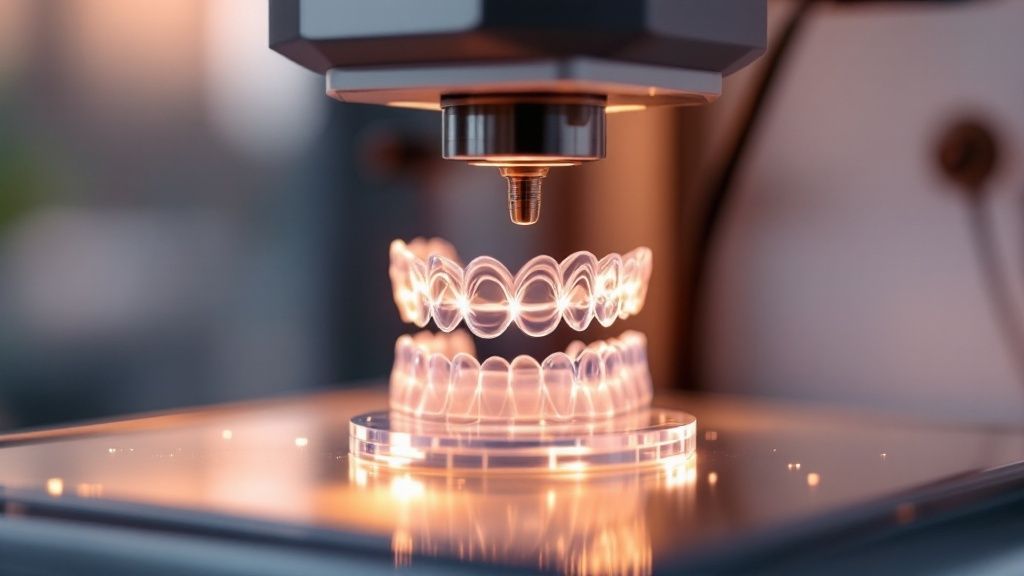
From simple fillings to complex surgeries, digital tools introduce a level of accuracy, speed, and patient comfort that was impossible with older methods. Let’s dive into a few specific examples.
Dental Crowns in a Single Visit
Remember the old way of getting a crown? It was a lengthy process, requiring at least two visits spread out over weeks. You had to sit through messy putty impressions, wear an awkward temporary crown, and then wait for an off-site lab to make the real one.
Digital dentistry has made that whole song and dance obsolete.
With modern CAD/CAM technology, we can do the entire thing in just one appointment. It starts with a quick, clean digital scan of the tooth. From that scan, your dentist designs a perfectly fitted crown on a computer right in front of you. An in-office milling machine then crafts it from a durable block of ceramic while you relax.
Once it's ready, the final crown is bonded into place, and you walk out with your smile completely restored. It’s that simple. To see how this works, you can learn more about our same-day CEREC crowns in San Diego and how they repair smiles in a single visit.
Precision Dental Implant Placement
Success with dental implants is all about precision. Placing them correctly from the start is critical for them to last a lifetime, and this is where digital planning is a game-changer.
The process begins with a cone-beam computed tomography (CBCT) scan, which gives us a highly detailed, 3D picture of your jawbone, nerves, and surrounding teeth. This digital map allows the dentist to plan the implant's exact position, depth, and angle with pinpoint accuracy before the surgery even starts.
Based on this digital blueprint, we can 3D-print a custom surgical guide. This guide fits perfectly over your other teeth, ensuring the implant is placed in the exact spot we planned. This guided approach makes the surgery safer, faster, and far more predictable.
Modern Orthodontics and Clear Aligners
Digital technology has completely reshaped orthodontics. Those popular clear aligner systems you see everywhere? They are the product of a fully digital workflow. Forget the goopy, gag-inducing impression trays of the past.
It all starts with a comfortable intraoral scan of your teeth. Powerful software then takes this scan and creates a step-by-step simulation of your entire treatment, showing exactly how each tooth will move into its ideal position. You get to see a preview of your new smile before you even begin!
Based on this plan, a series of custom, clear aligners are 3D-printed. Each one is designed to make a slight, calculated adjustment, gently guiding your teeth into place.
Co-Designing Your Perfect Smile Makeover
When it comes to cosmetic procedures, digital smile design (DSD) software turns you into a co-designer of your new look. Instead of just trying to describe what you want, you can see it unfold on a screen.
Using digital scans and photos of your face, your dentist can create a realistic simulation of what your smile will look like with veneers, whitening, or other enhancements. You can make adjustments in real time—a little longer here, a bit brighter there—until it’s perfect. This collaborative process takes all the guesswork out of the equation, giving you the confidence to move forward.
Here’s a quick summary of how these technologies improve specific treatments.
Impact of Digital Technology on Common Dental Treatments
This table breaks down how key digital tools are used in various procedures and the direct benefit you, the patient, will experience.
| Treatment | Key Digital Technology Used | Main Patient Benefit |
|---|---|---|
| Dental Crowns | Intraoral Scanning & CAD/CAM Milling | Get a permanent, custom-fit crown in a single visit. |
| Dental Implants | CBCT Scans & 3D-Printed Surgical Guides | Safer, more precise implant placement with predictable results. |
| Orthodontics | Intraoral Scanning & 3D Printing | No messy impressions and a clear preview of your final smile. |
| Smile Makeovers | Digital Smile Design (DSD) Software | See and approve your new smile before treatment begins. |
| Dentures | Digital Scans & CAD/CAM Fabrication | Better fitting, more comfortable dentures made more efficiently. |
As you can see, digital dentistry isn't just one thing—it's a collection of tools that work together to make your care faster, more comfortable, and more accurate from start to finish.
Why Isn't Every Dentist Digital Yet?
https://www.youtube.com/embed/-hmEmOAepOQ
With all the benefits of digital dentistry, it seems like every practice would have jumped on board by now. But the reality is a little more complicated. Making the full switch is a huge commitment, and several real-world hurdles slow down the process.
The most obvious barrier is the price tag. We're talking about a massive financial investment upfront. A top-tier intraoral scanner, a chairside milling unit, and a high-quality 3D printer can easily run into the six figures. For a small, independent practice, that kind of capital can be a serious roadblock.
It’s Not Just Plug-and-Play
Beyond the cost, there's a steep learning curve for the entire team. You can't just unbox a scanner and expect perfect results on day one. Learning the ins and outs of complex design software and operating the new machinery takes dedicated training and a willingness to completely overhaul old, familiar workflows.
It's a commitment of both time and money. Proper education is what separates a practice that truly excels with this tech from one where it just collects dust. Here at our San Diego dental office, we’re constantly training to make sure we’re getting the most out of these tools for our patients.
Hidden Costs and Tech Headaches
The spending doesn't end with the initial purchase, either. There are recurring costs for software subscriptions, routine maintenance, and the materials needed for milling and printing.
Then there's the integration puzzle. Getting a scanner from one company to talk to a milling machine from another isn't always straightforward. Ensuring all the different pieces of hardware and software work together seamlessly is a technical challenge all on its own.
These factors explain why the shift to a fully digital practice is more of a gradual evolution than an overnight revolution. Finding a clinic that has successfully navigated these challenges is still a key differentiator in the quality of patient care.
Your Smile's Future: AI and Teledentistry Are Changing the Game
If you think digital dentistry is impressive now, just wait. The pace of change is picking up, and two areas are really leading the pack: Artificial Intelligence (AI) and teledentistry. Together, they’re about to completely reshape what it means to visit the dentist.
AI is quickly becoming a dentist's sharpest co-pilot. Picture this: software that meticulously scans your X-rays and digital images, spotting the faintest hints of a cavity or the earliest signs of gum disease. It can often catch things even before a human eye can, meaning we can address problems when they're small, simple, and far less expensive to fix. AI is also getting incredible at helping us map out treatment plans by crunching data to predict how a specific approach will work for you.
Connecting Beyond the Clinic
At the same time, teledentistry is tearing down old barriers to getting care. Using secure video platforms, you can now have a virtual sit-down with your dentist right from your living room. It's a lifesaver for routine follow-ups, initial consultations about treatment options, or getting advice on a minor issue without having to take time off work for an office visit.
This shift towards virtual care isn't just happening in dentistry. To see the bigger picture, it's worth checking out this complete guide to video conferencing for healthcare, which shows how these tools are improving patient access across all of medicine.
So, what’s just over the horizon? We're on the cusp of some truly exciting developments:
- Smarter Diagnostics: AI will shift the focus from treating problems to predicting and preventing them before they even start.
- Advanced Materials: Expect to see stronger, more natural-looking materials for 3D-printed crowns, veneers, and other restorations.
- Greater Accessibility: Teledentistry will continue to close the distance, making expert dental advice available to anyone, anywhere.
This constant forward motion proves that the answer to what is digital dentistry isn't a fixed point. It's an ongoing journey toward a future where your dental care is more intelligent, more personalized, and more focused on you than ever before.
Your Questions About Digital Dentistry, Answered
It's completely normal to have questions whenever healthcare starts to change. Let's tackle some of the most common ones to give you a clearer picture of what digital dentistry really means for your next visit.
Is Digital Dentistry Going to Cost Me More?
This is probably the number-one question we hear, and the answer is usually no. While the upfront investment for a dental practice to buy scanners and mills is substantial, the long-term savings often balance things out for the patient.
Think about it this way: a digital process for something like a crown might cut the number of required visits in half. That saves you time away from work and life. Plus, the accuracy is so high that we see far fewer errors and remakes, which helps control material costs. The end result is a final price that's very much in line with, and sometimes even better than, traditional methods.
Are Those Digital Scanners Safe?
Yes, they are 100% safe. This is a big one. These scanners don't use any ionizing radiation—zero. They simply use a special visible light source, kind of like a very sophisticated camera, to take thousands of pictures of your teeth in a few minutes.
Because there's no radiation involved, the technology is perfectly safe for absolutely everyone. That includes children, expectant mothers, and any patient who needs to be cautious about radiation exposure. It's one of the safest diagnostic tools we have in the office.
Will I Find These Digital Tools at Every Dentist's Office?
Not quite yet, though the shift is happening fast. Making the leap to a fully digital practice involves more than just buying new equipment; it requires a significant financial investment and a serious commitment to training for the entire team. It's a big change, so many practices are integrating these new workflows one step at a time.
Ready to see what the precision and comfort of modern dental care feel like firsthand? The team at Serena San Diego Dentist has woven these technologies into our practice to give you the best care possible. Schedule your consultation today!