
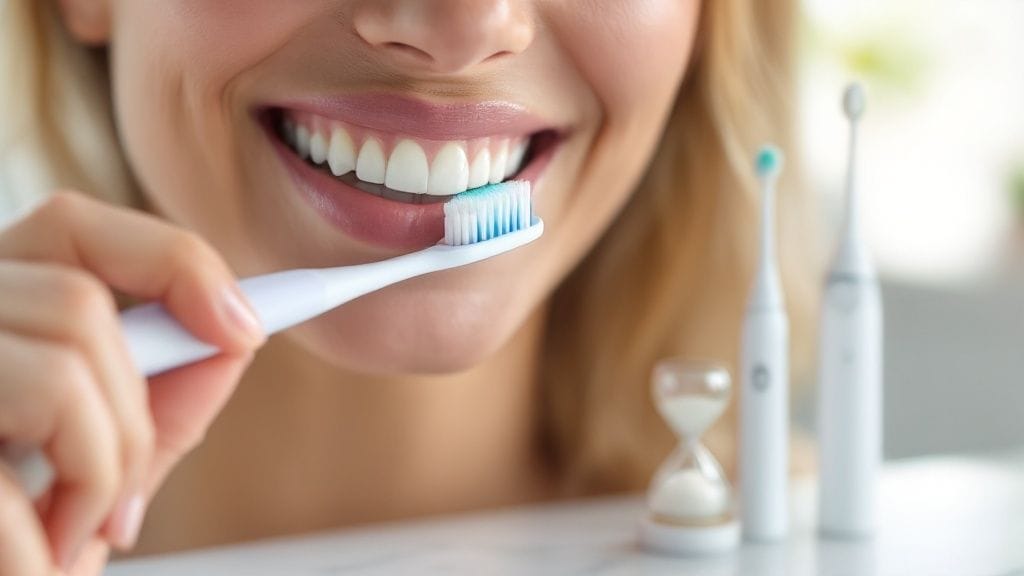
Learning how to brush your teeth properly is pretty straightforward: grab a soft-bristled brush, angle it at 45 degrees toward your gums, and make sure you brush for a full two minutes. It might sound basic, but mastering this technique is the absolute cornerstone of preventing cavities, keeping your gums healthy, and maintaining a bright, confident smile for life.
Why Your Brushing Technique Really Matters
Most of us brush our teeth on autopilot. It's a daily habit so deeply ingrained that we rarely stop to think about how we're doing it. But what if that autopilot is steering you in the wrong direction?
The gap between a quick, mindless scrub and a deliberate, proper technique is immense. It’s the difference between effectively fighting off cavities and gum disease or facing costly and uncomfortable dental procedures down the road. Honestly, learning how to brush your teeth correctly is one of the most powerful and proactive things you can do for your overall health.
A good brushing technique isn’t just about pushing leftover food particles around. It’s about methodically removing the sticky, bacteria-filled film we call plaque. When plaque is allowed to build up, it hardens into tartar and can lead to serious oral health issues.
The Pillars of a Perfect Brush
A truly effective brushing session boils down to nailing four key elements. It’s not just about the motion, but the entire approach:
- The Right Tools: Your non-negotiables are a toothbrush with soft bristles and a good fluoride toothpaste. Anything else is a bonus.
- The Correct Angle: This is a big one. Holding your brush at a 45-degree angle to your gums is crucial for cleaning just under the gumline where plaque loves to hide.
- Sufficient Time: A full two minutes, twice a day. Anything less, and you're almost certainly missing spots. This ensures you have enough time to give every tooth the attention it deserves.
- A Complete Routine: Brushing is the star player, but it needs a supporting cast. Daily flossing and regular dental check-ups are essential to complete the picture of optimal oral health.
This isn’t just friendly advice; the data backs it up. Oral diseases affect over 3.7 billion people across the globe, with cavities being the single most common health condition. The right brushing method is your best defense. If you let these fundamentals slide, simple plaque buildup can escalate into much more severe conditions. This is exactly how periodontitis can ruin your oral health.
Choosing Your Oral Health Toolkit
Walking down the dental care aisle can feel pretty overwhelming. With so many choices for brushes, pastes, and rinses, how do you know you're grabbing the right gear? Nailing down your tools is the foundational first step to brushing your teeth the right way.
The big debate is often manual versus electric. Honestly, one isn't automatically superior to the other. An electric toothbrush can make achieving a thorough clean easier for many people, thanks to built-in timers and oscillating heads that do much of the work for you. However, a simple manual brush, when used with the correct technique, is every bit as effective.
Ultimately, the best toothbrush is the one you’ll use consistently and correctly every single day.
The Bristle and Toothpaste Non-Negotiables
No matter which type of brush you choose, there's one feature that is absolutely non-negotiable: it must have soft bristles. It's a common misconception that medium or hard bristles provide a better clean, but they're often too abrasive. Over time, they can damage your gums, cause them to recede, and even wear down your precious tooth enamel.
Just as important is the toothpaste you pair with your brush. Always look for a formula that contains fluoride. Fluoride is a proven mineral that strengthens your tooth enamel, making it more resistant to the acid attacks that cause cavities.
- For Cavity Prevention: A standard fluoride toothpaste is your best all-around choice.
- For Discoloration: If you're dealing with surface stains from coffee or tea, whitening toothpastes use mild abrasives to help polish them away.
- For Discomfort: If you experience sensitivity to hot or cold, specialized formulas can be a game-changer. They work by blocking the tiny pathways in your teeth that lead to nerve endings.
A common mistake I see all the time is people using their toothbrush for way too long. Once the bristles get frayed and worn out, they just aren't cleaning effectively anymore. A good rule of thumb is to get a new one every three to four months.
It's a small detail, but remembering to swap out your brush is crucial for maintaining its cleaning power. You can learn more about why you should change your toothbrush regularly to keep your cleaning power at its peak. Your oral health toolkit doesn't need to be fancy or expensive—it just needs to be right for you and well-maintained.
Mastering the Proper Brushing Method
Having the right tools is half the battle. But even the best toothbrush won’t do much good if your technique is off. This is where we need to switch off autopilot and learn a method that actually cleans your teeth without causing damage. The goal is to be gentle but incredibly thorough, especially in the spots where plaque loves to hide.
Most dentists, myself included, recommend the Modified Bass technique. It sounds more complicated than it really is. The core idea is to break up plaque at and just below the gumline—the prime real estate for bacteria. It all comes down to the angle and the motion.
Take a look at this image. It shows the ideal 45-degree angle your toothbrush should have against your teeth. Getting this first step right is crucial.
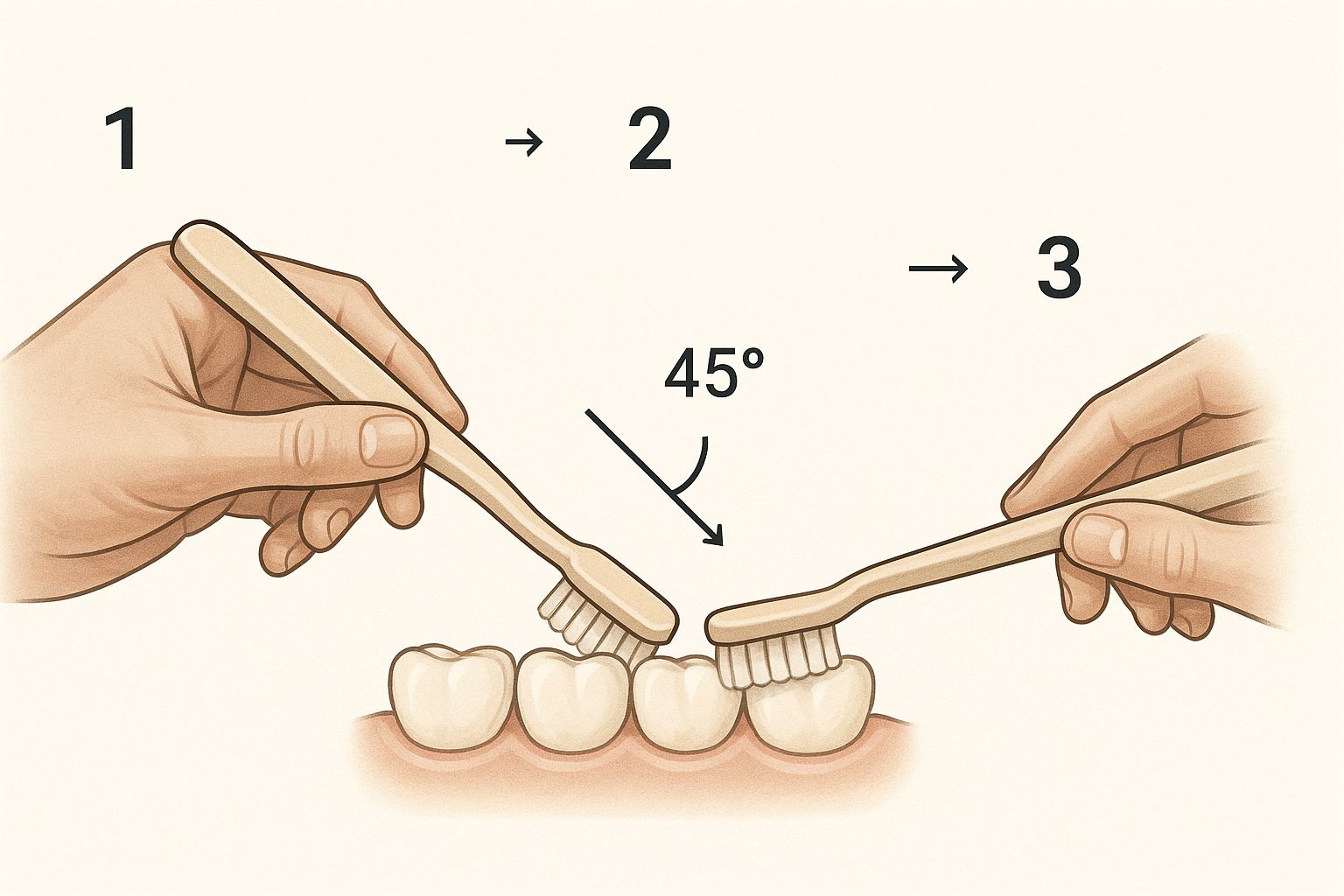
Mastering this simple placement ensures the bristles get right into that critical pocket along the gumline where so many dental problems begin.
The Four-Quadrant Brushing Strategy
Instead of just randomly scrubbing away, try thinking of your mouth in four sections: top right, top left, bottom right, and bottom left. If you spend about 30 seconds on each quadrant, you’ll easily hit that dentist-recommended two-minute mark.
Here’s a quick mental checklist for each section:
- Angle Is Everything: Tilt your brush to a 45-degree angle, aiming the bristles right where your teeth and gums meet.
- Be Gentle: Use short, gentle strokes. Think small, controlled circles or a gentle back-and-forth wiggle. You're massaging your teeth and gums, not scrubbing a floor.
- Cover All Your Bases: Make sure you hit all three surfaces of every single tooth—the outside (cheek side), the inside (tongue side), and the chewing surface.
Thinking systematically is one of the best ways to keep gingivitis in check. It's more important than ever, considering that from 1990 to 2021, the prevalence of periodontal disease shot up by over 76%. Ineffective brushing doesn't just impact gum health; it's also a major reason people wonder what causes tooth discoloration.
To make this quadrant approach even easier to follow, here's a simple checklist you can run through in your head while you brush.
Your Four Quadrant Brushing Checklist
| Quadrant | Focus Areas | Recommended Time |
|---|---|---|
| Top Right | Outer, inner, and chewing surfaces | 30 seconds |
| Top Left | Outer, inner, and chewing surfaces | 30 seconds |
| Bottom Left | Outer, inner, and chewing surfaces | 30 seconds |
| Bottom Right | Outer, inner, and chewing surfaces | 30 seconds |
Following this simple map ensures no tooth gets left behind and you're giving each area the attention it needs.
Don't Forget Your Tongue
Finally, once your teeth are sparkling, don't forget your tongue. It’s a huge hangout spot for the bacteria that cause bad breath. A few gentle brushes from the back of your tongue to the front can make a world of difference in how fresh your mouth feels and smells.
The biggest mistake I see people make is brushing way too hard. Aggressive scrubbing doesn't clean better—it just damages your gums and wears away your precious enamel over time. Gentleness is key.
By adopting this mindful, methodical approach, you can turn a daily chore into a powerful habit for your long-term health. It’s not about spending more time brushing, but about making the time you do spend count.
Common Brushing Mistakes to Avoid
Even if you're brushing every day, a few bad habits can creep in and do more harm than good. It’s not about adding more work to your routine; it’s about fine-tuning your technique to sidestep common mistakes that lead to real problems like worn-down enamel and receding gums. Let’s walk through the most frequent slip-ups I see.
The biggest issue by far is brushing too aggressively. It's a common misconception that you need to scrub hard to get your teeth really clean. In reality, that forceful approach is counterproductive. Pushing too hard can actually wear away your tooth's protective enamel and cause your gums to pull back over time.
Think of it more like a gentle massage. The bristles are designed to do the work with just light pressure. A dead giveaway you're pushing too hard? If the bristles on your toothbrush look smashed and frayed after just a few weeks, it’s time to ease up.
Quitting Before the Job Is Done
Rushing is another major culprit. Most people only brush for about 45 to 60 seconds, which is way short of the time needed to clean every surface thoroughly.
A quick once-over is like leaving the door wide open for plaque to set up shop in all the places you missed. Hitting that full two-minute mark is your best guarantee that every tooth—especially those tricky molars in the back—gets the attention it deserves.
An easy way to stay on track is to use your phone's timer or an electric toothbrush with a built-in pacer. I often suggest dividing your mouth into four sections and spending 30 seconds on each one. It's a simple mental trick that ensures you give every area equal time without having to stare at a clock.
Overlooking the Gumline
Plaque absolutely loves to hang out right where your teeth meet your gums. This is probably the single most important area to clean, but it's also the one people miss most often. When you skip the gumline, you're essentially inviting gingivitis and gum inflammation to the party.
The fix here is all about the 45-degree angle. Just by tilting your brush toward your gums, you let the bristles gently sweep away the plaque that collects in that little crevice.
Here are a few other common errors I see all the time:
- Using an old, worn-out toothbrush: Once the bristles are frayed and bent, they just can't clean properly. Swap your brush out every three to four months, or sooner if it looks worn.
- Neglecting the inner surfaces: We all focus on the "smile side" of our teeth, but the tongue-side surfaces are just as prone to plaque buildup. Make sure you're cleaning them just as carefully.
- Immediately rinsing with water: After you spit, try to avoid rinsing with water right away. This gives the fluoride in your toothpaste more time to sit on your teeth and do its job of strengthening your enamel.
Just steering clear of these simple mistakes will make a huge difference in how effective your daily brushing really is.
Beyond the Brush: Building Your Complete Oral Hygiene Routine
A great brushing technique is your star player, but it can't win the game alone. To truly protect your smile, you have to see brushing as just one part of a complete oral hygiene routine. Think of it as building a full defense against plaque, cavities, and gum disease.
The most critical teammate for your toothbrush is, without a doubt, dental floss. Your brush bristles are fantastic, but they simply can't reach into the tight spaces between your teeth. This is where about 40% of plaque hides out. If you're not flossing, you're essentially leaving a huge portion of your tooth surfaces uncleaned and vulnerable.
If you're unsure about the best way to floss, we've put together a comprehensive guide to help you master it.
The Supporting Roles of Flossing and Mouthwash
So, what about mouthwash? It's a great finisher. A good rinse can help kill lingering bacteria and give you that fresh-breath confidence, but it’s a supplement, not a substitute. It can't physically remove the sticky film of plaque that only brushing and flossing can tackle.
Your daily routine—brushing and flossing—is your best line of defense at home. But remember, this at-home care is designed to work hand-in-hand with regular professional dental cleanings and exams to keep your smile in top shape.
It's clear that more people are catching on to this holistic approach. In fact, the oral care market is projected to hit USD 80.8 billion by 2034, largely because of a growing public awareness of just how important comprehensive dental health really is.
Frequently Asked Questions About Tooth Brushing
https://www.youtube.com/embed/WviE5aa5Ha0
Even with the best instructions, there are always a few common questions that come up when people are trying to perfect their brushing routine. Let's tackle some of the most frequent ones I hear from patients.
How Often Should I Replace My Toothbrush?
As a rule of thumb, plan on swapping out your toothbrush every three to four months. That's the standard recommendation from the American Dental Association.
However, don't just go by the calendar—look at the bristles. If they’re frayed, splayed out, or look worn down, it's time for a new one, even if it hasn't been three months. Worn-out bristles simply can't clean effectively.
It's also a great idea to toss your old brush after you’ve been sick with a cold or the flu. This helps prevent re-infection from any lingering germs.
Is an Electric Toothbrush Really Better Than a Manual One?
This is a classic question, and the honest answer is: the best brush is the one you'll actually use correctly. Both manual and electric toothbrushes can do a fantastic job if your technique is solid.
That said, many people find electric toothbrushes give them an edge.
- Built-in Timers: Most have a two-minute timer, so you know for sure you're brushing long enough.
- Pressure Sensors: A common mistake is brushing too hard. Many electric models will alert you if you're pressing down with too much force, which helps protect your gums and enamel.
- Easier for Some: They are a huge help for anyone with limited dexterity, like individuals with arthritis, making a thorough clean much more achievable.
At the end of the day, if an electric toothbrush helps you brush consistently for two minutes, twice a day, it's a worthwhile investment.
Should I Brush My Teeth Before or After Breakfast?
Most dentists, myself included, will tell you to brush before breakfast. Here's why: you want to clean off the plaque and bacteria that have built up overnight before you introduce sugars and acids from your food. Brushing first creates a cleaner environment and helps protect your enamel from an acid attack.
If brushing after you eat just feels right to you, that’s okay—but you have to wait. After a meal, especially one with acidic foods like coffee or orange juice, your enamel is temporarily softened. Brushing right away can scrub it away.
Wait at least 30 minutes after eating before you brush. This gives your saliva the chance to neutralize the acids and for your enamel to remineralize and harden back up.
At Serena San Diego Dentist, we're here to help you build and maintain a healthy smile for life. If you have more questions or you're ready to schedule your next check-up, reach out to our office today.