
Taking care of your teeth and gums during pregnancy is one of the most proactive things you can do for both your health and your baby's. Those nine months bring a whirlwind of hormonal changes that can leave your gums surprisingly sensitive to inflammation, which means your normal dental routine suddenly becomes more important than ever. Far from being something to avoid, routine dental care is a cornerstone of a healthy pregnancy.
Why Your Dental Health Is a Priority During Pregnancy

Pregnancy is an amazing, transformative time. But while you’re busy planning for your new arrival, it’s easy to let your own health—especially your oral health—take a backseat. The truth is, the link between a healthy mouth and a healthy pregnancy is much stronger than most people think, making dental care an absolute must.
So, what’s going on? It all comes down to hormones. The surge in estrogen and progesterone that’s so crucial for your baby's development also changes how your body reacts to the normal bacteria in your mouth. You can think of these hormones as turning up the volume on your body's response to plaque, making your gums much more likely to become inflamed.
Understanding Pregnancy Gingivitis
This leads to a very common issue known as pregnancy gingivitis. You might notice your gums looking red and swollen, feeling tender, or even bleeding a little when you brush. While it can be a bit jarring, it's usually just a temporary condition caused by this amplified inflammatory response to plaque that was already there.
And when I say common, I mean it. Research shows this condition affects a staggering 67% to 100% of pregnant women around the world. Unfortunately, even with how widespread it is, preventative care is still a bit of a blind spot. In the U.S., only about 60% of expectant mothers get dental care, even though knowing the risks makes someone 40% more likely to see their dentist.
The key takeaway is this: you are not doing anything wrong if you notice these changes. Your body is simply reacting differently, which means your oral hygiene routine and professional dental visits become more crucial for managing this sensitivity effectively.
The Importance of Proactive Dental Visits
This is exactly why keeping up with your regular dental check-ups is so vital for managing your oral health during pregnancy. These appointments are your first line of defense. They give your dentist a chance to spot the early signs of gingivitis, perform a professional cleaning to get rid of stubborn plaque, and give you personalized tips for your routine at home. It’s all about staying ahead of any potential issues before they have a chance to get worse.
By making dental care a priority, you're taking a powerful, proactive step for both yourself and your baby. A healthy mouth helps prevent oral infections that could impact your overall well-being. To get a better feel for a good dental schedule, you can check out our guide on how often you should see a dentist to keep your smile healthy. It’s this kind of foundational care that helps set you up for a smoother, healthier pregnancy from start to finish.
Navigating Common Dental Issues While Expecting
When you're pregnant, your body is working around the clock, and the hormonal rollercoaster can bring some surprising changes to your mouth. Knowing what to look for is the first step in keeping your smile healthy and comfortable through every trimester.
The most common issue by far is pregnancy gingivitis. If you've noticed your gums are tender, swollen, or bleed a little when you brush, you're not alone. This isn't a sign that you've suddenly stopped taking care of your teeth. Instead, it's your body's supercharged inflammatory response to even tiny amounts of plaque, all thanks to those surging hormones. This sensitivity just means your daily brushing and flossing routine is more crucial than ever.
The Link Between Cravings and Cavities
Pregnancy cravings are famous for a reason, but those sudden desires for sugary or acidic foods can create the perfect storm for cavities. Add in more frequent snacking, and you've given cavity-causing bacteria exactly what they need to thrive.
Morning sickness can also be tough on your teeth. The stomach acid that comes up can seriously erode your tooth enamel, leaving your teeth vulnerable to decay. Protecting your enamel from this acid is a top priority.
A great little trick is to rinse your mouth with a simple solution of one teaspoon of baking soda in a cup of water right after a bout of sickness. This helps neutralize the acid on the spot. Just be sure to wait about 30 minutes before you brush—this gives your enamel time to re-harden so you don't accidentally scrub it away while it's in a weakened state.
Understanding Pyogenic Granulomas
Some expecting moms might notice small, reddish bumps on their gums, often called pyogenic granulomas or "pregnancy tumors." The name sounds scary, but don't worry—they are completely harmless, non-cancerous growths that tend to pop up during the second trimester.
These raspberry-like lumps are just an over-the-top inflammatory reaction to local irritants like plaque. They might bleed easily, but they are absolutely not a cause for panic.
These growths almost always disappear on their own after your baby arrives. If one happens to get in the way of eating, becomes uncomfortable, or bleeds a lot, your dentist can easily and safely remove it for you.
It's clear that pregnancy presents some unique dental hurdles. The research backs this up, with one study finding that around 64.4% of pregnant women experience dental problems, and nearly half feel their oral health has declined. Yet, despite these common issues, only 22% saw a dentist during their pregnancy. You can read more about how pregnancy impacts oral health in this insightful study.
Practical At-Home Solutions
Often, the best way to manage these changes starts with a few simple tweaks to your daily routine. Taking these small, proactive steps can make a huge difference.
- Switch to a Softer Toothbrush: If your gums are feeling extra sensitive, an extra-soft bristled brush will let you clean effectively without adding to the irritation.
- Be Gentle But Thorough: Seeing a little pink in the sink might make you want to back off, but that's actually a sign that plaque is hanging around. Keep cleaning gently but consistently to help reduce the inflammation.
- Stay Hydrated: Sipping water throughout the day is a simple way to help rinse away food debris and acids, giving your mouth a helping hand.
- Mindful Snacking: When a craving hits, try reaching for snacks that are low in sugar and acid. Things like cheese, yogurt, and crunchy vegetables are great for both your teeth and your overall health.
Think of these at-home habits as your first line of defense. But if you're dealing with bleeding or discomfort that just won't quit, it's time to call in the professionals. Our team is here to help, and you can find more great tips in our guide on how to fix bleeding gums. By pairing good daily habits with professional care, you can ensure your smile stays bright and healthy throughout this exciting journey.
Navigating Dental Treatments and Procedures During Pregnancy
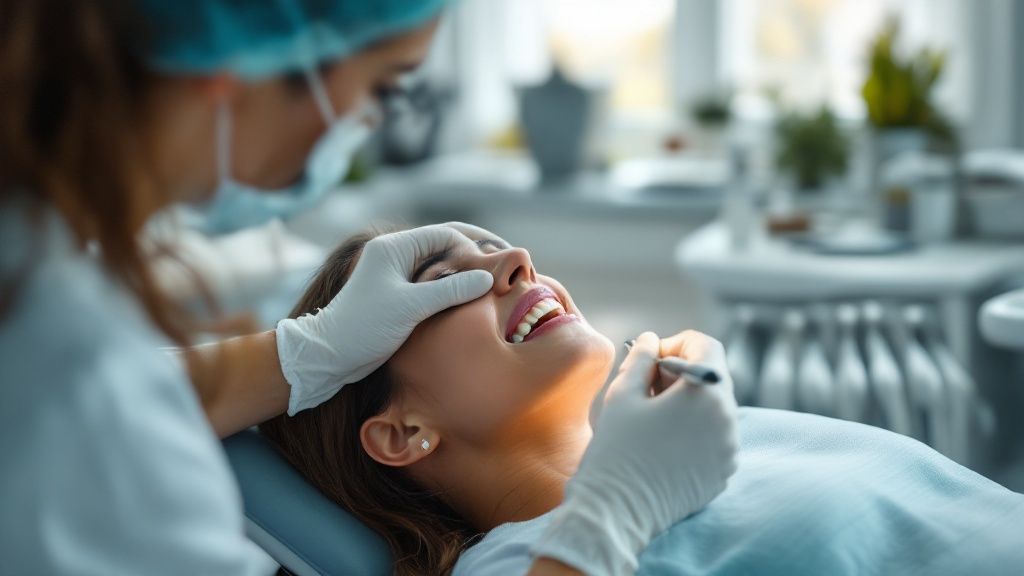
It’s completely understandable to wonder if dental work is safe while you’re expecting. The great news is that not only is it safe, but it’s highly recommended. Leading health organizations, including the American Dental Association (ADA) and the American College of Obstetricians and Gynecologists (ACOG), agree that putting off necessary dental care can be far riskier than the treatment itself.
Think of it this way: your oral health is directly connected to your overall health, which in turn affects your baby. An untreated infection in your mouth can cause problems elsewhere, so keeping your teeth and gums healthy is a vital part of a healthy pregnancy.
A Trimester-by-Trimester Guide to Dental Care
While we can handle dental emergencies anytime, we can strategically time routine procedures to maximize your comfort and safety throughout your pregnancy.
The First Trimester: This is a whirlwind of development for your baby. We can absolutely treat emergencies, but for anything non-urgent, it’s often best to wait. This is, however, a fantastic time for a check-up to assess what’s going on and map out a plan for the months ahead.
The Second Trimester: Many call this the "sweet spot" for dental work. By now, morning sickness has usually faded, and you can still lie back comfortably in the dental chair. This is the ideal window for routine procedures like fillings or crowns.
The Third Trimester: As you get closer to your due date, lying on your back for a long time can get pretty uncomfortable. We can still perform routine care, but for longer treatments, we’ll often break them into shorter, more manageable appointments for you.
Answering Your Biggest Safety Questions
Having questions about specific treatments is normal. Let’s tackle some of the most common concerns we hear from expectant moms.
The name of the game during pregnancy is prevention. Treatments like cleanings, fillings, and even crowns aren't just allowed—they are encouraged to stop minor issues from becoming major infections that could affect both you and your baby.
What About Dental X-rays?
Today's digital X-rays use incredibly low levels of radiation. On top of that, we take every precaution. We’ll always cover your abdomen with a protective leaded apron and your neck with a thyroid collar. These safeguards ensure that we can safely diagnose what we can't see with the naked eye.
Is Local Anesthesia Safe?
Yes. If you need a filling or other restorative work, we need to make sure you're comfortable. We use local anesthetics like lidocaine, which is considered safe for both mom and baby because it doesn’t cross the placental barrier. We always use the lowest effective dose to keep you pain-free and safe.
Recommended Procedures During Pregnancy
Think of your dental care as a key part of your prenatal plan. The following treatments are especially important during this time.
Routine Cleanings: With pregnancy gingivitis being so common, professional cleanings are your best defense. Removing built-up plaque and tartar keeps your gums from becoming inflamed and sore. You can learn more about what a professional dental cleaning involves and why it's a must for prenatal oral health.
Fillings and Crowns: It's so important to take care of tooth decay right away. A tiny cavity can grow surprisingly fast, leading to pain or infection. Getting a filling or a crown stops decay in its tracks and protects your overall health.
Emergency Care: If you have a dental emergency—like a severe toothache, a broken tooth, or a dental abscess—don't wait. Getting immediate treatment is crucial. We can safely perform procedures like root canals or extractions to eliminate the infection and get you out of pain.
What about cosmetic treatments like teeth whitening? It’s best to put those on hold until after the baby arrives. While there’s no evidence they are harmful, the wisest approach is to focus on essential health and preventive care. By staying in touch with your dentist, you can make confident, informed choices that support a healthy smile for you and a healthy start for your new little one.
How Your Oral Health Influences Your Baby’s Health
Taking care of your teeth and gums during pregnancy is one of the most powerful gifts you can give your baby. It’s about much more than just keeping your own smile bright—it’s about laying the groundwork for your child's health from the very beginning. Think of your oral health as a cornerstone of a healthy pregnancy, one that can influence your baby in ways you might not expect.
One of the most critical connections we see in dentistry is the link between severe gum disease, or periodontitis, and pregnancy outcomes. When gum disease gets serious, the inflammation doesn't just stay in your mouth. The bacteria and the inflammatory signals they produce can actually get into your bloodstream, travel to the uterus, and potentially trigger responses linked to preterm birth and low birth weight.
This isn't to scare you, but to empower you. Knowing this connection makes it clear just how vital proactive dental care is during these nine months. By keeping your gums healthy, you're actively managing a potential risk factor and helping create the safest possible environment for your developing baby.
The First Gift: A Healthy Oral Microbiome
Here’s a fascinating fact: babies are born without the specific bacteria that cause cavities. They usually get these germs, mainly Streptococcus mutans, from their parents or caregivers through everyday things like sharing a spoon or giving kisses. This bacterial transfer is a completely normal part of life.
The catch is, if your own mouth has a high level of these cavity-causing bacteria, you're more likely to pass on a larger colony to your little one. By taking great care of your oral health during pregnancy, you're directly lowering the number of harmful bacteria your baby will be exposed to right from the start.
Think of it as giving your child a head start on a lifetime of healthy smiles. A well-cared-for mouth creates a healthier oral microbiome, which is the first, foundational gift you give your baby’s future teeth.
Despite how important this is, many expectant mothers miss out on this crucial part of prenatal care. Shockingly, data shows that more than half (56%) of pregnant women in the U.S. don't see a dentist during their pregnancy, an issue often tied to income levels. Making good oral hygiene a priority is essential not just for you, but for minimizing the transfer of cavity-causing bacteria to your infant. The American College of Obstetricians and Gynecologists dives deeper into this in their committee opinion on oral health care.
Looking Ahead to Your Baby's Smile
The good habits you build now also set you up for success once your baby arrives. As you get ready for the big day, learning about their early oral development—like how to manage teething discomfort—will feel much less overwhelming. Having a solid routine for yourself makes it second nature to build good habits for your child when their first teeth finally pop through. Getting familiar with resources on topics like the best teething toys for babies can help you feel prepared for that next stage.
Ultimately, every step you take to protect your teeth and gums during these nine months is a direct investment in your baby's long-term health. It’s a powerful act of love that lays the groundwork for a future free from preventable dental issues.
Your Pregnancy Dental Care Action Plan
Knowing what to do is one thing, but knowing how to fit it all into your busy life is another. This simple, straightforward plan will help you take control of your oral health, breaking down your dental care into manageable steps throughout your pregnancy.
The moment you find out you’re expecting is the perfect time to get your dental health on track. One of the first calls you should make, right alongside your OB-GYN, is to your dentist for a check-up. This initial visit lets us get a baseline of your oral health, handle a gentle cleaning, and map out a personalized care plan for the exciting months ahead.
Good communication is key. Always let your dentist know you're pregnant and how far along you are. It’s also wise to keep your obstetrician in the loop about any planned dental work. When your whole healthcare team is on the same page, you get the best possible care.
Building Your At-Home Care Routine
Your daily habits are your first line of defense. Pregnancy hormones can make your gums extra sensitive to plaque, so sticking to a consistent routine is more important than ever to keep inflammation and gingivitis away.
- Gentle Brushing: Brush for a full two minutes, twice a day. Use a soft-bristled toothbrush and angle it toward your gumline to sweep plaque away without causing irritation.
- Daily Flossing: Don't let this one slide! Flossing once a day is critical for clearing out plaque and food particles from between your teeth—the exact spots where pregnancy gingivitis loves to start.
- Fluoride is Your Friend: Use a fluoride toothpaste. It helps strengthen your enamel and guard against cavities, which you might be more prone to thanks to new cravings or changes in your diet.
Protecting Your Enamel from Morning Sickness
Morning sickness is tough enough on its own, but the stomach acid that comes with it can do a number on your tooth enamel. Protecting your teeth from this acid is a crucial part of your plan.
If you do get sick, fight the urge to brush your teeth right away. Your enamel is temporarily softened by the acid, and brushing can actually scrub it away.
Instead, swish with a simple rinse of one teaspoon of baking soda mixed into a cup of water. This little trick neutralizes the acid on contact. Just wait at least 30 minutes before you brush to give your enamel time to reharden.
It's a small step, but it makes a huge difference in preventing long-term damage and sensitivity.
Fueling Your Smile with Smart Nutrition
What you eat directly impacts the health of your teeth and gums. It also plays a massive role in your baby’s development—their tiny teeth actually start forming around the sixth week of pregnancy!
This image breaks down the key nutrients that are essential for building and maintaining strong teeth for both you and your little one.
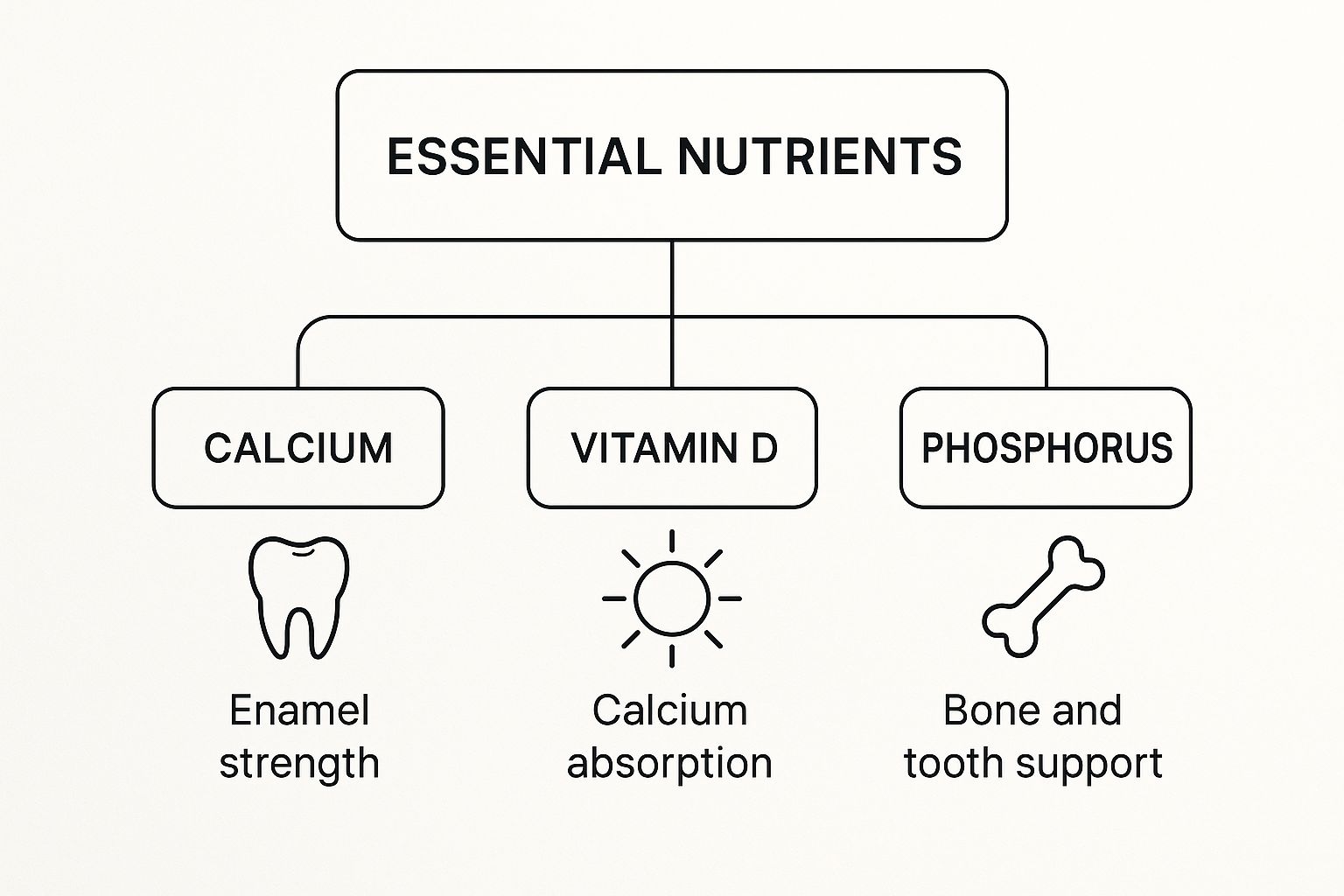
As you can see, calcium, Vitamin D, and phosphorus are the dream team for strong enamel and healthy bones.
- Calcium: The main building block for teeth and bones, found in dairy, leafy greens, and almonds.
- Vitamin D: Your body needs this to absorb and use calcium effectively. You’ll find it in fortified milk, and of course, sunshine!
- Phosphorus: This mineral works right alongside calcium to support tooth structure. It’s abundant in protein-rich foods like meat, fish, and eggs.
Every mindful food choice not only boosts your overall health but also gives your baby the foundational nutrients for a future of healthy smiles.
Your Trimester-by-Trimester Dental Checklist
To make things even easier, here’s a simple guide to help you time your dental care perfectly throughout your pregnancy.
| Trimester | Key Dental Priorities | Primary Focus |
|---|---|---|
| First (Weeks 1-13) | Initial Check-up & Planning | Establish a baseline, get a professional cleaning, and discuss your oral health plan with your dentist. Inform them of your pregnancy. |
| Second (Weeks 14-26) | Schedule Necessary Treatments | This is the ideal window for any routine procedures like fillings. Your comfort and baby's development are at an optimal stage. |
| Third (Weeks 27-40) | Monitor & Maintain | Focus on at-home care and monitor for any changes. Postpone any non-urgent procedures until after delivery for your comfort. |
This checklist helps you focus on what's most important at each stage, taking the guesswork out of scheduling.
Of course, having the right dental partner makes all the difference. If you're searching for a team that understands your needs during this special time, our guide on how to choose a dentist offers some great tips. By following this action plan, you can rest easy knowing you're doing everything right to keep your smile healthy and bright for you and your baby.
Your Pregnancy Dental Care Questions, Answered
When you’re expecting, you have a million things on your mind. Your dental health shouldn't be a source of stress. We get a lot of questions from expecting moms, so we've put together some straightforward answers to clear up any confusion and help you feel confident about taking care of your smile.
Is It Truly Safe to Visit the Dentist While Pregnant?
Yes, absolutely! It’s not just safe; it’s one of the best things you can do for yourself and your baby. Leading health organizations, including the American Dental Association (ADA) and the American College of Obstetricians and Gynecologists (ACOG), strongly recommend continuing your dental care throughout pregnancy.
Think about it this way: an untreated oral infection can pose a far greater risk to you and your baby's health than a dental procedure. We take every possible precaution, from using pregnancy-safe anesthetics to shielding you with a lead apron for any necessary X-rays, to ensure everyone's complete safety.
What’s the Best Time for Dental Work?
If we're talking about non-emergency procedures, the second trimester is usually the sweet spot. Morning sickness has hopefully passed, and you’re generally more comfortable sitting back in the chair than you will be in the final few months.
But that’s just a guideline. A dental emergency doesn’t follow a calendar. If you have a throbbing toothache, break a tooth, or see signs of infection, please call us immediately, no matter which trimester you’re in. Putting off urgent care is never a good idea.
The most important rule is to listen to your body and your dentist. If something feels wrong, don't wait. Early intervention is always the safest and most effective approach.
Can I Get My Teeth Whitened While Pregnant?
We recommend hitting pause on cosmetic treatments like teeth whitening until after your baby arrives. While there’s no evidence that it’s harmful, there also isn’t enough research to prove it's completely safe for a developing baby.
For these nine months, let's focus on what's most important: keeping your teeth and gums healthy and infection-free. You’ll have plenty of time for cosmetic touch-ups later!
If you're looking for more general information about what to expect, guides like this one can be a big help: What To Expect When Expecting: A Mom's Honest Guide.
My Gums Bleed When I Brush. Should I Stop?
No, definitely not! Keep brushing, but switch to a gentler approach. Bleeding gums are a classic sign of "pregnancy gingivitis." It happens because all those hormonal shifts can make your gums extra sensitive and reactive to plaque.
If you stop brushing that area, plaque will just build up and make the inflammation and bleeding even worse. The key is to be consistent and gentle.
- Be Consistent: Keep brushing twice a day and flossing daily.
- Be Gentle: Use an extra-soft toothbrush and make soft, circular motions instead of scrubbing hard.
- Be Patient: With consistent, gentle care, the bleeding should calm down in a week or two as your gums get healthier.
Think of the bleeding as your gums sending up a flare, signaling that the area needs a little more TLC—not less.
Your peace of mind is our priority. If you have more questions about dental care during your pregnancy, the team at Serena San Diego Dentist is here to give you the answers and support you need. Schedule a consultation so we can create a personalized care plan that keeps both you and your baby smiling.
https://serenasandiegodentist.com