Getting your wisdom teeth removed is a common procedure for many San Diego residents. For most, it's a proactive step to avoid future dental issues like pain, crowded teeth, and infections. The simple truth is that modern jaws often lack the space for these final molars, which can lead to impaction and other oral health challenges.
Why Wisdom Teeth Removal Is a Common Rite of Passage
If you've spent any time in San Diego, you've likely heard a friend or family member share their wisdom teeth removal story. It often feels like a rite of passage for teens and young adults, but have you ever wondered why it’s so common? The reason lies in a mismatch between our evolutionary history and our modern anatomy.
Wisdom teeth, officially called third molars, are the last set of teeth to emerge, typically appearing between the ages of 17 and 25. Our ancient ancestors needed these powerful molars to chew a diet of tough, raw foods. Their jaws were much larger and had ample room for all 32 teeth.
Over thousands of years, as human diets shifted to include softer, cooked foods, our jaws gradually became smaller. Unfortunately, our wisdom teeth didn't get the evolutionary memo to shrink or disappear.
The Problem of a Crowded Jaw
Today, the vast majority of people simply don't have enough room in their mouths for these late arrivals. It’s like trying to parallel park an SUV in a space designed for a compact car—it just won’t fit without causing problems. This lack of space is the root cause of nearly every wisdom tooth-related issue.
When wisdom teeth don't have a clear path to erupt properly, it can trigger a domino effect of dental problems. Approaching wisdom teeth removal in San Diego as a preventive measure rather than a daunting ordeal is the best mindset to have.
Here are some of the most common issues that arise from insufficient jaw space:
- Impaction: This is a major concern. The tooth becomes trapped beneath the gum line or wedged against another tooth, preventing it from emerging straight—or at all.
- Crowding and Damage: An erupting wisdom tooth can push neighboring molars out of alignment, potentially causing cracks or other damage to otherwise healthy teeth.
- Pain and Swelling: As the tooth struggles for space, it can cause significant discomfort, jaw stiffness, and inflamed, tender gums.
- Higher Infection Risk: A partially erupted tooth creates a small gum flap that is nearly impossible to keep clean. This area can become a breeding ground for bacteria, leading to painful infections.
Impacted wisdom teeth are more than just a nuisance; they can lead to cysts, tumors, and severe infections if left untreated. Proactive removal is almost always the safest and healthiest choice for your long-term oral health.
Proactive Care for a Lifetime of Healthy Smiles
Because these problems are so prevalent, dentists and oral surgeons typically recommend removing wisdom teeth before they have a chance to cause damage. A thorough evaluation in your late teens can usually predict if your wisdom teeth are on a collision course with the rest of your mouth.
If you're curious about the potential risks, you can learn more about the serious complications from impacted wisdom teeth and understand why early intervention is so critical.
Ultimately, view this common procedure as a smart investment in your long-term health. By addressing the issue early, you can prevent significant pain, protect the alignment of your other teeth, and maintain a healthy, comfortable smile for years to come. That’s why so many San Diego residents take this important step.
Is It Time to See an Oral Surgeon? Key Signs to Watch For
How can you tell if your wisdom teeth are becoming a problem? While a fortunate few experience no issues, most of us will eventually notice tell-tale signals that it's time for a professional evaluation. Your body is quite good at letting you know when something is wrong, and learning to recognize those signs can save you from significant pain and more complex dental work down the line.
The warnings aren't always a sudden, sharp pain. More often, the trouble begins subtly and worsens over time. Paying attention to these early hints is the best way to stay ahead of the problem.
The Most Common Red Flags
If any of the following symptoms sound familiar, it's a strong indication that you should schedule a consultation for wisdom teeth removal in San Diego. These issues rarely resolve on their own and tend to become more severe the longer you wait.
- A Nagging Pain or Dull Ache: This is the classic symptom. You might feel a constant, low-grade ache in the back of your jaw or experience sharp, intermittent pains that come and go.
- Pressure Behind Your Other Molars: Many people describe this as a feeling of crowding or pressure at the very back of their mouth, as if the wisdom teeth are physically pushing on the adjacent teeth.
- Swollen, Tender, or Bleeding Gums: Check the gum tissue around your backmost molars. If it appears red, puffy, and is sore to the touch, you may have pericoronitis—a common infection around a partially-erupted wisdom tooth.
- Jaw Pain and Stiffness: Does your jaw feel tight? Do you have difficulty opening your mouth fully? This can be a sign that impacted wisdom teeth are causing inflammation affecting your jaw muscles.
- Bad Breath or an Unpleasant Taste: When a wisdom tooth only partially breaks through the gum, it creates a perfect pocket for food particles and bacteria to hide. This can lead to persistent bad breath (halitosis) or a foul taste that brushing doesn't seem to fix.
What an "Impacted" Tooth Really Means
Imagine a car trying to exit a tight parking space but being blocked by another vehicle. No matter how much it tries, it can't get out. Worse, it might end up scraping the car next to it or damaging the pillar it's wedged against. This is precisely what an impacted wisdom tooth does inside your jaw.
When a tooth is "impacted," it is trapped beneath the gums or bone. It might be growing sideways, directly into the roots of the molar in front of it. This constant pressure can cause a range of problems, from severe decay to cysts (fluid-filled sacs) that can damage your jawbone and neighboring teeth.
By recognizing these signs, you aren't just addressing a toothache—you're taking a crucial step to prevent much more serious problems down the road. An early consultation allows an oral surgeon to get ahead of the issue before it becomes complicated.
The statistics put this into perspective. It is estimated that 85% of people will eventually need their third molars removed. With approximately 5 million Americans undergoing the procedure each year, it is one of the most routine oral surgeries performed. If you're interested in the data, you can learn more about wisdom teeth statistics.
When to Make the Call
Don't wait until the pain is unbearable. If you are experiencing any of these symptoms—especially if you're between 17 and 25 years old—it's the perfect time to seek a professional opinion. An oral surgeon can take a quick set of X-rays to see exactly what is happening beneath the surface.
This initial visit is all about diagnosis. A San Diego specialist will evaluate the position of your wisdom teeth, identify any existing or potential issues, and walk you through a personalized treatment plan. Acting early helps ensure the wisdom teeth removal process in San Diego is as simple and smooth as possible, protecting your overall oral health for years.
What to Expect During Your Extraction Procedure
The idea of surgery can be a bit intimidating, but understanding what to expect is the best way to ease your nerves. A wisdom teeth removal procedure in San Diego is not something to fear; it’s a very routine and safe process. Modern oral surgery focuses on making the experience as comfortable and stress-free as possible.
Let's walk through what happens, from your first appointment to the moment you're heading home to recover.
The Initial Consultation and Planning Phase
It all begins with a consultation. This first visit is less about the procedure itself and more about creating a detailed, personalized game plan. Think of it as the strategy session before the main event.
During this appointment, your oral surgeon will:
- Perform a Detailed Exam: They will take a close look at your wisdom teeth, gums, and jaw.
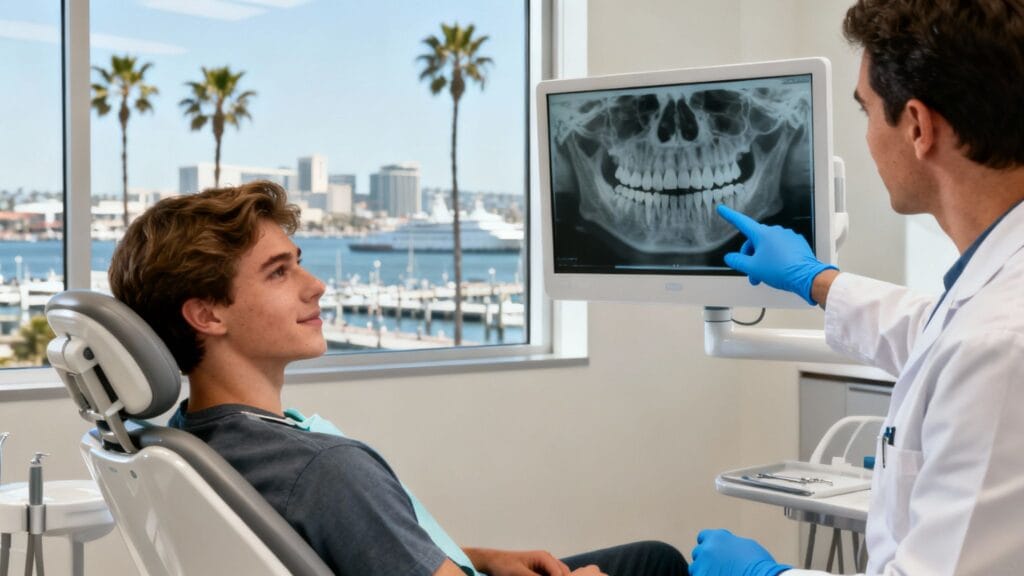
- Take Advanced X-rays: You will likely have a panoramic X-ray or even a 3D scan. This provides the surgeon with a clear map of your teeth, their roots, and their proximity to important nerves.
- Discuss Your Medical History: They will ask about any health conditions or medications you take to ensure your safety.
- Review Anesthesia Options: This is a crucial step. You'll discuss different ways to stay comfortable and decide on the level of sedation that works best for you.
Understanding Your Anesthesia and Sedation Choices
The number one priority is to ensure you feel no pain. San Diego oral surgeons offer several options and will recommend the best fit based on the complexity of your surgery and your comfort level.
Here are the most common choices:
- Local Anesthesia: Just like a filling, this numbs the area completely. You'll be awake but won't feel pain—just some pressure.
- Nitrous Oxide (Laughing Gas): Often used with local anesthesia, this helps you relax. It wears off almost immediately afterward.
- IV Sedation: This is the most common choice for wisdom teeth removal. Medication administered through an IV puts you into a "twilight sleep." You remain conscious but are so deeply relaxed that you'll likely remember little to nothing about the procedure.
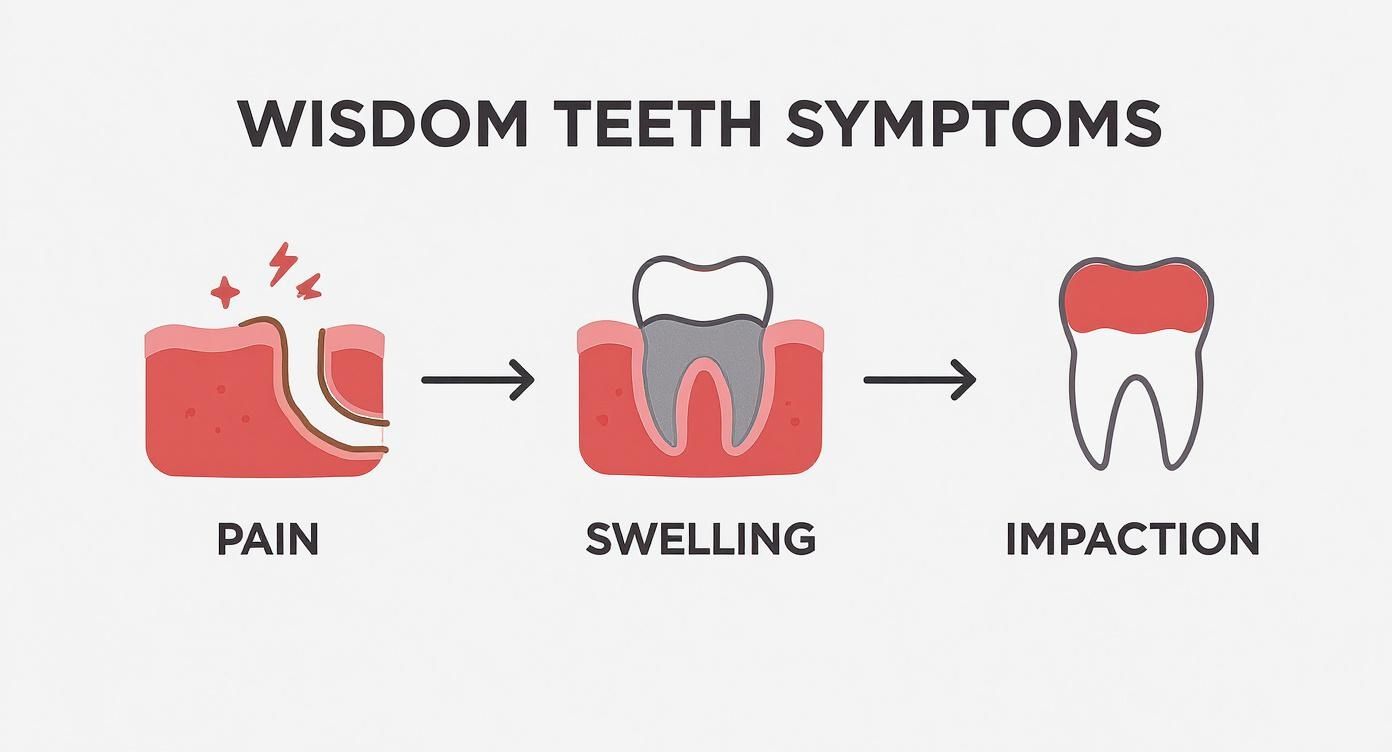
As you can see, persistent pain, swelling, and impacted teeth are common signals that it's time to have them evaluated.
On the Day of Your Extraction
When you arrive for your surgery, the team will get you settled and comfortable. Once your chosen anesthesia is effective, the surgeon will begin.
The entire procedure usually takes 45 to 60 minutes. The surgeon’s focus is on being both gentle and efficient to minimize discomfort and ensure a swift recovery.
If a tooth is impacted, the surgeon will make a small incision to access it. Sometimes, the tooth is broken into smaller pieces for easier removal. This may sound dramatic, but it's a gentler technique that reduces stress on your jaw. After the teeth are removed, the area is cleaned, and a few stitches (usually self-dissolving) may be placed to aid healing.
If you're curious about the surgical details, you can find more in our guide on what oral surgery involves.
The Immediate Post-Surgery Moments
Once finished, you'll be moved to a recovery area to rest. The staff will monitor you as you wake up from the anesthesia. They will also place gauze over the extraction sites to manage bleeding and help form the blood clots necessary for healing.
Your surgeon will provide specific aftercare instructions and prescriptions for pain medication or antibiotics if needed. Because you will be groggy (especially with IV sedation), you must have a friend or family member drive you home safely.
Figuring Out the Cost of Wisdom Teeth Removal in San Diego
One of the first questions on everyone's mind is, "How much will this cost?" When it comes to wisdom teeth removal in San Diego, there isn't a single price tag. The final cost is a reflection of your unique dental needs.
Think of it less as a fixed price and more as a customized treatment plan. Understanding the factors that contribute to the final number will help you feel more prepared and in control of the financial aspect.
Key Factors That Influence the Price
The final bill for your wisdom teeth removal is determined by several key components. It's similar to taking your car to a mechanic—the cost depends on the work needed. For your oral health, it all comes down to your specific clinical situation.
Here are the main factors that will shape your total cost:
- Number of Teeth: This is straightforward. Removing one tooth will cost less than removing all four. Your oral surgeon will determine how many need to be extracted to maintain your long-term oral health.
- Complexity of Impaction: This is the biggest variable. A wisdom tooth that has fully erupted is relatively simple to remove. However, an impacted tooth—one stuck under the gums or in the jawbone—requires a more involved surgical procedure.
- Type of Anesthesia: Your comfort is a top priority. The type of anesthesia you choose, from a simple local anesthetic to IV sedation for a "twilight sleep," will affect the price. IV sedation is more expensive due to the required equipment and monitoring, but it ensures a stress-free experience.
The primary driver of the cost is the degree of impaction. A tooth completely encased in the jawbone requires a much more delicate surgical approach than one covered only by gum tissue, and the price reflects that additional complexity.
To give you a clearer picture, here’s a breakdown of how these factors play out.
Estimated Cost Factors for Wisdom Teeth Removal in San Diego
This table breaks down how different factors can influence the total cost of your wisdom teeth extraction procedure, helping you understand potential expenses with or without insurance.
| Factor | Description | Impact on Cost |
|---|---|---|
| Simple Extraction | The tooth has fully erupted and is easily accessible. | Lower Cost |
| Soft Tissue Impaction | The tooth is trapped beneath the gum tissue but not bone. | Moderate Cost |
| Partial Bony Impaction | The tooth is partially encased in the jawbone. | Higher Cost |
| Full Bony Impaction | The tooth is completely covered by the jawbone, often growing at an angle. | Highest Cost |
As you can see, the more complex the extraction, the higher the cost. A full bony impaction is the most intricate scenario and will be at the upper end of the price range.
The Role of Dental Insurance and Payment Options
Now, let's discuss payment. The good news is that dental insurance can significantly reduce your out-of-pocket costs. Most plans cover at least a portion of wisdom teeth removal, as it is almost always considered a medically necessary procedure.
The amount your insurance covers depends entirely on your specific plan—your deductible, copay, and annual maximum all play a role. Our team has extensive experience working with insurance companies to help you maximize your benefits. For a deeper dive, check out our guide on navigating dental insurance in San Diego.
Making Your Procedure Affordable
Even if your insurance doesn't cover the full amount, you still have options. Quality dental care should never be out of reach due to cost.
Many dental offices in San Diego offer flexible payment solutions, including:
- In-House Payment Plans: Some practices will work with you to spread the cost over several months, making it more manageable.
- Third-Party Financing: Companies like CareCredit are designed for healthcare expenses, offering low- or no-interest financing so you can pay for your treatment in smaller installments over time.
Never let financial concerns prevent you from getting the care you need. During your consultation, be sure to speak with the clinic's financial coordinator. They can provide a clear, personalized estimate and walk you through all the payment solutions that fit your budget, so you can move forward with confidence.
A Practical Guide to a Smooth Recovery

A successful wisdom teeth removal in San Diego is just the first step. The healing process happens during your recovery. Knowing what to do in the hours and days after your surgery is what separates a comfortable experience from a difficult one.
Following a clear aftercare plan is your best strategy for managing discomfort, reducing swelling, and preventing complications like dry socket. Think of this guide as your roadmap to getting back on your feet and enjoying all that San Diego has to offer.
The First 24 Hours: Your Top Priorities
The first day is dedicated to protecting the surgical sites so your body can form the essential blood clots for healing. This is the foundation of your recovery, so it's critical to follow instructions precisely.
Here’s what to focus on:
- Rest and Relax: Take it easy. Lie down with your head elevated on a few pillows to help minimize swelling. No gym trips, no heavy lifting, no exceptions.
- Manage Swelling: Apply an ice pack to your cheeks for 15-20 minutes on, then 20 minutes off. This is a game-changer in the first 24-48 hours and significantly reduces puffiness.
- Control Bleeding: Leave the gauze your surgeon placed over the sites for at least 30-60 minutes. If bleeding continues, you can bite down gently on a fresh piece.
- Take Medication: Stay ahead of the pain. It's best to take your prescribed pain medication before the anesthesia completely wears off.
The golden rule for day one is to avoid creating any suction in your mouth. This means absolutely no smoking, no spitting, and no drinking through a straw. These actions can dislodge the protective blood clot and lead to a painful condition called dry socket.
Days 2 and 3: Navigating Swelling and Diet
During this phase, you'll likely experience the most swelling and possibly some mild bruising. This is a normal part of the healing process. Your focus now shifts to gentle maintenance and your diet.
For the next couple of days, soft foods are your best friend. Stick to items that require no chewing.
Your Soft-Food Shopping List:
- Yogurt
- Smoothies (remember, no straws—use a spoon!)
- Applesauce
- Mashed potatoes
- Pudding or Jell-O
- Lukewarm soups and broths
After 24 hours, you can begin gentle saltwater rinses. Mix half a teaspoon of salt into a glass of warm water. Swish very gently, and then—this is important—let the water fall out of your mouth over the sink. Do not spit forcefully. Do this after meals and before bed to keep the area clean.
For a more detailed breakdown, you can explore our guide on what you should do after a tooth removal.
The First Week: Transitioning Back to Normal
By day four, you should start to feel a noticeable improvement. Swelling and discomfort will begin to fade, and you can slowly reintroduce more solid foods. Continue with the saltwater rinses to keep the healing sockets clean.
The most important thing now is to listen to your body. Even as you feel better, you still need to avoid certain activities to prevent setbacks.
Important "Don'ts" for the First Week:
- Avoid Strenuous Exercise: Light walking is fine, but hold off on jogging, weightlifting, or any activity that significantly raises your heart rate for at least a week.
- Steer Clear of Crunchy and Hard Foods: Items like chips, nuts, popcorn, and seeds can easily get lodged in the healing sockets, causing irritation or infection.
- Continue to Avoid Smoking and Straws: This rule remains in effect for at least the first week to protect the blood clot.
Following these simple but effective steps after your wisdom teeth removal in San Diego will make all the difference in your recovery. It’s the surest way to heal properly, minimize pain, and get back to your normal routine quickly and safely.
How to Choose the Best Oral Surgeon in San Diego
Finding the right professional for your wisdom teeth removal is arguably the most important decision in this process. The right surgeon ensures a smoother procedure, a better recovery, and provides much-needed peace of mind. You are looking for a combination of proven experience, modern technology, and a team that genuinely cares about its patients.
A great starting point is to look for a board-certified oral and maxillofacial surgeon. This signifies that they have completed extensive, specialized training far beyond that of a general dentist.
Credentials and Experience Matter
When evaluating potential surgeons, their specific experience with cases similar to yours is crucial. Don't hesitate to ask about their background, especially if your wisdom teeth are impacted or in a complex position. An experienced surgeon has encountered a wide variety of situations and knows how to handle any unexpected challenges.
The best clinics in San Diego also invest in advanced technology. Tools like 3D Cone Beam CT (CBCT) scanners are game-changers. They provide the surgeon with a detailed, three-dimensional map of your jaw, teeth, and nerves, allowing for incredibly precise surgical planning. This directly translates to lower risks and a faster, easier recovery for you.
Questions to Ask During Your Consultation
The consultation is your opportunity to interview the surgeon and determine if they are the right fit. A good surgeon will gladly answer your questions and explain everything clearly. It's wise to come prepared with a list of questions.
Here are a few essential things to ask:
- What are my sedation options? A skilled surgeon will explain the pros and cons of local anesthesia, nitrous oxide, and IV sedation, helping you choose the best option for your comfort and the complexity of the extraction.
- How many wisdom teeth extractions do you perform each month? This gives you a practical sense of their hands-on experience with this specific surgery.
- What is your approach to managing potential complications? You want to hear a calm, clear plan. Knowing they are prepared can be very reassuring.
- Can I see patient testimonials or reviews? Hearing from other patients offers insight into the quality of their care.
Finding the right fit is about more than just credentials; it’s about feeling heard and respected. The best oral surgeon in San Diego for you is one who makes you feel confident and cared for every step of the way.
Impacted wisdom teeth are incredibly common. By age 25, a staggering 80% of people have had at least one tooth extracted, many of which are wisdom teeth. This is why it's so important to find a specialist who focuses on preventing problems for your long-term oral health. You can find more details on the importance of wisdom teeth removal on aplusfamilydentistry.com. Taking a little extra time to choose wisely ensures you’re placing yourself in the most capable hands.
Got Questions? We've Got Answers
Even after walking through the entire process, it's completely normal to have a few lingering questions. Let's address some of the most common inquiries from patients in San Diego before their wisdom teeth removal, so you can feel fully prepared.
Will the Wisdom Tooth Removal Procedure Hurt?
During the procedure itself? Not at all. Thanks to modern anesthesia, you won't feel any pain while the surgeon is working.
Afterward, you should expect some soreness and discomfort as part of the normal healing process. However, your surgeon will provide a solid plan, typically involving pain relievers and anti-inflammatory medications, to keep you comfortable. The worst of it is usually over within a few days.
How Long Is the Recovery Time?
Most people feel much more like themselves within 3 to 5 days and are ready to return to work or school.
You will need to take it easy, though. Plan to avoid any heavy lifting or strenuous exercise for at least a week to allow your body to heal properly. While the extraction sites may take a few weeks to fully heal, your daily routine should return to normal much sooner.
The single best thing you can do for a smooth recovery is to follow the aftercare instructions precisely. Small actions like not using a straw and rinsing gently make a significant difference.
What Is a Dry Socket and Is It Common?
A dry socket occurs when the blood clot in the empty socket is dislodged prematurely, exposing the underlying bone and nerves. It can be quite painful, but fortunately, it is not very common and only affects a small percentage of patients.
The best prevention is simple: carefully follow your aftercare instructions. This means no smoking, no using straws, and no aggressive spitting for the first week.
Do I Have to Be Fully Asleep for the Procedure?
Absolutely not. You have choices. Many patients opt for IV sedation, which induces a deeply relaxed "twilight" state where you are comfortable and won't remember the procedure. Others are perfectly fine with just local anesthesia to completely numb the area.
Your oral surgeon in San Diego will review all the options with you and help you decide what makes the most sense for your procedure and personal comfort level.
At Serena San Diego Dentist, our dedicated team is committed to ensuring your wisdom tooth removal is as safe, comfortable, and stress-free as possible. If you have more questions or you're ready to book a consultation, we are here to help you every step of the way.