
Facing wisdom teeth removal here in San Diego can feel a bit intimidating. However, it's an incredibly common procedure performed for a very good reason—it's often the best way to prevent serious oral health issues down the road. This guide is designed to walk you through everything you need to know, from the initial warning signs to what you can expect for a smooth and speedy recovery.
Why Wisdom Teeth Removal is a Common San Diego Story
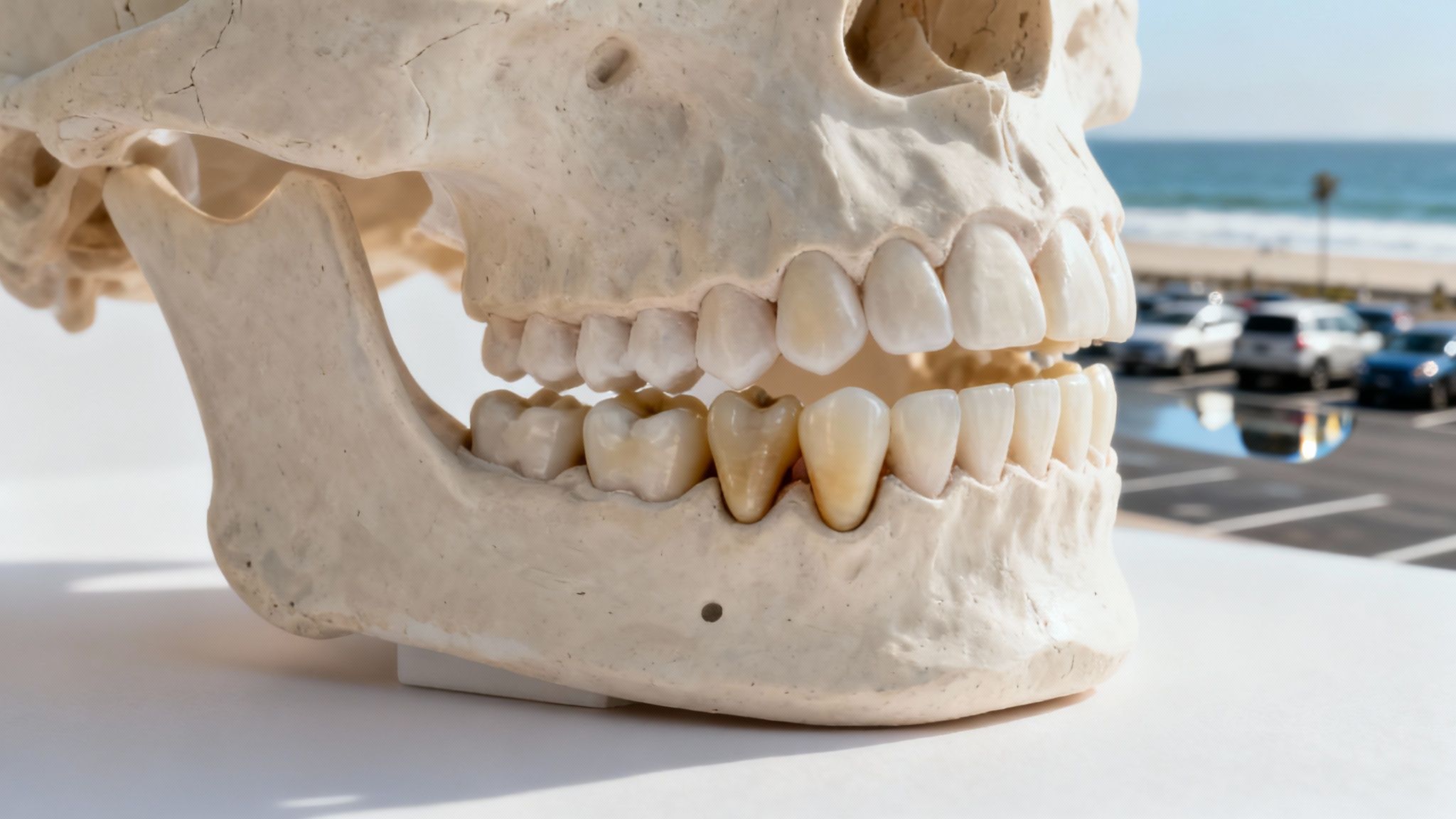
If your dentist has mentioned getting your wisdom teeth taken out, you are definitely not alone. For countless San Diegans, this procedure is a standard part of maintaining long-term oral health. The reason is surprisingly simple: our modern jaws often just don't have enough room for this third set of molars.
Think of your jaw like a parking lot in Pacific Beach on a sunny Saturday—space is at a premium. When your wisdom teeth (the late arrivals) try to force their way in, they frequently cause significant problems.
The Overcrowding Dilemma
When wisdom teeth—technically called third molars—attempt to emerge in a jaw that’s already full, they often get stuck, or impacted. This means they're trapped beneath the gum line or are growing in at an awkward angle, pushing against the adjacent teeth. This is where the real trouble begins.
This is precisely why your dentist might recommend removing them before they cause pain. In San Diego, oral surgeons frequently perform this procedure to prevent future issues like infection, pain, and damage to neighboring teeth. In fact, studies show that about 85% of wisdom teeth eventually require removal, a statistic that holds true both locally and nationally. You can learn more about local oral surgery trends to see how common it is.
Key Takeaway: Waiting until you feel pain is often waiting too long. Proactively removing problematic wisdom teeth is the best strategy to avoid more severe complications like cysts or damage to the roots of perfectly healthy molars.
So, what are the red flags your dentist is looking for? The table below breaks down the most common reasons we recommend extraction. It’s a great way to see if any symptoms you’re experiencing might point to needing the procedure.
Common Reasons for Wisdom Teeth Removal
| Reason | What It Means | Potential Long-Term Risk |
|---|---|---|
| Impaction | The tooth is stuck in your jaw and cannot break through the gums properly. | Cysts, tumors, damage to other teeth, or serious infection. |
| Overcrowding | There isn't enough room, causing your other teeth to be pushed out of alignment. | A crooked smile, bite issues, and difficulty cleaning your teeth. |
| Incorrect Angle | The tooth is growing sideways or diagonally, directly into its neighbor. | Damage to molar roots, jaw pain, and gum inflammation. |
| Pain & Swelling | The tooth is causing irritation as it attempts to erupt, leading to discomfort or infection. | Chronic pain, recurring infections, and potentially a painful abscess. |
Ultimately, these issues are why a dentist might suggest a consultation. Getting ahead of the problem is always the best strategy for maintaining your oral health.
Recognizing the Warning Signs from Your Wisdom Teeth
Wisdom teeth can be quite sneaky. Sometimes they announce their arrival with obvious, unmistakable pain. Other times, the signs are much more subtle, making it easy to ignore them until a real problem develops. Learning to spot these early clues can help you seek professional advice before a minor ache turns into a major issue requiring wisdom teeth removal in San Diego CA.
Think of it this way: your body is excellent at sending signals when something isn't right. That persistent, dull throb in the back of your jaw? That’s often the first red flag. This isn't just a random toothache; it's frequently the result of an impacted wisdom tooth pressing against the nerves and roots of its neighbor, creating constant, nagging discomfort.
Decoding the Symptoms
Beyond that general ache, there are several other distinct signs that your wisdom teeth might be causing trouble. Paying close attention to these is key to protecting your overall oral health in the long run.
- Swollen or Tender Gums: Take a look at the gums around your very back molars. If they appear red, puffy, or feel sore to the touch, it’s a classic sign of inflammation. This is often caused by a wisdom tooth that has only partially broken through the surface.
- Difficulty Opening Your Mouth: Does your jaw feel stiff? Is there pain when you try to open your mouth wide? This condition, known as trismus, can occur when an impacted tooth causes the surrounding muscles and joints to become inflamed.
- Persistent Bad Breath or an Unpleasant Taste: When a wisdom tooth gets stuck partially erupted, it creates a small flap of gum tissue that is a perfect hiding spot for food and bacteria. This pocket is nearly impossible to clean properly, which can lead to a foul taste or odor that even the best brushing and mouthwash can't seem to resolve.
These symptoms are all clear indicators that it's time to schedule a consultation. Oral surgeons here in a busy city like San Diego see young adults all the time with this exact trio of symptoms—pain, swelling, and bleeding gums—which almost always points to the need for an extraction. You can discover more insights about common wisdom teeth symptoms on Mission Valley Dentists.
When No Pain Doesn't Mean No Problem
One of the biggest myths is that if your wisdom teeth aren't hurting, they must be fine. Unfortunately, that is simply not the case. An impacted tooth can silently cause damage below the gum line for years without causing any pain.
By the time pain becomes a major issue, underlying problems like cysts, root damage to adjacent teeth, or significant decay may have already developed. This is why regular dental X-rays are so important for monitoring their position.
These hidden problems can lead to much more complicated and expensive procedures later on. You can learn more about the serious complications from impacted wisdom teeth in our detailed article. So, even if you feel perfectly fine, getting a professional evaluation provides peace of mind and allows your dentist to be proactive, ensuring a small issue doesn't have the chance to become a major emergency.
What to Expect During Your Procedure
It's completely normal to feel a bit nervous about wisdom teeth removal, but understanding what happens can make all the difference. Walking into the procedure feeling prepared and informed can transform anxiety into a sense of calm. Let's pull back the curtain and go through the entire process step-by-step, so you know exactly what to expect when you visit our San Diego clinic.
Everything begins with a detailed consultation. This isn't just a quick chat; we utilize sophisticated 3D imaging to get a crystal-clear picture of your jaw. This technology allows us to see the precise position of your wisdom teeth and, just as importantly, their proximity to nearby nerves. This detailed map enables us to plan the safest, most effective surgical approach for you.
Choosing Your Comfort: Anesthesia Options
Your comfort is our top priority. We're not just focused on removing the teeth; we're dedicated to making the experience as stress-free and painless as possible. Based on the complexity of your case and your personal comfort level, we’ll discuss the best anesthesia option for you.
- Local Anesthesia: If your tooth has already erupted through the gums and the extraction is straightforward, we can simply numb the area. You’ll be awake, but you won't feel any pain—just a bit of pressure.
- IV Sedation: This is the most common choice for wisdom teeth removal in San Diego CA. Often called "twilight sleep," it's administered through a vein and puts you in a deeply relaxed state. You won't be aware of the procedure and will have little to no memory of it afterward.
- General Anesthesia: For more complex extractions or for patients with significant anxiety, general anesthesia is an option. It ensures you are completely asleep for the entire surgery.
To get a better handle on these options, feel free to check out our detailed guide to oral surgery explained for a deeper dive.
We’ll discuss all of this with you during the consultation. The goal is to find the option that makes you feel most at ease, ensuring your experience is calm and entirely pain-free.
The Surgical Process, Demystified
Once your chosen anesthesia has taken effect and you’re completely comfortable, the surgery itself begins. We take a very methodical, precise approach designed to be as gentle as possible. This isn't about brute force; it's about minimizing trauma to the area to help you heal faster.
It's often the warning signs—like nagging jaw pain, swollen gums, or even bad breath—that bring people to us in the first place.
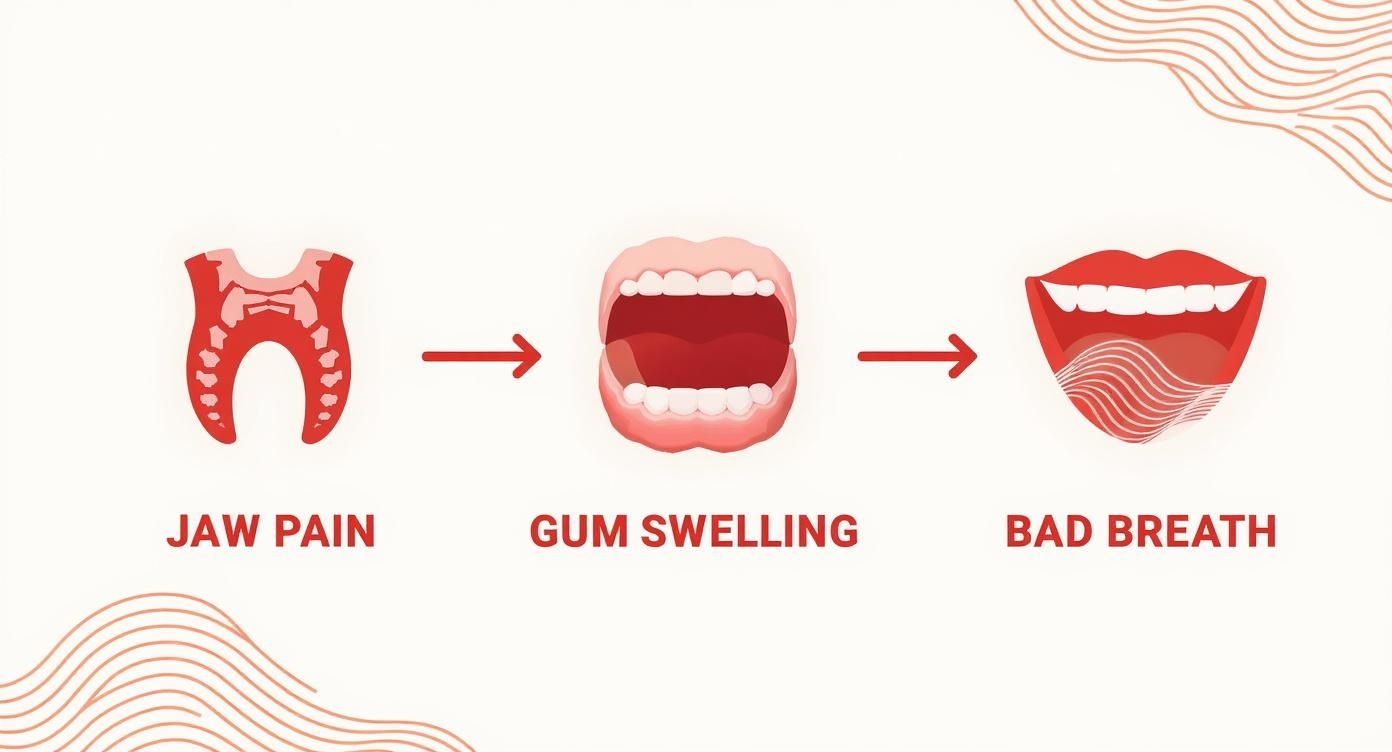
As you can see, these issues often build on each other. A timely extraction stops this cascade before it gets worse.
The actual surgical steps will vary slightly depending on whether your tooth is fully erupted or impacted (stuck below the gums).
- Making an Entrance: For an impacted tooth, the surgeon makes a small, careful incision in the gum tissue. This reveals the tooth and the surrounding bone.
- The Removal: Sometimes, especially with impacted teeth, it’s gentler to section the tooth into smaller pieces for removal. Think of it like trying to move a large piece of furniture through a small door—it’s much easier to take it apart first. For erupted teeth, we use a special tool to gently loosen it before lifting it from the socket.
- A Thorough Cleaning: After the tooth is removed, we meticulously clean the socket to ensure no debris is left behind. This is a critical step in preventing infection.
- Closing Up: We typically use dissolvable stitches to close the gum tissue, so you won't need to worry about having them removed. They will disappear on their own in a week or two. Finally, a piece of gauze is placed over the site to manage any bleeding and help a protective blood clot form.
Most patients are surprised by how quick the actual surgery is. From start to finish, we're usually done in 30 to 60 minutes, though it depends on how many teeth are being removed and their complexity. Once we're finished, we’ll move you to a recovery area to rest while the anesthesia begins to wear off.
Understanding the Cost of Wisdom Teeth Removal in San Diego
One of the first questions on everyone's mind is, "How much will this cost?" This is a perfectly fair question. Understanding the financial aspect is a significant part of the process, and the final cost can vary considerably from person to person. There is no one-size-fits-all price; the cost is determined by several factors specific to your situation.
Think of it like getting your car repaired. A mechanic can't give you a firm price over the phone until they've looked under the hood. The final bill depends on what's actually wrong with the engine. It's the same with wisdom teeth—the complexity of your case is the biggest driver of the cost.
Key Factors That Influence the Final Cost
So, what exactly determines the final number on your bill? A few key variables come into play, and knowing what they are will help you understand the estimate your oral surgeon provides. It mostly boils down to how many teeth need to be removed and how difficult they are to access.
For instance, extracting a single wisdom tooth that has already grown in straight is a relatively simple procedure. It's a completely different situation if all four of your wisdom teeth are impacted, meaning they're stuck sideways and buried deep in your jawbone. That is a much more involved procedure, and the cost will reflect that.
- Number of Teeth: This one is pretty straightforward. The cost to remove one tooth will naturally be less than removing all four.
- Impaction Level: This is likely the most significant factor. A fully erupted tooth (visible above the gum line) is the easiest to remove. A soft tissue impaction, where the tooth is stuck under the gums, is more complex. The most complicated (and therefore more expensive) scenario is a bony impaction, where the tooth is trapped partially or completely within the jawbone itself.
- Type of Anesthesia: The type of sedation you choose also plays a major role in the final price. Local anesthetic is the most budget-friendly option. If you opt for IV sedation or general anesthesia for greater comfort, that will add to the overall cost due to the extra medication and specialized monitoring required.
To give you a clearer picture, here’s a breakdown of the variables that shape your personalized cost estimate.
Factors Influencing Your Wisdom Teeth Removal Cost in San Diego
| Cost Factor | Why It Matters | Typical Impact on Cost |
|---|---|---|
| Number of Teeth | More teeth require more time, materials, and surgical work. | Significant. The cost scales directly with each additional tooth. |
| Level of Impaction | Impacted teeth require more complex surgical techniques, like removing bone. | Very High. Bony impactions are the most expensive, followed by soft tissue. |
| Anesthesia Type | Different sedation levels require different medications and personnel. | Moderate. Local is cheapest; IV sedation and general anesthesia are pricier. |
| Surgeon's Expertise | A board-certified oral surgeon may have higher fees than a general dentist. | Moderate. You're paying for specialized training and a lower risk of complications. |
| X-Rays & Imaging | A panoramic X-ray or 3D CT scan is needed to plan the surgery. | Low. This is a standard and relatively small part of the total bill. |
Understanding these components helps demystify the quote you receive, showing you exactly what you're paying for.
Navigating Dental Insurance and Payment Options
For most people in San Diego, dental insurance is the primary way to manage the cost. The good news is that most PPO (Preferred Provider Organization) plans do offer coverage for wisdom teeth removal, as it is almost always considered a medically necessary procedure, not a cosmetic one. That said, the amount of coverage can vary widely.
When you contact your insurance company, be specific. Ask direct questions like, "What percentage of surgical extractions does my plan cover?" or "Is there an annual maximum on my plan that I should be aware of?" Our team at Serena San Diego Dentist deals with major insurance carriers every day, so we can help you make sense of your benefits and get the most out of your plan.
We firmly believe that financial stress should not stand in the way of essential dental health. Our commitment is to offer clear pricing and flexible options that work for your budget.
If you don't have insurance, or if your plan leaves you with a remaining balance, we have you covered. We accept several out-of-pocket payment methods and can walk you through financing plans that allow you to break the total cost into smaller, more manageable monthly payments. This way, you can move forward with your wisdom teeth removal in San Diego CA without the added worry. Our top priority is ensuring you get the care you need, plain and simple.
Your Recovery Plan for a Smooth and Fast Healing

Getting through the surgery is just the beginning—your commitment to aftercare is what truly guarantees a smooth, quick, and comfortable healing process. Think of the days following your procedure as a crucial part of the treatment itself. With a clear game plan, you can sidestep common issues, minimize swelling, and get back on your feet faster.
Consider this your day-by-day playbook for a successful recovery after your wisdom teeth removal in San Diego CA.
The First 24 Hours: Your Top Priorities
The first day is without a doubt the most critical. What you do now sets the stage for the entire healing journey. Your main goals are simple: manage the inevitable swelling and, most importantly, protect the blood clot that forms in the empty tooth socket. This clot is nature's perfect bandage, shielding the underlying bone and nerves.
For this first day, your job is to rest and be gentle. Keep your head propped up with pillows, even while sleeping, as this helps gravity reduce swelling. Religiously apply an ice pack to your cheek for 20 minutes on, then 20 minutes off. It sounds simple, but this routine is your best weapon against inflammation and bruising.
Key Takeaway: That blood clot is the hero of your recovery. Protecting it is non-negotiable. This means avoiding anything that creates suction in your mouth, which could dislodge the clot and lead to a very painful complication called dry socket.
Days 2 to 4: Navigating Diet and Discomfort
As you move into the next couple of days, you'll likely reach peak swelling, and the soreness might still be present. Don't worry, this is completely normal. Continue with the ice packs as needed and take your prescribed pain medication on schedule. Staying ahead of the pain is much easier than trying to catch up to it.
Your diet is also a huge factor here. You'll need to stick exclusively to soft, cool foods that require zero chewing.
- Smoothies: A fantastic way to get nutrients without irritating the surgical sites. Just remember—no straws!
- Yogurt and Pudding: These are easy to swallow and incredibly gentle on your healing gums.
- Lukewarm Soups: Creamy options like tomato or butternut squash are great, but make sure they aren't hot.
- Applesauce and Mashed Potatoes: Simple, soft, and surprisingly satisfying.
During this time, you can also start gently rinsing your mouth with a warm saltwater solution (about half a teaspoon of salt in a glass of warm water) after you eat. It’s a great way to keep the area clean without being too aggressive.
The First Week: Reintroducing Normalcy
By the end of the first week, you should be feeling significantly better. Swelling and discomfort will have decreased dramatically, and you can start to slowly reintroduce more solid foods into your diet. Begin with semi-soft items like scrambled eggs, pasta, or flaky fish before returning to your usual meals.
Good oral hygiene is more important than ever now. You can resume brushing your teeth, but be extremely careful around the extraction sites. Continue with saltwater rinses after every meal to ensure no food particles get trapped.
It's just as important to know what not to do this week.
- Avoid straws: The suction is the enemy of your blood clot.
- Skip the gym: Strenuous activity can raise your blood pressure and trigger bleeding.
- Do not smoke: Smoking is one of the worst things you can do for healing tissue and is a primary cause of dry socket.
- Avoid crunchy or hard foods: Items like chips, nuts, and popcorn can easily damage the delicate area.
Spotting Complications and When to Call for Help
While most people recover without any issues, it's important to know the warning signs of potential complications. The most common issue by far is a dry socket. This occurs when the blood clot is dislodged too early, leaving the sensitive bone and nerves underneath exposed.
The tell-tale signs of a dry socket usually appear a few days after surgery and include:
- Severe, throbbing pain that often radiates up toward your ear.
- An unpleasant taste or odor coming from your mouth.
- A visibly empty-looking socket where the dark clot should be.
If you suspect you have a dry socket, this guide on what to do if you have a dry socket offers some great immediate steps. It's a condition worth understanding, and you can learn more about what a dry socket is and when you can stop worrying from our team. If you experience these symptoms—or have excessive bleeding, a fever, or trouble swallowing—don't wait. Call your San Diego surgeon right away. Getting it checked out quickly will resolve any problems and get you back on the path to a speedy recovery.
How to Choose the Right Oral Surgeon in San Diego
Choosing the right specialist for your wisdom teeth removal in San Diego CA is easily the most important decision you'll make in this process. A great surgeon not only ensures a successful procedure but often contributes to a much smoother and faster recovery. With so many options available, knowing what to look for is key.
Start with the basics: credentials and real-world experience. You are not looking for a general dentist; you need a specialist known as an oral and maxillofacial surgeon. These experts complete years of additional hospital-based training in both surgery and anesthesia after graduating from dental school. Always check if they are board-certified, which is a significant credential as it means they have passed rigorous exams to prove their skills.
Verifying Expertise and Patient Experience
Next, focus on their specific experience with complex extractions. Don't be hesitant to ask a potential surgeon how frequently they perform wisdom teeth removals, especially if your teeth are impacted. A surgeon who performs this procedure daily will be far more prepared for any unexpected challenges than one who only does it occasionally.
Technical skill is one thing, but the patient experience tells the rest of the story. Go beyond just looking at online star ratings; read the actual reviews. Are patients saying they felt informed and comfortable? Did they appreciate the surgeon's communication style or how the staff treated them? These details paint a clear picture of what it's truly like to be a patient at that practice.
A great surgeon should make you feel heard and respected. The initial consultation is your opportunity to gauge this rapport. Come prepared with questions and pay attention to how they are answered.
Technology and Clinic Environment
The tools a surgeon uses can make a significant difference in your outcome. The best oral surgeons in San Diego invest in modern technology like 3D Cone Beam CT (CBCT) scanners. This isn't just a fancy X-ray; it provides an incredibly detailed map of your jaw, showing the exact location of your teeth in relation to critical nerves and sinuses. This leads to a safer, more precise surgical plan from the very beginning.
Finally, trust your gut feeling about the clinic itself. A clean, modern, and welcoming space can do wonders for pre-surgery jitters. The team at a professional San Diego dental office should be organized and happy to assist you with everything from scheduling appointments to clarifying insurance questions. By considering all these factors, you can find a surgeon you truly trust to provide the best possible care.
Got Questions About Wisdom teeth Removal? We Have Answers.
It's completely normal to have a few lingering questions, even after learning about the process. To help you feel confident about your decision for wisdom teeth removal in San Diego CA, here are straightforward answers to the questions we hear most often from our patients.
Will the Procedure Hurt?
Honestly? No. During the actual extraction, you will not feel any pain. Modern anesthesia, especially options like IV sedation, ensures you are completely comfortable and often asleep or unaware of the procedure as it happens.
Afterward, you will definitely experience some soreness and swelling. This is a normal part of healing. But we will ensure you can manage it easily with prescribed pain medication and by following the ice pack routine we covered earlier.
How Much Time Do I Need Off From Work or School?
Most people need a few days to really rest and allow their body to begin the healing process. We usually recommend planning for 3 to 4 days of downtime.
You can probably return to light, non-strenuous activities the next day, but it's critical to avoid any heavy lifting or intense exercise for at least a week. This helps prevent complications, like bleeding or dislodging the protective blood clot in the socket.
A pro tip we always share: try scheduling your surgery for a Thursday or Friday. That way, you have the whole weekend to recover without missing much work or school, and you can ease back into your routine on Monday.
What Can I Actually Eat Afterward?
For the first couple of days, your diet will consist of soft foods and liquids. Think of items like smoothies, yogurt, applesauce, lukewarm soups, and mashed potatoes. Once you reach day four or five and start feeling better, you can slowly reintroduce semi-soft foods like scrambled eggs, oatmeal, or pasta.
Just remember these golden rules:
- No straws. The suction is the enemy of a healing blood clot.
- No crunchy, hard, or seedy foods. Items like chips, nuts, and popcorn can get stuck in the socket and cause irritation or infection.
- Avoid anything spicy or acidic. These can sting the healing gums and cause unnecessary discomfort.
Am I Too Old for This?
Not at all. While the ideal time is often in the late teens or early twenties, there is absolutely no upper age limit for wisdom teeth removal.
Adults of any age might require an extraction if their wisdom teeth suddenly start causing pain, infection, or crowding. The procedure itself is the same, and recovery is just as successful, though it might take an extra day or two to bounce back compared to a teenager.
At Serena San Diego Dentist, our main goal is to ensure you feel informed and comfortable from your first consultation to your final check-up. If any other questions come to mind, or if you're ready to see if removal is right for you, our team is here to help.
Contact us today to book your wisdom teeth removal consultation!