
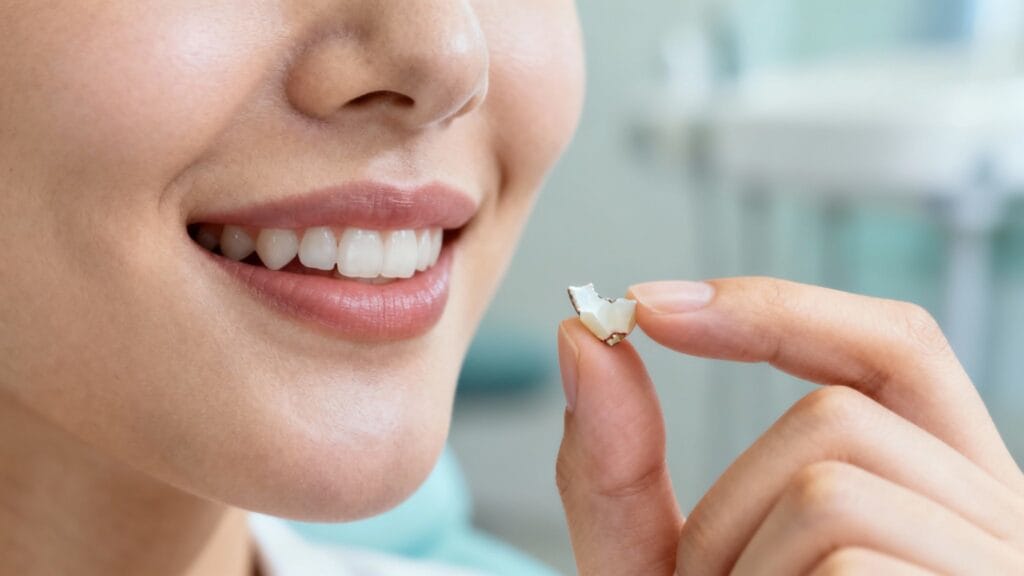
That gut-wrenching crunch when a tooth chips is a moment of pure panic. It can happen from anything—a stray elbow during a basketball game, biting down on an unpopped popcorn kernel, or an unlucky fall. Before you let the alarm bells go off in your head, take a deep breath. A few simple, immediate steps can make a huge difference in protecting your tooth and keeping you comfortable until you can see a dentist.
What you do in those first few hours is critical. Your goal is to keep things clean, manage any pain, and prevent the damage from getting worse. Acting quickly and calmly is your best bet, especially here in sunny San Diego where smiles are always on display.
At-Home First Aid for a Chipped Tooth
First things first, gently rinse your mouth with a warm saltwater solution. Just mix about half a teaspoon of salt into a glass of warm water. This acts as a natural disinfectant, helping to clean the area and lower the risk of infection. Swish it around carefully—no vigorous sloshing that could make things worse.
If you’re feeling any pain or notice your face starting to swell, grab a cold compress. A bag of frozen peas or a cold, wet washcloth held against your cheek or lips over the injured tooth will do the trick. Apply it for about 15 minutes at a time to help reduce swelling and numb the throbbing.
One of the most annoying things about a chipped tooth is the new, razor-sharp edge left behind. It can wreak havoc on your tongue and the inside of your cheek. You can temporarily cover this edge with a small piece of sugar-free gum or some over-the-counter dental wax. This creates a soft buffer and saves you from a lot of irritation.
Crucial Tip: Whatever you do, don't use regular gum. The sugar will get into the exposed part of your tooth and can cause some serious, shooting pain. Stick to sugar-free options only.
Found the Broken Piece? Here’s What to Do
If you manage to find the fragment that broke off, definitely hang onto it. Give it a quick, gentle rinse with water (don't scrub it!) and store it in a small, clean container. The goal is to keep it from drying out, which gives your dentist the best shot at reattaching it.
To keep the tooth fragment viable, you can store it in:
- A small amount of milk.
- Your own saliva (tucking it inside your cheek works well).
- An emergency tooth preservation kit, which you can find at most pharmacies.
Make sure to bring the piece with you to your appointment. A skilled dentist can often bond the original fragment right back into place, which is the ideal fix. Even if the chip seems minor, knowing how to handle common dental emergencies is a skill you'll be glad to have. Quick, correct action is always the best path forward.
Alright, you've handled the immediate first aid. So, what's next? Getting a professional opinion is the crucial next step because when it comes to fixing a chipped tooth, there’s no one-size-fits-all solution.
The right fix really depends on the chip itself—how big it is, where it is, and how deep the damage goes. Walking into your dentist's office with a little background knowledge can make that conversation a lot less intimidating and way more productive.
Whether you're looking at a minor cosmetic touch-up or a more serious structural repair, the goal is always the same: get your tooth back to looking and working its best. A good dentist will walk you through the options that make the most sense for your specific situation and long-term oral health.
This visual guide offers a quick look at the first moves you should make right after chipping a tooth.
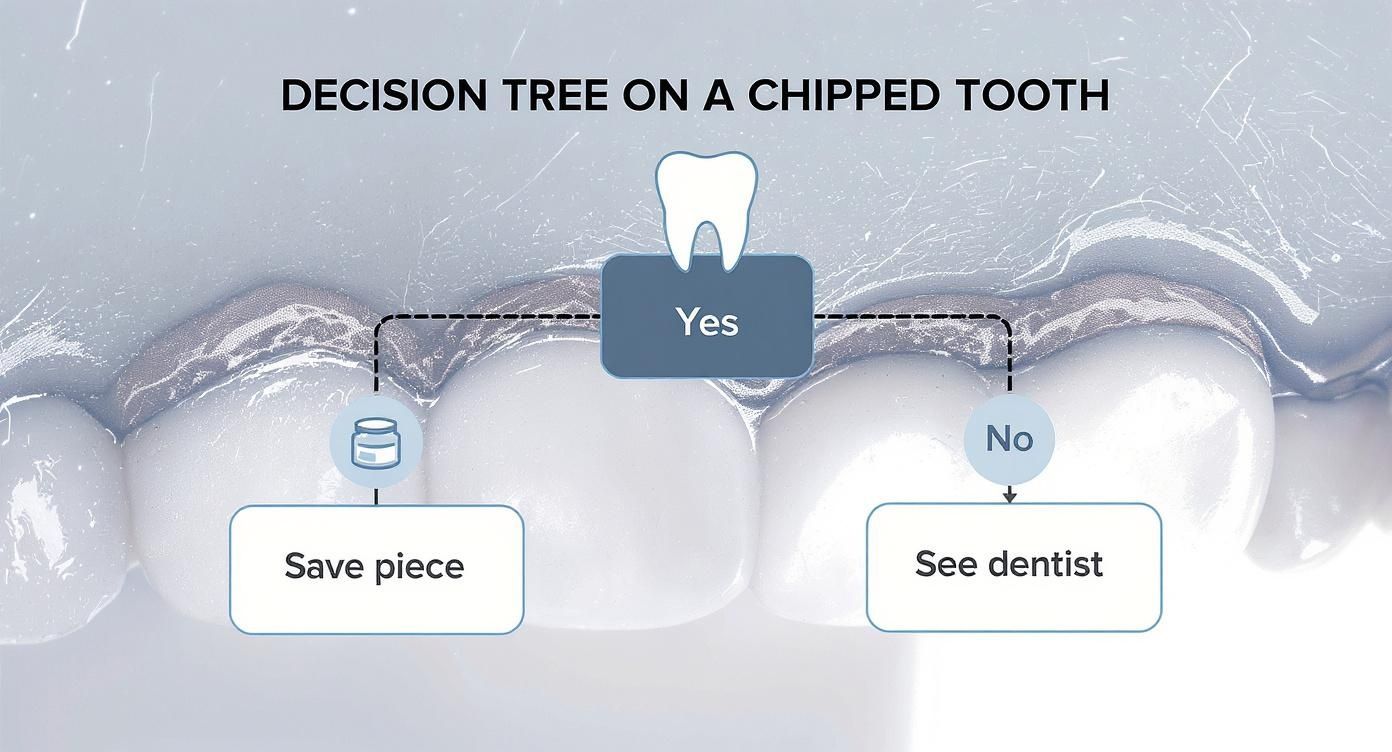
The biggest takeaway here? If you can find the broken piece, save it. And call your dentist as soon as possible.
Comparing Chipped Tooth Repair Treatments
To help you get a clearer picture of what your dentist might suggest, I've put together a quick comparison of the most common treatments. This table breaks down what each procedure is best for, what you might expect to pay, and how long you can expect the repair to last.
| Treatment | Best For | Typical Cost | Durability |
|---|---|---|---|
| Dental Bonding | Small, cosmetic chips on front teeth that don't take a lot of chewing pressure. | $100 – $400 | 3-10 years, can stain over time |
| Veneers | Larger chips on front teeth, or when you also want to fix discoloration or shape. | $900 – $2,500 per tooth | 10-20 years, very stain-resistant |
| Dental Crowns | Major fractures, weakened teeth (especially molars), or after a root canal. | $1,000 – $3,500 per tooth | 10-30+ years, very strong |
| Root Canal | Deep fractures that expose the tooth's inner pulp and cause pain or infection. | $700 – $2,000+ (plus crown) | Lifelong for the tooth, with a crown |
As you can see, the options vary quite a bit in terms of invasiveness, cost, and longevity. Your dentist will help you weigh the pros and cons for your specific tooth.
Dental Bonding For Small Surface Chips
If you just have a small, superficial chip that’s more of an aesthetic issue, dental bonding is often the go-to fix. I like to think of it as a sculptor carefully restoring a statue. The dentist uses a tooth-colored composite resin, applies it directly to the chipped spot, and skillfully shapes it to blend right in with your natural tooth.
A special ultraviolet light hardens the material, and that's it. It’s usually done in a single visit, is pretty much painless, and rarely requires any anesthesia. It’s a fantastic, quick solution for minor cosmetic flaws on your front teeth.
Veneers For Cosmetic And Structural Support
Now, if the chip is more noticeable, or if you're looking to correct other things like stubborn stains or unevenness at the same time, dental veneers are an excellent option. These are super-thin, custom-made shells, usually made of porcelain, that get bonded to the front of your tooth.
Veneers don't just hide the chip; they create a brand-new, durable surface for your tooth. It's a more involved process than bonding, but the result is a long-lasting, complete smile makeover, especially for chipped front teeth.
Dental Crowns For Major Fractures
When a big piece of your tooth has broken off or the chip has compromised the tooth's integrity, you're likely looking at needing a dental crown. A crown, sometimes called a cap, fits over the entire visible part of the tooth.
This gives it 360-degree protection, restoring its original shape, size, and most importantly, its strength. This is absolutely critical for molars, which handle all the heavy lifting when you chew.
Root Canal Therapy For Deep Damage
Sometimes, a chip isn't just a chip. If the fracture runs deep enough to expose the tooth's inner pulp—where the nerves and blood vessels live—it can cause a world of pain and lead to infection. In these situations, a root canal is necessary to save the tooth.
The dentist will remove the damaged pulp, clean out the inside of the tooth, and then seal it up. A crown is almost always placed on top of a tooth after a root canal, because the procedure leaves the tooth brittle and vulnerable to fracturing again. Trust me, you want that final layer of protection.
When you're choosing a professional for these more complex procedures, remember the importance of online reputation management for dental practices; it often points to a clinic's commitment to quality care and patient satisfaction.
Dental Bonding for Minor Chips and Flaws
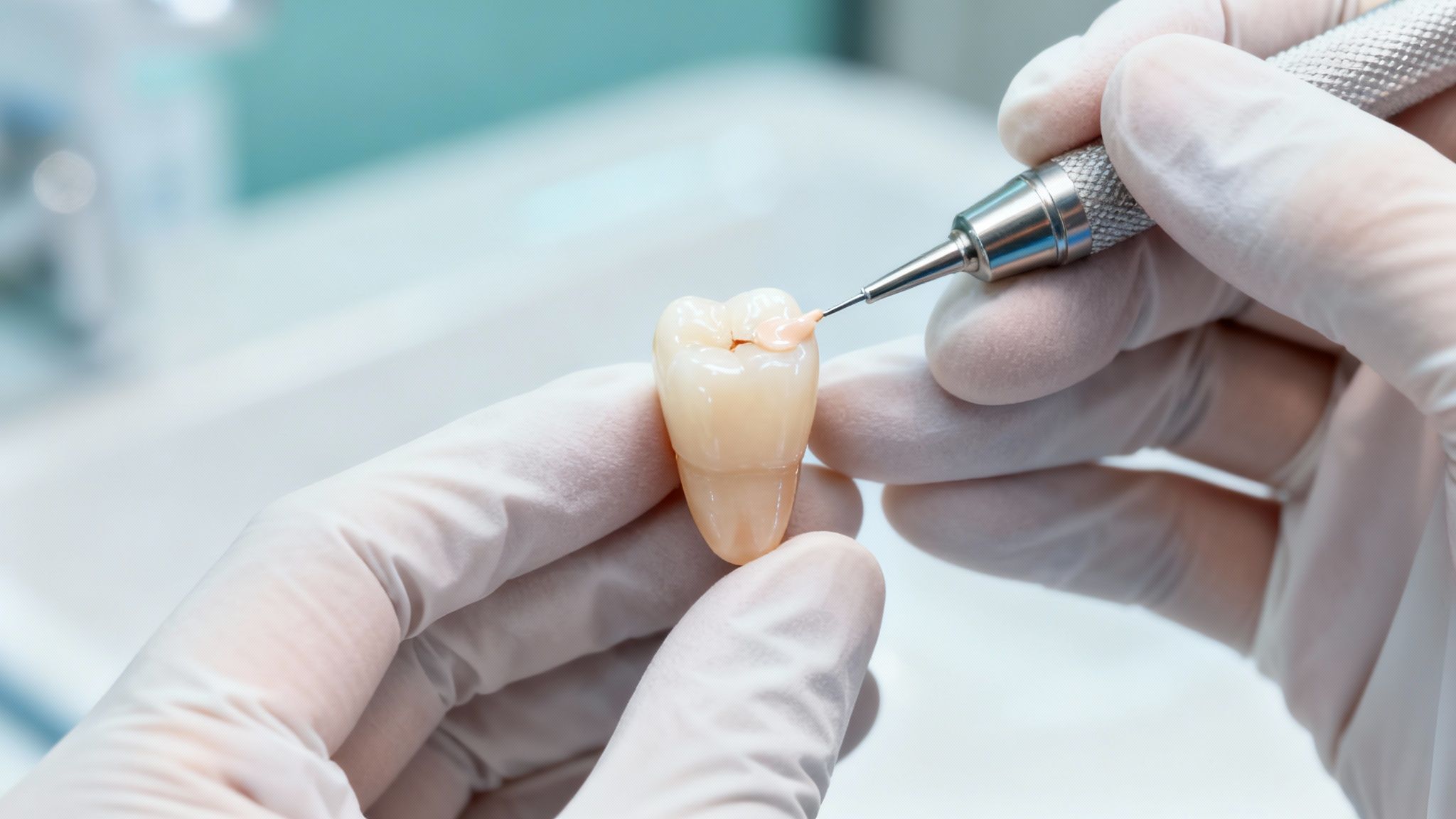
If you've got a small but annoying chip, especially on a front tooth, dental bonding is often the go-to solution. I like to think of it as a quick, artistic touch-up. It's perfect for restoring your tooth's natural shape without jumping into a major procedure, especially when the damage is more cosmetic than anything else.
The best part? It's surprisingly simple and usually wrapped up in just one visit. We essentially become sculptors, carefully rebuilding the part of the tooth that was lost. It’s a fast, effective, and affordable way to fix those minor imperfections and get you smiling confidently again.
How The Bonding Process Works
First things first, we find the perfect shade. Your dentist will meticulously select a composite resin—a tough, putty-like material—that’s a dead ringer for your natural tooth color. Getting this match right is what makes the final repair look completely seamless and natural.
After lightly preparing the tooth surface with a conditioning liquid to ensure a strong grip, the real artistry begins. The resin is applied and skillfully molded to fill in the chip, recreating the original, smooth contours of your tooth. Once everything looks just right, we use a special high-intensity light to harden, or cure, the material instantly. A final polish to match the sheen of your enamel, and you’re all done.
What To Expect From Your Bonded Tooth
Dental bonding is a fantastic fix, but it's good to go in with realistic expectations about its lifespan and how to care for it. The material is durable, but it’s not quite as tough as a natural tooth.
- Lifespan: With good home care, you can expect your bonding to last anywhere from 3 to 10 years before it might need a touch-up or to be replaced.
- Stain Potential: Composite resin can stain over time, unlike porcelain. So, if you're a big fan of coffee, tea, or red wine, you might notice some discoloration down the road.
- Bad Habits: Be mindful of chewing on hard things. Biting your fingernails, crunching ice, or chewing on pen caps can easily chip the bonding material.
Many of our patients in San Diego ask how bonding compares to other cosmetic options. It's a great question. We've put together a full breakdown in our article on dental bonding vs. veneers to help you understand which choice aligns best with your long-term smile goals.
For a fast, non-invasive repair for a minor chip, you really can't beat dental bonding. It delivers a beautiful result that restores your tooth—and your confidence—in a single, easy appointment.
When a Major Fracture Means You Need a Dental Crown
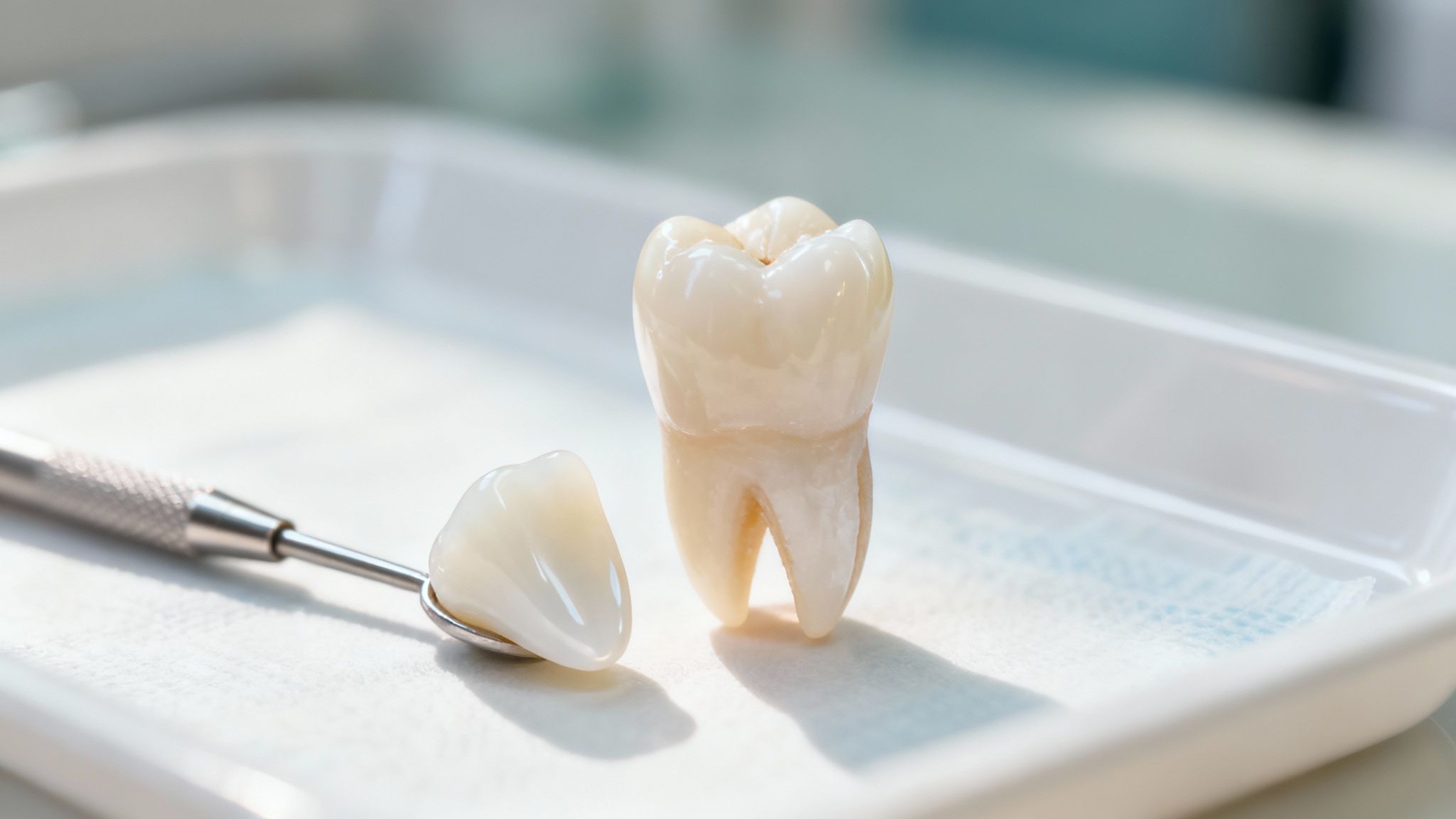
Sometimes a chip is more than a minor cosmetic issue—it’s a serious structural problem. If a big chunk of your tooth breaks off, especially from a molar that does all the heavy lifting when you chew, a simple fix like bonding just isn't going to cut it. That's when we turn to the gold standard for this kind of repair: a dental crown.
Think of a crown, or cap, as a custom-made helmet for your tooth. It’s designed to cover the entire visible part, giving it 360-degree protection. A crown brings the tooth back to its original shape and strength, holding it all together and preventing any more damage. It's the go-to solution when the tooth's fundamental integrity is at stake.
Scenarios Demanding a Dental Crown
Certain situations almost always point to a crown as the best long-term solution. Recognizing these can help you understand why your dentist might recommend this over a quicker fix. It’s all about ensuring the tooth can function properly for years to come.
A crown is typically the best option if:
- A large piece has broken off. This is especially true if a cusp (one of the main pointed parts of a back tooth) has fractured away.
- You can see deep cracks. A vertical crack is a red flag that the tooth could split apart completely. A crown acts like a band, holding it together.
- A chip reveals extensive decay. Often, a piece breaks off because a large cavity has been weakening the tooth from the inside out.
- The damaged tooth is a molar. Your back teeth take a beating. A crown is one of the only restorations tough enough to handle that kind of pressure on a compromised molar.
The Crown Placement Process
Getting a crown is a meticulous process, usually spread over two visits to make sure we get a perfect, durable fit. The goal is to restore both the look and the function of your tooth completely. Worried about pain during the crown placement? Here's what to expect: we make patient comfort a priority.
First, we’ll prepare the tooth. This involves removing any decayed areas and carefully shaping the remaining structure to create a solid base for the crown. Then, we take a precise impression, which goes to a dental lab where your permanent crown is custom-crafted. While the lab works its magic, you'll go home with a temporary crown to keep the tooth protected.
Thanks to modern fabrication tools like CAD/CAM dental technology, this process is more precise than ever. To get a feel for the entire journey, you can see a full breakdown in our guide to the dental crown procedure steps.
When you come back for your second visit, we’ll remove the temporary and check the permanent crown’s fit, color, and how it lines up with your bite. Once everything is just right, we cement it into place for good, and your tooth is back in business.
Materials Matter: Porcelain vs. Zirconia
The material used for your crown makes a huge difference in its appearance and how long it lasts. Today, the two most popular options are porcelain and zirconia, and each has its strengths.
Porcelain crowns are the artists of the dental world. They have a natural translucency that beautifully mimics real tooth enamel, making them a fantastic choice for highly visible front teeth.
Zirconia crowns, on the other hand, are the tanks. They are incredibly strong and resistant to chipping, so they’re the ideal pick for molars that need to withstand serious chewing forces.
Saving a Deeply Damaged Tooth with a Root Canal
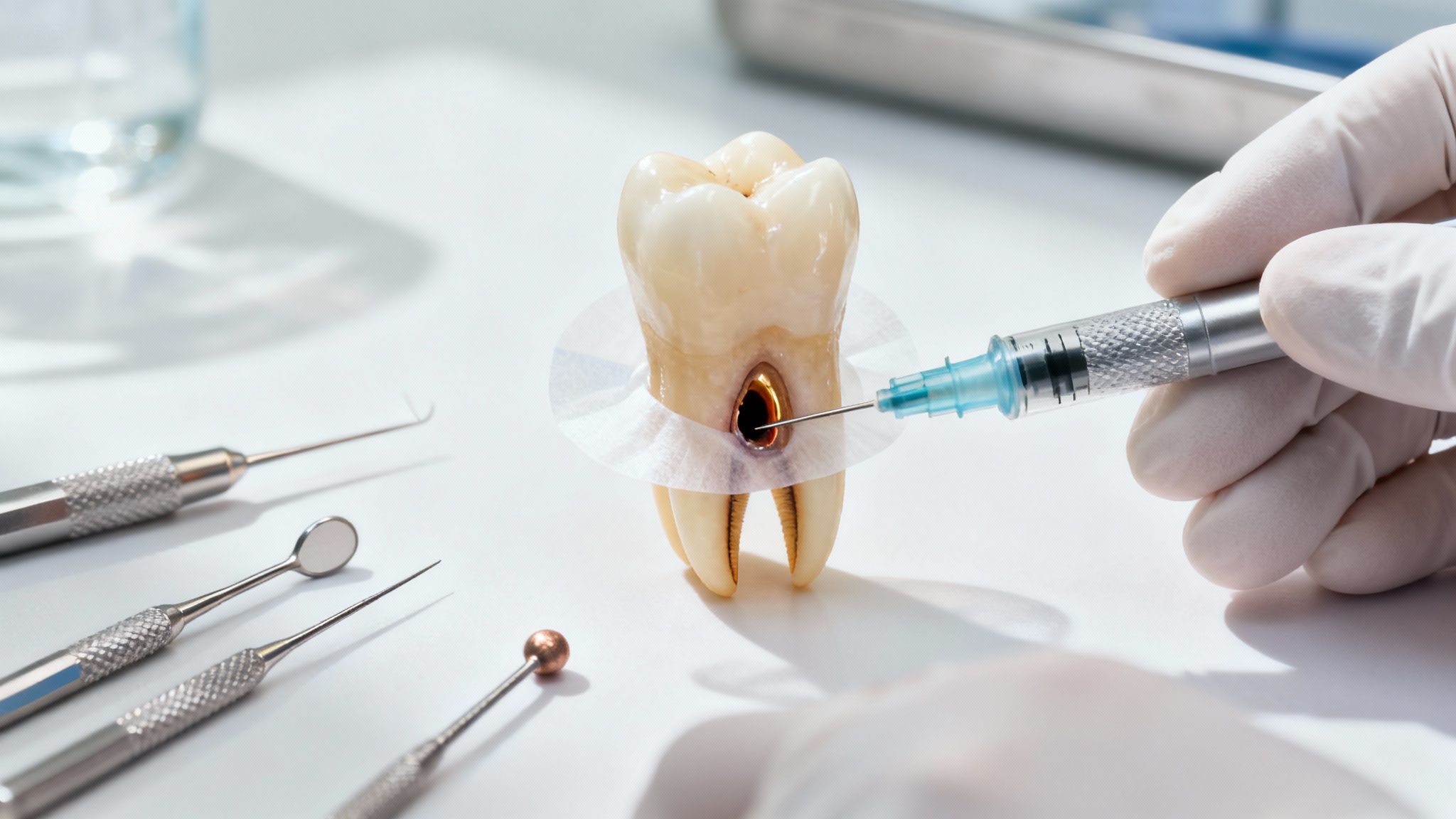
Sometimes, a chip is far more than just a cosmetic annoyance. If a fracture cracks open the tooth deep enough to expose the inner pulp—the live tissue containing nerves and blood vessels—you have a serious problem on your hands. This kind of trauma can trigger intense, throbbing pain and essentially opens a doorway for bacteria to invade, leading to a nasty infection.
In these severe cases, a root canal isn't just a suggestion; it's often the last line of defense to save your natural tooth. I know root canals have a scary reputation, but the reality is they are a pain-relieving procedure. They get rid of the source of the problem and stop an infection in its tracks, preventing a total tooth loss.
Signs You Might Need a Root Canal
When a nerve is exposed, your body doesn't usually whisper—it screams. You’ll likely know something is very wrong.
Keep an eye out for these classic symptoms after chipping a tooth:
- Lingering Pain: Sensitivity to hot or cold that hangs around for more than a few seconds is a major red flag.
- Intense, Throbbing Pain: This is a deep, persistent ache that can come out of nowhere and often feels worse when you lie down.
- Swollen Gums: The gums near the damaged tooth might feel tender, or you might even see a small, pimple-like bump.
- Discoloration: The tooth itself might start to look darker, taking on a grayish hue as the tissue inside begins to die.
If you notice any of these signs, don't wait. It’s a clear signal to call your dentist immediately. Acting quickly can truly be the difference between saving and losing your tooth. For a deeper dive into the procedure, check out our guide on root canal treatment in San Diego.
The Root Canal and Crown Combination
A root canal involves meticulously cleaning out the infected or inflamed pulp, disinfecting the tooth's inner canals, and then filling and sealing that empty space. This process gets rid of the infection and pain, but it also means the tooth no longer has an internal blood supply. Over time, this can make the tooth more brittle and prone to breaking.
That’s precisely why a dental crown is almost always the final, non-negotiable step.
A root canal saves the tooth from being pulled, but the crown is what saves the tooth from fracturing later on. It's a two-part solution: the root canal fixes the inside, and the crown provides vital protection on the outside.
Research from the American Association of Endodontists and other studies back this up completely. While teeth that undergo root canals generally have high survival rates, the outlook is grim without a crown. One study found a shocking two-year survival rate of only 20% for cracked teeth that had had a root canal but were never covered with a crown.
Simply put, placing a crown is critical for the long-term success of the tooth.
Common Questions About Fixing a Chipped Tooth
Once we've walked through the different ways to fix a chipped tooth, a few practical questions usually pop up. It's completely normal to wonder about things like cost, pain, and how to keep it from happening again. Getting these details sorted out will help you feel confident about what comes next.
Here are the straightforward answers to the questions I hear most often from our patients in San Diego.
Can a Chipped Tooth Heal On Its Own?
I get this one a lot. The short answer is, unfortunately, no. Your tooth enamel doesn't have living cells, so unlike a cut on your skin, it can't regenerate or repair itself.
Even a tiny chip that seems harmless can cause problems. It can create a rough edge that collects plaque or a weak spot that eventually turns into a much bigger crack.
The best thing you can do is have a dentist look at any chip, no matter how small. Ignoring it could turn a quick, easy fix into a much more involved and expensive procedure down the line.
How Much Does It Cost To Fix a Chipped Tooth in San Diego?
This is the big question for many people, and the cost really depends on how bad the damage is and which treatment we decide on. It’s a pretty wide range, so it's always best to get an exact quote from your dentist.
But to give you a ballpark idea:
- Dental Bonding: This is the most budget-friendly option for a small cosmetic chip. You can usually expect to pay somewhere between $100 to $400.
- Porcelain Veneer: If you have a larger chip on a front tooth, a veneer is a great solution. These typically run from $900 to $2,500 per tooth.
- Root Canal and Crown: For a seriously fractured tooth that needs both treatments, the total could be $1,500 to $3,500, sometimes more.
Payment and Insurance Options
The good news is that many dental insurance plans cover a portion of these costs, especially when the repair is necessary to get the tooth back to full health and function. At Serena San Diego Dentist, we believe quality dental care should be accessible. We accept most major PPO insurance plans for covered procedures like crowns and root canals. For cosmetic treatments or for patients who prefer flexibility, we also offer transparent out-of-pocket payment options and financing plans to fit your budget.
Is Getting a Chipped Tooth Fixed Painful?
Most of my patients are genuinely surprised at how painless these procedures are. Our number one priority is making sure you’re comfortable from start to finish.
For simple fixes like dental bonding or just smoothing a rough edge, you might not even need to be numbed. For more extensive work, like placing a crown or doing a root canal, we’ll use local anesthesia to make sure the area is completely numb. You won't feel any pain during the actual procedure.
Afterward, you might feel a little bit of soreness for a day or two, but it’s nothing that an over-the-counter pain reliever like ibuprofen can't handle.
How Can I Prevent My Teeth From Chipping Again?
Protecting your smile from another chip comes down to a few smart habits and a bit of proactive care.
Try to avoid chewing on hard things like ice, popcorn kernels, jawbreakers, or even pens and pencils. If you grind your teeth at night—a condition we call bruxism—a custom-fitted nightguard is an absolute must. And if you or your kids play contact sports, a mouthguard is non-negotiable.
Of course, keeping up with great daily oral hygiene and regular dental checkups will also keep your teeth strong and less likely to chip in the first place.
Ready to finally fix that chip and get your smile back to its best? The team at Serena San Diego Dentist is here to help you find the perfect solution. Schedule your consultation today by visiting https://serenasandiegodentist.com.