
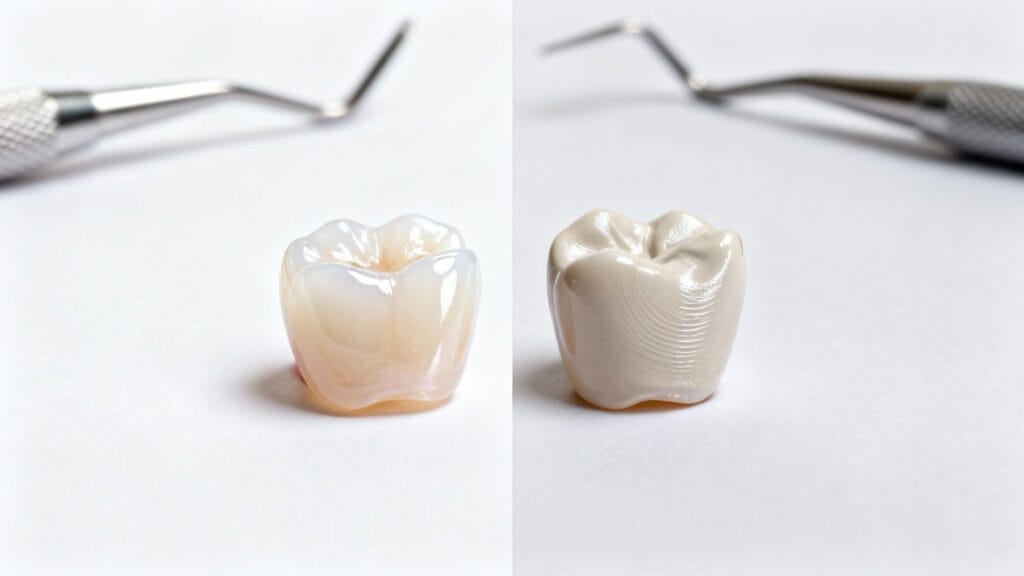
Tired of hiding your smile due to chipped, stained, or slightly misaligned teeth? In sunny San Diego, where a confident smile is always in style, choosing the right cosmetic dental treatment is the first step toward a major confidence boost. The choice between porcelain veneers and composite bonding often comes down to one key question: Are you looking for a long-term, complete smile overhaul or a quick, budget-friendly fix?
Porcelain veneers are the gold standard for a durable, stain-proof, and truly stunning smile transformation. On the other hand, composite bonding offers a fantastic solution that's faster, less invasive, and much easier on the wallet for correcting smaller cosmetic issues. This guide will walk you through the pros and cons of each, helping you decide which path to a perfect smile is right for you.
A Head-to-Head Smile Makeover Comparison
Making a decision about your smile can be tough, especially when both options sound so promising. Here in sunny San Diego, a brilliant smile is practically part of the uniform, so understanding the real-world differences between veneers and bonding is the best first step you can take. This guide will help you sort through the details and compare them directly.
We'll look at how each option handles common cosmetic problems—from little chips and stains to bigger concerns like gaps or slightly crooked teeth. You'll get a clear picture of the materials involved, what the procedure is actually like, and what you can realistically expect from your results over time.
Key Factors in Your Decision
Choosing the right treatment is about more than just how it looks. It's a personal decision that needs to balance your budget, your lifestyle, and what you hope to achieve for your dental health in the long run.
Here are the main things we'll compare:
- Aesthetics and Natural Appearance: How well does each option blend in and look like a real tooth?
- Durability and Lifespan: How many years can you expect your new smile to last before needing a refresh?
- Treatment Process and Time: What's the time commitment? Are we talking one afternoon or multiple appointments?
- Cost and Overall Value: What’s the price tag upfront, and what are the potential costs down the road?
To start, let’s get a bird's-eye view of how these two popular treatments stack up.
Porcelain Veneers vs Composite Bonding At a Glance
This table is a great starting point for seeing the core differences between veneers and bonding. It breaks down the most important factors side-by-side to give you a quick, clear summary.
| Feature | Porcelain Veneers | Composite Bonding |
|---|---|---|
| Material | High-grade dental ceramic | Tooth-colored composite resin |
| Durability | 10-20 years | 3-7 years |
| Stain Resistance | Excellent (non-porous) | Good (can stain over time) |
| Treatment Time | 2-3 visits over several weeks | 1 visit (typically 1-2 hours) |
| Invasiveness | Minimally invasive (enamel removal) | Non-invasive (no enamel removal) |
| Cost | Higher initial investment | More affordable upfront |
| Best For | Major smile transformations, durability | Minor chips, gaps, quick fixes |
As you can see, porcelain veneers are a bigger investment in both time and money, but they pay off with incredible durability and a flawless finish. Composite bonding, however, is the undisputed champ for fast, effective, and affordable results for less extensive issues.
Comparing Durability and Material Strength
When you're investing in your smile, you want it to last. This is where the choice between porcelain veneers and composite bonding really gets interesting. The materials themselves are fundamentally different, and that difference dictates how long your results will hold up against daily life. It’s one of the biggest distinctions between the two.
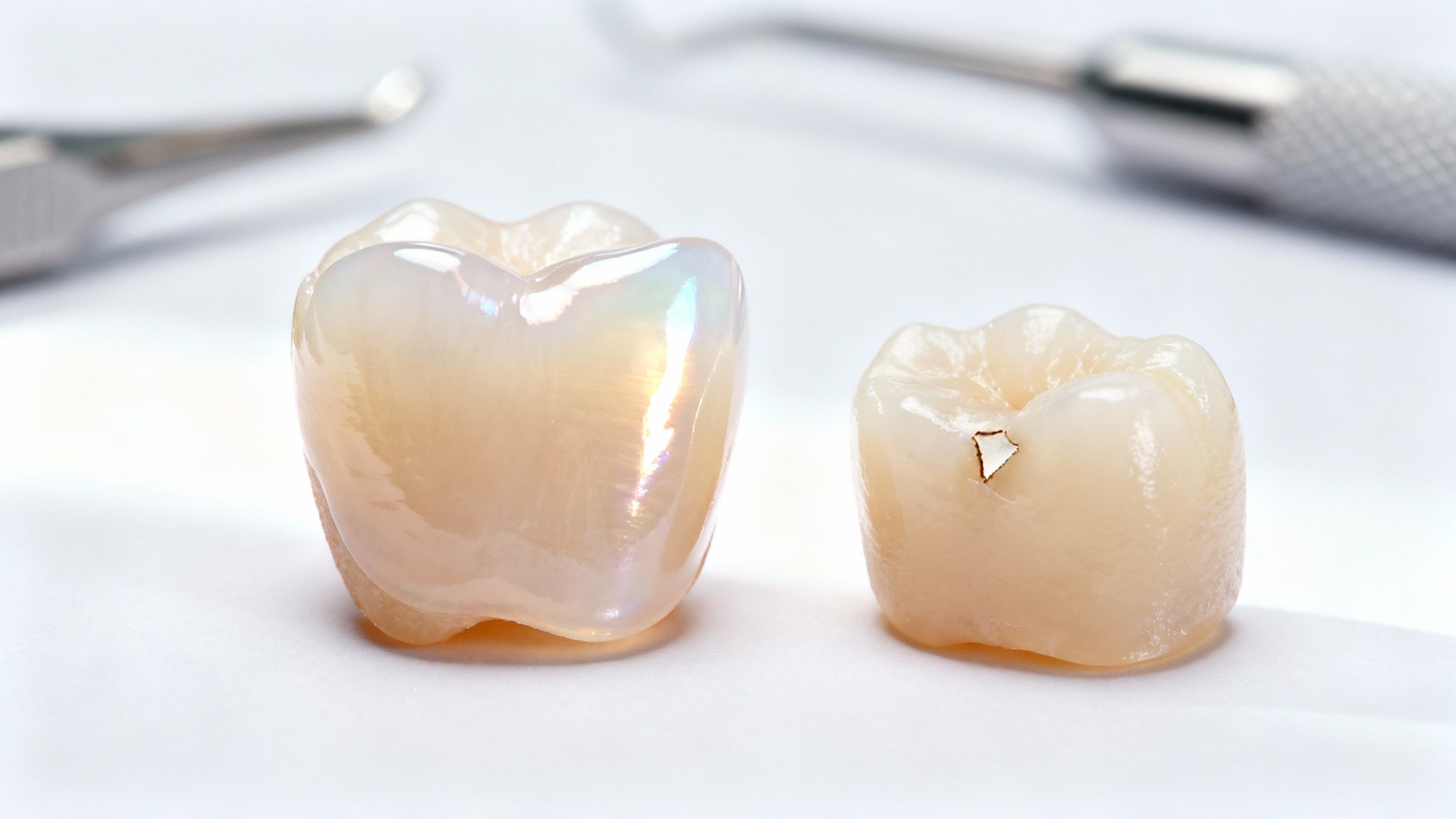
Think of porcelain veneers as custom-made, high-tech ceramic shields for your teeth. They are crafted from an incredibly dense, biocompatible material that is non-porous. It’s elegant, but it’s also remarkably tough.
Composite bonding, on the other hand, uses a specialized tooth-colored resin—a durable plastic mixed with fine glass particles. While today's composites are impressively strong, the material is naturally softer and more porous than dental ceramic. This one fact is the root cause of the major differences in lifespan and resilience.
How Porcelain Stands the Test of Time
The secret to porcelain's longevity is its robust, glass-like structure. These veneers are fired at incredibly high temperatures in a dental lab, which creates a hardened, non-porous surface that simply outperforms in a few critical ways.
- Exceptional Stain Resistance: Because porcelain isn't porous, it won’t soak up pigments from things like coffee, tea, or red wine. Your veneers stay the same bright, brilliant shade for their entire life.
- Superior Strength: The ceramic material is significantly harder than composite resin. This makes it highly resistant to chipping and fractures from everyday biting and chewing.
- Long-Term Stability: Porcelain doesn't warp, shrink, or change color over time. What you see is what you get, for years and years to come.
"The structural integrity of porcelain is its greatest asset. It’s engineered to function like natural tooth enamel, providing a durable and predictable solution for a long-lasting smile transformation."
This built-in strength translates directly to a much longer lifespan. Study after study backs this up. In fact, research shows that modern, ultra-thin porcelain veneers can have a 91% survival rate after 10 years—a truly impressive track record. Compare that to composite bonding, which has a reported 89% survival rate after just five years, and the long-term advantage becomes clear.
The Lifespan of Composite Bonding
Composite bonding is a fantastic and fast way to fix minor imperfections, but its material properties mean it won't last as long. The resin is applied and sculpted directly onto your tooth, making it more vulnerable to the wear and tear of daily life.
Over time, composite bonding faces a few key challenges:
- Susceptibility to Staining: The resin is porous, so it can absorb stains over the years. This can lead to discoloration that needs to be polished away or, eventually, replaced.
- Prone to Chipping: While it's a strong material, the resin isn't as hard as porcelain. It can chip or wear down, particularly on the biting edges of your front teeth.
- Requires More Maintenance: To keep it looking great, bonding often needs touch-ups or a complete replacement every 3 to 7 years.
This trade-off is at the heart of the porcelain veneers vs composite bonding decision. Composite bonding has a lower initial cost, but the expense of more frequent replacements can add up. Porcelain veneers, in contrast, are built to last, typically holding up for 10 to 20 years with proper care. If you're curious about what makes them so durable, you can learn more about how long porcelain veneers last and what you should know to get the most out of them.
The Aesthetic Difference in Your Smile
When you're choosing a cosmetic dental procedure, the end goal is always the same: a natural, brilliant smile you're proud to show off. While both porcelain veneers and composite bonding can get you there, they take very different paths, and the final look reflects that. The real aesthetic difference comes down to how each material plays with light and holds its color over the years.
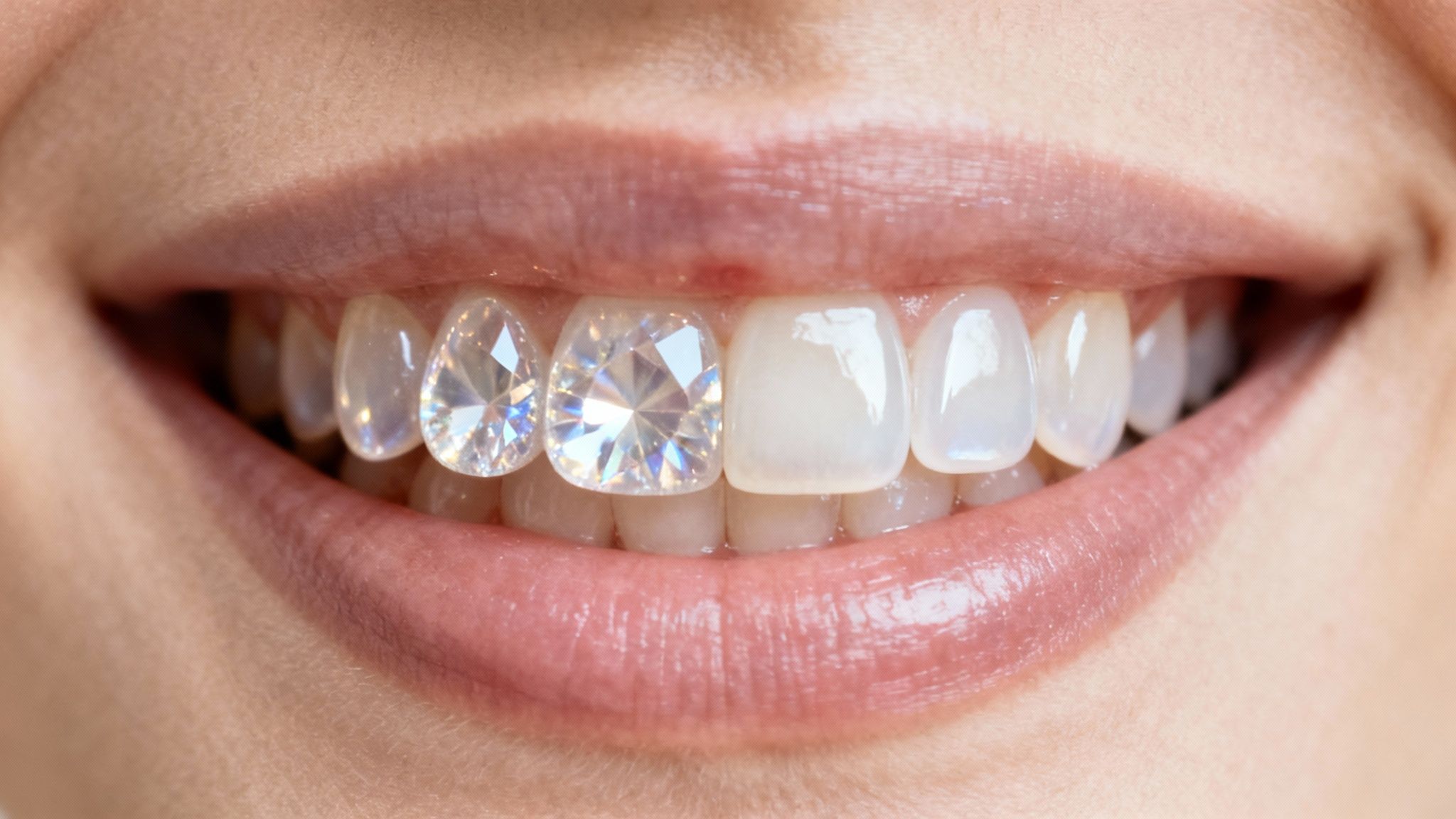
The secret ingredient to a truly lifelike smile is translucency. It’s that quality that lets light pass partway through the tooth’s surface, just like natural enamel. This is where porcelain has a clear advantage.
Porcelain: The Art of Mimicking Natural Enamel
Porcelain veneers are crafted from high-grade dental ceramic, a material celebrated for its incredible ability to replicate the light-handling properties of natural teeth. A talented ceramist in a dental lab meticulously layers the porcelain, blending varying degrees of translucency and opacity. The result is a restoration that looks so real it’s virtually impossible to tell it’s not your natural tooth.
This detailed process delivers:
- Natural Depth: Light doesn't just hit the surface and bounce off. It penetrates the veneer slightly before reflecting back, creating a depth that keeps teeth from looking flat or fake.
- Lifelike Luster: The glazed finish gives the porcelain a subtle, healthy sheen that blends seamlessly with your other teeth.
- Custom Color Matching: The color is baked right into the ceramic, so it’s completely stable and won't fade or change over the life of the veneer.
Because of this unparalleled aesthetic potential, porcelain veneers are the go-to for anyone dreaming of a complete smile makeover. They're perfect for correcting major cosmetic concerns across several teeth, giving you that consistently beautiful, camera-ready smile.
Composite Bonding: The Skill of Direct Artistry
Let’s be clear: modern composite bonding materials can create some stunning results. The process is a bit like sculpting, where the dentist applies the resin directly to your tooth and shapes it by hand, all in a single appointment. It's a true display of hands-on artistry.
However, the material itself has certain limitations when stacked against porcelain. Composite resin is naturally more opaque. A skilled dentist can certainly work wonders to create a natural-looking fix, but replicating the delicate translucency and depth of a real tooth is a tall order, especially on larger fixes.
For many San Diego residents, the choice comes down to the scope of their goals. Composite bonding is brilliant for small, targeted fixes, while porcelain provides a comprehensive, flawless aesthetic for a total smile transformation.
The Impact of Staining on Aesthetics
Beyond day one, the long-term look of your smile is hugely impacted by stain resistance. This is a massive differentiator in the porcelain veneers vs. composite bonding debate.
Porcelain’s non-porous ceramic surface is basically stain-proof. Think of it as a ceramic shield for your tooth; daily offenders like coffee, red wine, and tea simply can’t penetrate it. This means your veneers will stay the same bright, vibrant shade for a decade or even longer.
Composite resin, on the other hand, is a type of plastic, which means it's porous and will eventually soak up stains. While regular professional polishing helps, the bonding will likely need to be touched up or replaced every few years to keep it looking fresh. If staining is a major concern for you, it's worth understanding what causes tooth discoloration to begin with.
Ultimately, for those aiming for a total smile makeover, some people also look into complementary treatments. Combining a new smile with procedures like lip enhancement procedures helps frame the teeth perfectly, ensuring every part of your smile works in beautiful harmony.
A Look at the Financial Investment and Long-Term Value
When you're deciding between porcelain veneers and composite bonding, the financial side of things is obviously a huge factor. It’s easy to get focused on the initial price tag, but the real story is in the long-term value. We need to look beyond the cost per tooth and think about what your smile will truly cost to maintain over the next decade or two.
Porcelain veneers definitely have a higher upfront cost, and there's no getting around that. But with composite bonding, you're looking at a lower initial bill that often comes with the need for replacements every few years. Those recurring costs can really start to add up.
Upfront Costs: A Clear Comparison
There's a pretty significant difference in what you'll pay at the outset for these two treatments. Porcelain veneers are crafted by a skilled technician in a dental lab using high-end ceramic, which is a meticulous, artistic process. Composite bonding, on the other hand, involves your dentist applying and sculpting a resin material directly onto your teeth in one appointment, making it much more budget-friendly.
This initial cost difference is a central point in the porcelain veneers vs composite bonding debate. While bonding offers an accessible way to improve your smile, you have to think about the long run. When weighing your cosmetic options, it can also be helpful to compare these costs to others, like looking into professional teeth whitening costs.
Calculating the Total Cost of Ownership
To get a real sense of value, let's play this out over a hypothetical 15-year period. Porcelain veneers, while more expensive today, have an incredible lifespan of 10 to 20 years. In many cases, you pay for them once and you're set for a very long time.
Now, think about composite bonding in that same 15-year window. With a typical lifespan of 3 to 7 years, you would likely have to get it redone two, three, or maybe even four times. Each time, you're paying for the procedure again. Over a decade or more, those repeated expenses can easily match—or even surpass—the one-time investment in porcelain.
The decision often comes down to this: pay more now for a durable, long-lasting solution, or pay less now with the understanding that you will have recurring maintenance costs in the future.
Factoring in Repairs and Maintenance
Life happens. A stray olive pit or an accidental knock can cause damage, and this is one area where composite bonding has a clear financial edge.
- Composite Bonding Repairs: If you chip a bonded tooth, the fix is usually quick and affordable. Your dentist can simply add a bit of new composite resin to the damaged spot and blend it in.
- Porcelain Veneer Repairs: A porcelain veneer is a different story. Since it's a single, solid piece of ceramic, a major chip or crack almost always means the entire veneer has to be replaced, incurring the full cost of a new one.
The price gap between these treatments is significant. Porcelain veneers can run anywhere from $1,000 to $4,000 per tooth, while composite bonding is much less. However, when you remember that veneers last 10-15 years compared to bonding's 3-7 year lifespan, the long-term value of porcelain becomes much clearer. The cost of replacing bonding multiple times can certainly add up.
For anyone in the San Diego area weighing their options, getting a personalized cost breakdown is the best next step. You can learn more about the specific factors that influence porcelain veneers cost to get a better handle on your potential investment.
A Look at the Treatment Process and Timeline
When you're deciding between porcelain veneers and composite bonding, understanding the actual journey from start to finish is a huge factor. The time you'll spend in the chair and the number of visits are worlds apart. One is a quick, one-and-done fix, while the other is a carefully planned, multi-stage collaboration with a master dental lab.
Let's walk through what you can expect with each option, from your initial chat about your new smile to the final reveal.
The Multi-Visit Journey of Porcelain Veneers
Getting porcelain veneers isn't a rush job; it’s a meticulous craft that usually takes two to three appointments over a few weeks. This deliberate timeline ensures every single detail—from the exact shade of white to the way the light hits the surface—is absolutely perfect. Think of it as a journey toward a permanent, flawless smile.
The process is broken down into a few key stages:
- Consultation and Smile Design: This first meeting is all about the vision. We’ll talk about your goals, take some digital scans, and start designing the smile you've always wanted. This is where we lock in the ideal shape, size, and color for your veneers.
- Tooth Preparation: For the veneers to sit flush and look completely natural, a tiny layer of enamel—often less than a millimeter—is gently buffed from the front of the teeth. We make sure you're comfortable with a local anesthetic for this step.
- Impressions and Temporaries: Next, we take super-accurate digital impressions of your prepared teeth. This blueprint is sent to a specialized dental lab where a master ceramist will handcraft your custom veneers. You won't leave with prepped teeth; you'll get a set of beautiful temporary veneers to wear in the meantime.
- Final Bonding: This is the big day. Once your permanent veneers arrive from the lab, you’ll come back in. We'll remove the temporaries, double-check the fit and color of your new veneers, and then permanently bond them to your teeth with a powerful dental adhesive.
This multi-step approach is exactly why porcelain delivers such lifelike, durable results. It’s a time investment that pays off with a stunning transformation built to last. To see how we bring these smiles to life, check out our guide on the porcelain veneers smile design process.
The Single-Visit Efficiency of Composite Bonding
If you're looking for speed and convenience, composite bonding is your go-to. The whole procedure is almost always done in a single visit, sometimes in just an hour or two, depending on how many teeth we're working on. It’s an amazing solution for anyone in San Diego who wants to see immediate results.
Here’s a look at the streamlined process:
- Tooth Surface Prep: First, the tooth surface is lightly etched. This creates a microscopic texture that gives the bonding material something to grip onto, ensuring it stays put. Anesthesia is rarely needed for this.
- Applying the Bonding Agent: A conditioning liquid is brushed onto the tooth, acting like a primer to create a super strong bond.
- Sculpting the Resin: The tooth-colored composite resin, which feels a bit like putty, is applied directly to your tooth. Your dentist then skillfully sculpts and shapes it by hand to create the desired look.
- Hardening and Polishing: A special curing light hardens the resin in just a few seconds. Once it's solid, your dentist will trim, shape, and polish it until it blends seamlessly with your natural teeth.
Composite bonding is pure hands-on artistry performed right in the dental chair. The final result is achieved in one sitting, making it the perfect choice for fixing minor chips, closing small gaps, or making subtle tweaks without a major time commitment.
Choosing the Right Procedure for Your Goals
Deciding between porcelain veneers and composite bonding really hinges on what you want to achieve, what you're willing to spend, and how you view the long-term commitment. One gives you a complete, lasting smile overhaul, while the other is more of a quick, targeted, and reversible touch-up.
To figure out which path is right for you, let's look at who each procedure is really for. Understanding the ideal candidate is the best way to navigate the porcelain veneers vs composite bonding choice.
The Ideal Candidate for Porcelain Veneers
Porcelain veneers are the gold standard for anyone seeking a dramatic and permanent smile upgrade. If you have several cosmetic issues you want to address all at once, veneers offer a powerful, comprehensive solution.
You’re probably a perfect candidate for porcelain veneers if:
- You're looking for a total smile transformation. You want to correct multiple things at once, like deep stains, noticeable gaps, slightly crooked teeth, or worn-down shapes.
- Durability is your number one priority. You want a "one-and-done" solution and are ready to invest more upfront for a smile that can last 10 to 20 years with good care.
- You want that flawless, celebrity-grade finish. The incredible way porcelain mimics the translucency and shine of natural enamel is a big draw for you.
- You’re committed to the process. You understand that removing a thin layer of enamel makes the procedure irreversible and are prepared for a few appointments to get it just right.
For the patient who dreams of a permanently bright, perfectly aligned, and incredibly resilient smile, porcelain veneers are the clear winner. Think of it as a long-term investment in your confidence.
The Ideal Candidate for Composite Bonding
Composite bonding is a fantastic option for people with minor imperfections who want a fast, effective, and minimally invasive fix. It’s often a great first step into cosmetic dentistry.
Composite bonding is likely the right fit for you if:
- You have minor cosmetic issues. Your concerns are small—a little chip here, a tiny crack there, a single stained tooth, or closing a small gap between your teeth.
- You're working with a budget or just need a quick result. You’re looking for a more affordable treatment that delivers instant gratification, often in a single visit.
- You like that the procedure is reversible. The fact that bonding doesn't permanently alter your natural tooth structure is a huge plus, keeping your options open down the road.
- You don't mind a bit of maintenance. You understand the composite material can stain over time and might need polishing or replacement every 3 to 7 years.
The infographic below really spells out the difference in the journey for each procedure. It shows the multi-step, lab-focused process for veneers versus the direct, in-chair application for bonding.
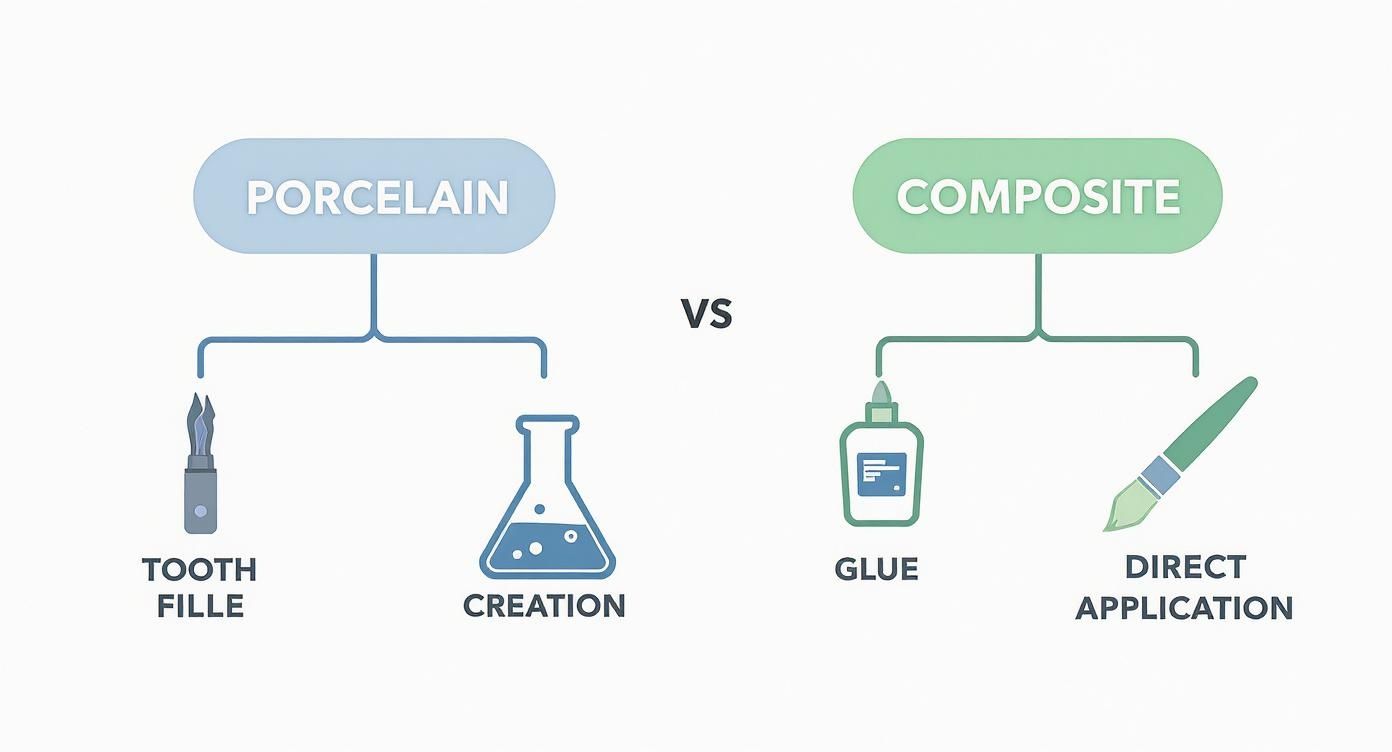
As you can see, both paths lead to a beautiful smile. But the road to porcelain involves a couple of visits and precise lab work, while composite bonding is all about your dentist’s hands-on artistry in a single appointment.
Your Veneer and Bonding Questions, Answered
Deciding between porcelain veneers and composite bonding is a big step, and it's normal to have a few lingering questions. To help you feel completely confident, we've pulled together the most common questions we get from our patients right here in San Diego.
Can I Whiten My Veneers or Bonding Later?
This is a really important one: neither porcelain nor composite resin will whiten with traditional bleaching treatments. The color we choose is the color they'll stay.
That's why we always recommend whitening your natural teeth before your veneer or bonding procedure. This way, we can match the restoration to your newly brightened smile, giving you a beautiful, uniform look. If your veneers or bonding get stained over time, a professional polishing can help, but eventually, they may need to be replaced to restore their original shade.
Is the Procedure for Veneers or Bonding Painful?
Your comfort is our absolute priority, and we make sure both procedures are as pain-free as possible. Worried about pain during your procedure? Here’s what you can expect.
- Composite Bonding: This is a very gentle process. Since we're just adding and sculpting material onto the tooth's surface, most people don't need any anesthetic at all. It's generally painless.
- Porcelain Veneers: This process involves shaving off a wafer-thin layer of enamel. To make sure you don't feel a thing, we use a local anesthetic to completely numb the area. Some people have a little bit of tooth sensitivity for a few days afterward, but it's temporary and totally manageable.
The simplest way to think about it is that bonding is additive (we're adding to the tooth), while veneers are preparative (we're preparing the tooth). Either way, we ensure you're comfortable, but the anesthetic with veneers guarantees a pain-free prep stage.
How Do I Take Care of My New Smile?
The great news is that caring for veneers or bonding is pretty much the same as caring for your natural teeth. Consistency is key.
Here’s your simple daily routine:
- Brushing: Use a soft-bristled toothbrush and a non-abrasive toothpaste twice a day. This keeps them clean without scratching the surface.
- Flossing: Floss every day to clear out plaque from between your teeth and along the gumline. This is crucial for the health of the gums supporting your restorations.
- Avoiding Hard Items: Don't use your teeth as tools! Steer clear of biting down on things like ice cubes, hard candy, or your fingernails, as this can cause them to chip or crack.
And of course, keep up with your regular dental check-ups and cleanings so we can keep an eye on everything and make sure your smile stays healthy.
Will My Dental Insurance Cover Veneers or Bonding?
Most of the time, insurance companies see porcelain veneers and composite bonding as cosmetic procedures, so they typically aren't covered. These treatments are primarily for improving the look of your smile, not for a medical reason.
However, there are some exceptions. If a tooth is chipped, broken, or damaged by decay, your insurance might cover a portion of the cost to restore it with bonding or a veneer. It's always best to check with your provider for a pre-treatment estimate. At Serena San Diego Dentist, we proudly accept most major PPO insurance plans and are happy to help you navigate your benefits.
Your Smile Investment: Payment and Accessibility
At Serena San Diego Dentist, we believe a beautiful, confident smile should be accessible. We work with most major insurance plans for any covered restorative services and offer flexible out-of-pocket payment options to fit your budget. Whether you prefer to use your PPO plan or explore financing options, our team is here to create a financial plan that works for you, ensuring cost doesn't stand in the way of your dream smile. We don't quote specific prices online, but we invite you to contact us for a personalized estimate.
Ready to figure out the perfect solution for your smile? The expert team at Serena San Diego Dentist is here to give you a personalized consultation, helping you weigh the pros and cons of porcelain veneers vs. composite bonding for your specific goals. Let us help you achieve the smile you've always wanted.
Schedule your free consultation today!