

Having your wisdom teeth removed is a common dental rite of passage, often recommended to prevent future pain and protect your long-term oral health. As the last molars to arrive, there often isn't enough space in a modern jaw for them to erupt properly. This can lead to a host of problems like impaction, crowding, and painful infections. We understand that the thought of oral surgery can be nerve-wracking, which is why we've created this guide to walk you through every step, from understanding the "why" to navigating a smooth recovery.
Why Do So Many People Need Their Wisdom Teeth Out?
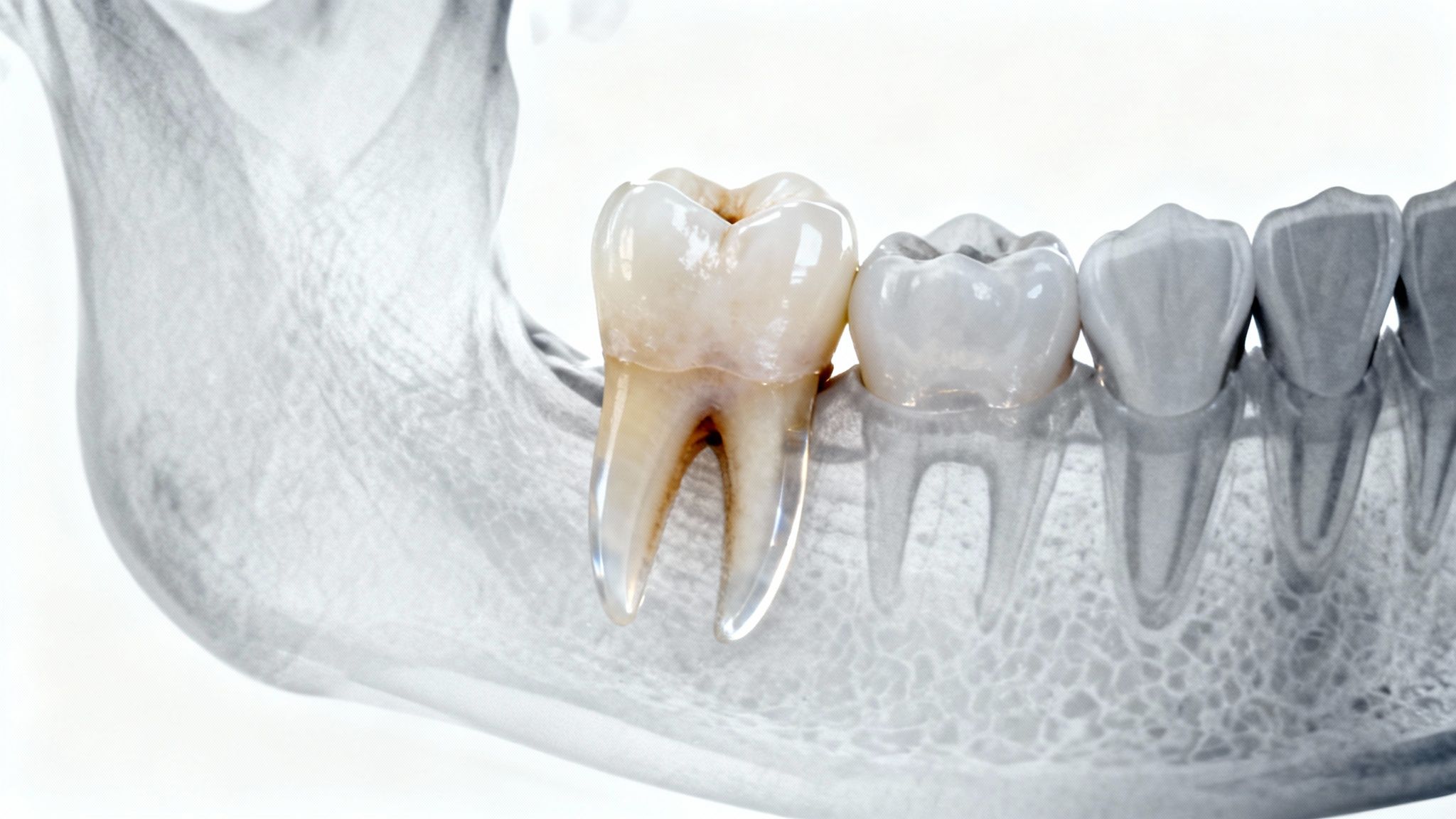
It often begins with a subtle, persistent ache in the very back of your jaw. For millions of people, this is the first hint that their third molars—the wisdom teeth—are on the move. So, why is the arrival of these teeth so frequently met with a recommendation for extraction?
Think of your jaw as a fully booked theater. By the time your wisdom teeth make their appearance (usually between the ages of 17 and 25), all your other permanent teeth have already settled into their designated spots. This leaves little to no room for the newcomers to emerge without causing a significant disruption.
The Problem of Impaction and Overcrowding
When a wisdom tooth doesn't have enough room to grow, it can become stuck, or impacted. This means it might remain trapped beneath the gum line or attempt to erupt at an awkward angle, pushing sideways into the adjacent molar. An impacted tooth can become a major source of trouble, causing pain, shifting other teeth out of alignment, and even damaging their roots.
This isn't a rare issue. In fact, studies show that about 85% of adults have at least one impacted wisdom tooth, making extractions one of the most common oral surgery procedures performed today.
This lack of space is the primary reason our team at Serena San Diego Dentist recommends an evaluation in your late teens. A proactive check-up allows us to spot potential issues with advanced imaging and prevent complications before they start.
Heading Off Future Dental Headaches
Ignoring a problematic wisdom tooth can set off a domino effect of oral health issues. Tucked away at the back of your mouth, they are notoriously difficult to brush and floss effectively, making them a perfect breeding ground for plaque and harmful bacteria.
Here’s a quick overview of the most common reasons a dentist will recommend removing your wisdom teeth.
Top Reasons for Wisdom Tooth Extraction
| Reason | What It Means for Your Oral Health |
|---|---|
| Impaction | The tooth is stuck and can't erupt properly, leading to pain and damage to adjacent teeth. |
| Overcrowding | There isn't enough room in your jaw, causing other teeth to shift and become crooked. |
| Pericoronitis | Painful swelling and infection of the gum tissue around a partially-erupted wisdom tooth. |
| Tooth Decay | The tooth is hard to clean, making it (and the one next to it) highly susceptible to cavities. |
| Cysts or Tumors | In rare cases, a sac of fluid can form around the impacted tooth, damaging the jawbone. |
| Chronic Pain | Constant pressure from the tooth can cause persistent jaw pain, stiffness, and headaches. |
By addressing these issues proactively, we can protect your overall oral health and save you from dealing with more complex and painful problems down the road. You can learn more about the procedure by reading this guide on Wisdom Teeth Removal. Ultimately, this proactive approach is all about keeping your smile healthy and comfortable for years to come.
Key Signs You Might Need Your Wisdom Teeth Removed

So, how can you tell if that nagging ache in the back of your jaw is just a minor annoyance or a signal of a real problem brewing? Your body is excellent at sending out warning signs when your wisdom teeth start causing trouble. Recognizing these symptoms early can save you from more serious complications and escalating pain down the road.
The most common red flag is persistent pain or a dull ache right behind your last molars. You might feel it radiate through your jaw, and it often worsens when you’re chewing. This is typically the first clue that a wisdom tooth is impacted—stuck under the gums—or is beginning to crowd its neighbors.
Beyond Just a Toothache
While pain certainly gets your attention, problematic wisdom teeth can create a variety of other issues. The ripple effect can impact your gums, jaw, and even your sinuses. Keep an eye out for these tell-tale symptoms, as they almost always point to a wisdom tooth issue.
- Swollen, Tender, or Bleeding Gums: If the gum tissue at the very back of your mouth is red, puffy, and sensitive to the touch, it’s often due to a partially erupted wisdom tooth causing inflammation.
- Jaw Stiffness and Difficulty Opening Your Mouth: Swelling from an impacted tooth can make your jaw feel tight and sore, making it tough to open your mouth fully without discomfort.
- Recurring Bad Breath or a Foul Taste: When a wisdom tooth only partially breaks through, it creates a small gum flap. This is a perfect hiding spot for food particles and bacteria, leading to a localized infection called pericoronitis that’s difficult to clean and often causes a bad taste or odor.
- Sinus Issues: This one often surprises people. The roots of your upper wisdom teeth are located just below your sinus cavity. An impacted upper tooth can push on the sinuses, causing pain, pressure, and congestion that you might otherwise mistake for allergies.
It’s especially important to recognize the signs of an infected wisdom tooth, because an infection can cause serious pain and even spread if not treated promptly.
When to See a Professional
Sometimes, the evidence is something you can see. You might notice a tooth poking through at a strange angle or feel your other teeth starting to shift and become crowded. These are not signs you should ignore.
Think of these symptoms as your body's alarm system. It's telling you it’s time to see a dentist. A quick X-ray at our San Diego office is all it takes to see exactly what’s happening below the gumline and confirm if your wisdom teeth are the culprits.
Putting off that visit can lead to much bigger problems, like cysts, damage to healthy molars, or widespread infection. Don't wait for the pain to become unbearable. Getting it checked out early makes the entire process of extractions of wisdom teeth much smoother and less complicated.
What to Expect During Your Extraction Appointment
Walking into an appointment for oral surgery can feel a little intimidating, but knowing what to expect can make all the difference. Understanding the process step-by-step helps turn uncertainty into confidence. The entire procedure for extractions of wisdom teeth is carefully planned with your safety and comfort as the top priorities. Here at Serena San Diego Dentist, we ensure you feel informed and relaxed from the moment you walk through our doors.
It all begins with an initial consultation. During this first visit, we'll take digital X-rays to get a crystal-clear picture of what your wisdom teeth are doing. This allows us to see their exact position, how their roots have developed, and whether they're impacting neighboring teeth or your jawbone. This detailed view is crucial for planning the safest and most effective removal method.
Your Personalized Consultation and Plan
Once we have your X-rays and have completed a thorough examination, we’ll sit down with you to discuss what we see. We'll explain why we recommend an extraction and walk you through the specific type of procedure that’s right for your situation.
Generally, there are two types of extractions:
- Simple Extraction: This is performed when a wisdom tooth has fully erupted and is clearly visible in your mouth. Think of it like removing any other tooth—it’s a relatively straightforward process.
- Surgical Extraction: This is necessary when a tooth is impacted, meaning it’s stuck under the gum line or has only partially emerged. This involves a minor, precise surgery where a small incision is made in the gum to access the tooth.
This first meeting is the perfect time to ask us anything that’s on your mind. We are committed to ensuring you feel completely comfortable and on board with the plan before moving forward.
Ensuring Your Comfort with Anesthesia
Let's address one of the biggest concerns most people have: pain. We want to be very clear about this: you will not feel pain during the procedure. Modern anesthesia is incredibly effective at ensuring you have a comfortable and pain-free experience.
We'll discuss the best option for your situation, which typically includes one of the following:
- Local Anesthesia: This completely numbs the area around the tooth, but you remain fully awake and aware. It’s the standard for most simple extractions.
- Sedation Anesthesia: If you feel anxious or are undergoing a more complex surgical extraction, sedation can help you reach a state of deep relaxation. You'll technically be conscious but will likely remember little to nothing about the procedure.
At Serena San Diego Dentist, your comfort is our highest priority. We will help you choose the right level of anesthesia to make your experience as stress-free as possible. For a deeper look into our approach, you can learn more about how we ensure sedation dentistry is safe and effective for our patients.
The Step-by-Step Extraction Process
Once you’re comfortable and the area is completely numb, the extraction can begin. Whether it's a simple removal or a surgical procedure, the goal is always the same: to remove the tooth as gently and efficiently as possible.
- Accessing the Tooth: For a surgical extraction, a small, precise incision is made in the gum tissue. This exposes the impacted tooth and the surrounding bone.
- Removing the Tooth: Sometimes, it’s easier to remove the tooth in smaller, more manageable sections. This technique is actually gentler, as it minimizes pressure on your jaw and means less bone needs to be disturbed.
- Cleaning and Closing the Site: After the tooth is out, we will thoroughly clean the area to ensure no debris is left behind. We might use a few stitches—often the kind that dissolve on their own—to close the gums and promote proper healing.
- Controlling Bleeding: The final step is to place a folded piece of sterile gauze over the extraction site. We’ll ask you to bite down on it gently. This pressure is key to helping a protective blood clot form, which is the first and most critical step in the healing process.
The entire appointment, from check-in to heading home, is designed to be as smooth as possible. Our compassionate team will be right there with you at every stage, making sure you feel cared for and prepared for a smooth recovery.
Navigating Your Recovery and Aftercare
The procedure is over, and now comes the most important part: your recovery. A smooth healing process really comes down to smart, gentle aftercare. Think of the next few days as a dedicated rest period where following a few simple rules will make all the difference in helping your body heal quickly and correctly.
Your primary job is to protect the empty tooth sockets. Immediately after the extraction, a blood clot forms in each one. This clot is nature's perfect bandage, shielding the underlying bone and nerves. Your entire aftercare routine is designed to keep this crucial clot safe and sound.
The First 24 Hours: Your Healing Blueprint
The first day is the most critical for setting yourself up for a successful recovery. The focus is on managing any discomfort, minimizing swelling, and allowing the healing process to begin without interruption.
Here’s a simple checklist to guide you through this initial period:
- Control Bleeding: Keep the sterile gauze we placed over the site for at least 30-60 minutes. If you're still bleeding slightly after that, replace it with a fresh piece and apply firm, gentle pressure.
- Manage Swelling: Use an ice pack on the outside of your cheek for 20 minutes on, then 20 minutes off. This is a game-changer for reducing inflammation, especially in the first 24 hours.
- Rest and Elevate: Plan to take it easy. Seriously. Avoid any heavy lifting or strenuous activity. When you lie down, prop your head up with an extra pillow to help reduce swelling.
- Pain Medication: It's wise to take your prescribed pain medication before the local anesthetic completely wears off. Staying ahead of the pain is much easier than trying to manage it after it has set in.
During this time, you must avoid anything that could dislodge that protective blood clot. That means no vigorous rinsing, no spitting, and absolutely no smoking or using straws. The suction from these actions can easily dislodge the clot, leading to a painful complication known as a dry socket.
The extraction process itself is carefully planned from start to finish to ensure you're comfortable and the procedure is smooth. This visual breaks down the key steps.
As you can see, the journey from the initial consultation to the final extraction is a methodical process focused on your safety and comfort.
Your Diet and Hygiene in the First Week
Once you're past the first day, you can slowly start easing back into your routine, but your mouth still requires special attention. Swelling typically peaks around day two or three before it begins to subside.
What you eat will be a huge factor in how you feel. For the first couple of days, stick to soft, cool foods that don't require any real chewing.
Safe Foods for Recovery:
- Smoothies (but remember, no straws! Use a spoon.)
- Yogurt and pudding
- Applesauce
- Mashed potatoes
- Lukewarm soups and broths
Stay away from anything hot, spicy, crunchy, or seedy. These can irritate the healing tissue or get stuck in the extraction sites. You can gradually reintroduce more solid foods as you feel comfortable, usually after day three or four.
Keeping your mouth clean is also key. After the first 24 hours, you can start gently rinsing with a warm saltwater solution (a half-teaspoon of salt in a cup of warm water) after meals. This helps keep the area clean. When you resume brushing, just be extra careful around the extraction sites.
To give you a clearer picture, here's a general timeline for what to expect during that first week.
Wisdom Tooth Recovery Timeline At-a-Glance
| Timeframe | What to Expect | Key Aftercare Tips |
|---|---|---|
| First 24 Hours | Some bleeding, swelling, and discomfort. Numbness from anesthesia will wear off. | Use gauze for bleeding, ice packs for swelling (20 min on/off), take pain meds, rest with head elevated. |
| Days 2-3 | Swelling and bruising may peak. Discomfort is still common. | Continue with soft foods. Start gentle warm salt water rinses after meals. Avoid strenuous activity. |
| Days 4-7 | Swelling and discomfort should be noticeably improving. | Slowly reintroduce more solid foods as comfort allows. Continue salt water rinses and gentle brushing. |
This table is just a guide—everyone heals at their own pace. The most important thing is to listen to your body.
At Serena San Diego Dentist, we send every patient home with detailed, personalized aftercare instructions. Following them closely is the single best thing you can do to avoid complications and ensure your healing is as fast and comfortable as possible.
For an even more detailed guide, you can read our advice on what you should do after a tooth removal. A little diligence in the first week pays off, letting you get back to your life without any setbacks. Remember, your body is working hard to heal—your job is to give it the support it needs.
Let's Talk About the Cost of Wisdom Tooth Removal
It's completely normal for one of the first questions on your mind to be, "What is this going to cost?" Getting a clear picture of the financial side of your procedure can relieve a lot of stress and let you focus on what really matters—your health. The final cost for wisdom tooth extraction isn't a single set price; it really depends on your unique situation.
The biggest factor influencing the cost is the complexity of the extraction. A straightforward removal of a fully erupted tooth is a different procedure than a surgical extraction for an impacted tooth stuck under the gums. The number of teeth being removed will also play a significant role in the total investment.
How Dental Insurance Helps
Here's the good news: most dental insurance plans provide some level of coverage for wisdom tooth removal, especially when it's considered medically necessary to prevent issues like pain, infection, or damage to other teeth. At Serena San Diego Dentist, we're in-network with most major PPO insurance plans, and our goal is to help you maximize your benefits and make care as affordable as possible.
Navigating insurance benefits can feel like solving a puzzle. Your plan's coverage will depend on specifics like your deductible, copay, and annual maximums. Don't worry, though—our team is experienced in working with insurance companies. We can help you get a clear understanding of your coverage before your procedure.
We believe in total transparency. Our front office team will work with you to verify your benefits and provide a detailed cost estimate. You'll know what to expect from the start, with no surprises.
Payment and Financing Options to Fit Your Budget
Even with great insurance, we know that out-of-pocket expenses can be a concern. We never want cost to be a barrier to getting the care you need, which is why we offer several flexible payment options.
Whether you're paying directly or are interested in a financing plan to break the cost into smaller, manageable monthly payments, we will find a solution that works for you.
So, instead of letting financial worries build, simply have a conversation with us. We can walk you through the options and find the best path forward. For a deeper dive into how different plans work, you can learn more about navigating dental insurance in our guide.
Your health and comfort are our top priorities. By offering clear, straightforward financial options, we aim to ensure nothing stands in the way of you receiving the excellent dental care you deserve right here in San Diego.
How Age and Other Factors Influence Extractions
One of the first questions patients often ask is, "Is there a perfect age to get my wisdom teeth out?" While everyone's situation is unique, timing does make a significant difference in how smoothly the procedure and recovery go. Most dental professionals agree there's an optimal window.
That "sweet spot" is typically between the ages of 17 and 25. During these years, the roots of the wisdom teeth are still developing and haven't fully fused into the jawbone. It’s like pulling a young sapling from the ground versus trying to uproot a fully grown tree—the less developed the roots, the easier the removal.
The Advantage of Youth in Dental Surgery
For patients in their late teens and early twenties, the benefits of addressing wisdom teeth sooner rather than later are clear, affecting both the surgery and the healing process.
- Softer Jawbone: A younger jawbone is not as dense, which allows a surgeon to remove the tooth with less force.
- Immature Roots: Shorter, underdeveloped roots are far less likely to be curved or entangled with nearby nerves, which dramatically reduces the risk of complications.
- Faster Healing: Your body's ability to heal is at its peak during this phase of life, which almost always leads to a quicker, smoother recovery.
The modern approach isn’t a one-size-fits-all rule but a personalized evaluation. At Serena San Diego Dentist, we use detailed X-rays to assess your unique anatomy and determine the ideal course of action for your long-term oral health.
Why Waiting Can Complicate Extractions
As we get older, wisdom tooth removal becomes a different challenge. We perform extractions on patients over 30 all the time, and they are perfectly safe, but they can come with a different set of considerations. By that age, the jawbone is denser, and the tooth’s roots are fully formed, often longer and more anchored, which can make the procedure more involved.
This isn't just an observation; research backs it up. The peak age for extractions is between 17 and 25, a time when wisdom teeth become impacted in an incredible 85% of cases. Data shows that by age 25, about half of all adults have had at least one wisdom tooth removed. For older patients, the risks increase—one study found that individuals over 40 faced 4.8 times higher complication rates. These deeply embedded teeth often present with infections, cysts, or decay, making the need for removal more urgent and complex. To explore the data yourself, you can learn more about these dental findings.
Ultimately, the decision is always made collaboratively between you and your dentist. Whether you're 18 or 48, our team in San Diego is here to provide an expert evaluation, explain your options clearly, and create a plan that prioritizes your safety and comfort for any extractions of wisdom teeth.
Your Wisdom Tooth Questions, Answered
It's completely normal to have a few lingering questions before any dental procedure. Let's walk through some of the most common ones we hear from our patients every day to help put your mind at ease.
Will The Wisdom Tooth Extraction Hurt?
This is usually the very first question people ask, and the answer is no—you won't feel pain during the actual procedure. We ensure the area is completely numb with local anesthetic before we begin.
If you’re feeling nervous, we can also discuss sedation options to help you feel totally calm and relaxed. You can expect some soreness and tenderness afterward, but we will send you home with a clear plan to manage it effectively with medication and simple aftercare.
How Long Does Recovery From Wisdom Tooth Removal Take?
Everyone heals differently, but most people feel significantly better within 3 to 5 days. The first 72 hours are the most crucial for resting and letting your body heal.
While you'll be back to most normal activities fairly quickly, the gum tissue itself can take a few weeks to heal completely. Following our aftercare instructions to the letter is the best way to ensure a speedy recovery.
What Is A Dry Socket And How Do I Avoid It?
A dry socket is a painful complication that occurs when the protective blood clot in the socket gets dislodged too soon. This leaves the underlying bone and nerves exposed.
To avoid it, the rules are simple: no smoking, no drinking through straws, and no aggressive swishing or spitting for the first few days. Stick to soft foods and be gentle when cleaning your mouth near the extraction site.
Protecting the blood clot is your number one priority during recovery. For a more detailed explanation of this common concern, learn more about what a dry socket is and when you can stop worrying about it.
Do I Need To Take Time Off Work Or School?
Yes, absolutely. We strongly recommend clearing your schedule for at least two to three days to focus on resting.
You’ll also want to avoid the gym or any strenuous activity for about a week. Pushing yourself too soon can lead to bleeding, increased swelling, and other setbacks. Giving your body a proper break is key to a smooth recovery.
If you have more questions or you're ready to see if it's time for your wisdom teeth to come out, our team at Serena San Diego Dentist is here to help. Contact us today to book a consultation and get started on the path to a healthier, more comfortable smile.