
If you're looking for the best mouthwash for gums, you should scan the label for a few key ingredients. Look for therapeutic, alcohol-free formulas that contain active agents like Cetylpyridinium Chloride (CPC) or Chlorhexidine. These ingredients aren't just for fresh breath; they are clinically proven to target the specific bacteria that cause plaque buildup along the gum line, helping to calm inflammation and manage conditions like gingivitis.
Why Your Gums Need More Than Just Brushing
Have you ever noticed a little pink in the sink after you spit out your toothpaste? It’s a common sight, but it's also a clear signal from your gums that they're inflamed and need a little extra help—more than just your toothbrush and floss can provide. Brushing and flossing are essential for clearing away plaque and food from your teeth, but they can't always reach the microscopic germs that hide at and just below the gumline.
This is where a good, gum-focused mouthwash comes in. Think of it like this:
- Brushing is like sweeping the main floor of your house. It removes the big, obvious debris.
- Flossing is like using a special tool to get into the corners and along the baseboards.
- Using a gum-health mouthwash is like mopping the entire floor with a disinfectant. It neutralizes the harmful germs that sweeping and detailed cleaning can't eliminate on their own.
The Role of a Targeted Rinse
A standard cosmetic mouthwash might leave your mouth feeling minty-fresh for a few minutes, but that's about it. It does little to tackle the real source of gum problems. Therapeutic mouthwashes are different. They are formulated with active ingredients specifically designed to fight the bacteria that lead to gingivitis, which helps reduce the tell-tale signs of swelling, redness, and bleeding.
The infographic below highlights how a dedicated gum health mouthwash fills in the gaps that brushing and flossing can leave behind.
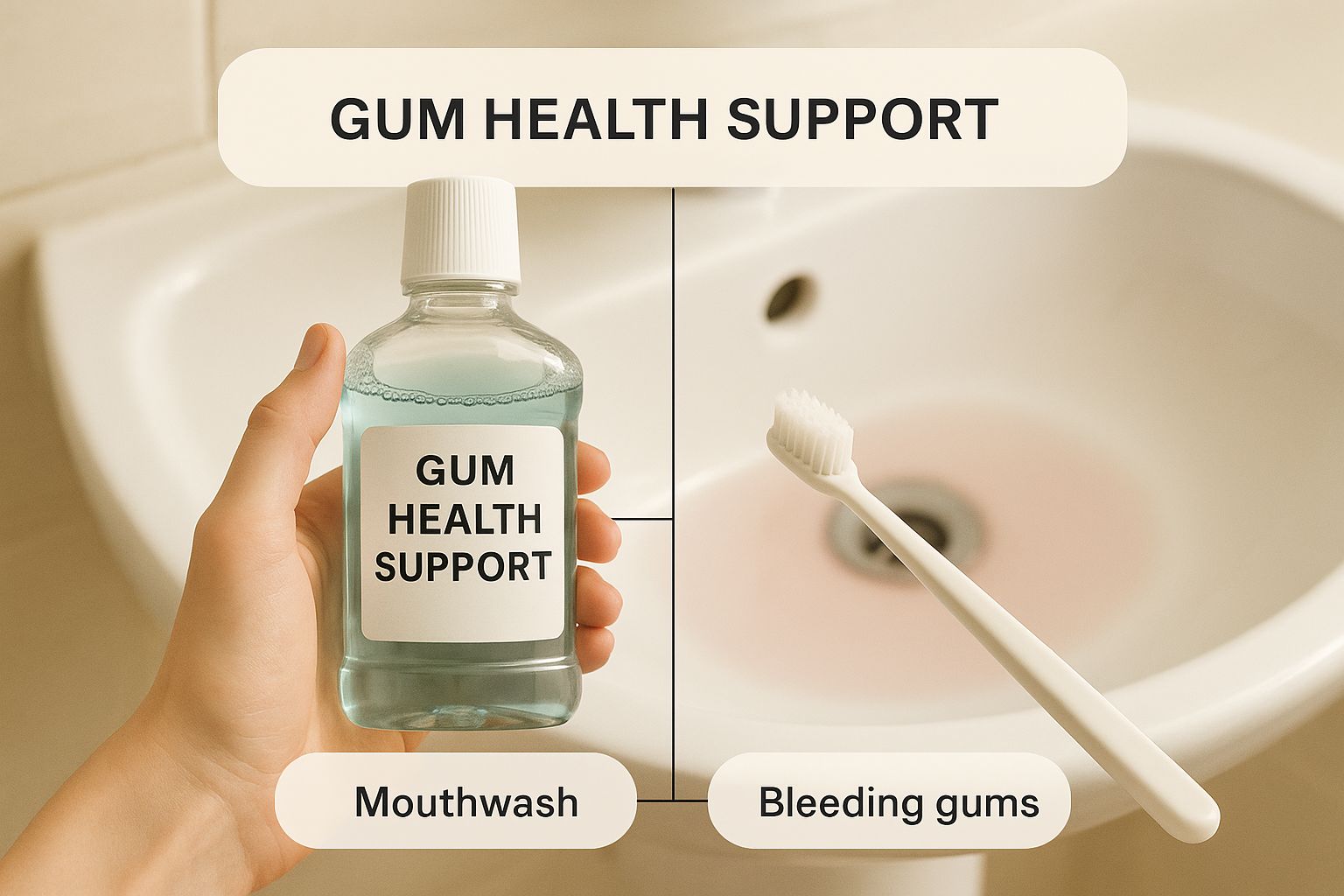
As you can see, while physically removing plaque is crucial, a liquid rinse can get into all the nooks and crannies to neutralize bacteria, rounding out your defense against gum disease.
People are becoming more aware of this, which is changing the oral care market. The global mouthwash industry was valued at nearly USD 9,930 million by 2025, a growth largely fueled by a desire for products that do more than just mask bad breath.
It's easy to overlook gum health, but letting harmful bacteria build up can cause serious issues down the line. A good mouthwash is an excellent preventative tool. Ignoring the early warning signs can lead to much bigger problems, including severe oral infections like an abscess after a root canal.
What’s Actually in That Bottle? A Guide to Gum-Protecting Ingredients
Strolling down the oral care aisle can be overwhelming. Mouthwash labels are filled with scientific terms that don't mean much to most people. But if you want to find the best mouthwash for your gums, understanding these ingredients is the most important step. It's about knowing what you're putting in your mouth and how it actually helps.
Think of it this way: you wouldn't use a wrench to hammer a nail. Similarly, a mouthwash designed just for whitening won't give your gums the targeted support they need to fight off plaque and inflammation.
Let's break down the key ingredients you should be looking for.
Your Everyday Defense Against Bacteria
For daily prevention and keeping mild gingivitis at bay, certain ingredients are your go-to defenders. They’re gentle enough for everyday use but tough on the germs that cause trouble.
A common and effective ingredient is Cetylpyridinium Chloride (CPC). Picture CPC as a microscopic shield for your mouth. It works by neutralizing plaque-causing bacteria, stopping them from sticking to your teeth and irritating your gums. Rinses with CPC are fantastic for daily maintenance.
Another powerful group is essential oils, such as eucalyptol, menthol, and thymol. These aren't just for flavor—they are nature's antiseptics. They have the unique ability to penetrate the sticky plaque film, killing germs on contact and soothing inflammation.
The Heavy Lifters for Serious Gum Issues
When gum problems advance beyond mild irritation, your dentist might recommend more powerful solutions. This is where prescription-strength ingredients become critical for getting your health back on track.
The gold standard here is Chlorhexidine Gluconate. This is the heavy-duty cleaner of the mouthwash world. It's a powerful, broad-spectrum antiseptic that clings to your oral tissues, providing a sustained antibacterial effect that lasts for hours after you rinse.
Due to its strength, chlorhexidine is usually prescribed for treating more advanced conditions like periodontitis or after oral surgery. To learn more about this serious issue, check out our guide on how periodontitis can ruin your oral health.
Because it can cause side effects like staining, it is only meant for short-term use under a dentist's direct supervision. It’s a targeted treatment, not an everyday rinse.
To make sense of it all, let's look at how these ingredients stack up.
Key Ingredients in Gum Health Mouthwashes
This table breaks down the most common active ingredients you'll find, what they do for your gums, and when they are typically used.
| Ingredient | Primary Benefit for Gums | Best For | Example Use Case |
|---|---|---|---|
| Cetylpyridinium Chloride (CPC) | Reduces plaque and prevents gingivitis | Daily prevention | Managing mild gum bleeding or maintaining gum health. |
| Essential Oils | Kill bacteria and reduce inflammation | Daily use for freshness and germ control | A person who wants both antiseptic benefits and fresh breath. |
| Fluoride | Strengthens tooth enamel | Cavity prevention and overall health | Anyone looking to fortify their teeth against decay. |
| Chlorhexidine | Potent antiseptic for serious issues | Short-term therapeutic treatment | Post-surgery care or managing a periodontitis flare-up. |
By recognizing these key ingredients—from daily defenders to prescription powerhouses—you can walk down that aisle, scan any label with confidence, and know exactly what you're getting for your gums.
Therapeutic vs. Cosmetic Rinses: What Your Gums Actually Need
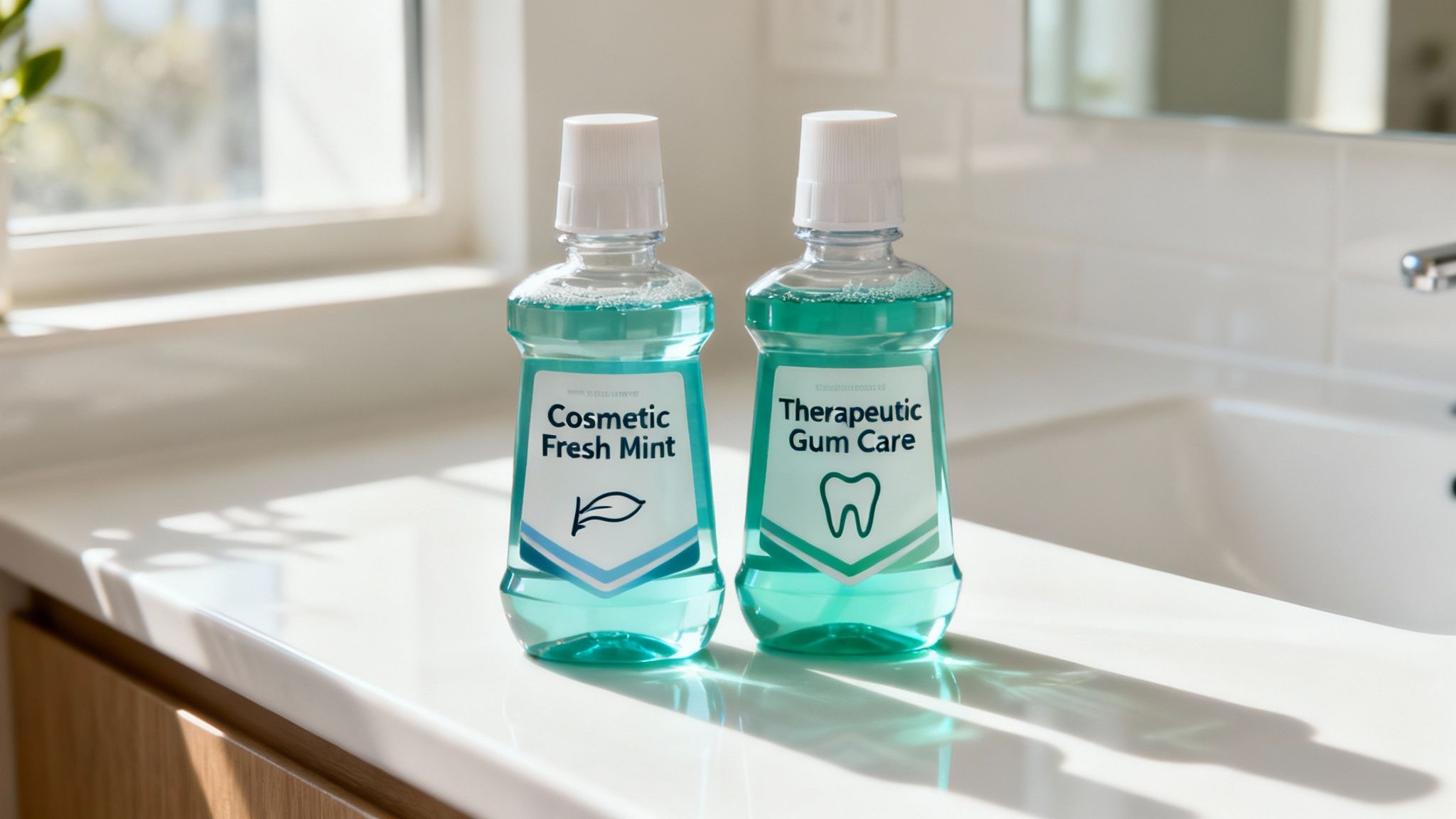
When you're staring at the wall of colorful bottles in the mouthwash aisle, it’s easy to think they all do pretty much the same thing. But there's a crucial difference that splits them into two categories: cosmetic and therapeutic. Understanding this distinction is key to picking a mouthwash that genuinely helps your gums, rather than just masking a problem.
Think of it like tending a garden. A cosmetic mouthwash is like quickly spraying a weed with green paint. It might look better for a moment, but the root is still there, growing stronger under the surface.
A therapeutic mouthwash, on the other hand, is like using a proper weed killer that gets right to the source. It’s formulated to actively fight the underlying causes of gum issues, not just cover up the symptoms.
What Makes a Rinse Cosmetic?
A cosmetic rinse is all about the immediate experience—a nice flavor and a temporary fix for bad breath (halitosis). It leaves your mouth feeling minty fresh for a little while, but the benefits stop there.
These rinses are essentially breath mints in liquid form. They lack the active ingredients needed to kill bacteria, reduce plaque, or calm irritated gums. If your real goal is to protect your gums, a cosmetic rinse just won’t be effective.
The Power of a Therapeutic Formula
This is where the real action is for your oral health. Therapeutic mouthwashes are backed by science and packed with active ingredients chosen specifically to target problems at their source.
They're designed to do much more than just freshen your breath. A good therapeutic rinse can:
- Control Plaque: It helps stop the sticky film of bacteria from building up on your teeth and along the gumline.
- Reduce Gingivitis: It actively fights the bacteria that cause your gums to become inflamed, red, and prone to bleeding.
- Prevent Cavities: Many contain fluoride to help strengthen tooth enamel and ward off decay.
- Kill Harmful Bacteria: They use antiseptic agents to lower the overall bacterial count in your mouth.
For anyone serious about their gum health, choosing a therapeutic rinse isn't just a good idea—it's essential. You’re moving from a quick fix to a proactive strategy that protects the very foundation of your smile.
Finding the Right Therapeutic Category
Even within the "therapeutic" world, there are different formulas for different jobs. Knowing these subcategories helps you find exactly what you need for a more targeted and effective approach to gum care.
The main types you’ll see are:
- Antiseptic Rinses: These are the all-purpose germ killers. They use ingredients like essential oils or CPC to reduce bacteria throughout the mouth, which is a great first line of defense against plaque and gingivitis.
- Anti-Gingivitis Rinses: While also antiseptic, these formulas are specifically tested and proven to reduce the inflammation and bleeding associated with gingivitis.
- Fluoride Rinses: Their primary job is to strengthen tooth enamel to prevent cavities. By making your teeth more resistant to decay-causing acids from plaque, they indirectly help your gums stay healthier too.
More and more, people are looking for these real health benefits. The therapeutic segment of the market is booming, with fluoride rinses alone making up about 40% of global demand. This reflects a clear shift toward oral hygiene that does more than just freshen breath. You can learn more about mouthwash market insights to see how consumer habits are changing. By choosing a therapeutic product, you are opting for a modern, health-first approach that really works.
A Practical Guide to Choosing Your Ideal Mouthwash
Walking down the mouthwash aisle can be overwhelming. Dozens of bottles promise whiter teeth, fresher breath, and healthier gums. It’s no wonder most people just grab the one with the most appealing label. But if you're serious about your gum health, there's a better way.
Think of it like this: you wouldn't use a hammer to tighten a screw. The right tool makes all the difference. Your mouthwash is a tool, and picking the right one comes down to your specific needs, not just a minty flavor. Let’s break down how to choose the best mouthwash for your gums without the guesswork.
First, Check Your Gum Sensitivity
The most important question to ask yourself is: how do my gums feel? This one answer will point you in the right direction, especially when it comes to a single, very common ingredient: alcohol.
For years, alcohol was the go-to antiseptic in mouthwash. It definitely kills germs, but it can also cause that familiar burning sensation and dry out your mouth. For someone whose gums are already sensitive or inflamed, an alcohol-based rinse can be harsh.
Here’s a simple way to decide:
- If your gums are sensitive, bleed easily, or your mouth is often dry: An alcohol-free mouthwash is your best bet. Look for one that uses gentle but effective ingredients like Cetylpyridinium Chloride (CPC) to fight bacteria without the burn.
- If your gums feel great and you don't mind the sting: An alcohol-based mouthwash is an option, but it’s not essential to get the job done effectively.
Picture this: You've noticed your gums are tender and bleed a little when you floss. The last thing you want is a harsh rinse that makes you wince. In this case, starting with an alcohol-free formula gives you the germ-killing power you need without causing more irritation.
Match the Mouthwash to Your Mission
Next, get clear on what you’re trying to accomplish. Are you playing defense to keep your healthy gums that way, or are you on offense, actively fighting back against problems?
Your goal will determine the type of mouthwash you need. Let's look at the two most common scenarios.
The Prevention Pro
- Your Gums: They’re in good shape. You rarely see any redness or bleeding, and you want to keep it that way. Your goal is simply daily maintenance to keep plaque and gingivitis at bay.
- Your Go-To Mouthwash: You need a solid, everyday rinse that controls plaque without being overkill. An alcohol-free mouthwash with CPC is perfect for this. It’s clinically proven to zap bacteria along the gumline and is gentle enough to use every single day. The Crest Pro-Health Gum and Breath Purify Mouthwash is a great example of a product designed for exactly this purpose.
The Gingivitis Fighter
- Your Gums: You're seeing the early warning signs of gum disease—some redness, puffiness, and bleeding when you brush or floss. Maybe your dentist even mentioned that you need to be more aggressive with plaque control.
- Your Go-To Mouthwash: It's time to bring in something stronger. An antiseptic mouthwash specifically labeled "anti-gingivitis" is the right tool for this job. You want a formula that's proven to reduce both plaque and the inflammation it causes. TheraBreath Healthy Gums Oral Rinse is a fantastic option, designed to fight gingivitis bacteria for up to 24 hours.
When you align your choice with your personal gum sensitivity and your main goal, the confusion melts away. You're no longer just grabbing a random bottle; you're selecting the perfect tool for the job.
Getting the Most Out of Your Mouthwash

You can pick the most scientifically-backed, dentist-recommended mouthwash, but if your technique is off, you're literally pouring those benefits down the drain. It’s not just about what you use; it’s about how you use it. Even the best rinse needs to be used correctly to effectively fight plaque.
The good news is that turning your daily swish into a powerhouse for gum health is easy. It all comes down to a few simple steps that give the active ingredients enough time and contact to do their job. Let's break down the right way to rinse.
How to Use Mouthwash Like a Pro
To make your rinse more than just a quick minty splash, follow this simple but effective routine. This process ensures the ingredients can actually work their magic on your gums.
Measure the Dose: Don't just free-pour it. More isn't better. Most brands recommend about 20 milliliters (ml), which is around four teaspoons. Always double-check the label on the bottle—some concentrated formulas might require less.
Swish With a Purpose: This is where the real work happens. You need to swish and gargle the liquid for a full 30 to 60 seconds. This timing is crucial. It gives the antiseptic ingredients enough contact time to start breaking down plaque and killing off harmful bacteria.
Spit, Don't Rinse: Once your time is up, spit all of the mouthwash out into the sink.
Hold Off on Food and Drink: This is the step people most often forget. To let the active ingredients keep working, don't eat, drink, or even rinse with water for at least 30 minutes. This allows the protective layer to remain instead of being washed away immediately.
Common Mistakes That Weaken Your Rinse
Think you're using it correctly? A few common habits can seriously undercut how well your mouthwash works, robbing you of the gum-protecting benefits you’re paying for.
Watering It Down: Unless the instructions specifically say to, never dilute your mouthwash with water. You're just weakening the concentration of the active ingredients, making the entire process less effective.
Rinsing Right After Brushing: It feels like the natural next step, but it’s often a mistake. Your toothpaste contains beneficial fluoride, and rinsing right away washes all of that away. Many dentists suggest using mouthwash at a different time, like after lunch, for a midday refresh.
Swallowing: This is a major no-no. Therapeutic mouthwashes contain ingredients that are not meant to be ingested. Always spit out the full amount after you're done swishing.
The goal is to make every swish count. By dodging these simple mistakes and using the right technique, you’re giving those gum-healthy ingredients the best possible chance to work.
Think of it like applying sunscreen. A quick, sloppy spray won't give you real protection from the sun. Similarly, a half-hearted, 10-second swish won't protect your gums from bacteria. Following these guidelines turns a simple daily habit into a powerful part of your oral health routine.
Your Next Steps Toward Healthier Gums
Now, you are equipped to walk down the dental aisle and understand what you're looking at. Knowing how to decode labels and spot the right ingredients is a huge advantage.
But picking the best mouthwash is just one part of the equation. Think of it as a powerful ally, not a magic solution. For it to truly work, it needs to be part of a solid daily routine.
The single most important thing to remember is that the best mouthwash is the one with the right active ingredients for your gums, and you have to use it consistently. It’s the supporting actor to the stars of the show: diligent brushing and daily flossing.
Consulting Your Dentist
While this guide gives you the knowledge to make a great choice at the store, your final step should always be a conversation with your dentist. Nothing beats a personalized recommendation based on a professional exam. They can see the full picture of your gum health and can point you to exactly what your mouth needs.
If you’ve been dealing with stubborn gum problems, it’s also a good idea to learn the signs you may need a deep dental cleaning. That’s another topic you can discuss with your dentist.
The global mouthwash market is projected to reach a valuation of USD 18,993 million by 2035, driven by a growing consumer focus on targeted oral health solutions. This trend highlights the increasing demand for specialized products that address specific concerns like gum health. Discover more insights on the mouthwash market at Fact.MR.
Ultimately, when you team up with your dentist, you stop guessing. Your home care becomes a precise, effective strategy, ensuring your investment in a good mouthwash pays off with the healthiest smile possible.
A Few More Questions About Mouthwash for Gums
Even after you've narrowed down your options, it's normal to have a few more questions. Let's tackle some of the most common ones so you can feel confident you're making the right choice for your gum health.
Can Mouthwash Alone Cure Gingivitis?
This is a common question, and the answer is a straightforward no. Think of a good therapeutic mouthwash as a star player on your oral health team—it’s incredibly effective, but it can’t win the game by itself.
A quality anti-gingivitis rinse does an excellent job of killing the germs that cause inflammation, resulting in less redness and bleeding. But it has limits. Mouthwash simply can't physically scrape off hardened plaque (tartar) or get into the tight spaces between your teeth and under the gumline like floss can.
To truly reverse gingivitis, you need a comprehensive approach:
- Brushing twice a day to clear away plaque from the surfaces of your teeth.
- Flossing every day to remove debris from between your teeth.
- Using a therapeutic mouthwash to eliminate remaining bacteria.
- Getting regular professional cleanings to remove stubborn tartar you can't handle at home.
Mouthwash is a powerful supplement, but it’s most effective when it supports your brushing and flossing routine.
Is Alcohol-Based Mouthwash Bad for My Gums?
"Bad" might be too strong a word, but for many people, alcohol-based mouthwash is not the ideal choice. For years, alcohol was a primary ingredient because it's a solid antiseptic. The problem is, it's also a desiccant, which means it dries out the soft tissues in your mouth.
This drying effect can cause real discomfort, especially if you already deal with:
- Sensitive gums that are prone to irritation.
- Canker sores or other mouth sores.
- A chronic condition like dry mouth (xerostomia).
For daily, long-term use, most dentists now recommend alcohol-free options. Modern formulas with ingredients like Cetylpyridinium Chloride (CPC) are just as effective at killing germs without the intense burn or risk of irritation. You get all the benefits with none of the downsides.
Bottom line: if your gums are sensitive or already inflamed, an alcohol-free mouthwash is almost always the smarter, more comfortable choice.
How Quickly Will I See Results for My Gum Health?
When it comes to healing your gums, consistency is key. You won't see a miracle overnight, but you might be surprised by how quickly things can start to improve.
If you’re using a good therapeutic mouthwash every day as part of a complete oral hygiene routine, you can expect to see the first signs of improvement within two to four weeks. This usually appears as less redness along the gumline and significantly less bleeding when you brush or floss.
But remember, achieving and maintaining healthy gums is a marathon, not a sprint. Those early improvements are fantastic, but they depend on you sticking with your routine. The real goal is to create a new, healthier normal for your mouth. If you want to dig deeper into different types of rinses, we cover more in our detailed guide on common mouthwash questions answered for you.
Do I Need a Prescription for the Strongest Mouthwash?
Yes, for the most potent options, you'll need a prescription from your dentist. Mouthwashes generally fall into two categories: those you can buy off the shelf and those that are kept behind the pharmacy counter.
Over-the-counter (OTC) mouthwashes are perfect for preventing and managing mild to moderate gingivitis. Formulas with CPC or essential oils are great for everyday defense against plaque buildup.
Prescription-strength mouthwashes, however, are for more serious situations. The most common one contains Chlorhexidine Gluconate, a very powerful antiseptic. A dentist will typically prescribe this for short-term use to tackle specific problems, like:
- Getting a severe gingivitis or periodontitis flare-up under control.
- Preventing infection after oral surgery or a deep cleaning.
- Assisting patients who physically cannot brush or floss effectively.
Because Chlorhexidine is so potent and can have side effects like temporary tooth staining, it’s considered a targeted treatment to be used only under a dentist's supervision, not an everyday rinse.
Ready to take the next step toward optimal gum health with personalized advice? At Serena San Diego Dentist, our team is here to help you build the perfect oral care routine. Schedule your consultation today!