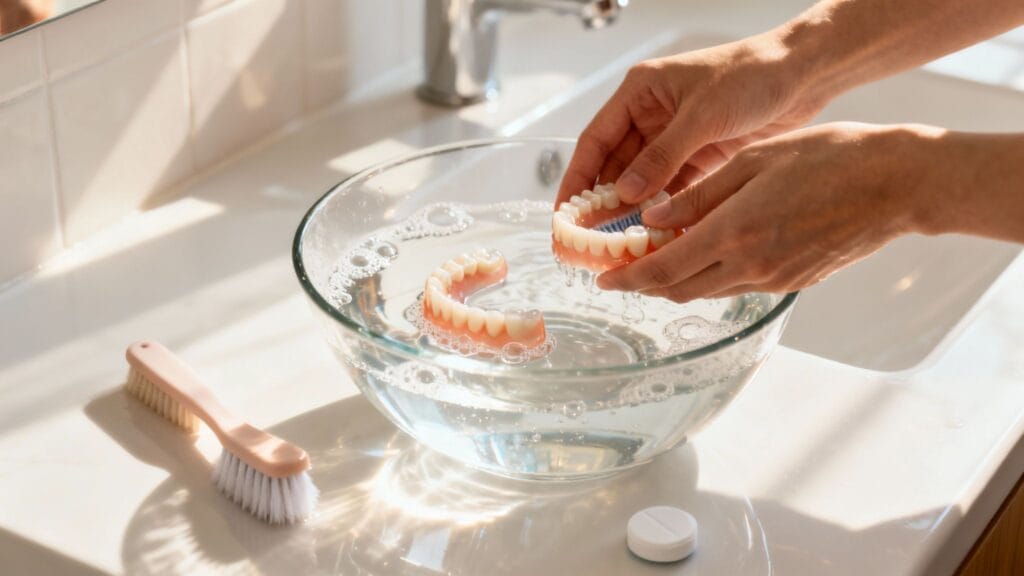
Keeping your dentures in excellent condition isn't about a complicated secret—it's about a consistent daily routine. The best method involves a simple yet effective three-part ritual: rinse after every meal, brush thoroughly with a soft-bristled brush, and soak them overnight in a proper cleaning solution. Mastering this daily habit is the key to preventing plaque, fighting stains, and ensuring your dentures feel fresh and comfortable for years to come.
Establishing Your Daily Denture Care Ritual
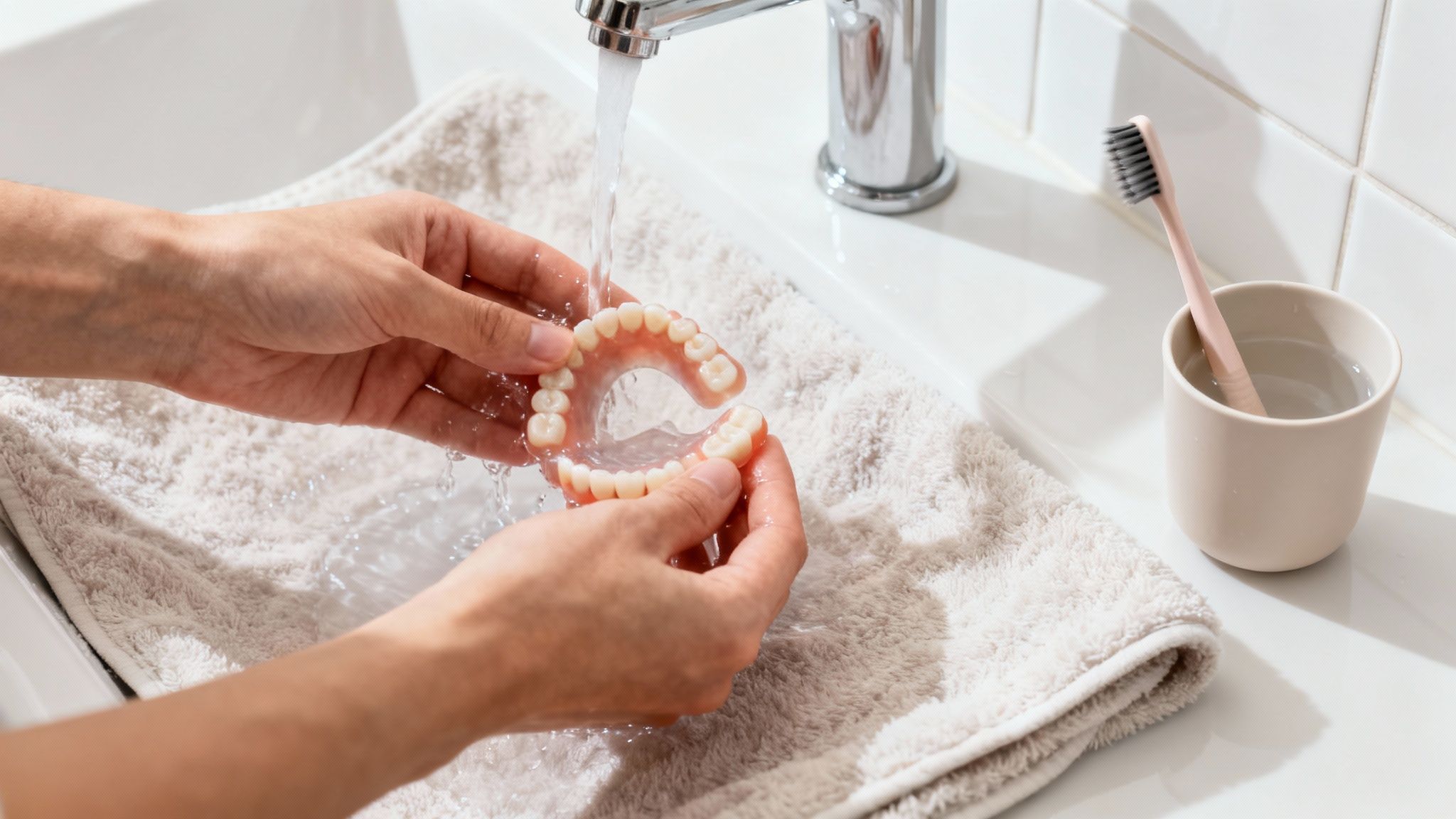
Think of it as the 'rinse, brush, soak' method. This isn't just about a quick scrub; it's about understanding why each step is so important for the longevity of your dentures and the health of your mouth.
The Power Of The Rinse
Your first line of defense is a quick rinse after every single meal. This simple step instantly washes away loose food particles that get stuck between your appliance and your gums. It takes just a few seconds but goes a long way in preventing irritation and uncomfortable sores throughout the day.
Mastering The Brush
Next up is a gentle, but very thorough, brushing. The main goal here is to remove plaque, not to scrub aggressively. It's crucial to use a soft-bristled denture brush and a non-abrasive denture cleanser—never regular toothpaste. Toothpaste is designed for tough tooth enamel and will create microscopic scratches on your dentures, giving bacteria and stains a perfect place to hide.
By brushing every surface—inside and out—you physically remove the soft plaque and biofilm before they have a chance to harden into stubborn tartar.
The Non-Negotiable Overnight Soak
Finally, the overnight soak is an absolute must. To truly get your dentures clean, you need to go beyond brushing and move into proper cleaning and disinfecting. Soaking your appliance in a specialized solution does a few critical things all at once:
- It kills the bacteria that cause unpleasant odors.
- It helps lift those deeper stains that brushing alone can't touch.
- It keeps the acrylic hydrated, preventing it from drying out, warping, and losing its custom fit.
This three-part approach is backed by solid science. A major 2018 clinical trial confirmed that combining daily brushing with a denture cleanser soak is far more effective at reducing microbes than just brushing. The study showed that this routine can prevent 70-90% of microbial regrowth, helping your dentures stay hygienic and last much longer. Consistent care is a huge part of overall wellness, and our team at Serena San Diego Dentist is committed to helping seniors maintain excellent oral health.
To make this daily habit even easier, here’s a quick-reference checklist you can follow.
Your Daily Denture Care Checklist
| Action | Primary Benefit | When to Do It |
|---|---|---|
| Rinse Dentures | Removes loose food particles to prevent irritation. | After every meal or snack. |
| Brush Gently | Removes plaque and biofilm from all surfaces. | At least once a day, ideally at night before soaking. |
| Soak Overnight | Disinfects, removes deep stains, and prevents warping. | Every night while you sleep. |
| Rinse Before Wearing | Removes any remaining cleaning solution. | Every morning before putting them in. |
Following these simple steps every day will make all the difference in the comfort, appearance, and lifespan of your dentures.
Choosing Your Denture Cleaning Toolkit
Walking down the oral care aisle can be pretty overwhelming. There are so many options, it's hard to know what you actually need. To really get your dentures clean, you have to build the right toolkit and, just as importantly, know what to leave on the shelf. Let's cut through the noise and put together your ideal cleaning kit.
The absolute cornerstone of any good denture care routine is a specialized cleaning agent. We dentists often recommend effervescent cleansing tablets, and for good reason. Their bubbling action is fantastic—it gently lifts away stains and tiny food particles from all those little nooks and crannies. Plus, it kills up to 99.9% of odor-causing bacteria without you having to do any harsh scrubbing.
Cleansers and Brushes Done Right
While those fizzing tablets are perfect for a daily soak, you'll also find denture-specific gels and pastes that are great to have on hand. Using a denture paste with a soft-bristled brush is a great way to physically scrub off plaque before you pop them in for their overnight soak. The key word here is soft; stiff bristles will absolutely cause microscopic scratches and damage over time.
So, what should be in your essential toolkit?
- A soft-bristled denture brush: These are specially designed with different head shapes to get into every curve and contour of your dentures.
- A non-abrasive denture cleanser: Look for the American Dental Association (ADA) Seal of Acceptance on tablets, gels, or pastes.
- A dedicated denture bath or case: This keeps them safe, submerged, and hygienic while they soak overnight.
Products to Absolutely Avoid
Knowing what to use is only half the battle. Knowing what not to use is just as critical because some common household products can permanently ruin your dentures.
Key Takeaway: The top three enemies of your dentures are regular toothpaste, household bleach, and very hot water. Toothpaste is far too abrasive, creating tiny scratches that trap bacteria. Bleach can weaken the acrylic and discolor the pink base. And hot water? It can easily warp the material, completely destroying that custom fit.
The science backs this up. A 2022 review highlighted that while denture cleanser tablets and bleach were most effective at killing microbes in just five minutes, the risks associated with bleach are just too high for home use. That same study confirmed that toothpaste damages the denture surface and that alcohol can etch the material, making it even more susceptible to bacterial growth.
Thinking about general hygiene can also improve your routine; brushing up on effective cleaning and disinfecting tips is never a bad idea. And of course, sometimes home care just isn't enough to tackle tough stains or buildup. That's when a professional touch can make all the difference. You can learn more about the benefits of a professional dental cleaning in San Diego right here on our site.
Tackling Stubborn Stains and Lingering Odors
Even if you follow a perfect daily cleaning routine, some stains just don't want to quit. We see it all the time—coffee, tea, and red wine can leave their mark, and a lingering odor is often a sign that a deeper clean is in order. When this happens, it's time to bring out the big guns to get your dentures feeling fresh and looking new again.
This is where stepping up your weekly care really pays off. One of the most effective tools I recommend for this is an at-home ultrasonic cleaner. Honestly, these little devices are a game-changer for a weekly deep clean. They use high-frequency sound waves to create tiny, powerful vibrations in the water, which blast away stubborn plaque, food particles, and stain molecules from all the nooks and crannies that even the most meticulous brushing can miss.
The Power of a Deeper Clean
And this isn't just a hunch; the science backs it up. A major randomized trial showed just how much better ultrasonic cleaning is compared to brushing alone. After only one month, dentures cleaned in an ultrasonic device—even with just plain water—had significantly less plaque buildup than those that were only brushed.
The study found biofilm reductions of up to 60-70% on the metal parts of partial dentures. That’s a massive difference. Here at Serena San Diego Dentist, we often suggest a weekly ultrasonic bath to our patients because it can boost the effectiveness of your daily routine by an extra 20-30%. If you're interested in the details, you can read the full research on ultrasonic denture cleaning for yourself.
Pro Tip: For mineral buildup (calculus), a diluted white vinegar solution can work wonders. Mix one part vinegar with one part water and let your dentures soak for about 15-20 minutes. The mild acid is fantastic at dissolving that chalky buildup without being harsh on the acrylic. Just remember to rinse them completely when you're done.
The chart below gives you a quick visual breakdown of which cleaners are right for the job and which to avoid.
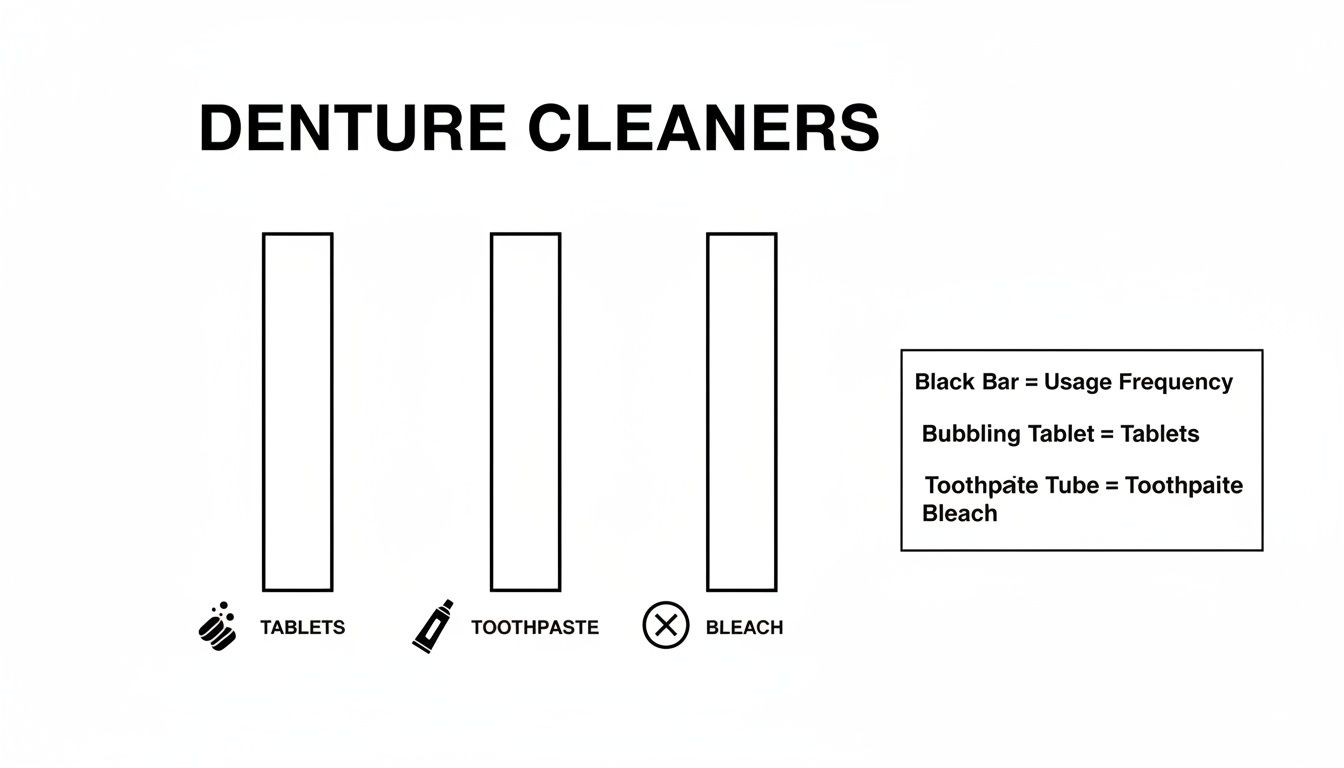
As you can see, specialized denture tablets are perfect for daily soaking, but harsh products like abrasive toothpaste or bleach are a definite no-go. A good daily routine combined with a powerful weekly deep clean is your best defense against tough stains and odors.
Adapting Your Technique for Partial and Full Dentures
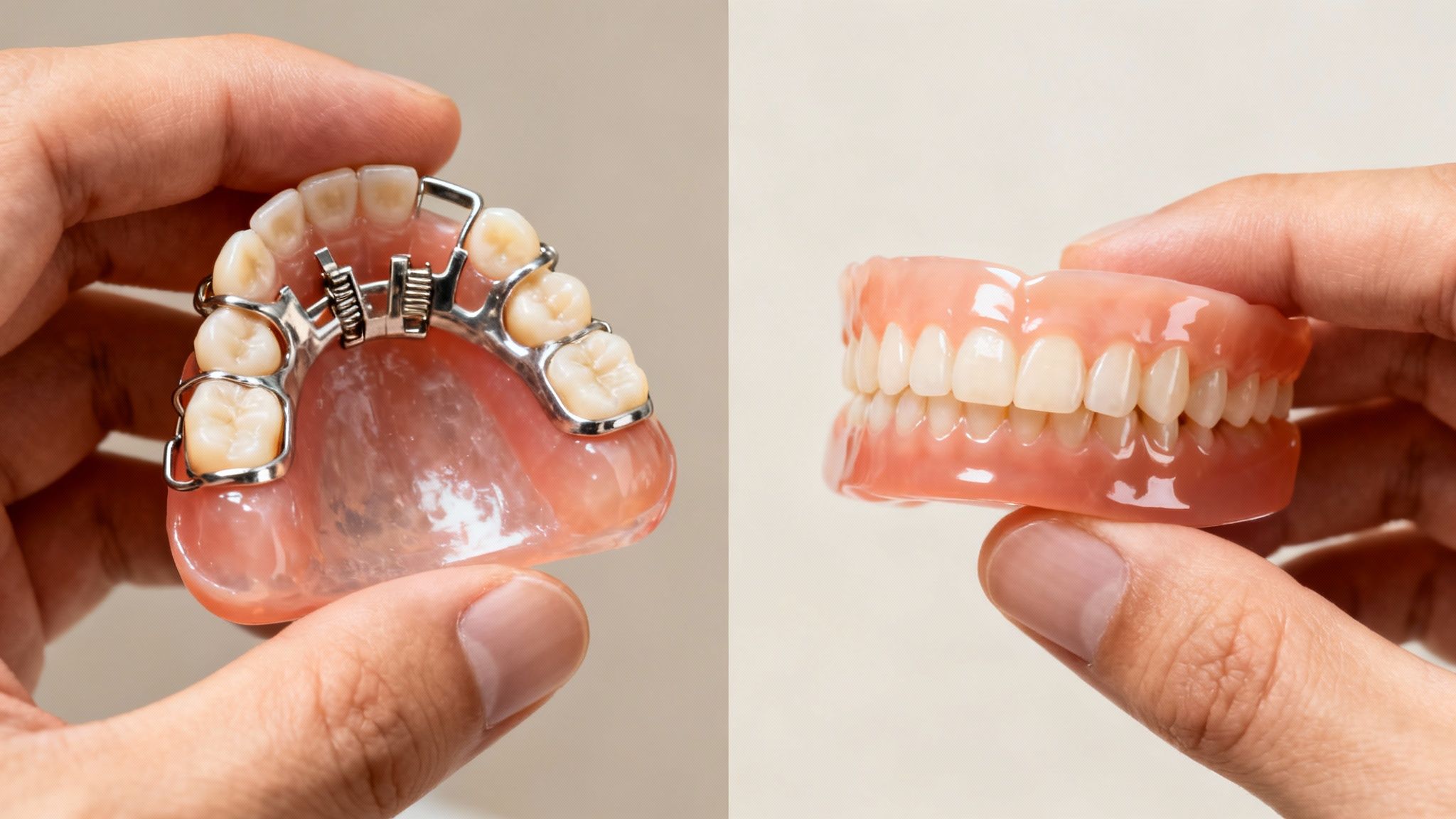
Not all dentures are created equal, so a one-size-fits-all cleaning routine just won't cut it. Your approach really needs to change depending on whether you have a partial or a full set of dentures. They each have unique features that demand specific attention to keep your mouth healthy.
Someone with a partial denture has to be diligent about protecting their remaining natural teeth, whereas a full denture wearer is more focused on gum health and making sure the appliance fits just right.
Specialized Care for Partial Dentures
If you wear a partial, your biggest job is cleaning the areas where the appliance meets your natural teeth. Those metal or acrylic clasps, in particular, are notorious for trapping plaque.
Letting that buildup sit can quickly lead to cavities and gum problems on the very teeth that support your partial. You have to be meticulous here.
- Focus on the Clasps: Grab a small, soft-bristled brush and gently scrub around every single part of the clasps and connectors. Don't miss a spot.
- Clean Your Natural Teeth Separately: Always, always take your partial out to properly brush and floss your remaining natural teeth.
- Inspect for Trouble Spots: Look closely at the areas where the partial rests against your teeth. This is a high-risk zone for plaque to hide.
By really focusing on these connection points, you’re doing more than just cleaning your denture—you're actively protecting your natural teeth from future problems.
Best Practices for Full Dentures
With full dentures, you're facing a different set of challenges. The priority shifts to keeping your gums healthy and maintaining the integrity of the denture itself. The large surface that sits against your gums has to be kept perfectly clean to prevent irritation, sores, and even infections like denture stomatitis.
This means getting rid of any biofilm on that entire inner surface. A comfortable, secure fit really depends on having a clean, smooth foundation.
When cleaning a full denture, brush the entire acrylic surface—the gum-colored base and the artificial teeth. An overnight soak is also a non-negotiable step for disinfecting such a large area and keeping it hygienic.
For those weighing their options for tooth replacement, it can be helpful to understand the differences we break down in our article on dental implants vs. dentures. Taking these dedicated steps ensures your full dentures will stay comfortable, secure, and odor-free for years.
Proper Handling, Storage, and When to Call in the Pros
Great denture care is about more than just a good scrub. How you handle and store your appliance every single day plays a massive role in how long it will last. I've seen it happen too many times: a single accidental drop onto a hard tile floor can be catastrophic, leading to a costly repair or even a full replacement.
Protecting that investment really just comes down to a few simple, smart habits.
One of the easiest things you can do is to always handle your dentures over a soft surface. Before you start cleaning, just lay a folded towel down in the sink or fill the basin with a few inches of water. It's a tiny step that provides a crucial cushion if they happen to slip from your grasp.
Why Proper Storage is Non-Negotiable
Just as critical as safe handling is what you do with your dentures when they aren't in your mouth. Think of it this way: dentures are designed to live in a moist environment. If you leave them out to dry on the nightstand, the acrylic can actually lose its shape and warp.
This warping isn't a minor issue—it can completely ruin the custom fit of your appliance. Suddenly, your once-snug dentures feel loose, uncomfortable, and don't function properly. The fix is simple: keep them moist at all times.
- Soak, Don't Dry: The best place for them is fully submerged in a denture-soaking solution or just plain, cool water.
- Use a Proper Case: A dedicated, covered denture bath is a must. It keeps them safe from dust and germs and prevents you from accidentally knocking them over.
- Keep it Cool: Never, ever use hot water for soaking or rinsing. Heat is the enemy of acrylic and will only speed up the warping process.
Your dentures are a finely tuned medical device. Keeping them hydrated is absolutely essential for preserving their shape and ensuring they continue to fit comfortably and work correctly.
Knowing When Your Dentures Need a Professional Touch
Even with the most dedicated daily care routine, there are times when you just need an expert. At-home cleaning is fantastic for daily maintenance, but it can't solve every problem. Learning to spot the signs that you need a dentist is the key to stopping small issues from becoming big ones.
It's time to schedule a visit with a professional, like our team here at Serena San Diego Dentist, if you start to notice any of these red flags:
- Stubborn Buildup That Won't Budge: See any hard, chalky deposits (calculus) that your brush just can't remove? That's a job for us. We have specialized tools that can safely clear it away without scratching the acrylic.
- A Change in How They Fit: Your mouth and jaw change over time. It's perfectly natural. If your dentures start feeling loose, begin to slip when you talk, or are causing new sore spots, you likely need a professional adjustment or reline to get that secure fit back.
- Any Chips, Cracks, or Damage: Please, never try to fix a broken denture with super glue! We can properly assess the damage and perform a professional repair that is both safe for your mouth and built to last.
- Lingering Stains or Odors: If deep-set stains or a funky odor just won't go away no matter what you try, let us take a look. A professional-grade cleaning can often get them looking and feeling fresh again.
Think of your regular dental check-up as a tune-up for both your mouth and your appliance. It's the perfect opportunity for us to give your dentures a deep, professional clean and make sure they still fit you perfectly.
Common Questions About Denture Care Answered
Once you've got the basics down for daily care and handling, a few specific questions almost always pop up. Let's tackle some of the most common ones I hear from my patients in San Diego to help you feel completely confident in your routine.
Can I Use Regular Toothpaste to Clean My Dentures?
I get asked this one all the time, and the answer is a hard no. Think of it this way: regular toothpaste is formulated for tooth enamel, one of the hardest substances in the human body. Your dentures are made from a much softer acrylic material.
Those abrasive ingredients in your everyday toothpaste will create thousands of tiny, microscopic scratches on the denture surface. These little grooves become a perfect breeding ground for bacteria and plaque, which is what leads to tough stains and that lingering bad breath you want to avoid. Always, always stick to a non-abrasive denture cleanser and a soft-bristled brush made specifically for the job.
How Often Should My Dentures Be Professionally Cleaned?
As a rule of thumb, we recommend having your dentures professionally cleaned at least once a year. It’s easiest to just sync this up with your annual dental check-up.
Here at Serena San Diego Dentist, we use specialized ultrasonic equipment and professional-grade polishes that can safely break down and remove hardened tartar (calculus) that simple brushing and soaking at home just can't touch. This visit is also a great opportunity for us to give your dentures a thorough look-over for any signs of wear and to check the fit, making sure they’re still comfortable and working as they should.
Is It Okay to Skip Soaking My Dentures Overnight?
I really advise against skipping the overnight soak. It's not just an optional step; it’s a crucial part of keeping your dentures in top shape. Soaking them in a proper solution is what gets into all the nooks and crannies to disinfect the appliance, killing off odor-causing bacteria that brushing alone often misses.
But it's not just about hygiene. The soak is vital for the physical health of your dentures. It keeps the acrylic hydrated, which prevents it from drying out, warping, and losing its custom-molded fit.
What if My Dentures Still Have an Odor After Cleaning?
If you're cleaning them diligently but still notice a persistent odor, that's usually a sign that something else is going on. It might point to a heavy buildup of stubborn bacteria or even a fungal issue, like denture stomatitis, starting to take hold.
First, make sure you’re using a quality effervescent cleansing tablet every single night without fail. If you’ve been doing that and the smell just won’t go away, it’s time to schedule a visit with us. We can help figure out the root cause, and a deep, professional cleaning can often get things back to fresh and healthy. It's always good to be aware of all your options, and you can read more about different tooth replacement alternatives on our blog.
Your smile is an investment in your health and your confidence, and we want to help you protect it. At Serena San Diego Dentist, our team is here for you, whether you need a professional denture cleaning, an adjustment for a more comfortable fit, or just have questions about your oral health. We proudly serve our community here in San Diego, offering compassionate and expert dental care for all our patients.
Schedule your consultation with us today!