
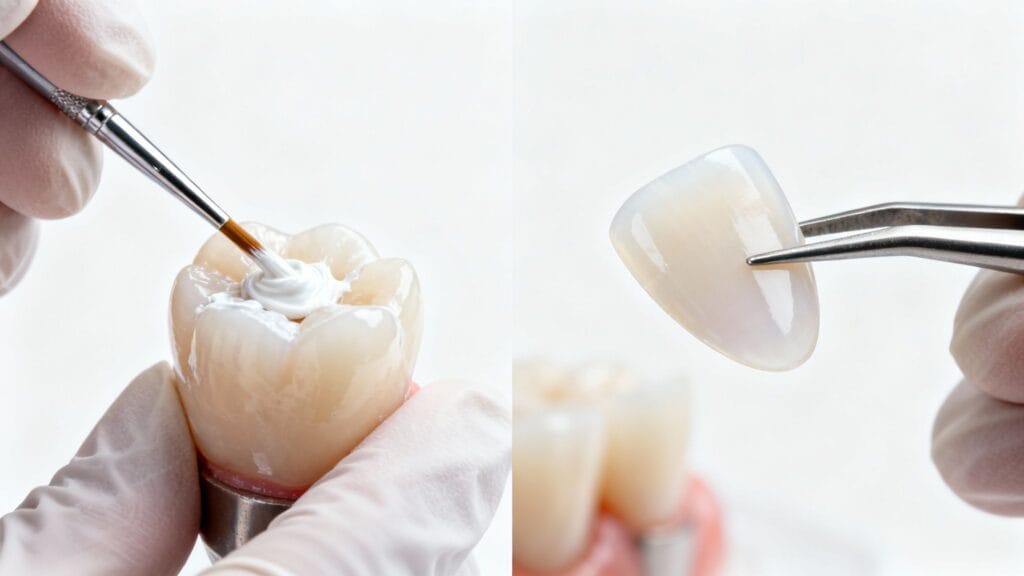
When you're weighing dental bonding against veneers, the core difference is simple. Think of bonding as a quick, single-visit touch-up for minor flaws using composite resin. Veneers, on the other hand, are a complete, multi-visit smile redesign using custom-made porcelain shells. The right choice really comes down to whether you're looking for a targeted repair or a total transformation.
A Side-by-Side Look at Your Smile Options
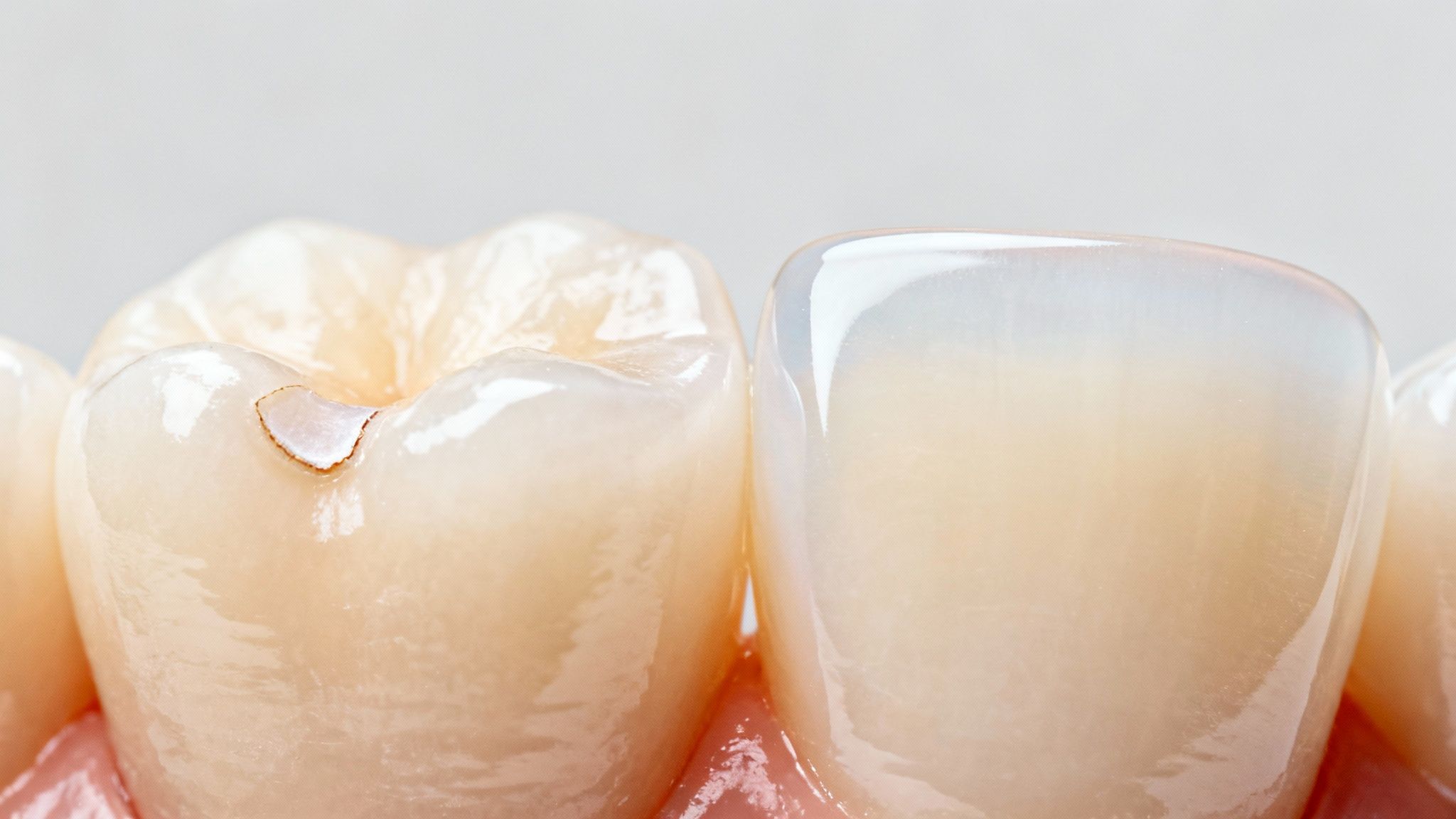
Deciding how to enhance your smile is a big deal. In sunny San Diego, where smiles are always on display, knowing your options is crucial. Both dental bonding and porcelain veneers are fantastic what is cosmetic dentistry procedures, but they work very differently and are suited for different goals.
Our goal here is to give you a straightforward, honest comparison. We'll dive into everything from the materials and procedure to how long you can expect the results to last. By the end, you'll have a much clearer picture of which treatment fits your smile goals, budget, and lifestyle.
Quick Comparison: Dental Bonding vs Veneers
To kick things off, let's look at a high-level comparison. This table gives you a quick snapshot of the key differences, which we’ll explore in more detail.
| Feature | Dental Bonding | Porcelain Veneers |
|---|---|---|
| Primary Use | Minor repairs like chips, gaps, or small stains. | Comprehensive smile makeovers for major cosmetic issues. |
| Material | Tooth-colored composite resin. | Thin shells of durable, medical-grade porcelain. |
| Procedure Time | One visit (usually 30-60 minutes per tooth). | Multiple visits over 2-3 weeks. |
| Invasiveness | Minimally invasive; little to no enamel removal. | Requires removal of a thin layer of tooth enamel. |
| Lifespan | Typically 3 to 10 years with proper care. | Typically 10 to 20 years or more with proper care. |
| Stain Resistance | Porous material can stain over time like natural teeth. | Highly stain-resistant due to non-porous surface. |
| Cost | More affordable upfront. | Higher initial investment. |
This table lays out the basics, but the decision often comes down to the nuances.
Key Takeaway: Choose dental bonding for fast, affordable fixes to minor imperfections. Opt for porcelain veneers when your goal is a durable, long-lasting, and complete transformation of your smile's color, shape, and alignment.
Before you make a final call, understanding the full scope of these options is key. Having that context ensures you're making a choice that will keep you smiling for years to come.
Dental Bonding vs. Porcelain Veneers: What's the Difference?
To figure out whether dental bonding or veneers are right for you, you need to understand what makes them so different. While both can dramatically improve your smile, they use entirely different materials, follow different procedures, and are suited for different goals. Getting a handle on the "what" and "how" of each one is the key to making a choice you'll be happy with for years to come.
This image gives a great at-a-glance look at how a veneer covers the whole tooth face, while bonding is more like a spot-treatment.
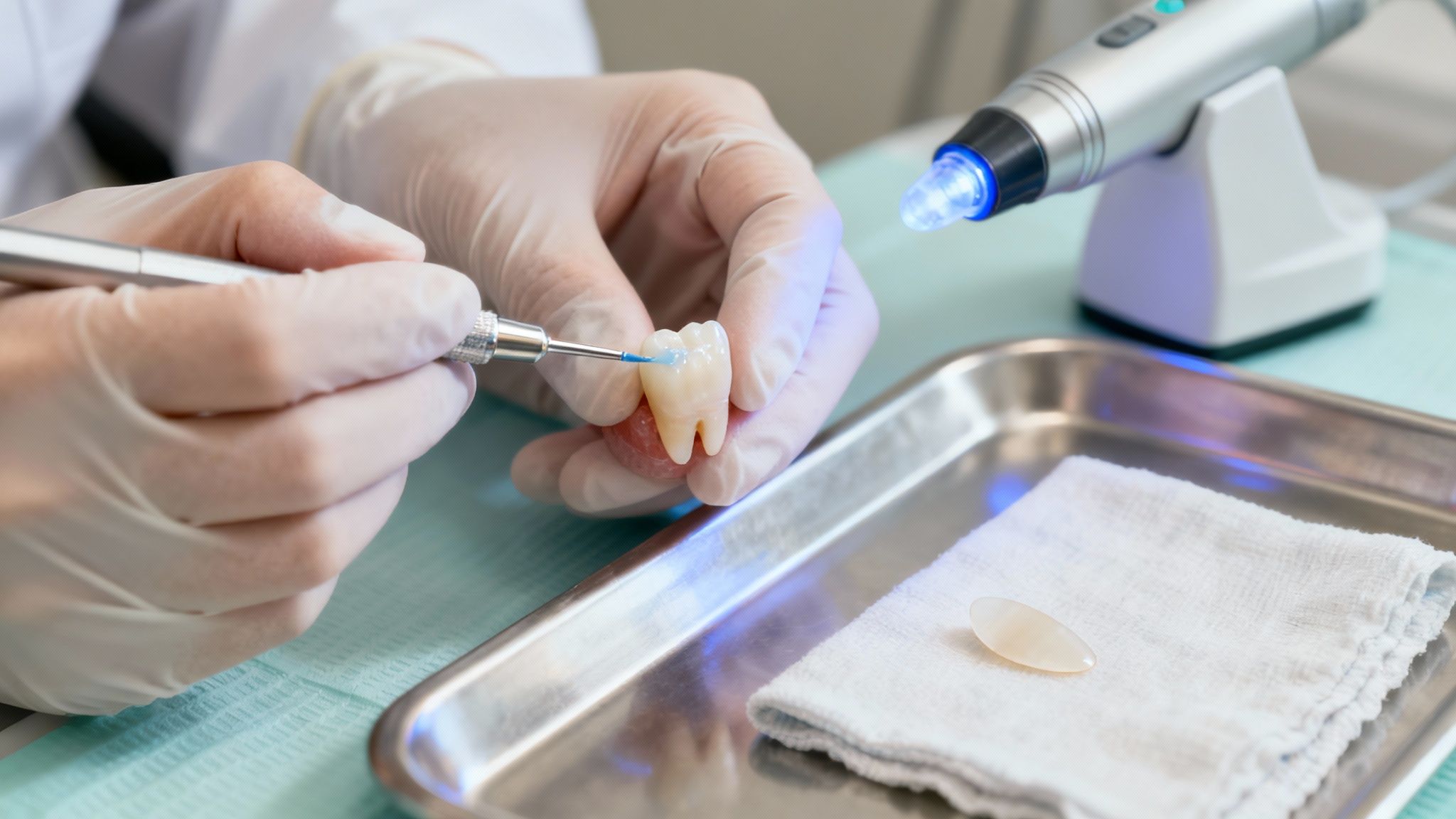
You can see that a veneer is a full-coverage shell, whereas bonding material is sculpted directly onto a specific part of the tooth.
Dental Bonding: The Art of Direct Application
Think of dental bonding as a hands-on, artistic approach to fixing minor flaws. In this procedure, your dentist applies a tooth-colored composite resin—a material with a putty-like consistency—directly onto your tooth. This allows the dentist to sculpt and shape it right then and there to hide imperfections. It’s a fantastic solution for smaller cosmetic touch-ups.
The whole process is surprisingly quick and is almost always done in a single appointment at our San Diego office. Here’s how it works:
- Preparation: First, the tooth's surface is lightly "etched," which creates a slightly rough texture for the resin to grip onto.
- Application: The composite resin, which has been perfectly color-matched to your other teeth, is applied to the area.
- Sculpting and Curing: Your dentist then skillfully shapes the resin into the ideal form. Once it looks perfect, a special light is used to harden it in seconds.
- Polishing: The final step is to polish the bonded area until it shines and blends in perfectly with the rest of your tooth.
Because it’s applied directly and involves very little, if any, alteration to your natural tooth, bonding is a wonderfully conservative and fast way to fix minor chips, close small gaps, or cover up a bit of discoloration.
Porcelain Veneers: The Custom-Crafted Smile Makeover
Porcelain veneers are a much more comprehensive way to transform your smile. These are incredibly thin, custom-made shells of high-tech ceramic that are bonded to the entire front surface of your teeth. Where bonding repairs a part of a tooth, a veneer completely redesigns its appearance from the ground up.
The path to getting porcelain veneers is a multi-step journey, and for good reason—it ensures a perfect, durable, and highly esthetic result that’s tailored just for you.
A porcelain veneer isn't just a simple fix; it's a meticulously crafted facade for your tooth, designed to create a flawless, uniform look across your entire smile.
It's no surprise that more and more people are choosing this kind of high-impact cosmetic treatment. The global dental veneers market is projected to grow from $2.36 billion in 2025 to a staggering $3.95 billion by 2032, showing just how much people value these stunning results.
Creating and placing veneers is a detailed craft that involves a few key stages:
- Consultation and Design: We start by talking about your goals and mapping out the design for your new smile.
- Tooth Preparation: A tiny layer of enamel (usually less than a millimeter) is removed from the front of the tooth. This makes just enough space for the veneer to sit flush with your other teeth.
- Digital Impressions: We take highly accurate digital scans of your prepared teeth and send them to a master dental laboratory.
- Lab Fabrication: At the lab, expert technicians use these scans to handcraft your custom porcelain veneers, paying close attention to the perfect shade, shape, and natural-looking translucency.
- Final Placement: Once your veneers are ready, you’ll come back to our office. We’ll check the fit and color to ensure everything is perfect before we permanently bond them to your teeth.
This meticulous process is exactly why veneers are considered the gold standard for anyone seeking a dramatic, long-lasting, and stain-resistant smile makeover. If this sounds like the right path for you, our comprehensive patient guide to porcelain veneers provides an even deeper dive into the procedure.
A Side-by-Side Look: Making the Right Choice for Your Smile
Deciding between dental bonding and porcelain veneers isn't always straightforward. While one offers a quick and easy fix, the other provides a more dramatic, long-lasting transformation. To figure out what's best for you, we need to break down how they stack up against each other in the areas that matter most.
Aesthetic Results: The Final Look
Let's be honest—how your teeth look is likely the biggest factor in your decision. Both bonding and veneers deliver beautiful results, but they get there in very different ways.
Porcelain veneers are really the gold standard in cosmetic dentistry for a reason. High-quality porcelain has this unique, translucent quality that perfectly mimics how light passes through natural tooth enamel. This gives veneers an incredible depth and life that's almost impossible to tell apart from a real tooth. Since they're custom-made in a dental lab, we have complete control over the shape, shade, and subtle color variations, creating a smile that's both flawless and totally believable.
Dental bonding is a fantastic solution for smaller imperfections. A skilled dentist can shape and polish the composite resin to blend beautifully with your other teeth. However, the resin itself is more opaque and doesn't have the same light-reflecting magic as porcelain. This can sometimes make it look a little less vibrant, especially if it's used to cover a large area. For a tiny chip or closing a small gap, you'd likely never notice the difference. But for a complete smile makeover, the aesthetic edge definitely goes to porcelain.
Durability and How Long They Last
Your lifestyle and what you hope to achieve long-term are huge factors here. The materials used for each treatment have very different lifespans and strengths.
Porcelain veneers are tough. The ceramic material is exceptionally hard and non-porous, making it highly resistant to chipping and breaking with normal use. If you take great care of them with good oral hygiene and regular check-ups, you can easily expect your veneers to last 10 to 20 years, sometimes even longer.
Dental bonding, on the other hand, is made from a composite resin—think of it as a durable, tooth-colored plastic. While it's strong, it simply can't compete with the robustness of porcelain. Bonding is more likely to chip or wear down over time, especially if it's on a biting edge or if you have a habit of grinding your teeth. On average, dental bonding will last somewhere between 3 and 10 years before it needs a touch-up or a full replacement.
A Real-World Scenario: If you're fixing a small chip on a front tooth that doesn't take the brunt of your bite, bonding is an excellent, efficient choice. But if you're looking for a comprehensive change across multiple teeth, the superior durability of veneers makes them a much more reliable long-term investment.
The Procedure: Time in the Chair and Invasiveness
The path to your new smile is quite different for these two options. Your schedule and how you feel about dental work will play a big part in your choice.
The dental bonding process is known for being quick and simple.
- One and Done: The whole thing is usually finished in a single visit.
- Minimally Invasive: We typically don't have to remove any of your natural tooth enamel. The resin is sculpted right onto your existing tooth.
- No Anesthesia (Usually): For most bonding procedures, it's a painless process that doesn't require any numbing.
This makes bonding a perfect fit if you want immediate results with very little fuss.
Getting porcelain veneers is a more detailed, multi-step process that requires at least two appointments over a few weeks.
- Two or More Visits: The first appointment is for preparing the teeth and taking impressions, and the second is for bonding the final veneers into place.
- Enamel Removal: To make sure the veneers fit perfectly and don't look bulky, a very thin layer of enamel is removed from the front of the tooth. This makes the process irreversible.
- Wearing Temporaries: While your custom veneers are being crafted by the lab, you'll wear a temporary set to protect your teeth.
This meticulous approach is what ensures that the final result is a precise, custom-fit, and stunningly natural-looking smile.
Stain Resistance: Keeping Your Smile Bright
For anyone who enjoys a morning coffee, a glass of red wine, or a cup of tea, this is a big one. The materials react very differently to staining agents.
Porcelain is a true champion here. As a non-porous ceramic, it is highly resistant to staining. It will keep its bright, beautiful shade for its entire lifespan, effectively repelling pigments from everything you eat and drink. You simply don't have to worry about your veneers turning yellow.
The composite resin used in bonding, however, is porous, much like your natural teeth. This means it can gradually soak up stains and may darken over time. While professional polishing helps manage this, the color stability just isn't on the same level as porcelain. To get a better handle on this material, take a look at our guide with 5 tips for composite veneers.
The Cost: Upfront vs. Long-Term
Finally, let's talk about the financial investment, which is a practical consideration for everyone.
Dental bonding is, without a doubt, the more affordable choice upfront. The materials cost less, and since it’s all done in one visit, the overall cost per tooth is significantly lower. This makes it a very accessible way to fix minor cosmetic issues without breaking the bank.
Porcelain veneers come with a higher initial price tag. The cost reflects the premium ceramic materials, the artistry of the dental lab technicians who handcraft them, and the multiple appointments involved. However, when you consider their longevity and durability, veneers often prove to be the more cost-effective option in the long run, as they need to be repaired or replaced far less frequently than bonding.
Choosing the Right Treatment for Your Smile Goal
Getting bogged down in the technical details of bonding and veneers is easy. What’s far more important is figuring out which one actually makes sense for you. Ultimately, your personal smile goals should be the deciding factor in the dental bonding vs. veneers debate.
Are you looking for a quick, targeted fix for a small imperfection? Or are you dreaming of a complete, long-lasting smile transformation? Your answer to that one question will almost always point you in the right direction. Let's walk through a few real-world scenarios our cosmetic dental team sees all the time.
Scenario 1: The Quick Fix for a Minor Chip
Imagine you have a big event coming up in San Diego—a wedding, maybe, or an important job interview—and you suddenly notice a small chip on one of your front teeth. It doesn’t hurt, but it’s the only thing you can see in the mirror. You need a solution that's fast, effective, and won't break the bank.
Recommendation: This is a textbook case for dental bonding.
In a single visit, a cosmetic dentist can apply a composite resin, carefully sculpt it to match your tooth's natural shape, and polish it until it blends in perfectly. You’ll walk out of the office the same day with your smile—and your confidence—fully restored. Bonding is practically designed for these kinds of immediate, cosmetic repairs.
Scenario 2: The Full Smile Makeover
Now, let's picture a totally different situation. Maybe you’ve been unhappy with your smile for years because of a combination of issues: deep-set stains that whitening can't touch, a few slightly crooked teeth, and an unevenness that just feels off. Your goal isn't just to fix one tooth; it's to create a bright, uniform, and flawless new smile from the ground up.
Recommendation: For a total transformation, porcelain veneers are the ideal choice.
This simple decision tree really helps clarify when to choose which path.
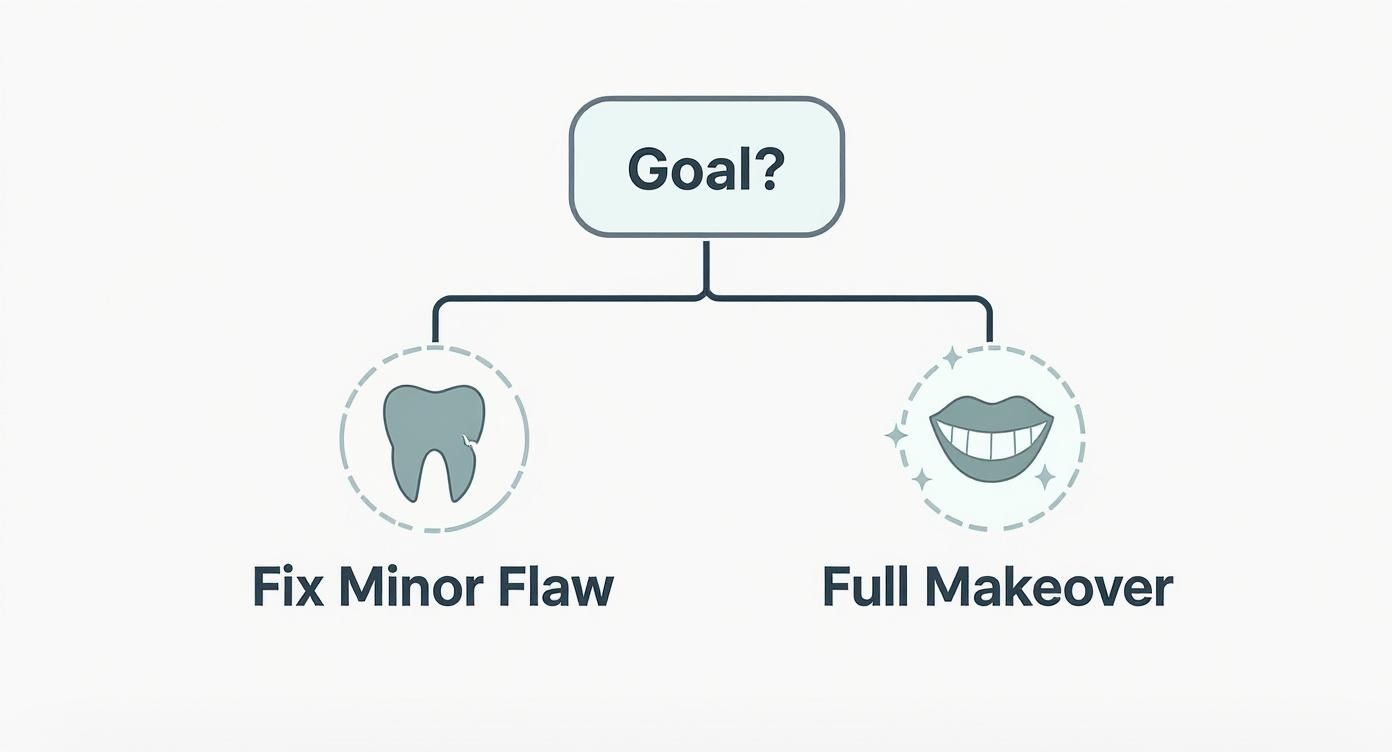
As you can see, if you're aiming for a complete makeover, veneers offer the most comprehensive solution.
Veneers essentially let us redesign the entire visible surface of your smile. We can select the perfect shade of white, correct minor misalignments, and craft a tooth shape that is both beautiful and perfectly suited to your facial features. It's a true aesthetic upgrade.
Key Insight: The choice isn't about which procedure is "better," but which one is better for your specific goal. Bonding excels at repair, while veneers excel at reinvention.
Scenario 3: Closing Small Gaps Between Teeth
That little gap (or diastema) between the front teeth is a common concern. It might not be big enough to justify orthodontics, but it's often noticeable enough to make people feel self-conscious when they smile.
- For minor gaps: Dental bonding is an excellent, non-invasive fix. We simply add a bit of composite resin to the sides of the teeth, effectively closing the space in one appointment.
- For larger gaps or multiple gaps: Porcelain veneers usually deliver a more proportional and aesthetically pleasing result. By covering the whole tooth, veneers close the gap while ensuring the final tooth shape looks natural and not too wide.
Scenario 4: Addressing Severe Discoloration
Sometimes, stains are so deep within a tooth's structure that even professional whitening can't lift them. This can be caused by certain medications (like tetracycline), genetics, or an old dental injury.
Recommendation: For this, porcelain veneers are the definitive solution.
Because a veneer is a thin but opaque shell of porcelain, it completely masks any underlying discoloration, no matter how severe. While bonding can help with minor surface stains, the superior coverage and color stability of porcelain are simply unmatched for tackling deep, intrinsic staining. Making the right call always starts with having a clear vision of what you want to achieve.
Understanding Costs and Insurance in San Diego
Let’s talk about one of the biggest factors in any dental decision: the cost. When you’re weighing dental bonding against veneers, it's not just about the initial price tag, but the long-term value you’re getting. The financial side of things can feel complicated, especially here in San Diego, so let's break it down.
Dental bonding is almost always the more budget-friendly choice on a per-tooth basis. This is because the composite resin material costs less, and the entire procedure can be completed right in the office in a single visit—no outside lab fees involved. It’s a fantastic and accessible way to make a big impact on your smile without a major financial commitment.
Porcelain veneers, on the other hand, are a more significant upfront investment. The higher price comes down to a few key things:
- Premium Materials: High-tech, medical-grade porcelain ceramic is engineered for incredible durability and an appearance that’s virtually indistinguishable from natural tooth enamel.
- Custom Lab Fabrication: Each veneer is a tiny work of art, custom-made for you by a skilled dental technician in a specialized lab. This process requires a high degree of precision and artistry.
- Multiple Appointments: The whole process is more involved, typically requiring at least two appointments for preparation, taking detailed impressions, and the final placement.
Navigating Dental Insurance for Cosmetic Work
One of the first questions patients ask is, "Will my insurance cover this?" When a procedure is purely for cosmetic reasons, the honest answer is usually no. Most insurance plans are set up to cover treatments that are considered medically necessary, like fillings or crowns for decay.
But there are sometimes exceptions. If you need bonding or a veneer to fix a tooth that was chipped or broken in an accident, your insurance might classify it as a restorative treatment and cover part of the cost. It really all comes down to the fine print in your specific PPO plan.
Important Note: You should never just assume a procedure isn't covered. Here at Serena San Diego Dentist, our team is fantastic at working with insurance companies to make sure you get every bit of the benefit you’re entitled to. We'll help you decode your coverage and handle the claims for you.
The demand for smile makeovers is growing worldwide. In fact, the cosmetic dentistry market is projected to hit $123 billion by 2033, driven by new technologies and more people learning about options like bonding and veneers. You can learn more about the growth of the cosmetic dentistry market and what it means for patients.
Payment and Accessibility in San Diego
We firmly believe that everyone deserves a smile they feel confident about, and finances shouldn't be a barrier. That's why at Serena San Diego Dentist, we accept most major PPO insurance plans and offer flexible out-of-pocket payment options. For a complete overview, you can check out our guide on dental insurance in San Diego.
For any out-of-pocket costs or treatments that insurance doesn’t cover, we also offer financing plans. These plans allow you to break the total cost into smaller, more manageable monthly payments, so you can move forward with your new smile without the financial stress. Our team will be happy to walk you through all the options during your consultation.
Your Next Step Toward a Confident Smile
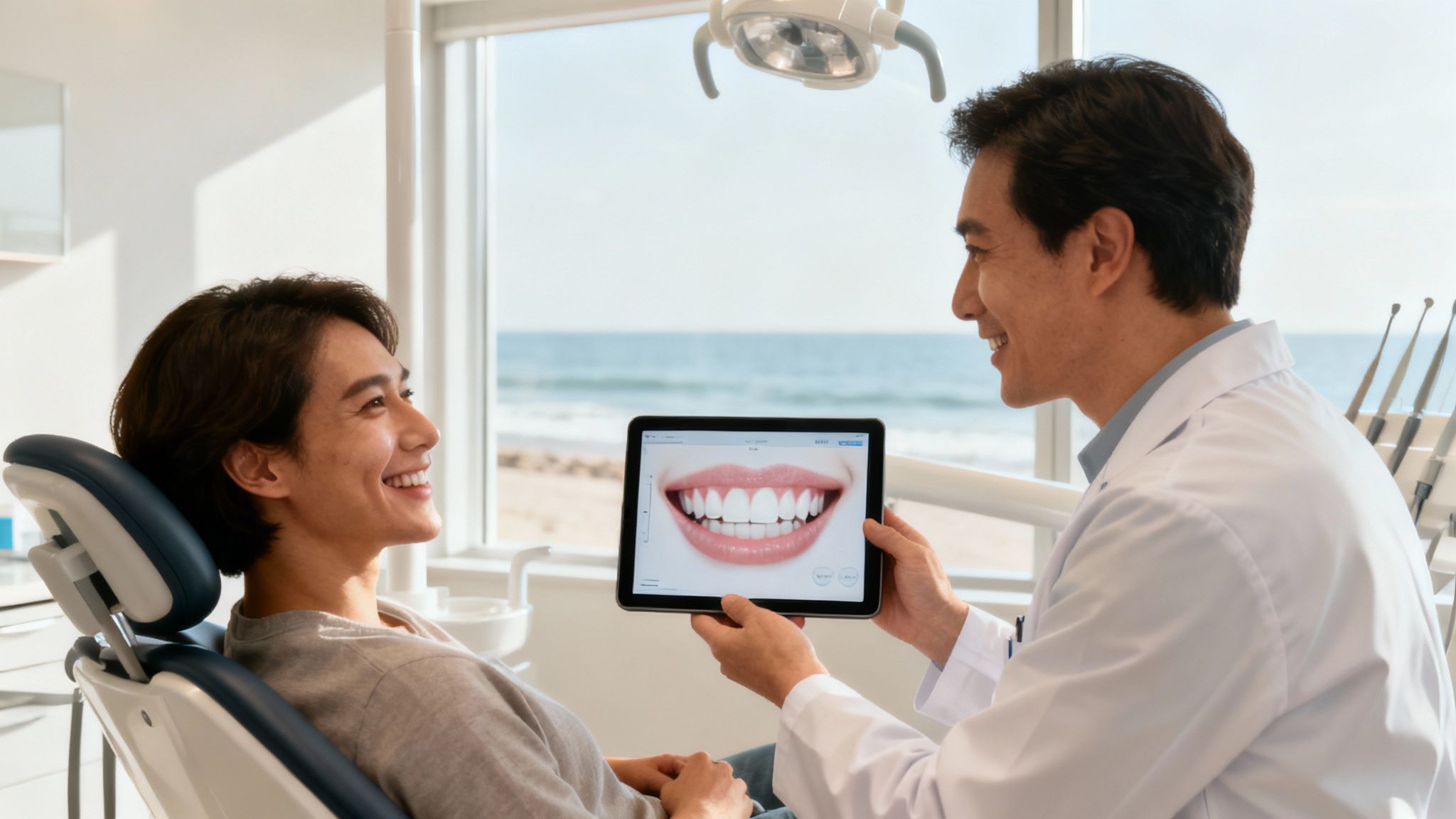
So, where do you go from here? The dental bonding vs. veneers decision really boils down to your own vision for your smile. It's about matching the right solution to your goals, your budget, and how quickly you want to see results. There isn't one "correct" choice for everyone—just the one that's right for you.
We've covered a lot of ground, from the materials and lifespan of each option to the time and money involved. You're now in a great position to understand the trade-offs and make an informed decision.
A Quick Recap to Guide Your Decision
Let's break it down one last time to make the choice crystal clear.
Choose Dental Bonding if: You're looking to fix minor, specific issues. Think small chips, tiny gaps between teeth, or a bit of discoloration that doesn't require a major overhaul. Bonding is the go-to for a quick, budget-friendly fix that can often be done in a single visit. It’s perfect for targeted touch-ups.
Choose Porcelain Veneers if: Your goal is a complete smile transformation. If you want to dramatically change the color, shape, and overall look of your teeth for a uniform, stunning result, veneers are the answer. They're the premier choice for covering deep stains and getting a durable, highly stain-resistant smile that can last 10-20 years.
Here's the simplest way to think about it: Bonding is a repair, while veneers are a redesign. One is for fine-tuning, the other is for a full aesthetic upgrade.
From Information to Action
Reading up on your options is an essential first step, but nothing beats a professional eye. A cosmetic dentist can look at the specifics of your teeth, hear you out on what you're hoping to achieve, and map out a practical plan to get you there.
In a place like San Diego, a great smile feels like a natural part of the lifestyle. Don't let indecision keep you from getting the one you've been picturing. The next move is taking that idea of a new smile and turning it into a reality.
Ready to enhance your smile with veneers or bonding? Schedule a personalized consultation at Serena San Diego Dentist today! Our team is ready to answer all your questions and help you design the beautiful, confident smile you deserve.
Frequently Asked Questions About Smile Makeovers
Even after a side-by-side comparison, it's completely normal to have a few lingering questions. Deciding on something as personal as your smile is a big deal, and getting all the facts is the best way to feel confident about your choice. Here are the answers to some of the questions we hear most often from our patients here in San Diego.
Can Dental Bonding Be Whitened Later?
This is a really important detail to get right. The composite resin used for dental bonding won't change color with teeth whitening products. So, while your natural teeth would get brighter, the bonded areas would stick out, creating an obvious mismatch in shade.
That’s why we always tell our patients to whiten their teeth before we do any bonding. This lets us match the resin perfectly to your new, brighter smile for a result that looks completely natural from the very start.
Is Getting Veneers a Painful Process?
We put your comfort above all else, and getting veneers shouldn't be painful. Worried about pain during veneer placement? Here's what to expect: When we prepare the teeth, we use a local anesthetic to make sure the area is totally numb. You really shouldn't feel a thing.
It's pretty common to have some minor sensitivity in your teeth or gums for a few days after the prep work and again after the final veneers are bonded. This feeling is only temporary and is usually easy to handle with standard over-the-counter pain relievers. Honestly, most people tell us the whole process was much easier than they imagined.
Can You Still Get Cavities with Veneers or Bonding?
Yes, absolutely. A tooth with a veneer or bonding can still get a cavity. Remember, these treatments only cover a part of your tooth—the very front for veneers, or a specific spot for bonding. The rest of the tooth, especially the back and the area along the gumline, is still vulnerable to decay.
Key Reminder: There's no substitute for great oral hygiene. Brushing twice a day, flossing every single day, and coming in for your regular check-ups are critical for protecting the natural tooth underneath and making your cosmetic work last.
Which Option Is Best for a Teenager?
For our younger patients, dental bonding is almost always the go-to solution for smaller cosmetic issues. A teenager's jaw and bite are often still changing, which makes an irreversible procedure like porcelain veneers a less suitable option.
Bonding has some major pluses for teens:
- It's minimally invasive, which means we preserve their healthy, natural tooth structure.
- It’s reversible, so it can be changed or removed as they get older.
- It's cost-effective, making it a practical fix for chips, cracks, or minor gaps.
When you're thinking about cosmetic treatments like bonding or veneers, it can be helpful to see how they fit into the bigger picture of current beauty industry trends. Understanding these trends gives you a broader perspective on modern aesthetics and what people are looking for.
How Do I Choose a Cosmetic Dentist in San Diego?
Picking the right dentist is probably the single most important decision you'll make. You want to find someone who has a ton of experience in cosmetic work, not just general dentistry. Always ask to see their portfolio—look at before-and-after photos of patients with issues similar to yours. A great cosmetic dentist will really listen to what you want, explain everything clearly, and work with you to create a plan you’re excited about.
At Serena San Diego Dentist, our team brings together artistic skill and proven dental science to craft smiles that look incredible and feel healthy. If you’re ready to see what’s possible for your own smile, we’d love to help you take that next step.
Schedule your personal consultation with our San Diego cosmetic dental experts today!