
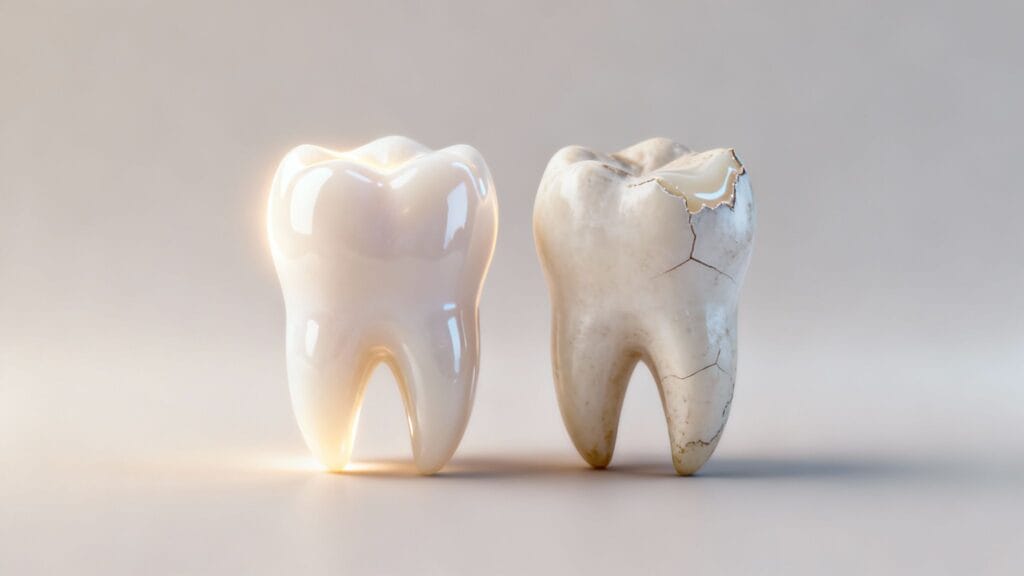
Dental sealants are a powerful tool for preventing cavities, acting as a shield for those hard-to-reach back teeth. But they aren't a "set it and forget it" solution. While their effectiveness at blocking plaque is a huge win, the main trade-off is that they don't last forever and will eventually need to be checked and reapplied.
Understanding Dental Sealants and How They Work
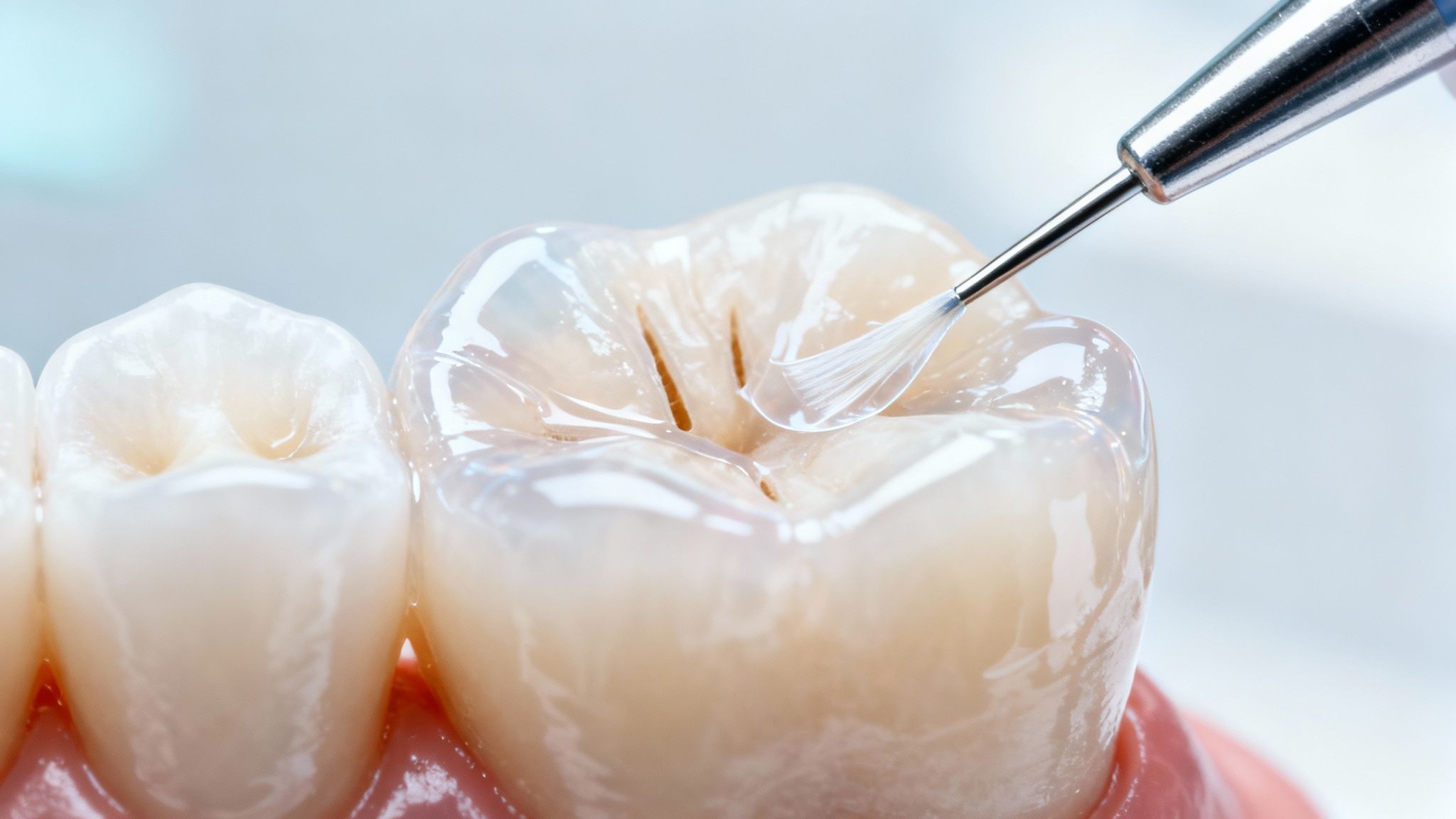
Think of dental sealants as a simple, proactive way to stay ahead of tooth decay. They are a very thin, safe, protective coating that a dentist paints onto the chewing surfaces of your molars and premolars. These back teeth are covered in tiny grooves and pits that are a nightmare to clean properly with a toothbrush, making them a perfect hiding spot for bacteria and food debris.
The process of applying them is quick and painless. First, we thoroughly clean and dry the tooth. Then, the liquid sealant is brushed onto the enamel, flowing into all those little crevices. A special curing light hardens the material in seconds, creating a tough, durable shield.
This physical barrier literally "seals out" the bad stuff—plaque, acids, and food particles—that cause cavities. It’s an incredibly effective preventive measure for the most vulnerable parts of your teeth. The CDC has found that sealants can cut the risk of decay in molars by nearly 80% for the first two years. That’s a massive benefit from such a simple procedure.
Knowing how sealants work makes it clear why they’re a cornerstone of preventive dentistry, especially for anyone looking to avoid fillings. If you’re curious about the early warning signs of decay, our guide on cavity symptoms you should never ignore is a great resource.
Dental Sealants at a Glance
To quickly break it down, here’s a simple overview of what dental sealants are all about.
| Aspect | Description |
|---|---|
| What It Is | A thin, plastic-like coating applied to the chewing surfaces of your back teeth. |
| Primary Purpose | Creates a smooth, protective barrier over deep grooves to block out food and bacteria. |
| Application | A fast, non-invasive, and completely painless procedure done in the dental chair. |
| Target Area | The pits and fissures of molars and premolars, where decay often starts. |
Essentially, it's a straightforward and highly effective way to protect the teeth that do most of the heavy lifting when you chew.
What Are the Real Advantages of Dental Sealants?
When we talk about dental sealants, we're really talking about a proactive investment in your oral health. This isn't just a simple coating; it's a powerful preventative measure. The biggest plus is their incredible effectiveness at stopping cavities right where they love to start—in the deep, hard-to-clean grooves of your back teeth.
Think of sealants as a shield, especially for kids and teenagers whose new permanent molars are particularly susceptible to decay. By physically blocking food particles and bacteria from getting trapped in those tiny crevices, sealants stop decay before it even gets a foothold.
A Smart Financial Choice
From a practical standpoint, one of the most persuasive arguments for sealants is the long-term savings. The initial cost to apply a sealant is just a fraction of what you'd spend to fix a cavity later on.
A single sealant application can help you avoid future fillings, root canals, or even crowns. Those treatments aren't just more expensive—they're also more invasive and require more time in the dental chair. It's a textbook case of an ounce of prevention being worth a pound of cure.
The Pain-Free Application Process
The actual experience of getting sealants is a huge win, especially for anxious patients or young children. Worried about pain? There's no need. The whole procedure is quick, straightforward, and completely painless.
- No Drilling: Unlike getting a filling, we don't have to remove any part of the natural tooth.
- No Anesthesia: The process is so gentle that no numbing shots are needed.
- Quick and Simple: It only takes a few minutes to seal each tooth, which makes for a short and positive appointment.
This kind of stress-free visit can help build a healthy, positive attitude toward dental care that lasts a lifetime. While sealants are a fantastic line of defense, it's also helpful to understand what they're protecting against. Learning about the benefits of quitting sugar for better overall health gives you the bigger picture on how to safeguard your smile.
The Flip Side: What Are the Downsides of Dental Sealants?
While dental sealants are a fantastic tool for preventing cavities, it's wise to look at the whole picture. They aren't a "set it and forget it" solution, and understanding their limitations is key to making an informed decision about your family's oral health.
The biggest thing to remember is that sealants don’t last forever. They take a beating every day from chewing and grinding, which can eventually cause them to chip or wear away. This is why your dentist will check on them during your regular visits—to make sure they’re still fully intact and doing their job.
A Closer Look at Materials and Maintenance
One of the most common questions parents ask is about the materials themselves, specifically about bisphenol A (BPA). Some resin sealants do contain trace amounts of BPA derivatives. While major health organizations have confirmed the exposure level is incredibly low and considered safe, it's a completely valid concern. The good news is that the dental industry has responded, and more and more dentists are now using completely BPA-free materials.
Durability is another practical point. Research shows that after five years, sealant retention rates can be anywhere from 50% to 70%. This means reapplication is sometimes necessary to keep those teeth protected. For a deeper dive, you can explore detailed dental adhesive research findings.
It's also critical to be clear about what sealants can't do.
- They're Site-Specific: Sealants only shield the chewing surfaces of your back teeth. They offer no protection for the smooth sides of teeth or, crucially, the spaces in between them where plaque loves to hide.
- They Don't Replace Good Habits: This is a big one. Sealants are a powerful addition to a dental routine, not a replacement for it. Brushing, flossing, and regular cleanings are still non-negotiable for fighting cavities and gum disease.
Think of sealants as a specialized raincoat for the grooved tops of your molars. It’s highly effective for that specific area, but you still need a comprehensive routine to protect your entire smile.
At the end of the day, dental sealants are most effective when they're part of a complete preventive strategy. They provide targeted, powerful protection where it's most needed, but they rely on a foundation of great daily habits to keep your smile healthy.
Weighing the Pros and Cons of Dental Sealants
Deciding if dental sealants are right for you or your child comes down to a simple trade-off: a small investment in prevention now versus the risk of more complex and expensive treatments later. It’s all about balancing their impressive protective power against their practical limitations.
The biggest win for sealants is their proven ability to stop decay dead in its tracks. We're talking about an 80% reduction in cavities for the first two years. On the flip side, they aren't a "set it and forget it" solution. They have a lifespan and need to be checked during regular dental visits to make sure they're still doing their job.
A Closer Look at the Key Factors
Let's talk about cost. Yes, there's an upfront expense to get sealants applied, but that cost is a drop in the bucket compared to what you'd pay for a filling, a crown, or a root canal. From a purely financial standpoint, sealants are a smart move for long-term dental health.
This infographic breaks down the essential numbers, from how well they prevent cavities to their cost and how long they typically last.
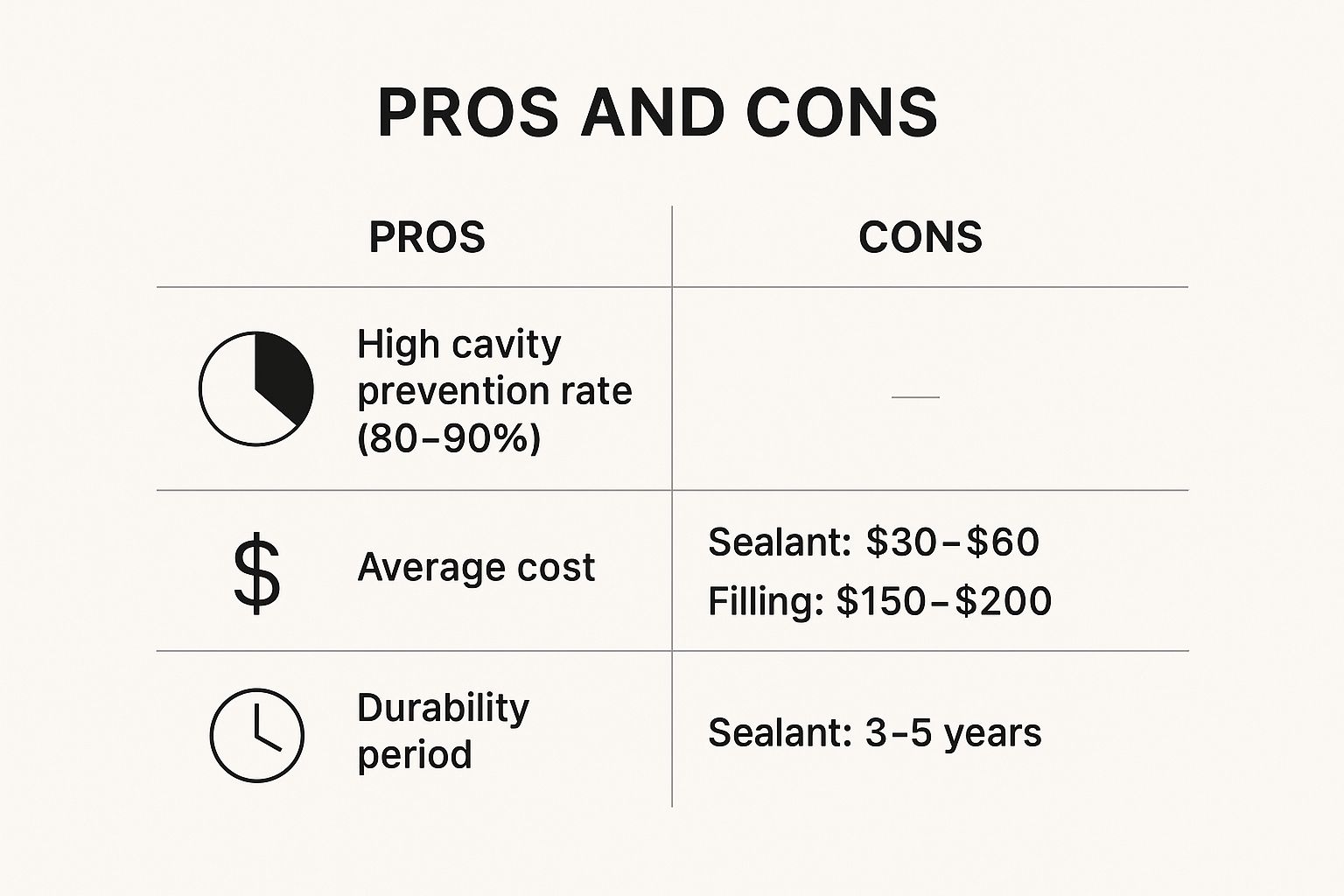
As you can see, even with a limited lifespan, their high success rate and cost-effectiveness make them a really powerful tool for protecting vulnerable teeth.
The decision boils down to this: a quick, painless, and preventive step today, or the possibility of invasive and costly dental work tomorrow. For most people, especially children with their new permanent molars, the benefits are a clear winner.
To help you see the full picture, here’s a more detailed breakdown.
Detailed Comparison of Dental Sealant Pros and Cons
| Criterion | The Pros (Advantages) | The Cons (Disadvantages) |
|---|---|---|
| Effectiveness | Extremely effective, reducing cavity risk by up to 80% in back teeth by blocking food and bacteria. | Not a permanent fix. Their effectiveness decreases as they wear down over time and may need reapplication. |
| Application Process | Painless and non-invasive. The procedure is quick, with no drilling or anesthesia required. | Requires a perfectly dry tooth surface for proper bonding, which can be challenging with some patients (e.g., young children). |
| Cost | Cost-effective in the long run. The initial cost is significantly lower than that of treating decay with fillings or crowns. | Not always covered by insurance. While many plans cover sealants for children, adult coverage is less common. |
| Durability | Can last for up to 10 years with proper care and regular dental check-ups to monitor for wear and tear. | Can chip or wear away sooner, especially with hard/sticky foods or teeth grinding, leaving the tooth vulnerable again. |
| Maintenance | No special maintenance required beyond normal brushing, flossing, and routine dental visits. | Requires professional monitoring at check-ups to ensure they are fully intact and have not developed leaks. |
Ultimately, while no dental treatment is perfect, the balance sheet for sealants leans heavily in their favor.
Of course, sealants are just one piece of the preventive puzzle. For a truly comprehensive approach to cavity defense, they work best alongside other treatments. You can learn more about the effects fluoride treatments can have on your teeth and see how it works hand-in-hand with sealants. The best defense is always a combination of great at-home hygiene, professional care, and regular check-ups.
Who Is a Good Candidate for Dental Sealants?
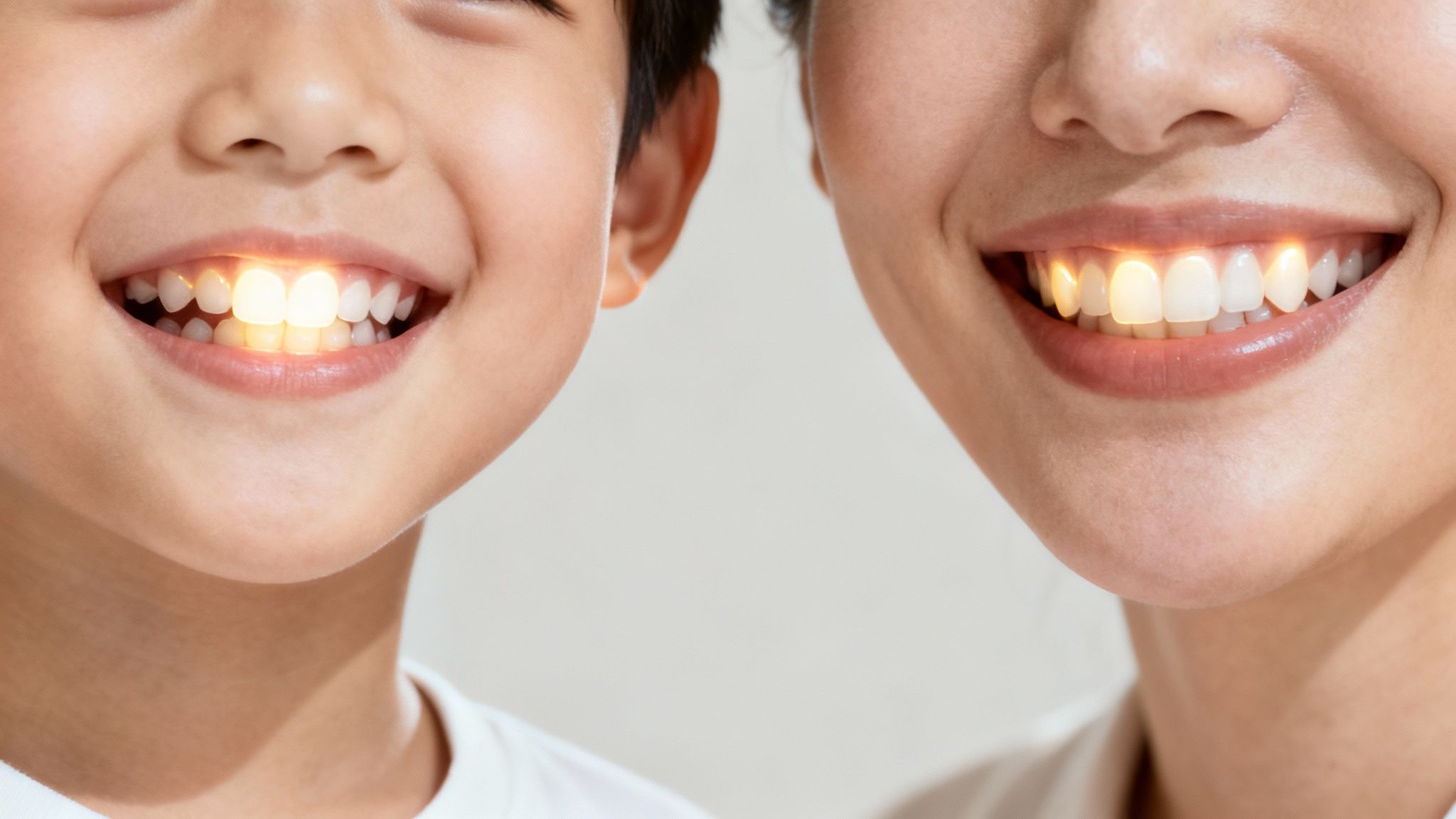
It’s one thing to weigh the pros and cons, but the real question is: who actually needs dental sealants? They aren’t for everyone, but for the right person, they’re an incredibly powerful preventive tool. The most common and effective use, by far, is for children and teenagers.
Think about it: their newly erupted permanent molars have deep, narrow grooves that toothbrush bristles just can't reach. Combine that with brushing habits that are still a work in progress, and you have a recipe for cavities. The prime window for applying sealants is usually between the ages of 6 and 14, right as those first and second permanent molars come in. It’s a simple, proactive step that shields the most vulnerable tooth surfaces during the most cavity-prone years. For parents considering this, understanding when to intervene is crucial; our guide on treating cavities in baby teeth provides more context.
Not Just for Kids
But sealants aren't exclusively a pediatric treatment. Many adults are excellent candidates, especially if certain risk factors for decay are present.
- Adults with Deep Grooves: Some of us have naturally deep pits and fissures in our molars that have managed to stay cavity-free into adulthood. Applying a sealant here is like getting an extra insurance policy against future decay.
- High Cavity Risk: If you have a history of getting frequent cavities, or if a medical condition causes dry mouth (which drastically increases decay risk), sealants can offer much-needed protection.
Ultimately, a professional dental evaluation is the only way to know for sure. A dentist can look at your specific tooth anatomy and overall oral health to determine if sealants are a smart preventive measure to keep your smile healthy for years.
Where Sealant Technology is Headed
The world of dental sealants is anything but static. We're seeing some genuinely exciting progress as researchers push beyond creating simple plastic coatings. The goal now is to develop "smarter" materials that do more than just block out food and bacteria—they actively improve tooth health.
One of the biggest leaps forward is in bioactive sealants. Think of these less as a raincoat for your tooth and more as a treatment. Unlike the inert sealants of the past, these new formulas are engineered to slowly release beneficial minerals like fluoride, calcium, and phosphate right where they're needed most. This helps remineralize the enamel, making the tooth itself stronger and more resistant to decay.
Building a Better Barrier
Of course, a sealant is only as good as its lifespan. A common frustration has been how long they last, which is why much of the current innovation is focused on durability. Researchers are experimenting with nanotechnology, for example, which has shown promise in creating nanomaterial-enhanced sealants that can last up to 50% longer.
At the same time, there's a growing demand for more natural, biocompatible options, leading to the development of bio-based sealants. You can dive deeper into these advancements in sealant materials at ATMBio.com.
This evolution toward "active" protection is a game-changer. Future sealants won't just sit on the tooth's surface; they'll work to rebuild and strengthen it from the inside out, making them an even more valuable part of preventive care.
Finally, the industry has heard patient concerns loud and clear. There is a major push toward formulating entirely BPA-free composites across the board. This dedication ensures that sealants will continue to be a safe, reliable, and evidence-based way to protect teeth for decades.
Common Questions About Dental Sealants
Even after weighing the pros and cons, it's natural to have a few more questions about dental sealants. Let's tackle some of the ones we hear most often in the office.
Is the Dental Sealant Application Process Painful?
Not at all. Applying sealants is one of the easiest and most comfortable procedures we do. There’s absolutely no drilling or need for anesthetic.
The whole process is quick and non-invasive. We just clean the tooth surface, prep it, and then carefully paint the thin sealant material onto the grooves before using a special light to cure it.
How Long Do Dental Sealants Last?
Dental sealants are surprisingly tough. With good care, they can protect your teeth for 5-10 years, sometimes even longer.
Of course, their lifespan depends on your individual chewing habits and diet. We'll check on them during your regular checkups and can easily touch them up or reapply them if we see any wear and tear. This durability works hand-in-hand with routine care like a professional dental cleaning to keep your smile healthy.
Are Dental Sealants Just for Kids?
While they are a cornerstone of pediatric dentistry, adults can absolutely benefit, too. We often recommend them for any adult who has deep pits and grooves in their molars and hasn't had fillings or decay in those teeth yet.
If you're at a higher risk for cavities, sealants can be an excellent, proactive step to protect those hard-to-clean back teeth for years to come.