
So, you're thinking about dental veneers and wondering, "How long will they actually last?" It’s one of the first questions people ask, and for good reason—you want your new smile to be a lasting investment, especially here in sunny San Diego where smiles are always on display.
On average, you can count on porcelain veneers to last between 10 to 15 years. The more budget-friendly option, composite veneers, typically have a lifespan of 5 to 7 years. Of course, these numbers aren't set in stone; with great care and regular dental check-ups, you can often extend their life even further, keeping your smile bright for years to come.
Understanding the Lifespan of Dental Veneers
The biggest factor determining how long your veneers will last comes down to the material they're made from. Think of it like choosing kitchen countertops: you have gorgeous, durable granite that lasts for decades, and you have laminate, which looks good and gets the job done but is more susceptible to wear and tear. Both work, but one is built for the long haul.
It's the same idea with veneers:
- Porcelain Veneers: These are the gold standard for cosmetic dentistry in San Diego. Crafted from a tough, high-quality ceramic, they're incredibly resistant to staining and chipping. That morning coffee or glass of red wine? Not a problem for porcelain.
- Composite Veneers: This option uses a tooth-colored resin material. They are a great, cost-effective choice that requires less tooth preparation, but the resin is softer and more porous, making it more likely to stain or wear down over time.
The track record for porcelain is impressive. Studies consistently show that after a full decade, around 95% of porcelain veneers are still going strong. This incredible success rate is why they are considered such a reliable choice for a true smile transformation. For a deeper dive, you can explore more about porcelain veneers longevity in our detailed guide.
To give you a clearer picture, let's break down the key differences.
Veneer Lifespan At a Glance
Here’s a simple table to compare the two main types of veneers head-to-head.
| Feature | Porcelain Veneers | Composite Veneers |
|---|---|---|
| Average Lifespan | 10-15 years (or more with excellent care) | 5-7 years |
| Material | High-grade ceramic | Tooth-colored resin |
| Stain Resistance | Excellent; non-porous material resists stains | Fair; can stain over time like natural teeth |
| Durability | Very high; resistant to chipping and wear | Moderate; more prone to chips and wear than porcelain |
| Appearance | Translucent, mimics natural tooth enamel perfectly | Very good, but can lose its polish over time |
| Cost | Higher initial investment | More budget-friendly upfront |
As you can see, the choice often comes down to balancing your long-term goals with your budget. While porcelain requires a larger upfront investment, its durability and longevity often make it more cost-effective over its entire lifespan.
Choosing Between Porcelain and Composite Veneers
When it comes to how long your veneers will last, it really boils down to one thing: the material they're made from. Getting your head around the difference between porcelain and composite is the key to picking the right option for your smile, your budget, and your lifestyle.
The Durability of Porcelain
Think of porcelain veneers as the fine china of the dental world. They're crafted from a super-strong, glass-like ceramic that’s incredibly tough and non-porous. This is a huge plus because it means they’re fantastic at resisting stains from things like coffee, tea, and red wine.
That tough nature also means they hold up beautifully to the daily grind of biting and chewing, making them far less likely to chip. It’s this built-in resilience that allows porcelain veneers to last an impressive 10-15 years—and sometimes even longer with the right care.
The Flexibility of Composite Resin
Composite veneers are a different beast altogether. They're sculpted from a tooth-colored resin, which you can think of as a high-grade, durable plastic. The big draw here is that they're easier on the wallet and the procedure is often less invasive, meaning more of your natural tooth is preserved.
The trade-off, however, is that this resin material is more porous than ceramic. As a result, composite veneers typically have a lifespan of about 5 to 7 years. Because they can stain and wear down a bit easier over time, they might need a little more maintenance, like polishing or touch-ups, to keep them looking their best.
This handy infographic gives you a quick visual comparison of what to expect from each.
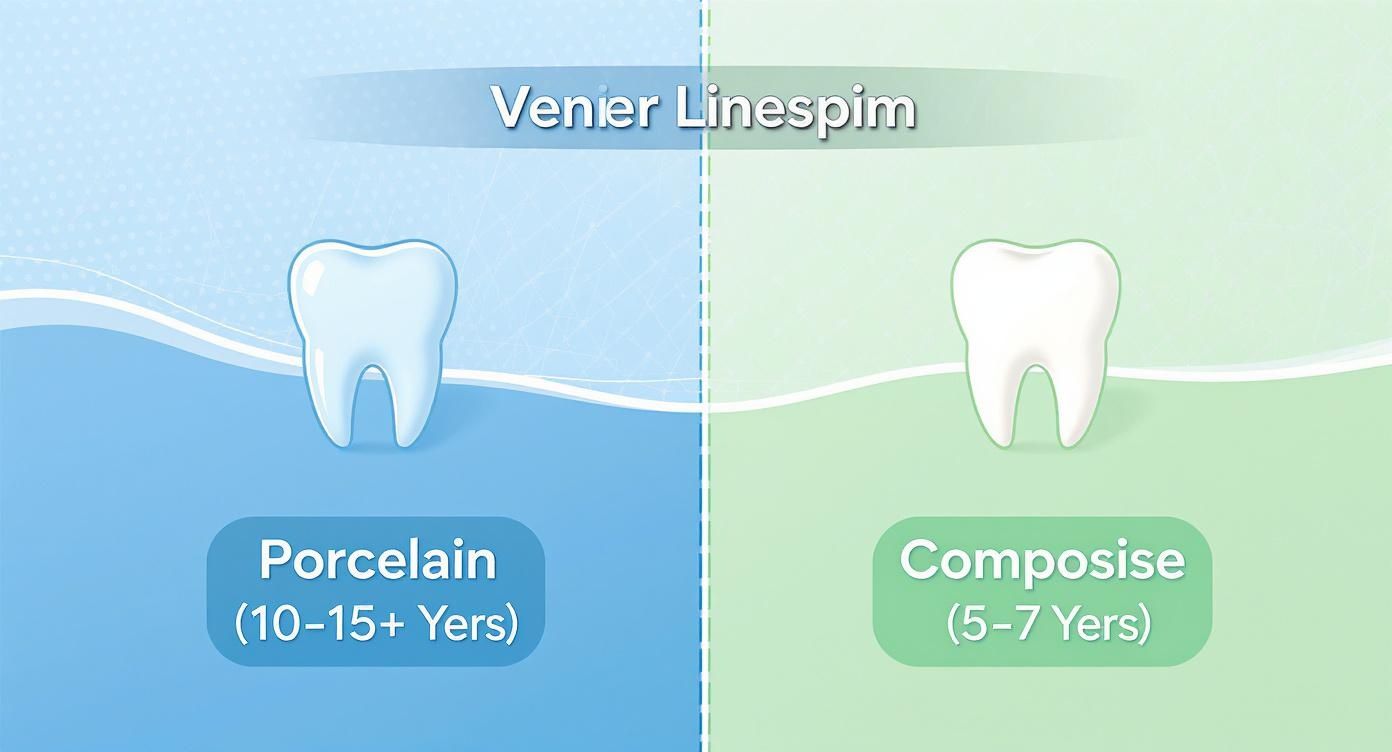
As you can see, porcelain offers roughly double the lifespan, making it a serious long-term investment in your smile. If you're leaning towards composites, be sure to check out our 5 essential tips for composite veneers to help you get the most out of them. Ultimately, the best choice comes down to balancing what works for your budget now with your goals for your smile down the road.
Everyday Habits That Impact Your Veneers
So, you've chosen your veneer material. That's a huge step, but it's really only half the story. The other, arguably more important, half is how you treat them day in and day out. Your daily habits are the single biggest factor in keeping that new smile looking brilliant for years to come.
Think of it this way: getting veneers is like buying a beautiful new car. You wouldn't just drive it without ever washing it or getting an oil change, right? The same principle applies here. Your daily maintenance is what protects your investment.
Your Daily Care Routine
Your commitment to a solid oral hygiene routine is your first line of defense. It doesn't have to be complicated, but it does need to be consistent.
- Gentle Brushing: Always opt for a soft-bristled toothbrush and a non-abrasive toothpaste. Brushing too hard or using gritty pastes can easily scratch the polished surface of your veneers and even irritate the delicate gum line where the veneer meets your natural tooth.
- Consistent Flossing: This is non-negotiable. Flossing every day is crucial for clearing out plaque that builds up along the edges of your veneers. This prevents decay from creeping in on the natural tooth structure underneath.
- Rinse Carefully: When choosing a mouthwash, make sure it's alcohol-free. Over time, mouthwashes with alcohol can actually weaken the bonding agent that secures your veneers to your teeth.
Lifestyle and Dietary Adjustments
What you do outside of the bathroom matters just as much. Certain foods, drinks, and habits can put your veneers at risk of damage or staining.
For instance, coffee is a big one for many people. The good news is you don't have to give it up entirely; you just need to know how to protect veneers from coffee with a few smart strategies.
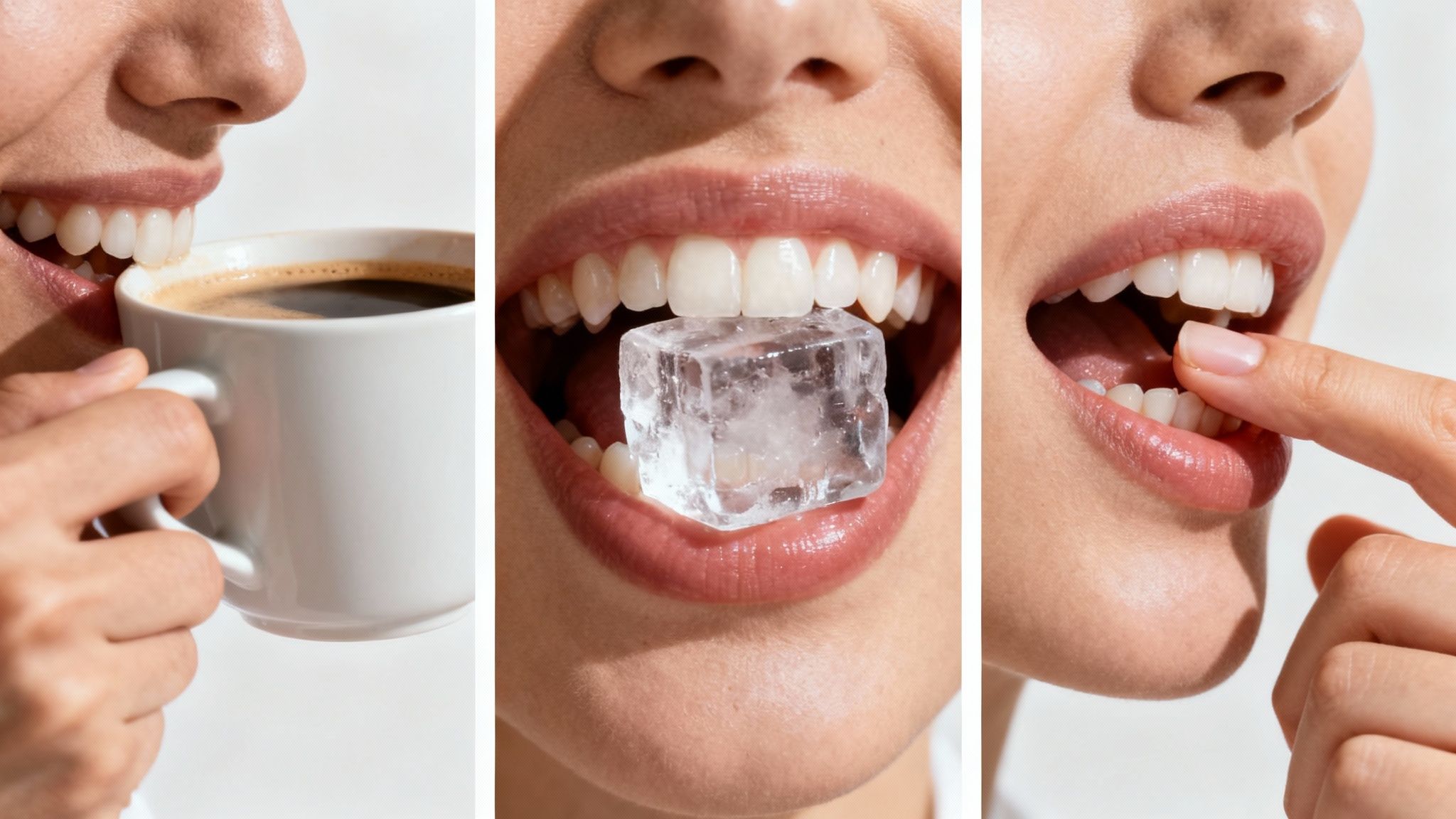
It’s also time to break any bad habits that involve using your teeth as tools. Tearing open a package, biting your nails, or chewing on ice and pens might seem harmless, but these actions can cause tiny fractures that eventually lead to noticeable chips and cracks.
Protect Your Smile While You Sleep
If you grind or clench your teeth at night (a common condition called bruxism), the constant force is a major threat to your veneers. This pressure can damage or even dislodge them. A custom-fitted nightguard from your San Diego dentist is the best way to shield them while you sleep.
By weaving these simple habits into your daily life, you become an active partner in extending the life of your veneers, ensuring they look just as fantastic years from now as they do today.
How Your San Diego Dentist Protects Your Investment
Getting veneers that last for years is a real team effort—a partnership between you and your dentist. While your at-home care is a huge piece of the puzzle, the foundation for a long-lasting smile is laid by the expert who places them in the first place.
Think of a skilled cosmetic dentist as a master craftsman. They meticulously prepare each tooth and bond the veneer with incredible precision to create a flawless, airtight seal. This isn't just about looks; it's about creating a protective barrier.
That perfect bond is what stops bacteria from creeping in underneath the veneer, which could cause decay and threaten the health of your natural tooth.
The Importance of Expert Application
Honestly, the application process itself is probably the single most important factor in how long your veneers will last. An experienced dentist knows exactly how to apply the bonding agent to forge a connection strong enough to handle all the daily wear and tear from biting and chewing.
When it's done right, the results speak for themselves. Clinical studies on professionally placed veneers show a remarkably low failure rate from issues like cracking or debonding—hovering around just 7.2%. You can dig deeper into the high success rates of professionally placed veneers if you're curious.
Your dentist’s precision during the bonding phase is the bedrock of your veneer’s lifespan. A perfect seal not only secures the veneer but also protects the underlying tooth for years to come.
Ongoing Professional Care
Your dentist's job doesn't end once the veneers are on. Far from it. Regular check-ups are your secret weapon for protecting your investment.
During these visits, your dental team at Serena San Diego Dentist will:
- Professionally polish your veneers to keep them looking brilliant and buff away any surface stains.
- Inspect the bonding and edges of every single veneer, looking for any subtle signs of wear or weakness.
- Check your gum health to make sure the tissue around your veneers is healthy and providing good support.
- Spot potential problems early, like tiny chips or evidence of grinding, before they turn into bigger issues.
Think of these appointments as your smile’s best line of defense. They help catch things early and ensure your veneers stay as stunning as the day you first saw them in the mirror.
Knowing When It's Time for a Replacement
Veneers are tough, but they're not a "set it and forget it" solution for life. Just like any other dental work, they have a lifespan, and eventually, the day will come when they need to be replaced. Knowing what to look for helps you stay ahead of the game and keep your smile looking fantastic.
Think of it like the routine maintenance you'd do on a classic car. After years of enjoying it, subtle signs of wear and tear start to show. Spotting these early means you can plan for a refresh before a small issue becomes a bigger problem.
Common Signs Your Veneers Need Attention
Usually, it's not one big thing but a collection of small changes that signal it's time to book a dental visit. Here’s what you should keep an eye out for when you're brushing and flossing each day.
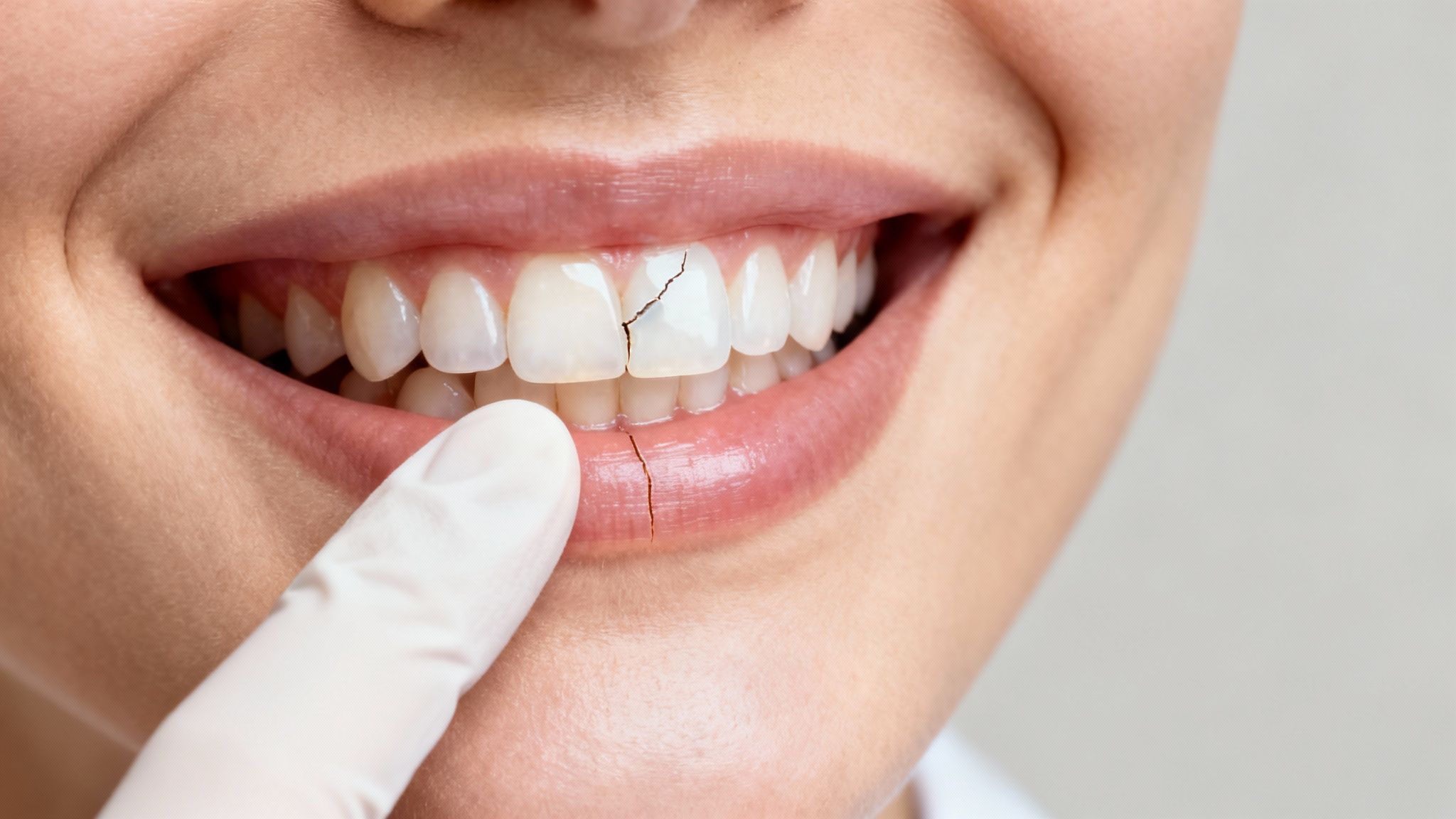
- Visible Damage: Get up close and personal with your smile. Do you see any small chips or cracks? While a dentist can sometimes polish out minor roughness, bigger fractures can weaken the veneer and spoil its look.
- Stubborn Stains: Porcelain is great at resisting stains, but the dental cement used to bond it can yellow over time. If one veneer looks dull or has a discoloured edge compared to the others, a replacement might be in order.
- A Loose Feeling: Your veneer should feel like a permanent part of your tooth—totally solid. If you notice even the slightest wiggle when you’re eating or brushing, the bond has likely failed. This is something you'll want your dentist to look at right away.
- Changes at the Gum Line: This is a big one. Our gums can recede over time, which might expose the top edge of the veneer. This can create a noticeable, sometimes dark, line between the veneer and your natural tooth.
The great news? Replacing a veneer is a pretty straightforward process. It's almost identical to getting it put on the first time. Your dentist will carefully remove the old one, prep the tooth underneath, and bond a brand-new, perfectly matched veneer in its place.
Catching these signs early means you can schedule a replacement on your own terms. A simple update will restore that seamless, natural look, keeping your smile a source of confidence for years to come.
Let's Talk About Making Veneers Affordable in San Diego
Investing in a smile you truly love is a big decision, and let's be honest, the financial part is a major piece of that puzzle. We firmly believe everyone here in sunny San Diego deserves to feel that boost of confidence, which is why we're so committed to making a beautiful smile an attainable goal.
It's true that most insurance plans don't cover cosmetic procedures like veneers. However, our office accepts most major PPO insurance plans, which can often help with related dental work your plan might cover, like initial exams or any necessary prep treatments.
To help you manage the main investment, we've put flexible solutions in place designed to fit your unique financial situation.
Your Payment Options
- Flexible Payment Plans: We can work with you to map out a payment schedule that fits comfortably into your monthly budget, spreading the cost out over a more manageable timeframe.
- Financing Partnerships: We've partnered with trusted, reputable third-party financing companies that offer straightforward loan options specifically for dental treatments.
The best way to get a clear picture of what will work for you is to come in and chat with us. You can also get more details by reading our full guide to affordable dental veneers.
Your dream smile isn't out of reach. Our main goal is to create a personalized financial plan that removes the stress, allowing you to invest in your confidence without the worry.
Ready to enhance your smile with veneers? Schedule a free consultation at Serena San Diego Dentist today!
Your Veneer Questions, Answered
Even with all the information out there, you probably still have a few lingering questions about veneers. That’s completely normal. Getting clear, straightforward answers is the best way to feel confident about moving forward with your new smile.
Let's tackle some of the questions we hear most often at our San Diego clinic.
Can I Replace Just One Damaged Veneer?
Yes, you absolutely can. Life happens, and if one veneer chips, cracks, or comes loose, you don’t need to worry about redoing your entire smile.
A skilled cosmetic dentist, like Dr. Serena, can create a single, new veneer that’s a perfect match for your existing ones. They'll meticulously match the color, shape, and size to blend in so seamlessly that no one will ever know it's a replacement.
Do Veneers Damage Your Natural Teeth?
This is a big concern for many people, but the answer is no—not when they're done right. We understand you might be worried about the procedure. A qualified, experienced dentist will only remove a paper-thin layer of enamel from the tooth surface.
This step is essential for making sure the veneer fits perfectly and looks natural, not bulky. The tooth underneath remains healthy and strong.
Does Dental Insurance Cover Veneer Replacements?
This one is a bit of a "maybe." Coverage really depends on your specific plan and the reason for the replacement.
If you need a new veneer because of an accident or another medical reason, some PPO plans might cover part of the cost. Replacements for purely cosmetic reasons, however, usually aren't covered. The best thing to do is let us help you check the details of your specific insurance plan here at our San Diego office.
Ready to see how veneers can give you a smile you'll love for years? The team at Serena San Diego Dentist is here to walk you through every step and create a plan that’s just for you.
Schedule your consultation today and let's get started on creating your perfect smile.