
For most people, the golden rule has always been to see the dentist every six months. This isn't just an arbitrary number; it’s a well-established timeline that helps keep your oral health on track and prevents minor issues from snowballing into major ones.
The Six-Month Rule for Dental Visits Explained
Think of a twice-yearly dental visit like routine maintenance for your car. You wouldn't wait for the engine to smoke before getting an oil change, right? In the same way, regular checkups allow our San Diego dental team to spot and handle small problems—like the beginning of a cavity or minor gum inflammation—long before they become painful, complicated, and expensive to fix.
Sticking to this schedule is one of the smartest things you can do for your long-term health. It's all about prevention.
Why Six Months is the Standard
So, why six months? It’s the sweet spot. It's frequent enough for us to catch problems early but not so often that it feels like a constant appointment in your calendar. Within that six-month window, tartar can start to build up in places your toothbrush and floss just can't reach. A professional cleaning gets rid of it, drastically cutting your risk of gum disease.
This biannual rhythm is the gold standard for maintaining oral hygiene. It allows dentists to detect subtle changes in your mouth, from the earliest signs of decay to precancerous lesions, ensuring timely intervention.
These checkups are about more than just your teeth. Your oral health is a window to your overall health, and sometimes the first signs of conditions like diabetes or heart disease can show up in the mouth. Staying on top of your dental visits is easier than ever with tools like a modern patient appointment scheduler that helps you remember.
The six-month recommendation is a global standard, but it's not a one-size-fits-all solution. Some research suggests visit frequency should be tailored to a person's individual risk factors. Ultimately, a consistent, professional dental cleaning in San Diego remains your best defense against future dental troubles.
To give you a clearer picture, here’s a quick breakdown of common visit schedules.
Standard Dental Visit Frequency Guidelines
This table offers a quick look at generally recommended dental visit schedules for different oral health profiles.
| Patient Profile | Recommended Frequency | Primary Goal |
|---|---|---|
| Low-Risk Adult | Every 6 to 12 months | Maintenance & Prevention |
| Child/Adolescent | Every 6 months | Monitor Growth & Prevent Cavities |
| High-Risk Adult | Every 3 to 4 months | Manage Active Disease & Reduce Risk |
| Denture Wearer | Annually | Check Fit & Oral Tissue Health |
These are just general guidelines. Your perfect schedule depends on your unique health history, which is something our team at Serena San Diego Dentist can figure out with you.
When You Might Need More Frequent Dental Checkups
While the "every six months" rule is a fantastic starting point, it's definitely not a one-size-fits-all solution. Think of your oral health as a unique fingerprint; your personal history, genetics, and lifestyle habits all play a huge role in the care you need. For some patients, waiting a full six months between visits is just too long, giving small problems a chance to become bigger ones.
Certain situations are clear signals that you should be on a more frequent, proactive schedule.
If you have a history of gum disease—whether it's early-stage gingivitis or the more serious periodontitis—your dentist will almost certainly want to see you every three to four months. These aren't just standard cleanings. They're critical appointments designed to manage the condition and stop its progression, which can ultimately lead to tooth loss if not kept in check. You can get a better sense of this by learning when you might need a deep dental cleaning as opposed to a routine one.
This quick flowchart breaks down how your personal risk profile helps determine the best visit schedule for you.
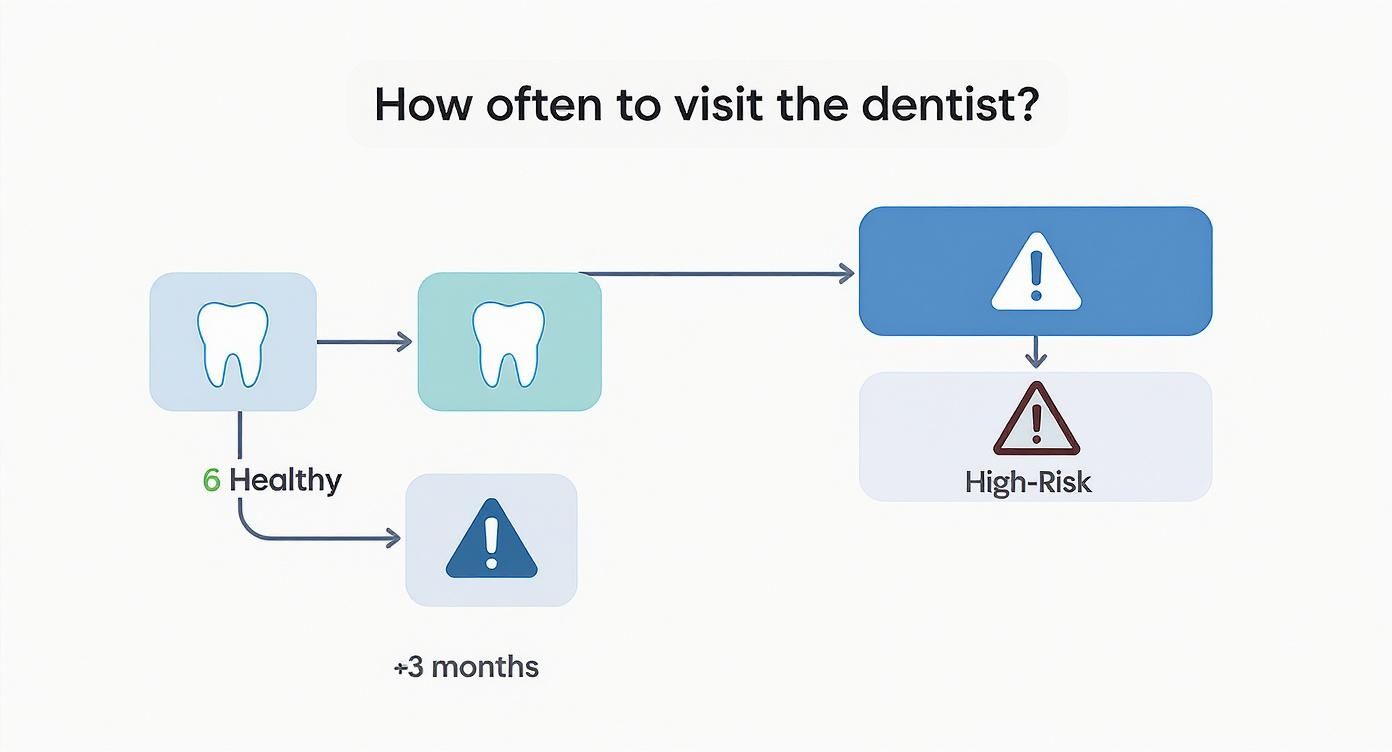
As you can see, the path to keeping your smile healthy really depends on your individual circumstances.
Key Factors Requiring Closer Monitoring
Beyond a history of gum disease, a handful of other conditions and life stages call for shorter gaps between dental appointments. Each of these introduces unique challenges that truly benefit from a dentist's watchful eye.
It's a good idea to chat with your dentist about a more frequent schedule if any of these apply to you:
- Smokers: Using tobacco drastically raises your risk for everything from gum disease and severe tooth decay to oral cancer. Coming in more often allows us to screen carefully and catch any serious issues early.
- Individuals with Diabetes: Uncontrolled blood sugar can wreak havoc on your oral health, leaving you more vulnerable to infections and gum problems. Keeping a close watch helps manage these complications.
- Pregnant Individuals: The hormonal rollercoaster of pregnancy can sometimes trigger "pregnancy gingivitis," which leads to tender, swollen, and bleeding gums. Regular, gentle cleanings are key to keeping this under control.
- Those with Dental Restorations: If you have investments in your smile like dental crowns, bridges, or implants, more frequent visits ensure they're working as they should and the surrounding gums stay healthy.
- People with Weakened Immune Systems: Any condition or medical treatment that compromises your immune system can make oral infections much more serious. A three-month checkup schedule is a smart defensive move.
- Patients with Braces: All those brackets and wires create countless nooks and crannies where plaque loves to hide. Frequent professional cleanings are essential to prevent cavities and staining while you're straightening your teeth.
Seeing your dentist more often isn't a punishment; it’s a personalized care plan. For anyone in a higher-risk category, a three-month cleaning and exam schedule is the single best strategy for preventing complex and expensive problems down the road.
If you tick any of these boxes, don't wait for a problem to announce itself. Taking a proactive approach with visits scheduled every three to four months is your best defense for keeping your smile healthy and bright—especially here in sunny San Diego, where a great smile goes with everything.
What Really Happens During a Routine Dental Visit
A lot of people get a little nervous about dental visits, and a big part of that is just not knowing what's going on. We find that when patients know what to expect, the whole experience feels much more relaxed. So, let’s pull back the curtain and walk through exactly what happens during a typical appointment at our San Diego clinic.
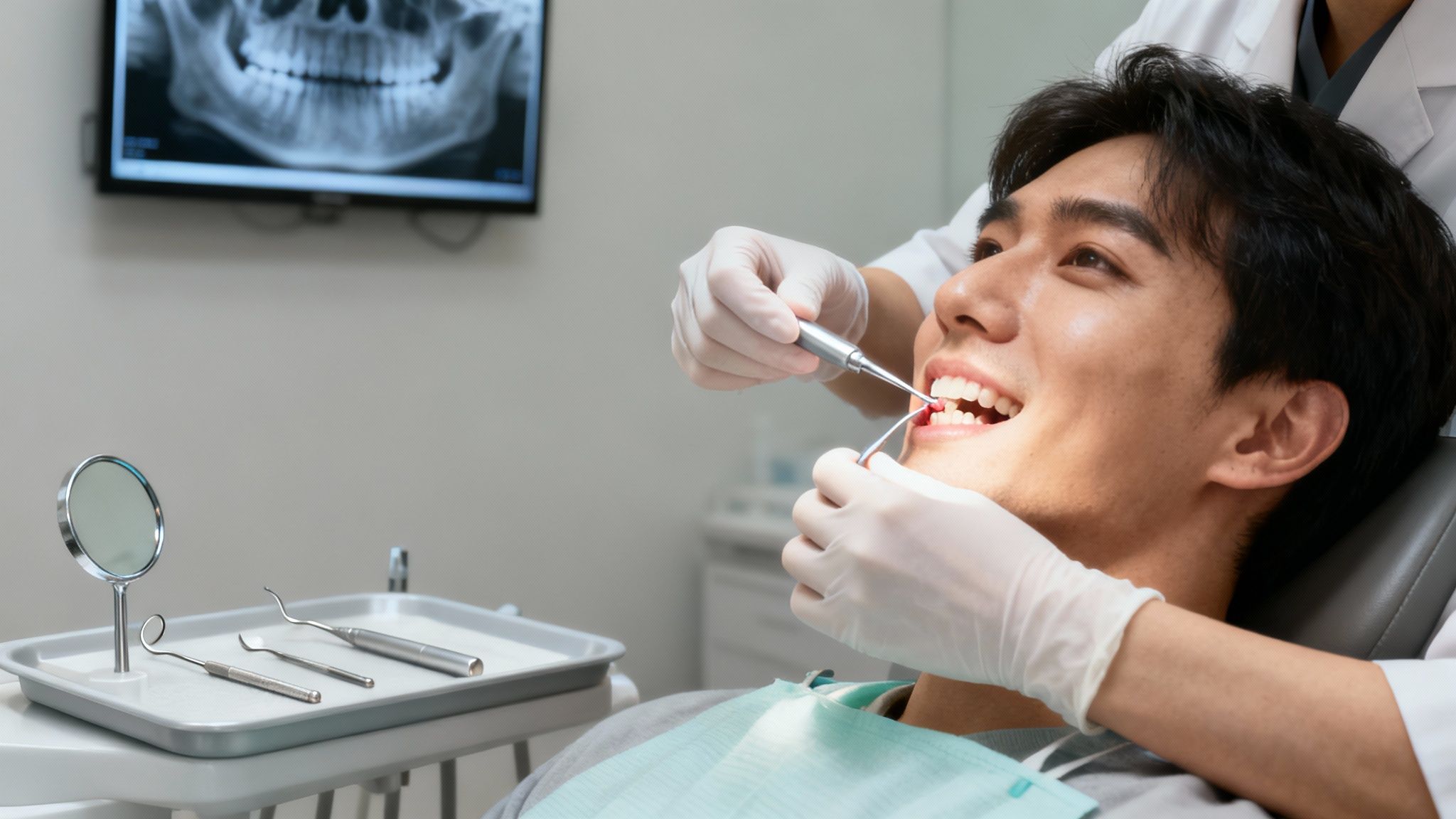
Once you're settled in the chair, we start with a good look at your teeth and gums.
The Initial Exam and Cleaning
Your dentist or hygienist will start with a visual check, using a small mirror to inspect every tooth for cavities, cracks, or unusual wear. They'll also carefully examine your gums for any signs of trouble like redness, swelling, or pockets forming around the teeth—the early warnings of gum disease.
Next up is the professional cleaning, what we call prophylaxis. This is where the hygienist uses a special tool, a scaler, to gently scrape away plaque and tartar. Tartar is that tough, yellowish stuff your toothbrush can't remove once it hardens. After your teeth are free of buildup, they’ll get a polish with a slightly gritty paste that buffs away surface stains, leaving them feeling incredibly smooth and clean.
A professional cleaning is the only way to remove hardened tartar (calculus) from your teeth. If left untreated, this buildup can lead to gum disease and decay, making your routine visit a cornerstone of preventive health.
Diagnostics and Screenings
Depending on your dental history and how long it’s been, your dentist might take a few X-rays. These are crucial for spotting problems you can't see with the naked eye, like decay hiding between teeth, bone loss in your jaw, or impacted wisdom teeth. The good news is that modern digital X-rays use very low radiation and give us an instant picture of what’s happening below the surface.
Finally, every thorough dental check-up wraps up with a quick but critical oral cancer screening. Your dentist will check your tongue, gums, throat, and all the soft tissues in your mouth for any strange patches or sores. It’s a simple, painless step that could be a lifesaver, because catching issues early makes all the difference.
Urgent Signs You Should See a Dentist Now
That six-month checkup on your calendar is great for keeping things on track, but sometimes your teeth just can't wait. Think of it like a warning light on your car's dashboard—ignoring it can turn a small, easy fix into a major, expensive repair.
Certain symptoms are your mouth’s way of screaming for help, and it’s critical to listen.

Knowing when to book an unscheduled appointment is just as vital as keeping up with your routine cleanings.
Key Warning Signs to Watch For
If you notice any of these red flags, don’t put off making a call. Getting ahead of the problem is always the best way to protect your health and avoid more complicated procedures later.
A nagging toothache is your body’s clearest signal that something is wrong.
- A Stubborn Toothache or Jaw Pain: Pain that just won't quit could be pointing to an infection, a hidden abscess, or even an impacted tooth.
- Bleeding or Puffy Gums: A little blood when you floss isn't a huge deal, but if your gums are consistently bleeding, swollen, or tender, it's an early sign of gum disease.
- A Sudden Jolt of Sensitivity: If hot coffee or a scoop of ice cream suddenly sends a sharp pain through a tooth, you might have a new cavity or a small crack.
- A Lost or Loose Filling/Crown: That filling or crown was there for a reason! Leaving the tooth exposed makes it an easy target for bacteria and further damage.
- A Chipped or Cracked Tooth: Even a tiny chip can be a gateway for bacteria to get deep inside your tooth, where they can cause a serious infection.
- Mouth Sores That Won't Heal: Any unusual lump, sore, or discolored patch in your mouth that sticks around for more than two weeks needs a professional look.
When it comes to dental pain, "waiting it out" is never the right move. A minor ache can quickly escalate into a severe infection or even tooth loss if you ignore it.
If any of this sounds familiar, it's time to pick up the phone. Getting familiar with common dental emergencies can help you understand when you need to act fast.
Understanding Your Dental Insurance and Visit Costs
Let's talk about the elephant in the room: cost. For many people in San Diego, the price tag is a huge factor in how often they make it to the dentist's chair. The good news? Most dental insurance plans are built around preventive care, making it surprisingly affordable to stay on top of your oral health.
If you have a PPO plan, for example, your routine checkups and cleanings are very likely covered at 80-100%. That structure is there for a reason—it’s a massive financial incentive to keep up with those twice-a-year visits, since you'll pay very little out-of-pocket.
Prevention vs. Treatment Costs
The real sticker shock comes when you compare the cost of prevention to the cost of major treatments. Skipping those simple, affordable checkups can let small problems snowball into big, expensive ones like advanced decay or serious gum disease.
Suddenly, you're not just talking about a cleaning; you're looking at a root canal or a crown. These major procedures are often covered at a much lower rate—sometimes as low as 50%—leaving you responsible for a hefty bill. It's a classic "ounce of prevention is worth a pound of cure" scenario.
This is why insurance plays such a critical role. According to the National Health Interview Survey, affordability is a key reason people either go to the dentist or stay away. The data clearly shows that children with private insurance are significantly more likely to get regular dental care than those who are uninsured.
At Serena San Diego Dentist, we work with most major insurance plans and have flexible payment options for patients without coverage. If you're currently without a policy, this guide on navigating a doctor visit without insurance has some great tips. Our mission is simple: to make sure everyone in San Diego can access outstanding dental care, regardless of their insurance situation.
Your Path to Lifelong Oral Health
At the end of the day, your journey to a healthy smile is entirely your own. While the classic six-month checkup is a fantastic starting point, the real answer to "how often should I see the dentist?" is a personal one, shaped by your health history, daily habits, and specific dental needs.
Think of consistent, preventive care as the best investment you can make in your long-term health. It's not just about getting your teeth cleaned; it’s about catching small issues before they snowball into bigger, more expensive problems. This partnership approach is what truly saves you time, money, and discomfort down the road.
Take the Next Step with Confidence
We get it—for many people, a dental visit brings up feelings of anxiety. That’s why modern dentistry, especially here in San Diego, is all about creating a comfortable, supportive environment. We prioritize clear communication and compassionate care so your appointments feel like a positive step for your well-being, not a chore.
The most important visit is always the next one. Taking control of your dental health schedule is an empowering move that pays dividends in confidence and overall wellness for years to come.
Getting started is as simple as a conversation. A quick consultation is all it takes to map out a personalized plan that keeps your smile bright and your mouth healthy. Don't wait for a toothache to be your reminder—take the first step today. Your smile is worth it, and we’re here to support you every step of the way.
Ready to create a personalized dental care plan? The team at Serena San Diego Dentist is here to help you achieve and maintain a healthy, beautiful smile. Schedule your consultation today by visiting us at https://serenasandiegodentist.com.