
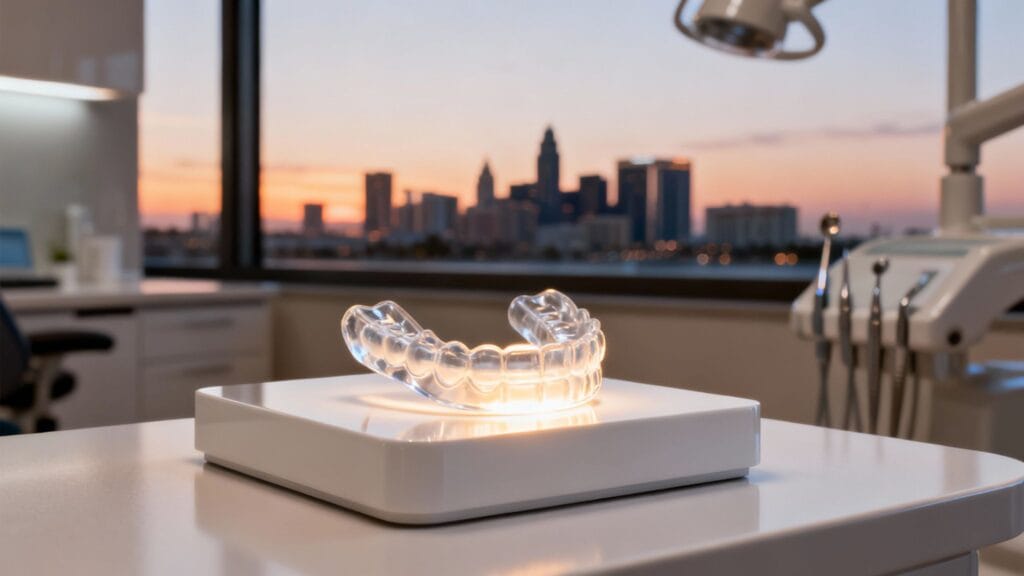
A night guard is a personal bodyguard for your teeth. It’s a simple, powerful device that fits over your upper or lower teeth, creating a protective cushion. This barrier absorbs the immense force from nighttime clenching and grinding, acting as a shock absorber for your jaw and saving your smile from long-term damage. If you've ever woken up with a sore jaw or a dull headache, a custom-fitted night guard from your dentist could be the solution you need.
The Hidden Damage of Nightly Teeth Grinding
Do you ever wake up with a throbbing headache? Or maybe a stiff, sore jaw that makes it hard to yawn? If so, you're not alone. This is a daily reality for many people in San Diego dealing with bruxism—the clinical term for grinding or clenching your teeth.
It’s far more than a quirky habit; it’s a surprisingly destructive force that works against your oral health all night long, while you’re completely unaware.

Why Addressing Bruxism Is So Important
Ignoring the signs of teeth grinding is like ignoring a slow leak in your roof—it might not seem like a big deal at first, but it can lead to serious and expensive problems down the line. The constant, intense pressure your jaw exerts can cause a host of issues.
We’re talking about problems like:
- Tooth Enamel Erosion: Grinding literally sands away the hard, protective outer layer of your teeth. This exposes the sensitive layers underneath, leading to sharp pain with hot or cold drinks.
- Chipped or Fractured Teeth: Over time, the sheer force can cause teeth to crack, chip, or even break. You can learn more in our guide on tooth cracks and all you need to know about it.
- Jaw Pain and TMJ Disorders: The muscles in your jaw are working overtime all night. This constant strain leads to chronic pain in the jaw joint (the TMJ) and the muscles that control it.
- Persistent Headaches: All that tension has to go somewhere. It often radiates upward, causing frustrating morning headaches and sometimes triggering migraines. Experts often point to the hidden link between jaw pain and headaches.
A Widespread Problem With a Clear Solution
If you grind your teeth, you're in good company. Studies show that bruxism affects up to 31% of adults globally. It's no wonder the market for dental night guards is booming. In the U.S. alone, it was valued at around USD 1.4 billion in 2023 and is expected to keep growing.
Much of this is driven by the stress of our modern, fast-paced lives—a major trigger for clenching and grinding at night. A custom-fitted night guard isn't just a piece of plastic; it's a crucial shield that protects your teeth from this nightly assault. Think of it as a smart investment that can save you from far more expensive restorative work—like crowns, root canals, or implants—in the future.
Understanding Why You Grind Your Teeth (and How to Tell if You Do)
Teeth grinding, or bruxism, isn't just a bad habit—it's a real medical condition, often driven by things we can't consciously control. The reasons behind it are different for everyone, but they usually boil down to a few common culprits.
Figuring out your personal trigger is the first big step toward relief. For many of us here in San Diego, the constant hustle means stress and anxiety are public enemy number one. When your brain is working overtime, your jaw muscles tend to follow suit, clenching and grinding away without you even realizing it, especially while you sleep.
The Most Common Causes of Teeth Grinding
While stress is a huge piece of the puzzle, it's not the whole story. At Serena San Diego Dentist, we often trace bruxism back to a few other key issues:
- Sleep Disorders: Conditions like sleep apnea can cause grinding. It's almost like your body's subconscious reaction as it struggles to keep your airway open.
- A Misaligned Bite: If your top and bottom teeth don't line up correctly (what dentists call malocclusion), your jaw muscles are constantly fighting to find a comfortable resting spot, leading to muscle strain and grinding.
- Lifestyle Habits: Daily coffee, an evening glass of wine, or smoking can fire up your nervous system, which can lead to more muscle activity in your jaw.
- Certain Medications: It’s worth noting that some medications, particularly certain antidepressants, list bruxism as a known side effect.
Recognizing the Telltale Signs
Because the worst of the grinding often happens when you're asleep, many people have no idea they're doing it until the damage is done or the pain becomes impossible to ignore. If any of the following sound familiar, it’s probably time to get it checked out.
Unchecked bruxism doesn't stay the same; it gets worse. What might start as minor jaw soreness can snowball into fractured teeth, chronic pain, and over time, can even change the shape of your face.
You might be a teeth grinder if you’re experiencing:
- Worn-Down or Flat Teeth: This is one of the first things a dentist will spot. The tops of your teeth, especially the molars, will look unnaturally flat.
- Chipped, Cracked, or Loose Teeth: The sheer force of grinding can easily break even the healthiest teeth.
- Sudden Tooth Sensitivity: As grinding wears away your protective enamel, the sensitive layer underneath gets exposed, causing a zap of pain from hot, cold, or sweet things.
- Nagging Jaw, Neck, or Facial Pain: Waking up with a stiff, tired, or sore jaw is a classic sign. We dive deeper into this in our guide on the causes of jaw clenching and tips to relieve it.
- Dull Headaches or Earaches: All that tension in your jaw muscles has to go somewhere. It often radiates outward, causing headaches that feel like they’re in your temples or a phantom pain that mimics an earache.
Bruxism is surprisingly common, affecting about 8-10% of the general population. That number jumps to a staggering 15-40% for professionals in high-stress jobs. Worse, leaving it untreated is a major risk, leading to painful TMJ disorders in 25-30% of cases. A simple night guard for teeth grinding can be a game-changer, cushioning your teeth and dramatically cutting that risk. Taking action now doesn't just save your smile—it saves you from a world of pain and expensive dental work down the line.
Choosing Between a Custom and an Over-the-Counter Night Guard
So, you’ve realized you need a night guard for teeth grinding. You’re now at a crossroads: do you get a custom-fitted appliance from a dentist, or grab a cheaper over-the-counter (OTC) version from the pharmacy? It's a common dilemma. While the price tag on an OTC guard is tempting, the real difference lies in comfort, effectiveness, and long-term health.
Think of it like getting a pair of glasses. You could buy a generic pair of "readers" from a rack, but they won't match your unique prescription. A custom pair from an optometrist is made just for you, ensuring you see clearly and comfortably. A night guard is no different—it's a therapeutic device that needs to fit your specific bite perfectly.
If you’re waking up with jaw soreness or frequent headaches, it’s a good sign that you should talk to a professional. This quick self-check can help you decide if it's time for an evaluation.
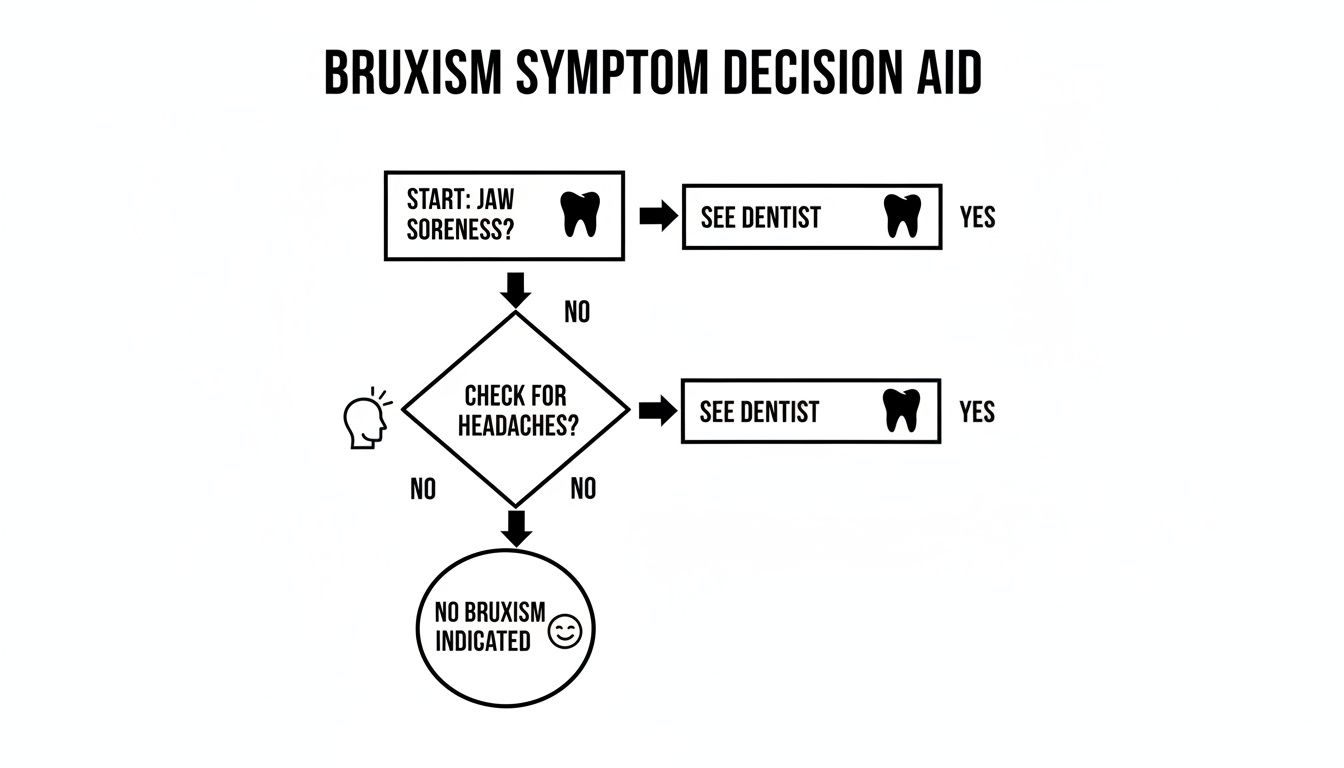
As the flowchart shows, symptoms that seem minor are often clear indicators of underlying bruxism that a dentist can properly diagnose and treat.
The Problem with One-Size-Fits-All Solutions
Most over-the-counter guards are what we call "boil-and-bite." You drop a bulky piece of thermoplastic into hot water, then bite into it to create a rough mold of your teeth. It sounds simple enough, but the resulting fit is almost always a compromise.
An ill-fitting guard can actually create new problems:
- Uneven Pressure: Instead of distributing bite forces evenly, a poor fit can concentrate all that pressure onto just a few teeth, which can lead to more damage.
- Jaw Misalignment: The bulky material can force your jaw into an unnatural and strained position all night, often making TMJ pain and muscle tension even worse.
- Poor Durability: These guards are made from a soft, flimsy material that a serious grinder can chew through in a matter of months, forcing you to buy replacements over and over again.
In short, they might provide a temporary cushion, but they don't offer the clinical, therapeutic protection needed to truly manage bruxism.
The Superiority of a Custom-Fitted Night Guard
A custom night guard from a dentist like us at Serena San Diego Dentist is a different beast entirely. It’s a genuine medical appliance, crafted in a professional dental lab from precise digital scans or physical impressions of your mouth. This meticulous process delivers a perfect fit that’s simply in another league.
This table breaks down the key differences between the two options.
Comparing Custom vs. Over-the-Counter Night Guards
| Feature | Custom-Fitted Night Guard (From a Dentist) | Over-the-Counter (OTC) Night Guard |
|---|---|---|
| Fit & Comfort | Precise, snug fit based on your exact dental anatomy. Minimal bulk allows for comfortable sleep. | Bulky and often ill-fitting. Can feel loose or awkward, disrupting sleep. |
| Material & Durability | Made from high-quality, durable acrylic or dual-laminate materials designed to last for years. | Softer, less durable materials that wear out quickly and need frequent replacement. |
| Protection | Evenly distributes biting forces across all teeth, effectively protecting them and relaxing jaw muscles. | Provides uneven pressure distribution, which can sometimes worsen jaw pain or cause bite issues. |
| Long-Term Value | Higher initial cost but lasts for many years, preventing thousands in future restorative dental work. | Low initial cost but requires frequent replacement, offering a poor return on investment over time. |
As you can see, the benefits of a professional guard go far beyond just a better fit.
A custom night guard is an investment in your health. Its purpose isn’t just to block teeth from touching—it’s to place your jaw in a comfortable, stable position that reduces muscle tension and protects your entire oral system from damage.
Ultimately, while the upfront cost of a custom night guard for teeth grinding is higher, its superior protection, comfort, and durability make it the clear winner for anyone serious about stopping the destructive effects of bruxism. It’s the difference between a temporary patch and a lasting solution.
How to Get Your Custom Night Guard in San Diego
Getting a custom night guard is a surprisingly simple and modern process. Here at Serena San Diego Dentist, we've fine-tuned every step to be straightforward and comfortable, so you know exactly what to expect. The journey to protecting your smile is probably a lot easier than you think.
It all starts with a thorough consultation at our San Diego dental office. This first visit is all about getting the diagnosis right. We'll sit down and talk about your symptoms—any jaw pain, morning headaches, or sensitive teeth you've noticed. Then, we'll do a careful exam to look for signs of wear and tear, confirming that bruxism is the culprit. This lets us know for sure that a custom night guard for teeth grinding is the best path forward for you.
Step 1: Your Digital Impression
If you’re imagining a tray full of goopy, uncomfortable putty, think again. We've left that in the past. Today, we use advanced digital scanning technology to create a perfect, three-dimensional model of your teeth. The whole process is fast, clean, and incredibly accurate.
We use a small, wand-like device called an intraoral scanner and gently guide it around your mouth. It captures thousands of pictures per second, digitally stitching them together on a screen in real-time. What you get is a flawless digital map of your teeth. Not only is this way more comfortable, but it gives us a far more precise model than old-school impressions ever could.
Step 2: Precision Fabrication
With your digital scan complete, we send the highly detailed 3D model to a professional dental laboratory. There, expert technicians use your exact dental blueprint to craft your night guard from durable, high-quality, biocompatible materials.
This is the opposite of a one-size-fits-all product. Your guard is meticulously shaped to fit over your teeth with absolute precision—snug enough to stay in place, but not so bulky that it disrupts your sleep. The goal is total protection and comfort.
Step 3: The Final Fitting Appointment
Once your new night guard arrives from the lab, you’ll pop back in for a quick final fitting. This is an essential last check to make sure everything is perfect.
We’ll have you try it on, and we'll check the fit and feel to ensure it’s secure and doesn't interfere with your bite. If any tiny adjustments are needed for maximum comfort, we can usually make them right on the spot. We’ll also walk you through the simple steps for wearing, cleaning, and storing your guard to keep it in great shape for years. You’ll leave our office knowing your smile is finally protected.
Investing in Your Smile and Your Wallet
When you first hear the price of a custom night guard for teeth grinding, it can seem like a lot. But framing it as a simple "cost" is looking at it the wrong way. A custom night guard isn't just another dental expense; it's a smart, long-term investment in your health and, believe it or not, your finances.
Ignoring the problem is where the real costs start piling up. Bruxism doesn't just fade away on its own. It's a destructive habit that chips away at your teeth, night after night, leading to a future full of extensive and expensive dental work. We're talking about things like crowns, veneers, or even complex TMJ therapy—all to fix damage that a simple guard could have easily prevented. A single, well-made night guard can literally save you thousands of dollars down the road.
The True Cost of Inaction
Let's break down what happens when teeth grinding is left unchecked. The data is pretty clear: untreated bruxism can wear away tooth enamel at a startling rate of 0.2-0.8mm per year. This often leads to needing cosmetic fixes like veneers, which can run over $1,000 per tooth.
A professionally fitted night guard, on the other hand, protects 95% of your tooth surface area, essentially stopping that damage in its tracks. Considering that bruxism is linked to 30% of all sleep disorder cases and is on the rise, getting protection is a statistically sound decision. It helps you sidestep future repairs that can easily top $5,000. If you're interested in the data, recent bruxism management reports show just how common this issue is becoming.
Think of a night guard like a helmet for your teeth. You don't buy a helmet because you plan on crashing your bike, but you wear it to prevent serious injury if you do. A night guard offers that same critical, nightly protection for your smile.
Making Protection Accessible and Affordable in San Diego
At Serena San Diego Dentist, we believe that protecting your health shouldn't break the bank. We are committed to making this essential treatment accessible for our patients in San Diego.
Many PPO dental insurance plans understand that a night guard isn't a luxury—it's a medically necessary appliance for treating bruxism. As a result, they'll often cover a good portion of the cost. Our team knows the ins and outs of dental insurance and will work with you to maximize your benefits.
For those without insurance or who prefer out-of-pocket payments, we offer flexible payment options, including financing plans that let you spread the cost over time. To learn more, take a look at our guide on dental insurance in San Diego. Our main goal is to get you the protection you need, right when you need it.
Making Your Night Guard Last
A custom night guard for teeth grinding is a serious investment in your oral health, and you'll want to make it last. The good news is that with just a little bit of daily attention, you can keep it in great shape for years to come.
Proper maintenance is simple and takes just a few moments, but it's what makes the difference between a guard that works and one that doesn't.
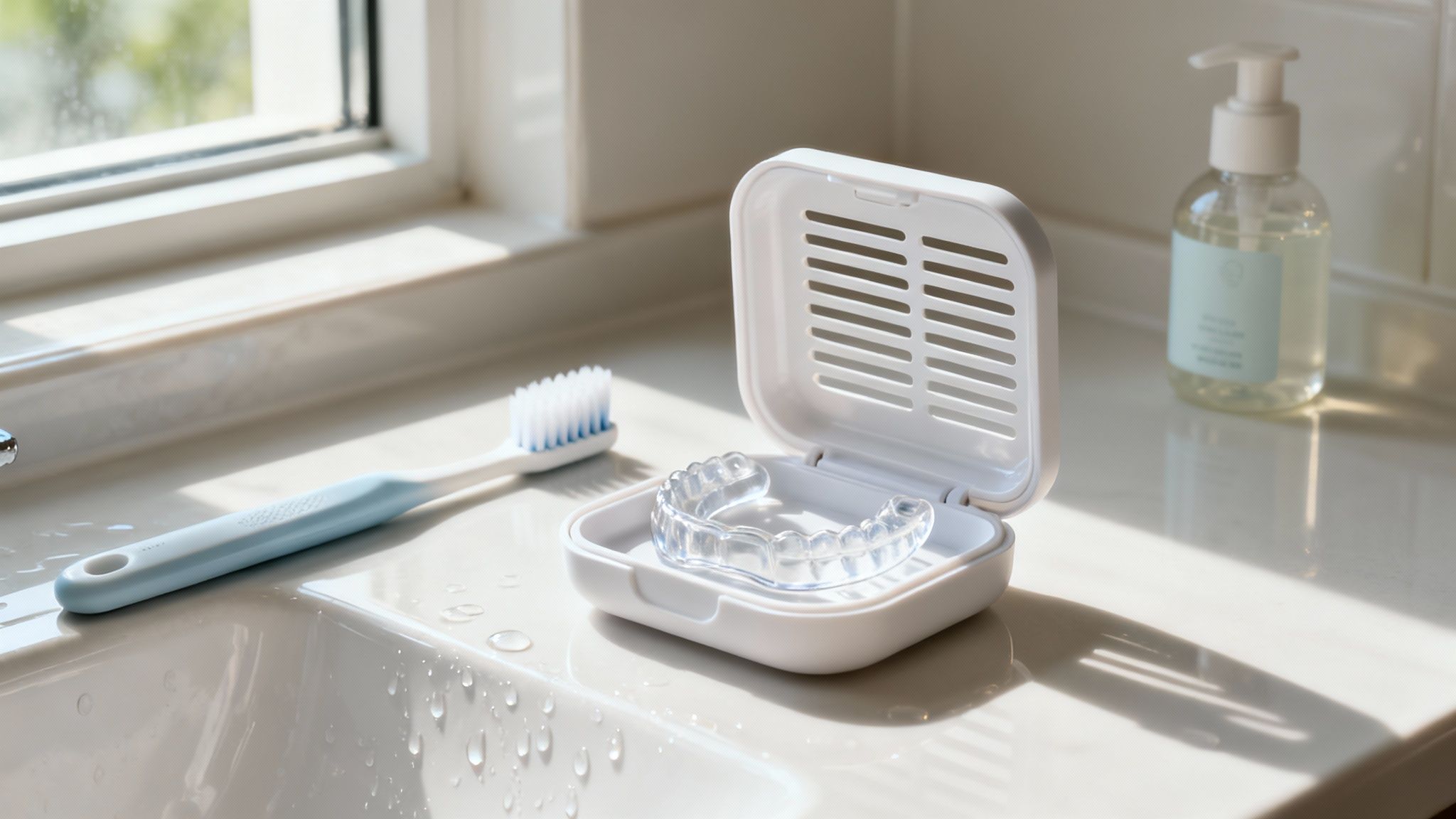
Think of your night guard like any other part of your dental routine. Just like your teeth, it needs a quick clean every day to stay fresh and do its job effectively.
Your Simple Daily Care Routine
Every morning, just follow these simple steps to keep your night guard in pristine condition:
- Rinse It Right Away: As soon as you take it out, give it a good rinse under cool water. This washes away saliva and stops plaque from building up.
- Brush Gently: Use a soft-bristled toothbrush and a mild, non-abrasive soap or a cleaner made specifically for retainers or dentures. You should avoid using toothpaste, as it's abrasive and can create microscopic scratches on the surface—perfect hiding spots for bacteria.
- Rinse Again: After brushing, rinse it thoroughly with cool water to get rid of any soap residue.
- Air Dry Before Storing: Let the guard air dry completely before popping it back in its protective, ventilated case. Trapped moisture is a breeding ground for bacteria, so this step is crucial.
Here's the most important rule: Never use hot water to clean or rinse your night guard. The heat can easily warp the custom-molded material, destroying the perfect fit and making it uncomfortable and ineffective.
When to Replace Your Guard
Even the best-cared-for night guard won't last forever, especially for those with severe bruxism. The constant grinding and clenching will eventually take a toll.
Make sure to bring your guard with you to your regular check-ups at Serena San Diego Dentist. We'll inspect it for signs of heavy wear and tear, look for any cracks, and check to see if the fit has changed. If we see that it's no longer giving you the protection you need, we'll let you know it's time for a replacement.
Your Night Guard Questions, Answered
Deciding to get a custom night guard is a great first step, but it's natural to have questions about what daily life with one will be like. Let's walk through some of the most common things patients ask so you can feel completely comfortable and confident in your decision.
Will a Night Guard Affect My Sleep?
This is probably the biggest question on everyone's mind. While there's a short "get-to-know-you" period with any new appliance, a custom-fitted night guard for teeth grinding is designed to feel like a natural part of your mouth.
Unlike those clunky, one-size-fits-all guards, a professional one is made from an exact digital map of your teeth. This means it snaps into place perfectly, staying put without getting in the way of your breathing or sleep. Honestly, most people forget it's even there after the first few nights.
How Long Does a Custom Guard Last?
The durability really depends on how heavily you grind, but you can expect a high-quality, professionally made guard to last anywhere from 3 to 10 years. Think of it as a long-term investment in your health.
During your regular dental check-ups, we’ll always take a look at it. We'll check for signs of wear and tear to make sure it's still doing its job effectively and give you a heads-up when it might be time for a new one.
Can a Night Guard Actually Stop Me from Grinding?
It's important to think of a night guard as a protective shield rather than a "cure" for grinding itself. It works by creating a safe, cushioned barrier between your upper and lower teeth, taking the brunt of all that clenching and grinding pressure.
Think of your night guard as a bodyguard for your enamel. It prevents chips and cracks, eases the strain on your jaw, and gives those overworked muscles a break. For some people, just having it in their mouth can also help dial down the intensity of their grinding over time.
While a guard is a game-changer for protecting your teeth, it's also smart to look at the bigger picture. Exploring other resources, like the best sleep accessories for your wellness journey, can complement your treatment and improve your overall rest. Managing bruxism is often about creating a more peaceful sleep environment.
Don't let teeth grinding control your life any longer. At Serena San Diego Dentist, we create custom night guards that offer the comfort and protection you deserve. Schedule your consultation today!