
Imagine a dental treatment that actually works with your body’s own healing abilities, precisely targeting harmful bacteria without the need for harsh chemicals or invasive procedures. That’s the reality of ozone therapy in dentistry. It's a gentle, minimally invasive approach that uses ozonated gas (O3) to disinfect treatment areas and accelerate healing for everything from early cavities to gum disease, promoting a healthier, more natural path to oral wellness.
A Natural Approach to Healing in Modern Dentistry
Ozone therapy is quickly becoming a go-to tool in modern, patient-first dental care. At its heart, the technique harnesses the power of a super-charged form of oxygen—ozone (O3)—to produce a powerful therapeutic effect.
Think of it as a specialized cleanup crew for your mouth. It selectively neutralizes harmful bacteria, viruses, and fungi while leaving your healthy tissues completely untouched.
This approach is fundamentally changing how we manage common oral health problems. Instead of just relying on drilling or strong chemicals, dentists can now use ozonated gas or water to create an environment where your body can heal itself more effectively. It’s a powerful instrument in biological dentistry, a field that recognizes the deep connection between your oral health and your overall well-being.
Why Is Ozone Gaining Popularity?
The growing interest in ozone therapy stems from its unique ability to support the body’s natural healing systems. Patients and practitioners who prefer gentle yet effective treatments are increasingly turning to it for a few key reasons:
- Targeted Disinfection: Ozone is incredibly effective at eliminating bacteria, viruses, and fungi on contact, often without the side effects linked to traditional antibiotics or harsh disinfectants.
- Accelerated Healing: By improving oxygen flow to the treated tissues, ozone stimulates cellular repair and calms inflammation. This often means a faster, more comfortable recovery.
- Minimally Invasive Application: Since it's usually applied as a gas or infused into water, it can often be used without drills or needles, which is a huge relief for anxious patients.
“Ozone therapy complements traditional dental procedures by enhancing disinfection and promoting a healthier biological response. It helps us achieve better outcomes with a gentler touch, which is what patients today are looking for.”
The increasing adoption of this method is also reflected in market trends. The global dental ozone therapy units market is projected to grow to nearly $250 million by 2030, a clear sign of the growing awareness of its antimicrobial and healing benefits.
At Serena San Diego Dentist, we are committed to integrating proven methods that make your dental care safer and more comfortable. You can learn more about our state-of-the-art dental technology that supports our patient-first philosophy. This commitment ensures we provide treatments that are not only effective but also align with a holistic view of your health.
How Ozone Naturally Disinfects and Heals
So, how does a simple gas deliver such powerful results in dentistry? It all comes down to its unique chemistry and how it behaves in the body. You probably know oxygen as O2, but ozone is O3—an “activated” form of oxygen with a third atom hitched on. This extra atom makes the entire molecule unstable, and that’s a good thing for us.
This instability is the secret to its therapeutic power. Ozone is always looking to get back to its more stable state (O2). To do that, it has to release that third, highly reactive oxygen atom.
Once freed, that single atom is incredibly effective at seeking out and neutralizing harmful pathogens.
The Science of Oxidation
The process ozone uses is called oxidation. I like to think of that single oxygen atom as a tiny, targeted missile programmed to find one thing: the cell walls of bacteria, viruses, fungi, and parasites.
When that reactive oxygen atom makes contact with a pathogen, it punches a hole right through its cell membrane. This is called an oxidative burst, and it causes the microbe to rupture and die almost instantly. It's like popping a balloon—the cell wall is destroyed, and the pathogen is eliminated from the outside in.
What's truly remarkable is how precise this is. Our healthy cells have sophisticated antioxidant defenses that protect them, so ozone therapy selectively targets the bad guys without damaging your own tissues.
This is a huge advantage over antibiotics, which can disrupt healthy gut bacteria, or harsh chemical disinfectants that can irritate the delicate tissues in your mouth.
Fueling Your Body's Healing Response
Killing pathogens is only half the story. When ozone (O3) breaks down into stable oxygen (O2), it has a second, equally important benefit: it bathes the treated area in pure oxygen. This oxygen boost triggers a cascade of positive effects that kickstart the healing process.
Here’s how this dual action helps your body recover:
- Better Circulation: The surge of oxygen stimulates blood flow, bringing vital nutrients and immune cells to the area to begin repairs.
- Immune System Support: Ozone helps modulate the immune system. It can calm down excessive inflammation while also signaling your body's natural defense team to get to work.
- More Cellular Energy: Your cells need oxygen for energy. By delivering more of it right where it's needed, ozone helps your cells produce the fuel required for tissue regeneration.
A Cornerstone of Biocompatible Dentistry
This one-two punch of powerful disinfection and stimulated healing is what makes ozone in dentistry a cornerstone of a biocompatible approach. It works with your body, not against it, creating the perfect environment for recovery.
Take gum disease, for example. We can use ozonated water to flush out deep periodontal pockets, wiping out the harmful bacteria causing the infection. At the same time, the increased oxygen helps the inflamed gum tissues heal and reattach to the teeth. Our guide on how periodontitis can ruin your oral health dives deeper into why this is so critical. Ozone gives us a gentle yet potent tool to manage it.
Ultimately, ozone therapy doesn’t just put a band-aid on a symptom. It helps resolve the root infection while actively supporting your body's natural ability to heal itself. This supportive process is what sets it apart, offering a more comfortable and effective path to lasting oral wellness for our patients here in San Diego.
Practical Applications of Ozone in Dental Care
This is where the rubber meets the road—where the science of ozone steps out of the lab and into the dental chair. Its versatility is what really makes it stand out. Ozone therapy isn’t just one single procedure; it’s a powerful tool we can adapt to improve the outcome of many common dental treatments, from tiny cavities to complex infections.
The real beauty of it is that it allows us to be more proactive and less invasive. That's always our goal. By bringing ozone into our practice, we can often step in earlier and more gently, setting you up for better long-term oral health.
Taming Tooth Decay and Cavities
One of the most exciting uses for ozone in dentistry is stopping cavities in their tracks—especially those early ones, which we call incipient caries. You know those little white spots that show up before a full-blown cavity forms? That's demineralized enamel, a tooth in trouble. Traditionally, we were forced to just "watch and wait" until it got bad enough to drill and fill.
Ozone completely changes that game. We can apply ozonated gas directly to these weak spots, where it seeps into the porous enamel and wipes out the acid-producing bacteria that are causing all the trouble. This does two incredible things:
- It literally halts the decay process.
- It creates a clean slate, a sterile environment where your tooth can start to remineralize naturally with help from your saliva and minerals like fluoride.
What does this mean for you? It means we can often reverse the first stage of a cavity without ever picking up a drill. Your natural tooth structure stays intact.
A Powerful Ally Against Gum Disease
Gum disease, or periodontitis, is essentially an infection of the very tissues that hold your teeth in place. It's caused by nasty bacteria that hide out in deep pockets between your gums and teeth—places you simply can't reach with a toothbrush or floss.
This is where ozonated water works wonders. We use it as a powerful irrigant during deep cleanings, flushing out those pockets to:
- Eliminate Pathogens: The ozone is incredibly effective at destroying the specific bacteria that cause the infection and inflammation.
- Reduce Inflammation: Once the bacterial troublemakers are gone, your gums can finally calm down.
- Promote Healing: The oxygen-rich environment helps your gum tissue heal and snugly reattach to the tooth root.
Using ozonated water gives us a much more thorough, yet gentle, disinfection than standard saline rinses. It’s a big step forward in helping patients manage gum disease more comfortably and effectively.
Disinfecting Root Canals for Better Outcomes
When the nerve inside a tooth gets infected, a root canal is the only way to save it. The entire goal of the procedure is to completely clean out and disinfect the complex web of canals inside the tooth’s root. The problem is, these main canals have microscopic side channels—think of them like tiny little alleyways—that are nearly impossible to clean with traditional files and liquid disinfectants.
Ozone gas gives us a huge advantage here. Because it’s a gas, it can flow into every last nook and cranny, reaching deep into those tiny tubules where liquids just can't go. It sterilizes the entire internal system of the tooth, which dramatically lowers the risk of the infection coming back later. This level of disinfection is a key reason for the long-term success of the treatment. If you want a deeper look at the procedure itself, our guide on what a root canal treatment involves breaks it all down.
To see how ozone is applied in real-world scenarios, here’s a great visual of a dentist using ozone oil—a common way we deliver targeted treatment right on the tooth's surface.
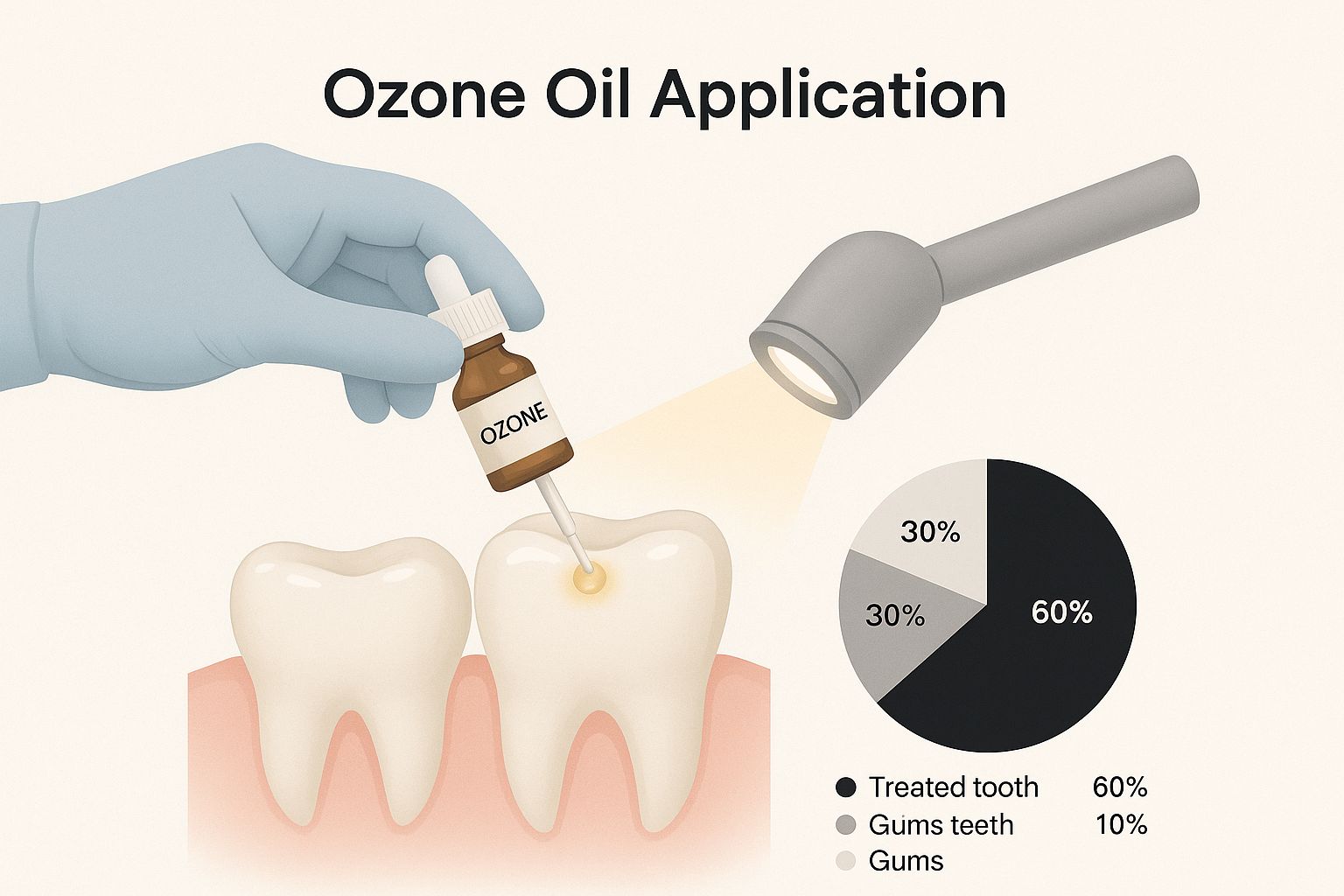
This image perfectly captures the precision of applying ozone exactly where it's needed. It's a clear example of how we use this tool to make dental care in San Diego more targeted, effective, and minimally invasive.
Ozone Therapy vs Traditional Methods in Common Dental Treatments
To really understand the difference ozone can make, it helps to see a side-by-side comparison with the conventional methods we’ve used for years.
| Dental Condition | Traditional Treatment Approach | Ozone Therapy Approach | Key Patient Benefit |
|---|---|---|---|
| Early Cavities | "Watch and wait" until the cavity is large enough to require drilling and a filling. | Application of ozone gas to kill bacteria and promote natural tooth remineralization. | No drill, no filling. Preserves natural tooth structure and avoids invasive procedures. |
| Gum Disease | Scaling and root planing with standard saline or antimicrobial rinses to clean pockets. | Irrigating gum pockets with ozonated water to eliminate bacteria and reduce inflammation. | More thorough disinfection. Leads to faster healing and better management of the disease. |
| Root Canals | Using files and liquid disinfectants (like sodium hypochlorite) to clean the main root canals. | Using ozone gas to penetrate and sterilize the microscopic tubules that liquids can't reach. | Lower risk of reinfection. Improves the long-term success rate of the root canal. |
As you can see, ozone doesn't just replace traditional methods—it enhances them, making treatments gentler, safer, and more effective for our patients.
What to Expect During Ozone Therapy
If the thought of a dental visit makes you think of drills and discomfort, I have some good news. Ozone therapy is a completely different experience—one that my patients often find surprisingly simple and gentle. The whole point is for it to be comfortable, quick, and non-invasive.
One of the first things that puts people at ease is learning that ozone therapy is completely painless. For most treatments, we don't need any injections or anesthesia. You just sit back and relax while the ozone does its thing. This makes it a fantastic choice for anyone with dental anxiety, and it's especially great for kids.
A Seamless and Comfortable Process
A typical ozone session is incredibly quick and straightforward. We tailor the application method to what we're treating, but the goal is always to be targeted and precise.
Here’s a simple breakdown of what a session usually looks like:
- Preparation: We start by isolating and drying the area we’re focusing on, whether that’s a tooth with a small cavity or an irritated gum pocket.
- Application: I'll use a specialized handheld device to deliver the ozone. This might be a small wand that forms a seal over the tooth to apply ozone gas, or it could be a tiny, flexible tip used to gently flush ozonated water into a gum pocket.
- Duration: The application itself is over in a flash—often just 30 to 60 seconds for each spot. The entire visit is usually done in just a few minutes.
There’s no drilling. No vibration. No discomfort. Most patients tell me they feel next to nothing.
No Downtime and Quick Recovery
After your treatment, you can walk out the door and get right back to your day. There is virtually no recovery time needed. You can eat and drink immediately without worrying about restrictions or lingering numbness from anesthesia. Because the therapy kicks your body's natural healing into high gear, the recovery process starts right away, and many people experience less soreness than they would after a more traditional procedure.
The gentle nature of this treatment is a huge part of why it's gaining so much traction. The global market for ozone therapy was valued at around USD 250 million in 2023, and it's projected to grow as more dentists and patients see the benefits. This really speaks to a larger shift in healthcare toward solutions that work with the body, not against it. You can see more on this trend over at Dataintelo.com.
By taking common dental fears like needles and drills out of the equation, ozone therapy opens the door for people to get proactive care. It changes the focus from invasive repairs to gentle, biological healing.
Ultimately, experiencing ozone in dentistry is all about comfort and confidence. It’s a quiet, fast, and painless process that delivers powerful results without the usual stress of a dental appointment. It's helping many of my San Diego patients feel much more relaxed about sitting in the dental chair.
Understanding the Safety of Medical-Grade Ozone

It’s completely normal to have questions about safety when you hear about a therapy like ozone. Let's clear the air right away: the ozone used in our San Diego clinic is a world apart from the smog you hear about on the news. They aren't the same thing at all.
Atmospheric ozone is a pollutant mixed with all sorts of other nasty stuff. What we use, however, is medical-grade ozone—a pure, precisely controlled blend of oxygen and ozone. We generate it right here in the office, right when we need it, ensuring it’s fresh and effective for your treatment. This key difference is what makes it so safe for dental care.
The Role of FDA-Cleared Technology
To guarantee your safety, we rely on specialized, FDA-cleared equipment built specifically for medical and dental procedures. This isn’t some generic machine; it's a precision instrument that produces exact ozone concentrations fine-tuned for the task at hand.
This technology gives us incredible control, allowing us to apply the therapy with pinpoint accuracy. Whether we're treating a tiny spot of decay or an infected gum pocket, the ozone goes exactly where it's needed and nowhere else. There’s no guesswork involved.
Plus, the equipment has multiple built-in safeguards, so we can deliver a controlled and predictable application, every single time.
Controlled Application and Patient Protection
During any ozone treatment, your safety is our number one concern. We have a set of strict protocols in place to make sure the ozone is delivered precisely where it needs to be.
- Targeted Delivery Systems: We use things like custom-fitted trays or small, sealed applicators that keep the ozone gas contained directly on the tooth or gum tissue. This prevents any unwanted exposure.
- High-Volume Suction: A high-speed suction system is always running alongside the ozone delivery. It immediately captures any excess gas before it has a chance to be inhaled.
- Proper Ventilation: Our treatment rooms are designed with excellent ventilation, creating a safe, clean environment for you and our team.
These measures all work together, creating a closed-loop system that maximizes the therapeutic benefits without posing any risk.
The safety of dental ozone isn't just about the molecule itself; it’s about the combination of pure medical-grade gas, precision technology, and strict clinical protocols. When used correctly by a trained professional, it is an exceptionally safe and effective tool.
Scientific Backing and Growing Acceptance
The use of ozone in dentistry isn't just some new trend; it's backed by a growing body of clinical research. Study after study confirms its powerful antimicrobial effects and its ability to kickstart the healing process, often without the side effects that can come with traditional medications.
This growing confidence is even showing up in the market for these devices. The overall ozone therapy instruments market was valued at about USD 1.6 billion in 2024, with even more growth on the horizon. This trend really highlights the demand for safer, less invasive treatments in modern healthcare. You can dive deeper into these market insights on Wiseguy Reports.
By pairing proven science with advanced technology, we can confidently offer ozone therapy as a safe, gentle, and highly beneficial service to our patients here in San Diego.
How to Find a Qualified Ozone Dentist
So, you're ready to see what ozone therapy can do for you? Great! The first, and most important, step is finding the right dentist.
Ozone in dentistry is a specialized field, so you won't find it offered at every dental practice in San Diego. You’ll want to look for a practitioner who has specific training and real-world experience in using it safely and effectively.
A good place to start your search is with dentists who practice holistic, biological, or minimally invasive dentistry. These dentists are often at the forefront of treatments that support the body's own ability to heal.
Questions to Ask a Potential Provider
Once you've shortlisted a few clinics, scheduling a consultation is the next move. This is your chance to get a feel for their approach and make sure they’re the right fit. It's not just about having the machine; it's about finding a dentist with a deep understanding of how and when to use it. For more general advice, our guide on how to choose the right dentist has some great tips that apply here, too.
Here are a few key questions to have in your back pocket:
- What specific training do you have in ozone therapy? Ideally, you want to hear about certifications or advanced training from reputable dental organizations.
- How long have you been using ozone in your practice? Experience matters. A long history with the therapy shows a genuine commitment.
- What conditions do you typically use it for? A skilled dentist will confidently explain how they apply ozone for issues like gum disease, cavities, or root canal treatments.
- What are your safety protocols? They should be able to walk you through how they use controlled delivery systems, high-volume suction, and proper ventilation to ensure your safety.
- Can you share any patient experiences or outcomes? Without breaking privacy, they should be able to talk about the kinds of positive results they've seen firsthand.
Choosing a dentist is a big decision. A good ozone dentist will be open, knowledgeable, and more than willing to answer all your questions. They want you to feel confident and comfortable with your treatment plan.
When you find a skilled practitioner, you're putting yourself in the driver's seat of your oral health. A thorough chat from the get-go will give you all the peace of mind you need to move forward.
Your Questions About Ozone in Dentistry, Answered
It's natural to have questions when you hear about a new approach to dental care. We’ve put together answers to some of the most common things patients ask us about ozone in dentistry so you can feel confident and clear about your treatment options.
Is Ozone Therapy Covered by My Dental Insurance?
This is a great question, and the answer really depends on your specific insurance plan. Because ozone is often used to make a standard procedure (like a filling or root canal) more successful, some insurance companies see it as a valuable part of that treatment and will cover it. Others might view it as an elective therapy and not offer coverage.
The simplest way to find out for sure is to let our San Diego team send a pre-treatment estimate to your insurance provider. This breaks down the entire procedure and shows exactly what your plan will cover. We're committed to making modern dental care accessible and also have flexible payment options available.
Can Ozone Therapy Replace a Filling or a Root Canal?
Think of ozone therapy as a powerful partner to traditional dental work, not a replacement for it. It excels at preventing small problems from becoming big ones and at making necessary treatments work even better.
- Stopping Early Cavities: If we catch decay very early—before it's a full-blown cavity—ozone can often stop it in its tracks and help your tooth heal itself, which can prevent the need for a filling.
- Improving Fillings: Once a cavity is established, a filling is still needed to rebuild the tooth. But using ozone first ensures the area is completely sterilized, creating a better foundation for the filling.
- Boosting Root Canals: Ozone gas can get into the tiny, complex canals inside a tooth far more effectively than traditional liquids can. It doesn't replace the root canal procedure, but it dramatically increases the odds of long-term success by wiping out hidden bacteria.
Essentially, it makes good dentistry great.
Who Is a Good Candidate for Dental Ozone Therapy?
Most people are great candidates for ozone therapy, but it’s an especially fantastic fit if you’re looking for a more natural, gentle approach to your oral health. You might find it particularly beneficial if you are:
- A patient who feels anxious about dental visits and prefers non-invasive treatments.
- Someone interested in the principles of minimally invasive or biological dentistry.
- Dealing with ongoing issues like gum inflammation or stubborn tooth sensitivity.
- Getting a root canal and want to do everything possible to ensure it succeeds.
If you want to tackle early decay, manage gum disease without aggressive treatments, or simply give your overall oral health a boost, ozone therapy is definitely worth discussing.
The best way to know for certain is to come in for a chat. A dentist experienced with ozone in dentistry can look at your unique situation and explain exactly how it could help you.
Ready to experience a gentler, more effective approach to dental care? The team at Serena San Diego Dentist is here to answer all your questions and help you achieve optimal oral health. Schedule your consultation today!