
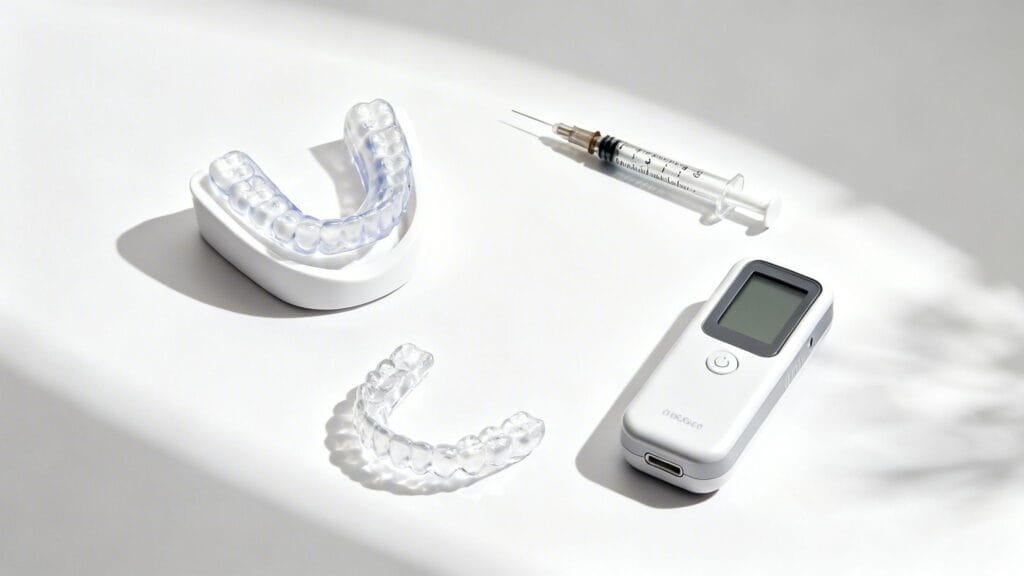
If you're looking for teeth grinding treatment options, you'll find a wide range, from simple at-home habit changes to professionally fitted custom night guards, precise dental work, and even Botox injections. The right path for you depends on what's causing the grinding and its severity. That’s why a professional diagnosis is the essential first step toward finding real, lasting relief from the pain and damage.
So, What Exactly Is Teeth Grinding?

Imagine your jaw muscles working overtime all night, with your teeth caught in the middle. That's bruxism—the medical term for involuntarily grinding your teeth or clenching your jaw. It's incredibly common and can happen while you're asleep (sleep bruxism) or during the day when you're focused or stressed (awake bruxism).
Many people have no idea they’re doing it. Often, the first clue is when symptoms start to appear. These warning signs are easy to brush off or blame on something else, but they’re your body's way of telling you about the intense pressure your jaw is putting on your teeth.
Telltale Signs You Might Be Grinding Your Teeth
Ever wake up with a dull, persistent headache or a jaw that feels stiff and sore? Those are classic signs of nighttime grinding. That constant muscle work puts a ton of strain on your entire head and neck. Worried about these symptoms? Here’s what to look for:
- Tooth sensitivity: Grinding wears away your enamel, the hard, protective layer of your teeth. Once it's gone, the sensitive layer underneath (dentin) is exposed, making hot coffee or a cold drink feel very uncomfortable.
- Worn-down or flattened teeth: Look at your teeth in the mirror. Over time, the constant friction can physically wear them down, making them look shorter or flatter than they used to be.
- Chipped, fractured, or loose teeth: The forces involved in grinding are powerful. They can be strong enough to crack a tooth or damage fillings, crowns, and other dental work you've had done.
- Pain that feels like an earache: Your jaw joint (the temporomandibular joint, or TMJ) sits right in front of your ear. When it gets inflamed from all that clenching, the pain often radiates and can easily be mistaken for an earache.
This isn’t a rare condition. Bruxism is a global issue, with surprising statistics. Studies have shown that North America has the highest rate of sleep bruxism, affecting up to 31% of people. It’s no wonder that dental treatments, especially oral appliances like night guards, make up a significant part of the multi-billion dollar industry dedicated to managing it—they are a proven and effective solution.
Why You Shouldn't Just "Grin and Bear It"
Ignoring bruxism is like ignoring a slow leak under your sink. The damage happens quietly and builds up over time until you're facing a much bigger, more expensive problem. For a deeper dive into breaking the habit, our guide on how to stop teeth grinding at night is a great resource.
Bruxism doesn't just damage your teeth; it can chip away at your quality of life. Chronic pain, disrupted sleep, and the financial stress of fixing dental work can take a real toll on your well-being.
Protecting your smile means getting to the bottom of the issue. This is especially true if you've invested in cosmetic dentistry like veneers or crowns, as grinding can quickly destroy them. We also have a great article that explores the causes of jaw clenching and tips to relieve it if you want to learn more. A proper diagnosis from your dentist is the first step toward stopping the damage and finally finding some peace.
How Dentists Diagnose Bruxism

So, you suspect you might be grinding your teeth. Maybe it's the morning headaches, a sore jaw, or your partner complaining about the noise at night. While those are definite clues, figuring out if bruxism is the true culprit requires a professional eye. It’s a bit like detective work.
At Serena San Diego Dentist, we don’t just look at your symptoms; we dig deeper to find the root cause. Our diagnostic process is thorough, combining a hands-on clinical exam with a compassionate conversation about your health and daily life. This is the crucial first step toward finding the right teeth grinding treatment options for you.
The Clinical Examination
The first piece of the puzzle comes from a careful look inside your mouth. This is where our expertise really comes into play. We’re on the lookout for the tell-tale signs of chronic grinding—subtle clues that are easy to miss but paint a clear picture for a professional.
Here's what we’re trained to spot:
- Flattened Tooth Surfaces: Constant grinding can literally wear down the tops of your teeth, especially the molars, making them look flat. This is one of the most classic signs of long-term bruxism.
- Microfractures and Craze Lines: We'll look for tiny vertical cracks in your tooth enamel. They might not be causing you any pain, but they’re a big red flag that your teeth are under incredible pressure.
- Enlarged Jaw Muscles (Masseter Hypertrophy): Think of your jaw muscles like any other muscle in your body—if you work them out constantly, they get bigger. We’ll gently feel the masseter muscles on the sides of your jaw to check if they’re overdeveloped or tender to the touch.
- Wear Facets: These are a dead giveaway. They’re shiny, worn spots on a tooth that perfectly match up with an opposing tooth. It’s like a fingerprint showing exactly where your teeth are rubbing against each other.
A Conversation About Your Habits and Health
After the physical exam, we need to talk. This part is just as important, because understanding your lifestyle often helps us figure out why you’re grinding in the first place. You might be surprised by some of the questions we ask, but they all help connect the dots.
This conversation helps us uncover patterns and triggers that you might not even be aware of.
A professional diagnosis is more than just confirming you grind your teeth. It’s about discovering the underlying reasons, which is the foundation for creating a treatment plan that actually works.
To get the full picture, we’ll likely ask you about things like:
- Stress Levels: Are you dealing with a high-pressure job? Going through a major life change?
- Sleep Patterns: Do you wake up feeling tired? Has anyone ever told you that you make grinding sounds in your sleep?
- Medications and Substances: Certain antidepressants, caffeine, alcohol, and even tobacco can all contribute to bruxism.
- Existing Health Conditions: We'll also ask about other issues, such as sleep apnea or acid reflux, which are often linked to teeth grinding.
Here in our San Diego office, we use tools like intraoral cameras to show you exactly what we see. By displaying the worn spots or tiny fractures on a monitor, you can see the evidence for yourself. It makes the problem feel real and helps you understand why treatment is so important.
To learn more about what a comprehensive exam involves, you can read our guide on what to expect during a dental check-up.
Why Custom Night Guards Are the Gold Standard

When it comes to the most effective, first-line teeth grinding treatment options, the custom-fitted night guard is the undisputed champion. Often called an occlusal splint, this device is far more than just a piece of plastic. It’s a precisely engineered shield, custom-made to protect your teeth from the incredible forces of grinding and clenching while you sleep.
By creating a comfortable, durable barrier, it absorbs the pressure and prevents your upper and lower teeth from making that destructive contact. Think of it as the difference between buying a suit off the rack and having one custom-tailored. While both get the job done, only the tailored one fits perfectly, feels comfortable, and works exactly as it should. That’s the real difference between a professional guard and what you find at the drugstore.
The Problem with Over-the-Counter "Boil-and-Bite" Guards
You’ve likely seen them on pharmacy shelves: inexpensive "boil-and-bite" mouthguards that promise a quick fix. And while the low price is definitely tempting, these generic guards can sometimes create more problems than they solve.
Here’s where they tend to fall short:
- Poor Fit and Comfort: Boiling soft plastic and biting into it rarely results in anything but a bulky, ill-fitting guard. This discomfort can make it harder to sleep and might even cause you to spit it out during the night, leaving your teeth completely unprotected.
- Inadequate Protection: For some people, the soft, pliable material can actually encourage more chewing and clenching. Instead of a protective device, it becomes more of a "chew toy" that can make muscle activity worse.
- Potential to Worsen Bite Issues: A poorly fitting guard can force your jaw into an unnatural position. Over time, this misalignment can trigger new bite problems or make existing TMJ (temporomandibular joint) pain even worse.
A professional night guard isn't just about stopping wear and tear. It's about creating a stable, balanced bite that gives your jaw muscles a chance to truly relax, offering real relief from pain and tension.
The Modern Process of Getting a Custom Guard
The thought of getting a dental impression might conjure up memories of biting into goopy, uncomfortable trays. Thankfully, those days are long gone. At Serena San Diego Dentist, we use quick and precise digital scanning technology to create a perfect 3D model of your teeth in just a few minutes.
The process is surprisingly simple and comfortable:
- Digital Scan: We use a small, handheld scanner to take thousands of pictures inside your mouth, building a highly accurate digital impression. No goop, no gagging, no mess.
- Custom Fabrication: This digital model is then sent to a specialized dental lab where your night guard is crafted from a durable, biocompatible acrylic. We’ll select the right material and thickness based on how severely you grind.
- Final Fitting: Once your guard is ready, you'll return for a quick fitting. We make any tiny adjustments needed to ensure it clicks perfectly and comfortably into place, with no rubbing or awkward pressure points.
This careful process guarantees your guard fits flawlessly, giving you maximum protection without getting in the way of a good night's sleep. There's a reason the market for these devices is growing so rapidly; one report projects the global sleeping bruxism treatment market will hit $825.8 million by 2034, largely driven by dentists prescribing custom guards because they simply work so well.
The Long-Term Value of a Professional Guard
Investing in a custom night guard is one of the smartest financial decisions you can make for your long-term dental health. Yes, the upfront cost is higher than a drugstore version, but the savings down the road can be massive. A high-quality guard really is an insurance policy for your smile. For a deeper dive into the specifics, you can learn more about a Mouth Guard For Teeth Grinding from other expert sources.
It protects you from incredibly expensive future damage, like cracked teeth that might need root canals and crowns. It also shields any cosmetic work you’ve invested in—like veneers or bonding—from being chipped or fractured under pressure. Put simply, a durable, well-made night guard can save you thousands of dollars in restorative dental work.
Exploring Advanced and Alternative Treatments
While a custom night guard is an excellent first line of defense for protecting your teeth, it doesn't actually stop the grinding. For people with severe bruxism, nagging jaw pain, or anyone who wants to tackle the root cause, we need to look at more advanced options. These treatments are designed to address the source of the problem—either the overactive jaw muscles or a bite that's out of balance.
Here’s a good way to think about it: A night guard is like putting a heavy-duty case on your phone. It’s great at preventing cracks if you drop it, but it doesn’t do anything to stop you from dropping it in the first place. Advanced treatments are more like improving your grip so you’re less likely to drop the phone at all.
Botulinum Toxin Injections for Jaw Muscle Relief
You probably know it by its brand name, Botox, but botulinum toxin has become a game-changer for treating severe bruxism. This isn’t about cosmetics; it's a therapeutic treatment that targets the powerful masseter muscles in your jaw responsible for clenching. Worried about pain during the procedure? Here’s what to expect.
The procedure itself is surprisingly quick and straightforward:
- Targeted Injections: A trained dental professional, like Dr. Serena, carefully injects very small amounts of botulinum toxin directly into those overactive jaw muscles. The process is minimally invasive with little discomfort.
- Muscle Relaxation: Over the next few days, the toxin gently relaxes these muscles. This dramatically reduces the force of your involuntary grinding and clenching, especially while you sleep.
- Preserved Function: The best part? It doesn't impact your ability to talk, chew normally, or make your usual facial expressions. It just dials down the intensity of those destructive muscle contractions.
For patients who suffer from constant jaw pain, tension headaches, or who grind so forcefully they even crack their night guards, this treatment can bring incredible relief.
Dental Corrections to Create a Balanced Bite
Sometimes, the root of the problem lies in how your teeth fit together. When your bite (what dentists call occlusion) is misaligned, it can create tiny interferences that your jaw muscles try to "grind away" to find a comfortable resting spot. Think of it like having a small rock in your shoe—your foot will constantly shift and move to get comfortable, and your jaw does the same thing.
If we find that your bite is a contributing factor, we might recommend dental corrections. These are functional adjustments designed to bring your entire bite into harmony.
Some common approaches include:
- Invisalign or Orthodontics: Straightening teeth can eliminate the misaligned contacts that trigger grinding in the first place.
- Dental Crowns or Reshaping: For teeth that are severely worn down, we can build them back up with crowns. In other cases, a very subtle reshaping of a tooth’s surface can help your bite fit together more evenly and reduce strain.
For some people, correcting the bite can be a permanent fix, offering long-term relief without needing a night guard every night.
A number of advanced treatments are available, each with its own set of benefits. The following table provides a clear comparison to help you understand which option might be the right fit for your unique situation.
Comparing Advanced Bruxism Treatments
| Treatment | Primary Mechanism | Ideal Candidate | Pros | Cons |
|---|---|---|---|---|
| Botulinum Toxin | Temporarily relaxes the masseter (jaw) muscles to reduce clenching force. | Someone with severe bruxism, jaw pain (TMD), or who breaks night guards. | Highly effective for pain relief; protects teeth and dental work; minimally invasive. | Temporary (lasts 3-6 months); not covered by all insurance; requires repeat treatments. |
| Dental Corrections | Corrects bite misalignments that trigger the grinding reflex. | Someone with a clear occlusal (bite) issue, such as crooked or worn-down teeth. | Can be a permanent solution; improves overall oral health and function. | Can be a longer process (e.g., orthodontics); may involve significant cost and dental work. |
| Medications | Muscle relaxants or anxiety medications that reduce muscle activity or address underlying stress. | Someone with acute, short-term bruxism related to a specific stressful event or injury. | Can provide quick, temporary relief from severe symptoms. | Not a long-term solution; can have side effects and potential for dependency. |
| Sleep Apnea Eval | Treats airway obstructions that can trigger grinding as a response to keep the airway open. | Anyone with bruxism who also snores, feels tired during the day, or has been told they stop breathing at night. | Addresses a serious underlying health condition; can resolve bruxism completely. | Requires a sleep study for diagnosis; treatment (e.g., CPAP) can take getting used to. |
Ultimately, the best path forward depends on what's causing your bruxism. A thorough diagnosis is the key to matching you with the most effective and lasting solution.
Lifestyle and Behavioral Strategies
Clinical treatments are powerful, but don't underestimate what you can do at home. These behavioral strategies help you tackle common bruxism triggers head-on, giving you more control over the habit.
A fascinating study highlighted that while 85-90% of people may grind their teeth at some point, only a small percentage ever need clinical treatment. This shows how impactful proactive, at-home care can be.
Here are a few effective techniques to try:
- Stress Management: Since stress is a huge trigger, finding ways to unwind is critical. Things like meditation, yoga, deep breathing, or even a brisk walk in sunny San Diego can calm your nervous system and, in turn, your jaw muscles.
- Jaw Relaxation Exercises: You can train your jaw to relax during the day. Try consciously holding your lips together but your teeth slightly apart. Another simple trick is to gently rest the tip of your tongue between your front teeth—it's impossible to clench in that position!
- Physical Therapy: For those with chronic pain that extends to the neck and shoulders, a physical therapist can be a huge help. They use targeted massage and exercises to release trigger points in the entire jaw system. If you're dealing with this kind of persistent pain, learning more about TMJ treatment in San Diego could offer you a path toward relief.
Navigating Insurance and Payment Options for Treatment
Let’s talk about the practical side of things: how to pay for your bruxism treatment. It's completely normal to worry about the cost, and many people put off getting help because they assume it’s out of reach. At Serena San Diego Dentist, we work hard to make sure you can get the care you need without financial stress getting in the way.
One of the first questions we always get is, "Will my insurance cover this?" The answer is often, "It depends." While purely cosmetic treatments are rarely covered, when it’s for a medically diagnosed condition like bruxism, many PPO dental insurance plans will cover at least a portion of the cost.
How to Know if Your Dental Insurance Covers Treatment
Dental insurance can feel like a maze of confusing terms. You shouldn't have to figure it out on your own. Every plan is different—what one provider covers for a custom night guard might be completely different from another. The best way to get a straight answer is to let our experienced team do the heavy lifting for you.
Our office team deals with insurance providers every day. We offer a complimentary benefits check to get you clear, simple answers. We will:
- Verify your specific coverage for bruxism-related diagnostics and treatments.
- Explain your benefits in plain English, so you know exactly what’s covered and what your portion will be.
- Handle all the claims and paperwork to make sure you get the most out of your plan with the least amount of hassle.
This process removes the guesswork and gives you a clear financial picture before you commit to any treatment. To see how we work with different providers, you can find more details about our approach to dental insurance in San Diego.
Flexible Payment and Financing Solutions
We firmly believe that your health should never be put on hold because of financial concerns. If you have costs that insurance doesn't cover, or if you prefer the flexibility of out-of-pocket payment, we have several options to make treatment manageable.
Our commitment is to your well-being. We focus on providing transparent financial guidance and flexible solutions so you can prioritize your health without worry.
We offer flexible financing plans that can break up the total cost into smaller, more affordable monthly payments. When you come in for your consultation, we’ll happily walk you through every option. Our goal is to remove any financial uncertainty, so you can feel confident that investing in your long-term health is absolutely achievable.
Your Next Steps Toward a Pain-Free Smile
We’ve covered a lot of ground, from the quiet signs of teeth grinding to the powerful teeth grinding treatment options available today. The single most important thing to remember is this: you don’t have to put up with the morning headaches, jaw aches, or the constant worry about your teeth. While bruxism is a real problem, it's one we can absolutely manage with the right care.
Ignoring the clenching and grinding allows the damage to pile up over time. This can lead to cracked teeth, wrecked dental work, and pain that just won't quit. Think of symptoms like a stiff jaw or sensitive teeth as your body’s way of asking for help. The path to feeling better is often more straightforward than you might imagine, and it all starts with a professional evaluation and a plan designed for you.
Taking the First Step
The journey to a pain-free life starts with a conversation. Here at Serena San Diego Dentist, we know that every person’s situation is different. Maybe a custom night guard is all you need. Or perhaps we need to look at more involved solutions like correcting your bite. Our team, led by Dr. Serena, is here to listen and map out a plan that makes sense for your health and your life.
We also believe great dental care should be within reach. This flowchart shows how we make affording your treatment simple and clear.

As you can see, whether you have dental insurance or need to use one of our flexible payment plans, we have a path forward. Your budget shouldn't stand in the way of a healthy, comfortable smile.
An Invitation to Lasting Relief
You've already taken the time to learn about the causes and solutions. Now, it's time to act on that knowledge. Let us help you finally put the pain and frustration of bruxism in the past.
Your health is an investment, not an expense. Taking that first step today is about protecting your smile and your overall well-being for years to come.
The team at Serena San Diego Dentist is ready to help you pinpoint the source of your grinding and create a personalized plan for real, lasting relief.
Ready to stop the grind and enhance your smile? Schedule your consultation with Serena San Diego Dentist today and start your journey toward a pain-free future.
Your Bruxism Questions, Answered
When you're dealing with teeth grinding, you're bound to have questions. It can feel a bit overwhelming at first. Here at Serena San Diego Dentist, we hear these same concerns from patients every day, so we’ve put together some clear, practical answers to help you understand your options.
Can Teeth Grinding Just Go Away on Its Own?
It's a common hope, but the honest answer is: rarely. If you're grinding temporarily because of a specific stressful event, it might fade once life calms down. However, chronic bruxism—the kind that becomes a nightly habit—usually has deeper roots that won't fix themselves.
Things like a misaligned bite, ongoing stress, or an underlying sleep disorder need to be addressed directly. Simply waiting and hoping it stops often leads to more damage over time, including cracked teeth, receding gums, and persistent jaw pain (TMD). Getting a professional diagnosis is the only real way to figure out what’s causing it and find a solution that lasts.
How Long Does a Custom Night Guard Last?
This is where investing in a professional solution really pays off. While the exact lifespan depends on the material we use and how intensely you grind, a high-quality, hard acrylic guard made by a dental lab can easily last for 5 to 10 years.
This is a world away from the over-the-counter "boil-and-bite" guards. Those are made of a much softer plastic that can wear through in just a few months. They also lack the precise fit needed for true protection and comfort. The durability of a custom appliance makes it one of the smartest investments you can make for your long-term dental health.
Think of a custom night guard not just as a purchase, but as an investment. It's insurance against thousands of dollars in future crowns, fillings, and repairs. It protects your natural teeth and any cosmetic work you've had done, all while giving your jaw muscles a much-needed break.
Is Botox for Teeth Grinding a Safe Option?
Absolutely. When administered by a trained dental professional for bruxism, botulinum toxin (Botox) is considered a very safe and effective treatment. We use small, targeted injections to gently relax the main jaw muscles, which reduces the sheer force of the clenching and grinding.
The goal here is purely therapeutic. It won’t change how you look or affect your ability to talk, chew, or make normal facial expressions. Side effects are rare and typically minor, like a little soreness where the injection was given. For many patients, it provides incredible relief from the destructive cycle of grinding.
Will My Dental Insurance Cover Treatment for Grinding?
This is a big question, and the answer really depends on your specific insurance plan. Coverage for bruxism treatment can vary quite a bit.
It usually comes down to how the treatment is defined:
- Medically Necessary: Most PPO dental plans view bruxism as a medical issue. Because of this, they often cover a portion of your diagnostic exam and the cost of a custom-fitted night guard, since it's designed to prevent more serious damage.
- Cosmetic or Elective: On the other hand, procedures that your insurance company might see as elective, like certain types of dental corrections, are less likely to be covered.
The best way to get a clear answer is to let us do the work for you. Our team can run a complimentary benefits check with your insurance provider to give you an accurate estimate of what your plan covers.
At Serena San Diego Dentist, our entire focus is on helping you find lasting relief from the pain and damage of teeth grinding. Our expert team is here to walk you through your diagnosis and explain every option, making sure you get the personalized care you deserve.
Ready to put an end to teeth grinding? Book your consultation at Serena San Diego Dentist today.