Facing wisdom teeth removal in San Diego can bring up a lot of questions, and it's completely normal to feel a bit anxious. But here’s the good news: understanding the process is the first step toward a smooth, comfortable experience. This procedure is a routine and incredibly safe oral surgery meant to head off future dental problems before they start. With the right specialist, you can look forward to a straightforward and stress-free recovery.
This guide is your clear roadmap, breaking down everything from that first consultation all the way through your aftercare. We're here to answer your questions, address your concerns, and empower you to feel confident about your oral health.
Your Guide to Wisdom Teeth Removal in San Diego
Just hearing the words "wisdom teeth" can cause a little bit of anxiety, but it really doesn't have to be an intimidating process. These third molars, which usually show up between the ages of 17 and 21, are the last to arrive and often the first to cause trouble. For many people in sunny San Diego, where smiles are always on display, there just isn't enough room in the jaw for them to grow in properly.
This lack of space is what leads to a whole host of issues that can disrupt your oral health. When wisdom teeth can't emerge correctly, they can become impacted—meaning they're trapped under the gum line or growing in at the wrong angle, creating a painful problem that needs professional care.
Why This Guide Is Your Trusted Resource
We designed this guide to be your go-to resource, demystifying the entire journey of wisdom teeth removal. Our goal is to empower you with knowledge so you feel confident and prepared every step of the way, just like a knowledgeable dentist chatting with a patient.
We’ll cover all the essential bases, including:
- Understanding the "Why": We'll dive into the common reasons for extraction—like impaction, crowding, and potential infection—so you can see the long-term benefits for your smile.
- The Procedure Explained: Get a clear, step-by-step look at what to expect during your consultation and on the day of your surgery, so there are no surprises.
- Navigating Costs and Insurance: Learn about typical cost factors here in San Diego and how to make the most of your dental insurance plan for affordable care.
- Planning for a Smooth Recovery: We've got practical aftercare tips to help you heal quickly and comfortably at home.
Think of this guide as a conversation with a trusted dental professional. We're here to answer your questions, ease your concerns, and give you the clarity you need to make smart decisions about your oral health.
By the end, you'll have the complete picture, from finding the right specialist to knowing exactly what to do after the procedure. For more insights on keeping your smile healthy, feel free to explore other topics on the Serena San Diego Dentist blog. We’re committed to giving you the information you need to protect your smile for years to come.
Why Wisdom Teeth Often Need To Be Removed
For many people, wisdom teeth—also known as third molars—are like uninvited guests showing up to an already full party. Our modern jaws just don't have enough room for these late arrivals, which can lead to a whole host of problems that make removal a smart, proactive step for your long-term oral health.
The single most common reason for wisdom teeth removal in San Diego is a condition called impaction. An impacted tooth is basically trapped, unable to break through the gum line properly. Picture a car completely blocked in a crowded downtown parking garage—it's not going anywhere, and its presence is causing a chain reaction of trouble for all the other cars around it.
The Domino Effect of Impacted Teeth
When a wisdom tooth is impacted, it doesn't just sit there quietly. It can start pushing against its neighbors, creating significant issues for the surrounding teeth, your gums, and even your jawbone. The exact angle of the impaction can vary, but the potential for damage is always a serious concern that requires attention from a dental expert.
These complications often include:
- Damage to Adjacent Teeth: An impacted tooth can shove against the molar next to it, causing damage, decay, and shifting otherwise perfectly healthy teeth out of alignment.
- Pain and Discomfort: A lot of patients report chronic pain, a feeling of pressure in the back of their jaw, and even persistent headaches, all tied back to their wisdom teeth.
- Infection and Gum Disease: When a wisdom tooth only partially emerges, it creates a small flap or opening where bacteria love to hide. This can easily lead to painful infections like pericoronitis, which is an inflammation of the gum tissue around the tooth.
This isn't a rare problem. Every year in the U.S., about 10 million wisdom teeth are extracted from 5 million people, with the procedures costing over $3 billion annually. The data shows that around 85% of third molars will eventually need to be removed because of these kinds of complications, which really highlights why proactive care is so important. You can discover more insights about these national statistics on MissionValleyDentists.com.
From Cysts to Chronic Problems
Putting off dealing with an impacted tooth can lead to much more severe issues down the road. The sac surrounding the tooth can fill with fluid, forming a cyst. This cyst can cause serious damage to the jawbone, nerves, and nearby teeth. In rarer cases, tumors can even develop from these cysts.
Proactive wisdom teeth removal isn't just about solving an immediate problem; it's about preventing a cascade of future dental issues that can be more painful and costly to treat down the road.
Understanding these potential risks is key. By addressing impacted wisdom teeth early, you're protecting your overall oral health and avoiding more significant interventions later on. To get a better handle on the risks, feel free to explore our detailed guide on the serious complications from impacted wisdom teeth. Scheduling a consultation with a San Diego dentist is the best way to get a proper evaluation and find out if extraction is the right path for you.
A Step-By-Step Walkthrough of the Procedure
Let's be honest, the thought of any kind of surgery can be a little nerve-wracking. But when it comes to wisdom teeth removal, knowing exactly what's going to happen can make all the difference. In San Diego, this is an incredibly common and refined procedure where your comfort and safety are always the top priorities.
From the moment you walk in, our goal is to put you at ease. This walkthrough will pull back the curtain on the entire process, from getting settled in the surgical suite to waking up afterward, feeling relieved.
Preparing for Your Comfort
Your visit starts with a final check-in. The clinical team will quickly go over your health history and the day's surgical plan one last time, making sure every single one of your questions is answered before you even sit in the chair.
Once you’re comfortable, the first real step is administering the anesthesia. This is key to ensuring you have a completely pain-free experience. Based on the conversation you had during your consultation, the surgeon will administer the specific type of sedation that’s right for your needs and anxiety level.
Here’s a great look at how a patient is made comfortable before the procedure, showcasing the calm, modern environment you can expect in a top San Diego dental office.
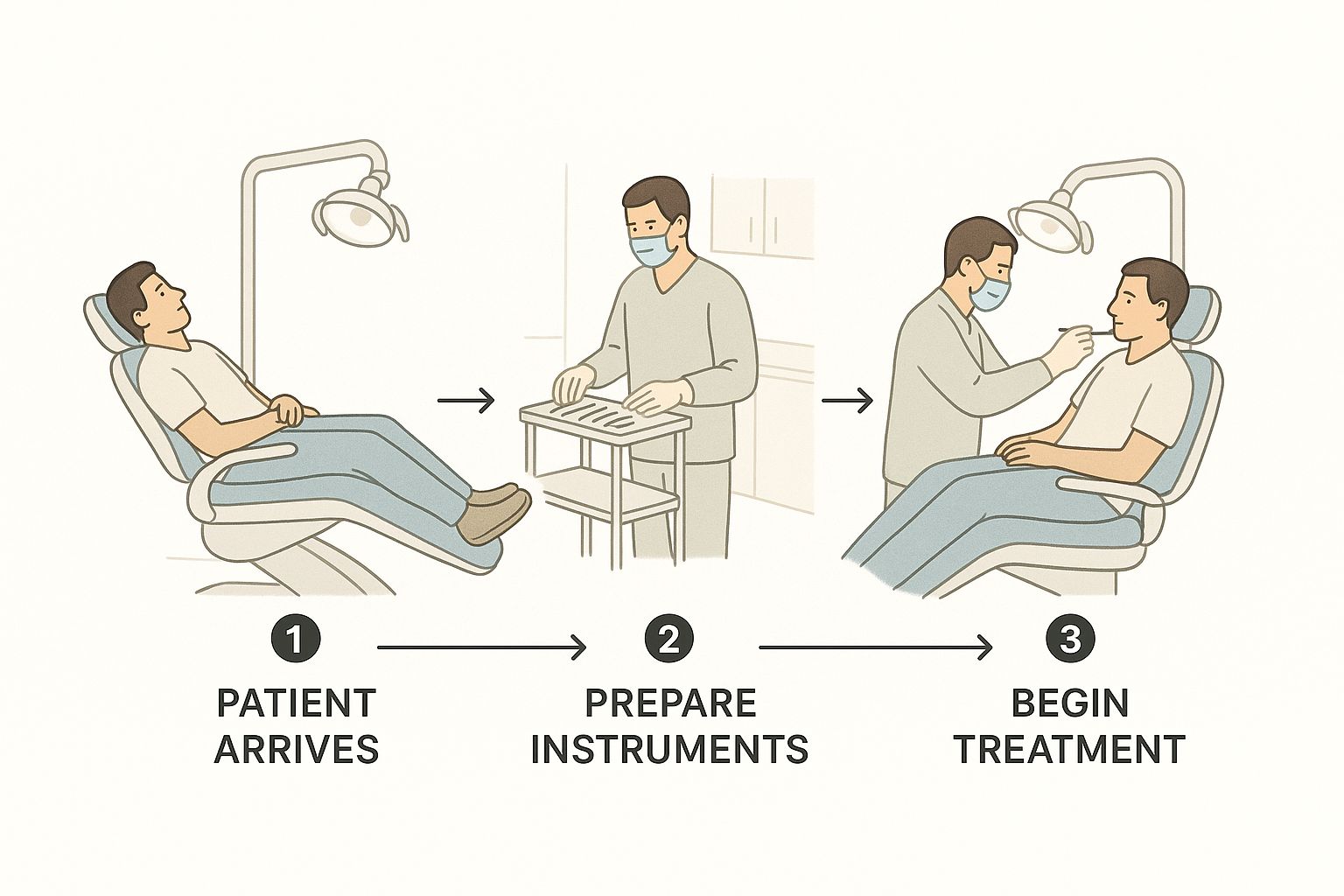
Seeing the professional and serene setting helps many of our patients relax and shake off any last-minute jitters.
Anesthesia Options for Your Comfort
Choosing the right sedation is a collaborative decision between you and your oral surgeon, ensuring you feel as relaxed as possible. Here’s a quick breakdown of the most common options available for wisdom teeth removal in San Diego.
| Anesthesia Type | What It Is | Patient Experience | Best For |
|---|---|---|---|
| Local Anesthesia | Numbing medication (like Novocain) is injected directly at the extraction site. | You are fully awake and aware but feel no pain, only some pressure. | Simple extractions of fully erupted teeth. |
| Nitrous Oxide | "Laughing gas" is inhaled through a mask to induce a state of deep relaxation. | You remain conscious but feel very calm, relaxed, and a bit giddy. Effects wear off quickly. | Patients with mild to moderate anxiety. |
| IV Sedation | Anti-anxiety medication is administered through an IV, putting you in a "twilight sleep." | You're technically conscious but deeply relaxed, drowsy, and won't remember the procedure. | The most common choice for wisdom teeth, especially for impacted teeth or anxious patients. |
| General Anesthesia | Medication is used to make you completely unconscious for the entire procedure. | You are completely asleep and unaware, with no memory of the surgery. | Complex cases, multiple extractions, or patients with severe dental phobia. |
No matter which path is chosen, the goal is always the same: a comfortable, stress-free, and pain-free procedure.
The Extraction Process Explained
Once the anesthesia has taken full effect—meaning you're either completely numb or comfortably sedated—the surgeon gets to work. You'll be amazed at how efficient and minimally invasive modern extraction techniques are.
If a tooth is impacted (stuck beneath the gums), the surgeon makes a small, precise incision in the gum tissue to get to it. Often, the tooth is then divided into smaller pieces. This smart technique allows for a much gentler removal, minimizes the size of the incision, and helps preserve your jawbone.
Worried about pain during the extraction? You won't feel any. The most you might be aware of is some light pressure, but the anesthesia does its job to keep you completely comfortable from start to finish.
After the tooth is out, the surgeon will clean the area thoroughly. They may place a few stitches (sutures) to close the incision, which are typically the dissolvable kind that disappear on their own as you heal.
Final Steps in the Office
The actual surgery is over before you know it. The procedure itself usually takes anywhere from 40 to 90 minutes. Your total time at the office will be closer to two hours, which includes prep time and the initial recovery period. That speed is a real testament to the skill of experienced San Diego oral surgeons.
If you’d like to dive deeper into what to expect, you can learn about sedation choices and timing on EntrustOralSurgery.com.
After the surgery is complete, you’ll be moved to a recovery room where the team monitors you as the anesthesia starts to wear off. They'll go over detailed aftercare instructions, give you any necessary prescriptions, and make sure you're good to go before releasing you to your designated driver. This careful process ensures your safety and sets you up for a smooth recovery at home.
Navigating Removal Costs and Insurance in San Diego

Let's talk about one of the biggest questions on every patient's mind: the cost. Understanding the financial side of wisdom teeth removal is a top priority, and the truth is, there’s no single price tag for the procedure in San Diego.
Think of it like getting a car repaired—the final bill depends on what’s happening under the hood. A straightforward extraction for a tooth that has already come in is a much simpler job than surgically removing one that’s stuck under the gums. Your unique situation is what really shapes the final cost.
Key Factors That Influence Your Total Cost
Several pieces come together to determine the final price for your wisdom teeth removal. Knowing what they are ahead of time helps you make sense of your estimate and plan for what's ahead.
Here are the main things that affect the cost:
- Case Complexity: Is the tooth fully visible and easy to access? Or is it impacted, meaning it's trapped beneath the gum line? A simple extraction will always be less expensive than a surgical one.
- Anesthesia Choice: The type of sedation you choose makes a big difference. Local anesthesia is the most budget-friendly, while IV sedation or general anesthesia adds to the cost but provides a much higher level of comfort for anxious patients.
- Number of Teeth: This one’s pretty simple—the more wisdom teeth you have taken out at once, the higher the overall cost will be.
Making Sense of Your Dental Insurance
For most people in San Diego, dental insurance is the key to making wisdom teeth removal manageable. The good news is that most PPO plans offer at least partial coverage for this procedure. Why? Because it’s almost always considered a medically necessary surgery, not a cosmetic one.
Still, figuring out your benefits can feel a little confusing. You’ll need to know your plan's deductible (the amount you pay out-of-pocket before your insurance kicks in) and your copayment or coinsurance (the percentage of the bill you’re responsible for).
The easiest first step is to call your insurance company or ask your dentist’s office to run a benefits check for you. If you're weighing different plans, it helps to understand how to compare different health insurance plans to make sure you get the best coverage possible.
Don't just assume your plan won't cover it. Wisdom teeth extraction is one of the most common oral surgeries covered by insurance, so it’s always worth checking your specific benefits.
Flexible Payment and Financing Options
Even with a good insurance plan, out-of-pocket expenses can be a real concern. That’s why many of the best dental practices in San Diego, including Serena San Diego Dentist, offer flexible ways to pay, ensuring you can get the care you need without the financial stress. We accept most major insurance plans and offer flexible out-of-pocket payment solutions.
Look for offices that work with third-party financing programs like CareCredit. These plans are designed for healthcare costs and often have low-interest or even 0% interest options for a set period. This lets you break the total cost into smaller, predictable monthly payments, so you can focus on your health now and pay over time.
Creating Your Smooth Recovery and Aftercare Plan
Getting your wisdom teeth out is only half the battle—a smooth, easy recovery is just as important. Think of your aftercare plan as your roadmap to healing up quickly and getting back to normal with as little fuss as possible.
Following a few simple guidelines right after your procedure can make a world of difference in your comfort levels and help you sidestep any potential complications.
The first 24 hours are absolutely the most critical. Your main job is to manage swelling, keep discomfort at bay, and let a protective blood clot form where the tooth used to be. This little clot is nature’s perfect bandage, and it’s your best defense against post-op problems.
Your Day-by-Day Healing Guide
Recovery really isn't that complicated once you know what to expect. Just think of it as a short timeline where each day gets you a little closer to feeling like yourself again. Here’s a quick look at what the first week usually holds.
Day 1 The Rest Day: A bit of swelling and minor bleeding is totally normal. Grab an ice pack and apply it to your cheek for 20 minutes on, then 20 minutes off. This will be your best friend for keeping inflammation down. Stay on top of your prescribed pain medication to keep discomfort from creeping up, and just focus on resting with your head propped up.
Days 2-3 Peak Swelling: This is typically when swelling hits its peak before it starts to go down. Keep up with the ice packs and stick to a diet of super-soft foods. Think yogurt, smoothies (but no straws!), mashed potatoes, and lukewarm soup. Basically, if you have to chew it, skip it.
The First Week Getting Back to Normal: After the first 24 hours, you can start doing gentle warm salt water rinses to keep the area clean. You can also slowly start bringing more solid foods back into your diet as you feel up to it. It is crucial to keep avoiding any tough workouts, smoking, or using straws for at least a week to protect the healing socket.
Honestly, the single most important thing you can do is follow your surgeon's specific instructions. They're tailored for you and are designed to prevent issues so you can heal without a hitch.
A great way to visualize your healing journey is with a simple timeline. It helps you know what's coming and how to best take care of yourself each step of the way.
Post-Op Recovery Timeline What to Expect
| Timeframe | Common Symptoms | Key Aftercare Actions |
|---|---|---|
| First 24 Hours | Swelling, mild bleeding, grogginess, discomfort. | Rest with head elevated. Use ice packs (20 min on/20 off). Take pain meds as prescribed. No spitting or rinsing. |
| Days 2-3 | Swelling may peak. Discomfort should be manageable. | Continue ice packs. Stick to soft foods (yogurt, soup). No straws. |
| Days 4-5 | Swelling and bruising start to fade. Discomfort lessens. | Begin gentle warm salt water rinses after meals. Can start reintroducing slightly more solid, easy-to-chew foods. |
| Day 7 | Significant improvement. Most swelling and discomfort should be gone. | Continue gentle oral hygiene. Avoid strenuous activity for the full week. Follow up with your dentist as instructed. |
This table is just a general guide, of course. Everyone heals a little differently, but it gives you a solid idea of what to prepare for.
Preventing Complications Like Dry Socket
One of the biggest worries people have after getting their wisdom teeth out is developing a dry socket. It’s a painful condition that happens when that all-important blood clot gets dislodged too early, leaving the bone and nerves underneath exposed.
Protecting that clot is non-negotiable. That means absolutely no spitting, no smoking, and no drinking through a straw. The suction created by these actions can easily pull the clot right out of its socket.
Good oral hygiene is still important, but you have to be incredibly gentle when brushing near the surgical sites. For a deeper dive, our guide explains what a dry socket is and when you can stop worrying about it.
How to Choose the Right Oral Surgeon in San Diego
Finding the right specialist for your wisdom teeth removal in San Diego is easily the most important part of this whole process. Think about it—a skilled oral surgeon doesn't just guarantee a safe and successful procedure. They give you the peace of mind you need to walk in feeling confident.
This single decision sets the stage for a smooth, comfortable recovery, so it’s absolutely worth taking the time to do your homework. Your search should zero in on oral and maxillofacial surgeons who are board-certified. That's not just a fancy title; it means they’ve completed years of rigorous, specialized training far beyond dental school, mastering complex surgical procedures.
Key Credentials and Experience
When you're vetting a potential surgeon, their experience is everything. You want a professional who has performed hundreds, if not thousands, of wisdom teeth extractions. This is especially true if your case involves impacted teeth, which demand a much more delicate and precise surgical touch.
Here's what to look for:
- Board Certification: Always double-check that the surgeon is certified by the American Board of Oral and Maxillofacial Surgery (ABOMS). This is non-negotiable.
- Specialization in Extractions: Don't be shy. Ask about their specific experience with cases just like yours, particularly if you're dealing with tricky or impacted wisdom teeth.
- Technology and Techniques: Modern surgical tools aren't just for show. Advanced imaging, like 3D CBCT scans, allows for more precise planning and less invasive procedures.
Research and Consultation
Start your search where real people share their stories: read verified patient reviews on platforms like Google and Healthgrades. These firsthand accounts give you invaluable insight into a surgeon's chairside manner, the vibe of their staff, and the overall patient experience.
Once you’ve narrowed it down to a few names, schedule a consultation. This meeting is your opportunity to ask all your questions and, just as importantly, see how you feel with the surgeon and their team. A great surgeon will listen to your concerns, clearly explain the procedure, and walk you through all the anesthesia options.
It's completely normal to feel a little nervous. Dealing with dental anxiety is common, and you can find some great strategies for how to cope with dental anxiety in our guide.
Wisdom teeth usually show up between the ages of 15 and 30, but dental specialists here in San Diego often encourage an evaluation around age 15. Getting them out early is often easier because the recovery is less complicated before the tooth roots have fully formed.
Ultimately, you want a surgeon who sees the big picture of your health. To learn more about comprehensive oral care, including important oral health tests and preventing bacterial infections, this is a fantastic resource.
We Get It—You've Got Questions
If you’re considering wisdom teeth removal in San Diego, you’re not alone. It’s a common procedure, but it’s totally normal to have a few questions before you commit. We’ve answered some of the most frequent ones below to help clear things up.
Is Getting Your Wisdom Teeth Out Painful?
This is easily the number one question we hear, and the answer is simple: no! Thanks to modern anesthesia options, you won't feel any pain during the actual procedure.
Afterward, you can expect some soreness, but it’s nothing you can’t handle. We’ll send you home with a plan that includes prescribed medication and ice packs to keep you comfortable. For most people, the worst of the discomfort is gone within just a few days.
What Exactly Is a Dry Socket? How Do I Avoid It?
A "dry socket" sounds scarier than it is. It's what happens when the small blood clot that forms over the extraction site gets knocked out too early, leaving the nerve exposed. It's definitely uncomfortable, but it's also highly preventable.
To keep that protective clot in place, avoid using straws, smoking, or any forceful spitting for the first several days after your surgery. Just follow the aftercare instructions we give you, and you’ll give yourself the best shot at a smooth, uneventful healing process.
How Much Time Should I Take Off from Work?
Plan on giving yourself some real downtime. Most of our patients take 2 to 4 days off from their jobs or school to just rest and recover.
It’s also a good idea to steer clear of any heavy lifting or intense exercise for at least a week. Your body needs that energy to heal properly, so take it easy.
Have more questions we didn't cover here? Or maybe you're ready to take the next step? The team at Serena San Diego Dentist is ready to help guide you through the process. Visit us online to book your appointment today!