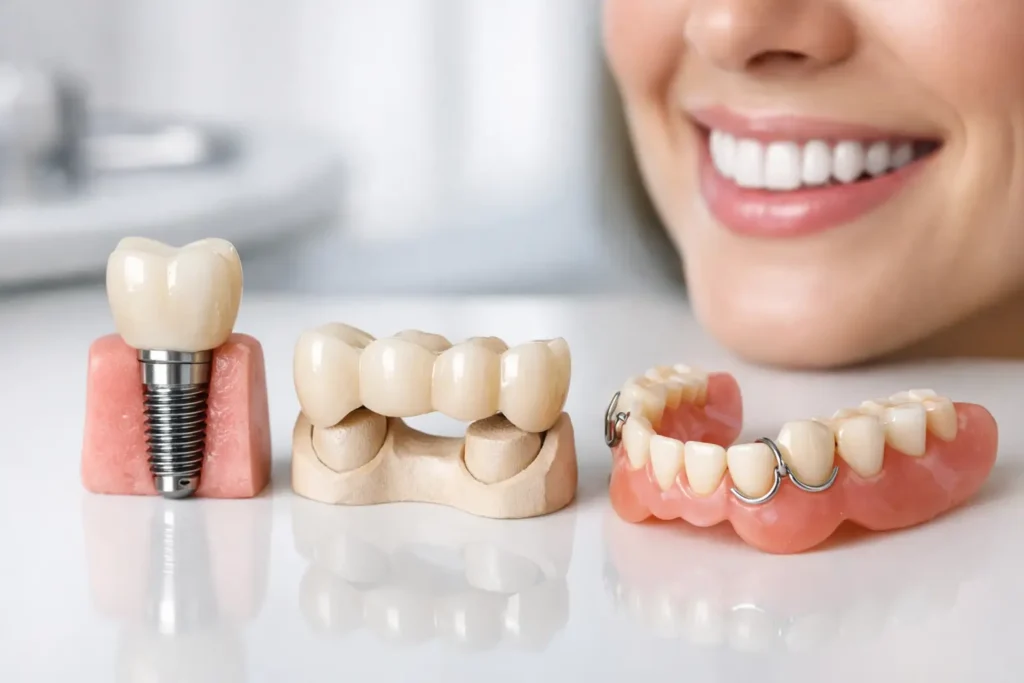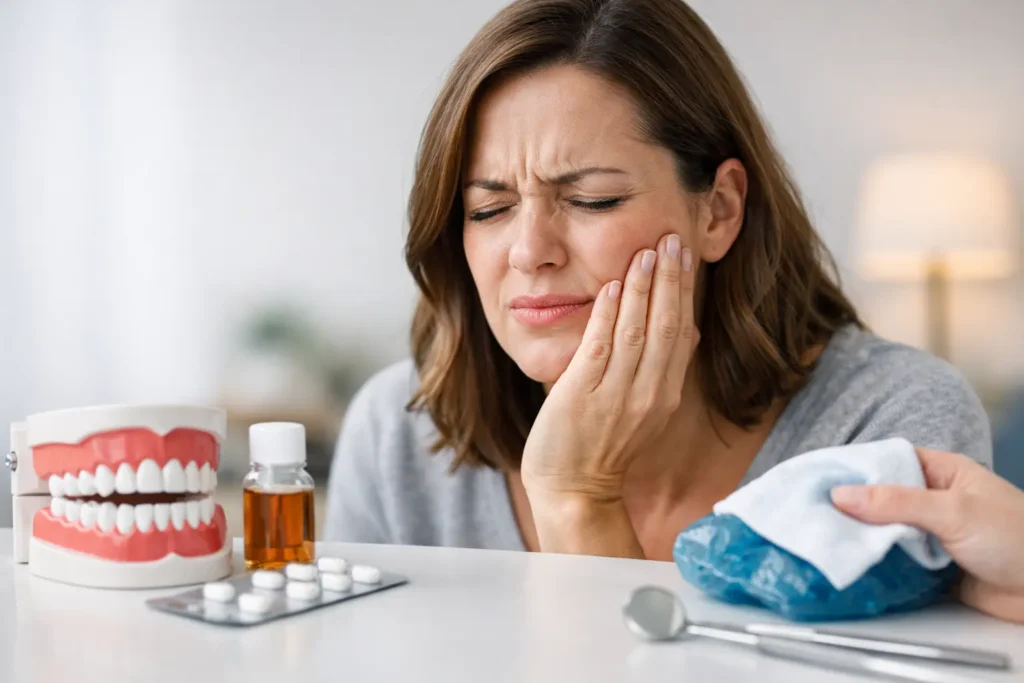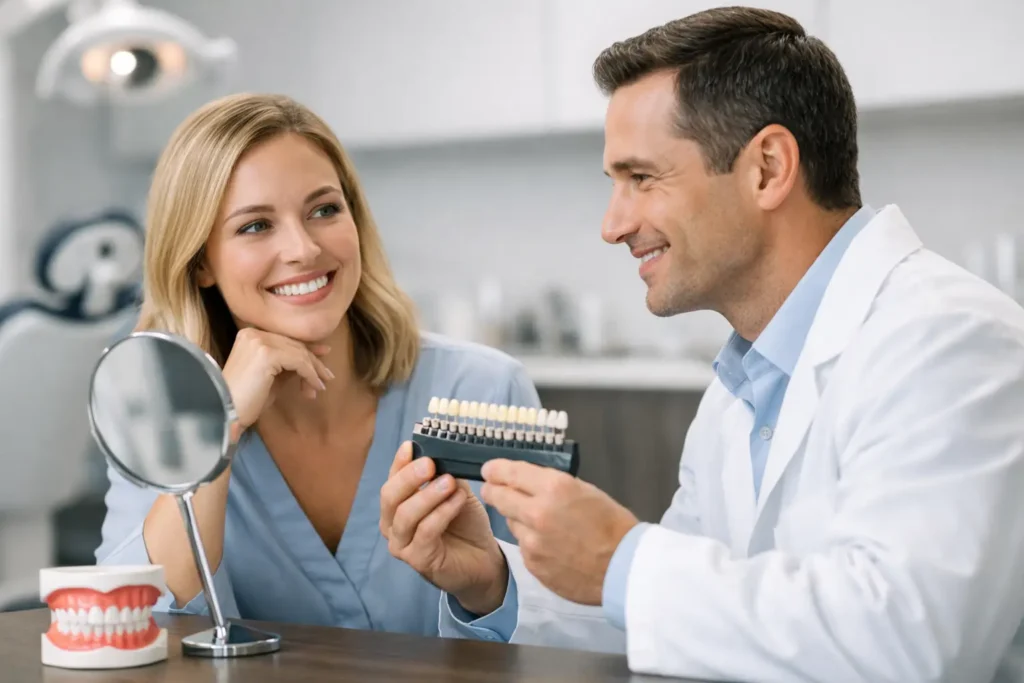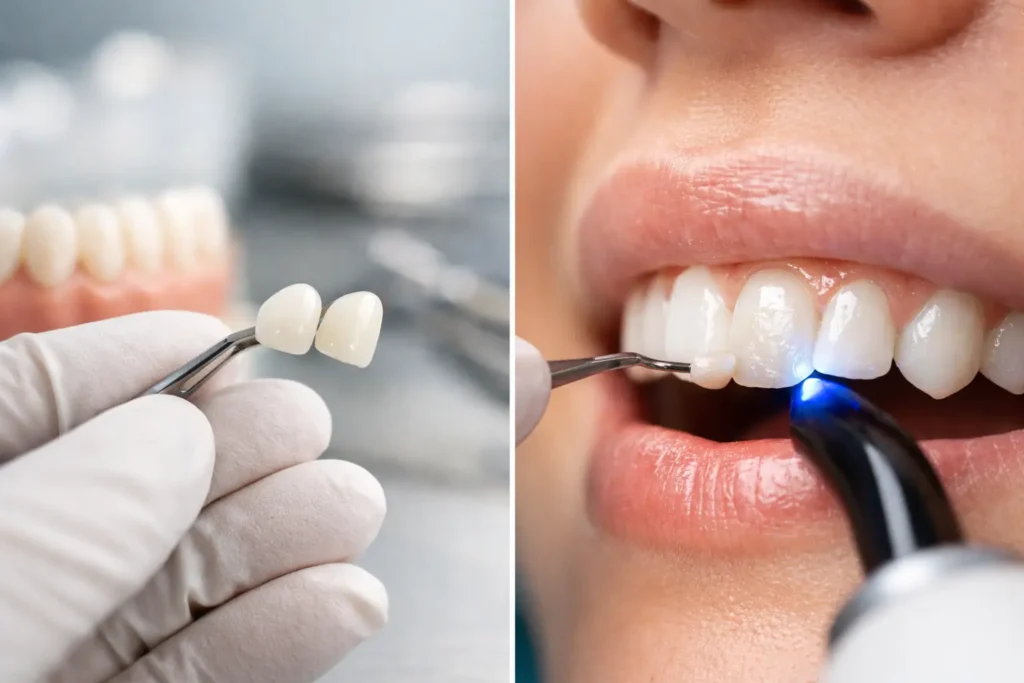
A cracked front tooth before work. A child with sudden swelling on a Saturday. A crown that came off the night before a big event. When something goes wrong unexpectedly, finding an emergency dentist quickly can make the difference between a straightforward repair and a more complex problem.

Dental emergencies are not always dramatic, and that is what catches many people off guard. Some issues come with obvious pain or bleeding. Others seem minor at first, then worsen within hours. Knowing when to call, what to do at home, and what can wait until the next available appointment helps protect both your comfort and your long-term oral health.

What counts as an emergency dentist visit?

An emergency dentist visit is appropriate when you have pain, trauma, swelling, bleeding, or sudden damage that needs prompt professional care. The goal is not only to relieve symptoms. It is also to prevent infection, save the tooth when possible, and avoid more extensive treatment later.

Severe tooth pain is one of the most common reasons people seek same-day care. Pain that keeps you awake, makes it hard to eat, or feels sharp and throbbing may point to infection, nerve inflammation, or a cracked tooth. Even if the tooth looks normal, the underlying problem may be significant.

Swelling is another sign to take seriously. If your gums, face, or jaw are becoming puffy or tender, infection may be involved. This is especially urgent if swelling is spreading, you have a bad taste in your mouth, or you feel feverish. In those cases, waiting too long can allow the infection to advance.

Trauma also calls for quick action. A tooth that is knocked loose, chipped deeply, pushed out of place, or completely knocked out should be evaluated as soon as possible. Timing matters. In some situations, same-day treatment improves the chance of saving the tooth and preserving the surrounding bone and gum tissue.

When to call an emergency dentist immediately

Some situations should move to the top of your list right away. If you have uncontrolled bleeding, facial swelling, a knocked-out permanent tooth, or intense pain that is not improving, call immediately. These are not issues to monitor for a few days.

A knocked-out tooth is especially time-sensitive. If it is a permanent tooth, handle it carefully by the crown, not the root. If possible, gently rinse off dirt without scrubbing it and try placing it back in the socket. If that is not possible, keep it moist in milk or saliva and seek care right away. The faster you are seen, the better the odds.

An abscessed tooth can be just as urgent, even if the pain comes and goes. Many patients assume that if the pain eases, the problem is improving. Sometimes the opposite is true. The pressure may have shifted, but the infection can still be active and potentially spreading.

A broken crown, lost filling, or chipped tooth can fall into a gray area. It depends on the extent of the damage, your discomfort level, and whether the inner part of the tooth is exposed. A small chip with no pain may wait briefly. A broken tooth with sharp edges, sensitivity, or visible inner structure should be seen much sooner.

What to do before you get to the office

The first priority is to stay calm and protect the area from further damage. Rinse gently with warm water if there is debris or blood. If you have swelling, a cold compress on the outside of the face can help limit discomfort. Over-the-counter pain relief may be appropriate for many adults, though it should not replace professional evaluation.

If a tooth is broken, save any pieces you can find and bring them with you. If a crown or filling has come out, keep it in a clean container. In some cases, the original restoration can help your dentist assess the tooth more efficiently.

Avoid chewing on the affected side. Stay away from very hot, very cold, or sugary foods if the tooth is sensitive. If there is bleeding, apply gentle pressure with clean gauze. If bleeding is heavy or does not slow, that raises the urgency.

One common mistake is placing aspirin directly on the gums or tooth. This can irritate the tissue and does not solve the cause of the pain. Another is waiting until the pain becomes unbearable. Early care often means simpler care.

Emergency dentist care for common problems

Severe toothache

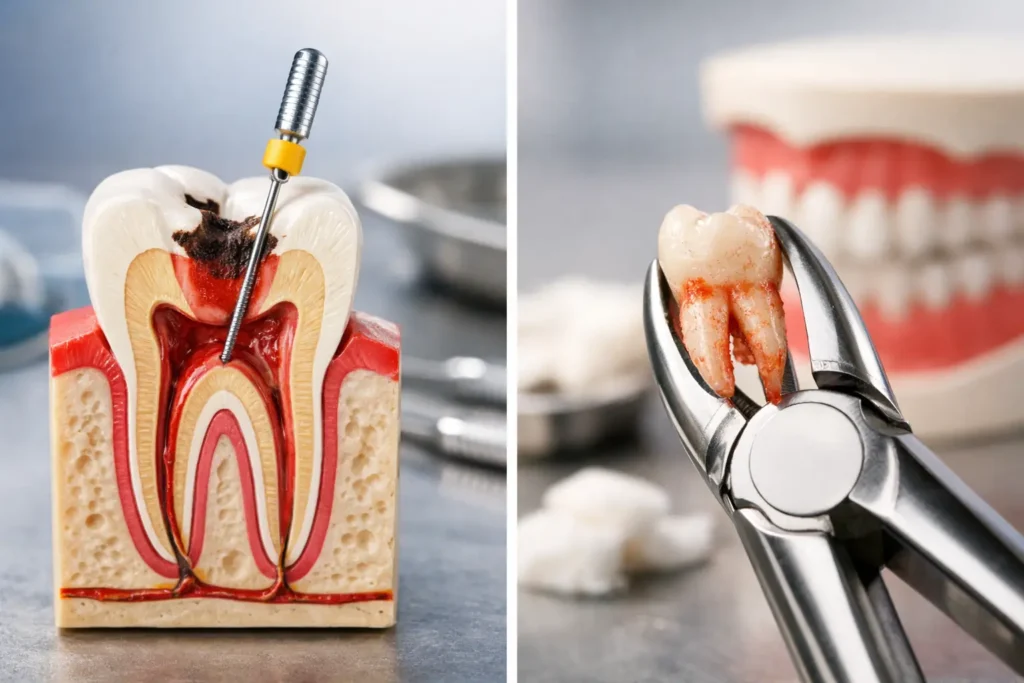
A severe toothache may come from deep decay, a cracked tooth, gum infection, or inflammation inside the tooth. Treatment depends on the cause. You may need a filling, crown, root canal, or in some cases extraction. The right answer depends on whether the tooth can be predictably restored and whether infection is present.

Chipped or broken tooth

Not every broken tooth is treated the same way. A small enamel chip may be smoothed or bonded. A larger fracture may require a crown to protect the tooth. If the crack extends into the nerve or below the gumline, more advanced treatment may be needed. This is where precise diagnostics matter.

Lost crown or filling

When a crown or filling comes off, the tooth underneath is often vulnerable and sensitive. If enough healthy tooth structure remains, it may be possible to replace or redo the restoration quickly. If the tooth has decayed or fractured underneath, the treatment plan may need to change.

Swelling or dental abscess

Swelling often signals infection, and infection control becomes the priority. That may involve draining the area, treating the tooth, and prescribing medication when clinically appropriate. The key is to address the source, not just the symptom.

Knocked-out or displaced tooth

With dental trauma, imaging and a close exam help determine whether the tooth can be stabilized and saved. Even if the tooth remains in place, impact injuries can damage the root, nerve, or surrounding bone. Follow-up matters because some changes appear days or weeks later.

Why technology matters in a dental emergency

When you are in pain, speed matters, but accuracy matters just as much. Modern diagnostics can help identify fractures, hidden infection, failing restorations, and bone involvement more efficiently than a basic visual exam alone. Digital imaging and 3D intraoral scanning can support faster, more precise decisions when time is limited.

That matters because emergency dentistry is not only about immediate relief. It is about choosing the right next step. Sometimes the best treatment is conservative and straightforward. Other times, a problem that looks simple on the surface needs more comprehensive care to protect the tooth and surrounding structures.

For patients who feel anxious about urgent dental visits, the environment matters too. A calm, polished office and a team that communicates clearly can make a very stressful situation feel manageable. In an emergency, comfort is not a luxury. It is part of quality care.

Emergency dentist vs. ER: where should you go?

A hospital emergency room is the right choice if you have facial trauma that may involve broken bones, trouble breathing or swallowing, uncontrolled bleeding, or signs of a serious spreading infection. Those situations go beyond routine dental treatment and need immediate medical attention.

For most toothaches, broken teeth, lost crowns, dental infections, and oral pain, an emergency dentist is usually the better first call. Dental offices are equipped to diagnose and treat the source of the problem directly. The ER can help with pain and infection management in some cases, but it often cannot provide definitive dental treatment.

Choosing an emergency dentist in San Diego

Not every office handles urgent care with the same level of responsiveness or capability. If you need an emergency dentist, look for a practice that offers same-day availability when possible, modern imaging, experience with restorative and surgical treatment, and a patient-centered approach that does not make you feel rushed.

This is especially important if your emergency turns out to need more than a temporary fix. A damaged tooth may eventually need a crown. An infected tooth may require root canal treatment. A non-restorable tooth may need extraction and a long-term replacement plan. Working with a practice that can manage both the emergency and the next phase of care creates a better experience and often a better outcome.

At Serena Family and Cosmetic Dentistry, that comprehensive approach is part of the standard of care. Patients in Clairemont and greater San Diego benefit from same-day emergency responsiveness, advanced technology, and treatment planning that keeps both immediate relief and long-term results in focus.

If something feels off, trust that instinct. Dental problems rarely improve from being ignored, and prompt care often preserves more options. The best next step is often the simplest one – make the call while the problem is still manageable.

A great smile changes more than photos. In Clairemont Mesa, it changes first impressions at work, confidence at school drop-off, and how comfortable people feel speaking, laughing, and showing up fully in daily life. That is a big reason why Clairemont Mesa 92117 loves Serena Dentistry: PPO cosmetic transformations make high-level aesthetic care feel both attainable and worth pursuing.

This is not just about brightening teeth for a special event. Local patients want dentistry that looks refined, feels personalized, and holds up over time. They also want a practice that can handle preventive care, urgent problems, and advanced cosmetic work without sending them across town to multiple offices. In a neighborhood filled with busy professionals, families, and long-time residents who value convenience, that combination matters.

Why Clairemont Mesa 92117 loves Serena Dentistry

The answer starts with trust. Cosmetic dentistry can feel like a major decision because it usually blends health, appearance, budget, and long-term planning. Patients are not simply buying a whiter smile. They are choosing the person and the process behind it.

In Clairemont, people tend to respond well to practices that feel polished without feeling distant. They want modern diagnostics, clear treatment planning, and a dentist who can explain why one option makes more sense than another. A veneer case may be ideal for one patient, while whitening and reshaping may be the smarter, more conservative route for someone else. That kind of restraint builds confidence.

The second reason is convenience with standards. Many PPO patients are trying to balance insurance benefits with elective goals. They want to understand where coverage may apply, where it may not, and how to prioritize treatment in a way that makes financial sense. Cosmetic care is rarely one-size-fits-all, and a practice that can map out practical options tends to earn loyalty quickly.

Then there is the experience itself. A luxury environment is not just a design choice. For anxious patients or people who have avoided treatment, a calm, modern office can lower resistance before the appointment even begins. When advanced imaging, detailed smile planning, and attentive communication are part of the visit, patients feel they are in capable hands rather than being sold a generic cosmetic package.

PPO cosmetic transformations feel more realistic here

For many adults, the phrase cosmetic dentistry sounds expensive before it sounds helpful. That is where PPO-friendly planning changes the conversation. While purely elective treatment is not always covered, many cases overlap with restorative needs. A damaged front tooth may need a crown that also improves appearance. Worn teeth may require function-first treatment that delivers cosmetic benefits at the same time. Replacing a missing tooth with an implant can restore confidence and bite stability together.

This matters because most patients are not walking in asking for a dramatic makeover in abstract terms. They are asking for a fix to something very specific. A tooth chipped before an important meeting. Old dental work that no longer matches. Staining that whitening alone will not solve. Gaps, wear, asymmetry, or missing teeth that make them self-conscious every day.

When a practice understands both PPO structures and cosmetic goals, treatment can feel more grounded. Patients can prioritize what affects oral health first and then build toward aesthetic refinements. Sometimes that means staging treatment over time. Sometimes it means choosing veneers for the visible zone and whitening for the rest. Sometimes it means deciding a crown is the better long-term answer than a more cosmetic-only option. Real transformation often comes from smart sequencing, not from doing everything at once.

What patients are really looking for in cosmetic dental care

Most people are not chasing perfection. They want natural-looking teeth that fit their face, their age, and their lifestyle. Clairemont Mesa patients are especially practical in that way. They appreciate polished results, but they usually do not want a smile that looks overly uniform or artificial.

That is why cosmetic success depends on restraint and precision. Shade selection, tooth proportion, gum balance, and bite function all matter. A beautiful result should look like the patient on their best day, not like a template. Technology helps here, but technology alone is not the selling point. What patients value is how that technology improves accuracy, comfort, and communication.

Digital imaging and 3D intraoral scanning can make planning more exact and appointments more comfortable. Instead of relying on rough impressions or vague explanations, patients can see what is happening and understand the rationale behind treatment. That lowers uncertainty, which is often the biggest barrier to moving forward.

The appeal of one office for both health and aesthetics

Another reason this model works so well in 92117 is that patients do not want separate relationships for routine dentistry and cosmetic care unless they have to. They want one trusted office that can manage checkups, fillings, crowns, emergency visits, and bigger smile goals.

That continuity changes the quality of care. When a dentist knows the patient’s dental history, bite patterns, existing restorations, and personal preferences, cosmetic recommendations tend to be more thoughtful. A smile transformation is stronger when it is built on a full understanding of oral health, not just surface appearance.

For families, this matters even more. Parents may come in first for cleanings or children’s visits, then address a long-postponed cosmetic concern once they feel comfortable with the practice. What begins as convenience often turns into trust, and trust is what moves patients from maintenance care to elective treatment.

Cosmetic transformations are not only about veneers

Veneers get attention for good reason. They can dramatically improve shape, color, spacing, and symmetry. But they are only one part of the cosmetic picture.

Many of the most appreciated transformations are more tailored. Professional whitening can refresh a smile quickly when the underlying teeth are healthy and well-shaped. Tooth-colored bonding can repair chips and close minor gaps conservatively. Crowns can restore strength to damaged teeth while improving appearance. Implants can replace missing teeth in a way that looks stable and natural. Full-mouth rehabilitation can rebuild function and aesthetics together for patients with complex wear or multiple failing restorations.

The right answer depends on the patient. Someone preparing for a public-facing career move may want the impact and polish of veneers. Someone with a single discolored tooth may need one carefully matched restoration instead of a full cosmetic plan. A patient with grinding habits may need bite protection and restorative planning before any aesthetic work begins. Good cosmetic dentistry is not about pushing the most dramatic option. It is about choosing the most appropriate one.

Why the local reputation keeps growing

Communities talk. In Clairemont Mesa, recommendations spread when people feel they received exceptional care without pressure. That includes the patient who called with an emergency and was seen quickly, the professional who wanted a more confident smile before a major life event, and the parent who appreciated an office that felt elevated but still welcoming.

People also notice consistency. A premium office experience matters, but it only carries weight when it is matched by clinical quality. Patients tend to remember when treatment feels organized, explanations are clear, and results look refined rather than overdone. They remember when the office respects their time. They remember when the dentist listens.

That combination of warmth and authority is rare enough to stand out. It is one thing to offer cosmetic services. It is another to make patients feel that their comfort, appearance, and long-term dental health are all being handled with equal seriousness.

The real value behind PPO cosmetic transformations

The phrase PPO cosmetic transformations resonates because it captures something practical and aspirational at the same time. Patients want to use the benefits they have wisely. They also want outcomes that feel meaningful, not minor.

For some, value means improving one visible tooth that has bothered them for years. For others, it means investing in a larger treatment plan that restores chewing comfort, facial balance, and self-confidence. There is no single definition. What matters is that the treatment feels personalized, clinically sound, and aligned with the patient’s priorities.

That is ultimately why this kind of care continues to earn loyalty in Clairemont Mesa 92117. People are not responding to flashy promises. They are responding to thoughtful dentistry delivered in a setting that feels sophisticated, reassuring, and genuinely patient-centered.

When a dental practice can make cosmetic care feel clear instead of intimidating, high-end instead of impersonal, and strategic instead of excessive, patients notice. And once they see what is possible with the right plan, a better smile stops feeling like a luxury reserved for someday and starts feeling like a smart next step.

A biotech workday can turn presentation-ready confidence into an afterthought fast. Between early lab starts, cross-functional meetings, investor calls, and long hours under bright office lighting, small smile concerns tend to feel bigger than they used to. That is exactly why cosmetic dentistry for biotech employees near Kearny Mesa – 92117 has become such a practical choice for professionals who want results that look refined, natural, and worth the investment.

For many professionals in and around Kearny Mesa, cosmetic dentistry is not about chasing an artificial look. It is about correcting the details that stand out every day – discoloration, uneven edges, worn enamel, small gaps, old dental work, or a smile that no longer fits the level of polish they bring to the rest of their career. In a field where precision matters and first impressions can carry real weight, that kind of upgrade feels less cosmetic for vanity and more cosmetic with purpose.

Why biotech professionals often want a different kind of cosmetic care

Biotech employees tend to approach health decisions with a high standard. They usually want clear explanations, modern diagnostics, efficient scheduling, and treatment plans that make clinical sense. Cosmetic dentistry should meet that same expectation.

That means a rushed whitening treatment or a one-size-fits-all veneer plan is rarely the right fit. Some patients need a subtle brightening that keeps their smile looking believable. Others want to correct chips, asymmetry, or wear without compromising function. And for professionals who spend their day speaking with teams, clients, or leadership, comfort and longevity matter just as much as appearance.

There is also a time factor. Long commutes, demanding project cycles, and limited flexibility during the week can make convenience essential. A practice near Clairemont and the 92117 area offers a strong advantage for Kearny Mesa professionals who want high-level care without adding another logistical headache to the calendar.

Cosmetic dentistry for biotech employees near Kearny Mesa – 92117

The most effective cosmetic treatment plan starts with the right diagnosis, not the trendiest procedure. A smile that looks tired may need whitening, but it could also need replacement of older restorations or reshaping to improve balance. A small gap may be ideal for bonding, while a more durable result may call for veneers. It depends on your enamel, bite, goals, timeline, and budget.

This is where advanced imaging and careful treatment planning make a real difference. Digital diagnostics and 3D intraoral scanning allow a dentist to assess not only what is visible in the mirror, but how each cosmetic change will interact with your overall oral health. For patients who are analytical by nature, that level of clarity tends to build confidence quickly.

A well-designed cosmetic plan should also protect the natural character of your smile. The best results do not announce themselves. They simply make you look healthier, more polished, and more rested.

Teeth whitening for a fast, noticeable refresh

Whitening is often the easiest place to start, especially for biotech employees whose coffee intake, tea habits, or years of minor staining have dulled the brightness of their teeth. Professional whitening can deliver a cleaner, more even result than over-the-counter options, and it is typically better controlled.

Still, whitening is not perfect for every situation. If discoloration comes from internal staining, old bonding, crowns, or enamel wear, whitening alone may create uneven color. That is why a professional evaluation matters. The right treatment is the one that fits the reason your smile looks the way it does.

Veneers for shape, symmetry, and long-term polish

Porcelain veneers appeal to many professionals because they address several issues at once. They can improve color, shape, proportion, spacing, and minor misalignment in a very controlled way. For someone who wants a stronger visual upgrade without years of orthodontic treatment, veneers can be an excellent option.

The trade-off is that veneers require detailed planning and should never be treated as a shortcut. They need to fit your face, your bite, and your long-term goals. A premium result comes from restraint and craftsmanship, not from making every tooth uniformly bright and flat.

For patients with demanding professional lives, veneers often make sense because they offer durability and a consistently polished appearance. But they are an investment, and the right candidate is someone who values both aesthetics and maintenance.

Cosmetic bonding for targeted improvements

Bonding is a smart solution when the issue is small but bothersome. A chipped front tooth, slight gap, or uneven edge can often be corrected conservatively and efficiently. It is less invasive than veneers and can be a strong fit for patients who want meaningful improvement without a larger commitment.

The limitation is longevity. Bonding may stain or wear more quickly than porcelain, especially if you clench, grind, or drink a lot of coffee. For the right case, it is excellent. For the wrong case, it becomes a temporary fix that eventually leads to a second treatment decision.

What busy professionals should expect from a modern cosmetic dental experience

A cosmetic consultation should feel organized, calm, and tailored. You should leave with a clear sense of what is possible, what is recommended, and what the trade-offs are between different options. That includes understanding the timeline, expected maintenance, and whether a treatment is primarily aesthetic or also restorative.

For many patients, the experience matters almost as much as the outcome. A technology-forward clinic with digital imaging, advanced scanning, and a polished environment can make treatment feel far more comfortable than the old idea of cosmetic dentistry. If dental anxiety is part of the picture, that matters even more.

Professionals also tend to appreciate a practice that values efficiency without making care feel rushed. There is a difference between fast appointments and streamlined excellence. The latter is what produces trust.

Choosing the right provider near Kearny Mesa and 92117

Not every dental office that offers whitening or veneers delivers high-level cosmetic dentistry. If you are looking for cosmetic dentistry for biotech employees near Kearny Mesa – 92117, the better question is whether the dentist combines aesthetic judgment, restorative skill, and modern technology in one place.

Look for a provider who can evaluate your smile comprehensively, not just sell a cosmetic service. That means understanding how bite alignment, gum health, old restorations, and tooth structure affect the final result. It also means choosing someone who can be conservative when conservative is best, and transformative when that is truly what the case calls for.

This is especially important for patients who may eventually need more than cosmetic treatment alone. A smile plan can involve whitening today, veneers later, and restorative work if aging dental work starts to fail. Continuity matters. Having one trusted office that can support routine care, cosmetic goals, and restorative needs creates a much better long-term experience.

That is one reason many patients in the area value a practice like Serena Family and Cosmetic Dentistry. The combination of personalized care, advanced diagnostics, cosmetic expertise, and an elevated patient experience fits what many Kearny Mesa professionals are already looking for in every other aspect of healthcare.

When cosmetic dentistry is worth doing now

There is rarely a perfect time on the calendar. Product launches happen. Reviews come up. Travel gets booked. But there are a few signs it may be worth moving forward sooner rather than later.

If you notice yourself hiding your smile in photos, covering your teeth when you speak, or feeling distracted by a visible flaw during meetings, that concern is already affecting your daily confidence. If you have older dental work that no longer matches your natural teeth, cosmetic treatment may improve both appearance and comfort. And if you have been postponing care because you assumed cosmetic dentistry would look too obvious or feel too complicated, a modern consultation may change that assumption quickly.

The right cosmetic treatment does not need to be dramatic to be valuable. Sometimes the most successful cases are the ones no one can identify. People simply notice that you look refreshed, confident, and well cared for.

A great smile should match the level of excellence you bring to your work, and getting there should feel thoughtful, comfortable, and genuinely personalized.

If you have been putting off the dentist because you want clear pricing, a modern experience, and real answers about your smile, the new patient special 92117: $59 exam + full PPO cosmetic plan review is built for exactly that moment. It gives you a straightforward starting point – not just a quick look, but a professional evaluation with room to talk through insurance, cosmetic goals, and what treatment actually makes sense for you.

For many adults in Clairemont and greater San Diego, the hardest part is not choosing a procedure. It is knowing where to begin. You may want whiter teeth, straighter edges, a better solution for worn dental work, or a long-term plan for implants or veneers. You may also want to stay practical about your PPO benefits and avoid wasting time on vague estimates. A focused new patient offer works best when it answers both needs at once.

What the new patient special 92117 includes

At its best, a $59 exam is not a stripped-down appointment. It is an efficient, professional first visit that helps a dentist understand your oral health, identify concerns, and recommend next steps based on your priorities. When that same visit also includes a full PPO cosmetic plan review, the appointment becomes more valuable for patients who are thinking beyond a routine cleaning.

That review matters because cosmetic and restorative decisions are rarely one-size-fits-all. A patient considering veneers may also need to discuss bite balance, old fillings, whitening, or gum symmetry. Someone interested in replacing missing teeth may want to compare implants, bridges, and phased treatment options. If you have PPO insurance, the conversation becomes even more useful when your exam includes a realistic review of where insurance may help, where it may not, and how to plan around that.

Why this offer works for cosmetic-minded patients

Cosmetic dentistry is personal. Patients are often balancing appearance, function, comfort, budget, and timing all at once. A standard exam can identify decay or gum concerns, but a cosmetic plan review gives structure to the bigger picture.

That is especially important if you have been thinking about improving your smile for a while but have not wanted to commit without understanding the full plan. You should be able to ask questions about veneers, whitening, crowns, implants, and complete smile design in one setting. You should also be able to hear what will produce the best result now versus what can wait.

There is a difference between a sales-heavy consultation and a clinically grounded one. A strong practice will explain what is elective, what is necessary, and what combination of treatment creates the most durable outcome. Sometimes the answer is surprisingly simple. Other times, the better long-term result comes from addressing health and structure before cosmetics.

New patient special 92117: $59 exam + full PPO cosmetic plan review for real treatment planning

The phrase sounds promotional, but the real value is clarity. New patient special 92117: $59 exam + full PPO cosmetic plan review is most useful when it helps patients stop guessing. You find out where you stand clinically, what your cosmetic options are, and how insurance may factor into restorative portions of care.

That last point deserves honesty. PPO plans usually do not cover purely cosmetic treatment in full, and sometimes not at all. But many smile improvements overlap with restorative needs. A damaged tooth may need a crown. Missing teeth may call for implant planning. Old dentistry may need replacement for both function and aesthetics. A careful review helps separate what is insurance-eligible from what is cosmetic so you can make informed decisions without confusion.

What to expect at your first visit

A premium dental experience should feel efficient and personal from the start. Your exam may include a review of your dental history, current symptoms, concerns about appearance, and any issues with sensitivity, breakage, missing teeth, or past dental work. In a modern clinic, advanced diagnostics such as digital imaging or 3D intraoral scanning can make the process more precise and more comfortable.

That technology is not just about presentation. It improves diagnosis. If you are considering cosmetic work, detailed images and scans can help evaluate spacing, wear, bite alignment, tooth shape, and the condition of existing restorations. It is easier to create a treatment plan when the dentist can see the complete picture.

You should also expect a real conversation. Not every patient wants a dramatic smile makeover. Some want a polished, subtle upgrade that looks natural and professional. Others want to solve years of wear, staining, or missing teeth in a more comprehensive way. A thoughtful exam makes room for both.

When this offer makes the most sense

This type of special is ideal if you are new to the area, overdue for care, unhappy with your smile, or curious about larger treatment options but not ready to commit blindly. It also makes sense if you have PPO insurance and want to understand how to use benefits strategically before the year moves along.

It can be especially valuable for busy professionals and parents who want one trusted office for both everyday dentistry and more advanced treatment. Convenience matters, but expertise matters more. If a practice offers family care, cosmetic dentistry, restorative solutions, and emergency treatment under one roof, your first exam can become the foundation for a long-term dental relationship instead of a one-off visit.

A few smart questions to ask during your PPO cosmetic plan review

The right first appointment is not passive. Ask what concerns are urgent, what concerns are optional, and which treatments would create the biggest improvement in function or appearance. Ask whether any cosmetic goals should wait until foundational issues are treated. If insurance is part of your decision-making, ask how covered treatment and elective treatment can be phased in a way that is financially sensible.

You should also ask about longevity. Whitening, bonding, veneers, crowns, and implants all serve different purposes and come with different maintenance expectations. The best choice depends on your habits, bite forces, timeline, and goals. Premium care is not about pushing the most expensive option. It is about matching the right treatment to the right patient.

Why environment and technology still matter

Patients often focus on price first, and that is understandable. But value is about more than the entry fee. A well-run office with advanced diagnostics, a polished environment, and a clinically experienced team can make a first visit dramatically more useful and far less stressful.

That matters if you have dental anxiety or have had disappointing consultations elsewhere. Confidence comes from precision, communication, and a setting that feels calm and capable. In a practice such as Serena Family and Cosmetic Dentistry, the goal is not only to identify treatment needs but to make patients feel informed, comfortable, and respected throughout the process.

The trade-off to keep in mind

A low-cost introductory exam is a starting point, not the full cost of treatment. That is not a drawback if the appointment is transparent. The purpose is to give you diagnostic insight and a professional roadmap. If you need additional imaging, periodontal therapy, restorative treatment, or cosmetic procedures, those are separate decisions.

That is actually where a good offer earns trust. It should open the door to expert evaluation without pressure, then give you a clear plan based on your priorities. If your needs are simple, the next step may be routine preventive care. If your case is more complex, the appointment should leave you with a detailed understanding of what comes next and why.

A strong first visit does not promise that every answer will be simple or inexpensive. It gives you something better – a confident diagnosis, a realistic plan, and a clearer path toward the smile you want. If that is what you have been missing, this special is not just a discount. It is a smart place to start.

If you have been told you need a graft before a dental implant, your first question is usually not about titanium or healing stages. It is whether bone grafting & implants with PPO insurance in Clairemont Mesa 92117 will actually be covered, how much you will pay, and whether the process is worth it. Those are practical questions, and they deserve clear answers.

For many patients, the issue starts after a tooth has been missing for a while. Bone naturally shrinks when it no longer supports a tooth root, which can make implant placement less predictable without rebuilding that area first. A bone graft is often the step that turns an implant from a maybe into a stable, long-term solution.

Bone grafting & implants with PPO insurance in Clairemont Mesa 92117

PPO dental insurance can help, but it rarely works in a simple yes-or-no way. Coverage depends on your specific plan, annual maximum, waiting periods, frequency limitations, and whether the carrier classifies part of the treatment as major restorative care. Some plans contribute toward extractions, grafting, or the crown on top of the implant, but not the implant body itself. Others may cover portions of the surgical phase yet leave a larger balance for the restorative phase.

That is why patients often get mixed answers when they call their insurance company directly. The representative may tell you a service is covered in theory, but the actual benefit depends on coding, remaining annual maximum, deductibles, and documentation. In real life, what matters is not just whether your plan includes implants. It is how the treatment is staged and how the claim is processed.

A well-run implant case should include a benefits review before treatment begins. That gives you a more realistic sense of your out-of-pocket cost instead of a rough guess. In a modern office setting, digital imaging and detailed diagnostics also help support a clinically sound treatment plan, especially if bone loss is part of the picture.

Why bone grafting may be necessary before implants

Not every implant patient needs a graft. If the bone is dense and tall enough, an implant may be placed without any additional rebuilding. But when a tooth has been missing, infected, fractured, or extracted after significant damage, the jawbone may no longer have the shape or volume needed for ideal support.

In those cases, grafting helps rebuild the foundation. The goal is not to add treatment for the sake of it. The goal is to create enough healthy bone so the implant can integrate properly and remain stable under daily function.

The type of graft matters. A socket preservation graft may be done at the time of extraction to reduce shrinkage. A ridge augmentation may be recommended later if the area has already collapsed. Some cases are straightforward and localized. Others are more complex and may require longer healing before the implant can be placed.

This is where personalized planning matters. Two patients can both need one implant, yet have very different timelines and costs depending on how much bone is available on day one.

What PPO insurance usually helps cover

PPO plans tend to be more flexible than HMO-style dental plans, but flexibility does not mean full coverage. In many cases, the exam, imaging, and basic diagnostic work are partially covered according to your plan benefits. Extractions may also receive a benefit if a tooth must be removed before grafting or implant placement.

Bone grafting is where things become less predictable. Some plans cover it when it is tied to preserving the site after extraction or supporting oral function. Some classify it as a separate surgical procedure with partial benefits. Others exclude grafting related to implants altogether. The same variation applies to implants themselves. One PPO may contribute significantly, while another may cover only the final crown or none of the implant phases at all.

Annual maximums are often the biggest limitation. Even when a plan offers implant benefits, the total allowance may be used up quickly once diagnostics, surgery, grafting, and restoration are factored in. That does not mean treatment is unaffordable. It means the financial plan should be built carefully, with realistic expectations from the start.

What affects your out-of-pocket cost

Your final cost depends on more than insurance. The number of missing teeth matters, of course, but so does the condition of the bone, whether an extraction is needed first, and whether the case requires a simple graft or a more advanced augmentation.

Timing also affects cost distribution. Some patients choose to stage treatment across benefit periods, which can help maximize two annual maximums instead of one. That approach is not always ideal clinically, but in the right case it can make treatment easier to manage financially. This is one of those situations where it depends. The best timeline is the one that protects the result, not just the insurance benefit.

Material choices can matter as well. So can the need for temporary tooth replacement during healing. A treatment plan should account for function, appearance, and long-term stability, not just the surgical appointment itself.

How the implant process usually works

A premium implant experience starts with precision. Your consultation should include a thorough exam, digital imaging, and a discussion of both health and cosmetic goals. If bone loss is present, that needs to be measured accurately, not estimated.

Once the site is evaluated, treatment is planned in phases. If the tooth is still present but non-restorable, extraction may come first. A graft may be placed immediately or later, depending on the condition of the area. Healing time varies. Some patients move to implant placement relatively quickly, while others need several months for the graft to mature.

After the implant is placed, the bone needs time to fuse to it. That integration period is what gives implants their strength and longevity. Once healing is confirmed, the final restoration is completed. The visible result is a custom crown that looks natural and functions like a real tooth.

In higher-end, technology-forward practices, advanced diagnostics help make each phase more accurate. That matters because implant dentistry is not just about replacing a tooth. It is about placing that tooth in the right position, with the right support, for the right long-term result.

Choosing care for implants in Clairemont Mesa 92117

When you are comparing providers for bone grafting and implants, insurance should be one part of the decision, not the whole decision. A lower estimate can be tempting, but implant treatment is highly technique-sensitive. If the diagnosis is rushed or the planning is incomplete, the result can cost more later in revisions, delays, or compromised esthetics.

Patients in Clairemont Mesa often want something very reasonable: one local practice that can handle routine care, advanced restorative treatment, and ongoing maintenance without sending them in multiple directions. That is especially valuable when grafting, implant placement, and final restoration need to work together as one coordinated plan.

Comfort matters too. For many adults, the hesitation is not only financial. It is anxiety, time away from work, or concern about looking natural afterward. A polished, patient-centered environment with clear communication can make a major difference in whether treatment feels manageable.

At Serena Family and Cosmetic Dentistry, that combination of advanced diagnostics, restorative expertise, and personalized care is designed to make complex treatment feel more straightforward. Patients want confidence before they commit, and they should.

Questions to ask before you start

Before you move forward, ask for a written treatment plan that separates each phase clearly. You should know what is being recommended now, what may be optional, what your PPO insurance is expected to cover, and what costs could change if clinical findings shift during treatment.

It is also smart to ask whether your benefits can be verified before care begins, whether treatment can be staged across calendar years if appropriate, and how long each healing phase is expected to take. If appearance is a priority, ask how the final result will be designed to blend with your smile, not just fill the space.

The right office will welcome those questions. Patients making an investment in bone grafting and implants are not being difficult by asking for detail. They are making a thoughtful decision about health, function, and confidence.

A missing tooth changes more than your bite. It affects bone levels, smile balance, and how confidently you eat and speak. If you are considering bone grafting & implants with PPO insurance in Clairemont Mesa 92117, the best next step is a clear diagnosis and a treatment plan built around both clinical excellence and financial transparency.

When your dentist needs to feel both highly skilled and genuinely easy to trust, credentials alone are not enough. For many local patients, dr. serena kurt: the 92117 cosmetic dentist trusted by ucsd & military families stands out because her care meets the moment – whether that moment is a routine checkup, a broken tooth, a smile upgrade, or a more complex full-mouth plan.

In a community like Clairemont, trust is earned in practical ways. It shows up in clear treatment recommendations, on-time emergency response, a calm and polished office experience, and results that look natural rather than overdone. That combination matters to busy professionals, parents coordinating family appointments, and military households who want consistency, efficiency, and a dentist who can handle more than the basics.

Why Dr. Serena Kurt stands out in 92117

Not every cosmetic dentist is built for real-life family care, and not every family dentist has advanced cosmetic and restorative range. That is where Dr. Kurt occupies a valuable middle ground. Patients are not choosing between a warm neighborhood office and a higher-end cosmetic practice. They can have both.

Her clinical scope matters. Cosmetic dentistry often begins with veneers or whitening, but many patients need more than one isolated service. A person unhappy with their smile may also have worn teeth, old crowns, bite issues, missing teeth, or gum concerns that affect the final result. A provider with broader restorative and implant experience can plan more intelligently from the start.

That becomes especially important for adults who want long-term value, not a quick cosmetic fix. A beautiful result should also feel functional, stable, and appropriate to the patient’s face, age, and lifestyle. Premium dentistry is not just about making teeth whiter. It is about creating outcomes that look elevated and still feel believable.

The 92117 cosmetic dentist trusted by UCSD and military families

UCSD professionals and military families tend to share a few priorities, even if their schedules and day-to-day demands look different. They value precision, efficiency, professionalism, and a care experience that respects their time. They also tend to ask thoughtful questions. They want to know why a treatment is recommended, what the alternatives are, and how long results are expected to last.

That is one reason trust becomes such a defining factor. Dentistry can feel deeply personal, especially when treatment affects your appearance, comfort, or budget. Patients want a provider who can explain complex options without pressure and who understands that the right plan depends on the person sitting in the chair.

For some, the best next step is conservative preventive care and monitoring. For others, it may be porcelain veneers, crowns, implants, or a phased full-mouth rehabilitation. There is no one-size-fits-all answer, and sophisticated care should never feel scripted.

Military families often appreciate continuity and responsiveness. With relocations, changing schedules, and family logistics, convenience matters. A practice that can support routine cleanings, urgent visits, restorative needs, and cosmetic goals under one roof removes friction. UCSD faculty, staff, and nearby professionals often look for the same thing from a different angle – streamlined care, modern systems, and confidence that the work will be done right the first time.

Cosmetic dentistry that looks refined, not obvious

The best cosmetic dentistry is usually the kind people notice without being able to explain exactly why. Your smile looks healthier, brighter, more balanced, and more polished. It does not look artificial or generic.

That distinction matters. Veneers, whitening, and crowns can produce remarkable changes, but the right treatment depends on the condition of the teeth and the patient’s goals. Whitening can be ideal for someone with strong enamel and good alignment. Veneers may make more sense when shape, spacing, proportion, or discoloration are part of the problem. Crowns may be necessary when strength and protection matter as much as appearance.

A cosmetic dentist with a restorative mindset knows when not to oversell a treatment. If a patient can reach an excellent result with whitening and bonding, that may be preferable to more aggressive work. If veneers are the right answer, the case should be planned with precision so the final smile suits the patient’s facial features and daily life. A great cosmetic result is not only photogenic. It is comfortable, functional, and built to last.

Advanced technology makes the experience better

Patients often hear about digital imaging and 3D scanning as if they are marketing features. In reality, they can improve the experience in very practical ways. Better diagnostics support better treatment planning. Digital tools can help reduce guesswork, improve communication, and make cosmetic and restorative work more precise.

For anxious patients, technology can also make appointments feel smoother and more reassuring. Seeing what the dentist sees helps people understand their oral health and feel more confident about treatment decisions. For busy adults, efficiency matters too. A modern, technology-forward clinic can often simplify workflows that used to feel slow or repetitive.

That said, technology should support judgment, not replace it. Patients do not choose a dentist because the office owns advanced equipment. They choose a dentist because that technology is used thoughtfully by someone with taste, experience, and strong clinical standards.

Family-friendly care without sacrificing quality

One of the strongest signals of a dependable practice is the ability to care for multiple needs across different life stages. Parents may come in for cosmetic improvements after years of postponing treatment, while also needing routine cleanings, fillings, or emergency visits for other family members.

That kind of convenience should not mean diluted quality. In a premium family practice, preventive care still feels attentive and personalized. Cosmetic consultations still feel elevated and detailed. Emergency visits still receive prompt attention. Patients are not shuffled through a generic system. They are cared for in a way that feels organized, calm, and professional.

This is where the patient experience matters as much as the procedures offered. A welcoming environment, respectful communication, and a polished office aesthetic can change how people feel about going to the dentist. For patients with anxiety or a history of delaying care, that emotional difference is not small. It can be the reason they finally begin treatment.

When cosmetic and restorative dentistry overlap

Many adults think they need cosmetic dentistry when they actually need a combination of cosmetic and restorative care. Chipped teeth, worn edges, missing teeth, failing dental work, and bite changes can all affect appearance. They also affect function.

That overlap is where a more comprehensive provider becomes especially valuable. Dental implants, crowns, bone grafting, root canal treatment, and full-mouth planning may sound very different from veneers or whitening, but in real patient cases, they are often connected. A beautiful smile is easier to create and maintain when the underlying dental health is solid.

There are trade-offs to consider. A faster cosmetic option may improve appearance quickly but not address structural issues. A more comprehensive plan may take longer and require greater investment, but it can provide better long-term stability. Patients deserve transparency about those differences so they can choose based on priorities, timing, and budget.

Why local trust matters more than marketing claims

A lot of dental offices promise comfort, technology, and personalized care. Those claims are easy to make. What is harder to build is a reputation that travels through neighborhoods, workplaces, family circles, and professional communities.

That is why local trust carries weight. When patients from nearby academic and military communities consistently choose the same dentist, it says something meaningful about reliability. People who value high standards tend to notice details. They remember whether treatment felt rushed, whether recommendations were clear, whether the office followed through, and whether the final result justified the investment.

In Clairemont, that reputation matters because patients are not only looking for a nice office. They are looking for a long-term dental home with the clinical ability to grow with their needs.

Serena Family and Cosmetic Dentistry reflects that expectation well – modern, polished, and equipped to deliver both everyday dental care and more advanced smile-focused treatment in one setting.

If you are looking for a dentist who can protect your oral health, respond when something goes wrong, and deliver cosmetic results with sophistication and restraint, the right choice is usually the one that makes trust feel easy from the first visit.

If you are searching for professional teeth whitening covered by Guardian PPO – Clairemont Mesa guide, the first thing to know is this: most dental PPO plans treat whitening as a cosmetic service, which means full coverage is uncommon. That said, the real answer depends on your specific Guardian plan, your employer’s benefits, and whether your dentist identifies any underlying oral health issue that should be addressed before cosmetic treatment begins.

For many patients in Clairemont Mesa, the confusion starts with one simple assumption – if a treatment happens in a dental office, insurance should help pay for it. Teeth whitening does not usually work that way. Professional whitening is elective in most cases, even when it can make a dramatic difference in how your smile looks and how confident you feel at work, in photos, or during everyday conversations.

Is professional teeth whitening covered by Guardian PPO?

Usually, no – not in the way cleanings, fillings, or crowns may be covered. Guardian PPO plans commonly focus benefits on preventive and medically necessary dental care. Cosmetic procedures, including in-office whitening and take-home whitening systems prescribed for appearance-related reasons, are often excluded.

That said, there are exceptions and gray areas. Some plans offer flexible spending options through an employer, some include discount arrangements rather than true insurance coverage, and some patients confuse a network fee reduction with a covered benefit. Those are very different things. A reduced office fee can still save money, but it is not the same as Guardian paying a percentage of the treatment.

If you have reviewed your benefits and still are not sure, that is normal. Insurance language can be vague, especially around services that sit near the line between cosmetic and clinical care.

Why whitening is usually considered cosmetic

Dental insurance is built around protecting oral health first. That means insurers generally prioritize exams, cleanings, periodontal care, fillings, root canals, extractions, and restorative treatment. Whitening falls into a different category because it improves tooth color rather than treating decay, infection, or structural damage.

From the insurer’s perspective, a whiter smile is desirable but not essential to function. From the patient’s perspective, it can feel very essential. A brighter smile can influence confidence, professional presence, and overall satisfaction with your appearance. Both views are understandable, but insurance policies are usually written according to clinical necessity, not cosmetic value.

There is also a practical reason for the exclusion. Teeth whitening is highly elective, and results vary based on enamel, existing staining, age, restorations, and lifestyle factors like coffee, tea, red wine, and tobacco use. Because outcomes are individualized, insurers tend to keep this category outside standard benefits.

What Guardian PPO may cover before whitening

Even when whitening itself is not covered, parts of your visit may be. This matters more than many people realize.

A comprehensive exam may be covered if you are due for one. X-rays or diagnostic imaging may be covered when clinically necessary. A professional cleaning may also be covered or partially covered, depending on your plan frequency. These steps are often recommended before whitening because plaque, tartar, untreated cavities, enamel wear, and gum inflammation can all affect comfort, safety, and final shade.

In other words, your policy may help with the foundation even if it does not pay for the whitening treatment itself. For patients who want the best cosmetic outcome, that foundation is not optional. Whitening on top of untreated dental issues is not premium care – it is rushed care.

Professional teeth whitening covered by Guardian PPO – Clairemont Mesa guide for real-world costs

The most useful question is often not, “Is it covered?” but, “What will I actually pay?” Those answers can differ widely.

If your Guardian PPO plan excludes whitening, you would typically pay out of pocket for the cosmetic treatment. However, your covered exam or cleaning could reduce the total amount you spend during the same phase of care. If your office offers treatment planning and transparent fee estimates, you can separate what insurance may apply to from what remains elective.

It is also worth asking whether the whitening option being discussed is in-office treatment, custom take-home trays, or a combined approach. These vary in price, convenience, speed, and longevity. In-office whitening delivers faster visible change and is popular with professionals preparing for events, photos, or career milestones. Custom trays can be more gradual and flexible. Neither is automatically covered simply because it is provided by a dentist.

How to verify your Guardian PPO whitening benefits

Start with your specific plan details, not general assumptions. Guardian offers many PPO plans, and employer-sponsored variations can change what is included, excluded, or discounted.

Ask your dental office to perform a benefits verification before treatment. This is often the fastest way to get clarity because the office can check your plan information directly and explain how your benefits apply in practical terms. You can also contact Guardian and ask very specific questions: Is whitening excluded, is there any cosmetic allowance, are there negotiated network rates for elective procedures, and are related diagnostics covered on the day of treatment?

The wording matters. If you ask only whether whitening is covered, you may get a simple no and miss the fact that associated preventive or diagnostic services may still be covered. If you ask only about discounts, you may mistake a reduced fee for insurance reimbursement.

Why an in-office evaluation still matters

Not every stain responds the same way. Surface stains from coffee or tea often respond better than discoloration caused by trauma, medication, aging, or older dental work. Crowns, veneers, and fillings do not whiten like natural teeth, which means treatment planning matters if you want a balanced result.

A professional evaluation also helps identify sensitivity risk, gum recession, enamel thinning, and hidden decay before whitening begins. This is where a modern, technology-forward dental office can make the experience more precise and more comfortable. Digital imaging and detailed shade assessment help create realistic expectations instead of generic promises.

For patients in Clairemont Mesa who want a bright smile without guesswork, that clinical step is worth far more than an over-the-counter shortcut. Store-bought products may look cheaper upfront, but if they irritate your teeth, create uneven results, or fail to address the true cause of discoloration, they can become a frustrating detour.

When whitening may not be the best first step

Sometimes the better investment is not whitening right away. If you have older restorations on visible front teeth, whitening the surrounding enamel can make those restorations stand out more. If you have worn edges, chips, or shape concerns, veneers or bonding may provide a more complete cosmetic improvement. If the issue is heavy internal discoloration, whitening may help only modestly.

This is where personalized treatment planning matters. A premium cosmetic result is not about selling the fastest procedure. It is about recommending the right sequence. For some patients, whitening is the ideal standalone treatment. For others, it is one part of a broader smile upgrade.

At a practice such as Serena Family and Cosmetic Dentistry, that distinction matters because cosmetic care should feel refined, tailored, and clinically sound from the first consultation.

The best questions to ask before you schedule

Before booking whitening, ask whether your Guardian PPO benefits have been verified, whether any exam or cleaning should happen first, what type of whitening is being recommended, and how existing dental work may affect the result. Also ask how long the expected shade improvement may last based on your habits and starting point.

These questions do more than protect your budget. They help you avoid disappointment. The best whitening experience is not just brighter teeth. It is clear expectations, a personalized plan, and no surprises when the estimate is presented.

What Clairemont Mesa patients should keep in mind

If you live or work in Clairemont Mesa, convenience matters, but so does quality. Professional whitening is one of the most requested cosmetic treatments because it offers visible improvement without the downtime of more extensive procedures. Still, insurance rarely treats it like essential dental care.

That does not mean it is out of reach. It means the smart move is to verify benefits, understand the difference between coverage and discounts, and choose a dental team that can evaluate your smile comprehensively before treatment begins. The right office will help you understand your options without oversimplifying the insurance side.

A brighter smile is a cosmetic choice, but making that choice with clear clinical guidance and transparent financial information is what turns it into a confident one.

A straighter, brighter smile can feel simple in theory until the insurance question shows up. If you are comparing invisalign vs veneers 92117: which works best with your ppo plan, the real answer usually comes down to two things at once – what you want to change, and what your plan is actually willing to help pay for.

That matters because Invisalign and veneers solve very different problems. One moves teeth. The other changes how teeth look from the front. If you choose based on coverage alone, you may save money upfront but end up with a result that does not fully address your goals. If you choose based on appearance alone, you may miss a more conservative treatment path.

Invisalign vs veneers 92117: what is the real difference?

Invisalign is orthodontic treatment. It uses a series of clear aligners to gradually move teeth into better positions. This can improve crowding, spacing, bite alignment, and overall symmetry. For adults in Clairemont and the greater San Diego area, Invisalign is often appealing because it is discreet, removable, and easier to fit into a professional routine than traditional braces.

Veneers are thin porcelain shells bonded to the front of teeth. They do not move teeth. Instead, they change visible shape, color, proportion, and minor irregularities. Veneers are often chosen for teeth that look worn, chipped, stained, uneven, or slightly misaligned when the underlying bite does not need full orthodontic correction.

This is why the comparison can get confusing. If your concern is cosmetic, both options may seem like they could work. But they work in completely different ways, and PPO dental plans often treat them very differently.

Which treatment fits your smile goals?

If your main issue is crooked teeth, overlapping teeth, gaps, or a bite that feels off, Invisalign is usually the more appropriate clinical option. Moving teeth into healthier alignment can improve appearance, but it can also support easier cleaning and better long-term function.

If your teeth are fairly well positioned and you mostly want a whiter, more refined, more uniform smile, veneers may be the better match. They can deliver a dramatic cosmetic upgrade in a shorter time frame, especially when discoloration, chips, small cracks, or shape inconsistencies are the real concern.

Sometimes the best answer is not either-or. A patient may benefit from limited Invisalign first and veneers afterward on selected teeth. That approach can create a more conservative final result because the veneers may require less adjustment to natural tooth structure. It usually costs more overall, but for the right case, it delivers a level of balance and polish that one treatment alone may not achieve.

How PPO plans usually view Invisalign

PPO coverage for Invisalign varies widely. Some plans include adult orthodontic benefits, some only cover orthodontics for dependents under 18, and some exclude clear aligners completely. Even when Invisalign is covered, there is often a lifetime orthodontic maximum rather than a percentage-based benefit.

That means your PPO might contribute a fixed amount, then stop. In many cases, that contribution is helpful but partial. You should also expect plan rules around waiting periods, age limits, and whether treatment is considered medically necessary or purely elective.

The practical advantage of Invisalign from an insurance standpoint is that orthodontic treatment is at least recognized by many PPO structures as a legitimate category of care. The downside is that coverage is rarely generous for adults, and the out-of-pocket portion can still be significant.

How PPO plans usually view veneers

Veneers are typically classified as cosmetic. That is the key phrase patients need to hear early. Most PPO dental plans do not cover cosmetic dentistry when the purpose is appearance enhancement rather than restoring function after damage or disease.

So if you are asking invisalign vs veneers 92117 with insurance in mind, veneers often have less PPO support. There are exceptions in rare restorative situations, but for elective smile design, patients usually pay out of pocket.

That does not make veneers the wrong choice. It simply means the financial conversation needs to be transparent from the beginning. For many adults, veneers are still worth the investment because the result is immediate, highly customized, and focused on visible transformation.

Cost is not the same as value

Insurance can make one treatment look better on paper, but value is about fit. Invisalign may receive more PPO assistance, yet it may not solve deep stains, worn edges, or shape concerns. Veneers may receive little or no insurance contribution, yet they may be the treatment that actually gives you the smile you want.

This is where a thorough cosmetic consultation matters. Digital imaging, close evaluation of bite position, and a clear review of your priorities can prevent an expensive mismatch between treatment and expectations.

A patient who wants teeth to be straighter may be disappointed by veneers alone. A patient who wants brighter, perfectly proportioned front teeth may finish Invisalign and still feel underwhelmed. The right question is not just what costs less. It is what problem are you truly trying to solve.

Timeline, maintenance, and lifestyle trade-offs

Invisalign usually takes months, sometimes longer depending on complexity. Success depends on compliance. Aligners need to be worn as directed, and treatment works best when patients are consistent and engaged. There is also a retention phase after treatment to help preserve the result.

Veneers are faster. Once planned and approved, treatment is completed on a shorter timeline than orthodontics. For busy professionals or patients preparing for a wedding, public-facing role, or milestone event, that shorter path can be compelling.

But fast does not mean casual. Veneers require careful design, precise preparation, and long-term maintenance. They are durable, but they are still a commitment. Invisalign asks for patience and discipline. Veneers ask for a higher upfront investment and a cosmetic philosophy that is more transformational than corrective.

When Invisalign is usually the better choice

If your teeth are healthy but noticeably crowded, spaced, or uneven, Invisalign often makes more sense. The same is true if your bite contributes to wear patterns or cleaning challenges. In those cases, orthodontic movement addresses the root issue instead of masking it.

It may also be the smarter PPO decision if your plan includes meaningful adult orthodontic benefits. Even modest coverage can narrow the financial gap enough to make Invisalign a very attractive option.

When veneers are usually the better choice

If your teeth are close to straight and your main concern is beauty rather than movement, veneers often win. They are especially effective for intrinsic staining, chipped edges, short teeth, irregular contours, and smile design cases where color and proportion matter as much as alignment.

For patients seeking a polished, camera-ready result with a luxury cosmetic finish, veneers can provide a level of customization that orthodontics cannot. They do not correct the bite, but they can dramatically improve what you see in the mirror.

What to ask before using your PPO plan

Before choosing either treatment, ask for a benefits review and a clinical recommendation in the same appointment process. You want to know whether your PPO covers adult orthodontics, whether there is a lifetime maximum, whether waiting periods apply, and whether any related imaging or records are included.

For veneers, ask whether any portion could be considered restorative in your specific case, but go in knowing that most cosmetic veneer treatment is not insurance-funded. That clarity helps you plan realistically rather than hoping for reimbursement that may never come.

An experienced, technology-forward practice can often help you compare these paths with more precision. At Serena Family and Cosmetic Dentistry, treatment planning is centered on aesthetics, function, and long-term value, not just a basic insurance code.

The best choice is usually the one that fits your smile goals, your oral health, and your budget without compromise in the areas that matter most to you. If your PPO helps with Invisalign, that can be a strong advantage. If veneers are the treatment that truly matches your vision, their value may go well beyond what insurance recognizes. A confident smile should feel intentional, not accidental.

A chipped front tooth at 7:15 a.m. can throw off an entire day. For parents rushing to school drop-off, professionals heading into meetings, and anyone who cannot afford to hide their smile for a week, same-day emergency cosmetic repair 92117: PPO coverage for busy Clairemont families is not a niche concern. It is a practical one. When a visible tooth is cracked, broken, or suddenly painful, patients want two things right away – a fast appointment and a clear answer on what insurance may help cover.

In Clairemont, emergency cosmetic concerns often sit in a gray area between aesthetics and function. A broken edge on a front tooth may look cosmetic, but it can also affect speech, bite comfort, and tooth protection. That distinction matters, especially when PPO coverage enters the conversation. The right dental team can quickly determine what is medically necessary, what is elective, and how to restore your smile without wasting your time.

What counts as same-day emergency cosmetic repair in 92117?

Not every cosmetic issue is an emergency, but many urgent smile problems deserve same-day attention. A fractured front tooth after a fall, a veneer that comes loose before an important event, a crown that breaks during lunch, or a filling that fails and leaves a visible dark gap can all require immediate care. If there is pain, sensitivity, bleeding, sharp edges, or exposed tooth structure, treatment moves beyond appearance alone.

That is where modern, technology-forward dentistry makes a noticeable difference. Digital imaging and detailed diagnostics help identify whether the damage is limited to enamel or extends deeper into the tooth. For busy Clairemont families, this matters because it reduces guesswork. You are not scheduling one visit to be told you need another. You are getting a plan built around speed, precision, and appearance.

In many cases, same-day treatment may involve cosmetic bonding, recontouring, a same-day crown workflow when appropriate, temporary stabilization, or emergency repair that protects the tooth until a final restoration is placed. The best option depends on where the tooth is located, how much structure is damaged, and whether long-term strength is the priority over a quick cosmetic patch.

Same-day emergency cosmetic repair 92117 and PPO coverage

PPO insurance usually does not cover treatment simply because a patient wants a nicer-looking smile. It may, however, contribute to care when the issue is tied to damage, pain, trauma, or tooth protection. That is an important difference for families trying to make a smart financial decision under pressure.

For example, if your child chips a front tooth playing sports, a PPO plan may help cover the restorative portion of treatment because the tooth was injured and needs repair. If an older filling breaks and leaves a visible defect, insurance may view the repair as restorative rather than purely cosmetic. If a crown fails, replacement may be eligible according to your plan frequency limits, deductible status, and remaining annual maximum.

It depends on the policy, and that is the honest answer. PPO plans vary widely in how they classify bonding, crowns, veneer-related issues, and emergency exams. Some plans cover the emergency evaluation and X-rays but not the most aesthetic material choice. Others may contribute to a basic restoration while leaving the upgrade portion as an out-of-pocket expense.

For busy families, the real value is having a practice explain this clearly before treatment begins whenever possible. A polished patient experience is not just about a beautiful office or advanced technology. It is also about knowing whether your repair is likely to be billed as restorative, cosmetic, or a combination of both.

What PPO plans often help with

PPO coverage may apply to the emergency exam, diagnostic imaging, tooth-colored fillings when medically necessary, crown replacement under plan guidelines, or treatment needed to protect a damaged tooth. It may be less likely to apply to elective veneers placed solely for cosmetic enhancement or to premium material choices beyond plan allowances.

That does not mean cosmetic-quality results are out of reach. It means treatment planning should be strategic. In some cases, a same-day repair restores appearance and function now, while a more elective refinement can be discussed later when your schedule and budget allow.

Why Clairemont families need speed and clarity

Parents do not have time to call three offices, repeat the same story, and wait days for answers. Professionals do not want to spend an afternoon in a waiting room just to hear that the doctor cannot address cosmetic damage until next week. When a visible tooth issue is urgent, convenience becomes part of quality care.

That is why same-day emergency availability matters so much in 92117. Local access means less disruption to work, school, and family logistics. It also means faster intervention, which can improve outcomes. A minor fracture that is smoothed and bonded quickly is often easier to manage than a neglected crack that deepens, becomes painful, or requires more extensive restoration.

There is also the emotional side that people sometimes downplay. A damaged front tooth can make patients feel self-conscious immediately. Teens notice it. Adults notice it. Anyone with presentations, photos, or client-facing work notices it. Prompt cosmetic repair is not vanity. In many cases, it is part of feeling comfortable enough to move through the day normally.

What to expect at a premium emergency visit

A high-quality emergency cosmetic appointment should feel efficient, calm, and highly personalized. First comes a focused assessment to understand the injury, pain level, and aesthetic concern. Then imaging and clinical examination help determine whether the tooth can be repaired conservatively or needs more involved treatment.

If the damage is limited, bonding can often restore shape and appearance with impressive speed. When a tooth has lost more structure, a crown or temporary protective solution may be the better path. If the nerve is involved, treatment may need to prioritize health first and final cosmetics second. That trade-off is not always what patients hope to hear, but it is part of responsible care.

An advanced clinic can make this process smoother through digital diagnostics and precise planning. Instead of a rushed patch that looks acceptable for a day, the goal is a repair that is attractive, stable, and aligned with your long-term dental health. This is especially important for adults who already invest in whitening, veneers, or other cosmetic work and want their emergency treatment to blend naturally.

When cosmetic and restorative priorities overlap

The phrase same-day emergency cosmetic repair suggests a single category, but real cases are more layered. A cracked front tooth may need immediate cosmetic improvement for appearance, while also requiring careful monitoring because the pulp was traumatized. A broken crown might be replaced quickly, but if decay is found underneath, the appointment may shift from cosmetic urgency to restorative necessity.

That overlap is exactly why experience matters. A family-focused cosmetic dentist can look beyond the obvious defect and recommend treatment that protects both the smile and the tooth. For Clairemont families, that means fewer surprises later.

At Serena Family and Cosmetic Dentistry, that kind of care fits the needs of patients who want modern diagnostics, polished results, and a team that understands the pace of real life. The priority is not just getting you in quickly. It is helping you leave with a repair that feels considered, not temporary in the worst sense of the word.

How to make the insurance side easier

If you need emergency care, call as early as possible and describe both the appearance issue and any pain or trauma. That helps the office determine urgency and document the functional side of the problem. Bring your insurance details, and if the injury happened recently, be ready to explain how it occurred.

It also helps to ask practical questions. Is the exam likely covered? Will the repair be considered restorative? Is there a less expensive option that stabilizes the tooth today and preserves cosmetic upgrades for later? These are not awkward questions. They are the questions smart patients ask.

The key is not assuming that PPO coverage will pay for everything or nothing. Emergency cosmetic cases often land somewhere in between. The right office can help you understand that balance quickly, so you can make a decision with confidence instead of stress.

A damaged tooth can feel urgent because it is. With the right same-day care, clear PPO guidance, and a team that respects both your appearance and your schedule, Clairemont families can handle dental surprises without letting them take over the week.

A lot of patients in 92117 ask the same question right after they ask about smile design: what do before & after veneers with Delta Dental PPO really look like when the treatment is finished, and what does insurance actually help with?

The honest answer is that veneers can create striking cosmetic change, but Delta Dental PPO coverage usually depends on why treatment is being done. That distinction matters. Patients often come in hoping insurance will cover a full aesthetic upgrade, then learn that PPO benefits may apply differently when a tooth is fractured, heavily worn, or structurally compromised. The best results happen when expectations are clear from the start.

Before & after veneers with Delta Dental PPO in 92117

In Clairemont and nearby San Diego neighborhoods, veneer patients are rarely chasing an artificial Hollywood look. Most want something more refined: even edges, brighter color, balanced symmetry, and a smile that fits their face and career. For working adults and parents alike, the goal is usually confidence, not obvious dental work.

That is why the “before” matters just as much as the “after.” Some patients start with small chips and discoloration. Others have older bonding that stains easily, spaces between front teeth, or enamel wear from grinding. A well-planned veneer case should solve the visible problem while preserving a natural shape, bite, and overall harmony.

Delta Dental PPO can be part of that conversation, but not the whole story. Veneers are often considered cosmetic, which means benefits may be limited or excluded. In certain cases, related restorative treatment may be evaluated differently than elective cosmetic treatment. This is where a detailed exam, photos, and digital scans become valuable. The treatment plan needs to reflect what the teeth actually need, not just what the patient hopes insurance will pay.

Real 92117 patient stories

The young professional with worn front teeth

One 92117 patient in her early 30s came in frustrated that her front teeth looked shorter every year. She had a polished, professional appearance, but years of clenching had flattened and chipped the edges of her upper front teeth. In photos, her smile looked tired even when the rest of her features looked vibrant.

Her main concern was whether veneers would appear too white or too bulky. Her second concern was Delta Dental PPO coverage. After evaluation, it became clear that while the cosmetic enhancement itself would not likely be covered as a standard veneer case, the functional wear pattern was a legitimate clinical issue. She needed bite analysis, protective planning, and a treatment approach that respected both esthetics and long-term durability.

Her before-and-after result was not dramatic in a flashy way. It was sophisticated. The length of the front teeth was restored, the edges looked softer and more youthful, and the shade was brighter without looking artificial. She still looked like herself, just more rested and more confident. For her, the value was in the natural finish and the fact that planning addressed the reason the teeth were wearing down in the first place.

The parent replacing old bonding and patchwork repairs

Another local patient had spent years repairing the same front teeth with bonding after minor chips and staining. Each repair helped for a while, but the surfaces no longer matched well. The smile looked inconsistent up close, and she was tired of maintenance appointments that never fully solved the issue.

She assumed Delta Dental PPO would cover veneers because the teeth had been treated several times before. What she learned is something many patients do not hear clearly enough: previous repair history does not automatically turn a cosmetic case into an insured one. Coverage depends on the current diagnosis, plan details, and the terms of the individual policy.

Her before-and-after photos showed one of the most satisfying types of transformation – not because the change was extreme, but because the smile finally looked unified. Color, contour, and surface texture matched from tooth to tooth. The result looked clean and elegant. She appreciated that treatment was designed around longevity and not just another short-term patch.

The patient with one dark, damaged front tooth

A third 92117 case involved a patient with one front tooth that had darkened after prior trauma. This is where the insurance conversation can become more nuanced. A discolored or structurally affected tooth may have restorative needs that are different from a purely elective veneer request. Depending on the diagnosis, some related treatment components may be evaluated under benefits differently than a cosmetic-only plan.

What mattered most in the final result was balance. The goal was not simply to cover the darker tooth. It was to make the smile look even, healthy, and believable in daylight, office lighting, and photos. His after result did exactly that. Friends noticed he looked better, but they could not pinpoint why. That is usually the sign of high-level cosmetic dentistry.

What patients usually expect versus what really happens

Patients often come in with screenshots of celebrity smiles or social media transformations. Those images can be helpful, but they can also flatten the conversation. Real veneer planning involves facial proportions, lip dynamics, bite alignment, tooth preparation, shade mapping, and material selection. It is not just placing white shells on front teeth.

The strongest before-and-after veneer cases tend to share three qualities. First, the teeth fit the face. Second, the shade looks polished but believable. Third, the bite is respected so the work holds up. If one of those is missing, the result may look impressive at first and disappointing over time.

With Delta Dental PPO, another expectation gap often centers on cost. Many patients hear “PPO” and assume broad coverage. PPO plans can absolutely be valuable, especially for exams, cleanings, and many restorative services. Veneers, though, sit in a category where cosmetic intent often limits reimbursement. The smart approach is to verify benefits, review alternatives, and make decisions based on both health and esthetic priorities.

When veneers make sense – and when another option may be better

Veneers can be excellent for teeth that are visibly worn, chipped, misshapen, uneven, or resistant to whitening. They are especially effective when a patient wants meaningful cosmetic improvement without full orthodontic treatment or extensive restorative reconstruction.

But veneers are not always the first recommendation. If the main issue is alignment, orthodontic treatment may preserve more natural tooth structure. If the tooth is heavily damaged, a crown may be the more appropriate long-term option. If the concern is only color, whitening may be enough. Premium dentistry is not about pushing one treatment. It is about selecting the right one.

That is also why before-and-after photos should be interpreted carefully. A beautiful final image does not show whether the bite was stable, whether the patient grinds, whether gum levels were evaluated, or whether the materials chosen were ideal for that person. Real quality is deeper than the photo.

How a premium veneer experience should feel

For many adults, cosmetic dentistry is emotional. They may have hidden their smile for years, avoided photos, or worried that treatment will feel judgmental or overly sales-driven. A modern veneer experience should feel very different. It should be calm, precise, and tailored.

Digital imaging, smile preview discussions, careful shade planning, and clear financial conversations all reduce uncertainty. Patients deserve to know what insurance may cover, what it likely will not, and why. They also deserve a cosmetic plan that feels custom rather than rushed.

At a practice such as Serena Family and Cosmetic Dentistry, that level of planning is what turns a cosmetic treatment into a high-value investment. Not because the process is extravagant, but because every step is designed around accuracy, comfort, and a result that looks right in real life.

The real takeaway from before-and-after veneer stories

The most meaningful 92117 veneer stories are not only about whiter teeth. They are about patients who stop editing their smile in every conversation. They laugh more freely, show up differently in photos, and no longer feel that one chipped edge or dark front tooth is the first thing people notice.

If you are researching before & after veneers with Delta Dental PPO, the best next step is not guessing from online estimates or assuming your plan will behave one certain way. It is getting a precise evaluation of your teeth, your bite, your cosmetic goals, and your actual benefits. The right plan is the one that respects all four.