

When a toothache hits, relief can't come soon enough. For a fast-acting fix, try swishing with a warm saltwater rinse to help calm inflammation. You can also press a cold compress against your cheek for 15-20 minutes to help numb the throbbing. Over-the-counter pain relievers like ibuprofen can also be a lifesaver, but always remember—these are temporary solutions. True relief comes from addressing the root cause, and that's where we can help.
Decoding the Source of Your Tooth Pain

When tooth pain interrupts your day, your first thought is, "Why is this happening?" Identifying the potential cause is the first real step toward finding relief and knowing what to do until you can see a dentist. Think of pain as your body's alarm system—it's signaling that something isn't right and needs attention.
The specific sensation can offer big clues. For instance, a dull, constant throb might point to a developing cavity, while a sharp, shooting pain when you bite down could mean you have a cracked tooth.
Common Culprits Behind a Toothache
Not all toothaches feel the same, and the specific type of discomfort you're experiencing often points directly to the source of the problem. Pinpointing this helps you manage the pain more effectively while you await your appointment.
Here are a few of the most common reasons you might be in pain:
Dental Caries (Cavities): This is the number one reason for tooth pain. A cavity is a hole in your tooth caused by decay, and once it deepens, it exposes the sensitive nerves inside. It often begins as a minor sensitivity to sweets, hot, or cold, but can quickly escalate into a constant, nagging ache. Knowing what a cavity looks like and its symptoms is key to catching it early.
Gum Disease: Sometimes the problem isn't the tooth itself but the gums surrounding it. Inflamed or infected gums (gingivitis or periodontitis) can create a sore, achy feeling. You might notice your gums are red, puffy, or bleed when you brush.
Tooth Sensitivity: Ever experience that sharp "zing" when you eat ice cream or sip hot coffee? That's classic tooth sensitivity. It happens when your enamel—the tooth's protective outer layer—wears thin, leaving the more sensitive dentin layer exposed.
Dental Abscess: This one is serious and requires immediate attention. An abscess is a pocket of pus caused by a bacterial infection, either at the tooth's root or in the gums. It causes an intense, throbbing pain that can spread to your jaw, neck, or ear. If you suspect an abscess, it's crucial to see a dentist right away.
Understanding the 'why' behind your pain does more than satisfy your curiosity—it helps you assess the urgency of the situation and choose the right immediate care strategies.
Getting a handle on these potential causes will also help you describe your symptoms more clearly to your dentist, which means we can diagnose the problem and get you out of pain much faster.
Finding Immediate Relief with At-Home Strategies
When a tooth starts throbbing, the time until your dental appointment can feel like an eternity. Your main goal is simple: find relief, and find it now. Thankfully, you can often manage the discomfort using safe, effective methods with items you likely already have at home.
Think of these strategies as first aid for your mouth. They aren't a permanent cure, but they can calm inflammation and dull pain signals just enough to get you through until you see a professional.
The Power of Saltwater and Cold Compresses
One of the first things we always recommend is a simple warm saltwater rinse. This isn't just an old folk remedy; there's real science behind it. Salt is a natural disinfectant and works wonders on inflammation.
Just dissolve half a teaspoon of salt into a cup of warm—not hot—water. Swish it around your mouth for about 30 seconds, focusing on the painful area, and then spit it out. The saline solution helps pull fluid out of swollen gum tissue, which can relieve pressure on sensitive nerves. It’s a gentle, effective way to clean the area and ease the ache.
Another go-to for immediate relief is a cold compress. Applying cold to your cheek constricts blood vessels, which is fantastic for reducing swelling and inflammation. It also provides a welcome numbing effect, temporarily blocking those sharp pain signals. This infographic shows you the best way to do it.
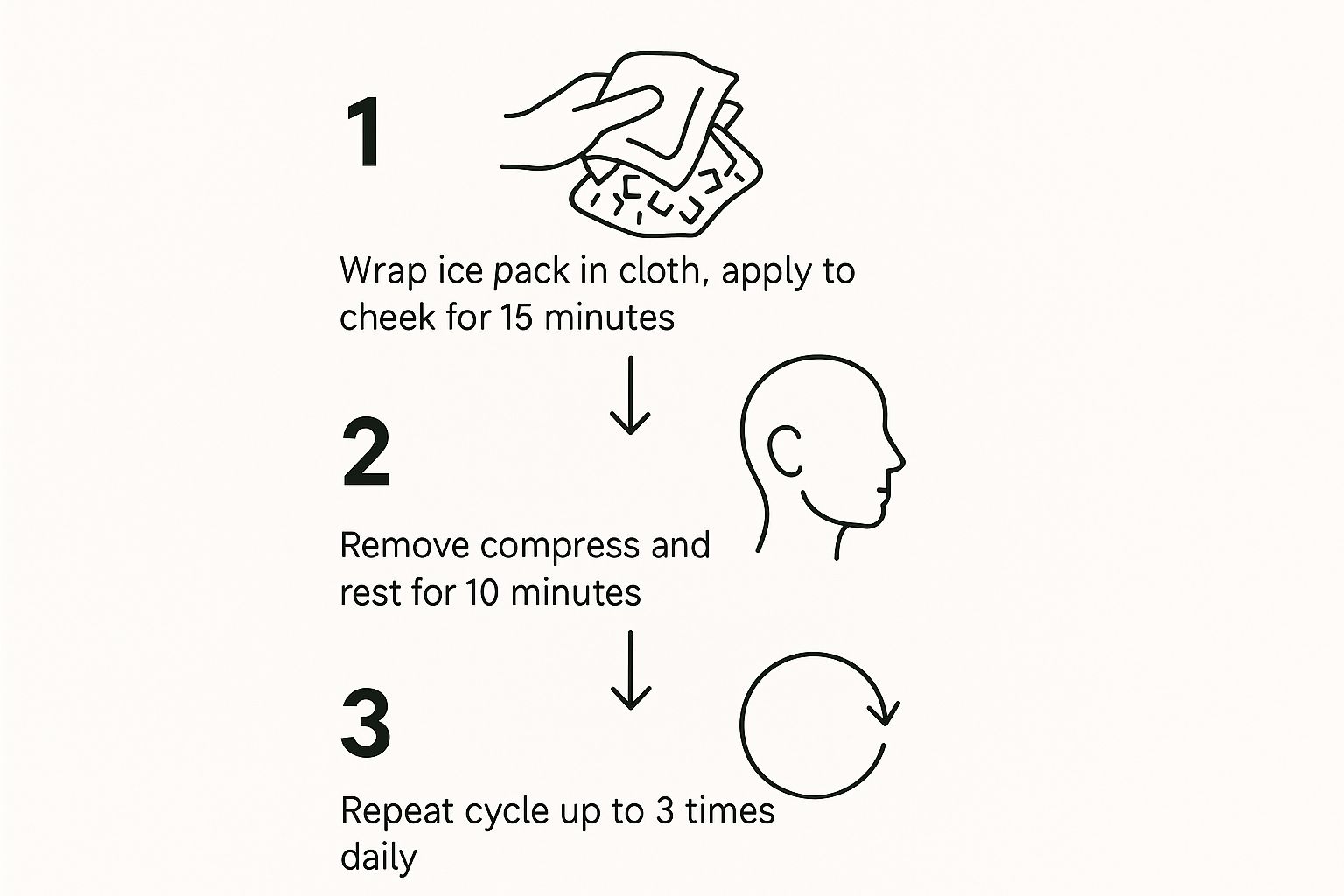
This simple on-and-off cycle is key. It helps you get the maximum pain-numbing benefit without risking any damage to your skin from prolonged cold.
Using Over-the-Counter and Natural Analgesics
If the pain is more intense, an over-the-counter (OTC) anti-inflammatory like ibuprofen can be a real game-changer. These medications work by blocking prostaglandins, the chemicals your body releases that trigger inflammation and pain. So, you're not just masking the ache; you're actively tackling the swelling that's likely causing it.
Important Takeaway: Always follow the dosage instructions on the package and ensure it's a safe option for you. Remember, OTC medications are for temporary relief, not a replacement for professional dental care.
For those who prefer a more natural approach, clove oil is a time-tested remedy. It contains eugenol, a natural analgesic and antiseptic. The trick is to use it correctly: put a couple of drops on a cotton ball, then gently dab it onto the aching tooth. Try to avoid getting it directly on your gums, as it can cause irritation.
Comparing At-Home Tooth Pain Remedies
With so many options, it can be tough to know which remedy is right for your situation. This quick-reference table breaks down the most common at-home strategies to help you decide.
| Remedy | Primary Benefit | Best For | How-To Tip |
|---|---|---|---|
| Saltwater Rinse | Cleanses & Reduces Swelling | A general dull ache, gum irritation, or pain after an extraction. | Use warm (not hot) water to avoid irritating sensitive nerves. Swish gently for 30 seconds. |
| Cold Compress | Numbs Pain & Reduces Inflammation | Throbbing pain, swelling from an abscess or trauma, or post-procedure soreness. | Apply for 15-20 minutes on, then 15-20 minutes off. Never apply ice directly to the skin. |
| Ibuprofen (OTC) | Anti-Inflammatory & Pain Relief | Persistent, inflammatory pain that doesn't respond to other methods. | Take with food to avoid stomach upset and always follow the label's dosage instructions. |
| Clove Oil | Natural Numbing (Analgesic) | Sharp, localized pain from a cavity or exposed nerve. | Apply with a cotton swab directly to the tooth, avoiding the surrounding gum tissue. |
Each of these remedies has its place, and sometimes combining a couple—like a cold compress and ibuprofen—can be the most effective approach.
Global Impact of Tooth Pain
It’s easy to feel alone when you’re in pain, but toothaches are an incredibly common human experience. In fact, a major meta-analysis found that tooth pain affects nearly a quarter of the global population at some point, with a worldwide prevalence of around 24%. This underscores how vital it is to have access to both professional dental care and reliable at-home strategies.
When you're searching for relief, it can be helpful to explore a variety of approaches. For instance, some people find success with broader natural pain relief methods using castor oil. While these general strategies can offer comfort, pinpointing the cause of your specific pain is crucial. If you suspect sensitivity is the culprit, our guide on how to manage sensitive teeth at home provides more focused advice.
How Your Diet Can Calm or Aggravate Tooth Pain

When you've got a raging toothache, every meal can feel like a gamble. The wrong food can send a jolt of pain straight to the nerve, but the right choices can provide much-needed nourishment without making things worse. This isn't about overhauling your entire diet; it’s about making smart, temporary swaps to avoid triggering more pain.
The link between what you consume and the pain you feel is incredibly direct. Some foods and drinks are notorious for fanning the flames of inflammation or irritating an already exposed nerve. Knowing what to avoid is your first line of defense.
Foods and Drinks to Avoid with a Toothache
Think of this as creating a "ceasefire" in your mouth. You want to temporarily avoid anything that could possibly aggravate the sore tooth and give it a chance to calm down.
Here’s what you’ll want to steer clear of for now:
- Sugary Foods and Drinks: Sugar is the primary food source for the bacteria that cause decay and inflammation. Things like soda, candy, and even some pastries create an acidic environment that can feel like pouring salt on a wound.
- Highly Acidic Items: Citrus fruits (lemons, oranges), tomatoes, and acidic drinks like coffee and wine can erode tooth enamel. If you have exposed dentin, the pain can be immediate and intense.
- Extreme Temperatures: That ice-cold drink or steaming hot soup can trigger a sharp, shooting pain. Stick to lukewarm or room-temperature foods and beverages until the sensitivity settles down.
- Hard or Chewy Foods: Anything that requires a lot of chewing pressure is off-limits. This means saying no to nuts, hard candies, crusty bread, and tough meats for a little while. The force of biting down can be agonizing on a compromised tooth.
The role of diet in oral health is a massive global issue. Tooth pain is often the first sign of dental caries (cavities), a condition that, as of 2021, affected an estimated 2.24 billion people worldwide. A diet high in sugar is one of the biggest culprits behind these staggering numbers.
Tooth-Friendly Foods for Pain Relief
Now for the good part—there are still plenty of things you can eat that won't have you clutching your jaw. The goal is to stick with soft foods that require little to no chewing.
Consider these your go-to options:
- Yogurt and smoothies
- Scrambled eggs
- Lukewarm soups and broths
- Mashed potatoes or bananas
- Oatmeal or other soft-cooked grains
Key Takeaway: Shifting to soft, neutral-temperature foods doesn't just prevent pain—it actively reduces stress on the aching tooth, giving your body a better chance to manage the inflammation.
Of course, long-term prevention is always the best strategy. A diet rich in essential minerals for strong teeth and bones, like calcium and magnesium, helps build a strong foundation, making your teeth more resilient to problems down the road.
Knowing When Home Remedies Aren’t Cutting It
At-home remedies can be a real lifesaver for taking the edge off, but it's crucial to remember they're a temporary fix, not a cure. Think of them as a bridge to get you to your dental appointment, not the final destination.
When a toothache sticks around for more than a day or two, that’s your first major sign that something deeper is wrong. Ignoring these persistent signals can turn a relatively simple problem into a severe infection, leading to more pain and more complex (and expensive) treatments later on.
Red Flags You Absolutely Shouldn't Ignore
Sometimes, your body sends out emergency signals that you can't afford to overlook. If you're dealing with any of the following, it's time to put down the clove oil and pick up the phone to call your dentist. These symptoms almost never resolve on their own.
- Pain That's Severe and Throbbing: Is the pain so bad it's waking you up at night or making it impossible to focus during the day? That level of intensity often points to a serious infection or inflammation that has reached the nerve of your tooth.
- Swelling in Your Gums, Jaw, or Face: Any puffiness or visible swelling is a serious red flag. It’s a strong indicator that an infection, like a dental abscess, is starting to spread into the surrounding soft tissues.
- A Fever Along with Your Toothache: A fever is your body's alarm system, signaling it's fighting off a significant infection. When you have a fever and a toothache at the same time, it’s a clear sign you need immediate professional help.
- A Nasty Taste or Smell: A persistent foul odor or a salty, metallic taste in your mouth could mean pus is draining from an abscess. This needs urgent attention.
- Pain After an Injury: If your tooth started hurting after a fall, a sports injury, or any kind of impact to your face, don't just hope it goes away. The tooth could be cracked, chipped, or knocked loose in its socket, and a dentist needs to assess the damage to save it.
Never wait for the pain to become unbearable. A dental infection isn't just a mouth problem; it can spread to other parts of your body and lead to serious, system-wide health complications.
Understanding these warning signs helps you make the right call for your health. While knowing how to reduce tooth pain at home is a valuable skill, recognizing the moment you need a professional is even more important. If any of these symptoms sound familiar, your very next move should be to get in touch with a dentist.
Professional Treatments That Stop Tooth Pain for Good

So, you’ve tried all the home remedies, but the pain just won't quit. That’s your cue to see a professional. A trip to the dentist is where you’ll find a real, permanent solution—not just a temporary fix. Professional treatments are all about tackling the root cause of the problem to get your tooth healthy and functional again for the long haul.
It’s completely normal to feel a little anxious about a dental appointment, but knowing what to expect can make all the difference. Your dentist has a number of highly effective ways to get you out of pain, and the right one for you will depend entirely on what’s going on inside your mouth.
Restoring Your Tooth With Dental Fillings
More often than not, the culprit behind a nagging toothache is a simple cavity. Once decay works its way through your tooth’s hard enamel, it exposes the sensitive inner layers, and that’s when the pain kicks in. A dental filling is the classic, straightforward fix for this.
Your dentist starts by making sure the area is completely numb. Then, they’ll gently clean out the decayed part of the tooth and fill the space with a strong, durable material. Many modern fillings are made from a composite resin that’s perfectly matched to your natural tooth color, so the repair is practically invisible. The tooth is sealed, strong, and best of all, pain-free.
Saving a Tooth With a Root Canal
Sometimes, decay or an injury can reach the very center of the tooth—the pulp—which is where the nerve lives. When this happens, the pain can become severe and unrelenting. This is the scenario where a root canal is needed to save the tooth.
Despite its scary reputation, a modern root canal is actually a pain-relieving procedure, not a painful one. The process involves carefully removing the infected pulp, thoroughly cleaning the inside of the tooth, and sealing it to keep any new bacteria out. For a closer look at what the procedure involves, check out our guide on what to expect during a root canal treatment in San Diego. This isn’t just about stopping the pain; it’s about saving a natural tooth that might otherwise have to be pulled.
Key Insight: The goal of modern dentistry is always to preserve your natural teeth whenever possible. Procedures like fillings and root canals are designed to restore health and prevent tooth loss.
Unfortunately, not everyone has equal access to these vital treatments. It's a sobering fact that about 41% of adults report having dental pain, and studies show a strong link between income level and the frequency and severity of that pain. This really highlights how socioeconomic factors can be a major barrier to getting timely care. You can learn more about the connection between dental health and socioeconomic factors on frontiersin.org.
Protecting Damaged Teeth With Crowns
What happens when a tooth is too weak for a standard filling? This can happen because of a very large cavity, a deep crack, or as the final step after a root canal. In these cases, a dental crown is the perfect solution. Think of it as a custom-made helmet that fits securely over the entire tooth.
A crown restores the tooth's original shape, brings back its strength, and makes it look great again. The process usually takes two visits: one to prepare the tooth and take an impression for the lab, and a second to bond the permanent crown into place. It’s a fantastic way to protect a vulnerable tooth and eliminate the pain from cracks or major decay.
When Extraction Is the Best Option
There are times when a tooth is simply too damaged or the infection is too severe for it to be saved. When that’s the case, a tooth extraction becomes the best and safest path forward. It removes the source of the pain entirely and stops the infection from spreading to other parts of your mouth or body.
Your dentist will make sure you are completely numb and comfortable during the whole process. Once the tooth is removed and the area has healed, you can start talking about replacement options, like dental implants or bridges, to get your smile back to full strength.
Your Top Questions About Tooth Pain Answered
We’ve covered a lot about what causes tooth pain and how to manage it, but we find that people often still have a few key questions. Let’s tackle some of the most common ones we hear from our San Diego patients so you can feel more in control when discomfort strikes.
Can a Toothache Just Go Away on Its Own?
This is something we all hope for, but unfortunately, it’s rarely the case. Pain from a real, structural problem—like a cavity, a cracked tooth, or a brewing infection—almost never resolves by itself.
You might get a few hours or even a day of relief, but the root cause is still there. We often tell our patients to think of it like a leaky pipe. You can put a bucket under it, but until a plumber fixes the leak, the problem isn't solved. Home remedies are your bucket; they manage the immediate mess but don’t fix the pipe.
Ignoring it usually means the pain will come back, often worse than before. Professional dental care is the only way to permanently fix the underlying issue.
What’s the Fastest Way to Stop Severe Tooth Pain at Night?
Nighttime seems to make toothaches feel ten times worse, doesn't it? With fewer distractions, the pain can become all-consuming. For the quickest relief, you'll want to attack it from a few different angles at once.
First, if you're able to, take an over-the-counter anti-inflammatory medication like ibuprofen. This is often more effective than a simple pain reliever because it targets the inflammation that's creating pressure on the nerve.
While you wait for the medicine to kick in, grab a cold compress. Apply it to the outside of your cheek for 15-minute stretches. Finally, prop your head up on an extra pillow or two. Lying flat can cause blood to rush to your head, making a throbbing tooth feel even more intense. A little elevation can make a surprisingly big difference.
Should I Use a Hot or Cold Compress for Tooth Pain?
This one is critical: always choose a cold compress. Cold is your best friend for dental pain. It constricts blood vessels, which helps bring down swelling and inflammation, and it provides a welcome numbing effect.
Applying heat is a common mistake that can seriously backfire. Warmth actually increases blood flow to the area, which can ramp up the inflammation and make the throbbing pain feel much worse, especially if there’s an infection. So, stick with a cold pack wrapped in a towel—never heat.
How Can I Prevent Tooth Pain from Coming Back?
The old saying is true: an ounce of prevention is worth a pound of cure. The absolute best way to handle tooth pain is to stop it from ever starting. This really comes down to a solid, consistent oral hygiene routine.
Here are the non-negotiables for a healthy mouth:
- Brush twice a day, every day, with a fluoride toothpaste.
- Floss daily. This is the only way to clean the 35% of your tooth surfaces that your brush can't reach.
- Watch your diet. Limit sugary and acidic foods and drinks that feed the bacteria that cause cavities.
- See your dentist for regular checkups and cleanings. Catching problems when they're small is the key to avoiding big, painful ones later.
These simple habits are your best defense. They’re what keep your smile healthy and, most importantly, comfortable.
If you have a toothache that just won't quit, please don't wait for it to get worse. The team at Serena San Diego Dentist is here to figure out what's wrong and get you out of pain for good. You can schedule your appointment online today.