

Breathing is an automatic reflex, but how you breathe has a surprisingly large impact on your health. While occasional mouth breathing during a tough workout or a bad cold is normal, chronic mouth breathing can lead to a cascade of negative health effects. The side effects of mouth breathing range from common issues like dry mouth and bad breath to more serious problems, including tooth decay and even changes in facial development, especially in children.
The core issue is that breathing through your mouth bypasses the nose's natural and highly effective air-filtration system. When this becomes a habit, it can trigger a chain reaction of unwanted health consequences.
Why Breathing Through Your Mouth Matters
We rarely think about our breathing, but the method we use—nose versus mouth—makes a significant difference to our overall well-being. Chronic mouth breathing isn't just a bad habit; it's often a sign that something else is amiss in the body.
Think of your nose as a sophisticated piece of biological engineering. It is perfectly designed to filter, warm, and humidify the air you inhale, preparing it for your lungs. Your mouth, on the other hand, is built for eating, drinking, and speaking—it was never intended to be the primary airway. Relying on it for breathing means you miss out on all the critical protective benefits your nose provides.
Common Causes of Chronic Mouth Breathing
Identifying the reason for mouth breathing is the crucial first step toward correcting it. Most often, the cause is some form of airway obstruction.
Here are the most common culprits:
- Nasal Congestion: Persistent stuffiness from allergies, sinus infections, or a cold forces your body to find an alternate route for air: your mouth.
- Enlarged Tonsils or Adenoids: This is a major cause in children. Swollen tonsils or adenoids can physically block the nasal passage, making mouth breathing the only viable option.
- Deviated Septum: A structural problem where the cartilage wall between the nostrils is off-center, restricting airflow through one or both sides of the nose.
- Habit: Sometimes, it’s a learned behavior. A person might have started mouth breathing during a childhood illness and simply never reverted to nasal breathing once the congestion cleared.
This infographic highlights the key differences between nasal and mouth breathing.
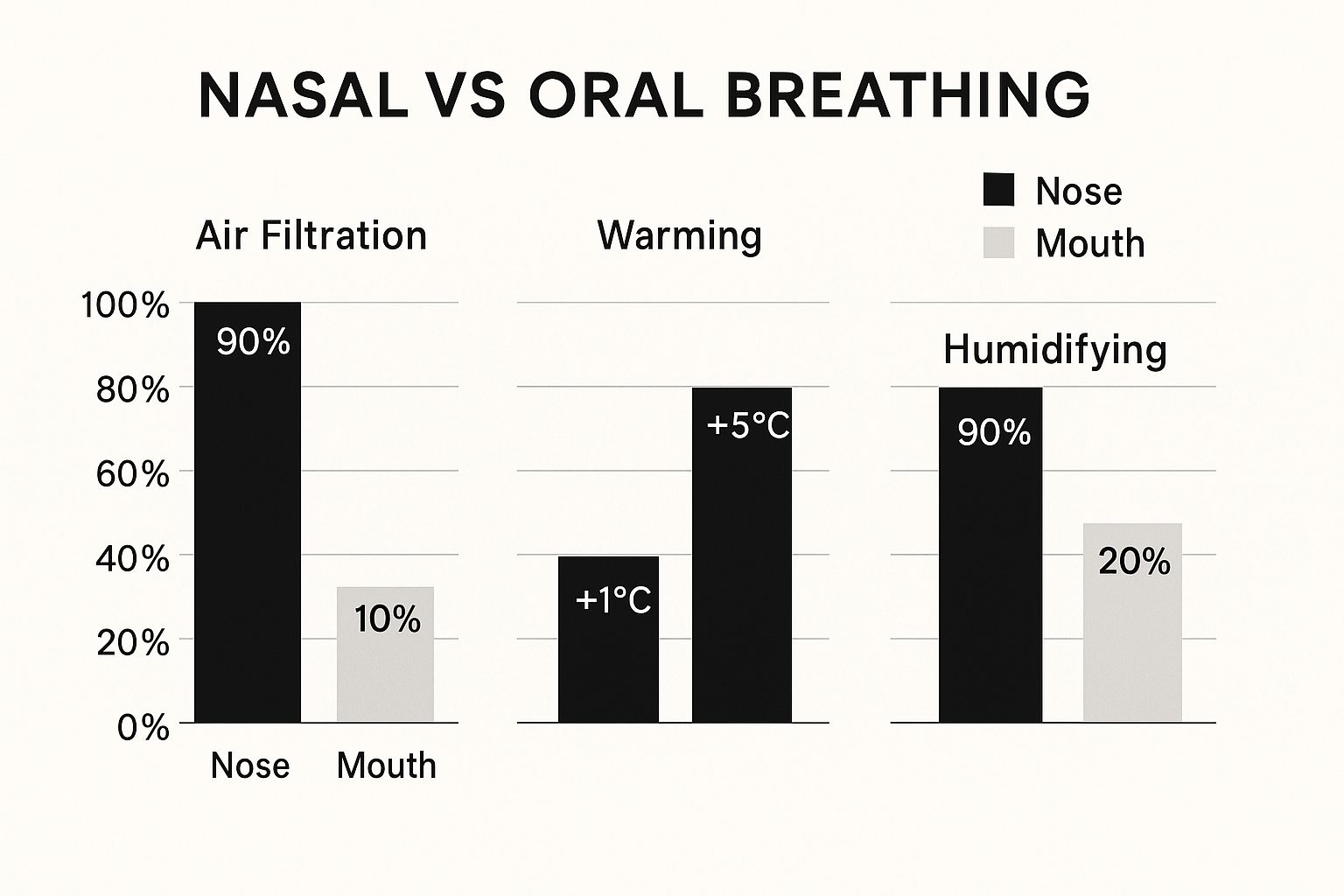
As you can see, the nose is specifically designed for respiration and does a much better job of preparing the air your body needs.
Bypassing the nose is like removing the air filter from your car's engine. It will still run, but over time, the unfiltered debris will cause significant damage.
Pinpointing the root cause is vital because the long-term side effects of mouth breathing can interfere with everything from your dental health to your sleep quality. Once the "why" is identified, we can find the right solution to restore your body's natural, healthier way of breathing. This is about more than comfort—it's about safeguarding your long-term health.
The Hidden Dangers for Children's Development

In children, chronic mouth breathing is more than a bad habit—it’s a critical developmental red flag. During these formative years, the act of breathing helps shape everything from facial structure and dental alignment to academic performance.
What might seem like a minor issue can actually trigger a domino effect of problems, and it’s something every parent in San Diego should be aware of.
How It Disrupts Sleep and Daily Life
One of the first casualties of mouth breathing is a child's sleep. This habit is a significant contributor to sleep-disordered breathing (SDB), a spectrum of issues that includes everything from loud snoring to the more severe obstructive sleep apnea (OSA).
When a child cannot breathe properly at night, their sleep is constantly interrupted. This isn’t just about morning grogginess. It can manifest as severe daytime fatigue, an inability to concentrate in school, and even behavioral issues that are sometimes misdiagnosed as ADHD.
The Impact on Facial Growth
Beyond sleep, consistent mouth breathing can physically alter the shape of a child's face. An open-mouth posture causes the tongue to drop to the floor of the mouth instead of resting against the palate, where it belongs. The tongue acts as a natural palate expander; without its support, the upper jaw fails to develop properly, growing narrow instead of wide.
Over time, this can lead to a distinct set of facial features known as "adenoid face":
- A long, narrow face
- A high, arched palate
- A weak or recessed chin
- Crowded teeth and bite issues, such as an open bite
This isn't merely about aesthetics. Breathing patterns are directly linked to facial structure, which in turn influences overall body alignment. To learn more, see our guide on the surprising link between your teeth and posture.
The Link to Sleep Apnea and Lifelong Health
The connection between mouth breathing and childhood OSA is well-established. One study revealed that 41% of otherwise healthy children with moderate to severe OSA were mouth breathers. If left untreated, this can cause night sweats, bedwetting, and a level of exhaustion that profoundly affects their quality of life.
To truly understand the difference, let's compare the two developmental paths.
Mouth Breathing vs. Nasal Breathing in Children
| Aspect | Nasal Breathing (Optimal) | Mouth Breathing (Detrimental) |
|---|---|---|
| Facial Growth | Wide palate, well-defined jawline, straight teeth. | Long, narrow face; recessed chin; high palate. |
| Dental Health | Proper alignment, reduced risk of cavities. | Dental crowding, open bite, increased gingivitis. |
| Sleep Quality | Deep, restorative sleep cycles. | Snoring, sleep apnea, frequent waking. |
| Behavior & Learning | Good focus, stable mood, better academic performance. | Irritability, difficulty concentrating, ADHD-like symptoms. |
| Immune Function | Air is filtered, warmed, and humidified, reducing illness. | Bypasses natural filtration, leading to more infections. |
As you can see, the difference between nose and mouth breathing sets the stage for two very different health outcomes for a child.
Addressing and correcting mouth breathing early is not just about fixing a habit. It’s about protecting a child's entire developmental trajectory. Early intervention can prevent serious dental problems, guide proper facial growth, and set them up for a lifetime of better health.
For San Diego parents, the first step is recognizing the signs—snoring, a constantly open mouth, or academic struggles. From there, a consultation with a dental professional can help identify the cause and create a plan to get your child back on the path to healthy nasal breathing.
How Mouth Breathing Wrecks Your Oral Health
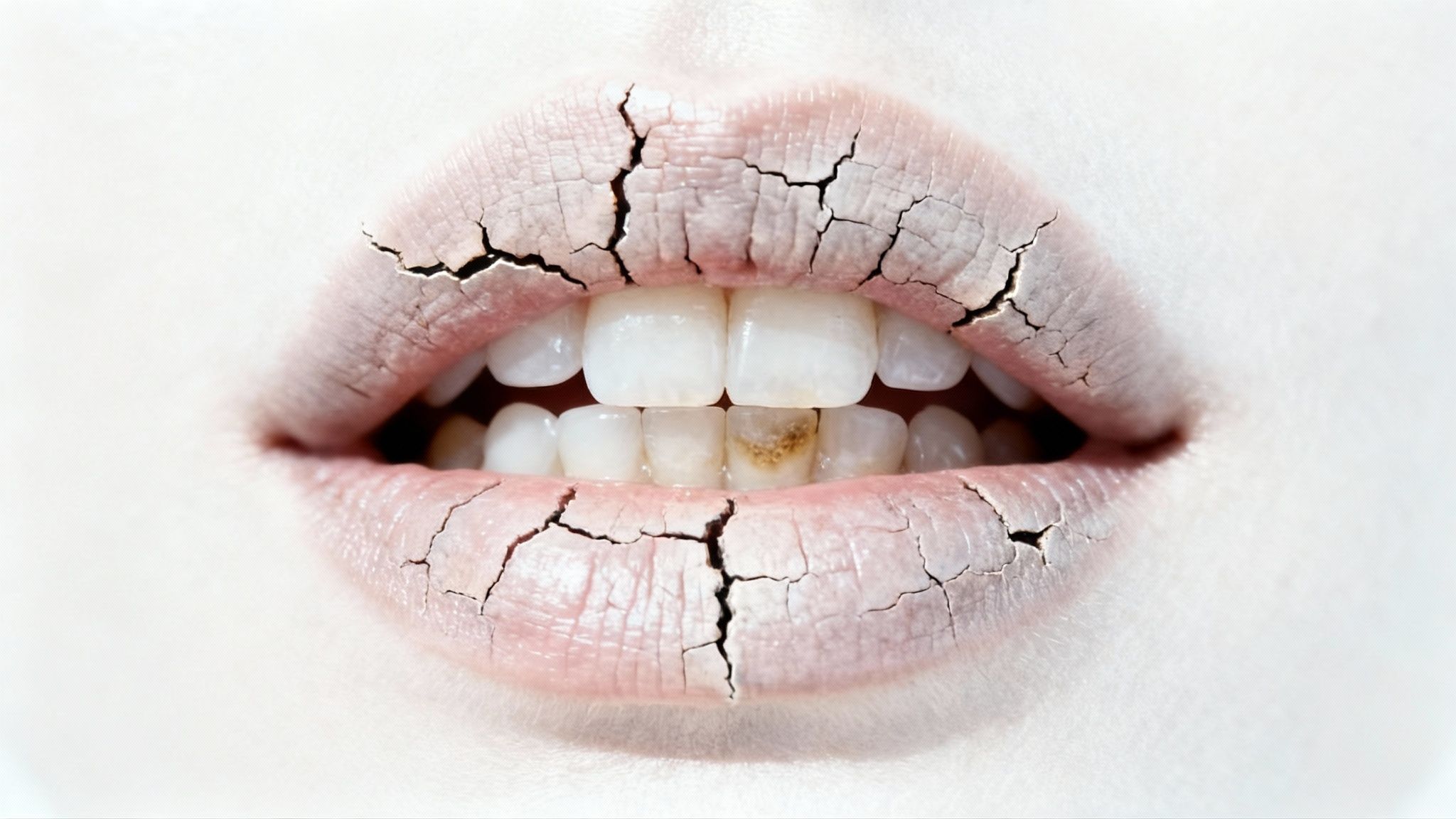
Think of saliva as the unsung hero of your oral health. It’s your mouth's natural defense system, constantly working to wash away food particles, neutralize harmful acids from bacteria, and maintain a healthy balance. But when you breathe through your mouth, you effectively shut down this vital system.
Chronic mouth breathing leads to xerostomia, or a persistently dry mouth. Imagine trying to keep a garden thriving in the San Diego sun without water—it quickly withers. This dry, arid environment inside your mouth becomes the perfect breeding ground for a host of serious dental problems.
The Breakdown of Your Natural Defenses
Without the protective flow of saliva, your oral health deteriorates. The natural barrier that saliva provides disappears, leaving your teeth and gums vulnerable to bacterial assault.
This isn't a minor inconvenience; it fundamentally alters the entire ecosystem of your mouth. Bacteria that would normally be washed away are free to linger, multiply, and thrive. This triggers a chain reaction of issues that can seriously damage your smile.
"A dry mouth is a sick mouth. Saliva is arguably the most important element in maintaining oral health, and mouth breathing is its number one enemy."
The consequences are both predictable and incredibly damaging:
- Increased Risk of Tooth Decay: Saliva is rich in minerals like calcium and phosphate, which are essential for strengthening tooth enamel. Without it, your teeth become much more susceptible to acid attacks, significantly increasing your risk of cavities.
- Persistent Bad Breath (Halitosis): The specific bacteria that flourish in a dry environment release volatile sulfur compounds. This is the source of stubborn, chronic bad breath that mints and mouthwash can't truly fix.
- Inflamed and Irritated Gums: A dry mouth often leads to red, swollen, and bleeding gums. These are the classic early signs of gingivitis, which can progress to more advanced gum disease if not addressed. You can learn more by reading our guide on the serious threat of gum disease.
The Connection to Exercise and Dehydration
Even if you only breathe through your mouth during exercise, you are still causing harm. Breathing this way during physical activity leads to greater water and CO2 loss, which quickly dries out your mouth and reduces saliva production.
This state dramatically increases your risk for dental problems because saliva's protective qualities vanish right when you are likely dehydrated and need them most. In fact, a recent scientific article explored this very connection in detail.
The bottom line is simple: how you breathe directly and powerfully impacts the health and longevity of your smile. Controlling mouth breathing isn't just a good idea—it's an essential part of a comprehensive oral health strategy.
Systemic Health Consequences You Can't Ignore
The side effects of mouth breathing extend far beyond your teeth and gums. When you consistently breathe through your mouth, you bypass a sophisticated, built-in system designed to keep your entire body functioning optimally.
Your nose is more than just an airway—it's an advanced filtration and conditioning unit that warms, humidifies, and cleans the air you inhale. But it also produces nitric oxide, a remarkable gas crucial for vasodilation, which means it helps relax and widen your blood vessels. This, in turn, boosts oxygen circulation throughout your body.
When you breathe through your mouth, you miss out on all of that. The air reaching your lungs is cold, dry, and unfiltered. More importantly, it lacks that vital nitric oxide boost. The result is less efficient oxygen uptake, which can leave you with chronic fatigue, brain fog, and can even contribute to higher blood pressure over time.
The Delicate Balance of Oxygen and CO2
Here's something that surprises many: effective breathing isn't just about getting oxygen in. It’s about maintaining the perfect balance of carbon dioxide (CO2). It may sound counterintuitive, but CO2 is the signal that tells your red blood cells to release their oxygen stores to your tissues and organs.
Mouth breathing often leads to a subtle form of over-breathing, known as "chronic hyperventilation." You end up exhaling too much CO2. This seemingly minor change can disrupt your blood's pH, putting your body in a constant, low-grade state of stress and making it much harder for oxygen to get to your muscles and brain.
This chronic imbalance can leave you feeling drained and unfocused, even after a full night's sleep. Your body is working harder just to maintain its basic functions, which impacts your energy, cognitive performance, and overall long-term wellness.
The physical and morphological consequences of mouth breathing have been extensively studied. In adults, it's strongly linked to fatigue, a noticeable dip in productivity, and a poorer quality of life precisely because it disrupts these fundamental physiological processes. You can read more about these physical consequences to see just how deep the connections go.
Broader Health and Environmental Factors
The cascade of problems doesn't stop with your blood chemistry. This state of low-grade stress and poor oxygenation can impact nearly every system in your body.
- Weakened Immune Response: Your nose is your first line of defense against airborne pathogens. Bypassing it by mouth breathing is like leaving the front door open for viruses and bacteria.
- Poor Sleep Quality: Mouth breathing is a major driver of snoring and sleep apnea. It robs you of restorative deep sleep and leads directly to daytime exhaustion.
- Increased Stress and Anxiety: The physiological stress from improper breathing can activate your sympathetic nervous system, keeping you stuck in a "fight or flight" state.
It's also worth considering how your immediate environment can influence your breathing. Poor indoor air quality can irritate nasal passages, making it harder to breathe through your nose and encouraging a shift to mouth breathing. Understanding how dirty air ducts can harm your health gives you a broader look at creating a home that supports healthy breathing.
Ultimately, correcting your breathing isn't just about breaking a bad habit. It's about restoring your body’s natural, intended balance for better health from head to toe.
Practical Steps to Reclaim Nasal Breathing

Understanding the "why" behind mouth breathing is half the battle. Now, it's time to take back control. The good news is that retraining your body to breathe through the nose is entirely achievable, though it requires conscious effort.
Think of it as a two-part strategy: first, you must clear any obstructions by addressing the root cause. Second, you need to retrain your body and mind to use the proper breathing pathway.
First, Figure Out What’s Really Going On
Before you can fix the problem, you need to know what's causing it. Self-help techniques are unlikely to work if a physical blockage is preventing you from breathing through your nose. This is why a professional diagnosis is essential.
Your path to finding answers might involve a few key professionals:
- See an Allergist: If you’re perpetually congested, an allergist can determine if chronic allergies are the culprit and create a plan to manage them.
- Consult an ENT: An Ear, Nose, and Throat (ENT) specialist is the expert for identifying physical blockages. They can diagnose issues like a deviated septum or swollen tonsils that may require medical intervention.
- Get a Dental Check-Up: Sometimes, the problem is structural. A narrow palate or misaligned jaw can crowd your airway, making nasal breathing difficult. Exploring orthodontic solutions in San Diego can often be a crucial part of the solution.
Daytime Techniques to Retrain Your Breathing
Once any major obstacles are addressed, you can begin consciously practicing healthy breathing habits during the day. The goal is to build awareness until breathing through your nose becomes your natural default.
Start with simple check-ins. A few times throughout the day, pause and ask yourself: "How am I breathing?" Are your lips together? Where is your tongue? Ideally, it should rest gently on the roof of your mouth. If you notice your mouth is open, gently close it and take a breath through your nose.
Retraining your breathing is like building a new muscle. It requires consistent, conscious effort at first, but over time, nasal breathing will become your body's default setting once again.
Breathing exercises, such as those from the Buteyko Method, can also be incredibly effective. They focus on teaching you to take calm, light breaths through your nose, which helps reset your body’s natural respiratory rhythm.
Strategies for Nighttime Breathing
For most people, the biggest challenge is maintaining nasal breathing while asleep. This is where a few simple tools can make a significant difference.
One of the most effective aids is a special type of porous, hypoallergenic mouth tape. While it may sound unusual, its purpose isn't to seal your lips shut. Instead, it acts as a gentle, physical reminder for your jaw to stay closed, prompting your body to breathe through the nose.
A quick word of caution: Always consult your doctor before trying mouth tape, especially if you have known breathing issues or severe nasal congestion.
Finally, consider your environment. Simple measures like maintaining good indoor air quality can reduce nasal irritants and make nasal breathing easier. By combining these strategies, you create a powerful approach to get back to breathing the way nature intended.
When It's Time to Call a Professional
While mindful breathing exercises and over-the-counter aids can be helpful, they often don't address the root cause of chronic mouth breathing. If you've tried these methods and still find yourself (or your child) struggling, it's a clear sign to consult with experts.
Ignoring the underlying issue won't make it disappear; in fact, it allows the negative side effects of mouth breathing to accumulate and become more serious over time.
Think of it as assembling a small team of specialists to tackle the problem from every angle. The causes are often complex, ranging from physical airway obstructions to deep-seated muscular habits, so a coordinated approach is typically the most effective.
Building Your Health Team
Knowing who to call first is crucial. Different healthcare professionals play unique and vital roles in diagnosing the why behind mouth breathing and treating its consequences.
Here’s who you might need on your team:
Ear, Nose, and Throat (ENT) Doctor: This is your primary detective for any physical roadblocks in the airway. An ENT can spot things like enlarged tonsils and adenoids, a deviated septum, or chronic sinus issues that are making it difficult—or even impossible—to breathe through your nose.
Dentist or Orthodontist: Often, a dentist is the first to notice the tell-tale signs inside the mouth. They can see problems like specific areas of gum inflammation, an unusually high or narrow palate, or changes in how the teeth are coming together. They are essential for managing any dental damage and monitoring how mouth breathing is affecting facial growth.
Myofunctional Therapist: Think of these specialists as personal trainers for the muscles of your face and mouth. They use targeted exercises to retrain the way you breathe, chew, and swallow, helping to correct improper habits and establish healthy, lasting nasal breathing patterns.
Sometimes, symptoms like jaw pain, clicking, or popping are directly tied to the muscle strain from keeping your mouth open all the time. Learning more about specialized TMJ treatments in San Diego can be a game-changer for finding relief from these related problems.
Common Questions About Mouth Breathing
After learning about the significant side effects of mouth breathing, it's natural to have more questions. Here are answers to some of the most common concerns we hear from patients in San Diego.
Is It Ever Normal to Breathe Through Your Mouth?
Yes, but only in specific, temporary situations. When you're in the middle of strenuous exercise and need oxygen quickly, or when a cold or allergies cause a stuffy nose, your mouth serves as a backup airway. That's perfectly normal.
The problem arises when it becomes chronic mouth breathing—when it’s your default way of breathing while sitting, working, or sleeping. This constant pattern is a red flag indicating an underlying issue that needs to be addressed to prevent long-term health problems.
Can Mouth Breathing Actually Change My Face Shape?
Yes, it absolutely can. This is one of the most serious side effects, especially for children whose bones are still developing. Persistent mouth breathing can lead to what is often called "long face syndrome."
When this occurs, several distinct changes in facial structure can be observed:
- The face appears long and narrow.
- The chin looks small or recessed.
- The palate (roof of the mouth) becomes high and arched.
- Dental issues, such as an open bite or crowded teeth, become more likely.
This happens because the tongue is meant to rest on the roof of the mouth, acting as a natural scaffold that guides the upper jaw to grow forward correctly. Without that support, facial growth tends to be more vertical, altering the entire facial profile. Early detection is crucial for guiding healthier development.
How Do I Know if I'm a Mouth Breather at Night?
Since you're asleep, you'll need to look for clues in the morning. Waking up with a parched mouth, a scratchy throat, or cracked lips are the classic signs.
Other indicators include:
- Loud and consistent snoring
- Waking up frequently during the night
- Struggling with morning headaches
- Feeling exhausted even after a full 8 hours of sleep
Your partner might also notice that you sleep with your mouth open. A dentist can often spot the signs as well, such as inflammation and redness in the gums, particularly around the upper front teeth.
If you are concerned about how mouth breathing might be affecting you or your child, it's time to seek professional guidance. At Serena San Diego Dentist, we can evaluate your oral health, identify the signs of mouth breathing, and help you find the best path back to healthy, natural breathing. Schedule your consultation with us today.