
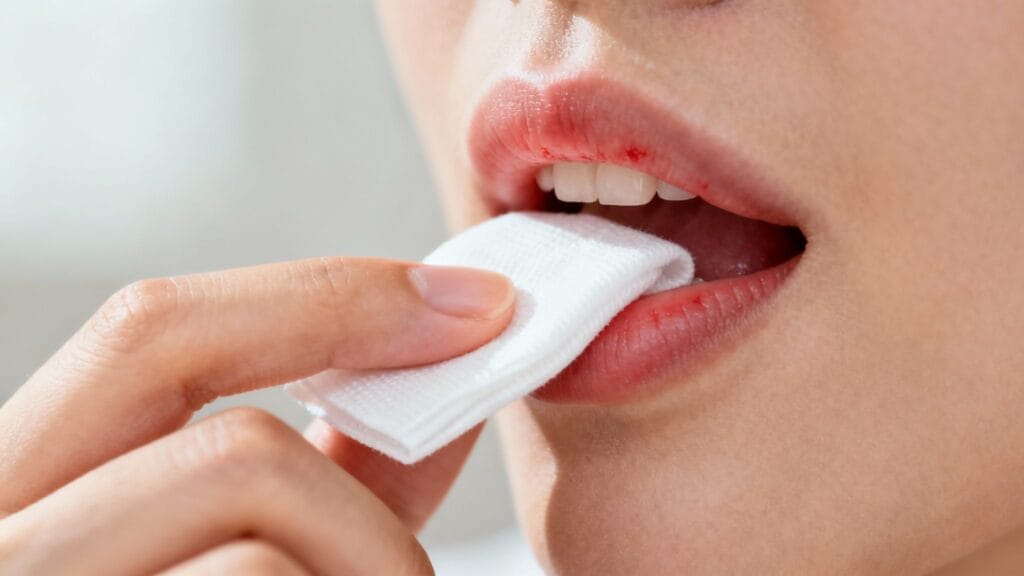
Seeing pink in the sink after brushing or flossing can be unsettling, but it’s often a signal from your gums that they need a little more attention. While it's a common issue, knowing the right first-aid steps can help you manage it quickly and effectively. Your immediate goal is to stop the bleeding and soothe the irritated tissue.
When you notice your gums are bleeding, the key is to remain calm and methodical. Reacting with aggressive treatments can sometimes make a small problem worse. Think of it as first aid for your mouth; taking the right steps now can bring immediate relief and help you identify the underlying cause later.
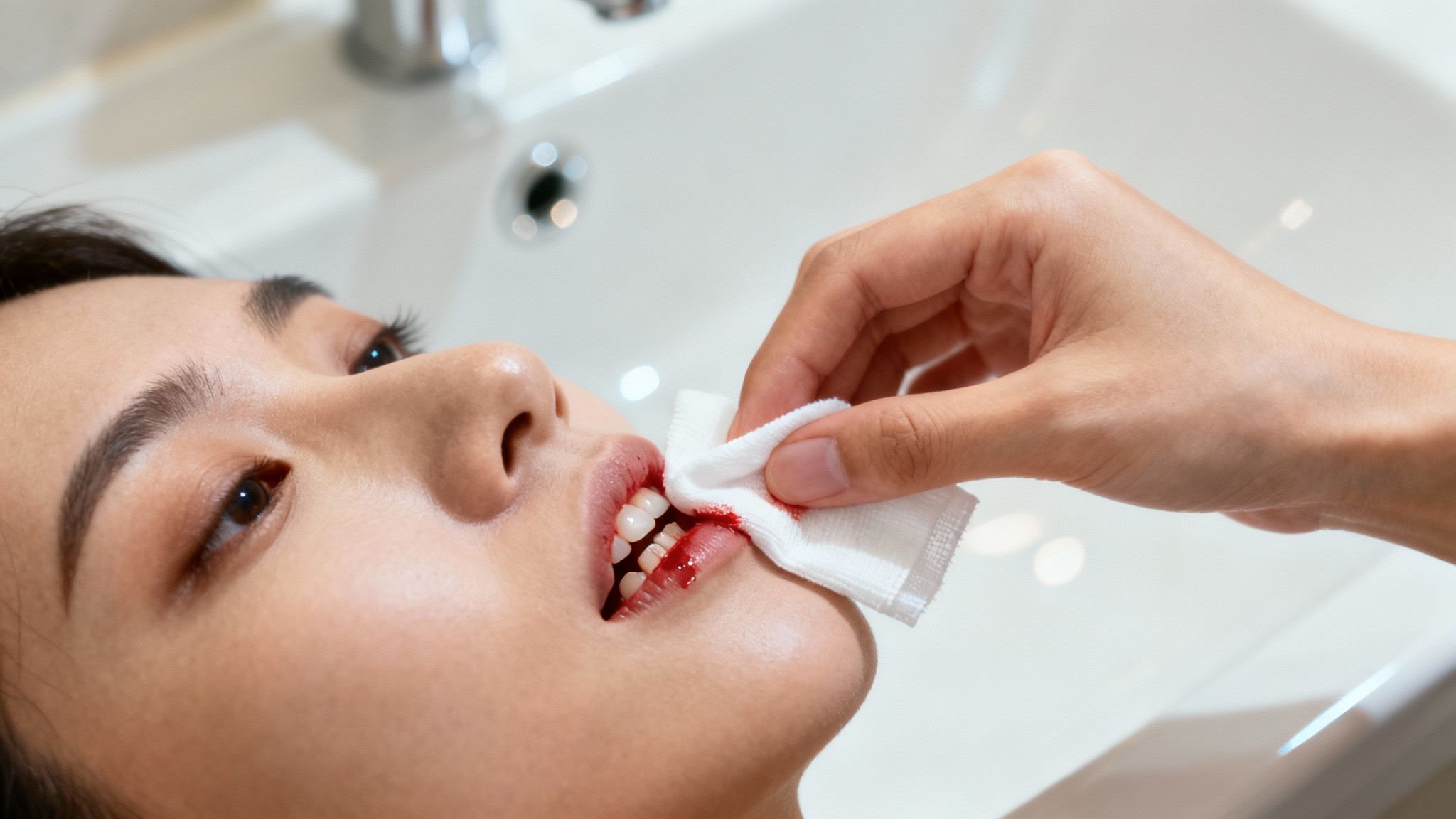
Here's a quick guide to help you manage gum bleeding the moment it happens.
Immediate Actions for Bleeding Gums
| Your Action | Why It Helps | What to Avoid Immediately |
|---|---|---|
| Apply Gentle Pressure | Helps blood clot by compressing the tiny blood vessels. | Don't scrub the area or keep checking every 30 seconds. |
| Use a Cool Saltwater Rinse | Cleanses the area, reduces inflammation, and acts as a natural antiseptic. | Stay away from alcohol-based mouthwash—it can sting and dry out your mouth. |
| Apply a Cold Compress | Constricts blood vessels from the outside to slow bleeding and reduce swelling. | Avoid using anything hot, as heat can increase blood flow and worsen bleeding. |
These simple steps are your best first response to get things under control.
Apply Gentle Pressure the Right Way
The most effective method to stop active bleeding is direct, steady pressure. This gives your body a chance to form a natural clot.
- First, grab a clean material. A sterile gauze pad from a first-aid kit is ideal, but a clean washcloth works in a pinch.
- Next, fold it into a small square and place it directly on the spot that’s bleeding.
- Finally, hold it there. Apply firm—but not painful—pressure by biting down or using your finger. The trick is to maintain that pressure for at least 10-15 minutes without peeking. If you keep lifting it to check, you can disturb the clot that’s trying to form.
For minor bleeding from brushing or flossing, this is often all you need.
Swish with a Cool Saltwater Rinse
Once the bleeding has slowed or stopped completely, a saltwater rinse is a great next step. Salt is a natural disinfectant that helps clean the wound and reduce swelling, and it won't sting like harsh, alcohol-based mouthwashes.
It’s easy to make:
- Dissolve about half a teaspoon of salt into an 8-ounce glass of cool water.
- Gently swish the solution around your mouth for about 30 seconds, ensuring it reaches the affected gum area.
- Spit it out. You can repeat this a few times a day, especially after meals, to keep the area clean while it heals.
A Quick Pro Tip: Always use cool or lukewarm water for your rinse when dealing with bleeding. Hot water can increase blood flow and may make the bleeding worse.
Give Your Gums a Break from Irritants
After you’ve stopped the bleeding, your gum tissue will be tender. It needs time to recover, so for the next few hours, try to avoid anything that might aggravate it.
Here's what to steer clear of:
- Spicy & Acidic Foods: Things like citrus fruits, tomatoes, or a spicy salsa can sting sensitive gums.
- Alcohol & Harsh Mouthwash: Alcohol is drying and can cause a burning sensation on inflamed tissue. Stick to the saltwater rinse for now.
- Hard or Crunchy Foods: Chips, crusty bread, or nuts can easily poke or scrape the healing area, which might cause it to start bleeding again.
Try sticking to softer foods like yogurt, soups, or smoothies until the sensitivity subsides. While these immediate actions are incredibly helpful, persistent bleeding is a sign you shouldn't ignore. For more guidance on what might be a more serious issue, our overview of common dental emergencies is a great resource.
Why Are My Gums Bleeding? Let's Uncover the Reasons
Seeing blood after you brush can be concerning, but it's a sign that shouldn’t be ignored. Think of bleeding gums as your body's alarm system—it's signaling that something isn't right with your oral health. Understanding what's causing the bleeding is the first step toward solving the problem for good.
In my experience as a dentist, the most common reason for bleeding gums is gingivitis. This is the earliest, mildest stage of gum disease, and it's caused by a buildup of plaque—a sticky, bacterial film that constantly forms on our teeth. If you don't remove plaque with consistent brushing and flossing, it can harden into tartar and irritate your gums, causing them to become inflamed, swollen, and prone to bleeding.
Gingivitis: The Usual Suspect
The good news about gingivitis is that it's completely reversible with a little more attention to your daily oral hygiene. The bacteria in plaque release toxins that aggravate the delicate gum tissue, which is why even gentle brushing can sometimes trigger bleeding when gingivitis is present.
However, you don't want to let it linger. If gingivitis is ignored, it can advance into a much more serious problem: periodontitis. This is when the infection goes deeper, damaging the bone and connective tissues that hold your teeth in place. To get the full picture, check out our guide on how periodontitis can be ruining your oral health.
Other Factors That Can Cause Bleeding Gums
While plaque is almost always part of the equation, it's not the only thing that can make your gums bleed. Sometimes, our daily habits or even our overall health can play a significant role.
Here are a few other common culprits I see in my San Diego practice:
- You're Brushing Too Hard: Are you using a stiff-bristled brush and scrubbing away? This can damage your gums and cause them to recede and bleed. Remember, the goal is to gently clean, not aggressively scour.
- You Just Started a New Flossing Habit: If you haven't flossed in a while, it's normal to see some bleeding for the first week or so. Your gums are getting used to the stimulation. Stick with it! The bleeding should stop as they become healthier.
- Certain Medications: Blood thinners are a well-known example, as they affect your body's ability to clot. Other medications might cause dry mouth, creating a better environment for plaque-causing bacteria to multiply.
- Hormonal Changes: Big hormonal shifts during puberty, pregnancy, or menopause can make gums extra sensitive and more susceptible to inflammation. "Pregnancy gingivitis," for instance, is a very real condition many expectant mothers experience.
Bleeding gums are a key symptom of gum disease, a condition that’s more widespread than most people realize. In fact, severe periodontal disease affects an estimated 1 billion people worldwide. This staggering number underscores why it’s so important to pay attention to early warning signs.
The Connection Between Your Gums, Your Diet, and Your Lifestyle
Your oral health doesn't exist in a vacuum. What you eat and how you live have a direct impact on the health of your gums. Your body relies on specific nutrients to build and maintain gum tissue that’s strong enough to fight off infection.
The Role of Nutrition
If your diet lacks certain vitamins, your gums can become weak and vulnerable. Two of the most important players are:
- Vitamin C: This is crucial for producing collagen, the protein that makes up your gum tissue. Without enough Vitamin C, your gums can become fragile and bleed easily.
- Vitamin K: This vitamin is essential for blood clotting. If you're low on Vitamin K, even a minor scrape on your gums could lead to bleeding that's hard to stop.
How Your Habits Affect Your Gums
Your daily routines also make a big difference. Smoking is one of the worst offenders—it impairs your immune system's ability to fight off gum infection and reduces blood flow, which slows down healing.
Don't underestimate the impact of chronic stress, either. High cortisol levels can fuel inflammation throughout your body, gums included. This makes you more susceptible to the bacteria that kickstart gingivitis. By looking at the big picture—diet, habits, and hygiene—you can create a more effective plan to get your gums healthy and stop the bleeding for good.
Building a Gum-Friendly Home Care Routine
Your most powerful tool in the fight against bleeding gums is a consistent home care routine. This isn't about brute force; it's about being smart and gentle, using the right techniques to remove plaque without making the problem worse. This is where you can truly take control of your gum health.
Think of your gumline as a delicate yet critical border. Your goal is to clean this area thoroughly but without aggression. A common mistake is using aggressive, sawing motions with a toothbrush, which only traumatizes sensitive gums and can make them bleed even more. Instead, a thoughtful approach is what allows your gums the space they need to heal.
Master Your Brushing Technique
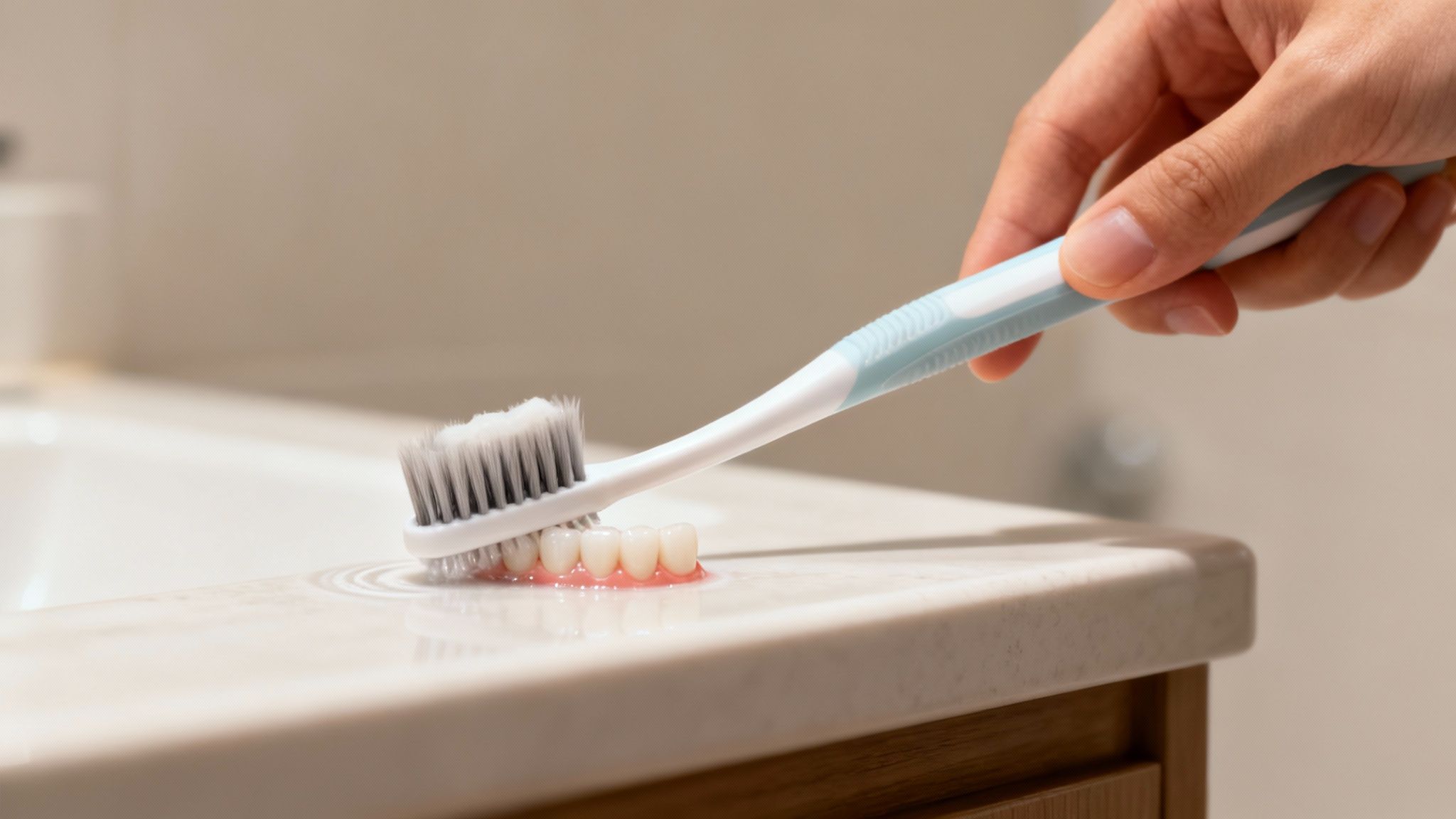
Your toothbrush is your primary weapon against plaque, but only if you use it correctly. Many people brush too hard, thinking more pressure means a deeper clean. In reality, that approach can damage both your enamel and your delicate gum tissue.
Let's get it right:
- Pick the Right Tool: Always use a soft-bristled toothbrush. Medium or hard bristles are too abrasive and can contribute to bleeding and gum recession over time.
- Get the Angle Right: Hold your brush at a 45-degree angle to your gums. This is the sweet spot that allows the bristles to gently sweep just below the gumline where plaque loves to accumulate.
- Switch to Gentle Circles: Ditch the back-and-forth scrubbing. Instead, use short, gentle, circular or oval motions to dislodge plaque without hurting your gums.
- Be Thorough, Not Fast: It’s a marathon, not a sprint. Aim for at least two minutes, making sure you hit every surface—the outside, inside, and chewing surfaces of each tooth.
If you’re prone to heavy-handed brushing, an electric toothbrush with a built-in pressure sensor can be a game-changer. It will alert you instantly if you’re pushing too hard.
The Art of Flossing Without Trauma
Flossing is non-negotiable for healthy gums. It’s how you clean the 35% of your tooth surfaces that a brush can't reach. But snapping the floss down into your gums will cause pain and bleeding. The secret is to be deliberate.
Here’s how we teach our patients to floss effectively:
- Start with about 18 inches of floss. Wrap most of it around one middle finger and a little around the other.
- Gently guide the floss between your teeth with a careful rubbing motion. If it’s tight, don’t force it.
- Once you reach the gumline, curve the floss into a “C” shape against one tooth.
- Carefully slide it into the space between your gum and the tooth until you feel gentle resistance.
- Now, gently rub the side of the tooth, moving the floss away from the gum to pull the plaque out.
- Lift the floss out, unspool a clean section, and repeat on the adjacent tooth before moving on.
This technique is essential for reversing gingivitis because it cleans below the gumline where the most harmful bacteria thrive. To explore different options, check out our guide on how to use dental floss, including its various types and materials.
A little bleeding when you first get back into a consistent flossing routine is quite common. It should stop within a week or so as your gums get healthier. If it doesn’t, that’s your cue to schedule an appointment.
Enhance Your Routine With Additional Tools
Brushing and flossing are the cornerstones, but a few other tools can give your gums extra support, especially when they're sensitive.
- Antiseptic Mouthwash: A good alcohol-free, antiseptic mouthwash can help reduce the amount of bacteria in your mouth, control plaque, and soothe irritated gums. Look for one specifically formulated for gum health.
- Water Flossers: These devices, also called oral irrigators, use a pulsating stream of water to flush out plaque and food from between teeth and under the gumline. They're a fantastic, gentle option for people with very sensitive gums, bridges, or braces.
- Tongue Scrapers: You’d be surprised how much bacteria your tongue harbors. Scraping it daily reduces the overall bacterial load in your mouth, which contributes to better breath and a healthier environment for your gums.
For a deeper dive, there are some great tips to optimize your oral health and home care routine available that cover everything from mouthwash to flossing. Ultimately, consistency is what matters most. Committing to these gentle practices every day will make a huge difference in reducing gum bleeding and put you on the path to long-term oral wellness.
Knowing When You Need a Dentist's Help
A solid home care routine is your best defense against bleeding gums, but even with perfect daily habits, some situations require a professional eye. The key is knowing the difference between a minor, temporary flare-up and a sign of a deeper problem that could affect your long-term health.
While you can often reverse early-stage gingivitis at home, you cannot do the same for its more advanced stage, periodontitis. This is a serious form of gum disease where the infection attacks the bone and tissues holding your teeth in place. It's a critical distinction because once this damage begins, you need professional intervention to halt its progression and prevent tooth loss.

Red Flags That Mean It's Time for a Dental Visit
Think of your gums as sending out an S.O.S. If you've been brushing, flossing, and rinsing diligently but the bleeding hasn't improved—or has even worsened—that’s a clear signal your body needs professional help.
Here are the specific warning signs that mean it's time to book an appointment:
- Bleeding for More Than a Week: If you’ve improved your oral hygiene and the bleeding persists after seven to ten days, home care isn't enough.
- Swollen, Tender, or Bright Red Gums: Healthy gums are firm and pale pink. If yours are puffy, sensitive to the touch, or an angry red, this points to significant inflammation.
- Receding Gums: Do your teeth look longer than they used to? That's a classic sign of gum recession, often driven by advancing gum disease.
- Bad Breath That Won't Quit: Persistent bad breath or a bad taste that lingers even after brushing can be caused by bacteria hiding in deep gum pockets.
- Loose or Shifting Teeth: This is a major red flag. It means the underlying bone supporting your teeth is compromised, and you need to see a dentist immediately.
Ignoring these symptoms is not an option. Periodontal disease is a growing health issue worldwide, with cases jumping by over 76% between 1990 and 2021. This alarming trend underscores just how important early detection and professional treatment are. You can dive into the full research on periodontal disease incidence to see the global trends for yourself.
What to Expect During Your Dental Visit
I know that visiting the dentist, especially when you know something is wrong, can feel nerve-wracking. Here at Serena San Diego Dentist, our first job is to make you feel comfortable and understood. We'll start with a thorough but gentle exam to get to the source of your bleeding gums.
Your visit will most likely include:
- A Professional Cleaning: Our hygienists will meticulously remove the hardened plaque—what we call tartar or calculus—that your toothbrush can't reach. This step alone often makes a huge difference in reducing gum inflammation.
- Measuring Gum Pockets: We use a tiny, specialized ruler to measure the space between your teeth and gums. Deeper pockets are a tell-tale sign of gum disease progression.
- Creating a Personal Treatment Plan: Once we have the full picture, we’ll discuss the next steps. For many patients, a good cleaning and some adjustments to their home routine are all that's needed.
When a Deeper Cleaning Is Required
Sometimes, we find signs of more advanced gum disease, like deep gum pockets and significant tartar buildup below the gumline. In these cases, we'll likely recommend a procedure called scaling and root planing.
You may have heard it called a "deep cleaning," and it's the gold standard for treating periodontitis. It's a two-part process:
- Scaling: We carefully clean away all the plaque and tartar from above and—most importantly—below the gumline.
- Root Planing: We then gently smooth the surfaces of the tooth roots. This makes it harder for new bacteria to attach and helps your gums heal and reattach more firmly to your teeth.
This treatment is essential for stopping gum disease in its tracks and preventing further damage. To get a better idea of what's involved, we invite you to learn more about when you might need a deep dental cleaning on our blog. Our team is here to guide you through every step, ensuring your treatment is both effective and comfortable.
Long-Term Strategies for Healthy Gums
Stopping your gums from bleeding in the moment is a good start, but the real victory is preventing it from happening again. Think of it less as a quick fix and more as building a solid foundation for your health. True, long-term gum wellness is about creating sustainable habits that go far beyond your bathroom sink.
It’s about combining consistent daily care, regular professional support, and smart lifestyle choices that all work together to keep your gums strong and resilient.
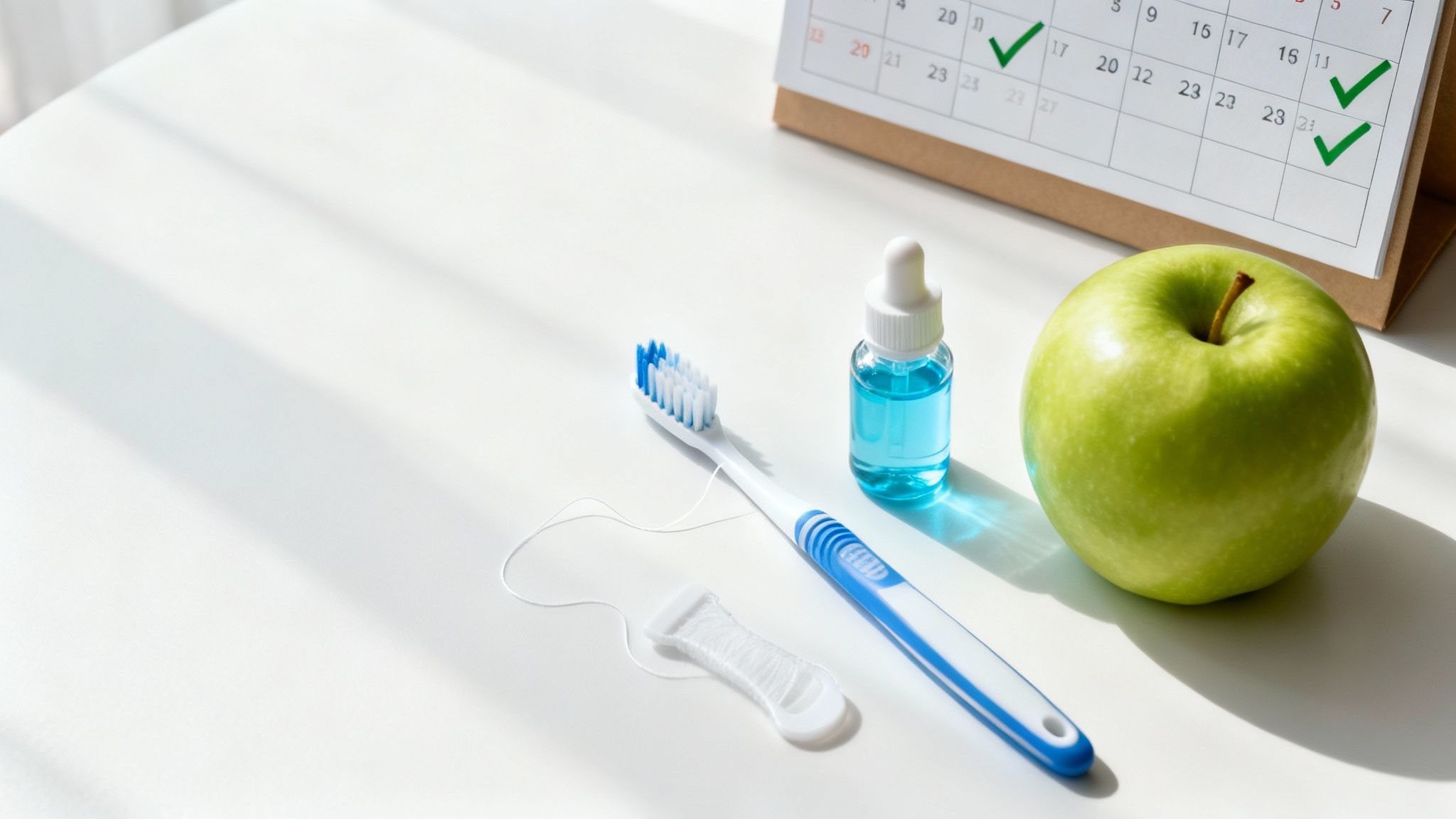
This isn't just about avoiding problems; it's about proactively building a genuinely healthy smile that lasts a lifetime.
Don't Skip Your Professional Cleanings
Your daily brushing and flossing are your first line of defense, but even the best home routine can't do it all. Plaque is sneaky. It eventually hardens into tartar, and once that happens, only a dental professional can remove it. That's why your regular check-ups are non-negotiable for keeping your gums healthy for the long haul.
Treat your six-month cleaning and exam as an essential part of your overall health regimen—no different than an annual physical. During these visits, our team at Serena San Diego Dentist will:
- Remove stubborn tartar that fuels inflammation and bleeding.
- Spot the early warning signs of gingivitis before they can turn into something more serious.
- Offer personalized tips to help you fine-tune your home care routine, making it even more effective.
Connect the Dots: Lifestyle and Gum Health
Your oral health is a surprisingly accurate mirror of your overall well-being. Several lifestyle factors can have a huge impact on your gums' ability to fight off infection and heal properly.
The Impact of Smoking on Gums
If there's one major risk factor for gum disease, it's smoking. It cripples your immune system, making it much harder to fend off plaque bacteria. At the same time, it reduces blood flow to your gums, which dramatically slows down healing. Quitting is one of the single best things you can do for the health of your mouth.
How Stress Affects Your Gums
Chronic stress wears down your entire body, and your mouth is no exception. High levels of cortisol—the stress hormone—increase inflammation and weaken your immune defenses. This leaves your gums vulnerable to bacterial attack. Finding healthy outlets for stress, whether it's exercise, meditation, or a favorite hobby, can directly benefit your gum health.
A strong immune system is paramount for preventing and combating infections, including those that can lead to bleeding gums. Consider incorporating essential vitamins for immune support into your routine.
Eat for a Healthier Smile
What you put on your plate plays a vital role in building and maintaining strong gum tissue. A diet packed with the right vitamins and minerals gives your body the tools it needs to fight off inflammation and infection from the inside out.
For happy, healthy gums, make sure you're getting plenty of these:
- Vitamin C: This is essential for producing collagen, the protein that keeps your gum tissue firm. You'll find it in citrus fruits, bell peppers, and broccoli.
- Vitamin K: Crucial for proper blood clotting, Vitamin K is abundant in leafy greens like spinach and kale.
- Crunchy Fruits and Veggies: Think apples, carrots, and celery. They act like natural toothbrushes, helping to scrub away plaque while stimulating your gums.
When you adopt these long-term strategies, you're making a fundamental shift. You're moving from just reacting to bleeding gums to proactively building a system of care that will support a lifetime of healthy smiles.
Got Questions About Bleeding Gums? We’ve Got Answers.
Even with all this information, you might still have a few questions. That's completely normal. Here are some of the most common things our patients in San Diego ask us about their bleeding gums.
Can Stress Really Make My Gums Bleed?
Absolutely. It’s not just in your head. When you’re under a lot of stress, your body produces more cortisol, a hormone that can weaken your immune system. This makes it much harder for your body to fight off the plaque bacteria causing your gums to become inflamed and bleed.
Additionally, stress can lead to habits like teeth grinding (bruxism) or letting your oral hygiene slide when you're overwhelmed. Finding ways to manage your stress isn't just good for your mental health; it's a crucial part of keeping your gums healthy.
Is It Normal to Bleed When I First Start Flossing Again?
Yes, this is incredibly common. If it's been a while, expect to see a little pink in the sink for the first few days. You're cleaning out bacteria from areas that have been neglected, and the already-inflamed tissue will be sensitive.
But here’s the key: that bleeding should stop within about a week of consistent, gentle flossing. If it’s still happening after seven to ten days, or if the bleeding seems heavy, that's your cue to give us a call. It's a sign that something more than just initial inflammation is going on.
Are Electric Toothbrushes Better for Bleeding Gums?
They can be a game-changer. Many people cause gum irritation simply by brushing too hard. A key feature of most modern electric toothbrushes is the built-in pressure sensor—it will alert you or even stop pulsating if you’re pressing too hard.
The oscillating heads are also fantastic at removing plaque efficiently without you having to scrub. Just remember to use a soft-bristled head. Your only job is to guide the brush along your teeth and let it do the work for you.
Ready to figure out exactly why your gums are bleeding and get on the path to a healthier smile? The team here at Serena San Diego Dentist is ready to help with personalized, expert care. You can schedule your consultation with us today and get the answers you need.