Picture this: you walk into our San Diego dental office with a nagging chip or a stubborn stain on your tooth. In about an hour, you walk out with a seamless, confident smile. That's not science fiction—it's the reality of tooth bonding in San Diego, one of the fastest and most effective ways to make immediate cosmetic fixes. We're here to guide you through this simple yet transformative procedure.
Transform Your Smile in a Single Visit
In a place like San Diego, feeling good about your smile is a big deal. Whether you're heading into a big meeting downtown or just enjoying a weekend at La Jolla Shores, you want to feel your best. Little things like small gaps, chips, or discoloration can make you feel self-conscious, but you might not want or need a major dental overhaul.
That’s exactly where dental bonding comes in. Think of it as the perfect entry point into cosmetic dentistry—it delivers fantastic results without the commitment or invasiveness of other procedures.
The Power of an Instant Upgrade
So, what is tooth bonding? At its core, it's a cosmetic treatment where we apply a tooth-colored composite resin—a tough, durable material—directly onto your tooth. As your dentist, I carefully sculpt it to fix the imperfection, then cure and polish it with a special light. The resin literally "bonds" to your tooth, creating a strong, natural-looking fix.
Here’s why so many of our San Diego patients love it:
- It's Fast: This is one of the quickest cosmetic treatments available. Most appointments take just 30 to 60 minutes per tooth. You can pop in on your lunch break and leave with a transformed smile. It’s no wonder bonding is so popular in communities from La Jolla to Clairemont Mesa. For a deeper look into quick fixes, check out these insights on fast dental bonding services in San Diego.
- It's Conservative: Unlike veneers or crowns, bonding typically requires little to no removal of your original tooth enamel. We’re adding to your tooth, not taking away from it. This makes it a less invasive and often reversible choice.
- It's Affordable: Bonding is one of the most budget-friendly cosmetic dental procedures out there, putting a better smile within reach for more people.
The speed and simplicity make it a perfect fit for the busy San Diego lifestyle. While bonding is fantastic for smaller cosmetic issues, it’s not the answer for everything. For more significant damage, we might recommend a more durable solution. For instance, our guide on single-visit dental crowns explains how we can restore a heavily compromised tooth in just one appointment.
Understanding the Tooth Bonding Process Step by Step
So, what actually happens when you come into our San Diego office for tooth bonding? Let's pull back the curtain. The best way to think about it is to picture your dentist as a sculptor, carefully and meticulously restoring a piece of art—your tooth. It’s a comfortable and surprisingly quick blend of science and artistry, and we make sure there are no surprises along the way.
The whole thing is pretty straightforward. In most cases, we can get it all done in a single visit, often taking less than an hour for each tooth. We break the process down into a few key stages to guarantee a repair that not only looks natural but is built to last.
Step 1: Shade Selection and Tooth Preparation
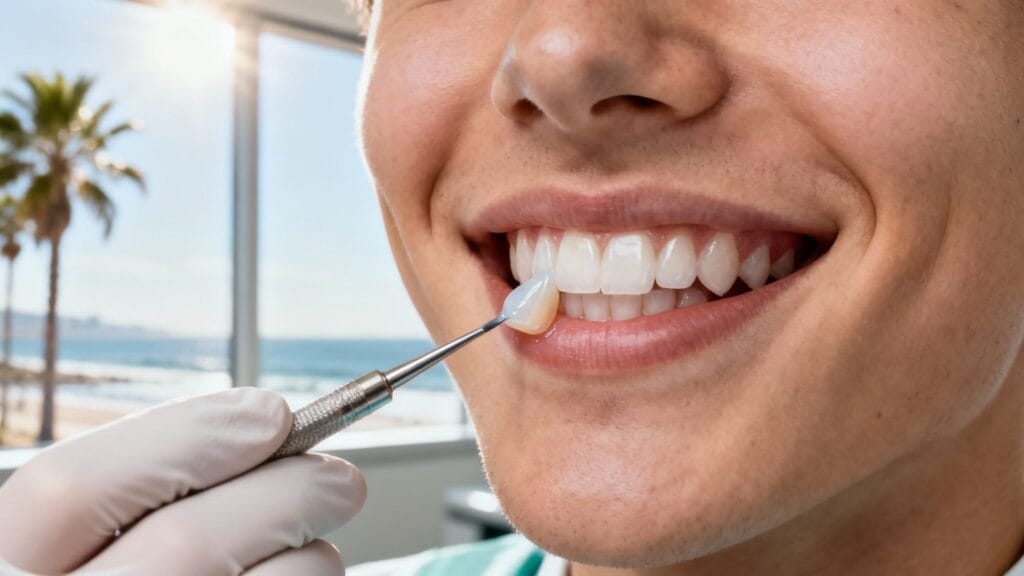
First things first, we need to get the color just right. This is probably one of the most critical parts of making the final result look seamless. We'll use a shade guide to find the perfect match between the composite resin and your natural teeth. This touch of artistry is what makes the bonded spot completely invisible.
Once we've nailed down the shade, we get the tooth ready. This involves gently roughening the surface enamel with a special tool. Why? It creates a better surface for the bonding agent to grip onto, kind of like sanding wood before you paint it. This part is incredibly gentle and usually requires no anesthesia, which is a big plus for most patients.
Step 2: Applying the Bonding Agent
With the tooth prepped, we apply a conditioning liquid. This acts like a primer, setting the stage for a super-strong connection between your tooth and the resin. It’s a quick but vital step that creates the foundation for a restoration that will hold up for years.
This adhesive base is what will keep the new material locked in place. It only takes a moment, but it’s a non-negotiable step for successful tooth bonding in San Diego.
The whole point of preparing and conditioning the tooth is to create the perfect surface for the composite resin to "grab onto." This microscopic etching allows the material to form a powerful mechanical bond with your natural tooth, making it incredibly durable.
Step 3: Sculpting the Composite Resin
Now for the fun part—the sculpting. We apply the tooth-colored composite resin, which has a consistency like putty, directly onto your tooth. This is where Dr. Serena’s skill comes into play, as she carefully shapes and molds the material to look just right.
Whether we’re fixing a chip, closing a gap, or changing a tooth's shape, we work the resin to match the exact contours of your smile. We build it up layer by layer until it looks perfect. This is where attention to detail makes all the difference. If you're curious about how this material is used for more extensive makeovers, check out our guide on composite veneers.
Step 4: Curing and Final Polishing
Once the resin is shaped perfectly, we use a special curing light to harden it. This high-intensity blue light is aimed at the tooth for just a few seconds, and it instantly solidifies the material, bonding it securely to the tooth. If we’re building up a larger repair, we'll repeat this step with each layer.
Finally, we add the finishing touches. Dr. Serena will trim any excess material, fine-tune the shape, and polish the surface until it has the same natural sheen as your other teeth. This last step gives the restoration its smooth, glossy look, making it blend right in. You’ll walk out of our office ready to smile, with your tooth looking good as new.
Could Tooth Bonding Be Right for You?
Dental bonding is a powerful tool in our cosmetic dentistry toolkit, but the real question is whether it's the right tool for your smile. It truly shines when we're correcting those minor-to-moderate imperfections that catch your eye in the mirror. Figuring out if you're a good candidate is the first, most important step toward getting a result you'll love.
Think of tooth bonding as the perfect solution for people who want a quick, minimally invasive fix for surface-level issues. It’s an amazing way to see a big improvement without the time and financial commitment of procedures like veneers or crowns.
A Checklist for Ideal Candidates
So, are you wondering if tooth bonding in San Diego could be your answer? Let's run through a quick checklist of the exact problems bonding handles beautifully.
- Minor Chips or Cracks: Got a small, annoying chip on the edge of a front tooth? Bonding is an excellent, budget-friendly way to make it look whole again.
- Small Gaps Between Teeth: If you have a slight gap (what dentists call a diastema) that you'd rather not see, we can use bonding to artfully close it for a seamless look.
- Stubborn Discoloration: Sometimes, a single tooth has a stain that just won't budge with professional whitening. Bonding can cover that spot with a perfectly matched shade.
- Uneven Tooth Length or Shape: We can use bonding material to sculpt a slightly misshapen tooth or add just enough length to a short one, creating a much more balanced and symmetrical smile.
This chart lays out the simple, straightforward steps we take during a bonding appointment.
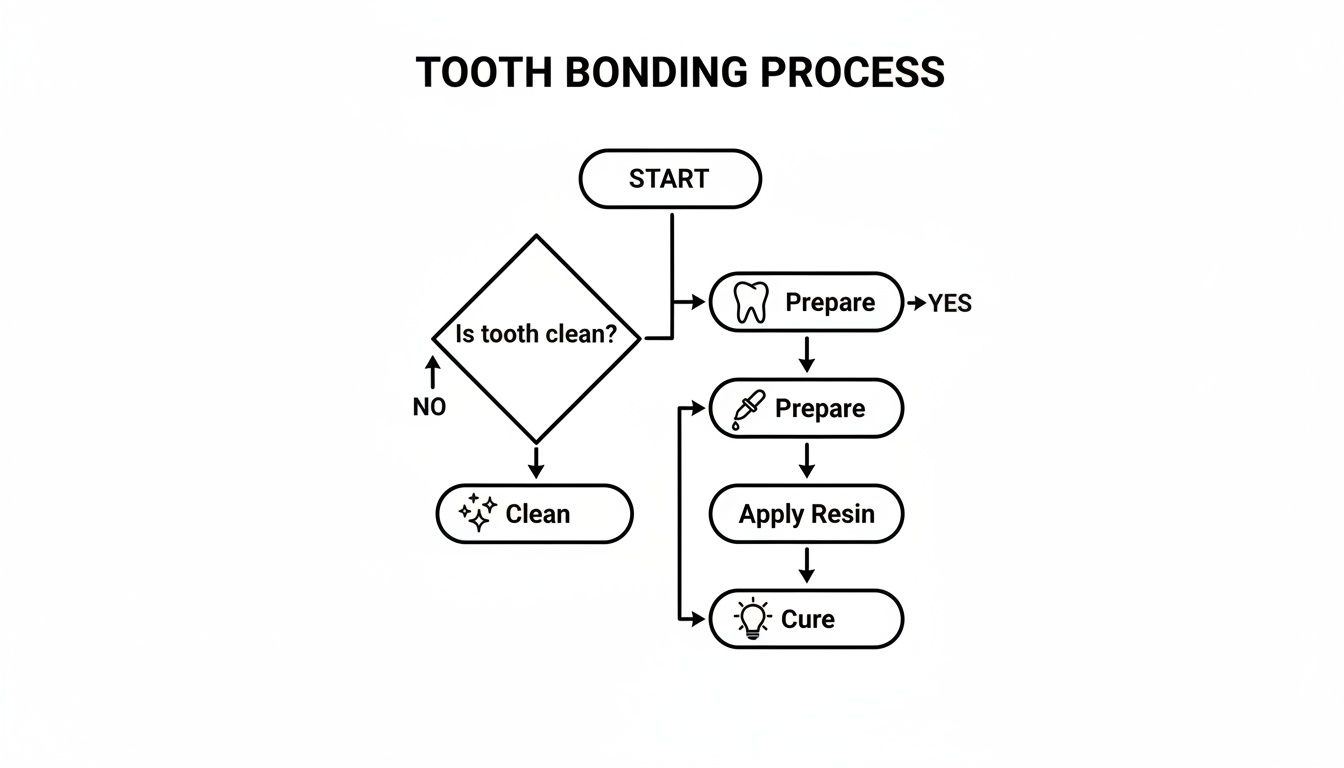
The main thing to notice here is how conservative the process is. We're focused on adding to your tooth, not taking away its healthy structure.
When Another Treatment Might Be Better
We believe in being upfront and honest with our patients. While bonding is a fantastic option for many, some situations call for a more durable, long-term solution.
We'll likely suggest an alternative to bonding if you have:
- Major Structural Damage: If a tooth has a large crack or significant decay, a dental crown is the only way to give it the strength and protection it needs to survive.
- Heavy Grinding Habits (Bruxism): The composite resin used in bonding is strong, but it can chip or wear down under the intense pressure of teeth grinding. A tougher material like porcelain, used in veneers or crowns, would hold up much better.
- A Desire for a Full Smile Makeover: When someone wants to completely transform the color and shape of all their front teeth, porcelain veneers usually deliver a more comprehensive and stain-resistant result.
Because bonding preserves so much of your natural tooth compared to crowns or even some veneer preps, it’s become a go-to cosmetic choice. This is especially true for younger adults who want to fix chips or gaps but aren't ready for more invasive treatments. As explained on this dental resource page, this conservative approach is a huge part of its appeal.
Ultimately, the only way to know for sure is to come in for a chat. We can take a look at your teeth, listen to your goals, and figure out the absolute best path to the healthy, confident smile you deserve.
Comparing Bonding With Veneers, Crowns, and Whitening
When you start looking into cosmetic dentistry here in San Diego, it's easy to feel a little overwhelmed by all the choices. Tooth bonding is a fantastic and popular option, but it’s just one of several tools we use to perfect smiles. So, how does it really stack up against other treatments like porcelain veneers, dental crowns, or a simple professional whitening?
Getting a handle on the key differences is the first step toward figuring out what you truly want for your smile. Each of these procedures is designed to solve different types of problems, and they all come with their own price points, timelines, and levels of durability. Bonding is often the perfect answer for quick, conservative fixes, whereas veneers and crowns are built for more dramatic, long-term transformations.
Let's dive in and compare them.
Tooth Bonding: A Quick and Artistic Fix
Think of tooth bonding as an artistic touch-up for your smile. We use a tooth-colored composite resin, which is skillfully sculpted right onto your tooth to hide minor flaws. It's all about precision and artistry.
- Best For: Fixing small chips, closing those little gaps between teeth, covering a stubborn stain on one tooth, or reshaping a tooth that's just a bit out of line.
- Process: It’s a one-and-done deal. We can usually get it done in a single visit, often in under an hour for each tooth.
- Invasiveness: This is one of its biggest selling points—it’s incredibly conservative. We almost never have to remove any of your natural tooth enamel.
- Durability: With good care, you can expect bonding to last anywhere from 3 to 10 years.
Because it's so fast and affordable, bonding is a go-to choice for anyone wanting to see immediate cosmetic results without a huge commitment.
Porcelain Veneers: A Comprehensive Smile Makeover
Porcelain veneers, on the other hand, are all about a total transformation. These are ultra-thin, custom-crafted shells of high-quality ceramic that we bond to the front of your teeth, essentially giving you a brand-new smile.
- Best For: Correcting several issues at once. Think significant discoloration, crookedness, larger gaps, or creating a uniform, beautiful look across all your front teeth.
- Process: This is a two-step process. Your first visit is for preparing the teeth and taking precise impressions, and the second is when we permanently place your new veneers.
- Invasiveness: We do have to remove a very thin layer of enamel. This is a crucial step to make sure the veneers sit flush and look completely natural, not bulky.
- Durability: Veneers are tough and incredibly stain-resistant. They often last 10 to 15 years or even longer.
If you’re dreaming of that "Hollywood smile" and want to fundamentally change the color, shape, and alignment of your teeth, veneers are almost always the best path forward. For a deeper dive, check out our guide on dental bonding vs. veneers.
Dental Crowns: A Protective Restoration
A dental crown plays a different role altogether. While it does have cosmetic benefits, its primary job is restorative. A crown is a full-coverage cap that encases the entire tooth, bringing back its strength and protecting it from further damage.
- Best For: Saving a tooth after a root canal, restoring a tooth with a huge cavity, holding a cracked tooth together, or covering a tooth that is severely misshapen.
- Process: It traditionally takes two visits, but with modern CEREC technology, we can often create and place a crown in a single appointment.
- Invasiveness: This is the most invasive of the three, as the tooth needs to be significantly reshaped to make room for the crown to fit over it.
- Durability: Crowns are built to last. They’re incredibly strong and can easily last 15 years or more.
Simply put, a crown is a health-first solution. We use it when a tooth's structure is at risk.
Teeth Whitening: A Brightening Foundation
Finally, we have professional teeth whitening. This is the most straightforward cosmetic treatment, designed purely to lift stains and lighten the shade of your natural teeth.
- Best For: Tackling general yellowing or staining that comes from coffee, tea, red wine, or just the natural aging process.
- Process: Quick and easy. It can be done in our office in about an hour or with professional-grade take-home kits that you use over a couple of weeks.
- Invasiveness: Totally non-invasive. The whitening agent only works on the surface enamel of your teeth.
- Important Note: Whitening gels only work on natural tooth enamel—they won't change the color of bonding resin, veneers, or crowns. This is why we always recommend whitening your teeth before any restorative work so we can match your new bonding or crown perfectly to your brighter, whiter smile.
Cosmetic Dental Treatments at a Glance
Trying to decide which path is right for your smile goals can be tricky, so we've put together this simple table to help you compare the most common cosmetic dental procedures side-by-side.
| Feature | Tooth Bonding | Porcelain Veneers | Dental Crowns | Teeth Whitening |
|---|---|---|---|---|
| Primary Goal | Minor cosmetic repairs | Full smile makeover | Restore strength & function | Brighten natural tooth color |
| Treatment Time | 1 visit (30-60 mins/tooth) | 2+ visits | 1-2 visits | 1 visit or take-home kit |
| Durability | 3-10 years | 10-15+ years | 15+ years | Results vary; touch-ups needed |
| Cost | Most affordable | Higher investment | Highest investment | Very affordable |
| Invasiveness | Minimal to none | Conservative enamel removal | Significant enamel removal | Non-invasive |
| Stain Resistance | Prone to staining over time | Highly stain-resistant | Highly stain-resistant | Re-staining is possible |
Ultimately, the best choice depends entirely on your unique situation, budget, and what you hope to achieve. During your consultation, we can walk through these options and find the perfect fit for you.
How to Care for Your Bonded Teeth
So, you've got your beautiful new smile—now, how do you keep it looking that good? Protecting your investment is actually pretty straightforward. With just a few simple habits, you can keep your bonded teeth looking fantastic for years to come.
Think of it as a simple maintenance routine for your upgraded smile. The composite resin we use is quite durable, but it's not invincible. A little bit of TLC goes a long way in preventing chips and stains.
Daily Oral Hygiene Habits
Good daily care is your first line of defense. The key here is to be thorough but gentle, so you don't accidentally scratch or dull that polished resin surface.
- Brush Gently: Always use a soft-bristled toothbrush. Medium or hard bristles are too aggressive and can create tiny scratches on the bonding material over time.
- Choose the Right Toothpaste: Stick with non-abrasive toothpastes. Avoid anything with harsh whitening agents or a gritty texture that can wear down the resin's smooth finish.
- Floss Daily: This is non-negotiable. Flossing gets rid of the plaque that loves to hide around the edges of the bonding, which helps prevent new decay and keeps your gums healthy.
Following these simple steps will keep your natural teeth and your new bonding work in great shape.
Lifestyle and Dietary Tips
It's amazing how much your daily habits affect your teeth. What you eat and how you use your teeth play a huge part in how long your bonding will last.
The composite material can pick up stains, especially in the first 48 hours after the procedure while it fully cures. To keep your smile bright, it's a good idea to limit things like coffee, tea, red wine, and even dark sauces like soy sauce or marinara. If you're curious about what else can cause staining, our guide on what causes tooth discoloration has more great info.
A good rule of thumb is to treat your bonded teeth like you would your natural teeth—but with a little extra caution. Don't use them as tools to rip open packages, and try to avoid biting down on super hard things like ice, pens, or jawbreakers.
The Importance of Regular Dental Check-Ups
Finally, one of the best things you can do is keep up with your regular check-ups here at our San Diego office. These visits give us a chance to professionally check on your bonding and catch any small issues before they become bigger problems.
During your cleaning, we can give your bonded teeth a professional polish to buff away any minor surface stains and bring back that original luster. If we spot any tiny chips or signs of wear, we can often do a quick and easy touch-up on the spot. Think of these appointments as your best insurance policy for keeping your bonding strong, intact, and looking great for the long haul.
Why San Diegans Choose Us for Dental Bonding
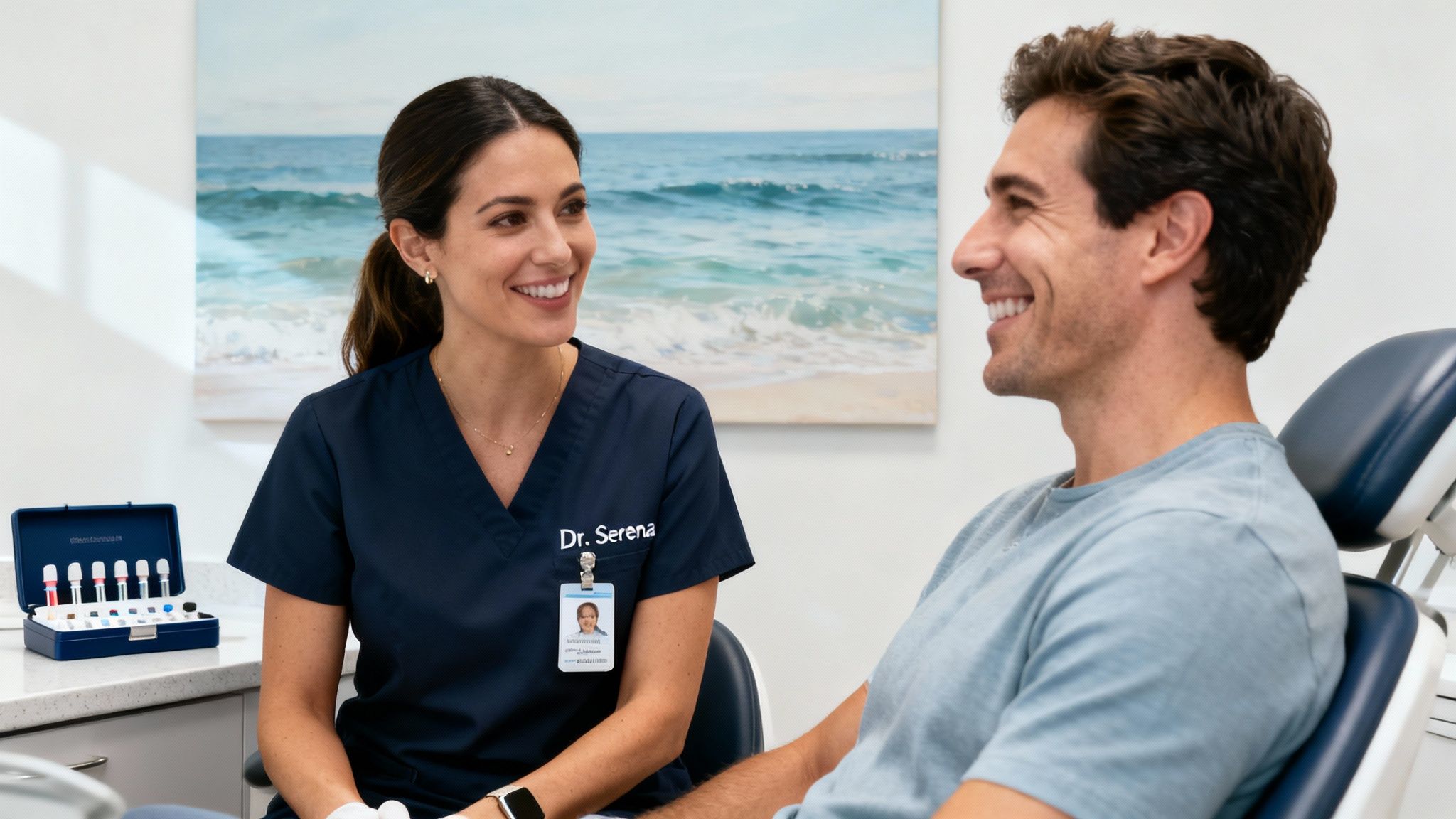
When it comes to your smile, choosing the right cosmetic dentist is everything. It's the most important decision you'll make. Patients from all over San Diego, from Clairemont Mesa to La Jolla, trust Serena San Diego Dentist for one simple reason: we believe bonding is more than just a procedure—it’s an art form.
Our entire approach blends artistic detail with proven dental science. Dr. Serena brings a meticulous eye for aesthetics, much like a sculptor, to ensure every single bonded tooth looks and feels like it’s always been there.
A Commitment to Quality and Precision
Exceptional results don't happen by accident; they start with the best materials. We exclusively use high-quality, durable composite resins that are hand-picked to perfectly match the unique shade and translucency of your natural enamel. This focus ensures your tooth bonding in San Diego is not only beautiful but also built to last.
Our clinic is outfitted with modern technology that allows for incredibly precise application and curing. What does that mean for you? A stronger, more seamless bond. This combination of artistry and technology is what we're known for. For other businesses looking to connect with their local community, a comprehensive local SEO guide for small businesses can be a great resource for boosting online visibility.
Patient Success Story: "I had a chip in my front tooth for years and was always self-conscious about it. Dr. Serena fixed it with bonding in under an hour, and I honestly can’t even tell where the chip was. It looks completely natural. The whole team made me feel so comfortable." – Jessica P., a satisfied patient from La Jolla.
Making World-Class Care Accessible
Getting the smile you've always wanted shouldn't be a source of financial anxiety. We're passionate about making top-tier cosmetic dentistry accessible for everyone in our community.
- Insurance Friendly: We proudly accept most major PPO insurance plans. Our team is fantastic at helping you understand and get the most out of your benefits for any covered services.
- Flexible Payment Options: For any out-of-pocket costs, we provide flexible payment solutions and financing plans designed to fit your budget. You shouldn't have to wait for the care you need.
Your journey to a brighter, more confident smile begins with a simple, no-pressure conversation. Come in and experience the Serena San Diego Dentist difference for yourself.
Ready to see what tooth bonding can do for your smile? Schedule your complimentary consultation with us today! We’ll sit down, discuss your goals, and map out a personalized plan to get you there.
Common Questions About Tooth Bonding
Making a good decision about your smile is a big deal. To help you out, we’ve put together the questions we hear most often from our San Diego patients about tooth bonding. Here are some clear, straight-up answers to help you know what to expect.
How Much Does Tooth Bonding Cost in San Diego?
One of the best things about tooth bonding is that it's much easier on the wallet than bigger cosmetic procedures like veneers or crowns. The final price tag here in San Diego really depends on how many teeth you're having done and how much work each one needs.
We'll always give you a specific, personalized quote during your consultation, but it’s safe to say bonding is one of the most budget-friendly ways to get a major cosmetic boost.
Here at Serena San Diego Dentist, we want great dental care to be within reach. We work with most major PPO insurance plans, and they might cover part of the cost, especially if it's fixing a structural issue. We also have flexible financing options to make sure your new smile doesn't break the bank.
Is the Tooth Bonding Procedure Painful?
Not at all. For almost every single patient, the tooth bonding procedure is completely painless. Since we're just working on the surface of your tooth, it’s about as non-invasive as it gets.
We almost never need to use anesthesia unless we're also filling a cavity at the same time. The first step just involves lightly roughening the tooth enamel, which feels more like a quick polish than anything uncomfortable. Most of our patients are surprised by how comfortable and easy the whole process is.
The comfort of tooth bonding is a huge reason it’s so popular. Patients can get a fantastic cosmetic result without the stress that comes with more intensive dental work. It's often a perfect first step into cosmetic dentistry.
How Long Does Dental Bonding Last?
If you take good care of it, you can expect your dental bonding to last anywhere from 3 to 10 years. How long it holds up really comes down to a few key things.
Your daily oral hygiene, what you eat and drink, and where the bonding is placed all play a role. For instance, bonding on your front teeth—which don't take a lot of chewing pressure—will usually last longer than bonding on a molar's biting surface.
Regular check-ups are key to getting the most life out of your bonding. During your visits, we can keep an eye on it, polish away any new stains, and do minor touch-ups to keep it looking great for years to come.
Can I Whiten My Bonded Teeth?
This is a really important question, and something you need to know before we start. The composite resin we use for bonding does not respond to whitening treatments like your natural tooth enamel does. If you try to whiten your teeth after you have bonding, the bonded spot will stay its original color, creating a very obvious mismatch.
Because of this, we always recommend getting professional teeth whitening before your bonding appointment. That way, we can match the composite resin to your newly brightened smile perfectly, giving you a seamless, beautiful result. If your bonded tooth starts to look stained down the road, we may need to polish it or replace the material to get it back to its original shade.
Ready to fix those small imperfections and get the smile you’ve been wanting? The team at Serena San Diego Dentist is here to walk you through your options in a personalized, no-pressure consultation. Visit us at https://serenasandiegodentist.com to book your appointment today.