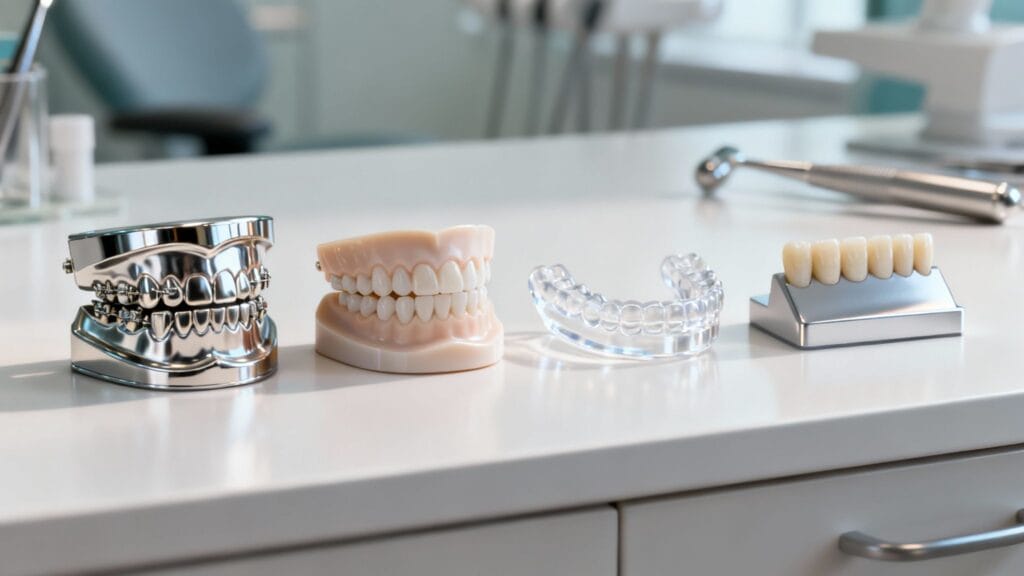
It's no secret that adult orthodontics is more popular than ever. Getting your teeth straightened as an adult isn't a rare thing anymore—it’s a common step people take to get a healthier, more confident smile. With options ranging from nearly invisible clear aligners to other discreet braces, treatment fits into an adult lifestyle much more easily these days.
Let's dive into the best solutions available right here for adults in sunny San Diego.
Why More Adults Are Investing in a Straighter Smile
Deciding to straighten your teeth as an adult is about so much more than just looks. It's a genuine investment in your long-term dental health and, just as importantly, your self-confidence. We live in a very visual world, filled with video calls and social media, where a great smile can be a real asset both personally and professionally. Adults I see in my San Diego practice are leading busy lives and understand that fixing their smile can make a big difference in how they present themselves.
The Real Reasons for Adult Orthodontics
While looking good is a huge plus, the health benefits are often what really drive the decision. When your teeth are properly aligned, they're simply easier to clean. That means less risk for plaque buildup, cavities, and gum disease down the road. Fixing a bad bite can also relieve jaw pain, stop teeth from wearing down unevenly, and just make everything work better.
Here’s what typically motivates people:
- A Major Confidence Boost: A straight smile can be a game-changer for your self-esteem, whether you're in a meeting or out with friends.
- Better Oral Health: Straight teeth make brushing and flossing far more effective, leading to healthier gums and fewer dental headaches.
- Long-Term Durability: Correcting alignment can prevent future problems like TMJ pain and protect your teeth from premature wear and tear.
- Subtle Treatment Choices: Thanks to options like clear aligners and ceramic braces, the old social stigma of having a "metal mouth" is pretty much gone.
The numbers really tell the story here. Did you know that about 32% of all orthodontic patients in the US and Canada are now adults? That number has jumped by over 40% in the last decade alone, with almost two million adults currently in treatment. You can find more on this trend in this detailed report. For any dental pros reading this, a great guide for dentists on marketing their services offers some excellent insights into connecting with this growing group of patients.
At the end of the day, the goal is a smile that not only looks fantastic but functions perfectly for the rest of your life. This guide will walk you through the various teeth straightening options for adults so you can find the perfect fit for your goals and lifestyle.
Comparing the Top Adult Teeth Straightening Methods
Thinking about straightening your teeth as an adult can feel like a huge decision, but it doesn't have to be overwhelming. The real first step is just understanding what’s out there. The "right" treatment for you really comes down to your lifestyle, what your teeth actually need, and what you’re most comfortable with. Thankfully, modern orthodontics is designed with adults in mind, focusing as much on discretion as on results.
Let's walk through the most common options available today, comparing them on the things that will actually matter in your day-to-day life.
This decision tree is a great starting point. It helps you map out your initial thoughts and clarifies if you're ready to take the next step toward a smile you love.
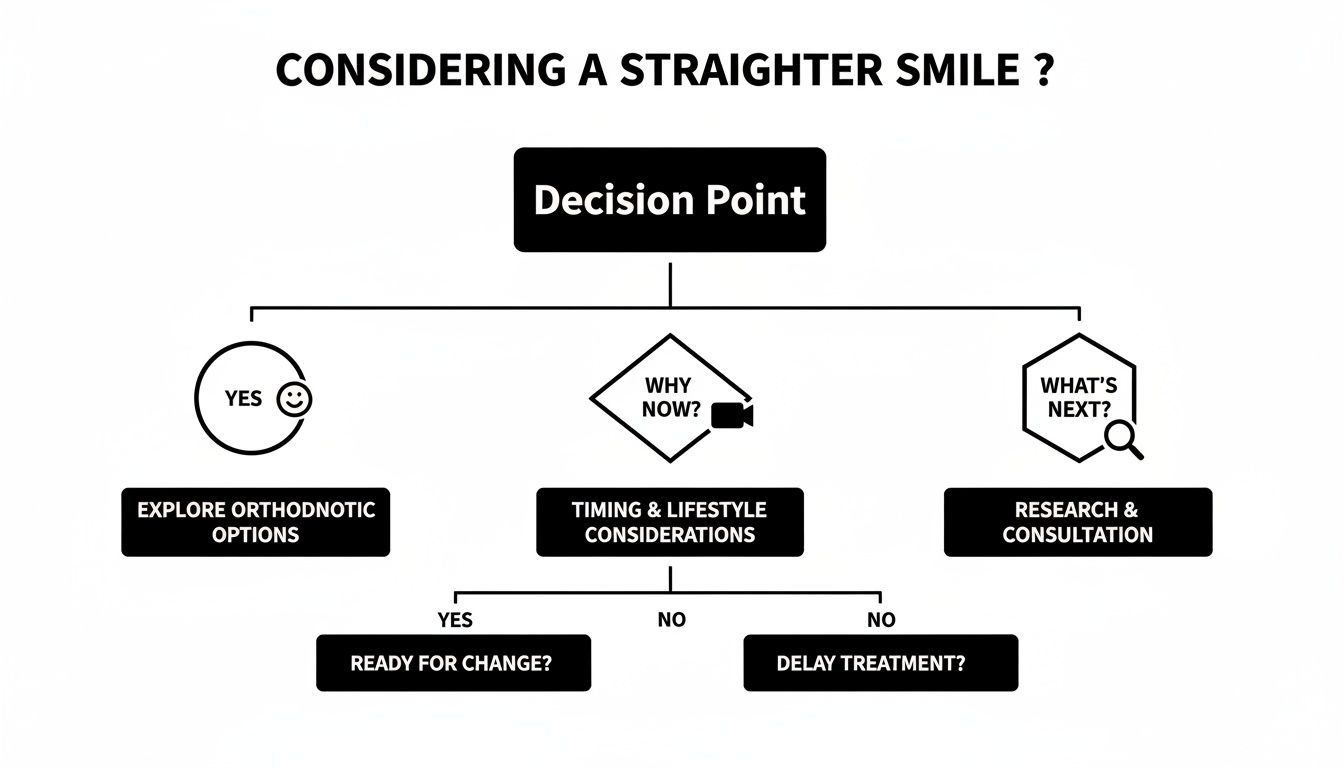
As you can see, the journey often starts with just deciding you want a change, then figuring out why that change is important to you before diving into the specifics.
At-a-Glance Comparison of Adult Orthodontic Treatments
Sometimes, seeing everything laid out side-by-side makes all the difference. This table offers a quick snapshot of the key differences between the most popular treatments we see adults choosing.
| Treatment Option | Best For | Visibility Level | Average Treatment Time | Lifestyle Impact |
|---|---|---|---|---|
| Traditional Metal Braces | Complex alignment, severe bite issues, budget-conscious patients. | High – Most noticeable option. | 18-24 months | Requires dietary adjustments; more demanding oral hygiene. |
| Ceramic & Lingual Braces | Patients needing the power of braces with more discretion. | Low to None – Ceramic is less visible; Lingual is hidden. | 18-24 months | Similar to metal braces, with lingual requiring extra cleaning effort. |
| Clear Aligners (e.g., Invisalign) | Mild to moderate crowding, spacing, and bite issues. | Very Low – Nearly invisible. | 12-18 months | Removable for eating and cleaning; requires discipline to wear 20-22 hours/day. |
| Restorative Alternatives (Veneers) | Purely cosmetic fixes for minor gaps, chips, or discoloration. | None (Cosmetic enhancement) | 2-3 weeks | Quick transformation; does not correct underlying bite issues. |
This comparison is a great starting point, but the real story is in the day-to-day experience with each of these options.
How Noticeable Will It Be? (Aesthetics and Discretion)
Let's be honest: for most adults, this is the big question. You have a career, a social life, and you don't necessarily want your orthodontic treatment to be the first thing people notice.
Traditional Metal Braces: These are what most people picture when they hear "braces." They're the most visible choice, no doubt about it. While today’s brackets are much smaller and sleeker than what you might remember from middle school, they are still front and center. They are workhorses, perfect when clinical results are the absolute top priority over looks.
Ceramic Braces: Think of these as the stealth version of traditional braces. They work in exactly the same way but use clear or tooth-colored brackets that blend in with your teeth. From a conversational distance, they're much harder to spot, making them a fantastic compromise.
Lingual Braces: This is the ultimate in discreet treatment. Lingual braces are bonded to the back of your teeth, facing your tongue. They're completely hidden from sight, offering the full power of traditional braces without anyone knowing they're there.
Clear Aligners: It's right there in the name—these are nearly invisible. Made from a thin, transparent plastic, these custom trays fit snugly over your teeth. For adults with mild to moderate alignment needs, this is often the go-to for a low-profile treatment.
What’s the Impact on Daily Life? (Comfort and Convenience)
Your orthodontic treatment shouldn't bring your life to a screeching halt. The way each option fits into your routine—from eating to brushing—varies quite a bit.
Clear aligners easily win the convenience award. Because you can pop them out, you have total freedom. Eat what you want, when you want. Brush and floss like normal. There are no wires or brackets to navigate.
Fixed options like metal, ceramic, and lingual braces demand a bit more of an adjustment period. You'll have a short list of foods to avoid—things that are super hard, sticky, or chewy—to prevent damaging your hardware. Cleaning also becomes a more involved process. You’ll get friendly with tools like water flossers and interdental brushes to get into all the nooks and crannies.
The Big Trade-Off: It boils down to this: responsibility vs. adaptation. Clear aligners need your discipline to wear them 20-22 hours every single day. Fixed braces do the work for you 24/7, but you have to adapt your habits to them.
How Long Will This Take? (Typical Treatment Timelines)
Everyone wants to know when they'll see their final smile. While your specific case determines the exact timeline, we can look at some solid averages.
Traditional & Ceramic Braces: Treatment time usually lands somewhere between 18 and 24 months. If you have very complex bite issues or significant tooth movements to make, it could take longer.
Lingual Braces: The timeline is very similar to their traditional cousins, averaging around 18 to 24 months as well.
Clear Aligners: This is often one of the faster routes for the right candidate. For mild to moderate cases, treatment frequently wraps up in 12 to 18 months.
Remember, these are just estimates. Your commitment to the process plays a huge role. With aligners, wearing them diligently is key to staying on track. With any option, making it to your scheduled appointments is what keeps the progress moving forward. To get a better sense of what a timeline might look for you, exploring the different orthodontics in San Diego, CA is a great next step.
Keeping Things Clean (Oral Hygiene Demands)
Keeping your teeth and gums healthy during treatment is absolutely critical. You want your new smile to be a healthy one, too.
With any kind of fixed braces, plaque has a lot more places to hide. Brushing thoroughly after you eat becomes a non-negotiable part of your routine to avoid staining or cavities from forming around the brackets.
Clear aligners make the act of cleaning simpler—just take them out and brush and floss as you always have. The trick here is making sure you never put your aligners back in over dirty teeth. Trapping plaque or sugary residue against your enamel is a recipe for trouble, so you have to be diligent about cleaning your teeth before popping the trays back in.
At the end of the day, there's no single "best" choice for everyone. The best option is the one that fits seamlessly into your life while delivering the beautiful, healthy smile you're looking for.
A Closer Look at Clear Aligner Technology
It's no secret that clear aligners have become the go-to choice for adults looking to straighten their teeth. This isn't just about hype; it's a fundamental shift in orthodontics. We've moved from fixed metal brackets to a flexible, nearly invisible solution that fits right into a busy, professional life. For adults who want a better smile without broadcasting their treatment to the world, aligners have been a game-changer.
There's a reason the clear aligner market is booming. Valued at over $2.4 billion in the U.S. alone, it’s seeing incredible growth as more adults discover this modern approach. This isn't just a market trend—it's proof of how effective and desirable this technology has become for achieving a straight smile without the look of traditional braces.
What’s the Process Like, From Start to Finish?
Getting started with clear aligners is all about precision digital technology—no more goopy, uncomfortable impression trays. The entire process is mapped out from the beginning, so you can see your future smile before you even put in your first tray.
Here’s a quick breakdown of what to expect:
- Digital Scan: We start with a high-tech 3D intraoral scanner to create a perfect digital map of your teeth. It’s fast, comfortable, and gives us an incredibly detailed model to work with.
- Custom Treatment Plan: Using that 3D model, we digitally plot the exact movement of every tooth from its starting point to its final, ideal position. You'll even get to see a simulation of how your smile will change over time.
- Making Your Aligners: Once the plan is approved, a series of custom aligners are created just for you. Each tray is made from a smooth, BPA-free plastic and is designed to apply gentle, targeted pressure.
- Wearing the Trays: You'll wear each set of aligners for about one to two weeks before switching to the next one in your series. This progression gradually and consistently guides your teeth into place.
- Progress Check-Ins: You’ll have periodic appointments with your dentist to make sure everything is on track and to pick up your next sets of aligners.
Why Aligners Work So Well for the Adult Lifestyle
Clear aligners offer some major perks that really connect with adults, especially those navigating careers and social lives in a place like San Diego. The entire system is built around aesthetics and convenience, without cutting corners on results for many common alignment issues.
The biggest advantages are:
- They’re Nearly Invisible: The transparent material makes the aligners incredibly discreet. You can lead a meeting, go out with friends, or meet new clients with total confidence.
- You Can Eat Whatever You Want: Since the trays are removable, you have zero food restrictions. Craving popcorn or corn on the cob? No problem. Just take your aligners out and enjoy.
- Oral Hygiene is Simple: Brushing and flossing are a breeze. You just pop the aligners out, clean your teeth normally, and put them back in. This makes it much easier to avoid the plaque buildup that can happen around metal braces.
- They’re More Comfortable: The smooth plastic design means you don’t have to worry about the poking wires or irritating brackets that can rub against your cheeks and lips.
The real magic of clear aligners for adults is the control they offer. Being able to take them out for a big presentation, a first date, or a special photo gives you a level of freedom that fixed braces just can't match.
The Trade-Off: It's All About Your Commitment
While the benefits are fantastic, success with clear aligners comes down to one thing: your discipline. This isn't a "set it and forget it" treatment; it requires you to be an active partner in your own success.
The golden rule is wear-time. For the system to work, you have to wear your aligners for 20 to 22 hours per day. If you consistently take them out for too long, you'll slow down your progress and could even extend your treatment timeline. It’s a simple trade-off for the incredible flexibility they provide.
It's also important to remember that aligners are best suited for mild to moderate crowding, spacing, and some bite problems. For more complex orthodontic cases, traditional braces may still be the most effective solution. If you’re in San Diego and this sounds like the right fit for you, you can get more details on Invisalign treatment and see if it aligns with your goals.
When Fixed Braces Are the Superior Choice
While clear aligners get a lot of attention for their flexibility, they simply can't handle every orthodontic situation. For certain complex cases, the controlled, powerful force you get from fixed braces—whether traditional metal, ceramic, or lingual—is the only way to predictably achieve a perfect, healthy smile. It’s not about one being “better” than the other; it’s about picking the right tool for the job.
Fixed braces give your dentist unmatched, pinpoint control over how each tooth moves. While aligners are fantastic at tilting teeth into a new position, braces really shine when it comes to the heavy lifting—the kind of complex movements that need a strong, constant anchor.
Tackling Complex Orthodontic Cases
For some alignment and bite issues, the continuous, steady force from brackets and wires is absolutely essential. These appliances are the true workhorses of orthodontics, built to succeed where removable aligners might fall short.
Think about these situations where fixed braces almost always come out on top:
- Severe Bite Correction: Correcting a significant overbite, underbite, or crossbite often requires the kind of powerful, consistent pressure that only fixed braces can deliver to move both the teeth and the jaw into their proper place.
- Major Tooth Rotations: Trying to turn a severely rotated tooth, especially a rounded canine, requires a specific kind of torque that a fixed bracket is designed to apply perfectly.
- Vertical Tooth Movement: If a tooth hasn't fully emerged and needs to be pulled down (extrusion), or if one sits too low and needs to be pushed up (intrusion), the direct force from a bracket and wire is far more effective.
- Closing Large Gaps: When dealing with big spaces, like those left after an extraction, braces provide the solid anchoring needed to move multiple teeth together predictably over a long distance.
These treatments require a level of precision that fixed appliances are specifically engineered to provide, ensuring the final result is not just beautiful but also functionally sound.
The Evolution of Modern Braces
If you’re picturing the bulky metal braces from your school days, it’s time for an update. Today's fixed teeth straightening options for adults are sleeker, more comfortable, and more discreet than you might imagine.
Modern braces are not what you remember from middle school. Technological advancements have made brackets smaller, wires more efficient with heat-activated alloys, and aesthetic options like ceramic and lingual braces widely available. They combine clinical power with adult-friendly discretion.
- Ceramic Braces: These work exactly like traditional braces but use clear or tooth-colored brackets. They blend in with your smile, offering a much lower-profile look without sacrificing any orthodontic strength.
- Lingual Braces: For the ultimate invisible treatment, lingual braces are placed on the back of your teeth. They are completely hidden from view, making them a go-to choice for adults who need the power of braces but don't want anyone to know they're there.
These modern options mean you no longer have to choose between getting the best possible result and feeling good about your smile during treatment. For adults focused on quicker cosmetic improvements, systems like Six Month Smiles orthodontics use clear bracket technology to align just the teeth that show when you smile, often in a fraction of the time. It’s another great example of how braces have evolved to meet adult needs.
At the end of the day, when your orthodontic needs are more complex, fixed braces deliver the reliability and control required to build a healthy, functional, and beautiful smile that’s made to last.
Cosmetic Alternatives for Minor Imperfections
Not everyone needs a full-blown orthodontic overhaul to get the smile they want. If your main goal is fixing a few minor cosmetic issues—like a small gap or a slightly crooked tooth—restorative dentistry offers some incredibly effective and fast solutions.
Instead of physically moving your teeth and their roots, these cosmetic treatments create the illusion of a perfectly straight smile. It's all about masking the little flaws. Procedures like porcelain veneers and dental bonding can completely change your smile's appearance, often in just a couple of appointments. This is a game-changer for adults who want results without the wait.
The Power of Porcelain Veneers
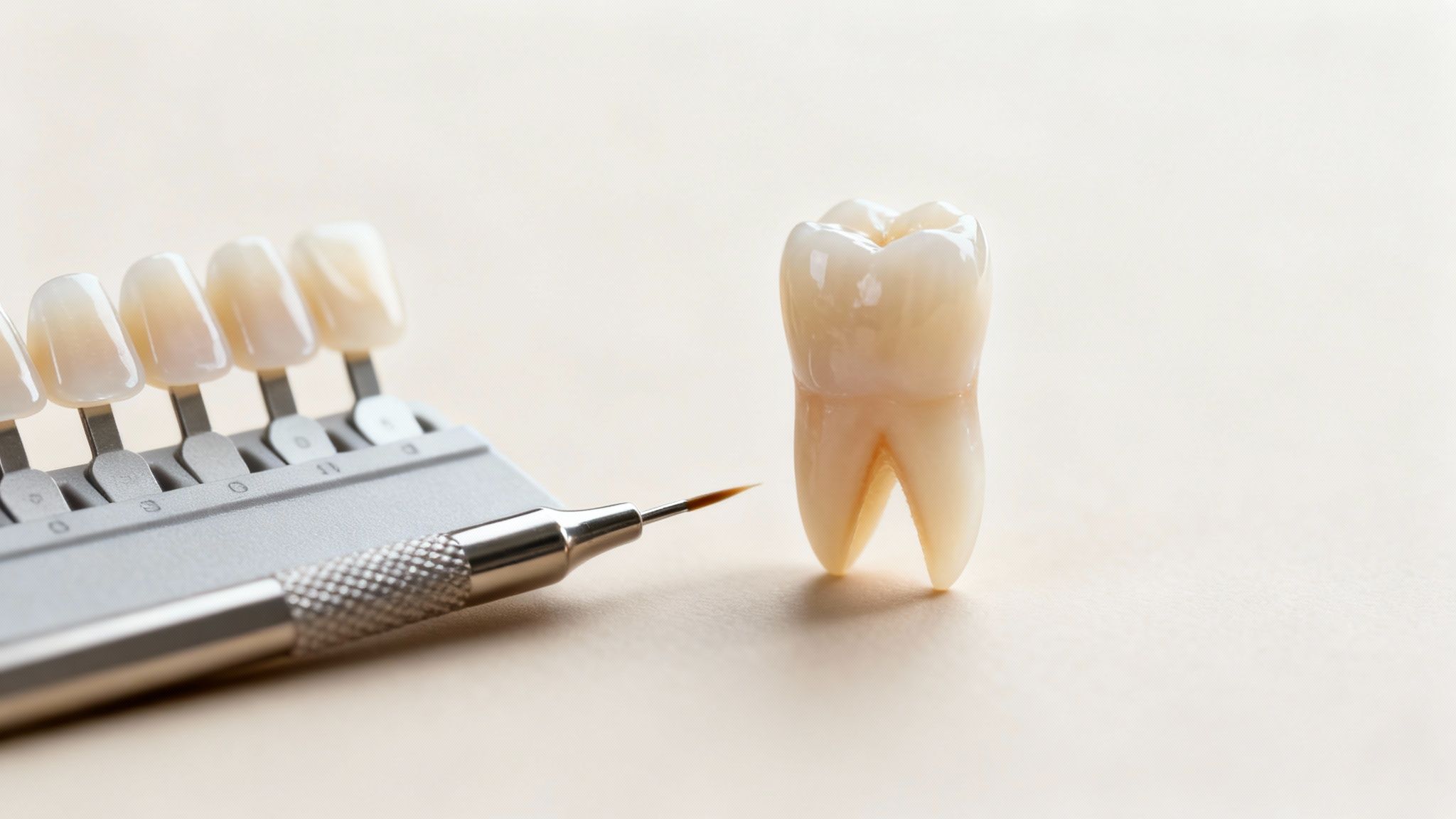
Think of porcelain veneers as wafer-thin, custom-made ceramic shells that are permanently bonded to the front of your teeth. They're the go-to treatment for achieving a "Hollywood smile" because they can address multiple cosmetic concerns at once.
Veneers are a fantastic choice for:
- Hiding slight crookedness: They can make a rotated or tilted tooth look perfectly aligned.
- Closing small gaps: Unwanted spaces between teeth can disappear in an instant.
- Reshaping teeth: Veneers can fix chips, wear, or teeth that just look too small or uneven.
- Permanent whitening: Since porcelain is stain-resistant, your smile stays consistently bright.
Getting veneers right is an art form. At Serena San Diego Dentist, we meticulously design each veneer to blend seamlessly with your natural smile, matching the color and translucency for a result that’s both stunning and believable.
Dental Bonding: A Versatile and Quick Fix
Dental bonding is another great cosmetic tool, especially for smaller, more targeted fixes. The process involves applying a tooth-colored composite resin directly to the tooth, sculpting it by hand into the ideal shape, and then hardening it with a specialized light.
Think of dental bonding as an artistic touch-up. It's a fantastic, often single-visit solution for repairing a chipped front tooth or closing a tiny gap, providing an immediate and affordable enhancement to your smile's symmetry.
Bonding is less invasive than veneers and is perfect for those isolated imperfections. It’s an accessible entry point into cosmetic dentistry if you're looking for a noticeable improvement without a huge commitment. If you're weighing your options, our guide on dental bonding vs. veneers breaks down the differences in detail.
It's important to remember that these procedures are purely cosmetic. They don't change your bite or fix any underlying functional problems. They are designed for adults who have healthy teeth and gums but want to elevate the look of their smile. For San Diego residents dreaming of an instant makeover, these treatments offer a fast track to newfound confidence.
Talking Dollars and Cents: Your Investment in a New Smile
Let's talk about the investment. Understanding the cost is, of course, a huge part of choosing the right path to straighten your teeth. The final price tag for any of these treatments isn't one-size-fits-all; it really depends on a few things.
The complexity of your situation, the treatment you land on, and how long it will take are the three biggest factors. A simple alignment with clear aligners for 12 months will look very different financially from a complex bite correction needing two years in ceramic braces. Here at Serena San Diego Dentist, we believe in total transparency from day one.
Making It Work: Insurance and Payment Plans
Trying to figure out dental insurance can feel like a puzzle, but we're here to help you put the pieces together. The good news is that many PPO dental insurance plans do include some coverage for adult orthodontics, which can make a real difference in your out-of-pocket costs. Our San Diego team works with major insurance providers every day, so we know how to help you get the most out of your plan.
For any costs that insurance doesn't cover, we have options to make it manageable:
- Flexible Financing: We've partnered with trusted financing companies that offer simple monthly payment plans, many with low or even zero interest.
- In-House Plans: We can also set up a payment schedule directly with our office, spreading the cost out in a way that works for your budget.
- HSA/FSA: Don't forget about your Health Savings Account (HSA) or Flexible Spending Account (FSA). You can absolutely use those pre-tax dollars for your treatment.
We believe that financial concerns shouldn't stand in the way of your health and confidence. Our commitment is to find a plan that makes your dream smile a comfortable, affordable reality.
If you're curious about the business side of dentistry and how practices communicate value and financing, some modern dental practice marketing strategies offer a fascinating look behind the curtain.
Your journey to a straighter smile in San Diego should start with a clear, honest conversation about the investment. Schedule a personalized consultation at Serena San Diego Dentist today, and we’ll give you a detailed treatment plan and a straightforward cost estimate. No surprises.
Your Questions About Adult Teeth Straightening Answered
Deciding to straighten your teeth as an adult is a big step, and it's natural to have a few questions before you commit. We hear these all the time from our San Diego patients, so let's clear up some of the most common concerns.
Is It Too Late for Me to Straighten My Teeth?
Not at all. There’s really no upper age limit for orthodontics, as long as your teeth and gums are healthy enough to handle it. We see adults in their 40s, 50s, and even older get incredible results that transform their smiles.
The first step is always a detailed dental exam to make sure your periodontal health can support the gentle tooth movement required.
Will Adult Orthodontic Treatment Be Painful?
You can expect some mild pressure or tenderness for a few days after getting your braces adjusted or when you pop in a new set of clear aligners. Think of it as a good sign—it means your teeth are moving!
This discomfort is temporary and most people find it's easily handled with simple over-the-counter pain relievers. Modern orthodontic methods are designed to be much more gentle than what you might remember from the past.
How Will I Keep My Teeth Clean with Braces or Aligners?
Keeping your teeth clean is absolutely critical during treatment, but how you do it depends on the appliance you choose.
- Clear Aligners: This is the easy part. You just take them out to brush and floss like you always have.
- Fixed Braces: You’ll need to be a bit more diligent. Tools like interdental brushes or a water flosser become your best friends for cleaning around brackets and wires. Don't worry, we'll show you exactly how to do it.
Is Wearing a Retainer After Treatment Really Necessary?
Yes, 100%. A retainer is your insurance policy for a permanently straight smile. Once your teeth straightening options for adults treatment is done, your teeth have a natural memory and want to drift back to their old spots.
Wearing your retainer exactly as your dentist prescribes is the only way to lock in your results and protect the investment you've made in your smile. It's the final, crucial step.
Skipping the retainer means you risk watching all that hard work slowly unravel. This phase is just as important as the treatment itself.
Your ideal smile is closer than you think. The team at Serena San Diego Dentist is ready to help you figure out the best path forward. Let’s explore your options together—schedule your consultation today.