When you hear the term “oral surgery,” it’s easy to feel a little intimidated. But really, it’s just a specialized field of dentistry that tackles problems inside your mouth that go beyond a simple filling or cleaning. Think of it as the next level of care for specific issues involving your teeth, jaw, and facial structures.
For those of us here in San Diego, this could mean anything from finally dealing with painful wisdom teeth to getting a permanent fix for a missing tooth. It’s all about restoring your mouth’s health, function, and even your smile when routine dental work isn't quite enough.
What Exactly Is Oral Surgery?
Let's break it down. Oral surgery is simply a precise, hands-on solution for more complex dental situations. It’s performed by a dentist who has completed years of additional, intensive training specifically in surgical procedures.
Here in San Diego, our active lifestyles can sometimes lead to dental injuries, but many surgical needs are simply a part of life. The key takeaway is that these procedures are handled by a specialist to ensure you get the safest, most effective care possible.
When Might You Need Oral Surgery?
So, when does a dental issue cross the line into needing a surgical solution? A referral for San Diego oral surgery usually happens when the goal is to fix a problem for good, relieve chronic pain, or restore proper function to your mouth.
Here are a few common scenarios where oral surgery is the best answer:
- Impacted Wisdom Teeth: These are the classic troublemakers. When your third molars get stuck and can't grow in properly, they can cause a world of pain, infections, and even damage the teeth next to them. Removing them surgically is the most common fix.
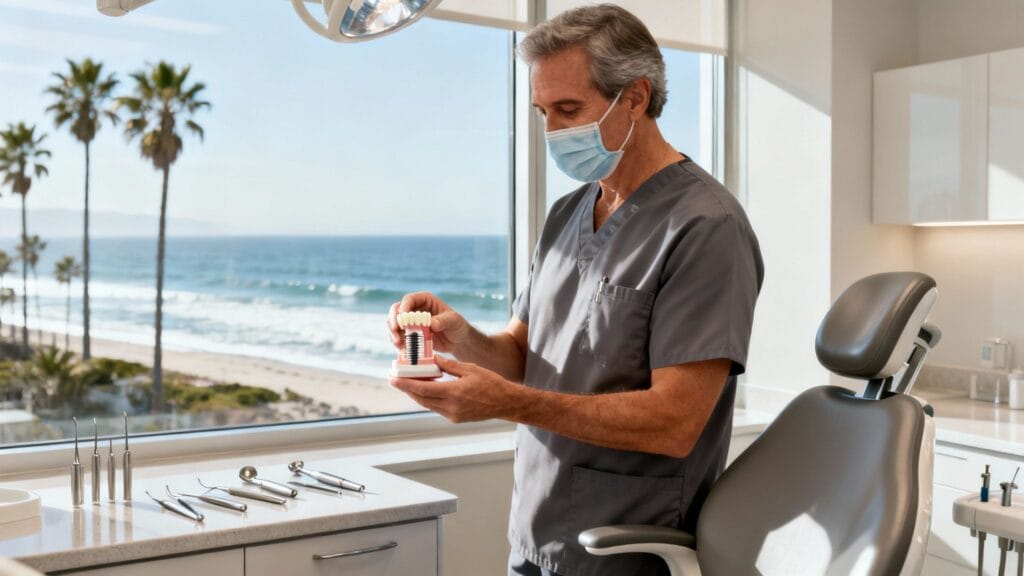
- Tooth Loss: If you're missing a tooth, a dental implant is the gold standard for replacement. The process of placing that implant into the jawbone is a surgical one that creates a super-strong foundation for a new crown.
- Jaw-Related Problems: Sometimes, a misaligned jaw can cause trouble with everything from chewing and speaking to breathing. Corrective jaw surgery (orthognathic surgery) helps realign things to get them working smoothly again.
- Facial Injury: Accidents happen. Oral surgeons are the experts who repair fractured jaws and other facial bones to get you back to normal after a trauma.
- Lesions or Biopsies: Found something unusual in your mouth? A surgeon can take a tiny tissue sample, called a biopsy, to get a clear diagnosis and make sure everything is okay.
At Serena San Diego Dentist, our entire approach is built on making you feel comfortable and informed. We take the time to walk you through why a procedure is needed and what every step will look like, so you can leave the fear and uncertainty at the door.
At the end of the day, oral surgery is a problem-solving specialty. It provides lasting, effective solutions for significant dental challenges, whether you live in Clairemont Mesa, La Jolla, or anywhere else in our beautiful city. To get a deeper dive into this area of dentistry, take a look at our guide on what oral surgery involves.
A Closer Look at Common Oral Surgery Procedures
Oral surgery isn't just one thing; it's a collection of highly specialized treatments that tackle complex dental problems head-on. The ultimate goal for any of these procedures is always the same: to get your smile healthy, functional, and comfortable again.
Let's walk through some of the most common surgeries you might hear about. Getting familiar with the 'why' behind each one can make the whole process feel much more approachable.
To give you a quick overview, here’s a simple breakdown of the most frequent types of oral surgery.
Common Oral Surgery Procedures at a Glance
| Procedure | Primary Goal | Commonly Recommended For |
|---|---|---|
| Wisdom Teeth Removal | Prevent or resolve crowding, pain, infection, and damage to other teeth. | Patients whose wisdom teeth are impacted (stuck) or growing in at a bad angle. |
| Dental Implants | Provide a permanent, root-to-crown replacement for one or more missing teeth. | Individuals with missing teeth who want a durable, natural-feeling solution. |
| Bone Grafting | Rebuild and strengthen the jawbone to create a solid foundation for a future implant. | Patients who have experienced bone loss after a tooth has been missing for some time. |
| Corrective Jaw Surgery | Realign the jaw and teeth to improve function (chewing, speaking) and facial balance. | People with significant bite misalignments or jaw growth issues. |
| Oral Biopsy | Diagnose suspicious sores, lesions, or growths in the mouth. | Anyone with an unusual spot in their mouth that needs to be identified. |
Now, let's dive a little deeper into what each of these procedures actually involves.
Wisdom Teeth Removal: A Proactive Step for Your Health
Wisdom teeth, officially known as third molars, are the last ones to show up to the party, usually in your late teens or early twenties. The problem is, for most of us, there’s no room left for them on the dance floor.
When there isn't enough space, these teeth get stuck, or "impacted," beneath the gum line or only manage to poke through partially. This can kick off a whole host of problems:
- Pain and Swelling: They start pushing on their neighbors, causing a lot of discomfort and inflammation.
- Infection: A partially erupted tooth is a magnet for bacteria, creating painful gum infections.
- Damage to Other Teeth: The constant pressure can damage the roots of the molar right next to it or shove your other teeth out of alignment.
- Cyst Formation: Sometimes, a fluid-filled sac (a cyst) can form around the tooth, which can seriously damage the jawbone.
Taking out problematic wisdom teeth is one of the most common oral surgeries for a reason. It’s a smart, preventative move that stops these issues in their tracks. If you're running into trouble, our guide on wisdom teeth removal in San Diego offers a more detailed look.
Dental Implants: The Gold Standard for Replacing Teeth
Losing a tooth can throw a wrench in everything—how you chew, how you speak, and how you feel about your smile. Dental implants are the closest we can get to turning back the clock, giving you a permanent solution that mimics a natural tooth from the root up.
Think of it like building a house. The dental implant is the foundation. It's a small titanium post that your surgeon places in the jawbone right where the old tooth root was. Over a few months, your bone actually fuses to this post in a process called osseointegration. This creates an incredibly strong, stable base.
Once that foundation is rock-solid, a custom-made crown is attached to the top. It's crafted to match your other teeth perfectly, so the final result looks, feels, and works just like the real thing.
Dental implants do more than just fill a gap. They actively stimulate the jawbone, preventing the bone loss that always happens when a tooth is gone. This is key to maintaining your facial structure and keeping your other teeth healthy.
Tooth loss is a real issue here in San Diego County. In fact, projections show that by 2026, about 1 in 5 local seniors could be facing the loss of all their teeth, which explains the growing need for lasting solutions like implants. You can read more about these local tooth loss trends.
Bone Grafting: Preparing the Foundation
For a dental implant to work, it needs a good, solid jawbone to lock into. But if a tooth has been missing for a while, that part of the jawbone can start to shrink and weaken. That's where a bone graft comes in.
It's a bit like preparing the soil before you plant a tree. The surgeon adds bone material—either from another part of your body, a donor source, or a special synthetic material—right where it's needed. This material acts like a scaffold, encouraging your body to grow new, dense bone.
This crucial step ensures the foundation for your future implant is strong and stable, dramatically boosting its chances of long-term success.
Other Important Procedures: Jaw Surgery and Biopsies
Oral surgeons also handle other specialized procedures that are just as important.
- Corrective Jaw Surgery: Also called orthognathic surgery, this is for realigning the jaw bones. It can fix major bite problems, make it easier to chew and speak, and can even improve breathing. It often has the added benefit of enhancing facial harmony.
- Oral Biopsy: If your dentist spots a weird lesion or growth in your mouth, they’ll likely recommend a biopsy. It's a straightforward procedure where a tiny piece of tissue is removed and sent to a lab to be analyzed. This is the definitive way to diagnose anything from a benign cyst to oral cancer, making sure you get the right treatment as early as possible.
Your Oral Surgery Journey From Consultation to Procedure
Heading into oral surgery can feel a bit daunting, but knowing exactly what to expect can make all the difference. Think of it as a well-planned journey, with each step designed for your safety, comfort, and a successful outcome. It all starts with a simple conversation.
The Initial Consultation: Your Starting Point
Your first visit is much more than just a check-up; it’s a strategy session. This is where we sit down together to talk about your goals, go over your medical and dental history, and get a crystal-clear picture of what’s happening using tools like X-rays or even 3D scans.
This is your time to get answers and build confidence. To get the most out of it, I always recommend patients come with a few questions in mind:
- What’s the main goal we’re trying to achieve with this surgery?
- Can you walk me through what will happen on the day of the procedure?
- Which type of anesthesia is best for me, and why?
- What does a typical recovery look like for this?
This meeting is all about building trust. At Serena San Diego Dentist, our promise is that you'll leave with a clear, personalized plan and zero unanswered questions. It’s a collaborative approach that defines a positive San diego oral surgery experience.
Preparing for Your Procedure
Once your surgery is on the calendar, we'll give you a set of pre-op instructions. It's incredibly important to follow these closely—they aren't just suggestions, but key steps to ensure everything goes smoothly and safely.
You can generally expect instructions like these:
- Fasting: If you’re having any form of sedation, you’ll need to stop eating and drinking for several hours beforehand. This is a non-negotiable safety measure to prevent complications while you’re sedated.
- Medication Adjustments: We need a full list of every medication and supplement you take. Some, like blood thinners, may need to be paused for a few days before your appointment.
- Arranging a Ride: Anesthesia and driving don’t mix. You’ll need to arrange for a trusted friend or family member to drive you home and ideally stay with you for a bit afterward.
Understanding Your Anesthesia Options
Modern oral surgery should be a pain-free, comfortable experience, and that's where anesthesia comes in. We’ll discuss the best option for you based on the procedure's complexity, your health, and your own comfort level.
Here’s a quick rundown of the common choices:
- Local Anesthesia: This simply numbs the specific spot we’re working on. You'll be fully awake but won't feel any pain in that area.
- Nitrous Oxide: You probably know this as "laughing gas." You inhale it through a small mask to feel relaxed and at ease. The effects wear off very quickly once the procedure is over.
- IV Sedation: Administered directly into a vein, this puts you into a deeply relaxed state often called "twilight sleep." You're still conscious, but you’ll likely have little to no memory of the surgery itself.
- General Anesthesia: Reserved for more complex or lengthy surgeries, this will put you completely to sleep for the duration of the procedure.
This diagram shows how different procedures, like an extraction, bone graft, and implant, fit together into one cohesive treatment plan.
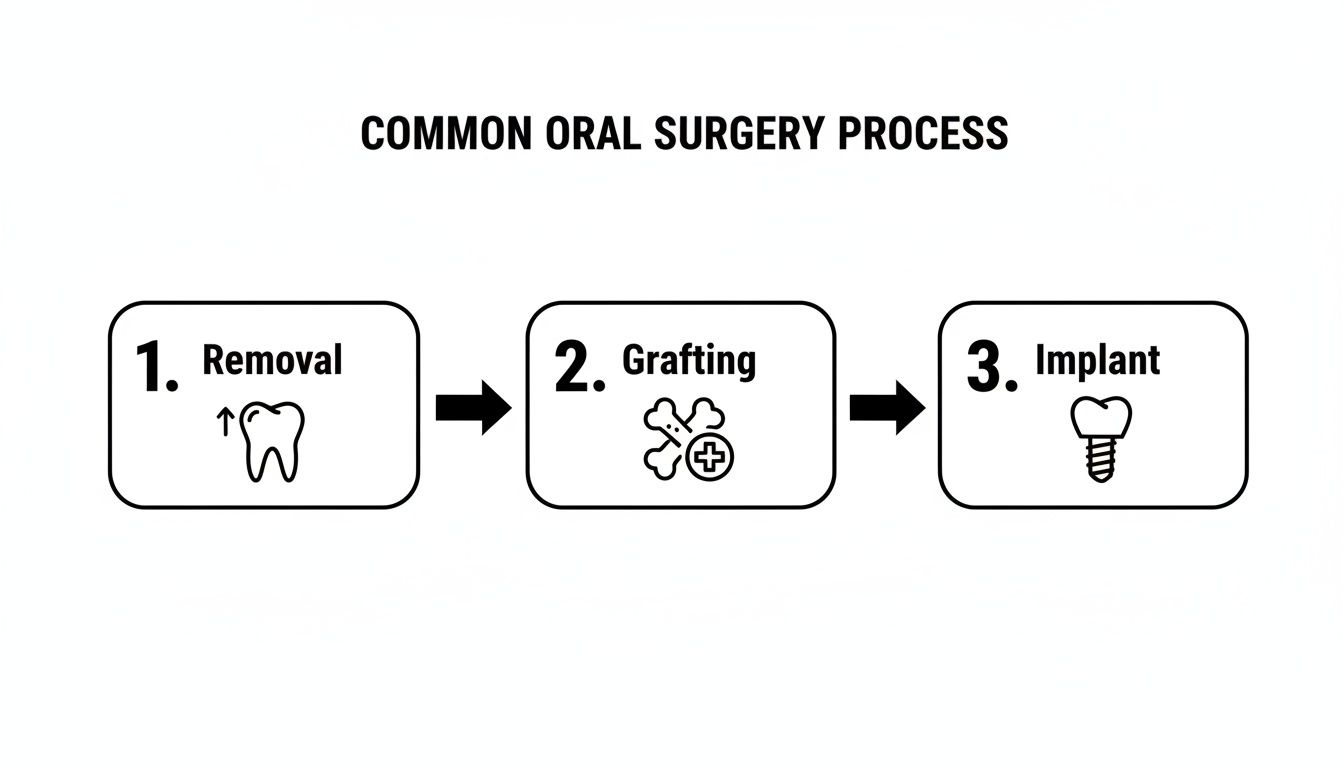
As you can see, oral surgery is often a multi-step process, carefully staged to allow for proper healing and ensure the best possible long-term results. By breaking down the journey from start to finish, we aim to replace any anxiety with clarity and confidence.
Navigating a Smooth and Speedy Recovery
The surgery itself is over—congratulations, the hard part is done! Now, the ball is in your court. Your focus needs to shift to recovery, because how you handle these next few days is just as important as the procedure itself for getting the best results.
Think of the first 24 hours as mission-critical. Your body is working hard to form a protective blood clot over the surgery site. This little clot is the foundation for all healing, so protecting it is your number one job.

Your First 24-48 Hours Post-Surgery
What you do right after your San Diego oral surgery really sets the tone for your entire healing process. Here’s a quick-and-easy checklist to get you through that crucial first window.
What to Do:
- Rest, Seriously: Your body is a healing machine, but it needs fuel. Plan on taking it very easy. Any strenuous activity can spike your blood pressure and trigger more bleeding, so kick your feet up.
- Keep Pressure on the Gauze: Bite down with gentle but firm pressure on the gauze we placed. You'll want to swap it out for a fresh piece every 30-45 minutes or so until the bleeding slows to a stop.
- Ice is Your Best Friend: To keep swelling down, grab an ice pack or a bag of frozen peas. Apply it to your cheek for 20 minutes on, then 20 minutes off. This trick works wonders in the first 24-36 hours.
- Prop Your Head Up: When you lie down, use an extra pillow or two to keep your head elevated above your heart. It’s a simple move that makes a big difference in managing swelling.
- Hydrate Smart: Drink lots of cool water. Just remember—no straws!
What to Avoid:
- No Straws or Spitting: The suction from a straw or the force of spitting can yank that all-important blood clot right out. This can lead to a painful complication called a dry socket, which you definitely want to avoid.
- Skip Hot Foods & Drinks: Heat can break down the blood clot and encourage bleeding. For the first day, stick with foods and drinks that are cool or lukewarm at most.
- Avoid Smoking & Alcohol: Both of these are major roadblocks to healing. They can slow down recovery and seriously increase your risk of infection. It’s best to avoid them for at least 72 hours, if not longer.
Managing Diet and Oral Hygiene
Eating well and keeping your mouth clean without disrupting the surgical site is a bit of a balancing act. For now, your diet should be all about soft, easy-to-eat foods. Think smoothies, yogurt, applesauce, mashed potatoes, and cool soups.
You still need to keep your mouth clean, but gentleness is key. Starting the day after surgery, you can begin rinsing with a warm salt water solution—just mix 1/2 teaspoon of salt into 8 ounces of water. Do this after you eat and before bed to keep things clean.
You can brush your other teeth like normal, just be extremely careful to steer clear of the surgical area for a few days. We have a lot more detailed tips on what to do after tooth removal, which you can find in our post-extraction care guide.
When to Contact Your Surgeon
A little bit of swelling, some manageable discomfort, and minor bleeding are all part of the process. However, there are a few red flags that mean you should give our office a call right away.
Don't hesitate to reach out if you're experiencing:
- Heavy bleeding or bleeding that doesn’t stop after 24 hours.
- Severe pain that your medication isn't touching.
- Swelling that gets worse after the third day.
- A fever, pus, or other signs of infection.
- A persistent bad taste or smell in your mouth.
Following these steps puts you in the driver's seat of your recovery. It’s the surest way to heal up properly so you can get back to enjoying that beautiful San Diego sunshine.
Understanding the Costs of Oral Surgery in San Diego
Let’s be honest—one of the first questions on anyone's mind when it comes to a medical procedure is, "What's this going to cost me?" Oral surgery is no different, and the answer isn't a simple one-size-fits-all number. The final cost for San Diego oral surgery is a unique puzzle, with different pieces coming together for every patient.
Here at Serena San Diego Dentist, we believe in total transparency. Our job is to give you a clear, complete picture so you can plan for your oral health without any last-minute financial surprises.
What Influences the Final Cost
So, what exactly goes into the total cost of an oral surgery procedure? It’s more than just the surgery itself. A few key factors shape the final price tag, and knowing what they are can help you see where the value is.
Think of it like this:
- The Complexity of Your Procedure: A single, straightforward wisdom tooth removal is a much different undertaking than placing a dental implant that also requires a bone graft to prepare the jaw. The more intricate the work—meaning more time, specialized skill, and materials—the more it will cost.
- Your Anesthesia and Sedation Choice: Your comfort is our top priority. The type of sedation you choose, whether it's local anesthetic to simply numb the area or deeper IV sedation for total relaxation, plays a role in the final bill.
- The Technology and Materials We Use: We rely on advanced tools like 3D CBCT scans for surgical planning that’s accurate down to the millimeter. Using premium materials, like medical-grade titanium for dental implants, also contributes to the cost but ensures a better, more durable outcome.
Insurance, Payments, and Making Care Accessible
If your procedure is considered medically necessary—like an extraction or a biopsy—your dental insurance can be a huge help, especially if you have a PPO plan. That said, dealing with insurance can sometimes feel like a full-time job. Understanding administrative steps like the need for prior authorization in healthcare is crucial, as this pre-approval process can directly affect what your plan will cover.
Our team at Serena San Diego Dentist works with major insurance carriers every single day. We are pros at navigating the system and will handle the paperwork and verification to make sure you get every penny of coverage you’re entitled to. For services not covered by insurance, we offer flexible out-of-pocket payment and financing options to ensure care is accessible. You can find more details on how we work with various dental insurance plans in San Diego here.
It's a tough reality that cost often stands in the way of necessary dental care. In San Diego County alone, a startling 1 in 3 children has untreated tooth decay. This issue is frequently tied to families struggling with affordability or a lack of adequate insurance coverage. For more on this, check out the San Diego County Oral Health Coalition Assessment Report.
The best way to start is with a consultation, where we can provide a clear, personalized cost estimate—no strings attached. Contact us today to learn how we can make the essential care you need fit within your budget.
How to Choose the Best Oral Surgeon in San Diego
Finding the right person for your San Diego oral surgery is easily the most critical decision you'll make. This isn’t about just picking a name off a list; it’s about finding a healthcare partner you can truly trust. When you know what to look for, you can make a choice with complete confidence.
Your first filter should be a simple one: is the surgeon board-certified? This is a non-negotiable. A board-certified oral and maxillofacial surgeon has completed years of intensive, specialized training far beyond dental school. They’ve passed rigorous exams to prove their expertise, giving you peace of mind that they meet the absolute highest standards in the field.
Evaluate Experience and Specialization
After confirming certification, dig into their specific experience. You want a surgeon who is deeply familiar with the exact procedure you need. Someone who places dental implants every single day will have a level of practical skill and intuition that a more general practitioner simply can't match.
Never hesitate to ask pointed questions during your consultation. It's your health, after all.
- "How often do you perform this particular procedure?"
- "What kind of success rate have you seen with this surgery?"
- "Can you show me any anonymized before-and-after examples of cases like mine?"
A surgeon who is confident in their work will welcome these questions and be glad to put your mind at ease.
The Role of Technology in Modern Oral Surgery
The equipment and technology a surgeon uses can make a huge difference in your comfort, safety, and final results. Modern dental practices that invest in the right tools can offer surgery that is more precise and less invasive. When looking for your San Diego oral surgery expert, it's a good idea to see how top-tier dental practices operate to make sure the clinic you choose is up to snuff.
A key piece of tech to ask about is 3D Cone Beam Computed Tomography (CBCT). Think of it as a GPS for your surgery. While a standard 2D X-ray is a flat picture, a CBCT scan gives your surgeon a detailed, 3D map of everything—your teeth, jawbone, nerves, and soft tissues. This allows for incredibly accurate planning, which dramatically reduces risks and leads to much better outcomes.
Trust Patient Reviews and Testimonials
Finally, see what actual patients are saying. Online reviews on Google, Yelp, and Healthgrades provide a real, unfiltered look into what it’s like to be a patient at that clinic. Look for patterns in the comments. Do people consistently praise the surgeon’s calming chairside manner? Is the office staff repeatedly mentioned as being friendly and helpful?
A single bad review can be an outlier, but a consistent pattern of feedback—whether it’s glowing or concerning—is one of the most reliable clues you’ll get about the clinic’s culture and quality of care.
The good news is that the demand for skilled oral surgeons is high. Here in San Diego, this growth means we have an amazing community of dedicated surgeons. By focusing on credentials, hands-on experience, technology, and real patient feedback, you can find the perfect expert for your needs.
Your Oral Surgery Questions, Answered
It's completely normal to have a few lingering questions as you think about oral surgery. Getting straightforward answers is the best way to feel confident and prepared for your procedure. Let's tackle some of the most common concerns we hear from our patients right here in San Diego.
Will My Oral Surgery Be Painful?
This is usually the first question on everyone's mind, and the answer is a relief: you should not feel pain during the procedure. Modern anesthesia and our sedation options are specifically designed to keep you comfortable from start to finish. Worried about pain during your procedure? Here’s what you can expect. We use a local anesthetic to completely numb the area we're working on. For patients who feel a bit anxious, options like IV sedation can put you in a deeply relaxed "twilight sleep," making the whole experience a pain-free blur.
Now, you can expect some soreness and swelling for the first few days as you heal. But this is easily managed with the pain medication we'll prescribe and by following simple aftercare steps, like using ice packs.
How Much Time Should I Take Off Work?
This really depends on the type of surgery you're having. There's no one-size-fits-all answer, but here's a general guide:
- Simple Extractions: For something straightforward, many people are back to their desk jobs in just 1-2 days.
- Wisdom Teeth Removal: It's a good idea to plan for 3-4 days of real rest. This gives the initial swelling and discomfort time to fade before you have to be "on" at work again.
- Dental Implants: The surgery itself might require 2-3 days off. Just remember, the full healing process—where the bone fuses to the implant—takes a few months.
If your job involves heavy lifting or a lot of physical activity, you'll want to take a few extra days off. Pushing it too soon can interfere with healing. We'll give you a personalized recommendation based on your specific procedure and what you do for a living.
Will My Dental Insurance Cover My Procedure?
This is a big one, and the answer usually comes down to why you need the surgery.
Many San Diego oral surgery procedures that are considered medically necessary—like removing impacted wisdom teeth, taking a biopsy, or extracting an infected tooth—are often at least partially covered by dental insurance, especially PPO plans.
Procedures that are purely cosmetic, on the other hand, are rarely covered. Our team is fantastic at navigating the insurance world. We'll check your benefits for you and give you a clear cost breakdown before we do anything. We work with all the major providers to get you the most out of your coverage and offer flexible financing to help fit the care you need into your budget.
Ready to take the next step toward a healthier smile with a team you can trust? The experts at Serena San Diego Dentist are here to answer all your questions and map out a treatment plan that's right for you. Schedule your consultation today by visiting us at https://serenasandiegodentist.com.