If the thought of a dental visit sends a shiver down your spine, you're not alone. Not by a long shot. This feeling, which can range from mild anxiety to a full-blown phobia, is a very real and common experience. For millions of people, it's more than just nerves—it's a deep-seated emotional and psychological reaction that can prevent them from getting the care they need.
Figuring out where this fear comes from is the first real step toward managing it. For many, it traces back to a bad experience in the past. Perhaps it was a painful procedure during childhood or a time you felt dismissed and not listened to. Worried about pain or judgment? These memories stick around and can train your brain to see the dentist's office as a threat.
Why Is Dental Anxiety So Common? Let's Break It Down

The key to facing dental anxiety is to first understand its roots. Once you can put a name to what's scaring you, it becomes much less intimidating and a lot more manageable.
Identifying Your Personal Triggers
Dental anxiety isn't just one big fear; it's usually a mix of very specific worries. Pinpointing yours is a game-changer. Do any of these sound familiar?
- The Fear of Pain: This is the big one for most people. It might come from a past procedure that hurt or even from hearing horror stories from friends or family.
- A Sense of Helplessness: Lying back in that chair, unable to see what’s happening, can make anyone feel vulnerable and out of control.
- Embarrassment or Shame: If it’s been a while, you might feel self-conscious about the state of your teeth and worry that the dentist or hygienist will judge you.
- Needle Phobia (Trypanophobia): For many, the thought of an injection in the mouth is the most terrifying part of the entire visit.
- Sensory Triggers: The sounds and smells of a dental office are unique—and not always in a good way. That high-pitched whine of the drill is enough to set anyone's teeth on edge.
These feelings are incredibly common. Global research shows that around 15% of adults have a significant fear of the dentist. In the U.S., it's even more pronounced, with an estimated 21% of adults avoiding dental care entirely because of their anxiety. Unfortunately, this avoidance cycle often lets small problems turn into bigger, more complex ones.
Shifting Your Mindset from Fear to Empowerment
First things first: acknowledging your fear isn't a weakness. It’s the first step toward taking back control. The goal isn't to magically erase your anxiety but to build a toolkit that helps you manage it.
A powerful mental shift is to stop thinking of a dental visit as something that happens to you and start seeing it as a proactive, collaborative step you are taking for your health.
Understanding the 'why' behind your anxiety allows you to dismantle it piece by piece. It all starts with validating your own feelings and finding a dental team who will do the same.
Since dental anxiety can overlap with general health anxiety, techniques from Cognitive Behavioral Therapy (CBT) can be incredibly effective. Studies on CBT have shown that a remarkable 75% of patients reported a major drop in anxiety after just a few sessions. If you're curious, check out a practical guide to CBT for health anxiety to see how these strategies work. Think of this as your first move toward building a new, healthier relationship with your dental care.
Practical Coping Techniques for Your Next Appointment
Let’s move past the unhelpful advice of "just relax" and get into real, actionable strategies you can use right away. These aren't just theories; they're practical tools to help you feel a sense of control before, during, and after your appointment.
Your own breath is one of the most powerful, and portable, tools you have. When anxiety kicks in, our breathing gets shallow and fast, which just tells our brain to panic more. You can break that cycle.
One of the best methods I’ve seen work for patients is box breathing. It’s incredibly simple, which is exactly what you need when you're feeling stressed.
- Breathe in slowly through your nose for a count of four.
- Hold that breath for a count of four.
- Exhale slowly through your mouth for a count of four.
- Hold again at the bottom for a count of four.
Run through this cycle a few times in the waiting room or even while you’re in the chair. It's a physiological hack that stimulates your parasympathetic nervous system—your body's built-in "calm down" button.
Grounding Yourself in the Moment
Anxiety loves to drag you into a vortex of "what-if" scenarios. Grounding techniques are designed to pull you right back to the present, anchoring you to your physical surroundings instead of your fears.
The 5-4-3-2-1 method is a fantastic way to do this. Just take a moment and silently identify:
- 5 things you can see: The light fixture, a crack in the ceiling, the color of the dentist’s gloves.
- 4 things you can feel: The texture of the chair against your back, your feet firmly on the floor.
- 3 things you can hear: The low hum of the air conditioner, your own breathing.
- 2 things you can smell: The clean scent of the office, the faint smell of your own perfume.
- 1 thing you can taste: Maybe the mint from your toothpaste earlier.
This simple exercise redirects your brain's focus to concrete, sensory details, making it much harder to get lost in anxious thoughts. Exploring different ways to calm anxiety naturally can give you a whole toolkit for managing not just dental fear, but everyday stress too.
Assemble Your Personal Comfort Kit
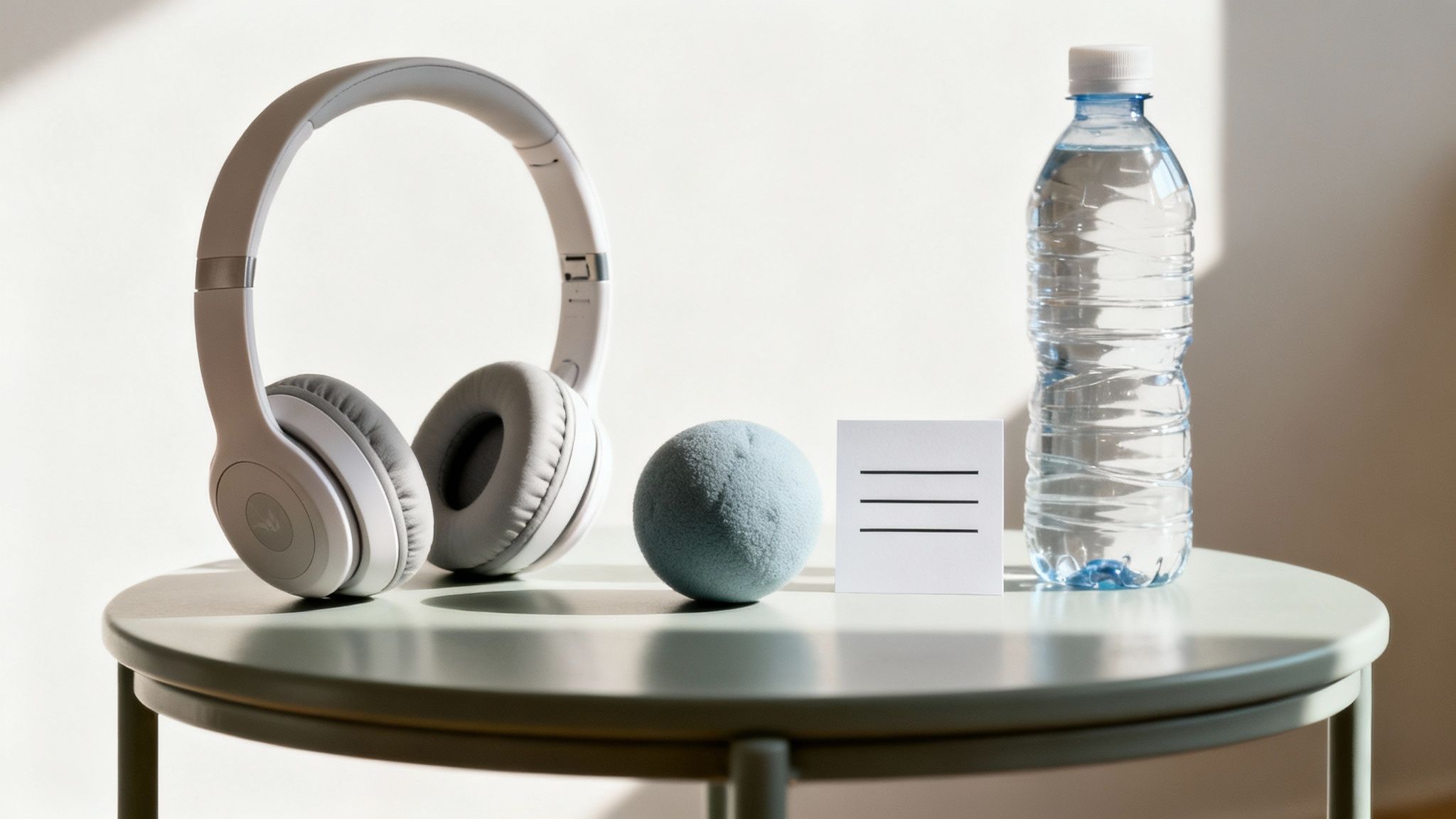
Never underestimate the power of having a few familiar, comforting items with you. Think of it as bringing a small piece of your safe space right into the dental office.
Some great ideas for your kit include:
- Noise-canceling headphones: Drown out the sounds of the dental office with your favorite music, a podcast, or an audiobook. You're in control of your soundscape.
- A stress ball or fidget toy: Giving your hands something to do can release a surprising amount of physical tension.
- A weighted lap pad: The gentle, steady pressure can have an incredibly calming effect, similar to a weighted blanket.
- Aromatherapy: A small rollerball of a soothing scent, like lavender, on your wrists can be a subtle but effective way to relax.
Bringing these items isn't about being difficult; it's about actively participating in your own care and comfort.
A study in Frontiers in Oral Health found that basic mindfulness practices, like deep breathing, can slash anxiety by up to 40% almost instantly. This is huge, especially when you consider that 36% of people have dental anxiety, and for 12%, it's an extreme fear.
Even with these powerful coping strategies, sometimes a little extra help is exactly what you need. Options like nitrous oxide can add another layer of relaxation to your visit. If you're curious, we have a great resource that explains exactly how laughing gas helps with anxiety. The goal is always to find the right combination that makes you feel safe and comfortable.
Finding a Dentist Who Truly Understands Your Fear
All the breathing exercises and coping strategies in the world won't make a difference if you’re in the wrong dental chair. Honestly, the most important step you can take to conquer dental fear is finding a dentist and a team that sees you as a person, not just a set of teeth. The right practice can completely change the game.
This isn't just about finding someone with great technical skills; it's about finding a human being who gets it. The right team builds a safe, judgment-free space where your comfort truly comes first. They know your anxiety is real and, more importantly, they have the tools and the patience to help you through it.
What to Look For in a Compassionate Dental Practice
As you start your search, think of yourself as a detective looking for "green flags"—all those little clues that a practice puts patient comfort above everything else. This means reading between the lines on their website and looking for specific themes in their patient reviews.
Don't just skim the testimonials; dig into them. Keep an eye out for phrases that signal a gentle, patient-focused approach:
- "Listened to my concerns": This is huge. It means the dentist takes the time to understand exactly what you're afraid of.
- "Gentle and patient": For anyone with anxiety, these are the magic words.
- "Explained everything clearly": A dentist who walks you through the process puts you back in the driver's seat.
- "Made me feel comfortable": This says a lot about the clinic’s atmosphere and the entire team’s chairside manner.
Another great sign is a practice that openly talks about dental anxiety on its website. It shows they're not just aware of the problem but have actively created a system to support nervous patients.
How to Screen a Dental Office Over the Phone
That first phone call to a dental office can tell you almost everything you need to know. Remember, you are interviewing them—not the other way around. Don't be shy about being upfront with your needs.
You can try a simple script like this:
"Hi, I'm looking to schedule a new patient appointment, but I should tell you I have pretty severe dental anxiety. Could you tell me a little bit about how your office helps nervous patients feel more comfortable?"
A great answer will sound warm, genuine, and specific. They might mention things like offering longer appointment times, sedation options, or how their dentist has a particularly gentle approach. If you get a rushed, dismissive, or vague response, that’s your cue to thank them and move on. For more in-depth advice, our guide on how to choose the right dentist in San Diego has a ton of useful tips.
The Power of Communication in the Dental Chair
Once you've found a dentist who seems like a good fit, the next step is all about communication. This is where you build trust and take back the sense of control that anxiety so often steals.
Two simple but incredibly powerful techniques can make a world of difference:
- The "Stop" Signal: Before the dentist even picks up a tool, agree on a non-verbal hand signal (like raising your left hand) that means "stop right now." This isn't just for pain; it's for when you need a second to breathe, a sip of water, or just a quick break. Just knowing you have that control can lower your anxiety dramatically.
- The "Tell-Show-Do" Method: This is a classic technique used by dentists who are amazing with anxious patients. First, they tell you what they’re going to do. Then, they show you the tool they’ll use, maybe by letting you feel the vibration on your thumbnail. Only after you're comfortable do they actually do the procedure. This demystifies the whole process and gets rid of any scary surprises.
Finding a dentist who truly understands isn't a bonus—it's a non-negotiable part of your journey to beating dental fear for good.
How Modern Dentistry Makes Your Appointments Comfortable
If your image of a dental office involves scary noises and cold, clinical rooms, it’s time for an update. Dentistry has changed—a lot. Today’s best practices are built from the ground up with one goal in mind: your comfort.
The entire experience has been re-engineered to be as painless, quiet, and stress-free as possible. A calm, comfortable, and even relaxing dental visit isn’t a far-off dream; it's the standard of care you should expect.
Sedation Dentistry: Your Path to a Calm Experience
One of the biggest game-changers for managing dental fear is sedation dentistry. This isn't about being "knocked out." It’s about creating a state of deep relaxation that lets you get the care you need without the anxiety.
Understanding your options is the first step toward feeling back in control. Each method is a good fit for different anxiety levels and procedures.
Comparing Your Sedation Dentistry Options
To help you see what might work best for you, let's break down the most common sedation methods. Each offers a different level of relaxation, so you can choose based on your personal comfort needs and the treatment you're having.
| Sedation Type | Level of Consciousness | Best For | Recovery Time |
|---|---|---|---|
| Nitrous Oxide | Fully conscious, but deeply relaxed and calm. | Mild to moderate anxiety, shorter procedures, cleanings. | Wears off in minutes; you can drive yourself home. |
| Oral Sedation | Conscious but very drowsy; you may not remember the appointment. | Moderate to severe anxiety, longer or more complex procedures. | Several hours; you will need a ride home. |
| IV Sedation | "Twilight sleep"; you're technically conscious but unaware of the procedure. | Severe dental phobia, extensive surgical work. | Lasts for several hours; you will need a ride home and supervision. |
These options are incredibly safe and effective. They directly address the root of dental phobia, which for a staggering 61% of people stems from a past painful experience. Sedation can be a lifeline for the 5-10% with severe cases, and a simple option like nitrous oxide can ease anxiety in 80% of patients almost immediately.
Technology That Reduces Fear Triggers
Beyond sedation, today’s dental tools are designed to eliminate the very sensory triggers that cause anxiety.
Think about the sound of the drill. For many, that's the worst part. Now, many procedures can be done with near-silent dental lasers. They are not only quieter but also more precise, often reducing the need for anesthesia.
What about those goopy, gag-inducing impression molds? Gone. We now use digital scanners to create a perfect 3D model of your teeth in seconds—no mess, no discomfort, and a much better result.
Creating a Genuinely Soothing Environment
A compassionate dental practice knows that your comfort extends beyond the chair. The entire atmosphere should feel calming from the moment you step inside.
At Serena San Diego Dentist, we believe your comfort is just as important as your clinical outcome. We've designed our San Diego office to be a welcoming, spa-like space where you can feel relaxed and cared for.
We focus on the small touches that make a huge difference:
- Comforts on Hand: We offer cozy blankets, pillows, and noise-canceling headphones to help you feel safe and settled.
- Calming Aromas: We use calming scents like lavender, which studies suggest can reduce anxiety levels by as much as 30%, to create a serene atmosphere.
- No Surprises: Our team always takes the time to listen, answer your questions, and walk you through every step. You'll always know what's happening and why.
When you combine a truly soothing environment with modern technology and effective sedation, fear finally takes a backseat. To explore these options further, check out our guide on whether sedation dentistry is safe for you. Our team is always here to talk through what will work best for you.
A Gentle Path to Rebuilding Your Dental Confidence
For some people, dental fear isn't just a case of the jitters—it's a deep-seated phobia that can feel completely paralyzing. If the mere thought of scheduling an appointment makes your heart pound, a gradual approach isn't just a good idea; it's the only way forward.
This strategy is all about rebuilding your confidence at a pace that feels genuinely safe and manageable for you. Think of it as taking small, achievable steps. Instead of staring up at the overwhelming mountain of a full dental procedure, you break the journey down into tiny, manageable wins. Each successful step builds a new foundation of trust, slowly chipping away at the power your anxiety holds over you.
Your First Step Doesn't Have to Be in a Dental Chair
The journey to beating dental phobia starts long before you ever sit in a treatment chair. The first goal is simply to get your mind and body used to the idea of a dental office again, proving to yourself that you are in complete control of the situation.
Your first step could be as simple as:
- Making a phone call: Ring up our San Diego office not to book anything, but just to ask a question. Ask about our comfort options or what a new patient visit involves. It's a low-stakes interaction that puts you firmly in the driver's seat.
- Driving by the office: At a time when you feel calm, just take a drive past our clinic. The goal is simply to see the building and normalize its existence. No pressure, no appointment, just a drive.
- Exploring our website: Spend some time online looking at photos of our team and the office. Familiarizing yourself with the space and the faces can make the whole concept feel much less intimidating.
These might seem like minor actions, but they are incredibly powerful. They begin to dismantle the long-held belief that a dental office is a place to be avoided at all costs.
Building Momentum with Non-Clinical Visits
Once you feel comfortable with those initial steps, the next phase is to enter the physical space without any pressure for treatment. This is a crucial part of desensitization, showing your nervous system that you can be in the environment and remain perfectly safe.
We can arrange what's often called a "happy visit" or a non-clinical tour. It’s a brief, informal meeting where you can:
- Meet the front office team: Put a friendly face to the voice you heard on the phone.
- See the waiting area: Sit in the reception area for five minutes with a book or some music, and then just leave. That's it.
- Tour the clinic: A team member can give you a quick walkthrough, pointing out the calming atmosphere and modern tech, all without you ever having to sit in a dental chair.
The objective here is simple: create new, positive memories associated with the dental office. Each successful, stress-free visit helps overwrite the old, fearful ones, slowly but surely rewiring your brain's response.
Scheduling Your First Low-Impact Appointment
After you've built some confidence with non-clinical visits, you're ready to schedule the simplest, quickest clinical appointment possible. This is not the time for a complex procedure. It's time for another small win.
Consider booking one of these to start:
- A consultation only: This is just a conversation with the dentist, often in a regular office, not even a treatment room.
- A simple polish: This is usually quick, painless, and helps you get accustomed to the sensation of someone working gently in your mouth.
- A single X-ray: A very fast procedure that requires minimal time and interaction.
As you become ready for more involved care, you can start exploring different levels of comfort.
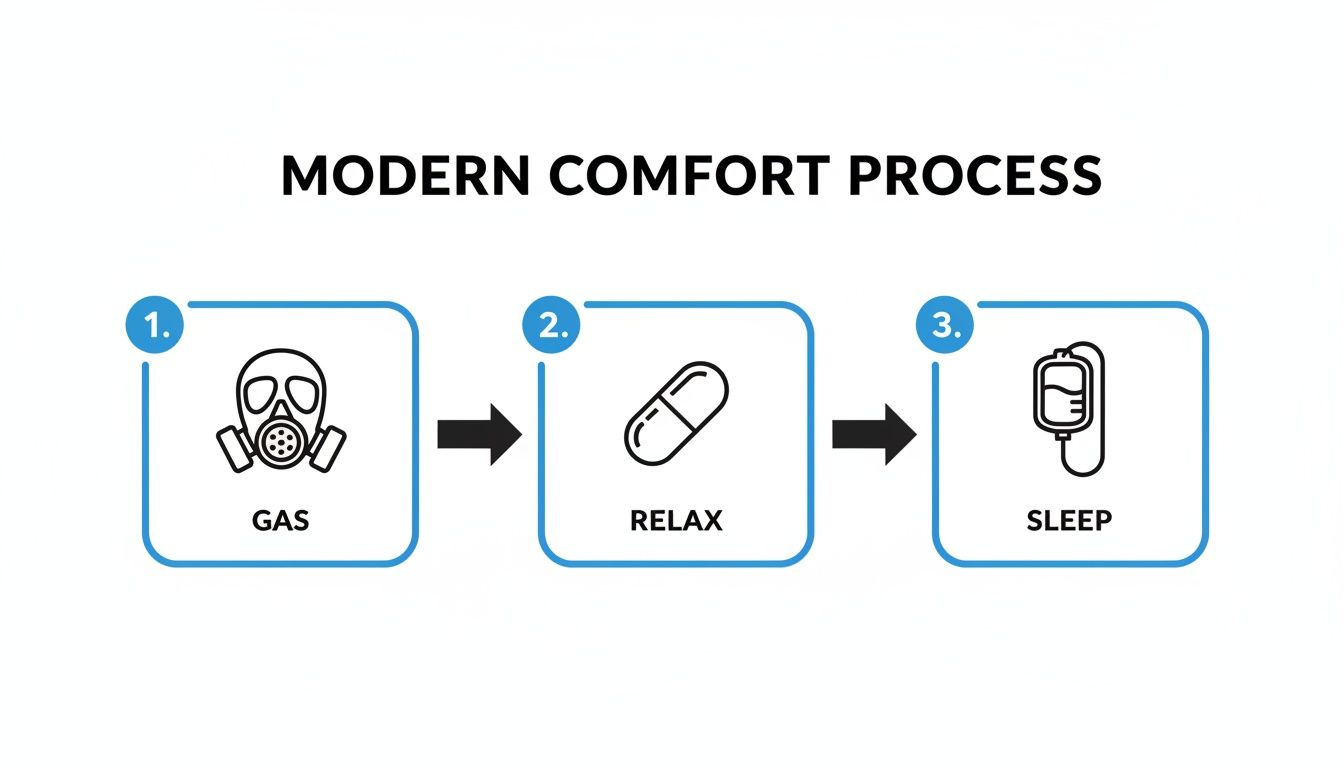
This process shows that you can start with something as mild as nitrous oxide ("laughing gas") and only consider deeper options like oral or IV sedation if and when you need it for more complex treatments down the road.
This gentle, phased approach is a proven, long-term strategy for reclaiming your oral health without pressure. It’s all about meeting you where you are and moving forward one confident step at a time.
Your Questions About Dental Fear, Answered
Even with a game plan, you're bound to have some specific worries rattling around in your head. That's completely normal. Let's tackle some of the most common questions we hear from our San Diego patients about dental fear, with direct answers to help you feel more prepared.
Is It Embarrassing to Be Scared of the Dentist?
Not in the slightest. Dental anxiety isn't a character flaw or something to be ashamed of—it’s a real, recognized psychological response. You’re not alone in this; millions of people from all walks of life feel the exact same way. In fact, a huge number of people avoid the dentist altogether because of it.
A compassionate and experienced dental team, like ours at Serena San Diego Dentist, has seen it all. We've worked with countless anxious patients, and our focus is never on judgment. Our entire approach is built around understanding your specific concerns, keeping you comfortable, and making sure you feel safe and in control. Your feelings are valid, and we're here to help you work through them.
What if I'm Ashamed of How My Teeth Look?
This is a big one. It's probably the most powerful reason people stay away. You're worried about being judged for cavities, stained teeth, or gum problems, so you avoid coming in. But that only allows the problems to get worse, which makes you feel even more embarrassed. It's a vicious cycle.
Please know this: a true dental professional's only goal is to help you, not shame you.
We see ourselves as your partners in health. Our passion is helping people restore their oral health and get their confidence back. A caring team has seen every dental condition imaginable and is focused on one thing—finding solutions for your future, not dwelling on your past. Just making that first call is a huge act of courage, and it's something we genuinely respect.
Can I Request Sedation for a Simple Cleaning?
Yes, you absolutely can. If your anxiety is so high that it’s keeping you from getting even the most basic preventive care, using sedation is a smart and proactive choice. Your mental well-being is just as important as your physical health.
For something like a cleaning, a mild option like nitrous oxide (you probably know it as "laughing gas") is often a perfect fit. It just takes the edge off, helping you stay calm and comfortable without being completely "out." The best thing to do is just talk to us about it. We can have an open conversation during a consultation and figure out a plan that’s tailored specifically for you.
Remember, the goal of sedation isn't just to get through one procedure. It's to help you build positive experiences in a dental setting, which can gradually reduce your overall fear over time.
Payment and Insurance Options for Stress-Free Care
At Serena San Diego Dentist, we believe financial concerns shouldn't add to your anxiety. We strive to make quality dental care accessible and affordable. We accept most major PPO insurance plans, and our knowledgeable team is happy to help you understand and maximize your benefits for any covered services. For patients without insurance or for procedures not covered, we offer flexible out-of-pocket payment options and financing plans to fit your budget. Our goal is to provide transparent information so you can focus on your health, not on financial stress. Please contact us to discuss your specific situation.
How Do I Find a San Diego Dentist Who Is Good with Anxious Patients?
Finding the right dentist in a city like San Diego can feel like searching for a needle in a haystack, but there are definitely clues that point to a patient-focused practice.
First, check out their website. Do they have pages or even just mentions of how they help nervous patients? Look for key phrases like:
- "Sedation dentistry" or "Comfort dentistry"
- "Gentle care" or "Compassionate approach"
- "Anxiety-free" or "Fear-free dentistry"
Next, read the patient reviews on Google or Yelp. Don't just look at the star rating; read what people actually wrote. Pay close attention to stories from other patients who admit they have dental fear and describe how the dentist and staff made them feel.
Finally, a truly patient-focused office will be happy to chat with you over the phone before you even book anything. Don't ever hesitate to call and ask directly, "How do you help patients with anxiety?" Their answer will tell you everything you need to know. For a deeper look into this, check out our guide on addressing the link between dental anxiety and more complex procedures like crown placements.
At Serena San Diego Dentist, we get it. Overcoming the fear of the dentist is a journey, and we're here to support you every single step of the way. Our team is committed to providing gentle, judgment-free care in a calm and welcoming space.
Ready to take the next step toward a healthy, confident smile? Schedule your stress-free consultation with us today.