
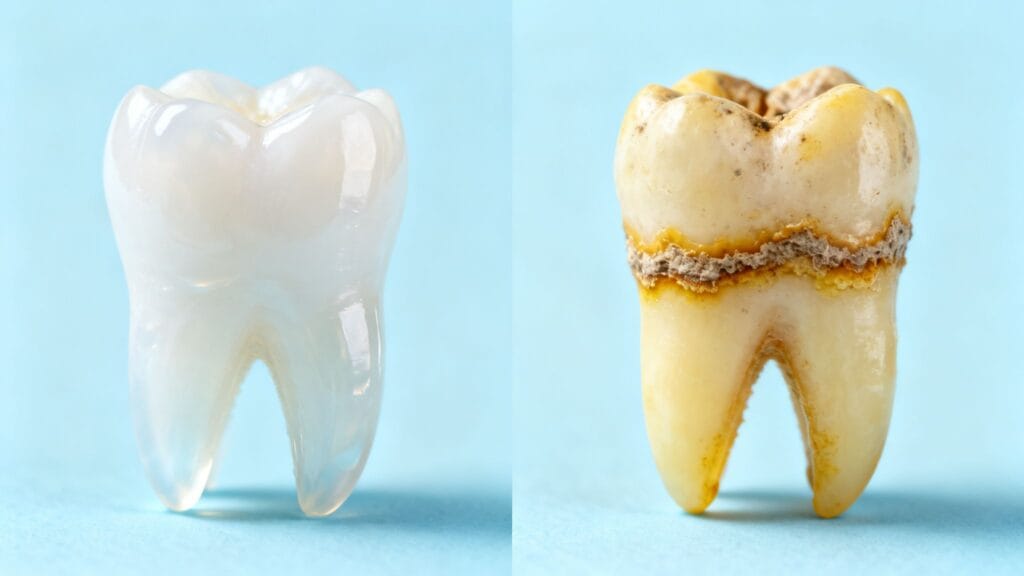
When it comes down to it, the biggest difference between plaque and tartar is this: plaque is the soft, sticky film of bacteria you can remove at home, while tartar is the hardened, mineralized deposit that only a dental professional can scrape away.
Think of plaque as the problem you can tackle every day. Tartar is what happens when that daily effort falls short.
From Sticky Film To Hardened Buildup
A constant battle for your oral health is waged inside your mouth, and it all begins with plaque. Understanding how this manageable film turns into stubborn, rock-hard tartar is the key to preventing much bigger dental problems down the road. This isn’t just about having a pretty smile; it’s about the foundational health of your teeth and gums.
What Is Plaque?
Ever run your tongue over your teeth and feel a fuzzy coating? That’s plaque. It’s essentially a living biofilm—a sticky, organized community of bacteria—that’s always trying to set up camp on your teeth. It’s usually colorless or pale yellow.
This film is a mixture of three main things:
- Bacteria
- Food debris (especially from sugars and starches)
- Saliva
Because plaque is soft, you have the power to control it with simple, consistent daily hygiene. The real danger is that the bacteria in plaque produce acids that eat away at your tooth enamel, paving the road for cavities.
What Is Tartar?
Tartar, which dentists often call calculus, is what plaque becomes when it's left to its own devices. If plaque isn't brushed or flossed away within about 24 to 72 hours, it starts absorbing minerals from your saliva. This process, called calcification, hardens the plaque into a cement-like substance that bonds tightly to your teeth.
This creates a rough, porous surface that’s a perfect magnet for even more plaque, kicking off a vicious cycle of buildup. Once it's there, no amount of brushing will get it off. That's when you need a professional dental cleaning to safely remove it.
This diagram clearly shows how that soft, manageable plaque evolves into hard, stubborn tartar if it isn't removed.
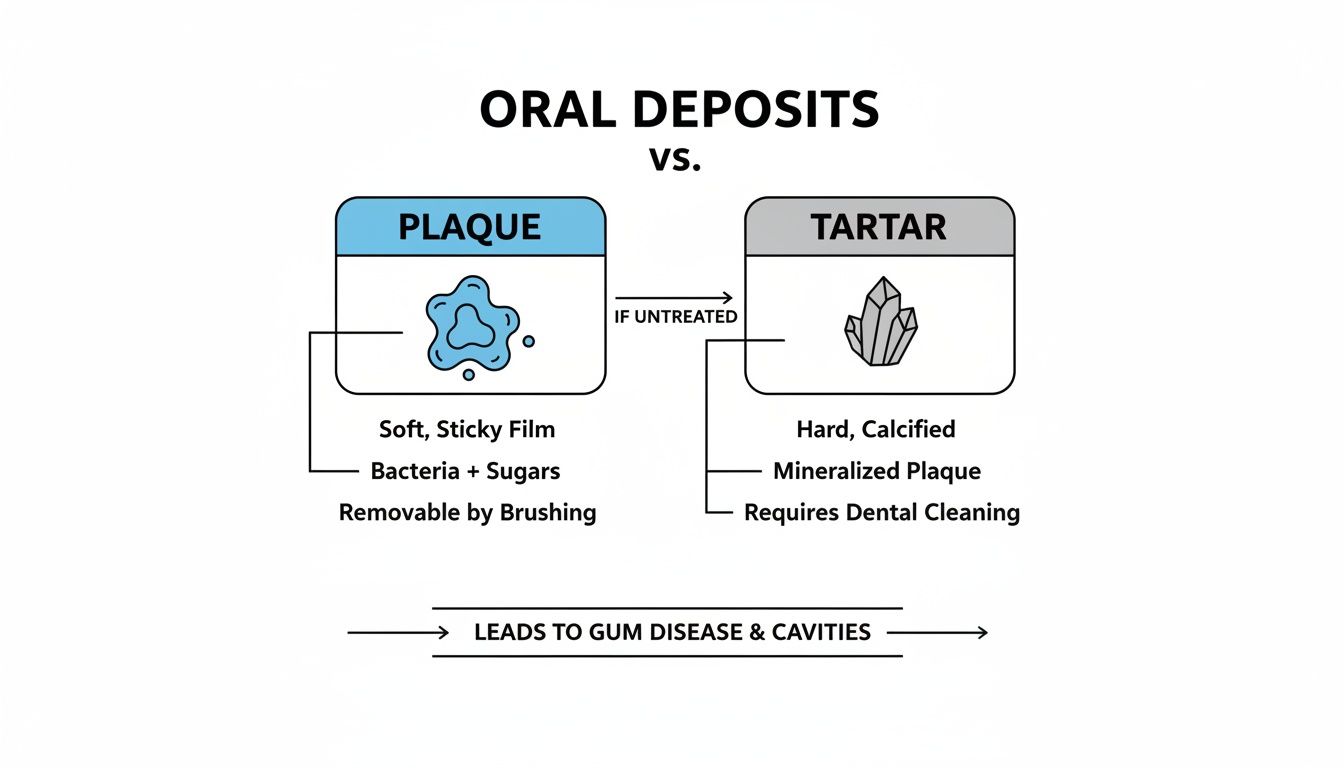
As you can see, stopping plaque in its tracks is the only real way to prevent tartar from ever forming in the first place.
To make it even clearer, let's break down the key differences side-by-side.
Plaque vs Tartar At A Glance
This table gives a quick rundown of the fundamental differences between these two common dental troublemakers.
| Characteristic | Plaque | Tartar (Calculus) |
|---|---|---|
| Texture | Soft, sticky, and film-like | Hard, crusty, and rough |
| Color | Colorless to pale yellow | Yellow, brown, or sometimes black |
| Composition | A living biofilm of bacteria, food, & saliva | Hardened (calcified) dead bacteria & mineral deposits |
| Removal | Can be removed at home with brushing & flossing | Requires professional removal by a dentist or hygienist |
| Location | Forms all over teeth, especially near the gumline | Typically forms between teeth and along the gumline |
Seeing them compared like this really highlights why your daily oral hygiene routine is so crucial—it's your primary defense against the much more serious problem of tartar.
What Exactly Is Dental Plaque?
To get to the bottom of the difference between plaque and tartar, we first need to talk about plaque itself. Think of it as a living, sticky community of germs that sets up shop on your teeth. This soft, tacky film, called a biofilm, starts forming almost immediately after you eat or drink anything.
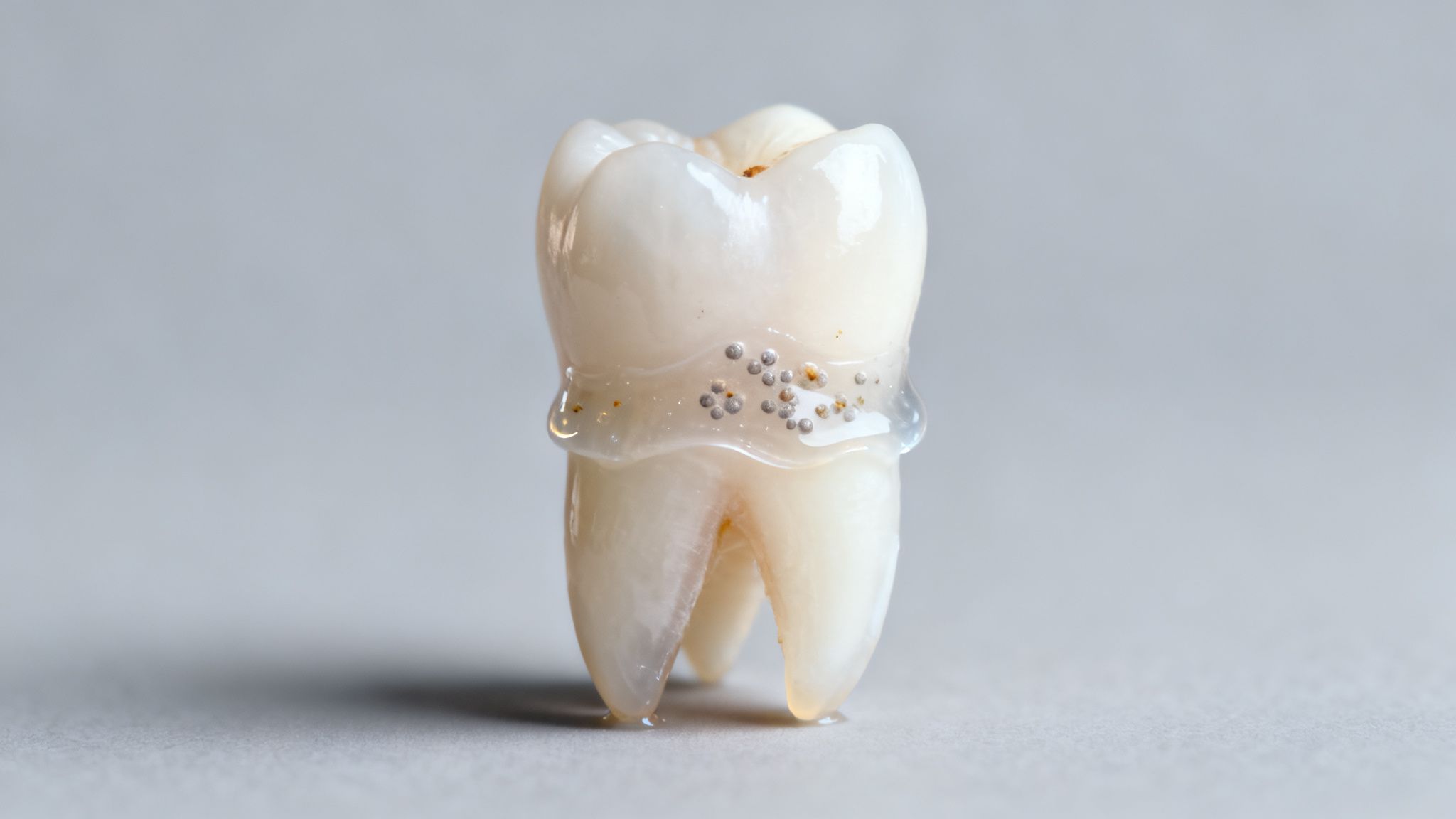
It all starts when the sugars and starches left over from your last meal meet the bacteria that naturally live in your mouth. This mix is what creates that fuzzy feeling you can sometimes feel with your tongue, especially when you first wake up.
The Composition Of Plaque
Plaque isn't just a single substance. It’s a complex, sticky mess that clings to your tooth enamel, and it's made up of a few key ingredients:
- Bacteria: Plaque is home to hundreds of different kinds of bacteria, all living together in a structured little colony.
- Food Particles: Leftover bits of sugary and starchy foods act as the fuel source for these bacteria.
- Saliva: The proteins in your saliva actually help the bacteria grab onto your teeth, creating that film-like structure.
This combination makes plaque a daily problem that you have to stay on top of. For a deeper dive, you can explore our guide for more tips to step up your oral hygiene and keep plaque under control.
The Primary Threat: Acid Production
The real problem with plaque isn't just that it's sticky—it's what the bacteria living in it do. As they feast on the sugars from your diet, these tiny organisms produce acids. And these acids are powerful enough to eat away at your tooth enamel, which is the hard, protective shell of your teeth.
This constant acid attack is what directly causes demineralization, the process that creates dental caries—or what we all know as cavities.
Over time, these repeated acid attacks weaken the enamel, creating tiny holes that will only get bigger if you don't do something about it. At the end of the day, plaque is the root cause of most dental issues. If you can manage it every day, you can stop cavities, gum inflammation, and the formation of its hardened big brother—tartar. Focusing on plaque removal is the single best way to keep your smile healthy and strong for years to come.
How Plaque Hardens Into Tartar
That soft, sticky plaque on your teeth won't stay soft for long. Think of it like wet cement—if you don't clean it up quickly, it's going to harden into concrete. The same thing happens in your mouth when plaque is left to sit.
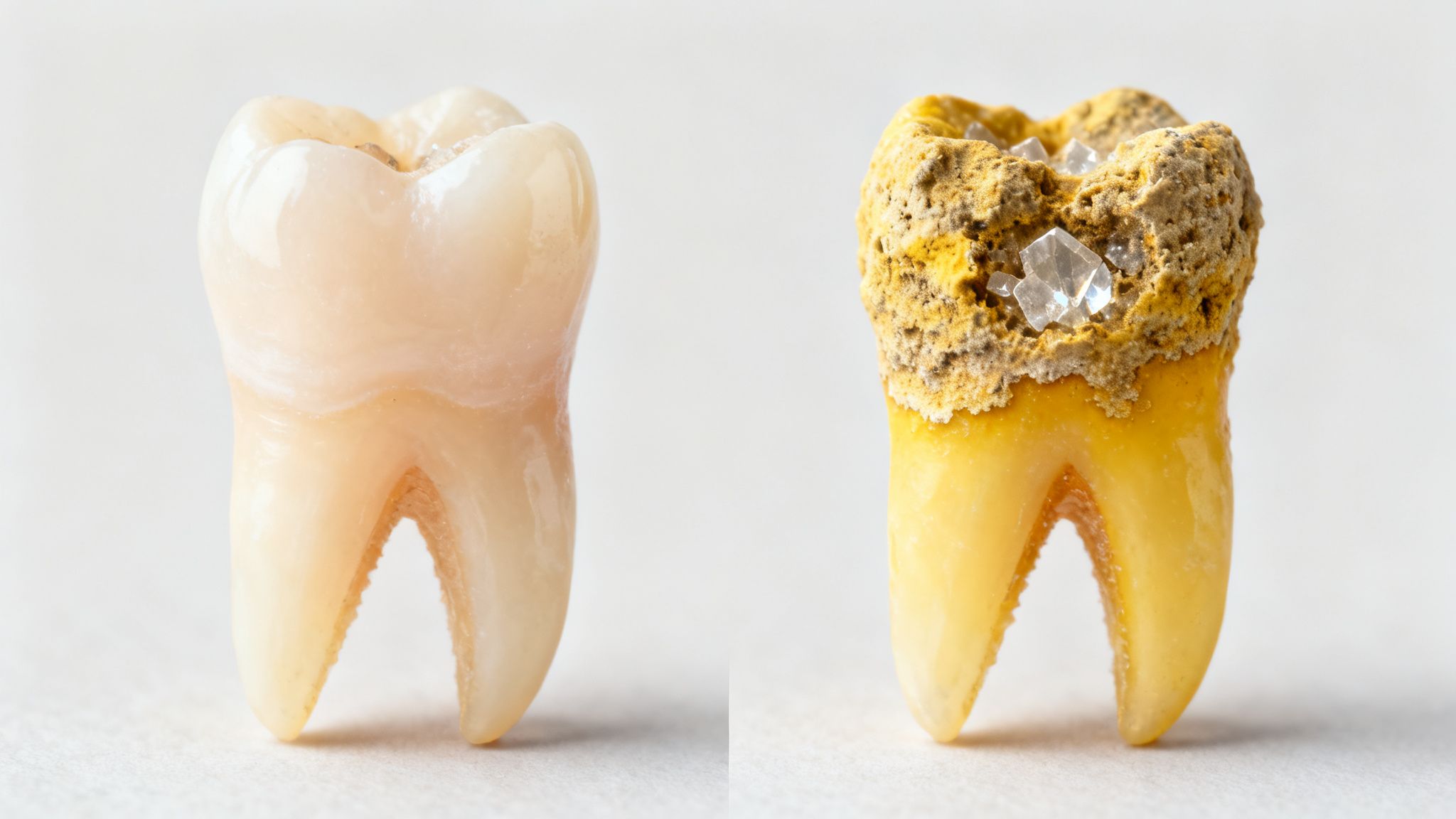
This hardening process is called calcification. It kicks off when minerals floating around in your saliva, like calcium and phosphate, start to deposit into the plaque film. These minerals crystallize, effectively fossilizing the bacteria and food debris into a rock-hard substance. The role of calcium in this process is a major reason why what starts as a soft film becomes so incredibly tough.
The Critical 24-Hour Window
Here’s the part that catches most people by surprise: this transformation happens fast. Plaque can begin to harden into tartar in as little as 24 to 72 hours. That tiny window is exactly why brushing and flossing every single day isn't just a suggestion—it’s the only way to stop tartar before it starts.
Some people are also more prone to tartar buildup than others. A few factors can speed up the hardening process:
- Your Saliva's Chemistry: Everyone's saliva is different. If yours is naturally high in minerals, you’ll likely build up tartar more quickly.
- What You Eat: Sugary and starchy foods are a buffet for plaque-causing bacteria, giving them more fuel to create the sticky film that eventually hardens.
- Crowded Teeth: When teeth are crooked or tightly packed, it creates nooks and crannies that are nearly impossible to clean. Plaque loves to hide out in these spots and harden undisturbed.
Once tartar forms, it creates a rough, crusty surface that makes it even easier for new plaque to grab on. This starts a vicious cycle: more plaque leads to more tartar, which leads to more plaque, all while irritating your gums.
Key Takeaway: You cannot brush or floss tartar away at home. Once that plaque has mineralized, it’s bonded to your tooth enamel. The only safe way to remove it is with professional dental instruments, which might involve a deep cleaning for stubborn buildup.
How To Spot Plaque And Tartar Yourself
Knowing the difference between plaque and tartar is a great start, but the real power comes from being able to spot them in your own mouth. While your dentist has the trained eye, you can absolutely become your own first line of defense with a little know-how.
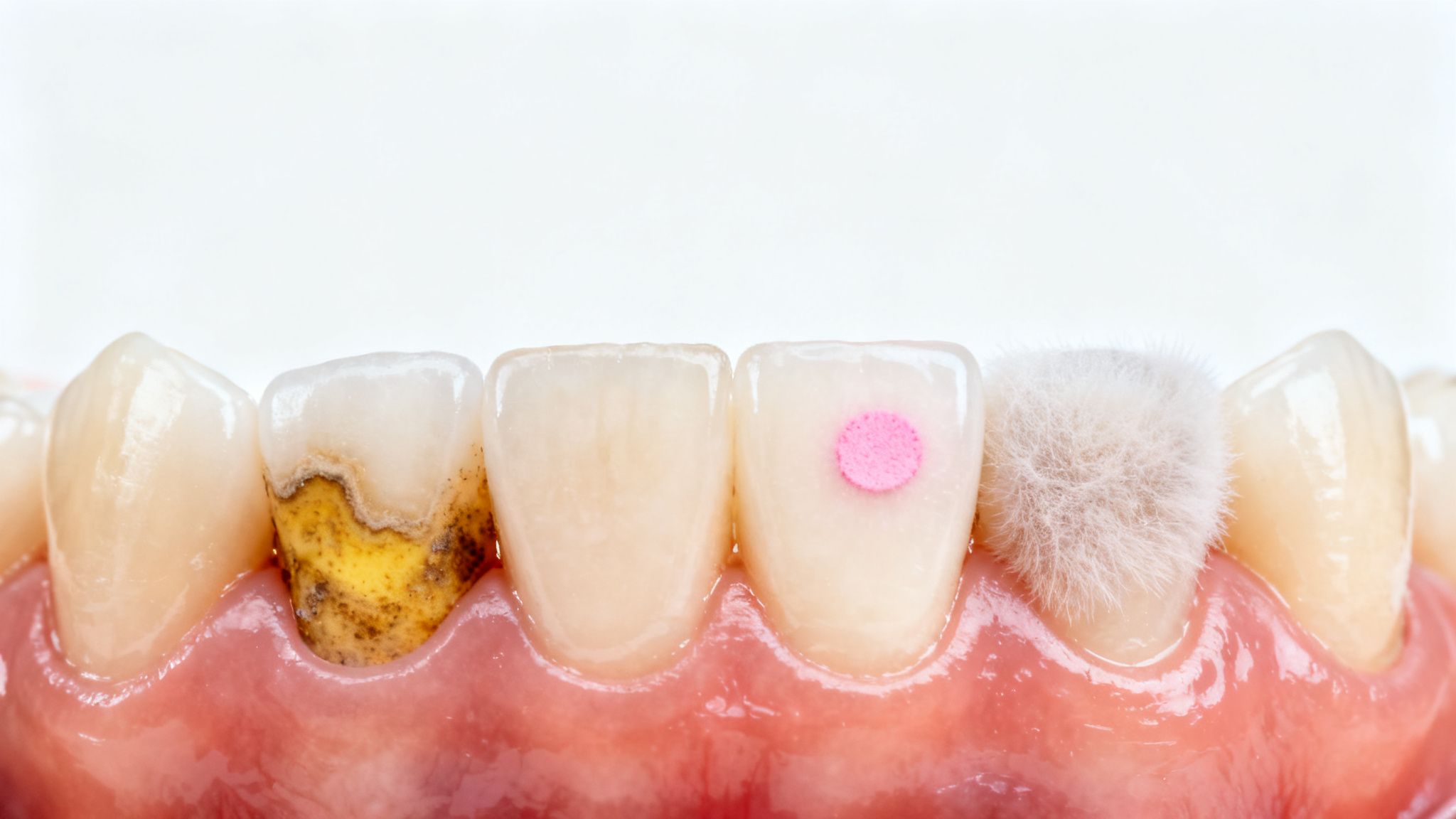
Since plaque is basically a clear, sticky film, your sense of touch is often more reliable than your eyes. Just run your tongue across your teeth. If they feel fuzzy or slick instead of perfectly smooth, you're feeling a fresh layer of plaque. It's that simple.
Making The Invisible Visible
Want to take the guesswork completely out of the equation? There's a clever little tool you can use right at home.
Pro Tip: Grab some disclosing tablets from your local pharmacy. You chew one, swish, and it temporarily stains any plaque on your teeth a bright, impossible-to-miss color like red or purple. It’s a fantastic visual guide showing you exactly which spots your brushing and flossing are missing.
Identifying Hardened Tartar
Tartar, unlike its stealthy predecessor, is much easier to see once it’s taken hold. It isn't trying to hide.
Keep an eye out for these signs:
- A Yellow or Brownish Stain: This hard deposit typically forms right along the gumline, looking almost like a crust.
- Common Hotspots: Check the inside of your lower front teeth and the cheek-side of your upper molars. These areas are right next to major salivary glands, making them prime real estate for buildup.
- A Hard, Rough Texture: If you were to touch it (gently!), it would feel solid and crusty—nothing like the soft film of plaque.
Don't forget to pay attention to other signals from your body. Persistent bad breath (halitosis) that won't go away or gums that bleed easily when you brush are classic red flags. They're telling you that plaque and tartar are causing irritation, and it’s time to take action.
The Health Risks of Tartar Buildup
Tartar is so much more than a cosmetic issue—it's a real threat to your oral health and can even impact your entire body. Think of its rough, porous surface as the perfect hideout for harmful bacteria, keeping them pressed right up against your sensitive gum tissue around the clock. This constant bacterial assault is what kicks off the first stage of gum disease: gingivitis.
If you ignore the early signs, that gingivitis can escalate into periodontitis, a much more serious infection that actually destroys the bone holding your teeth in place. That’s when the damage gets serious.
From Gum Irritation to Systemic Concerns
The bacteria living in tartar release toxins that make your gums red, swollen, and likely to bleed when you brush. Over time, this constant inflammation causes your gums to recede or pull away from your teeth, forming little pockets. These pockets are a nightmare because they trap even more bacteria, deepening the infection. This is the classic sign of periodontitis, which can eventually lead to bone loss and, ultimately, your teeth becoming loose or falling out. For a deeper dive on this, our article explains in detail how periodontitis can be ruining your oral health.
You might be surprised to learn just how common this is. Research has shown that a staggering 68 percent of adults have tartar, which tells you this isn't a rare problem. For folks here in San Diego, from Clairemont to La Jolla, that means about two out of every three people you meet are likely dealing with hardened plaque. You can read more about these stats and understand tartar's prevalence on Crest.com.
But the risks don't end in your mouth. The chronic inflammation caused by severe gum disease is now being linked to much bigger health issues, including heart disease and diabetes. This connection between your mouth and your body is why getting tartar professionally removed isn't just about aesthetics—it’s a crucial step in protecting your overall health.
Your Guide To Prevention And Removal
Winning the fight against plaque and tartar really boils down to a one-two punch: consistent daily care at home and regular professional cleanings. When you get both of these right, you're setting your smile up for a lifetime of health.
Think of your daily routine as your frontline defense. Plaque starts as a soft, sticky film, which means you have the power to remove it completely before it has a chance to harden into stubborn tartar. This is where your everyday habits become non-negotiable.
At-Home Prevention: Your Daily Defense
Your bathroom is the main battleground in the war against buildup. To really stop plaque in its tracks, you need to be consistent with a few key actions every single day.
- Brush the Right Way: It’s not just about going through the motions. You need to brush for a full two minutes, twice a day. Use a soft-bristled brush and a good fluoride toothpaste to gently clean every surface of every tooth.
- Don't Skip the Floss: Flossing is your secret weapon. It’s the only way to clean out the tight spots between your teeth and just under the gumline—the exact places your toothbrush can't reach and where tartar loves to hide.
- Add a Mouthwash: Rinsing with an antiseptic or antimicrobial mouthwash gives you an extra edge. It helps wipe out some of the bacteria that form plaque, adding another layer of protection to your routine.
Sticking to this kind of diligent oral hygiene is how you dramatically lower your risk of tartar buildup and learn how to maintain healthy gums.
Professional Removal: The Only Way To Beat Tartar
Once plaque hardens into tartar, the game changes. No amount of brushing, flossing, or rinsing at home is going to get rid of it. Tartar is like concrete bonded to your teeth, and trying to scrape it off yourself can cause serious damage to your enamel and gums.
This is where professional help isn't just a good idea—it's essential. Only a dentist or dental hygienist has the specialized tools and training to remove tartar safely and effectively.
The process is called scaling, where we carefully and precisely remove those hardened deposits from your teeth. At our San Diego office, our hygienists are masters at getting your teeth perfectly smooth and clean without being rough. Regular check-ups are your best strategy, letting us tackle any buildup before it can cause bigger problems like gum disease.
Keeping your smile free from tartar is a partnership between you and your dental team. If you're seeing signs of buildup or it's just been a while since your last cleaning, don't put it off. Schedule your professional cleaning at Serena San Diego Dentist today, and let our experts get your oral health back on track.