A hard toothache at 10 p.m. can make everything feel urgent. You stop thinking clearly. You start searching for an emergency dentist mission valley while holding your jaw, wondering if you should wait until morning, go to the ER, or do something right now at home.
That panic is normal. Dental pain can get intense fast, and trauma like a broken tooth or swelling can turn from manageable to serious in hours, not days. What matters most is making the next decision correctly.
I’m going to give you the same advice I’d give a patient who called in distressed. First, figure out whether this is a true emergency. Then protect the tooth or control the situation at home for the next few minutes. Then get to the right place for treatment.
The Moment Panic Strikes Your Dental Emergency Guide
A common scenario goes like this. You bite down on something hard, hear a crack, and suddenly one side of your mouth feels wrong. Or you wake up with a deep, pulsing toothache and a swollen cheek. Or your child bumps into you, and now a front tooth is loose or completely out.
In those moments, people make two mistakes. They either wait too long, hoping it will settle down, or they rush to the wrong place and lose valuable time. Neither helps.
When a tooth can still be saved, time matters more than comfort. Deal with the problem first. Then deal with the inconvenience.
The good news is that most dental emergencies follow a simple pattern. Pain, swelling, bleeding, a broken tooth, or a lost restoration usually tells you what to do next if you stay calm and act in order.
Start with these three priorities
- Protect your airway and control major bleeding if that's happening.
- Preserve the tooth or exposed area if a tooth broke, came out, or lost a crown or filling.
- Get evaluated the same day if you have severe pain, swelling, trauma, or signs of infection.
Don’t talk yourself out of treatment
People often minimize symptoms because they don’t want the hassle, cost, or interruption. That’s understandable. It’s also how a fixable problem turns into a bigger one.
A severe toothache, facial swelling, a knocked-out tooth, or ongoing bleeding is not something to monitor for a few days. It needs a decision now. That doesn’t mean panic. It means moving in a straight line.
Is It a True Dental Emergency
Not every dental problem needs immediate treatment tonight. Some do. The fastest way to decide is to stop asking, “Can I tolerate this?” and ask, “Could waiting make this harder to fix?”
Mission Valley clinics prioritize same-day and walk-in care because injuries like a knocked-out tooth or an abscess need treatment within hours, and prompt care can improve the chances of saving a tooth, according to Mission Valley emergency dentist guidance.

Go now if you have any of these
- Severe toothache that doesn’t let up and keeps you from eating, sleeping, or concentrating.
- A knocked-out permanent tooth. This is one of the clearest true emergencies.
- Swelling, pus, or fever with dental pain. That combination can point to infection.
- A broken or cracked tooth with significant pain, exposed inner tooth structure, or sharp edges cutting your mouth.
- A lost filling or crown when the tooth underneath is painful or exposed.
- Bleeding that won’t stop after pressure.
- A tooth that suddenly feels loose after injury.
- Something stuck between teeth that you can’t remove and that’s causing pain.
For a plain-language overview of what qualifies, review these common dental emergencies in San Diego.
You may be able to wait until the next available appointment if
- Mild sensitivity comes and goes
- A small chip has no pain and no sharp edge
- A lost crown isn’t painful and the tooth is protected for the moment
- Dull discomfort improves rather than worsens
Decision rule: If the pain is escalating, the swelling is visible, the tooth is displaced, or the bleeding continues, treat it as urgent.
Your First 30 Minutes What to Do Before You Call
Your first job isn’t to fix the problem completely. It’s to avoid making it worse. Handle the tooth carefully, keep the area clean, and reduce irritation while you get ready to leave.

If you need general relief ideas while you’re arranging care, these tooth pain home remedies can help you stay functional for the trip. They are not a substitute for treatment.
If a permanent tooth gets knocked out
This is the one situation where your handling in the first few minutes can change the outcome. For a knocked-out permanent tooth, immediate reimplantation or transport in milk is critical. Extraoral dry time over 60 minutes causes periodontal ligament cell survival to drop below 50%, while quick action can produce an 80% reimplantation success rate, based on Mission Valley emergency tooth avulsion guidance.
Do this in order:
- Pick the tooth up by the crown only. Don’t touch the root.
- If it’s dirty, rinse it gently. Don’t scrub it.
- If you can, place it back in the socket carefully.
- If you can’t reinsert it, put it in milk.
- Leave immediately for dental care.
The reason milk matters is simple. It helps protect the delicate cells on the root better than letting the tooth dry out.
If you have a severe toothache
A severe toothache usually means inflammation, infection, fracture, or a failing restoration. You won’t solve that at home, but you can stop adding pressure.
- Rinse gently with warm water
- Remove trapped food carefully
- Avoid chewing on that side
- Use a cold compress on the outside of the face if swelling is starting
Watch this short clip if you need a quick visual before you head out.
If a tooth is chipped or broken
A chipped tooth isn’t always critical. A severely broken tooth often is.
- Save any large fragment if you can find it
- Rinse your mouth gently
- Cover sharp edges with dental wax if available
- Don’t test the tooth repeatedly with your tongue or bite on it
If a crown or filling falls out
The danger is exposure. Once dentin is open, the tooth can become very sensitive fast.
Try these steps:
- Keep the area clean
- Avoid sticky, hard, or very cold foods
- Bring the crown with you if you still have it
- Don’t force it back if it doesn’t seat easily
ER vs Emergency Dentist Making the Right Choice in San Diego
People confuse these two for understandable reasons. Both say “emergency.” They do very different jobs.
If you have a life-threatening issue, go to the ER. If you need a tooth diagnosed, repaired, stabilized, extracted, or saved, you need a dentist.
According to Mission Valley emergency dental provider information, emergency rooms can stabilize bleeding or wounds from dental accidents but can’t repair or save teeth, while an emergency dentist in Mission Valley with a 4.9-star rating from over 313 patients is equipped for care such as extractions, root canals, and tooth repairs.
Go to the ER when
- Breathing feels affected
- Swelling is spreading into the face or neck
- You have uncontrolled bleeding
- You suspect a jaw fracture or major facial trauma
- The dental injury happened with a more serious medical injury
Go to an emergency dentist when
- You have tooth pain that needs diagnosis
- A tooth is broken, loose, or knocked out
- A filling or crown came off
- You have a likely abscess
- You need an X-ray, root canal, extraction, or restoration
| Problem | ER | Emergency dentist |
|---|---|---|
| Heavy bleeding after trauma | Stabilizes | May treat after stabilization |
| Knocked-out tooth | Refers after initial support | Reimplants or evaluates salvage |
| Severe toothache | Pain support only | Diagnoses and treats cause |
| Broken crown or filling | Not repaired | Repaired or replaced |
| Dental abscess | Manages medical risk | Treats dental source |
Go to the ER for threats to breathing, bleeding, or major trauma. Go to the dentist for the tooth itself.
If you’ve ever wondered why some clinics are easier to find when you need urgent care, this overview of Local SEO for Medical Practices explains how healthcare offices make emergency access clearer online. For treatment details, this page on dental emergency care in San Diego shows the kind of problems an office can address directly.
Comprehensive Emergency Care at Serena San Diego Dentist
When you’re in pain, vague promises are useless. You need to know what happens once you get in the chair.
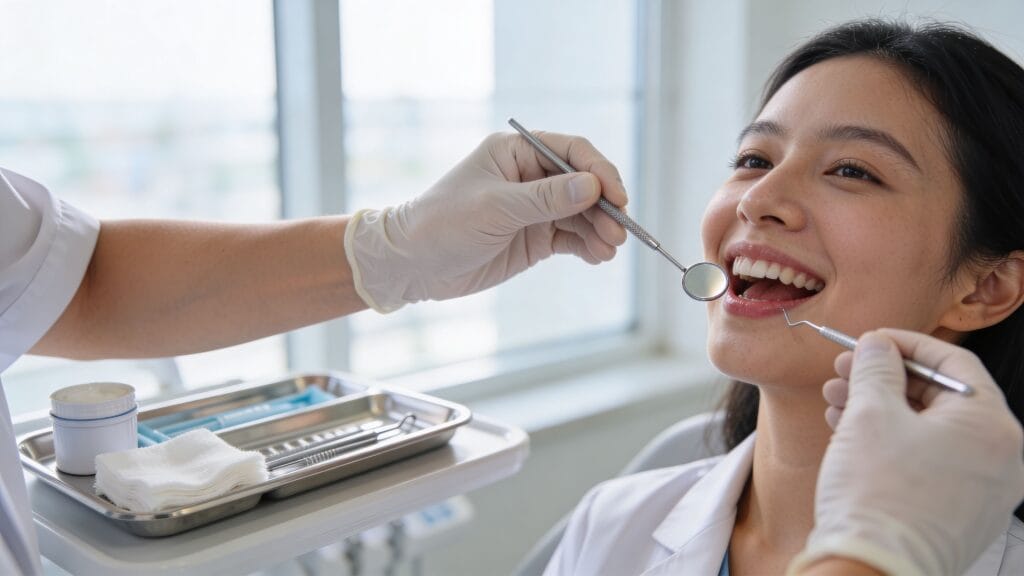
An emergency visit should start with a focused exam and imaging. Emergency exams at the clinic involve urgent X-rays to identify the source of the problem, and treating an infected tooth with root canal therapy within 24 hours can achieve a 90% to 95% success rate in saving the tooth, according to Mission Valley emergency dental exam guidance.
What gets treated in a true emergency visit
The point of emergency care is not to “take a look.” It’s to move from uncertainty to a treatment decision quickly.
That usually includes:
- Urgent X-rays to locate decay, infection, fracture, or root involvement
- Pain control so you can tolerate the procedure
- Tooth-preserving treatment when the tooth is still savable
- Extraction when the tooth can’t be predictably restored
- Temporary or definitive repair for broken teeth and lost restorations

The treatments patients usually need fast
A painful infected tooth often needs one of two things. Either the nerve space is cleaned and sealed through root canal therapy, or the tooth is removed if the structure is too damaged.
A cracked tooth may need stabilization and then a crown. If you want to understand how modern single-visit repair can work after an emergency, this page on same-day CEREC crowns in San Diego is useful.
I’ll name one practical local option plainly. Serena San Diego Dentist offers same-day emergency dental care in San Diego and is relevant when you need evaluation, imaging, pain-focused treatment, and repair in one setting.
Clinical priority: Save the tooth if it can be saved predictably. Remove the source of pain and infection if it can’t.
What competent emergency care looks like
Good emergency dentistry is fast, but it isn’t rushed. The office should identify the source, explain your immediate options, and tell you what can be done today versus what may need follow-up.
If you’re curious why some practices communicate these services more clearly than others, this guide to Dental SEO strategies gives a useful behind-the-scenes look at how dental offices organize service pages and urgent care information online.
Navigating Your Visit Insurance Payments and Directions
Once you’ve decided to go, remove the remaining friction. Don’t let paperwork or uncertainty slow you down.
The simplest move is to call the office, describe the problem in one sentence, and ask whether you should come in immediately. If you’re headed to a Mission Valley emergency location, leave with your ID, insurance card if you have one, a list of medications, and any broken tooth fragment or crown you were able to save.

Insurance and payment
Most patients worry about cost right when they also need treatment fast. Don’t let that stop you from calling.
A practical approach is:
- If you have PPO insurance, ask the office to verify benefits and explain what emergency evaluation and treatment may be covered.
- If you’re paying out of pocket, ask for the immediate treatment plan first, then discuss phased care if more than one procedure is needed.
- If flexibility matters most, ask about payment options before you arrive so there are no surprises.
For general coverage questions, this page on dental insurance in San Diego can help you prepare.
Getting there without added stress
Use a map app before you leave, not while driving. If you’re in pain, ask someone else to drive. If you’re coming from Clairemont Mesa, La Jolla, or another nearby San Diego neighborhood, choose the route you know best instead of the one that saves only a few minutes.
A side note that matters in moments like this. Clear online location details are part of what makes urgent care easier to access, and these essential local SEO practices for businesses explain why some local listings are much more usable than others.
Frequently Asked Questions About Emergency Dental Care
Can I wait until tomorrow if the pain comes and goes
Maybe, but don’t use temporary relief as proof that the problem is minor. If the pain is severe, wakes you up, or is paired with swelling, call the same day.
Do I need an appointment for emergency care
Call first if you can. That helps the team prepare. But true emergencies are often handled with same-day scheduling and urgent evaluation.
Will treatment hurt
The goal in emergency dentistry is to get you comfortable and treat the cause. Patients usually fear the procedure more than the problem itself. The untreated problem is often worse.
What if this happens on a weekend
Weekend availability matters in emergency care. Some Mission Valley clinics are open extended hours and weekends, so call instead of assuming you need to wait.
How much will it cost
Costs depend on what’s wrong and whether you need an exam only, imaging, a root canal, an extraction, or a repair. Ask for the immediate treatment recommendation first. Then ask what must be done today and what can wait.
Should I go in for swelling even if the tooth pain is tolerable
Yes. Swelling changes the situation. Dental infections can spread, and that’s not something to manage casually at home.
If you’re dealing with sudden tooth pain, swelling, a broken tooth, or a knocked-out tooth, act now and get clear guidance from Serena San Diego Dentist. Call, explain what happened in one sentence, and ask for the earliest emergency evaluation available.