You wake up, glance in the mirror, and notice the same thing you’ve been trying to ignore. Maybe one tooth looks shorter than it used to. Maybe your denture shifts when you talk. Maybe you’ve had dental work done before, but your bite still feels “off,” like the gears in a machine no longer line up.
That’s often the moment people start searching for prosthodontics san diego. Not because they want a dental dictionary definition, but because they want to know why everyday chewing, speaking, or smiling suddenly feels complicated.
For many people in San Diego, Clairemont Mesa, and La Jolla, the issue isn’t a simple cavity or routine cleaning. It’s a mix of concerns that connect to each other: worn teeth, old crowns, missing teeth, jaw discomfort, cosmetic frustration, or trouble eating comfortably. When those problems overlap, a more advanced kind of restorative planning becomes important.
Your Guide to Advanced Dental Restoration in San Diego
A common story goes like this. Someone chips a tooth years ago, gets it repaired, then starts grinding at night. Another tooth wears down. A bridge feels harder to clean. A denture becomes looser over time. Nothing seems dramatic on its own, but together, the mouth stops working smoothly.
That’s where prosthodontics comes in. It’s the area of dentistry focused on restoring and replacing teeth, especially when the case involves function, appearance, and long-term stability at the same time. In practical terms, prosthodontic care helps when the goal isn’t just to “fix one tooth,” but to make the whole smile work together again.
San Diego has clear demand for this kind of care. The region’s prosthodontics market segment generates approximately $5.3 million in annual revenue, which points to strong local need for advanced restorative and reconstructive treatment, according to this San Diego prosthodontics market profile.
When routine dentistry may not feel like enough
You might be in that category if you’ve noticed any of these patterns:
- Repeated repairs on the same teeth that don’t seem to last
- Multiple missing teeth that affect chewing or confidence
- A denture that rocks or slips
- A bite that feels uneven, especially after past dental treatment
- Aesthetic concerns tied to function, such as front teeth that are worn, shortened, or fractured
Sometimes the real problem isn’t one damaged tooth. It’s that the whole bite has drifted out of balance.
People often assume they should just keep patching one issue at a time. But when the mouth works like a system, piecemeal fixes can feel like replacing one tile on a roof that already needs structural repair.
If you’re trying to understand your options locally, it helps to start with a broader view of comprehensive dentistry in San Diego and then narrow down whether specialist-level restoration fits your needs.
What Exactly Is a Prosthodontist
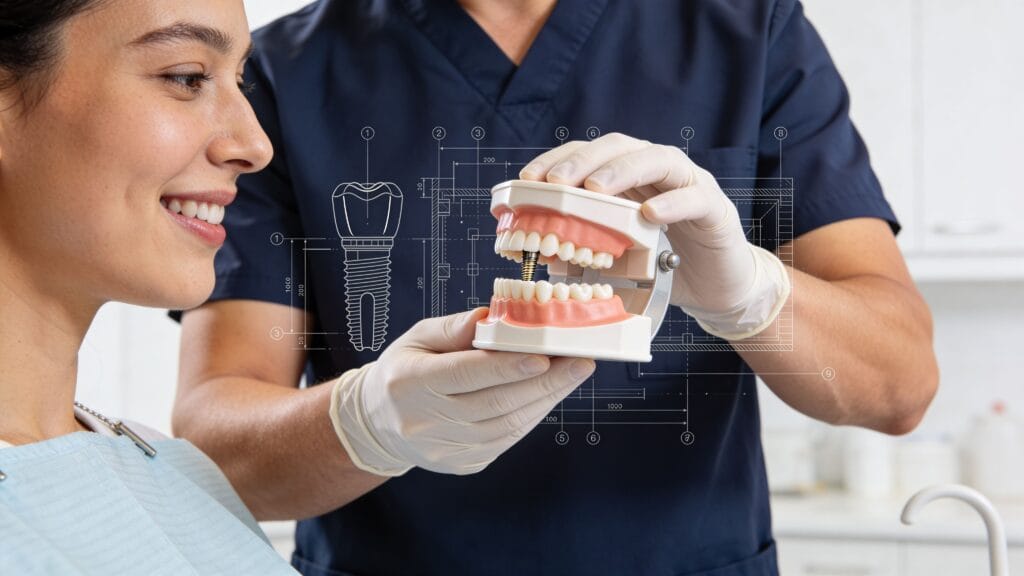
A prosthodontist is a dentist with advanced training in restoring and replacing teeth, especially in complex cases. They focus on crowns, bridges, veneers, dentures, implants, bite design, and full-mouth rehabilitation. Their work sits at the intersection of engineering, aesthetics, and biology.
A useful analogy is this. A general dentist is like a skilled general contractor. They handle a wide range of important work. A prosthodontist is more like the architect for a complicated rebuild. They look at the entire structure first, then design how each part should fit, function, and last.

Why the training matters
This specialty isn’t casual extra education. The training path is extensive and involves advanced study beyond dental school. Nationally, prosthodontics programs enrolled 2,562 individuals in the 2022-23 academic year, reflecting how rigorous the pathway is, based on advanced dental education data from the ADA file.
That matters to patients because complex restorations aren’t just about making teeth look white and even. They have to survive chewing forces, fit your facial proportions, and work with your jaw movement.
The easiest way to understand occlusion
Occlusion means how your upper and lower teeth come together. Patients often hear that word and tune out. A simpler way to think about it is this: your bite is the way the lid fits on a container.
If the lid sits crooked:
- some spots take too much pressure
- other spots don’t touch enough
- the container still closes, but it doesn’t seal properly
Your mouth works the same way. When bite forces land unevenly, teeth can wear, crack, loosen, or make jaw muscles work harder than they should.
Practical rule: If dental work looks fine but feels wrong when you chew, bite design may be the real issue.
Why some cases need a specialist mindset
A prosthodontist often becomes important when several problems overlap:
- Missing teeth plus bite collapse
- Old crowns plus grinding
- Cosmetic concerns plus structural damage
- Implant planning plus limited space or alignment issues
In those situations, the question isn’t only “How do we repair this tooth?” It’s “How do we rebuild the system so the repair makes sense?”
If you’re comparing options, this overview of restorative dentistry procedures gives a good starting point for understanding where specialist planning may fit.
Prosthodontic Treatments and Conditions They Address
Some patients know they need a crown. Others know they hate their denture. Many don’t know what category their problem falls into, only that something feels unstable, uncomfortable, or unattractive.
The simplest way to sort prosthodontic care is by the type of problem being solved: missing teeth, damaged teeth, or a bite that no longer functions well as a whole.

Missing teeth
When teeth are missing, treatment can range from replacing one tooth to rebuilding an entire arch.
- Dental implants can support single crowns, bridges, or larger restorations.
- Bridges replace a missing tooth by connecting to neighboring teeth.
- Full or partial dentures replace multiple missing teeth with removable options.
- Implant-supported dentures give more stability than conventional removable dentures.
For patients missing many teeth, implant-supported dentures can provide 5 to 10 times greater stability than conventional dentures and show a 95-98% success rate at the 5-year mark, according to this prosthodontics treatment overview from Scripps Center for Dental Care.
That difference is easier to understand if you think of a standard denture as a shoe resting on the ground, while an implant-supported denture is more like a shoe that laces to your foot. Both are wearable. Only one feels anchored.
If you’re weighing choices, this guide to dental implants vs dentures can help you frame the tradeoffs.
Damaged or weakened teeth
A prosthodontist also treats teeth that are still present but no longer strong enough, attractive enough, or functional enough on their own.
Common solutions include:
- Crowns for broken, heavily restored, or weakened teeth
- Veneers for selected front-tooth cosmetic concerns
- Inlays and onlays when a tooth needs more than a filling but not a full crown
- Complex replacement of old dental work when several restorations no longer fit the bite
Patients often find this confusing. A cosmetic problem and a structural problem can look similar. A short front tooth may seem like a simple appearance issue, but if it has worn down because the bite is imbalanced, appearance alone won’t fix it.
Full-mouth rehabilitation and bite-related cases
Full-mouth rehabilitation means rebuilding multiple teeth in a coordinated plan. It’s not a single product. It’s a strategy.
A patient may need it when they have:
- worn teeth from grinding
- repeated fractures
- collapsed bite height
- failing older dental work
- missing teeth combined with jaw strain
Consider renovating a kitchen after a water leak. You don’t just repaint one cabinet door if the flooring, plumbing, and counters have all been affected. You make a full blueprint first.
Some patients with jaw tension or disrupted sleep also wonder whether dental treatment overlaps with breathing issues. In that context, a general educational resource on sleep apnea treatments beyond CPAP can help you understand where oral appliances may fit into a broader conversation.
General dentist vs prosthodontist scope of work
| Procedure | General Dentist | Prosthodontist |
|---|---|---|
| Routine crowns | Commonly provides | Provides, especially for complex cases |
| Veneers | Commonly provides | Provides with deeper focus on bite, symmetry, and complex smile design |
| Single tooth replacement | May provide or refer | Frequently plans and restores |
| Full dentures | Commonly provides | Provides highly customized planning for difficult fit or advanced rebuilds |
| Implant restorations | May provide or coordinate | Often leads restoration design and functional planning |
| Full-mouth rehabilitation | May diagnose and refer | Core area of advanced expertise |
| Bite reconstruction | Limited in routine settings | Central part of specialty care |
The Prosthodontic Treatment Journey in San Diego
Patients generally feel less anxious once they know the sequence. Prosthodontic treatment usually follows a careful progression rather than one rushed appointment.

The first visit is about diagnosis, not pressure
The opening appointment is usually the most investigative part of the process. The dentist listens to what bothers you, examines the teeth and gums, checks how your bite meets, and reviews imaging.
Patients often expect this visit to focus on the obvious issue. Instead, a good prosthodontic evaluation looks for the cause behind it. A fractured crown may be the symptom. The underlying driver could be grinding, a shifted bite, or a missing tooth elsewhere that changed force patterns over time.
Planning works like a blueprint
After diagnosis comes treatment planning. Options get organized in a way that makes sense.
Some people need one clear solution. Others need phases. A phased plan may involve stabilizing pain first, protecting worn teeth, replacing missing teeth, then refining esthetics. The order matters because dentistry is mechanical as well as biological.
A strong treatment plan answers three questions at once: Will it work? Will it last? Will it look natural?
For patients who want to understand how one common restorative step fits into the bigger picture, these dental crown procedure steps are a useful reference.
Treatment may be simple, staged, or collaborative
Some prosthodontic care is straightforward. A single well-planned crown might be completed quickly. More complex care can involve temporary restorations, healing periods, or coordination with an oral surgeon, periodontist, or implant provider.
That collaborative side matters. In advanced restorative care, one clinician may place an implant, another may manage supporting gum tissue, and the prosthodontic plan guides how the final teeth should function together.
A short overview can make the flow easier to picture:
Final placement is not the finish line
When the final crown, bridge, denture, or implant restoration is placed, patients often think treatment is “done.” In reality, follow-up is part of the result.
Fine adjustments may be needed so the bite settles evenly. Home care instructions matter. Night guards may matter. Recall visits help protect the investment and catch small issues before they become expensive ones.
The best prosthodontic work should feel less like a dramatic event and more like a system returning to order.
Understanding Costs and Insurance for Prosthodontic Care
Cost is one of the first questions patients ask, and that’s reasonable. Prosthodontic treatment can involve advanced planning, custom materials, laboratory work, and in some cases multiple providers. That means the total fee depends on what is being rebuilt.
What affects the cost
A few variables usually shape the overall investment:
- Case complexity such as one crown versus a larger rehabilitation
- Type of restoration such as veneer, bridge, denture, or implant-supported work
- Material choice including options like porcelain or zirconia
- Technology used for imaging, design, and fabrication
- Need for coordinated care with surgical or periodontal specialists
The key point is value. A restoration isn’t just a product. It’s a custom-made part in a living system. The right fit, bite design, and long-term planning often matter more than finding the lowest upfront number.
What insurance may and may not cover
Dental insurance usually draws a line between medically necessary restorative treatment and elective cosmetic treatment. That distinction matters.
Crowns, dentures, and some replacement procedures may receive coverage when they restore function. Cosmetic upgrades may not. PPO plans often give patients more flexibility, but benefits vary by plan, waiting periods, annual maximums, and missing-tooth clauses.
A few smart questions to ask any office include:
- Is this procedure considered restorative or cosmetic by my plan?
- Will you submit a pre-treatment estimate?
- Are there alternative treatment paths at different fee levels?
- Do you offer financing or phased treatment?
Ask for a written treatment plan that separates urgent needs from optional upgrades. That makes decisions easier.
If you want a better foundation before calling an office, this page on dental insurance in San Diego helps explain common coverage questions in plain language.
Paying out of pocket doesn’t always mean all at once
Many patients choose out-of-pocket payment for flexibility, even when they carry insurance. Others combine insurance benefits with financing or staged treatment. The most helpful offices are transparent about what is essential now, what can wait, and how payment options fit the plan.
Why Choose Serena San Diego Dentist for Prosthodontics
When patients compare providers for advanced restorative care, they’re usually looking for three things. They want clinical judgment, modern tools, and a process that doesn’t feel fragmented.
One major advantage of a technology-forward practice is digital precision. According to this San Diego prosthodontic technology overview, advanced CAD/CAM systems can fabricate restorations like crowns with sub-millimeter accuracy, reduce production errors by up to 90% compared with traditional methods, and in some cases support single-visit restorations. For patients, that can mean fewer remakes, fewer adjustments, and a smoother experience.
What patients should look for in a prosthodontic provider
- Thorough diagnosis instead of a quick single-tooth fix
- Attention to occlusion so restorations don’t just look good in photos
- Digital tools such as advanced imaging and CAD/CAM workflows
- Comfort with interdisciplinary cases involving implants, gums, and complex rebuilding
- Clear communication about timelines, materials, and follow-up

Why that matters in San Diego
In a city where appearance and lifestyle both matter, patients often want dentistry that supports photos, meetings, meals out, and long-term comfort. But premium care isn’t only about cosmetics. It’s about getting the mechanics right so the cosmetic result lasts.
That’s especially relevant for people traveling from neighborhoods such as Clairemont Mesa and La Jolla, where patients often want efficient planning and high-detail results without bouncing between disconnected offices.
Frequently Asked Questions About Prosthodontics
Do I need a referral from my general dentist to see a prosthodontist
Usually, no. Many patients schedule directly when they know they have a complex concern such as missing teeth, failing dental work, or bite issues. That said, referrals are still common, especially when a general dentist recognizes that a case needs advanced planning.
Is prosthodontic treatment painful
Most treatment is designed with patient comfort in mind. The exact experience depends on the procedure, your oral condition, and whether surgery is involved. Many patients feel more comfortable once they understand the plan and know which steps involve numbing, temporary restorations, healing, or follow-up adjustments.
How long do crowns, implants, or dentures last
There isn’t one universal answer because longevity depends on home care, grinding habits, bite forces, maintenance visits, and the condition of supporting teeth or bone. A well-designed restoration generally lasts longer when the bite is balanced and the patient keeps up with regular care.
Why does collaborative care matter so much
Modern prosthodontics often works best as team-based care. The American College of Prosthodontists emphasizes collaboration with specialists such as periodontists and oral surgeons so patients receive more complete outcomes, as described in this discussion of collaborative prosthodontic care.
That team model is especially useful when treatment involves implants, gum shaping, jaw function, and esthetics all at once.
What if I still have questions before booking
That’s normal. Many patients want to ask practical questions privately before committing to a consultation. If you’re comparing communication tools that make healthcare offices easier to reach, these healthcare live chat solutions show how online conversations can help patients get quick answers without a long phone call.
How do I know it’s time to see a prosthodontist
You should consider it when your dental problems feel connected rather than isolated. Examples include repeated breakage, multiple missing teeth, a denture that no longer fits, cosmetic concerns tied to wear, or a bite that feels unstable after prior treatment.
If you're dealing with worn teeth, missing teeth, unstable dentures, or dental work that never quite feels right, Serena San Diego Dentist can help you take the next step. Schedule a consultation to get a personalized evaluation, review your insurance and payment options, and find out whether advanced prosthodontic care is the right fit for your smile.