If you have been told you need a graft before a dental implant, your first question is usually not about titanium or healing stages. It is whether bone grafting & implants with PPO insurance in Clairemont Mesa 92117 will actually be covered, how much you will pay, and whether the process is worth it. Those are practical questions, and they deserve clear answers.
For many patients, the issue starts after a tooth has been missing for a while. Bone naturally shrinks when it no longer supports a tooth root, which can make implant placement less predictable without rebuilding that area first. A bone graft is often the step that turns an implant from a maybe into a stable, long-term solution.
Bone grafting & implants with PPO insurance in Clairemont Mesa 92117
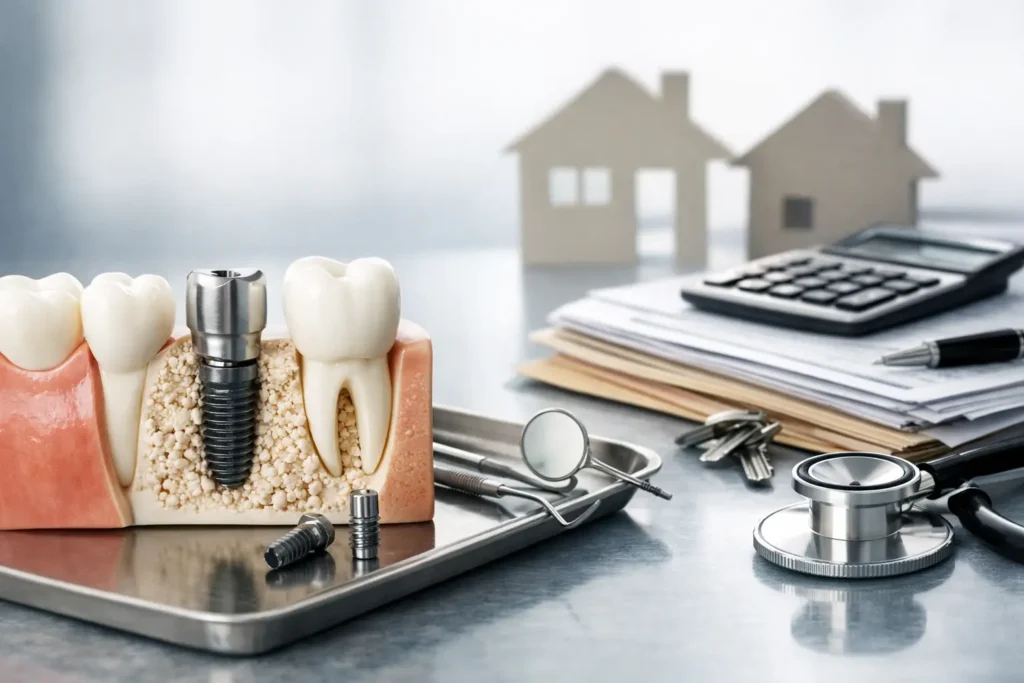
PPO dental insurance can help, but it rarely works in a simple yes-or-no way. Coverage depends on your specific plan, annual maximum, waiting periods, frequency limitations, and whether the carrier classifies part of the treatment as major restorative care. Some plans contribute toward extractions, grafting, or the crown on top of the implant, but not the implant body itself. Others may cover portions of the surgical phase yet leave a larger balance for the restorative phase.
That is why patients often get mixed answers when they call their insurance company directly. The representative may tell you a service is covered in theory, but the actual benefit depends on coding, remaining annual maximum, deductibles, and documentation. In real life, what matters is not just whether your plan includes implants. It is how the treatment is staged and how the claim is processed.
A well-run implant case should include a benefits review before treatment begins. That gives you a more realistic sense of your out-of-pocket cost instead of a rough guess. In a modern office setting, digital imaging and detailed diagnostics also help support a clinically sound treatment plan, especially if bone loss is part of the picture.
Why bone grafting may be necessary before implants
Not every implant patient needs a graft. If the bone is dense and tall enough, an implant may be placed without any additional rebuilding. But when a tooth has been missing, infected, fractured, or extracted after significant damage, the jawbone may no longer have the shape or volume needed for ideal support.
In those cases, grafting helps rebuild the foundation. The goal is not to add treatment for the sake of it. The goal is to create enough healthy bone so the implant can integrate properly and remain stable under daily function.
The type of graft matters. A socket preservation graft may be done at the time of extraction to reduce shrinkage. A ridge augmentation may be recommended later if the area has already collapsed. Some cases are straightforward and localized. Others are more complex and may require longer healing before the implant can be placed.
This is where personalized planning matters. Two patients can both need one implant, yet have very different timelines and costs depending on how much bone is available on day one.
What PPO insurance usually helps cover
PPO plans tend to be more flexible than HMO-style dental plans, but flexibility does not mean full coverage. In many cases, the exam, imaging, and basic diagnostic work are partially covered according to your plan benefits. Extractions may also receive a benefit if a tooth must be removed before grafting or implant placement.
Bone grafting is where things become less predictable. Some plans cover it when it is tied to preserving the site after extraction or supporting oral function. Some classify it as a separate surgical procedure with partial benefits. Others exclude grafting related to implants altogether. The same variation applies to implants themselves. One PPO may contribute significantly, while another may cover only the final crown or none of the implant phases at all.
Annual maximums are often the biggest limitation. Even when a plan offers implant benefits, the total allowance may be used up quickly once diagnostics, surgery, grafting, and restoration are factored in. That does not mean treatment is unaffordable. It means the financial plan should be built carefully, with realistic expectations from the start.
What affects your out-of-pocket cost
Your final cost depends on more than insurance. The number of missing teeth matters, of course, but so does the condition of the bone, whether an extraction is needed first, and whether the case requires a simple graft or a more advanced augmentation.
Timing also affects cost distribution. Some patients choose to stage treatment across benefit periods, which can help maximize two annual maximums instead of one. That approach is not always ideal clinically, but in the right case it can make treatment easier to manage financially. This is one of those situations where it depends. The best timeline is the one that protects the result, not just the insurance benefit.
Material choices can matter as well. So can the need for temporary tooth replacement during healing. A treatment plan should account for function, appearance, and long-term stability, not just the surgical appointment itself.
How the implant process usually works
A premium implant experience starts with precision. Your consultation should include a thorough exam, digital imaging, and a discussion of both health and cosmetic goals. If bone loss is present, that needs to be measured accurately, not estimated.
Once the site is evaluated, treatment is planned in phases. If the tooth is still present but non-restorable, extraction may come first. A graft may be placed immediately or later, depending on the condition of the area. Healing time varies. Some patients move to implant placement relatively quickly, while others need several months for the graft to mature.
After the implant is placed, the bone needs time to fuse to it. That integration period is what gives implants their strength and longevity. Once healing is confirmed, the final restoration is completed. The visible result is a custom crown that looks natural and functions like a real tooth.
In higher-end, technology-forward practices, advanced diagnostics help make each phase more accurate. That matters because implant dentistry is not just about replacing a tooth. It is about placing that tooth in the right position, with the right support, for the right long-term result.
Choosing care for implants in Clairemont Mesa 92117
When you are comparing providers for bone grafting and implants, insurance should be one part of the decision, not the whole decision. A lower estimate can be tempting, but implant treatment is highly technique-sensitive. If the diagnosis is rushed or the planning is incomplete, the result can cost more later in revisions, delays, or compromised esthetics.
Patients in Clairemont Mesa often want something very reasonable: one local practice that can handle routine care, advanced restorative treatment, and ongoing maintenance without sending them in multiple directions. That is especially valuable when grafting, implant placement, and final restoration need to work together as one coordinated plan.
Comfort matters too. For many adults, the hesitation is not only financial. It is anxiety, time away from work, or concern about looking natural afterward. A polished, patient-centered environment with clear communication can make a major difference in whether treatment feels manageable.
At Serena Family and Cosmetic Dentistry, that combination of advanced diagnostics, restorative expertise, and personalized care is designed to make complex treatment feel more straightforward. Patients want confidence before they commit, and they should.
Questions to ask before you start
Before you move forward, ask for a written treatment plan that separates each phase clearly. You should know what is being recommended now, what may be optional, what your PPO insurance is expected to cover, and what costs could change if clinical findings shift during treatment.
It is also smart to ask whether your benefits can be verified before care begins, whether treatment can be staged across calendar years if appropriate, and how long each healing phase is expected to take. If appearance is a priority, ask how the final result will be designed to blend with your smile, not just fill the space.
The right office will welcome those questions. Patients making an investment in bone grafting and implants are not being difficult by asking for detail. They are making a thoughtful decision about health, function, and confidence.
A missing tooth changes more than your bite. It affects bone levels, smile balance, and how confidently you eat and speak. If you are considering bone grafting & implants with PPO insurance in Clairemont Mesa 92117, the best next step is a clear diagnosis and a treatment plan built around both clinical excellence and financial transparency.