A small chip on a front tooth can change the way you smile in photos, speak in meetings, or even order coffee without thinking about your teeth. That is why cosmetic bonding San Diego patients choose so often stands out as one of the quickest ways to improve a smile without committing to a more extensive cosmetic procedure.
For discolored or damaged teeth, bonding offers something many adults want – visible improvement, conservative treatment, and a price point that feels more approachable than veneers or crowns. It is not the right answer for every smile, but for the right patient, it can deliver a dramatic upgrade in a single visit.
Why cosmetic bonding in San Diego appeals to busy adults
Life in San Diego does not leave much room for drawn-out treatment plans when the issue is a chipped edge, a stubborn stain, or a tooth that looks uneven next to the rest of your smile. Cosmetic bonding is appealing because it is efficient. In many cases, treatment can be completed in one appointment, often without anesthesia and with little to no removal of healthy tooth structure.
That matters to professionals who want a polished appearance, parents who need convenient scheduling, and anyone who wants cosmetic dentistry that fits into a normal week. Bonding is also useful when the concern is specific rather than comprehensive. If one or two teeth are bothering you, a conservative treatment often makes more sense than a full smile redesign.
What cosmetic bonding actually fixes
Dental bonding uses a tooth-colored composite resin that is carefully shaped and polished to improve the appearance of a tooth. It can be a strong solution for a range of cosmetic concerns, especially when the tooth is still structurally healthy.
Cosmetic bonding for discolored teeth
Some stains do not respond well to whitening. Deep discoloration, dark spots from past trauma, or a single tooth that no longer matches the others may be better treated by covering the visible surface with composite resin. Bonding can improve color while also refining shape, which makes it a flexible option when whitening alone is not enough.
This is where clinical judgment matters. If the discoloration is mild and spread across many teeth, professional whitening may be the better first step. If the problem is isolated or paired with minor shape issues, bonding can create a more balanced result.
Cosmetic bonding for chipped or damaged teeth
A chipped front tooth is one of the most common reasons patients ask about bonding. The material can rebuild worn edges, soften rough corners, and restore a more symmetrical outline. Small cracks, minor gaps, and teeth that appear slightly short or misshapen can often be improved in the same way.
Bonding is best for modest repairs. If a tooth has significant structural damage, heavy bite pressure, or a large failing filling, a crown or veneer may offer more durability and better long-term performance.
What to expect during treatment
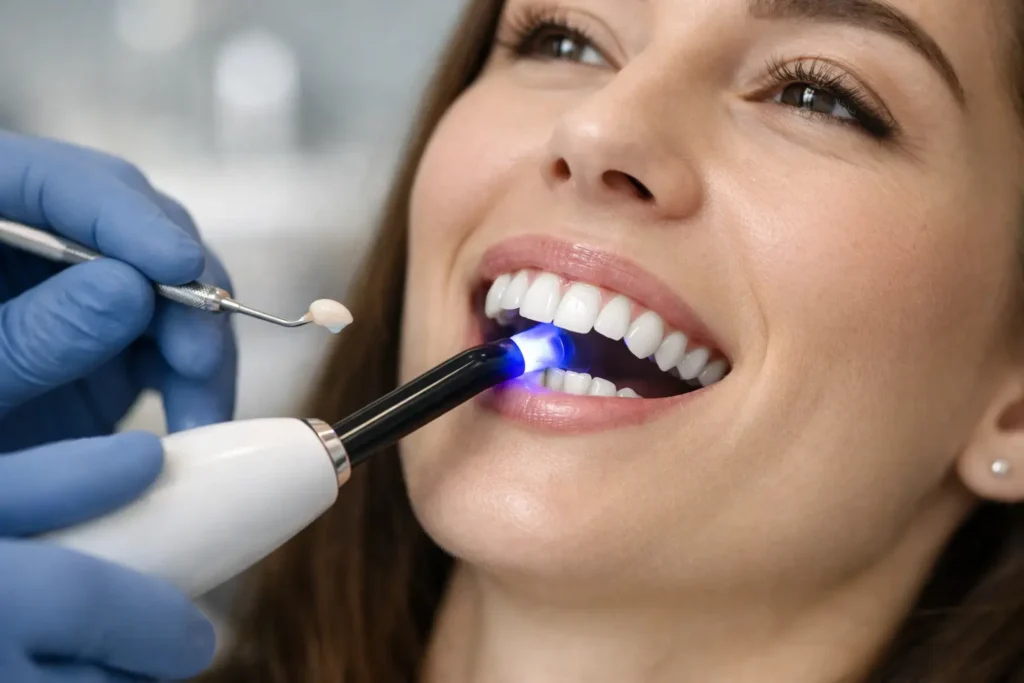
One reason patients appreciate bonding is how straightforward the process feels. After evaluating your tooth and discussing your goals, the dentist selects a composite shade designed to blend with your natural enamel. The surface is prepared, the resin is applied and sculpted, and then a curing light hardens the material. Final shaping and polishing refine the finish so it looks smooth and natural.
When done well, the result should not look bulky, flat, or overly white. It should simply look like your tooth on a better day.
A technology-forward office can make this process even more precise. Careful imaging, detailed shade matching, and a cosmetic eye for proportion all matter when treatment is on a front tooth where every detail shows.
Fast and affordable does not mean one-size-fits-all
The phrase fast and affordable is attractive, but it should not be confused with casual or rushed care. Good bonding requires planning. The color has to match, the shape has to fit your facial features and bite, and the final polish has to reflect light like natural enamel.
This is also where patient expectations should be realistic. Bonding is less invasive and often less expensive than porcelain veneers, but it is not identical to porcelain in strength or stain resistance. Composite can pick up discoloration over time, especially if you drink coffee, red wine, or tea regularly, or if you smoke. It may also need touch-ups earlier than a porcelain restoration would.
That does not make bonding a lesser option. It makes it a different option. For many patients, the balance of cost, speed, and cosmetic improvement is exactly what makes it worthwhile.
Cosmetic bonding San Diego patients should compare with veneers
Bonding and veneers are often discussed together because they can both improve color, shape, and symmetry. The difference is usually in scope, material, and longevity.
Bonding is more conservative and typically more affordable. It works well for smaller corrections and patients who want to preserve as much natural tooth structure as possible. Veneers are made from porcelain, usually require more planning, and tend to offer greater stain resistance and durability. They are often chosen for broader smile makeovers or when a patient wants a more comprehensive cosmetic transformation.
If you are deciding between the two, the right choice depends on how many teeth are involved, how dramatic a change you want, your bite, and your long-term goals. A patient with one chipped tooth may be an excellent bonding candidate. A patient wanting a full front-smile redesign may be better served by veneers.
How long bonding lasts
Cosmetic bonding can last several years with good care. Longevity depends on where it is placed, how much biting force the tooth handles, and daily habits. Bonding on the edge of a front tooth may experience more wear than bonding on a smoother surface. Nail biting, chewing ice, opening packages with teeth, and clenching can shorten its lifespan.
Routine dental visits matter here. Polishing, monitoring, and early repairs can help bonding continue to look refined. If the material chips or stains over time, it can often be touched up without replacing the entire restoration.
Who is a good candidate
The best bonding candidates usually have healthy teeth and gums, minor to moderate cosmetic concerns, and clear goals about what they want to improve. Bonding is especially attractive for patients who want to correct a visible flaw quickly without committing to a more invasive procedure.
It may not be ideal if the tooth is severely broken, if enamel loss is extensive, or if grinding habits create too much pressure on the restoration. In those situations, a more protective treatment may be recommended. A quality consultation should include that level of honesty. Cosmetic dentistry works best when the treatment matches both the appearance you want and the function your teeth need.
Choosing a provider for cosmetic bonding in San Diego
Bonding is often described as simple, but beautiful bonding is technique-sensitive. The difference between an average result and an elegant one usually comes down to the dentist’s eye for detail, experience with cosmetic cases, and ability to make the restoration disappear into the smile.
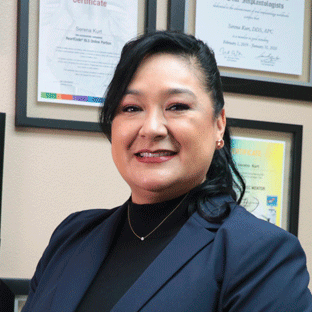
Patients in Clairemont and the surrounding San Diego area often want more than a quick patch. They want a result that looks polished in person, on video calls, and in bright natural light. That is why it helps to choose a practice that combines cosmetic expertise with advanced diagnostics and a high-comfort environment. At Serena Family and Cosmetic Dentistry, that blend of personalized care, modern technology, and aesthetic precision is central to the patient experience.
Caring for bonded teeth after treatment
After bonding, normal brushing, flossing, and professional cleanings are usually enough to maintain your result. A few practical habits help preserve the finish. Try to limit foods and drinks that stain, avoid using your teeth as tools, and ask about a night guard if you clench or grind.
If you are considering whitening, timing matters. Natural teeth can be whitened, but bonded material does not whiten the same way. Many patients get better cosmetic results by whitening first and then matching new bonding to the brighter shade.
For adults who want a refined smile without extensive dental work, bonding fills an important space. It offers cosmetic improvement that is efficient, conservative, and often surprisingly transformative. When the treatment is chosen thoughtfully and performed with precision, a small repair can make your whole smile feel more confident again.
If a chipped, stained, or uneven tooth keeps pulling your attention every time you look in the mirror, that is usually a sign it is worth addressing. Sometimes the most satisfying dental treatment is not the biggest one – it is the one that solves the problem beautifully and lets you move on with confidence.