For UCSD and Qualcomm professionals comparing Invisalign vs. veneers in San Diego 92117, the best choice is rarely about which treatment is more popular. It comes down to the specific change you want to see in the mirror, the condition of your teeth, the timeline you can realistically manage, and what your PPO plan may contribute. A discreet orthodontic plan may be ideal for one patient. For another, a carefully designed veneer transformation delivers the more immediate, refined result.
Both options can create a more confident smile. They simply work in very different ways.
Invisalign vs. Veneers in San Diego 92117: The Core Difference
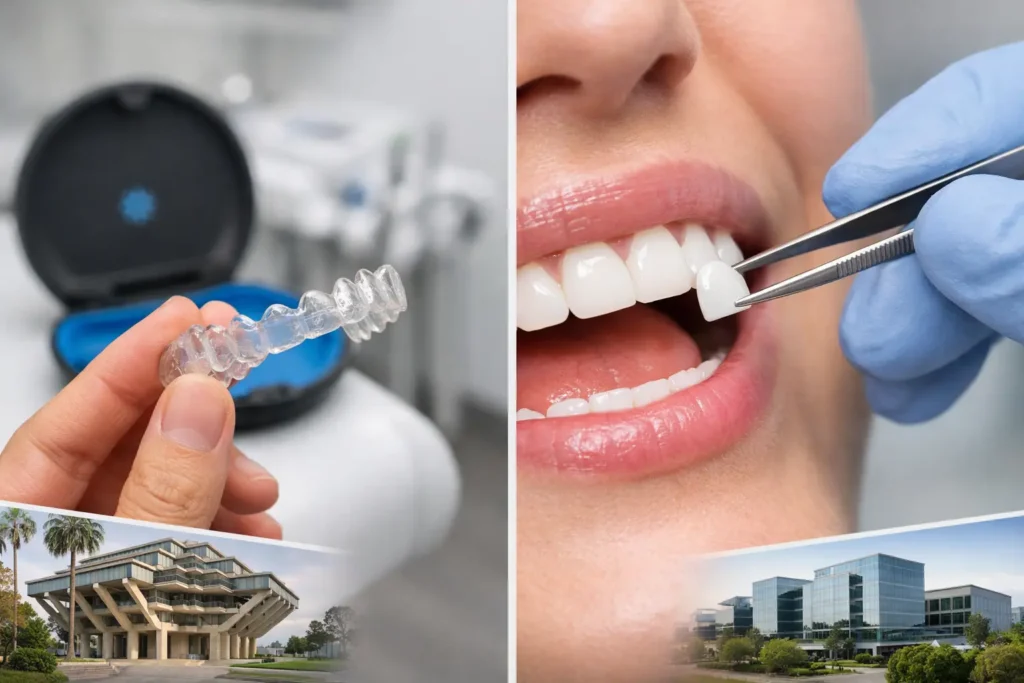
Invisalign is orthodontic treatment. Clear, removable aligners apply controlled pressure to gradually move teeth into healthier, more balanced positions. It addresses concerns such as crowding, spacing, teeth that have shifted since prior braces, and certain bite issues. The tooth structure remains intact because the treatment changes position rather than reshaping the visible tooth.
Porcelain veneers are custom-crafted ceramic shells bonded to the front surfaces of selected teeth. They are designed to improve the appearance of teeth that are discolored, worn, chipped, unevenly shaped, slightly misaligned, or proportionally small. Veneers do not move teeth or correct a bite in the orthodontic sense. Instead, they create a beautifully balanced new visible surface.
That distinction matters. If your front teeth are healthy but crowded or rotated, Invisalign often treats the cause of the cosmetic concern. If your teeth are already reasonably positioned but their color, shape, edges, or proportions distract from your smile, veneers may provide a more direct aesthetic solution.
When Invisalign Is the Better Investment
For many busy employees, Invisalign fits naturally into a professional routine. The aligners are clear, removable for meals and brushing, and far less noticeable in meetings, presentations, lab work, and video calls than traditional braces. Treatment begins with a detailed digital scan and a customized movement plan, so you can see the intended progression before committing.
Invisalign is often the stronger choice when you want to correct crowding, spaces, or a noticeable shift in tooth alignment. It can also make daily hygiene easier when overlapping teeth have been difficult to brush and floss thoroughly. A more aligned bite may reduce uneven wear on certain teeth over time.
The trade-off is consistency. Aligners need to be worn approximately 20 to 22 hours each day. They come out for eating, drinking anything other than water, and oral hygiene, but they must go back in. A demanding UCSD rotation, a Qualcomm product launch, frequent travel, or a packed family schedule does not prevent treatment, but it does require discipline.
Treatment length varies widely. Minor cosmetic alignment can sometimes be completed in a matter of months, while more complex cases take longer. Attachments, small tooth-colored additions that help aligners grip and guide teeth, may also be needed. They are subtle, but they are part of the practical reality of treatment.
PPO coverage and Invisalign
PPO dental coverage may include an orthodontic benefit, but the details are plan-specific. Some plans have a separate lifetime orthodontic maximum, age restrictions, waiting periods, or limitations for adult treatment. Others provide no adult orthodontic benefit at all.
Before beginning Invisalign, ask for a benefits review that confirms whether orthodontics are covered, your remaining lifetime maximum, any waiting period, and whether the practice is in-network or out-of-network for your plan. A quoted percentage alone does not tell the whole story. The plan maximum, deductible, and annual benefit limits shape your actual out-of-pocket cost.
When Veneers Are the Better Choice
Veneers are often chosen by patients whose alignment is acceptable but whose smile still does not reflect how polished or youthful they want to look. Deep internal staining that does not respond predictably to whitening, chips, worn edges, irregular shapes, and old bonding are common reasons to consider porcelain veneers.
The appeal is precision. A skilled cosmetic dentist can design veneers around facial proportions, lip line, tooth display, and your preference for a natural or more luminous result. High-quality porcelain can closely mimic the light-reflecting qualities of enamel while offering excellent stain resistance. For a patient preparing for a major career transition, wedding, milestone event, or simply a more confident presence in front of clients and colleagues, veneers can deliver a dramatic visible change on a shorter timeline than orthodontics.
Veneers do require a more permanent decision. In most cases, a conservative amount of enamel is prepared to create a natural fit and avoid a bulky appearance. Once a tooth has been prepared for a veneer, it will need a veneer or another restoration in the future. Porcelain is durable, but it is not indestructible. Biting ice, using teeth as tools, or unmanaged grinding can damage even beautifully crafted restorations.
PPO coverage and veneers
Most PPO plans classify veneers as cosmetic and do not cover them. There can be exceptions when a veneer is being considered as part of treatment for a damaged tooth, but coverage depends on the diagnosis, the plan language, and whether an alternate benefit applies. It should never be assumed.
That does not make veneers a poor value. It means the decision should be based on their long-term aesthetic and functional value rather than an expectation of broad insurance reimbursement. A clear treatment plan should explain the number of veneers recommended, the design approach, any preparatory care needed, and how to protect the investment over time.
The Situation Where Both Treatments Make Sense
Some of the most natural-looking smile transformations use Invisalign first and veneers second. This approach can be particularly valuable when teeth are crowded or unevenly positioned, but the patient also has discoloration, chips, undersized lateral incisors, or significant edge wear.
Moving teeth first may allow for a more conservative veneer design later. Rather than covering a rotated tooth with extra porcelain, alignment can place the tooth in a better position. The final veneers can then focus on shape, color, and proportion with less alteration of natural enamel.
Not every patient needs both. If your teeth are generally straight and your primary concern is color or wear, Invisalign may add time and expense without delivering the result you value most. Conversely, placing veneers over significant crowding without evaluating bite and alignment can compromise the result. A comprehensive cosmetic examination protects you from choosing a shortcut that does not serve your smile long term.
How a Digital Smile Evaluation Helps You Decide
An in-person evaluation is where the answer becomes personal. Digital imaging and 3D intraoral scanning provide a detailed view of tooth position, bite relationship, gum health, existing restorations, and the amount of healthy enamel available. This is especially valuable for professionals who want a precise plan before making a financial and time commitment.
A proper consultation should look beyond the front six teeth. Your dentist should evaluate how your teeth meet, whether you clench or grind, the condition of any older fillings or crowns, and whether periodontal health is stable. Cosmetic dentistry is most successful when it is built on a healthy, functional foundation.
At Serena Family and Cosmetic Dentistry, patients can discuss Invisalign, porcelain veneers, and combination treatment in one modern, technology-forward setting. The goal is not to steer every smile toward the same service. It is to create a result that looks exceptional, feels comfortable, and makes sense for your lifestyle.
A Practical Decision for UCSD and Qualcomm Employees
Choose Invisalign when your priority is moving teeth, improving crowding or spacing, and preserving natural tooth structure. It is well suited to patients who can wear aligners consistently and are comfortable with a gradual transformation.
Choose veneers when you want to change the color, shape, size, or surface appearance of teeth that are already in relatively good positions. They are a premium cosmetic option for patients who want highly controlled, lasting smile design and understand the permanent nature of tooth preparation.
If your PPO includes a meaningful adult orthodontic benefit, Invisalign may have an insurance advantage. If veneers are the only treatment that addresses your real concern, limited coverage should not force you into an option that leaves you dissatisfied. The best next step is to bring your PPO information to a cosmetic consultation, ask for a clear benefits estimate, and make a decision based on your teeth, your goals, and the result you will be proud to live with every day.