A small chip on a front tooth can change the way you smile in photos, speak in meetings, or even laugh at dinner. For patients searching for dental bonding Clairemont Mesa: quick, affordable fixes for chipped or gapped teeth with PPO, bonding is often one of the fastest ways to restore a polished, natural look without committing to more extensive cosmetic treatment.
Dental bonding is a conservative cosmetic procedure that uses tooth-colored composite resin to reshape a tooth, close a small gap, or repair visible edge damage. In the right case, it can be completed in a single visit and usually requires little to no removal of healthy enamel. That combination of speed, value, and immediate improvement is exactly why bonding remains a popular option for busy adults and families in Clairemont Mesa.
Why dental bonding works so well for chips and small gaps
Not every cosmetic concern needs veneers or crowns. If the issue is limited to a minor chip, uneven edge, worn corner, or a small space between teeth, bonding can deliver a clean, attractive result with far less treatment time.
The material is carefully color-matched to your natural teeth, then sculpted directly onto the tooth surface. Once hardened and polished, the bonded area blends into the smile rather than standing out. For many patients, the appeal is simple: the tooth looks better right away, and the appointment is straightforward.
That said, bonding is not a one-size-fits-all solution. It tends to work best when the tooth is healthy overall and the cosmetic change is relatively modest. If a tooth has major structural damage, significant decay, or heavy bite pressure, a crown or veneer may provide better long-term performance.
Dental bonding Clairemont Mesa with PPO – what patients should know
One of the first questions patients ask is whether PPO dental insurance helps cover bonding. The honest answer is that it depends on why the bonding is being done.
If bonding is used to repair a chipped tooth caused by damage or to restore function, PPO plans may offer partial coverage, especially when the treatment is considered restorative rather than purely cosmetic. If the bonding is done only to improve appearance, such as closing a minor gap or refining tooth shape, many PPO plans classify it as cosmetic and may not cover it.
This is where a detailed exam matters. A dentist can evaluate the tooth, document the condition, and help determine how the procedure may be coded and whether your benefits apply. For patients who want clarity before moving forward, a reputable office will review PPO details, explain expected out-of-pocket costs, and avoid vague pricing conversations.
Affordability is one of bonding’s strongest advantages. Compared with porcelain veneers or crowns, composite bonding is usually the more budget-conscious option. For patients who want a meaningful cosmetic improvement without the cost or commitment of a larger treatment plan, it often hits the right balance.
What the appointment is actually like
Bonding is popular in part because it feels manageable. In many cases, no anesthesia is needed unless the procedure is paired with cavity treatment or the tooth is especially sensitive.
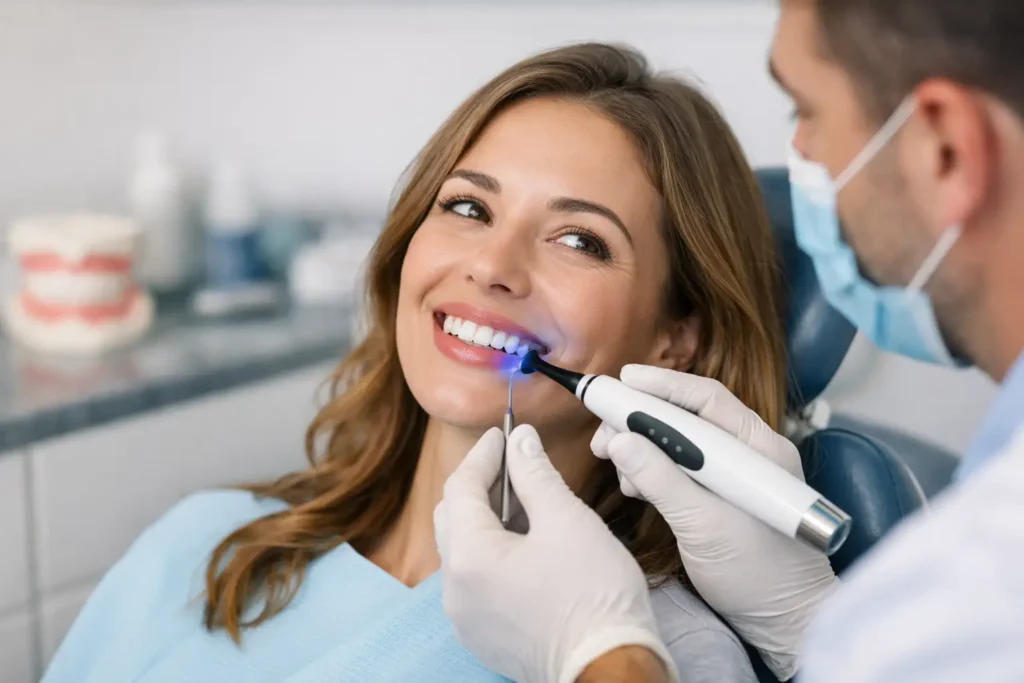
The tooth is lightly prepared so the resin can adhere properly. Then the composite is applied in layers, shaped with precision, and cured with a special light. Once the dentist refines the contours and polishes the surface, the tooth is ready to function normally.
For a single chipped front tooth, the visit can be surprisingly quick. Patients often walk in concerned about a visible flaw and leave with a smile that looks complete again. That immediacy matters, especially for professionals, parents, and anyone with an upcoming event who does not want weeks of treatment.
When bonding is the right choice and when it is not
The best cosmetic dentistry is not about selling the biggest procedure. It is about choosing the treatment that matches the tooth, the bite, the aesthetic goal, and the patient’s budget.
Bonding is often a strong choice for small front tooth chips, narrow gaps, slight asymmetry, mild edge wear, and touch-ups after minor damage. It can also be a smart first step for patients who want cosmetic improvement now but are not ready for veneers.
There are limits. Bonding is not as stain-resistant as porcelain, and it is generally not as durable over many years of wear. Patients who clench, grind, bite their nails, or use their teeth to open packaging are more likely to chip bonded edges. If the goal is a dramatic smile redesign or maximum longevity, porcelain veneers may be the better investment.
That does not make bonding the lesser option. It simply means treatment should be selected with honesty and precision. For the right patient, bonding is elegant in its simplicity.
How long dental bonding lasts
Composite bonding can last several years with good care. Longevity depends on the location of the bonding, your bite, oral habits, and how well you maintain the area.
Bonding on a front tooth edge that experiences light stress may hold up quite well. Bonding placed in an area exposed to frequent pressure or grinding may need maintenance sooner. Small repairs are often possible if the material chips or wears.
Patients can help protect their results by avoiding chewing ice, limiting stain-heavy foods and drinks right after placement, wearing a night guard if they grind, and keeping up with routine cleanings and exams. Polished composite can look very natural, but it benefits from regular professional monitoring.
The cosmetic difference can be subtle but powerful
A great bonding result should not look obvious. It should look like your tooth, only better proportioned, smoother, and more complete.
That is why technique matters. Shade selection, edge shape, symmetry, and surface polish all influence whether bonding disappears into the smile or looks artificial. In a modern cosmetic practice, digital imaging, careful smile evaluation, and a trained aesthetic eye make a noticeable difference in the final result.
For many adults, the goal is not a dramatic makeover. It is to stop noticing the flaw every time they look in the mirror. Closing a small gap or repairing one chipped corner can make the entire smile look more balanced. Sometimes the most effective cosmetic dentistry is the kind that feels effortless.
Choosing a provider for dental bonding in Clairemont Mesa
Because bonding is conservative, patients sometimes assume it is simple enough to be the same everywhere. In reality, the outcome depends heavily on the dentist’s cosmetic judgment and attention to detail.
You want a provider who looks at more than the damaged spot. Tooth proportion, lip line, neighboring teeth, bite alignment, and facial aesthetics all matter. A high-quality office should also be transparent about alternatives. If bonding is unlikely to hold up well in your case, you should hear that clearly.
In Clairemont Mesa, many patients are looking for more than a quick patch. They want care that feels polished, modern, and personalized. That means an environment where advanced diagnostics, cosmetic expertise, and practical financial guidance all come together in one place. At Serena Family and Cosmetic Dentistry, that standard of care is part of the experience, not an upgrade.
A smart option for patients who want fast, affordable improvement
If you have been living with a chipped tooth, a small gap, or slight unevenness, bonding may be the treatment that makes the most sense right now. It is conservative, attractive, and often far more accessible than patients expect, especially when PPO benefits apply to restorative situations.
The key is getting a proper evaluation rather than guessing based on online photos or general pricing. What looks like a minor cosmetic issue can have different treatment paths depending on your enamel, bite, habits, and goals.
The right dental office will not rush that decision. It will explain whether bonding is likely to look beautiful, function well, and fit your budget. And if it is, you may be only one visit away from forgetting that chip or gap was ever there.