
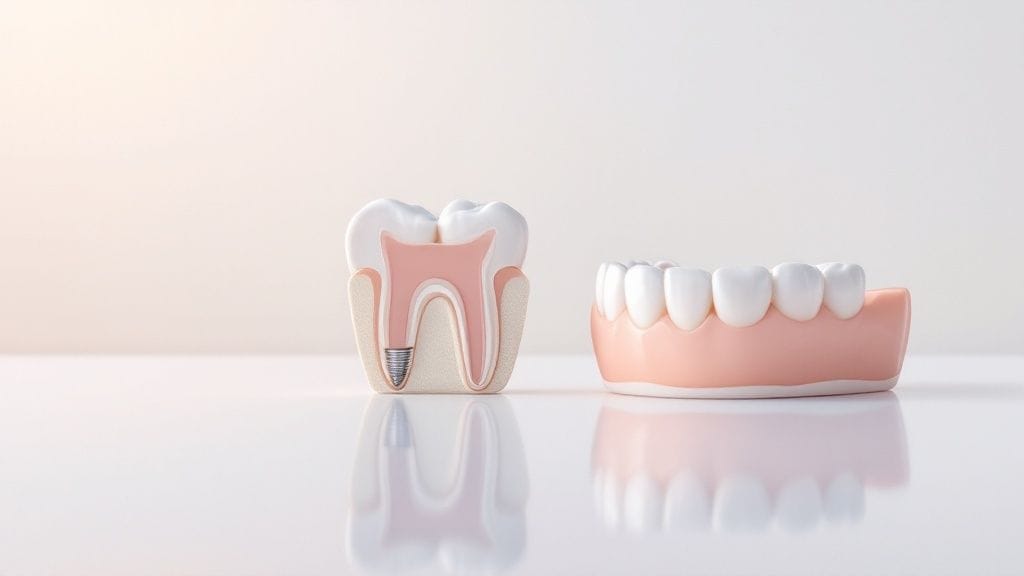
When you're weighing your options for replacing missing teeth, the biggest question often boils down to one thing: do you want a permanent solution or a removable one? Dental implants are a fixed solution, surgically placed to become a permanent part of your jaw, just like your natural teeth. On the other hand, dentures are a removable, non-invasive alternative that simply rests on your gums. Making an informed decision is crucial, and understanding the core differences will help you choose the best path to regain your confidence.
Choosing Your Best Tooth Replacement Option
Losing a tooth—whether it's one or several—can change everything from how you eat to how you feel about your smile. Thankfully, today’s dentistry gives you some fantastic ways to get your function and confidence back. The two most common paths are dental implants and dentures, and while they both fill the gaps in your smile, they get there in completely different ways.
The right choice for you will hinge on your specific situation. We'll need to consider your long-term oral health goals, what your budget looks like, and what fits best with your day-to-day life. Getting a handle on the core differences between them is the essential first step. It's important to remember that while both can give you a full set of teeth again, only one actively helps preserve your jawbone for the years to come.
Key Differences at a Glance
Let's break down the fundamental differences between these two popular tooth replacement solutions. The following table gives you a quick snapshot of how they stack up against each other, helping you understand the core trade-offs you'll be making.
Quick Comparison: Dental Implants vs. Dentures
This table highlights the fundamental differences between the two most common tooth replacement solutions to guide your initial decision. Exploring these tooth replacement alternatives is crucial for your long-term oral health.
| Factor | Dental Implants | Dentures |
|---|---|---|
| Permanence | Permanent and fixed in the jawbone | Removable for cleaning and sleeping |
| Procedure | Surgical placement required | Non-surgical, impression-based fitting |
| Jawbone Health | Stimulates and preserves bone | Can lead to bone loss over time |
| Initial Cost | Higher upfront investment | Lower upfront investment |
While the initial cost often stands out, the long-term impact on your jaw is arguably the most critical factor to consider.
The most significant long-term distinction is how each option affects your jaw. Implants integrate with the bone, providing stimulation that prevents deterioration, whereas traditional dentures do not offer this crucial benefit. This difference has lasting implications for facial structure and overall oral health.
How Dental Implants Restore Your Natural Smile
When it comes to replacing missing teeth, dental implants are considered the gold standard by most dentists—and for good reason. They provide a permanent, incredibly stable foundation that feels just like your own teeth. Unlike dentures that simply rest on your gums, an implant becomes a part of your jaw, fully replicating the function of a natural tooth root.
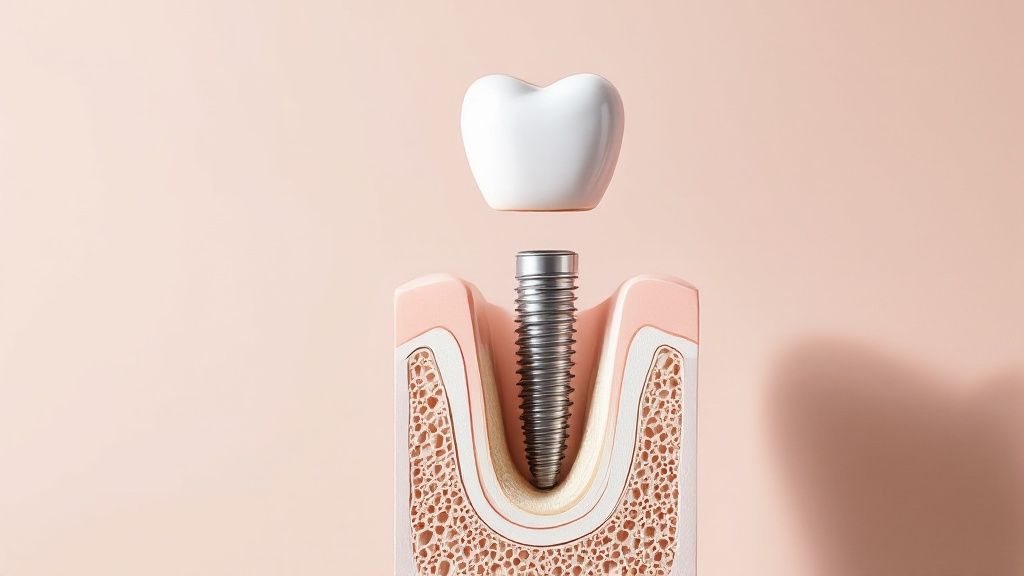
This remarkable stability comes from a biological process called osseointegration. It sounds complex, but it's a natural phenomenon where the titanium implant post, placed directly into your jawbone, fuses with the surrounding bone over a few months. The bone literally grows around the implant, locking it in place.
This fusion creates an artificial tooth root that’s exceptionally strong. It’s this unique process that really separates dental implants from every other tooth replacement option out there.
The Three Core Components of an Implant
A dental implant isn't a single piece; it's a sophisticated, three-part system designed to work together to mimic a natural tooth. Breaking it down helps show why implants are so effective.
- The Implant Post: This is the titanium, screw-like post that acts as the new tooth root. It's surgically placed into the jawbone, setting the foundation for the entire restoration.
- The Abutment: After osseointegration is complete, a small connector piece called an abutment is attached to the implant post. It sits right at the gum line and serves as the secure connection point for the final crown.
- The Crown: The final touch is the custom-made dental crown. This is the visible, "tooth" part of the implant, and it’s meticulously crafted to match the color and shape of your surrounding teeth for a seamless look.
Working in harmony, these three parts give you a replacement tooth that looks, feels, and functions just like the real thing. You get back your ability to chew, speak, and smile with absolute confidence.
Unmatched Functional and Health Benefits
Perhaps the biggest advantage of dental implants is their role in preserving your long-term oral health. When a tooth is lost, the jawbone in that area starts to shrink from a lack of stimulation—a process called resorption.
Because dental implants fuse directly with the bone, they provide the necessary stimulation to prevent this bone loss. This helps maintain your natural facial structure and prevents the sunken look that can occur over time with missing teeth.
This direct integration also means implants can restore up to 98% of your natural chewing power. Compare that to traditional dentures, which often only restore 10-20%, and you can see the massive difference. You can eat all your favorite foods, from a crisp apple to a juicy steak, without worrying about slippage or discomfort.
It's no surprise the market reflects this growing preference. The global dental implants market was valued at around USD 6.7 billion in 2024 and is expected to hit nearly USD 10.48 billion by 2030. This growth is fueled by patients who are incredibly satisfied with the superior function and aesthetics implants offer.
Furthermore, implants are a standalone solution. They don't need to be anchored to adjacent teeth, which means we don't have to alter or grind down healthy teeth to place them. This preserves the integrity of your entire smile for years to come. For more on keeping them in top shape, check out our guide on how to look after dental implants and oral health.
Exploring Dentures as a Versatile Solution
For generations, dentures have been the go-to, reliable path back to a complete smile. Because they're a non-surgical solution, they’re an incredibly practical choice for anyone looking to avoid an invasive procedure or for those who simply aren't candidates for dental implants.
The idea behind dentures is refreshingly simple: a set of custom-made, artificial teeth is artfully set into a gum-colored acrylic base. This prosthetic is then meticulously designed to fit snugly and comfortably over your gums, giving you back the appearance and basic function of a full set of teeth.
Understanding the Main Types of Dentures
Of course, not all dentures are created equal. The right type for you really hinges on how many teeth you're missing and your overall oral health.
- Full Dentures: These are what most people picture. They're used when all the teeth in an entire arch—either upper or lower—are gone. They sit directly on the gums, held in place by natural suction and sometimes a bit of dental adhesive for extra security.
- Partial Dentures: If you still have some healthy, strong teeth, a partial denture is the perfect solution to fill in the gaps. It usually has a metal or acrylic framework with clasps that discreetly hook onto your existing teeth, which helps keep it stable.
The fitting process itself is straightforward and non-invasive. It involves a few appointments where we take precise impressions of your mouth, which a dental lab then uses to create a denture that is uniquely yours.
Conventional vs. Immediate Dentures
When we talk about full dentures, timing becomes a huge part of the conversation. This leads to two distinct approaches: conventional and immediate dentures.
A conventional denture is made and placed only after any remaining teeth have been removed and your gum tissues have had a chance to fully heal. This healing period can take several weeks or even a few months, which does mean you'll be without teeth during that time.
On the other hand, an immediate denture is made ahead of time and placed the very same day your teeth are extracted. The huge benefit here is that you never have to go a day without teeth. The trade-off is that as your gums and bone heal and inevitably shrink, these dentures will need quite a few adjustments and relinings to keep them fitting properly.
One of the biggest reasons dentures remain so popular is their accessibility. They offer a much faster and more budget-friendly way to restore a smile compared to surgical options, making them a vital solution for millions.
Living with Dentures Daily
Let's be honest—adjusting to life with dentures takes a little time. At first, they might feel a bit bulky or awkward, and it can take a few weeks to get the hang of speaking and eating with them. Many people find that a small dab of dental adhesive provides extra security and confidence, helping to prevent any slippage when they talk or chew.
Proper care is absolutely essential, both for the longevity of your dentures and for the health of your mouth. This daily routine includes:
- Removing and cleaning them every day.
- Gently brushing your gums and any remaining natural teeth.
- Soaking the dentures overnight to keep them clean, hydrated, and free of bacteria.
Regular check-ups with your dentist are also non-negotiable. Over time, your jawbone will naturally change shape, which can cause your dentures to become loose. Your dentist will need to perform periodic adjustments or relinings to make sure they continue to fit comfortably and correctly. We're even seeing denture trends go viral on social media, showing how people are embracing this solution. You can read more in our article about the viral TikTok denture trend.
The widespread use of dentures is a testament to just how effective they are. An estimated 40.99 million people in the United States wore them back in 2020, and that number is only expected to grow. Their continued relevance really underscores their role as a foundational tooth replacement option for people of all ages. For a deeper dive into the data, you can explore the dentures market on mordorintelligence.com.
Comparing Implants And Dentures Across Key Factors
Deciding between dental implants and dentures isn't just a clinical choice; it's about how your new smile will fit into your real life. To get this right, we need to look past the basics and compare them on the factors that truly matter, from enjoying a meal to your long-term health.
This isn't just a simple pros-and-cons list. It’s a practical breakdown of the trade-offs you’ll be making with either option.
Durability And Lifespan
When you’re investing in your smile, you want it to last. Dental implants are engineered to be a permanent part of your mouth. The titanium post actually fuses with your jawbone in a process called osseointegration, creating an incredibly stable foundation that can last a lifetime with good care.
The porcelain crown on top of the implant is the part that does the heavy lifting day-to-day. Like any tooth, it's subject to wear and tear, and you can expect it might need replacement every 10 to 15 years.
Dentures, on the other hand, are a removable solution and have a much shorter lifespan. They generally need to be relined or replaced every 5 to 10 years. This is because your jaw changes shape when there are no tooth roots to keep the bone stimulated, causing the dentures to eventually loosen and not fit as well.
Daily Comfort And Functionality
How your replacement teeth feel every single day is a huge deal. This is where dental implants really shine. Because they are anchored directly into your jawbone, they feel and work just like natural teeth.
You won't experience any slipping, clicking, or shifting when you talk or eat. You can pretty much forget they're even there.
Traditional dentures sit on your gums, held in place by suction. For some, this can lead to sore spots, discomfort, or a bulky feeling. While today's dentures are far more comfortable than what your grandparents wore, there's still an adjustment period, and many people find they need adhesives to feel truly secure.
This infographic helps visualize some of the key differences at a glance.
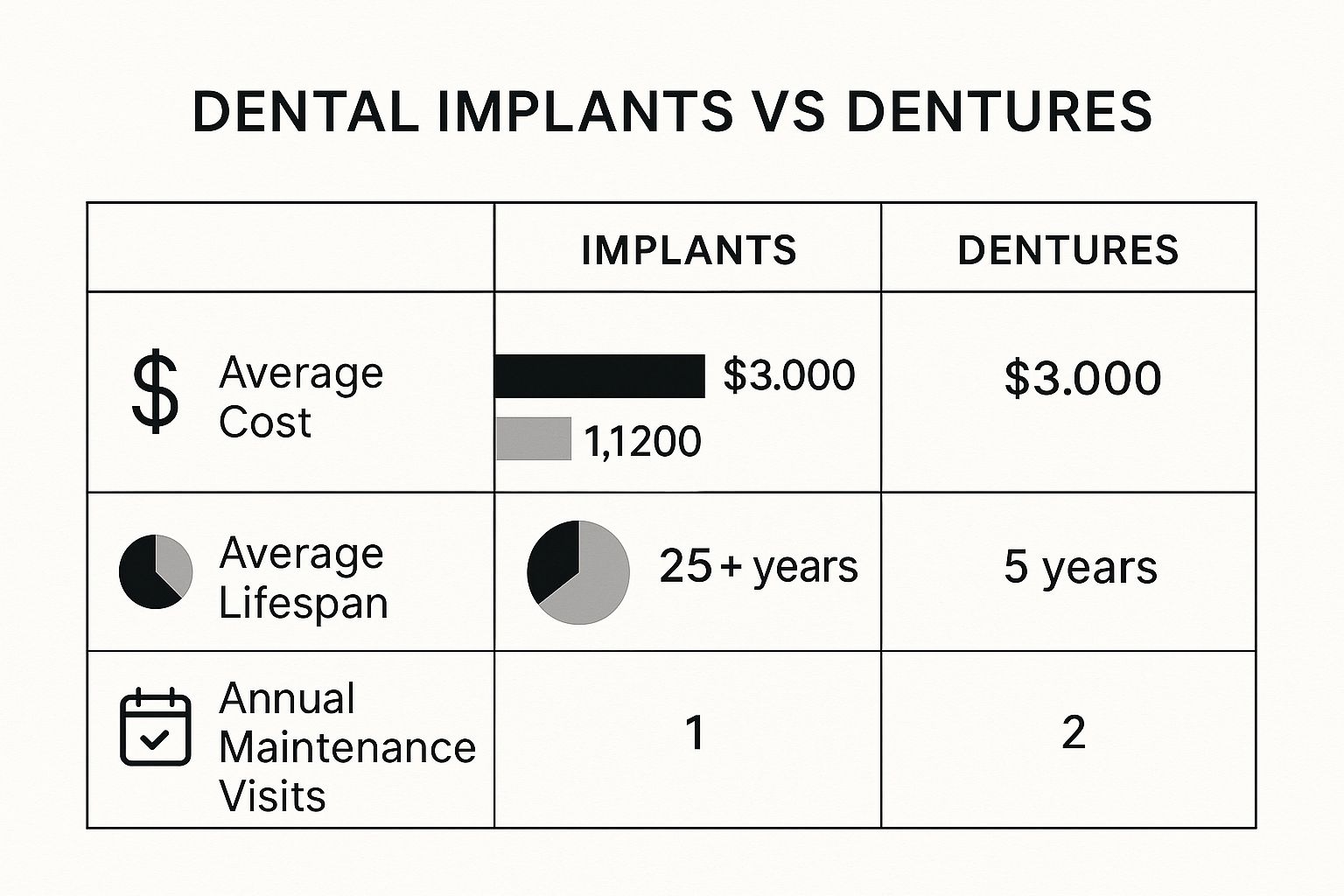
As you can see, while implants have a higher upfront cost, their durability and lower maintenance needs often make them a better value over the long run.
Dietary Freedom And Chewing Power
One of the biggest lifestyle differences between implants and dentures is what you can eat. The power behind your bite directly impacts your ability to enjoy a full and healthy diet.
Dental implants can restore nearly 100% of your natural chewing power. This means you can bite into a crisp apple, chew a steak, or snack on nuts without a second thought. There are no restrictions.
Dentures, however, offer a much weaker bite force—typically only 25-50% of your natural chewing ability. This means that hard, sticky, or very chewy foods are often off-limits, which can be a daily frustration and limit your nutritional choices.
Aesthetics And Natural Appearance
Of course, you want your new smile to look fantastic. Both implants and modern dentures are custom-made to look beautiful and natural. But implants have a clear edge.
An implant crown emerges from the gum line just like a real tooth. There’s no artificial-looking plastic base or visible metal clasps, making it virtually impossible for anyone to tell it's not your own.
Modern dentures can also look incredibly realistic. The artificial teeth are crafted to match the shade and shape of natural teeth perfectly. The main drawback is the acrylic base that rests on the gums, which can sometimes be noticeable and look less natural up close.
Long-Term Impact On Oral Health
This is arguably the most critical point of comparison. Dental implants do more than just fill a gap—they actively protect your oral health. The implant post acts like a natural tooth root, stimulating the jawbone and preventing it from deteriorating.
Without that stimulation, a process called bone resorption begins, where the jawbone shrinks. Over time, this can lead to a sunken, aged facial appearance. Implants stop this process cold, preserving your facial structure and protecting the health of your remaining teeth.
Unfortunately, traditional dentures don't offer this benefit. Since they just sit on top of the gums, the jawbone underneath continues to shrink away. This is why dentures become loose over time and also why your facial profile can change. Protecting your jawbone is fundamental to a lasting smile, making this a crucial factor in your decision.
Dental Implants vs Dentures: A Detailed Feature Comparison
To make things even clearer, here’s a side-by-side look at how dental implants and dentures stack up across the most important features. This table will help you quickly compare the key differences and see which option aligns best with your personal needs and priorities.
| Feature | Dental Implants | Dentures |
|---|---|---|
| Lifespan | Can last a lifetime; crown may need replacement in 10-15 years. | Need replacement every 5-10 years due to jaw changes. |
| Comfort | Feel and function like natural teeth. No slipping or sore spots. | Can cause discomfort and sore spots; may require adhesives. |
| Chewing Power | Restores nearly 100% of natural bite force. No food restrictions. | Restores only 25-50% of bite force. Diet is often restricted. |
| Oral Health | Prevents jawbone loss and preserves facial structure. | Does not prevent jawbone loss, which continues over time. |
| Appearance | Seamless and indistinguishable from natural teeth. | Can look very natural, but the acrylic base may be visible. |
| Maintenance | Cared for like natural teeth (brushing, flossing). | Must be removed daily for cleaning and soaking. |
| Procedure | Surgical procedure with a healing period of several months. | Non-surgical; involves taking impressions over a few appointments. |
| Upfront Cost | Higher initial investment. | Lower initial investment. |
Ultimately, this table highlights the fundamental trade-off: implants offer superior function, health benefits, and longevity for a higher upfront cost, while dentures provide a more affordable and less invasive solution with significant functional compromises.
Understanding the Cost and Treatment Timeline
When you're deciding between dental implants and dentures, two of the biggest questions are always: "How much will this cost?" and "How long will it take?" These are practical, real-world concerns, and the answers for each option are worlds apart. It's crucial to understand both the financial investment and the time commitment to make the right choice for your life.
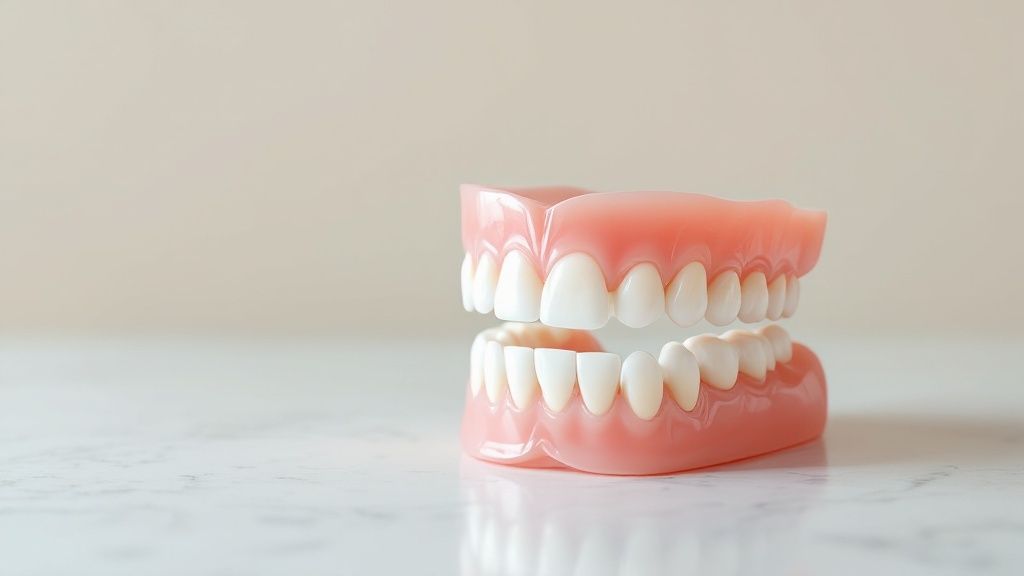
It’s tempting to just look at the initial price tag, but that doesn't tell the whole story. The true cost of replacing a tooth unfolds over years, not just on the day you pay the bill. A higher upfront investment might actually save you money and headaches down the road.
Breaking Down the Financial Investment
The initial cost is where you'll see the starkest contrast. Dental implants have a significantly higher upfront price, and for good reason—it's a surgical procedure that involves premium materials like titanium posts and custom-designed porcelain crowns.
Think of it as a one-time investment in your smile's foundation. With proper care, the implant post itself can last a lifetime. The crown on top might need to be replaced after 10 to 15 years, but the core structure is permanent. Ongoing costs are minimal, pretty much the same as caring for your natural teeth.
Dentures, on the other hand, are much more affordable at the outset, which makes them a more accessible option for many people. But you have to look beyond that first payment.
The "total cost of ownership" is a key concept with dentures. You'll have recurring expenses for adhesives, special cleaning solutions, and periodic refittings as the shape of your jaw changes over time. The dentures themselves will also need to be completely replaced, usually every 5 to 10 years.
Over a lifetime, these smaller, regular costs can really add up. In some cases, the implant, which seemed more expensive initially, can become the more economical choice in the long run. For a closer look at what goes into the cost, you can find a full breakdown of dental implant prices to compare with the long-term expenses of dentures.
Mapping Out the Treatment Journey
Money isn't the only factor; time is just as important. The path you choose will determine how quickly you get your final smile, and the processes are fundamentally different.
The Dental Implant Timeline: A Multi-Stage Process
Getting a dental implant is a marathon, not a sprint. It requires patience because the process unfolds over several months. This slow, deliberate approach is what allows the implant to securely fuse with your jawbone, creating that permanent, rock-solid result.
- Consultation and Placement: It all starts with planning and imaging. Then, a surgeon places the small titanium post into your jawbone.
- Osseointegration (Healing): This is the most crucial waiting period. Your jawbone needs to grow around and fuse to the implant. This natural healing process can take anywhere from three to six months.
- Abutment and Crown: Once your jaw has fully healed, an abutment is attached to the post. We then take impressions to create your final, custom-matched crown, which is secured to complete your new tooth.
The Denture Timeline: A Faster Path to a New Smile
The journey to getting dentures is much faster and completely non-surgical, which is a huge plus for many patients. You can often have your new smile ready in just a few weeks.
- Impressions and Measurements: First, your dentist takes a series of detailed impressions of your mouth to capture its exact shape.
- Model and Fitting: Next, a wax model of the denture is created for you to try in. This "test drive" allows the dentist to perfect the fit, shape, and color before the final version is made.
- Final Delivery: After any necessary adjustments, your final denture is fabricated and delivered. The whole process usually wraps up in just a handful of appointments over several weeks.
Ultimately, your decision comes down to weighing the higher upfront cost and longer timeline of implants against the quicker, more affordable process for dentures—all while keeping that long-term value in mind.
Making the Right Choice for Your Lifestyle
Choosing the right tooth replacement isn't about picking the "best" option—it's about finding the best option for you. The dental implants vs. dentures debate comes down to what fits your health, your daily life, and what you want for the future. This decision is deeply personal, so let's look at the specific circumstances where one might be a better fit than the other.
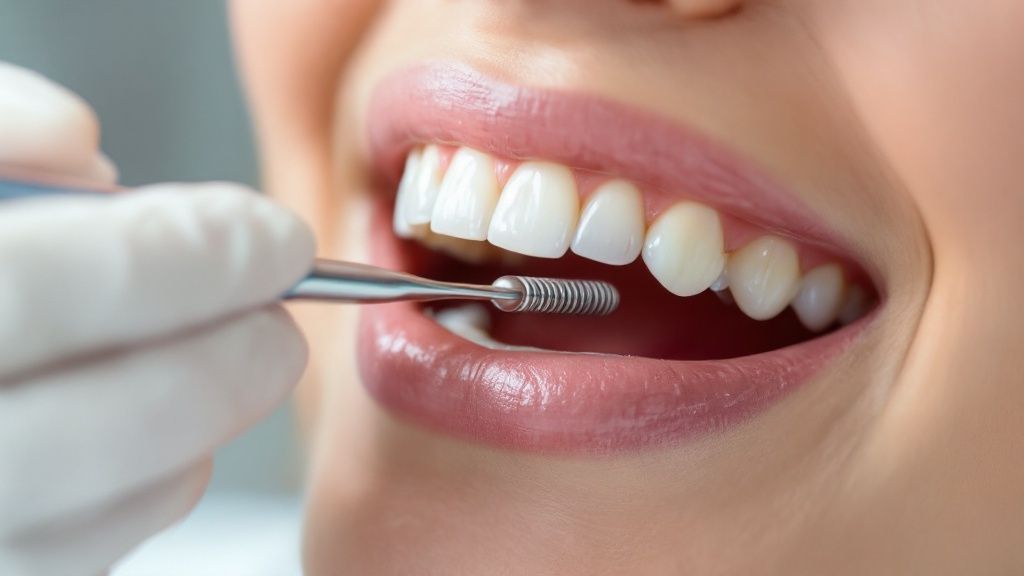
We'll break down the scenarios where each solution really shines.
Are You an Ideal Candidate for Dental Implants?
Dental implants are an incredible technology, but their success depends on having a strong foundation to build on. Candidacy isn't universal; it hinges on a few key factors that allow the implant to properly integrate with your body and last for decades.
You're likely a great candidate for dental implants if you have:
- Sufficient Jawbone Density: The implant post needs a healthy amount of bone to anchor into. Without that solid base, the implant simply won't be stable enough to work.
- Good Overall Health: Certain health issues, like uncontrolled diabetes or some autoimmune disorders, can complicate the healing process after surgery, so your general health is a big factor.
- A Commitment to Oral Hygiene: Implants need care just like natural teeth. Diligent brushing, flossing, and regular dental visits are non-negotiable for their long-term survival.
Think of a healthy professional who lost a single tooth in a sports injury. With a strong jawbone and excellent oral habits, a dental implant is a perfect, permanent fix that lets them get back to their active life without a second thought.
When Dentures Are the More Practical Choice
While implants are a fantastic permanent solution, dentures are often the more sensible and effective choice in many situations. They offer a non-invasive and much faster route to a full, confident smile, which for many people is the most important thing.
Dentures might be the right call for you if you:
- Have experienced significant jawbone loss and aren't keen on undergoing bone grafting procedures.
- Are managing health conditions that make any kind of surgery a higher risk.
- Need a more immediate and budget-friendly way to restore your smile and ability to eat comfortably.
A senior who needs a full set of teeth and has dealt with bone deterioration over the years is a great example. For them, dentures offer a straightforward and comfortable path to a new smile, avoiding the long recovery tied to implant surgery.
In the end, it’s all about what lets you live your life to the fullest. Whether that’s the rock-solid permanence of implants or the removable convenience of dentures, the goal is a solution that brings back your confidence.
Common Questions About Replacing Missing Teeth
Making the right choice between implants and dentures can feel overwhelming. Let's break down some of the most common questions people ask to help you feel more confident in your decision.
How Long Do Dental Implants And Dentures Last?
Longevity is one of the biggest differences. A dental implant is built to last a lifetime. The titanium post that fuses with your jawbone is a permanent fixture, though the crown on top might need to be replaced every 10-15 years from normal daily use.
Dentures, on the other hand, have a shorter lifespan. You'll likely need a new set or a reline every 5-10 years. This is because your jaw changes shape over time when there are no tooth roots, causing the dentures to become loose and less comfortable.
Will I Have To Change My Diet?
Your ability to enjoy your favorite foods is a huge quality-of-life issue. Dental implants give you back nearly 100% of your natural chewing power, meaning nothing is off-limits. You can bite into a crisp apple or enjoy a steak just like you would with your natural teeth.
With dentures, you only get back about 25-50% of your original bite force. This can make it challenging to eat very hard, sticky, or chewy foods. There’s definitely a learning curve as you get used to chewing with them.
Does Getting Dental Implants Hurt?
Worried about pain during the procedure? We understand completely. The implant surgery is done with local anesthesia, so you won't feel a thing during the actual procedure. Afterward, most people say the discomfort is pretty mild—similar to having a tooth pulled—and easily handled with over-the-counter pain relievers.
Fitting for dentures is a completely different experience. It's a non-surgical process that's entirely painless, mostly just involving taking molds of your mouth.
The real game-changer often comes down to looks. An implant looks and feels just like a natural tooth because it comes right out of the gum line. It’s practically impossible for anyone to tell the difference.
While modern dentures look incredibly natural, the artificial gum line can sometimes be visible, which is a major factor for many people weighing the dental implants vs dentures choice.
Ready to enhance your smile and get your confidence back? The team at Serena San Diego Dentist is here to walk you through every option and find the perfect fit for you. Let's talk about what's possible.
Learn more and book your appointment at serenasandiegodentist.com