
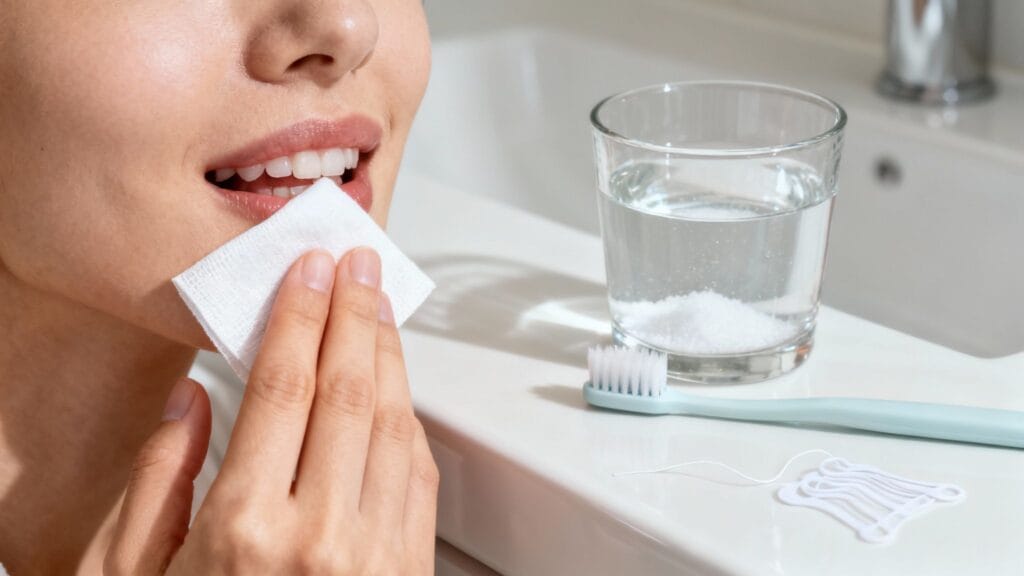
It's always a bit jarring to see that tinge of pink in the sink after you brush your teeth. Bleeding gums are incredibly common, but that doesn't mean you should ignore them. Think of it as a signal—your gums are telling you something isn't quite right.
The good news is, you can usually get minor bleeding under control right away with a few simple steps at home.
Your First Steps for Bleeding Gums
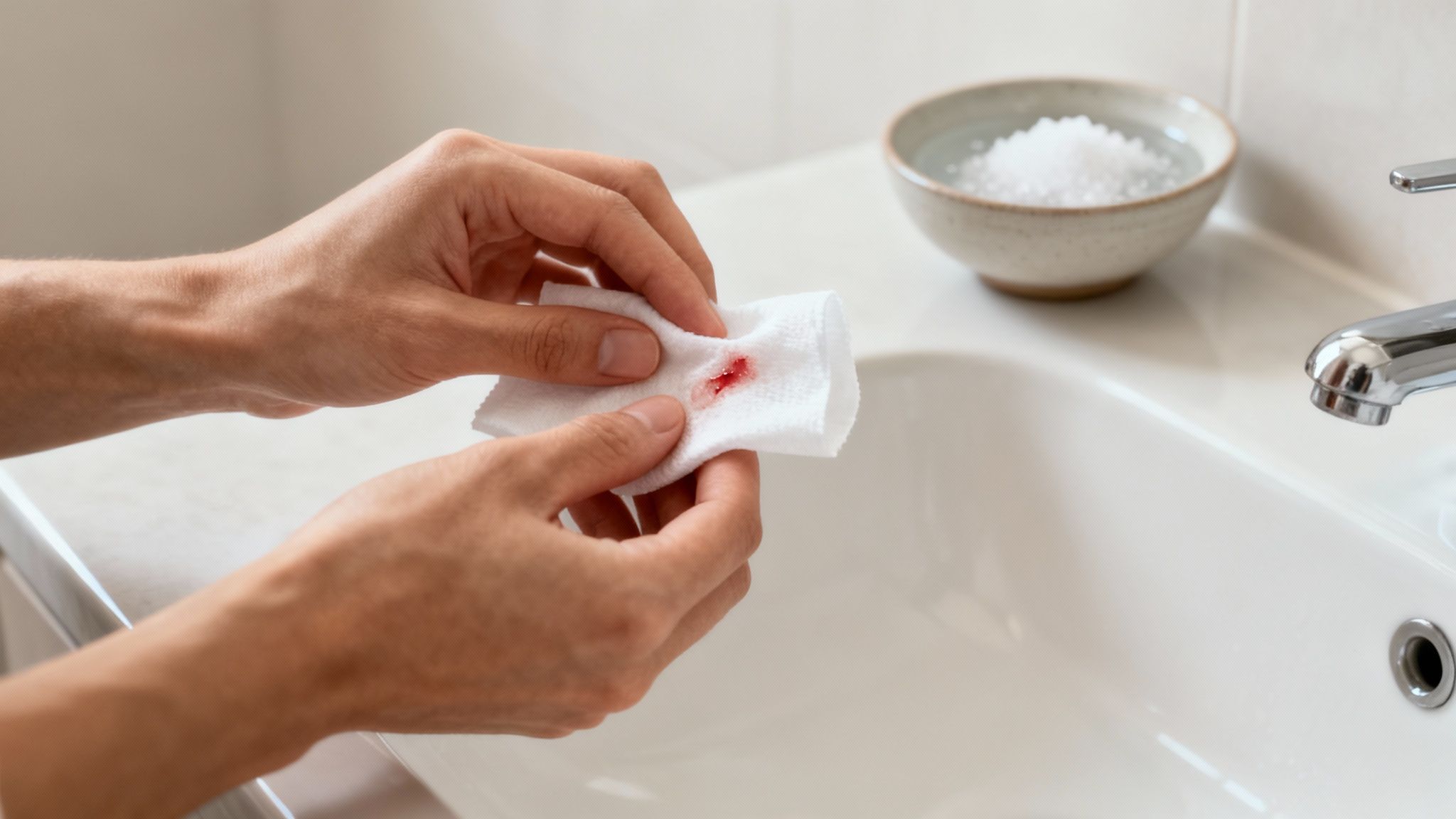
When you first notice the bleeding, the goal is to be quick but gentle. You don't want to cause more irritation, so a calm, steady hand is your best tool.
Apply Gentle Pressure
Your first instinct might be the right one. Just like with any small cut, applying direct pressure is the fastest way to encourage a clot to form and stop the bleeding.
- Find a clean gauze pad or even a soft, clean washcloth.
- Dampen it slightly with cool water.
- Press it firmly but gently directly onto the bleeding spot. Hold it there for a solid 10-15 minutes. Try not to lift it to check; just let it do its work.
For most minor cases caused by overzealous brushing or flossing, this simple trick is all it takes.
Use a Cold Compress
If your gums feel swollen or tender along with the bleeding, a cold compress is a fantastic two-for-one solution. The cold helps constrict the blood vessels, which naturally slows down the bleeding. It also provides some welcome, numbing relief.
Simply wrap some ice cubes in a paper towel or a thin cloth and hold it against your cheek, right over the sore area. A 10-minute application should do the trick.
Swish with a Saltwater Rinse
A warm saltwater rinse is one of the oldest tricks in the book for a reason—it's incredibly effective. Salt is a natural antiseptic, helping to clean the area, reduce inflammation, and soothe your irritated gums. It's a simple, gentle way to promote healing.
- The recipe: Just mix half a teaspoon of salt into an 8-ounce glass of warm water.
- The technique: Swish it around your mouth for about 30 seconds, then spit it out. Be sure not to swallow it!
Repeating this a few times a day, especially after eating, helps keep the area clean and free of debris that could make things worse.
For a quick summary, here’s a table outlining what to do the moment you notice bleeding.
Immediate Actions for Bleeding Gums
| Action | How It Helps | What to Do |
|---|---|---|
| Gentle Pressure | Encourages blood clotting. | Press a clean, damp gauze on the area for 10-15 minutes. |
| Cold Compress | Constricts blood vessels to slow bleeding and reduce swelling. | Hold an ice pack wrapped in a cloth on your cheek for 10 minutes. |
| Saltwater Rinse | Cleans the area and soothes inflammation. | Swish with a solution of 1/2 tsp salt in 8 oz warm water for 30 seconds. |
Following these steps will handle most minor bleeding incidents effectively.
While these home remedies are great for immediate relief, you have to remember that persistent bleeding is a symptom, not the root problem. It's often the first sign of gum disease, an issue that affects nearly half of all adults over 30. If the bleeding is severe, happens frequently, or is the result of an injury, it's time to get professional advice. Knowing when to call the dentist is key, and our guide on what constitutes a dental emergency can help you make that call.
Why Are My Gums Bleeding in the First Place?
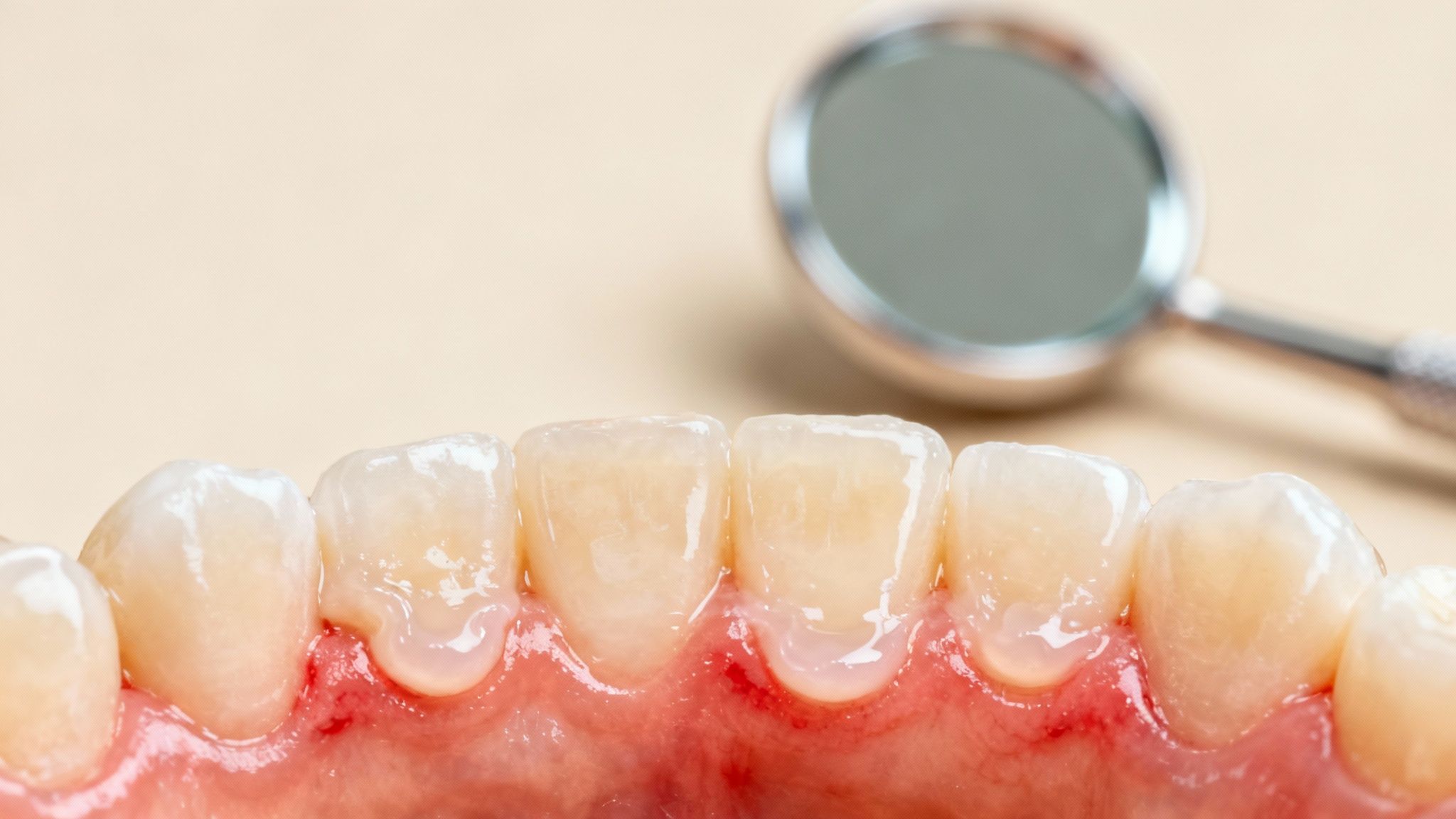
Spotting that pink in the sink can be alarming, but it’s a clear signal from your body that your gums are irritated. Before you can stop the bleeding for good, you have to understand what’s causing it. More often than not, the culprit is a buildup of plaque.
Plaque is that fuzzy, sticky film of bacteria that you can feel on your teeth throughout the day. If it’s not cleared away with good brushing and flossing, it hardens into tartar, which creates a rough surface for even more bacteria to latch onto. This buildup right along the gumline is what triggers inflammation, making your gums swollen, tender, and quick to bleed.
This initial stage of gum disease is called gingivitis. It’s incredibly common, but the good news is that it's completely reversible with a renewed focus on your oral hygiene and a professional cleaning.
When Gingivitis Gets Worse: The Road to Periodontitis
If that initial inflammation from gingivitis isn't managed, things can get more serious. The gums begin to pull away from the teeth, forming little pockets. These pockets are a perfect hiding place for bacteria, and the infection can then start to damage the underlying bone that holds your teeth in place.
This advanced stage is known as periodontitis, a serious infection that doesn't just go away on its own.
Unfortunately, periodontal disease has become a massive global health issue. In 2021 alone, there were an estimated 89.6 million new cases reported across the world. That’s a staggering 76.3% increase from previous years, bringing the total number of people affected to over one billion. You can get the full picture of this silent disease by reading our guide on how periodontitis can be ruining your oral health.
Bleeding is the first and most obvious symptom of periodontitis. If you ignore it, the infection can progress, leading to receding gums, chronic bad breath, and ultimately, tooth loss.
It's Not Always About Plaque
While plaque is the number one cause, it’s not the only reason your gums might be bleeding. A few other factors can make your gums more sensitive and prone to irritation.
- Brushing Too Hard: Are you really scrubbing your teeth? Using too much force, especially with a hard-bristled brush, can easily damage the delicate gum tissue. If the bleeding happens right after a particularly vigorous brush, your technique is likely the problem.
- Hormonal Shifts: Life changes like puberty, pregnancy, and menopause cause hormone levels to fluctuate. This can increase blood flow to the gums, making them extra sensitive and more likely to bleed. "Pregnancy gingivitis" is a very real thing for many expectant mothers.
- Medication Side Effects: Some medications, particularly blood thinners like aspirin or warfarin, can increase your tendency to bleed. If you've recently started a new prescription and noticed your gums are bleeding, it’s a good idea to mention it to both your doctor and your dentist.
- Vitamin Deficiencies: Your diet plays a huge role in your oral health. A lack of Vitamin C can impair tissue healing, while a shortage of Vitamin K can interfere with blood clotting. Both can make your gums more susceptible to bleeding.
Finding Your Personal Triggers
Take a moment to think about what’s going on in your life. Did you just switch to a new, hard-bristled toothbrush? Are you going through a stressful period that’s causing your diet to slip? Pinpointing these potential triggers is the first step toward finding a lasting solution.
Often, the problem isn’t one single thing but a combination of factors. Maybe a minor vitamin deficiency paired with a few days of skipping the floss was enough to tip the scales. Understanding these connections is how you can truly take control of your gum health.
Building a Gum-Friendly Oral Care Routine
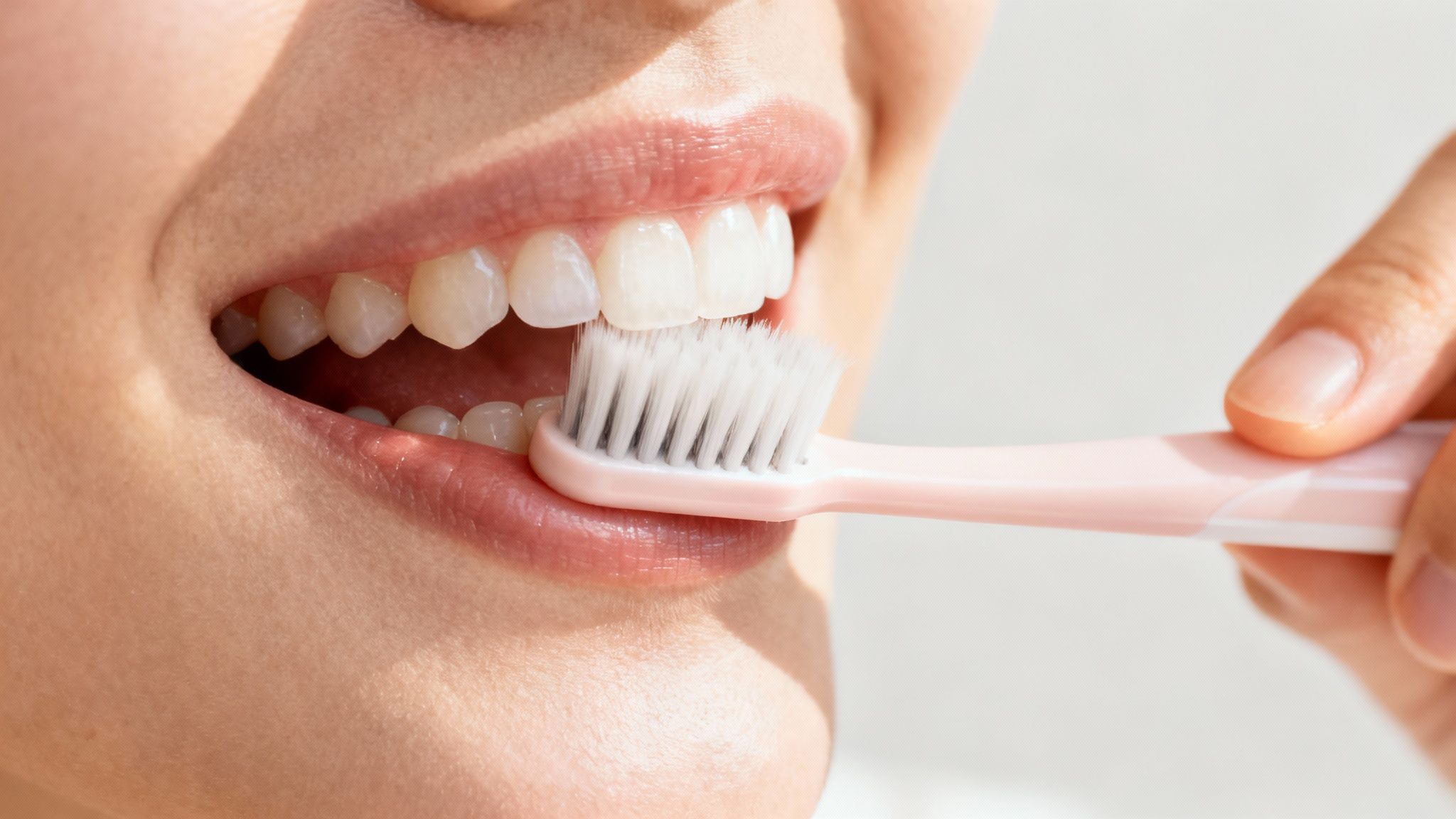
When it comes to stopping your gums from bleeding, your daily habits are everything. They're your first line of defense and your most powerful tool. A consistent, gentle, and thorough routine is the key to reversing early gum issues and keeping irritation from coming back.
The goal isn't to scrub your gums into submission—it's to meticulously remove the plaque that causes all the inflammation in the first place. Think of it as a delicate cleaning operation, not an all-out assault.
Mastering the Brushing Technique
Believe it or not, how you brush matters far more than how hard you brush. One of the most common mistakes people make is using a firm brush and scrubbing aggressively. This doesn't just fail to solve the problem; it actually traumatizes the gum tissue, leading to more bleeding and even recession. The secret is all in the tools and the technique.
First, always grab a toothbrush with soft bristles. They're flexible enough to clean effectively without being abrasive on your delicate gumline.
Here’s how to brush for healthy gums every single time:
- Position the bristles at a 45-degree angle right where your gums meet your teeth. This specific angle is crucial—it lets the bristles gently sweep away plaque from that little crevice.
- Use short, gentle, circular motions. No aggressive back-and-forth sawing.
- Spend a full two minutes on the job, making sure to hit the outer, inner, and chewing surfaces of every tooth.
Pro Tip: Brushing isn't about force; it's about angles and consistency. That 45-degree angle is your best friend for getting plaque out from the gumline, which is where most of the trouble starts.
Making Flossing a Daily Habit
Let’s be honest: flossing is often the first thing to go when you're short on time. But from a dental perspective, it's arguably the most critical step for gum health. Your toothbrush simply can't get into the tight spaces between your teeth and under the gumline where bacteria love to hide and cause inflammation.
The good news is, if you hate traditional string floss, you have other options. The best tool is the one you'll actually use every day.
- Traditional String Floss: It’s the gold standard for a reason. Just be sure to gently guide the floss between your teeth, curve it into a "C" shape against the tooth, and slide it just beneath the gumline.
- Water Flossers: These devices are fantastic, using a pressurized stream of water to flush out plaque and food particles. They’re a lifesaver for people with braces, bridges, or very sensitive gums.
- Interdental Picks: These little tools are easy to handle and are great for cleaning between teeth, especially if you have some wider gaps.
No matter your choice, the mission is the same: clean those hard-to-reach surfaces once a day. If you’re not sure where to start, our guide explores the different types of dental floss to help you find your perfect match.
Choosing the Right Mouthwash
Adding a mouthwash is like giving your mouth an extra layer of protection. A good antiseptic or anti-gingivitis rinse helps reduce bacteria everywhere, not just on your teeth. Look for products with the American Dental Association (ADA) Seal of Acceptance—that’s your guarantee that they’ve been proven safe and effective.
Swishing for 30-60 seconds after you brush and floss can make a real difference in controlling plaque and keeping your breath fresh. One word of caution: try to avoid mouthwashes with a high alcohol content, as they can dry out your mouth and sometimes make irritation worse.
If you're interested in natural solutions, you might also want to learn about aloe juice for oral care benefits, as it's well-known for its soothing properties. Ultimately, building a routine with products you like and will use consistently is what brings long-term success.
How Your Lifestyle Impacts Gum Health
Healthy gums don't happen in a vacuum—they're a direct reflection of your overall well-being. While brushing and flossing are your first line of defense, the choices you make every day, from the food on your plate to how you manage stress, play a huge part in keeping your gums healthy.
Think of it this way: what’s good for your heart, your mind, and your body is also great for your gums. They are all part of the same interconnected system.
Fueling Your Gums from the Inside Out
Your diet literally provides the building blocks your body needs to repair tissue and fight off infection. When your gums are irritated or trying to heal, a few key nutrients become absolutely essential.
- Vitamin C is crucial for producing collagen. That’s the protein that makes your gum tissue strong and resilient. Without enough of it, your gums can become fragile and bleed easily. Load up on citrus fruits, bell peppers, broccoli, and strawberries.
- Vitamin K plays a direct role in blood clotting. If you're low on it, even a minor irritation can cause more bleeding than it should. You'll find it in leafy greens like spinach, kale, and collard greens.
A healthy immune system is your best defense against the bacteria that cause gum disease. To keep your defenses up, you can explore powerful vitamins for immune support and learn how key nutrients can help your body fight back.
The Hard Truth About Smoking and Vaping
There’s just no sugarcoating this: smoking and vaping are disastrous for your gums. Nicotine is a vasoconstrictor, which is a fancy way of saying it shrinks your blood vessels. This dramatically chokes off blood flow to your gum tissues.
When circulation is poor, your gums are starved of the oxygen and nutrients they need to stay healthy and ward off infection. Worse, this can mask the early signs of gum disease. Smokers' gums often don't bleed as much, which can create a false sense of security while the underlying infection quietly gets worse.
Key Takeaway: Smoking doesn't just put you at a higher risk for severe gum disease; it also torpedoes your body's ability to heal after dental treatment. Quitting is one of the most powerful things you can do for your oral health.
The Surprising Link Between Stress and Gum Health
Ever notice how you seem to catch a cold right when you're most stressed out? The same thing happens in your mouth. Chronic stress pumps your body full of cortisol, a hormone that weakens your immune system and fuels inflammation everywhere, including your gums.
When your immune system is down, the bacteria that cause gingivitis have a much easier time setting up shop. On top of that, stress can make you slip up on your oral hygiene routine or lead to teeth grinding (bruxism), which puts a ton of extra strain on your gums.
This isn't just a theory. A detailed study of the working-age population in Hong Kong found a clear connection between psychological factors and gum health. The research showed that gum bleeding was tightly linked to poor oral hygiene and skipping dental visits, with about 20-30% of participants reporting bleeding when they brushed. It also pointed out that people with high dental anxiety, often tied to stress, were more likely to put off getting care, letting small problems spiral into bigger ones. You can read more about the study's findings on gum health and psychological factors.
Even small steps to manage your stress—like going for a walk, practicing mindfulness, or making time for a hobby—can make a real, positive difference for your gums.
Knowing When It Is Time to See a Dentist
While consistent home care is your first line of defense, some signals are too important to ignore. Think of occasional, minor bleeding as a yellow light—a heads-up to pay closer attention to your routine. But certain symptoms are a flashing red light, telling you it's time to call in a professional.
Viewing a dental visit as a proactive step, not a last resort, is the key to protecting your long-term oral health. A dentist can spot underlying issues you can't see and provide treatments that go far beyond what you can accomplish at home.
Red Flags You Should Never Ignore
If you're experiencing any of the following, it’s time to book an appointment. These are often clear signs that simple gingivitis is escalating into something more serious.
- Persistent Bleeding: Your gums shouldn't bleed every time you brush or floss. If this continues for more than a week despite gentle care, it signals chronic inflammation that needs professional help.
- Severe Swelling or Pain: Gums that are visibly puffy, bright red, or tender to the touch are screaming that there's an active infection. Pain is your body’s alarm system; don't just ignore it.
- Receding Gums: Have you noticed your teeth looking longer than they used to? This is a classic sign of gum recession, where the tissue pulls away from the teeth, exposing the roots and creating pockets where bacteria love to hide.
- Chronic Bad Breath: We're not talking about morning breath. Persistent bad breath (halitosis) that lingers even after brushing can be caused by bacteria trapped deep in gum pockets—a tell-tale sign of gum disease.
- Loose Teeth: Any change in your bite or a feeling of looseness in your teeth is a serious red flag. It suggests the infection may be damaging the bone that supports your teeth.
Catching these issues early is often the difference between a simple, routine cleaning and more involved periodontal therapy. Your dentist is your partner in preventing minor problems from becoming major ones.
It can be tough to know what you can manage at home and what requires a professional. This table breaks it down.
Home Care vs Professional Treatment When to Act
| Symptom | Recommended Home Action | When to Call a Dentist |
|---|---|---|
| Slight pink on floss | Review your brushing and flossing technique for gentleness; rinse with warm salt water. | If it continues for more than a week. |
| Puffy, tender gums | Improve oral hygiene immediately; use an antiseptic mouthwash temporarily. | If pain is severe or swelling doesn't improve in 2-3 days. |
| Noticeable gum recession | Switch to a soft-bristled brush and use gentle, circular motions. | As soon as you notice it; recession is irreversible without treatment. |
| Persistent bad taste/breath | Use a tongue scraper and ensure you're flossing daily. | If it doesn't resolve with excellent hygiene. |
| Teeth feel loose or shifted | N/A – Home care cannot fix this. | Immediately. This is a dental emergency. |
This isn't a substitute for professional advice, but it’s a good guide for making smart decisions about your gum health.
What to Expect During Your Dental Visit
Walking into a dental office for bleeding gums isn't something to fear; it's an empowering first step toward getting healthy. The main goal is to find the exact cause of the bleeding and create a straightforward plan to fix it.
Your appointment will start with a thorough exam. Your dentist will gently measure the depth of the "pockets" between your gums and teeth. In a healthy mouth, these pockets are shallow, typically 1-3 millimeters deep. Deeper measurements are a clear indicator of gum disease.
Based on what they find, your treatment might include one of the following.
Professional Cleaning
For early-stage gingivitis, a professional cleaning is often all it takes. The hygienist will use specialized tools to remove the plaque and tartar (hardened plaque) that your toothbrush can't touch. This removes the source of irritation, giving your gums a clean slate to heal and reattach.
Scaling and Root Planing
If periodontitis is diagnosed, you'll need to go a bit deeper with a procedure called scaling and root planing, often known as a "deep cleaning." It's a two-part process:
- Scaling: This involves carefully removing tartar and plaque from below the gumline, where the real damage happens.
- Root Planing: After scaling, the tooth roots are smoothed out. This helps the gums reattach to the teeth and gets rid of rough spots where bacteria could gather again.
This is the gold-standard treatment for stopping periodontal disease in its tracks. If you want to learn more, our guide explains how to know when you need a deep dental cleaning.
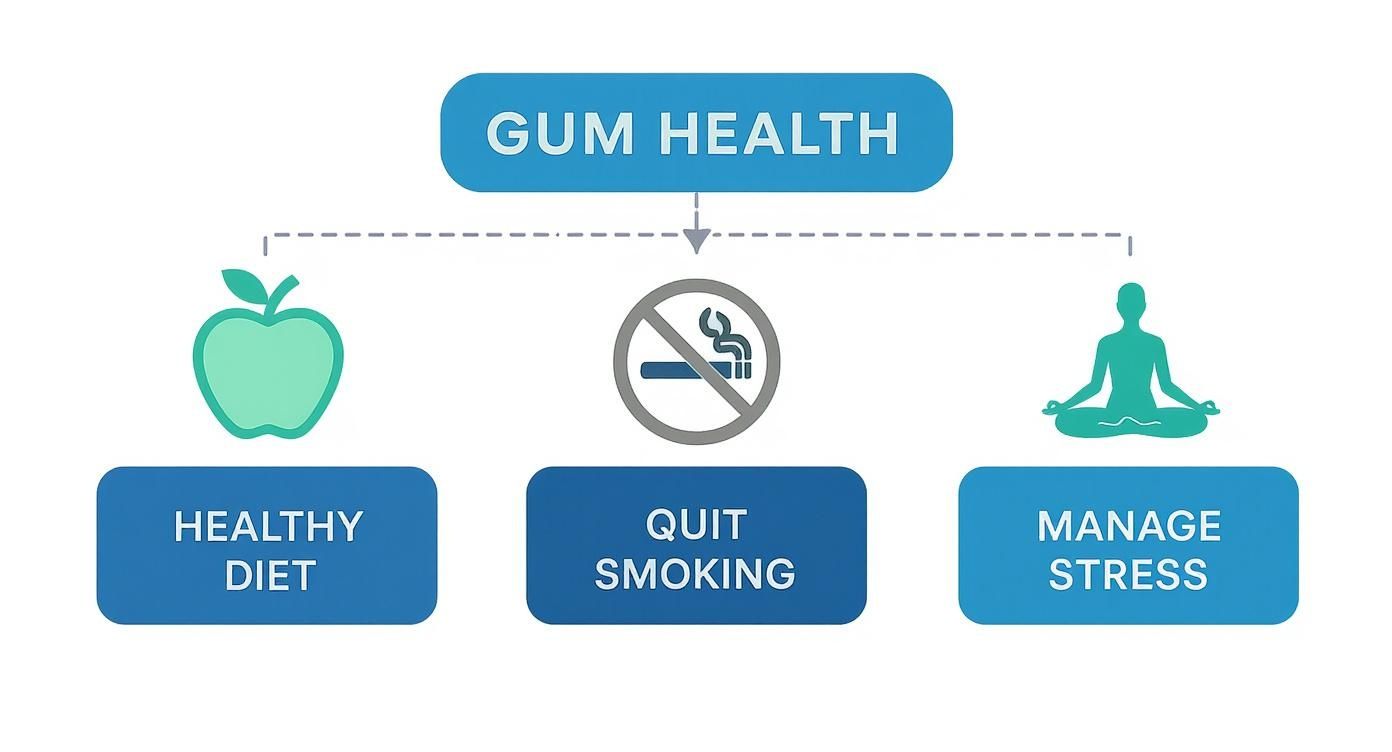
As this infographic shows, a holistic approach is always best. Great dental care combined with smart daily habits—like a healthy diet and managing stress—is the recipe for lasting gum health. At Serena San Diego Dentist, we're here to provide the expert care you need to get your smile back on track.
Got Questions About Bleeding Gums? We’ve Got Answers.
It's natural to have questions when something feels off with your health, and bleeding gums are no exception. We hear these same concerns from patients all the time at our San Diego practice, so let's clear up a few of the most common ones.
Is It Really a Big Deal if My Gums Bleed a Little?
This is easily the most common question we get, and the short answer is: yes, it's a big deal. While bleeding gums are incredibly common, they are never normal.
Healthy gums are meant to be firm and resilient. They shouldn't bleed when you brush or floss. Think of it this way: if your hands started bleeding every time you washed them, you'd be concerned, right? It’s the exact same principle. Bleeding is your body's alarm bell, signaling inflammation caused by plaque buildup. A one-off incident from a sharp tortilla chip is one thing, but regular bleeding is a clear sign your gums need help.
How Long Until My Gums Stop Bleeding?
This really hinges on the root cause and how proactive you are.
- If it's early-stage gingivitis: You'd be surprised how quickly things can turn around. With dedicated brushing and daily flossing, you could see a massive improvement in just one to two weeks. The goal is simply to remove the plaque that’s irritating your gums, and your body will handle the rest.
- If it's more advanced periodontitis: Unfortunately, home care alone won't cut it here. After a professional deep cleaning (what we call scaling and root planing), it can still take several weeks for that deep-seated inflammation to calm down and the tissues to properly heal.
The key takeaway is that the sooner you act, the faster you'll heal.
I Started Flossing, but Now My Gums Bleed More! Should I Stop?
It sounds counterintuitive, I know. You start flossing to stop the bleeding, but at first, it seems to make it worse. This is a classic sign that you're on the right track.
When you floss inflamed gums for the first time in a while, you're disturbing all the bacteria that have been comfortably settled along your gumline. That irritation causes some initial bleeding.
Don't let this spook you into stopping! This is proof that flossing is necessary. Stick with it. After just a few days of consistent, gentle flossing, you'll notice the bleeding starts to decrease and will eventually stop as your gums get healthier and stronger.
Are Electric Toothbrushes Actually Better for Bleeding Gums?
Electric toothbrushes can be a fantastic tool in the fight against gum disease, mostly because they take the guesswork out of brushing correctly.
Many modern brushes come with features that are perfect for someone with sensitive, bleeding gums:
- Built-in Timers: Most have a two-minute timer, ensuring you’re not rushing the job.
- Pressure Sensors: This is the real game-changer. The brush will literally stop or warn you if you’re pushing too hard, which prevents you from causing more irritation.
- Better Plaque Removal: Good evidence shows that certain electric toothbrushes (specifically the oscillating-rotating kind) are simply more effective at removing plaque than a manual brush.
You can certainly get the job done with a manual brush and great technique, but an electric model often makes it far easier to be effective and gentle every single time.
If your question wasn't covered here or the bleeding isn't getting better, it’s time to let a professional take a look. The team at Serena San Diego Dentist is here to give you the personalized care you need to get your gums healthy for good. You can schedule a visit with us today at https://serenasandiegodentist.com.