
A small chip on a front tooth can make you hesitate before a photo. So can uneven edges, worn enamel, stubborn discoloration, or a gap that has bothered you for years. When deciding between porcelain veneers or bonding, the best choice is rarely about choosing the most expensive option. It is about selecting the treatment that fits your teeth, goals, timeline, and long-term expectations.
Both treatments can create a dramatic improvement in the right hands. Yet they work differently, age differently, and ask different things of your natural teeth. A thoughtful cosmetic consultation helps ensure your investment looks beautiful not only on the day treatment is completed, but for years afterward.
Porcelain Veneers or Bonding: The Core Difference
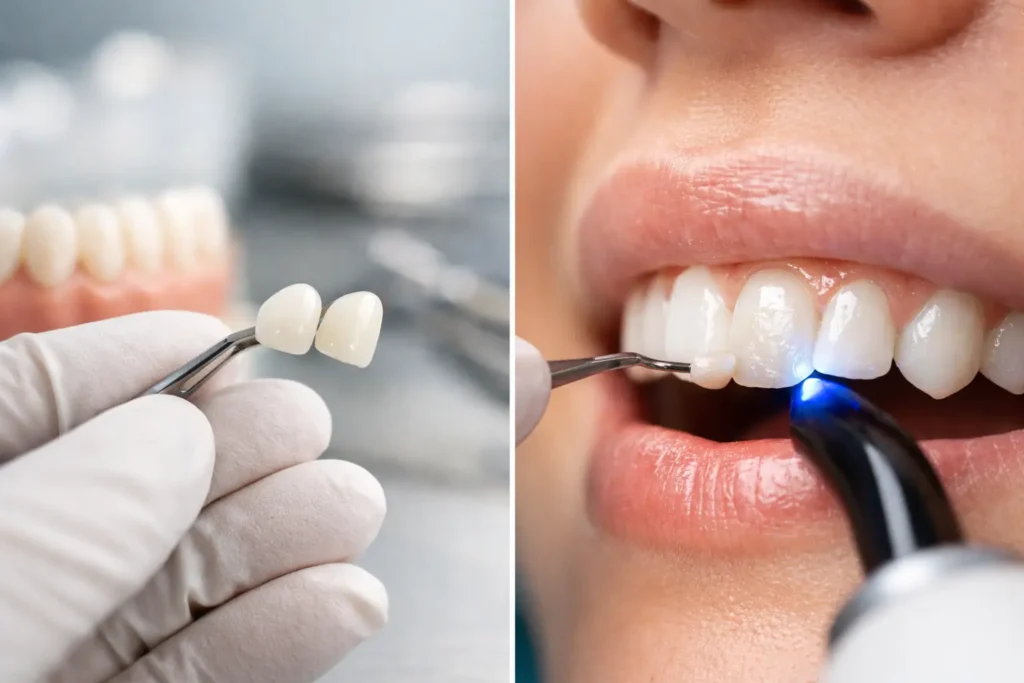
Dental bonding uses a tooth-colored composite resin applied directly to the tooth. Your dentist shapes, hardens, and polishes the material to improve the tooth’s color, contour, or symmetry. It is a conservative treatment that can often be completed in one visit.
Porcelain veneers are thin, custom-made shells crafted in a dental laboratory and bonded to the front surfaces of teeth. Because porcelain reflects light in a way that closely resembles natural enamel, it can deliver exceptionally refined color, translucency, and surface texture. Veneers are typically designed as part of a more comprehensive smile enhancement rather than a quick repair.
Neither option is automatically better. Bonding can be an excellent solution for a single chipped tooth or a small cosmetic adjustment. Veneers may be the stronger choice for patients seeking a more uniform, durable transformation across several visible teeth.
When Dental Bonding Makes Sense
Bonding is often ideal when the cosmetic concern is limited and the tooth is otherwise healthy. A small chip, minor gap, slightly uneven edge, or localized discoloration may respond beautifully to carefully placed composite resin. The appointment is usually efficient, and anesthesia may not be necessary when no tooth reshaping is required.
One of bonding’s greatest advantages is conservation of natural enamel. In many cases, little to no enamel must be removed. It can also be repaired more easily than porcelain if it chips or wears.
For patients who want an immediate improvement before a wedding, professional milestone, or special event, bonding can be a practical option. It is also commonly chosen when someone wants to make a conservative change now while considering more extensive cosmetic treatment later.
The trade-off is maintenance. Composite resin is more porous and less resistant to staining than porcelain. Coffee, red wine, tea, tobacco, and strongly pigmented foods can gradually affect its color. Bonding can also chip or lose polish over time, particularly for patients who bite their nails, chew ice, or grind their teeth.
When Porcelain Veneers Are Worth Considering
Porcelain veneers are often recommended when several front teeth need coordinated improvement. They can address persistent discoloration, visible wear, uneven shapes, small gaps, mild alignment concerns, and old bonding that no longer matches surrounding enamel.
The advantage of porcelain is not simply that it looks white. High-quality veneers are designed with depth, texture, and proportion in mind. A skilled dentist considers your facial features, lip line, gum contours, bite, and natural tooth character. The goal is a smile that looks elevated and balanced, not artificial or overly uniform.
Porcelain is also highly stain resistant. While natural teeth may darken gradually with age and lifestyle habits, veneers typically retain their shade very well. They are durable when properly designed, bonded, and cared for, making them appealing for patients who want a long-term cosmetic solution.
However, veneers require more planning than bonding. Some enamel reduction is commonly needed to create a natural profile and allow the porcelain to sit properly against the tooth. The amount varies by case, but this step means veneers should be considered a long-term commitment. Once a tooth has been prepared for a veneer, it will generally need a veneer or similar restoration in the future.
Appearance: Natural Beauty Depends on Design
Both bonding and veneers can look natural. The difference comes down to material properties, craftsmanship, and the complexity of the case.
Composite bonding can blend remarkably well with a single tooth, especially when a dentist uses layered shades and careful polishing. For small repairs, it may be difficult for anyone else to notice where the natural tooth ends and the bonding begins.
Porcelain has an advantage when multiple teeth are being transformed. It holds a glass-like polish, resists staining, and can reproduce the subtle light transmission of enamel. This makes it particularly well suited to smile makeovers involving the upper front teeth, where color consistency and fine detail matter most.
An overly bright shade or bulky shape can look unnatural with either treatment. That is why cosmetic dentistry should begin with planning, not simply material selection. Digital imaging and 3D intraoral scanning can help evaluate proportions and create a more predictable result before treatment moves forward.
Durability and Maintenance Expectations
Porcelain veneers generally last longer than composite bonding, but neither is maintenance-free. Your habits, bite, oral hygiene, and routine dental care all influence longevity.
Bonding may need polishing, touch-ups, or replacement over the years. It can be especially vulnerable at thin edges and in areas exposed to heavy biting force. A night guard may be recommended for patients who clench or grind their teeth.
Veneers are stronger and more stain resistant, but porcelain can still chip or fracture under excessive force. Veneers are not designed to open packages, bite fingernails, or crunch ice. Patients should also continue regular cleanings and examinations, since the natural tooth and gum tissue around each veneer remain susceptible to decay and inflammation.
If you are seeking the lowest-maintenance option for a broad cosmetic change, porcelain often offers the better long-term performance. If you value a more conservative, repairable approach for a limited concern, bonding may be the more appropriate choice.
Cost Is About More Than the Initial Fee
Bonding typically costs less initially because it requires less laboratory work and can often be completed in one appointment. Porcelain veneers involve advanced treatment planning, custom fabrication, precision placement, and more clinical time, so the initial investment is higher.
Still, the lower upfront cost of bonding does not always mean it is the best value over time. If bonding repeatedly stains, chips, or requires replacement, maintenance can add up. Conversely, veneers may not be a wise investment if the underlying issue is active grinding, untreated gum disease, decay, or an unstable bite.
The right comparison is not simply price versus price. It is the expected result, how long that result is likely to serve you, and whether the treatment protects your overall oral health.
Your Bite and Oral Health Come First
Cosmetic treatment should never overlook foundational dentistry. Before veneers or bonding, your dentist should check for cavities, gum disease, cracked teeth, bite issues, and signs of grinding. Placing beautiful restorations on unhealthy teeth can lead to avoidable complications.
Patients with significant crowding, a deep bite, or active clenching may need orthodontic treatment, restorative care, or a protective night guard before moving forward. In some cases, teeth whitening may be recommended first, especially if bonding will be used and needs to match the surrounding enamel.
At Serena Family and Cosmetic Dentistry, cosmetic recommendations are built around a detailed evaluation of your smile, function, and goals. This level of planning is especially valuable when changing several front teeth, where even a subtle difference in shape or shade can affect the entire result.
How to Choose With Confidence
Choose bonding when your concern is small, you prefer the most conservative treatment possible, or you need a practical one-visit repair. It is a smart option for localized chips, minor gaps, and subtle contour changes.
Consider porcelain veneers when you want a more comprehensive enhancement, lasting color stability, and refined aesthetics across multiple visible teeth. They are often best for patients ready to make a long-term investment in a polished, balanced smile.
The most helpful next step is a cosmetic consultation that includes a close examination, discussion of your priorities, and an honest conversation about trade-offs. The right treatment should feel tailored to your smile and comfortable for your future, not like a one-size-fits-all answer.