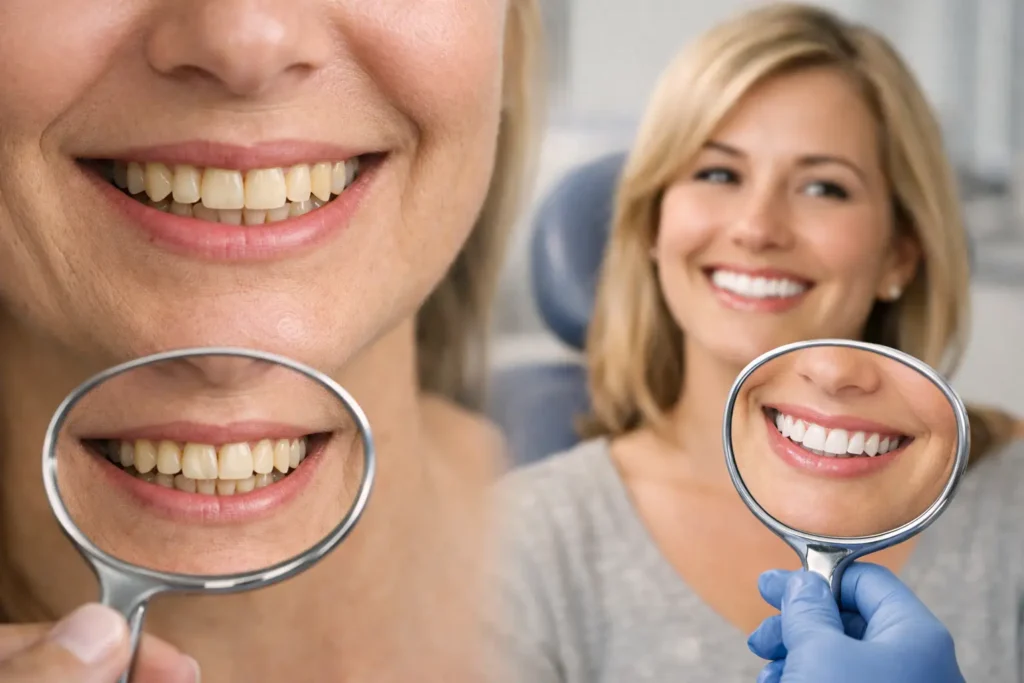
A great smile makeover is not about making teeth look unnaturally perfect. It is about creating a result that fits the face, improves function, and still feels like you. When patients search for smile makeover before & after Clairemont Mesa: real patient results with Delta Dental PPO, they usually want two things at once – visible change and clear financial expectations.
That makes sense. Cosmetic dentistry is personal, but it is also practical. Patients want to know what changed, how long it took, whether the result looks believable, and what portion of treatment may be covered when restorative care is part of the plan.
What a smile makeover really changes
A smile makeover can be simple or highly comprehensive. For one patient, it may mean whitening and bonding to brighten worn edges and improve symmetry. For another, it may involve veneers, crowns, implant restoration, or a full-mouth approach after years of grinding, fractures, missing teeth, or failing dental work.
The most compelling before-and-after results usually come from treatment plans that balance esthetics with health. Straight, bright teeth matter, but so do bite alignment, gum health, tooth structure, and the way restorations function over time. A result can look beautiful on day one and still be the wrong treatment if it ignores long-term stability.
This is why a premium, technology-forward evaluation matters. Digital imaging, close-up photography, and 3D intraoral scans help show what is happening beneath the surface, not just what appears in the mirror. Patients often come in thinking they need veneers everywhere, then learn that a more conservative combination of whitening, bonding, and a few porcelain restorations may be the better fit. Others assume they only need cosmetic improvements, when the real issue is structural damage that requires crowns or implant treatment first.
Smile makeover before & after Clairemont Mesa results often follow a pattern
The best transformations are individualized, but many real patient cases follow a recognizable path. First, the patient arrives with a concern that has become hard to ignore. It may be darkening teeth in photos, front teeth that chipped over time, spaces that make the smile feel unfinished, or older dental work that no longer matches.
Next comes diagnosis and design. This is where experience shows. Shade, tooth proportions, gum display, lip movement, facial balance, and bite function all need to work together. A cosmetic result that looks refined in a still photo may feel wrong in daily life if it is too bulky, too bright, or poorly aligned with the patient’s natural features.
Then treatment begins in phases. Some cases start with hygiene or restorative care to create a healthy foundation. Others begin with whitening so that future restorations can be matched to a lighter shade. If veneers or crowns are involved, provisional restorations often guide the final shape and let the patient preview the new smile before completion.
The after phase is where patients notice more than appearance. They often report smiling more naturally, speaking with more confidence, and feeling less self-conscious at work or in social settings. That emotional change is real, but it should come from dentistry that is carefully planned, not rushed.
Real patient results with Delta Dental PPO – what coverage may look like
This is where many patients have questions. Delta Dental PPO may help with portions of treatment that are considered restorative or medically necessary, but cosmetic-only procedures are often not covered. That distinction matters.
For example, if a patient needs a crown because a tooth is cracked or heavily worn, insurance may contribute based on plan details, annual maximums, deductibles, and frequency limits. If that same patient chooses additional elective veneer work on otherwise healthy teeth to improve color or shape, that cosmetic portion is usually out of pocket.
The same principle applies in larger smile makeovers. An implant crown replacing a missing tooth may have some level of coverage depending on the plan, though benefits vary widely and not every PPO plan treats implants the same way. A whitening treatment done purely for esthetics is generally excluded. Bonding can fall into a gray area depending on why it is being done. Replacing a fractured edge after damage may be viewed differently than changing the shape of a tooth for appearance alone.
That is why responsible treatment planning includes a benefits review, not assumptions. Patients deserve a realistic understanding of what insurance may help with and where personal investment begins. In a well-run office, that conversation is clear, respectful, and specific to the plan.
The trade-off between cosmetic goals and insurance rules
Insurance is designed around dental necessity, not personal beauty goals. That does not make it useless, but it does mean patients should avoid choosing treatment based only on what a plan is willing to pay.
Sometimes the most conservative and cost-effective option is also the best clinical option. Other times, the ideal esthetic result involves elective treatment that insurance will not support. For instance, a patient with multiple old fillings and discoloration in the front teeth may technically qualify for some restorative work, but a mix of patchwork repairs may not create the polished, consistent result they want. In that case, the patient has to weigh longevity, appearance, and budget together.
A thoughtful cosmetic dentist will discuss those trade-offs honestly. There is no value in overpromising coverage or pushing treatment that does not match the patient’s priorities. Some patients want the highest esthetic finish possible. Others want strategic improvements with the most insurance-friendly path. Both are valid.
Why before-and-after photos should be interpreted carefully
Before-and-after images are powerful, but context matters. Lighting, lip position, camera angle, and even hydration can change how teeth appear. More importantly, photos only show the visible outcome. They do not show the planning, preparation, and clinical decision-making behind the case.
That is why the most meaningful patient results are not just dramatic. They are believable. The smile fits the face. The shade looks bright without looking flat or artificial. The edges and contours are refined, but not identical in a way that feels manufactured.
In a premium cosmetic practice, quality is often visible in restraint. The work does not announce itself as dental work. It simply looks healthy, confident, and elevated.
What patients in Clairemont Mesa usually want from a smile makeover
Local patients are rarely looking for a generic makeover. They want a dentist who can combine cosmetic vision with comprehensive care. Many are busy professionals who want fewer referrals and a clear treatment plan. Others are parents who want a trusted dental home for routine care now and advanced treatment when needed later.
That is one reason full-scope practices tend to serve smile makeover patients well. A case may start with cosmetic goals but quickly involve restorative planning, periodontal evaluation, bite analysis, or replacement of older dentistry. Managing those details under one roof creates a more coordinated experience and often a better final result.
At Serena Family and Cosmetic Dentistry, that philosophy aligns naturally with the way modern smile transformations should be handled – personalized, technology-guided, and built around both beauty and function.
Is a smile makeover right now, or later?
It depends on what is driving the decision. If the issue is mainly cosmetic and the teeth are healthy, timing may come down to personal readiness, budget, and life events. If there are cracks, bite wear, missing teeth, or failing restorations, waiting can make treatment more involved later.
Patients sometimes delay because they think a smile makeover has to be a major project. It does not. Some of the most satisfying before-and-after changes come from a few carefully chosen treatments rather than a full reconstruction. The key is knowing what will make the biggest difference for your smile, your function, and your long-term oral health.
If you are comparing options, ask better questions. Not just, How white can my teeth get? Ask what will look natural on your face, what will hold up over time, and what parts of the plan may qualify for Delta Dental PPO benefits if restorative treatment is involved.
The right smile makeover should feel exciting, but also grounded. When diagnosis is precise, design is thoughtful, and expectations are clear, the before-and-after tells a much stronger story – one that still looks good long after the photos are taken.