
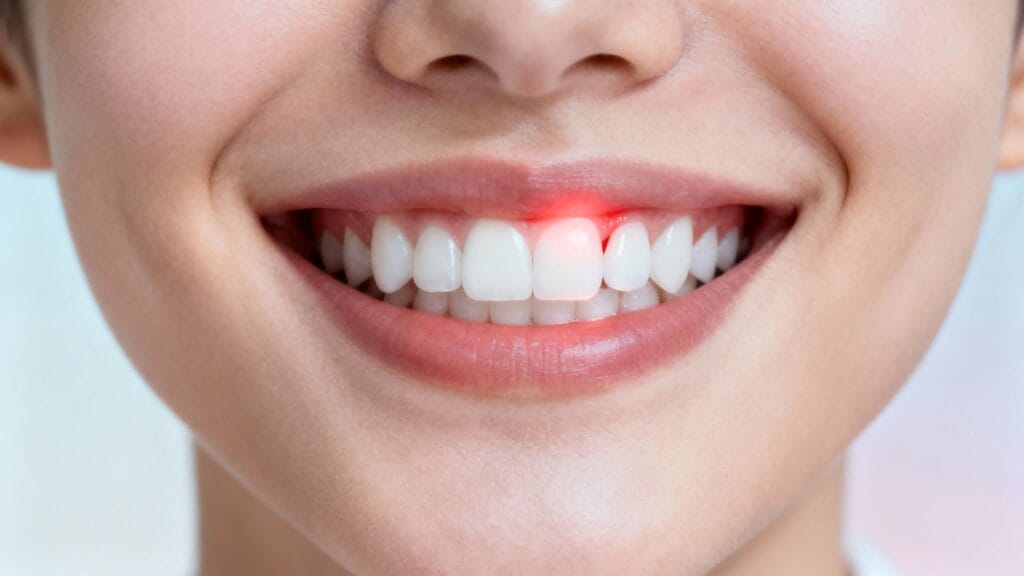
Thinking about brightening your smile is a great first step toward feeling more confident. But before you dive into any treatment, it's wise to understand what to expect. While most people have a smooth and successful experience, some teeth whitening side effects can occur. The good news? They are almost always mild and temporary.
The most common issues you might encounter are tooth sensitivity and minor gum irritation. These typically resolve on their own within a few days after you complete the whitening process.
What to Expect When Whitening Your Teeth
Getting your teeth whitened is a straightforward procedure, but knowing what's normal and what isn't makes all the difference. Think of this less as a list of warnings and more as a helpful guide so you can handle anything that comes your way with confidence.
Our goal here isn't to scare you off whitening, but to empower you. When you know what might happen, you can manage it without worry. The two things you're most likely to notice are a bit of sensitivity and some gum soreness. These aren't really "problems" but more like your mouth's natural, temporary reaction to the whitening process.
The Most Common Side Effects
- Tooth Sensitivity: Ever felt that sharp "zing" when you drink something ice-cold? You might feel a bit of that after whitening. This happens because the active ingredient in the whitener temporarily makes your enamel more porous, giving hot and cold stimuli a brief, direct line to the more sensitive part of your tooth.
- Gum Irritation: If whitening gel escapes from its tray and sits on your gums, it can cause some temporary redness or soreness. This is a frequent issue with one-size-fits-all trays that don't fit your mouth perfectly.
This infographic breaks down these two main side effects and shows you the best first steps to take for relief.
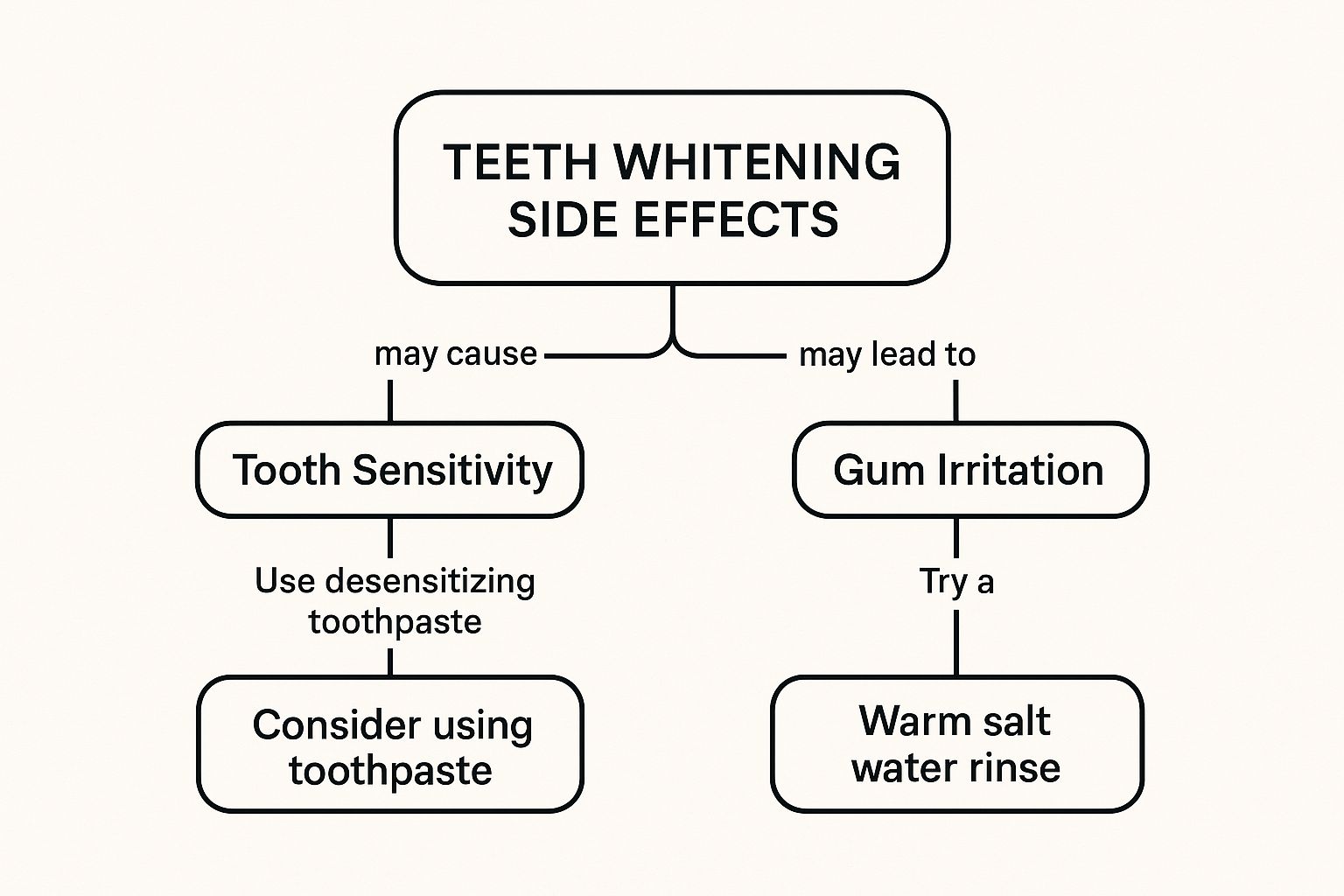
As you can see, for every common issue, there's a simple, straightforward solution. Just being prepared with these easy remedies can make your entire whitening experience feel much more comfortable and controlled.
Here’s a quick-reference table that summarizes these potential side effects and gives you an at-a-glance plan for handling them.
Quick Guide to Common Teeth Whitening Side Effects
| Side Effect | Common Cause | Typical Duration | What to Do First |
|---|---|---|---|
| Tooth Sensitivity | Peroxide agent temporarily increasing enamel porosity. | 1-3 days | Use a desensitizing toothpaste before and after treatment. |
| Gum Irritation | Whitening gel making direct contact with gum tissue. | 1-2 days | Rinse with warm salt water and avoid direct application on gums. |
| Blotchy or Uneven Results | Pre-existing dental restorations (crowns, fillings) that don't whiten. | Permanent until addressed by a dentist | Consult your dentist before whitening to discuss options for matching restorations. |
| Slight Throat Irritation | Accidentally swallowing a small amount of whitening gel. | Less than 24 hours | Drink plenty of water and ensure trays are not overfilled. |
Having this information handy helps you feel prepared from the very start, turning potential concerns into minor, manageable speed bumps on your way to a brighter smile.
Navigating Tooth Sensitivity After Whitening
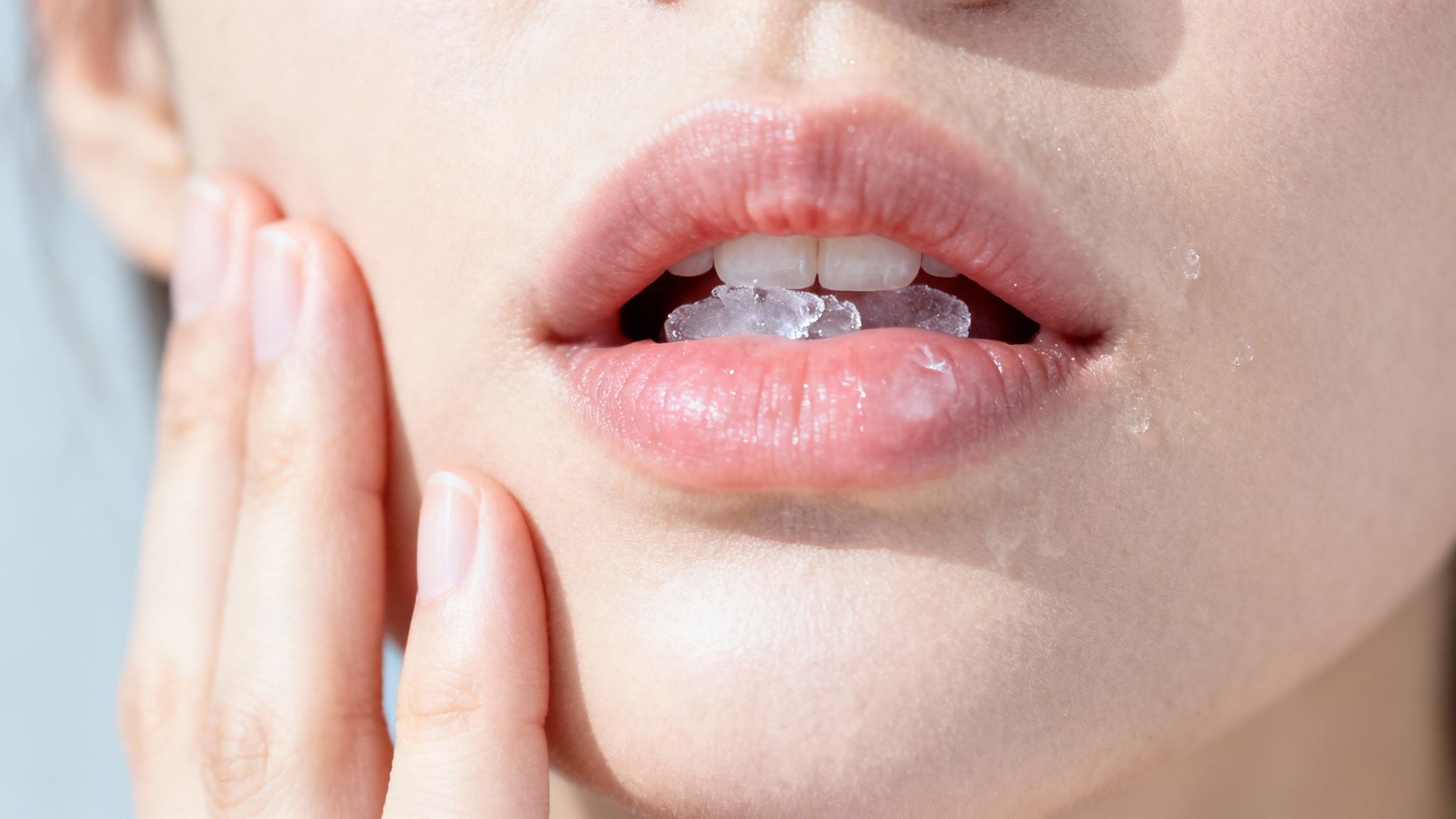
If you've ever felt that sudden, sharp "zing" from a sip of cold water, you know exactly what tooth sensitivity feels like. It’s easily the most common of all teeth whitening side effects, but once you understand what's happening inside your tooth, it becomes much less intimidating.
Think of the whitening gel—typically a peroxide-based formula—as a visitor that needs to get past your tooth's protective front door. To break down stains, it has to gently travel through the enamel, which is the hard, outer layer. In doing so, it gets closer to the layer underneath called the dentin.
This dentin layer is full of tiny, microscopic tubules that lead straight to the tooth's nerve center. When the whitening agent temporarily opens these channels, the nerve can get a little irritated. The result is that familiar jolt you feel with hot or cold temperatures. The good news? This is almost always a temporary state, usually fading within a day or two after you finish whitening.
Who Is More Likely to Feel the Zing?
Not everyone walks away with sensitive teeth, and the intensity can be very different from person to person. A few key factors can predict whether you're more likely to feel that post-whitening discomfort:
- Pre-existing Sensitivity: If you already cringe at the thought of ice cream, you're a prime candidate for sensitivity after whitening.
- Thinner Enamel: Some people are just born with it, while for others, enamel thins with age. Either way, less enamel means less insulation for the nerve.
- Gum Recession: When gums pull away from the teeth, they expose the root surfaces. These areas have no enamel protection and are naturally very sensitive.
- Cracks or Old Fillings: Any small breach in your tooth's armor, like a tiny crack or a leaky filling, can give the whitening gel a direct path to the nerve.
The whitening method itself is also a big piece of the puzzle. Professional in-office treatments use a more potent gel to get you dramatic results fast, which can sometimes lead to more intense (but brief) sensitivity. On the other hand, at-home kits use a lower concentration over several weeks, often causing milder, more manageable sensitivity.
It’s such a common reaction that some clinical reports show that up to 67–78% of patients experience it after a professional in-office whitening session.
Proactive Steps for a More Comfortable Experience
Why wait for discomfort to start? The smartest approach is to get ahead of it. A few simple steps beforehand can make your entire whitening journey smoother and more pleasant.
One of the best things you can do is switch to a desensitizing toothpaste about one to two weeks before your whitening appointment. These toothpastes are formulated with ingredients like potassium nitrate that work by blocking those tiny tubules in your dentin. It’s like turning down the volume on your tooth's nerve before the main event even begins.
After your treatment, try to stick with lukewarm food and drinks for the first 24-48 hours. Giving your teeth a break from extreme temperatures allows them to calm down and rehydrate, helping that sensitive feeling disappear much faster. For more great ideas, take a look at our guide on how to manage sensitive teeth at home. Taking these small steps can ensure your path to a brighter smile is as wonderful as the final result.
How to Handle Gum Irritation and Soreness
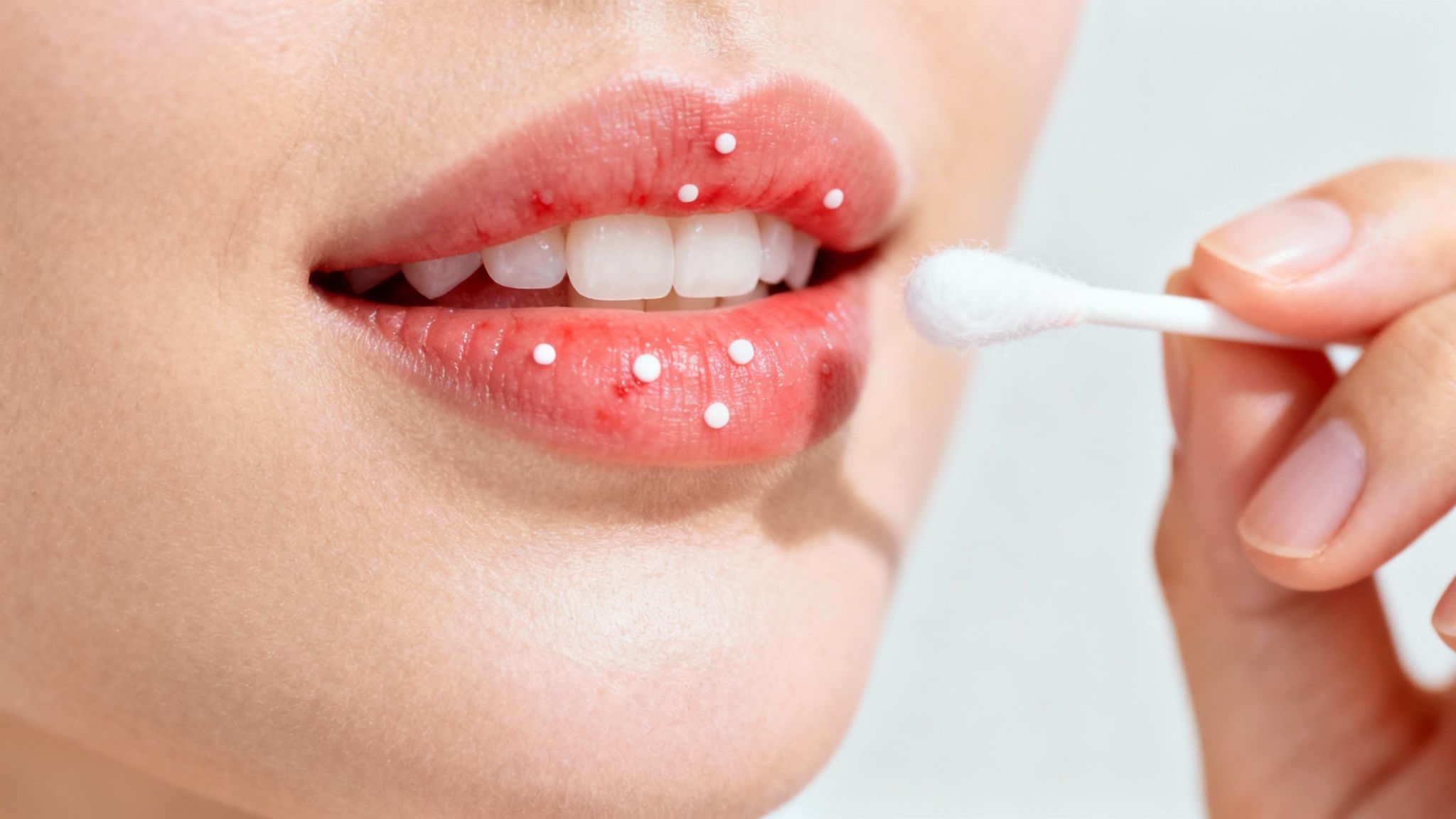
While sensitive teeth usually steal the spotlight, your gums can also be affected during the whitening process. It’s a common side effect, and it makes sense when you think about it. The whitening gel is a powerful solution designed to work on hard tooth enamel, not the delicate, soft tissue of your gums.
When that gel escapes the tray and makes contact with your gums, it can cause a temporary chemical reaction. You might notice some redness, swelling, or even temporary white spots on your gum line.
Think of it like getting soap in your eye—it stings for a bit, but the discomfort usually fades once you flush it out. This type of irritation happens most often with over-the-counter kits that come with generic, one-size-fits-all trays. Since they aren't molded to your specific bite, the gel can easily seep out and pool along your gums, causing soreness.
Immediate Steps for Soothing Sore Gums
If you start to feel your gums getting tender during a whitening session, don't try to power through it. Acting fast will prevent the irritation from getting worse and help your gums bounce back quickly.
Here’s a simple game plan to get things under control:
- Stop the Treatment: The second you feel that stinging sensation, take the whitening tray out. Trying to finish the session will only make the problem worse.
- Rinse Gently: Mix half a teaspoon of salt into a glass of warm water and swish it around your mouth for about 30 seconds. The saltwater rinse is a classic remedy for a reason—it helps clean the area and calm inflammation.
- Apply a Soothing Agent: Grab a cotton swab and gently dab a little vitamin E oil on the irritated spots. This can help soothe the tissue and support the healing process.
- Take a Break: Don't consider whitening again until your gums are completely back to normal. This might take a day or two, so be patient.
The most important thing you can do is pause your whitening routine. Constantly exposing irritated gums to the whitening gel will just prolong the healing time and could lead to bigger issues down the road.
Prevention: The Best Defense Against Gum Irritation
Knowing how to treat sore gums is great, but avoiding the problem in the first place is even better. The absolute best way to protect your gums is to make sure the whitening gel stays right where it's supposed to be: on your teeth.
This is one area where professional guidance really pays off. A dentist can create a custom-fitted whitening tray from a mold of your own teeth. This tray forms a perfect seal, locking the gel onto your tooth surfaces and preventing it from leaking onto your gums. It makes the entire process more comfortable, safer, and more effective.
If you're dealing with ongoing gum problems, you can find more helpful information in our guide on how to fix bleeding gums. Ultimately, checking in with a professional is the surest way to get that brighter smile without the painful side effects.
Understanding the Risks of OTC Whitening Products
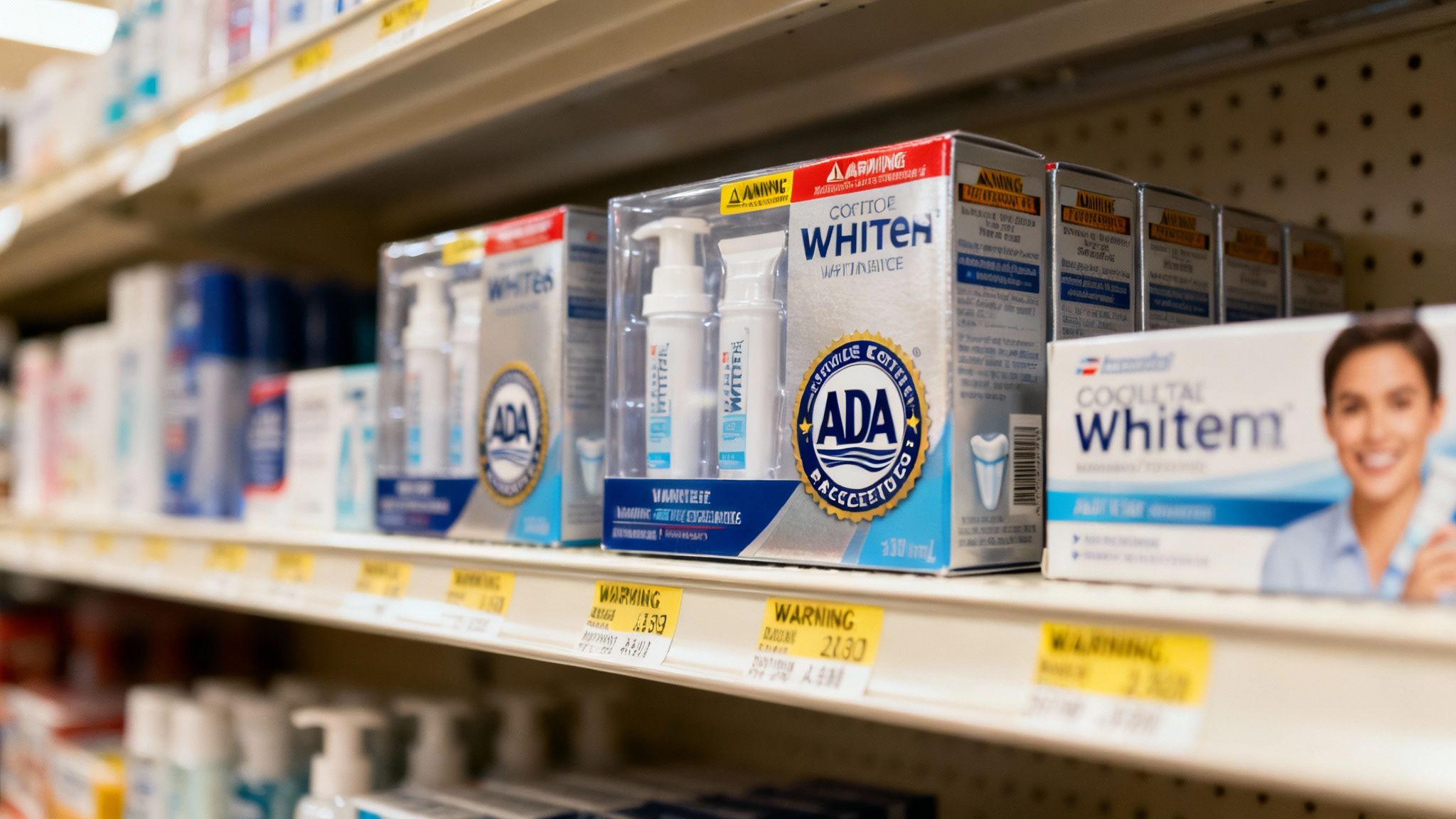
It’s hard to miss them. Walk down any dental care aisle, and you’ll see dozens of over-the-counter (OTC) whitening kits, all promising a movie-star smile. While the convenience is undeniable, it's crucial to know that not all these products are created equal. Some carry significant risks, and the convenience of a box can sometimes come at a hidden cost to your long-term oral health.
The main issue comes from unregulated products, especially those you might find online from questionable sellers. These can contain dangerously high concentrations of whitening agents or even harsh, acidic ingredients that can permanently damage your tooth enamel. And that’s a big deal—once your enamel is gone, it’s gone for good.
The Danger of Enamel Erosion
Think of your tooth enamel as a protective shield, a hard outer shell that guards the sensitive, living tissue inside your teeth. When that shield gets worn away by aggressive chemicals, it leaves your teeth vulnerable.
Enamel erosion is one of the most serious teeth whitening side effects from using the wrong product. This single issue can kick off a chain of other problems:
- Chronic Tooth Sensitivity: When the enamel thins, the nerves inside your teeth are much more exposed. This is why you might feel a jolt from hot coffee, cold ice cream, or even sweet foods.
- Increased Risk of Cavities: Enamel is your primary defense against the bacteria that cause decay. Thinner enamel is like a weakened fortress, making it much easier for cavities to take hold.
- A Yellowish Appearance: Here’s the ironic part. Over-whitening can actually make your teeth look more yellow over time. As the translucent enamel wears away, the naturally yellowish layer beneath it, called dentin, starts to show through.
Some of these OTC kits have been found to contain alarming ingredients. For example, some products use sodium chlorite, which can reduce the hardness of your teeth when activated by an acid. While dental authorities recommend a maximum of 6% hydrogen peroxide for home use, some illegal kits have been seized containing over 33%! That’s a level that can cause severe gum burns, nerve damage, and serious enamel loss.
How to Choose Safer OTC Options
If you’re still set on using an at-home product, there are definitely ways to protect your smile. The single most important thing to look for is the American Dental Association (ADA) Seal of Acceptance. This seal isn't a marketing gimmick; it means the product has been through rigorous, independent testing to prove it’s both safe and effective.
The ADA Seal of Acceptance is your assurance that a product does what it claims without causing undue harm. It's the gold standard for dental products and a simple way to filter out potentially dangerous options.
But even with a top-notch, ADA-approved product, you can still run into trouble if you don't use it correctly. This is why having a quick chat with your dentist before starting any at-home treatment is the smartest first step you can take.
A professional can look at your overall oral health, spot potential issues like thin enamel or existing dental work, and guide you toward the safest and most effective path for your specific needs. To learn more, check out our detailed guide on whether DIY teeth whitening could be causing harm.
Spotting the Rarer Side Effects of Whitening
Most people who whiten their teeth might deal with a bit of sensitivity or temporary gum soreness, but a few less common issues can pop up. Knowing what to look for means you can catch a problem early and keep your whitening experience on the right track.
One of the most disappointing results is ending up with a blotchy, uneven smile. This is a classic issue for anyone with crowns, veneers, or fillings on their front teeth. These restorations were made to match your tooth color at a specific point in time. The porcelain or composite resin they're made of will not change color with whitening products. So, as your natural enamel brightens, your dental work stands out, looking darker or more yellow in contrast.
Other Discomforts to Be Aware Of
Beyond how your teeth look, a few other physical issues can arise if you're not careful with how you apply the whitening product.
A Sore Throat or Upset Stomach: This is almost always caused by accidentally swallowing a bit of the whitening gel. The most common mistake is overfilling the whitening trays. The extra gel oozes out, and it’s easy for some of it to trickle down your throat. A small amount isn't dangerous, but it can definitely leave you with a sore throat or some stomach irritation.
A Strange Taste in Your Mouth: Some people notice a temporary chemical or metallic taste during or right after a treatment. This is just a direct reaction to the peroxide in the gel and usually goes away within a couple of hours.
The big takeaway here is simple: listen to your body. If you feel anything more than very mild, temporary sensitivity, it's time to pause the whitening. Powering through real discomfort is never a good idea and could lead to bigger problems.
Understanding what’s normal and what’s a red flag is crucial for any cosmetic treatment. You can even draw parallels to other procedures. For example, learning about common versus serious dermal filler side effects helps people know when to relax and when to call a professional—it’s the same principle.
If any of these less common side effects show up, your next step is always the same: stop whitening and give your dentist a call. They can figure out what's going on, whether it’s a tray that doesn’t fit right or something else entirely, and help you get back on a safe path to the brighter smile you want.
When You Should Talk to Your Dentist
Knowing the difference between a normal, temporary side effect and a real problem is the key to whitening your teeth safely. Most of the minor issues you might run into will clear up on their own, but there are definitely a few red flags that mean it's time to pause and call your dentist.
Think of it as a simple safety check. A bit of mild sensitivity that disappears in a day or two? That's pretty standard. But your body has a way of telling you when something is off. The goal is to get a brighter smile without having to "power through" serious discomfort.
Signs That Require Professional Attention
You should never hesitate to call your dentist if you experience any of these symptoms. These go beyond the typical mild side effects and could point to a bigger issue that needs a professional look.
- Severe, Lingering Pain: If the sensitivity is so bad it's disrupting your daily life or if it sticks around for more than 48 hours, that's a clear signal to get help.
- Blisters or Sores on Gums: A little redness on your gums can happen. But if you see white patches, actual blisters, or painful sores forming, you're likely dealing with a chemical burn that needs attention.
- Extreme Sensitivity to Touch: Is a simple breath of cool air or the touch of your tongue sending a sharp jolt of pain through your tooth? It's time for a professional evaluation.
- Difficulty Eating or Drinking: When the sensitivity gets so bad that you can't enjoy a meal or a drink without wincing, it has moved past being a minor inconvenience and into a clinical problem.
The ultimate goal is to enhance your smile safely. Partnering with a dental professional ensures you are a good candidate for whitening and helps you choose the safest, most effective approach for your unique needs.
Your teeth whitening journey should be an exciting one, not a painful one. By learning to recognize these warning signs, you can stay in control of your oral health and ensure your path to a brighter smile is both successful and completely safe.
For more information on the most reliable and gentle methods, you can learn about our professional teeth whitening services and see how an expert approach can protect your smile.
Common Questions About Teeth Whitening Safety
Getting a brighter smile is exciting, but it's natural to have a few questions about the process first. Let's walk through some of the most common things people ask so you can feel confident and prepared.
Can I Whiten My Teeth If I Have Crowns or Fillings?
This is a fantastic question and one that comes up all the time. The short answer is that whitening gels won't change the color of dental work like crowns, veneers, or fillings.
Think of it this way: when your dentist placed that crown, they matched it perfectly to the color of your teeth at that moment. The material they used isn't porous like your natural enamel, so the peroxide simply won’t affect it. If you whiten the surrounding teeth, you might end up with a mismatch in color, which can make your dental work stand out. It's always a good idea to chat with your dentist first to figure out a plan.
How Often Is It Safe to Whiten My Teeth?
It's easy to get caught up in the quest for a dazzling smile, but overdoing it is a real risk. Whitening too often can start to wear on your enamel and lead to serious sensitivity.
Most dental professionals suggest you wait a good 12-18 months between full professional treatments. This gives your teeth time to recover and stay healthy. If you're using an at-home kit, stick to the instructions on the box like glue—the manufacturer sets those limits to keep your teeth safe from unnecessary side effects.
Are Natural Whitening Methods Like Charcoal Safer?
You see them all over social media, but "natural" doesn't automatically equal "safe." Things like activated charcoal or baking soda pastes are often quite abrasive. While they might scrub off some surface stains, they can also scrub away your protective enamel along with them. Once enamel is gone, it's gone for good.
Your best bet is to stick with products that have been clinically tested for both safety and effectiveness, like those approved by dental associations. For a deeper dive into the general safety of the process, this guide on what you need to know about teeth whitening side effects is a great resource.
Ready to get that brighter smile the right way? The experts at Serena San Diego Dentist are here to help you do it safely and effectively. Schedule a consultation today, and let's find the perfect whitening approach for you.
https://serenasandiegodentist.com