
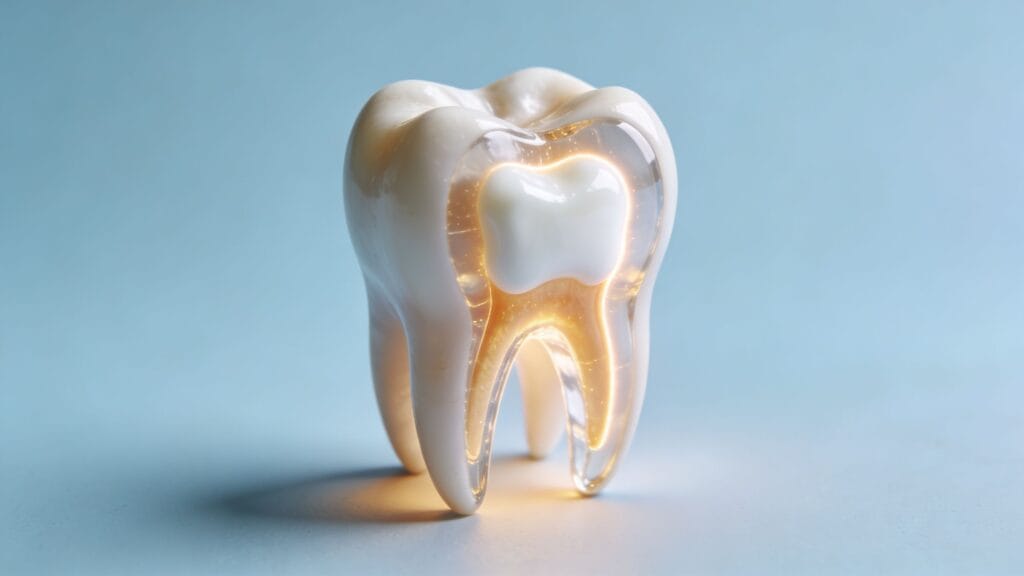
You got the filling because something was wrong. Then the numbness wore off, you took a sip of cold water, and that tooth gave you a sharp little reminder that it’s still there.
That’s unsettling. It's understandable to expect a filling to end the problem right away, not start a new one. If your tooth still sensitive after filling treatment is making you worry, your concern makes sense. Dental pain is hard to ignore, and even mild sensitivity can make every coffee, smoothie, or bite of dinner feel like a test.
The good news is that post-filling sensitivity is often part of normal healing. Teeth aren’t blocks of stone. They’re living structures with tiny tubules, a nerve inside, and supporting tissues around the root. When a dentist removes decay and places a filling, the tooth has to settle down afterward. Sometimes it does so uneventfully. Sometimes it complains for a bit.
You don’t need to guess your way through it, though. There’s a big difference between a tooth that’s healing and a tooth that’s asking for help.
That Lingering Twinge After a Dental Filling
A common story goes like this. You leave the appointment relieved that the cavity is fixed. Later that day or the next morning, the tooth feels “off.” It might zing when cold air hits it. It might ache when you chew on that side. It might feel fine most of the time, then protest when you drink iced coffee on your way through Clairemont Mesa or bite into something crunchy at lunch in La Jolla.
That reaction can make you wonder if something went wrong.
Usually, it doesn’t mean the filling failed. It means the tooth has been through dental work and is reacting to it. This is much like a sore knee after a necessary repair. The treatment helped, but the area may stay tender while it recovers.
What makes this confusing is that sensitivity can show up in different ways:
- Cold sensitivity that feels quick and sharp
- Pressure sensitivity when you bite down
- Sweet sensitivity that wasn’t obvious before
- A general “bruised” feeling around one tooth
Some of those patterns are expected early on. Some are not.
A healing tooth usually improves little by little. A troubled tooth often stays the same, gets worse, or starts waking you up.
San Diego lifestyles can add another layer. High-stress work can lead to jaw clenching. Acidic foods and drinks can make already-sensitive teeth feel more reactive. If you’ve been sipping citrus drinks, snacking often, or grinding your teeth at night, the tooth can feel more irritated even if the filling itself is fine.
The key is not to panic and not to ignore it. Watch the pattern. Mild sensitivity that fades over time is very different from pain that becomes stronger, more constant, or more specific.
Why Your Tooth Is Sensitive After a Filling
The simplest explanation is this. Your tooth’s nerve may be temporarily irritated.

Your tooth isn’t just enamel
Inside every tooth is the pulp, which contains the nerve and blood supply. Around it is dentin, which has tiny pathways that can carry sensation. When a dentist removes decay, the tooth goes through a controlled kind of “construction work.” The drilling, cleaning, rinsing, and filling placement can disturb that inner tissue.
A lot of patients understand this better when I compare it to a bruise. The tooth isn’t necessarily damaged in a dangerous way. It’s just irritated and more reactive than usual.
Tooth sensitivity after a filling is very common, and the drilling process can irritate the tooth pulp. In the vast majority of cases, discomfort fades on its own within two to four weeks, and over 90% of patients experience resolution without further intervention, according to this review of post-filling sensitivity.
Why some fillings feel more noticeable
Not all fillings affect a tooth the same way. A small shallow filling may settle quickly. A deeper one can stir up more sensitivity because the dentist had to work closer to the nerve.
That often leads to confusion. Patients think, “If the decay is gone, why do I feel more now?” The answer is that the tooth can become temporarily over-alert after treatment. Cold drinks, chewing pressure, air, and sweets can all travel through the tooth more noticeably while the nerve calms down.
Here’s a simple perspective:
| Situation | What it can feel like |
|---|---|
| Shallow filling | Brief twinges, mostly with cold or sweets |
| Deeper filling | Longer tenderness, stronger temperature response |
| Recently filled tooth under chewing load | Soreness or pressure when biting |
The tooth may be overreacting, not failing
Early sensitivity doesn’t automatically mean infection, a bad filling, or a need for major treatment. Many teeth just need time.
What often helps is understanding the triggers:
- Temperature changes can activate the irritated nerve
- Chewing pressure can stress a tooth that’s still settling
- Air exposure can trigger a quick zing
- Sweet foods can travel through those tiny dentin pathways and spark a reaction
A short explanation from a clinician can ease a lot of anxiety, so this video may help you connect the dots:
San Diego habits can make sensitivity feel louder
Daily life matters. If you’re under stress and clench during work or traffic, the tooth may feel more beat up. If your diet includes frequent acidic drinks, fruit, sparkling beverages, or sweet snacks, the nerve can seem more reactive while healing.
That doesn’t mean you caused the problem. It means the tooth may need a calmer environment for a little while.
Practical rule: If the tooth is gradually improving, that usually points to healing. If it’s becoming more intense, more frequent, or more disruptive, it deserves a closer look.
Your Healing Timeline and At-Home Care Plan
Patients do best when they know what “normal” looks like day by day. Uncertainty often causes more stress than the sensitivity itself.

What healing often feels like
Here’s a practical timeline to keep in mind.
First 24 to 48 hours
The tooth may feel tender, especially after the numbness fades. Hot, cold, and pressure can all seem exaggerated. Soft foods and gentler chewing usually help.
Day 3 through the first week
The sensitivity should start becoming less dramatic. You may still notice it with cold drinks or harder foods, but it shouldn’t be building momentum.
Week 2 through week 4
This is when most normal post-filling sensitivity settles down. If your tooth still sensitive after filling treatment by this point feels exactly the same, or worse, it’s worth contacting your dentist.
What you can do at home
You don’t need a complicated routine. Small changes often make the biggest difference.
- Switch to a desensitizing toothpaste. Products made for sensitive teeth can reduce triggers over time.
- Avoid temperature extremes. Very hot coffee and ice-cold drinks can provoke a healing nerve.
- Chew on the other side for a few days. That gives the restored tooth a chance to settle.
- Brush gently with a soft-bristled brush. Scrubbing hard can irritate the area more.
- Keep flossing carefully. You want the area clean without snapping floss against the gum.
If you want a few simple comfort measures for home, this page on tooth pain home remedies from Serena San Diego Dentist offers a practical starting point.
Don’t ignore clenching and grinding
One of the most overlooked reasons sensitivity hangs on is bruxism, which means clenching or grinding. Some people do it at night. Others do it at a desk without realizing it.
Habits like bruxism are reported in 8-10% of the population, and they can significantly worsen post-filling sensitivity by creating constant micro-trauma on the restored tooth. In some cases, a custom night guard can lead to a 70% reduction in sensitivity, according to this discussion of grinding-related filling pain.
That matters in San Diego because stress can show up in the jaw fast. If you wake with tight jaw muscles, morning headaches, or sore teeth, grinding may be part of the story.
If the tooth feels worst in the morning, or after stressful workdays, think beyond the filling itself. Your bite force may be part of the problem.
Foods and habits that can slow healing
A recently filled tooth usually prefers a boring menu for a little while.
- Acidic drinks like citrus beverages or sparkling drinks can aggravate sensitivity
- Crunchy foods can create pressure on a tooth that’s still settling
- Sticky sweets can trigger discomfort and are harder to clean away
- Hard brushing can make the surrounding area feel raw
You don’t need to avoid these forever. You’re just giving the tooth a quieter recovery period.
Red Flags When Sensitivity Is Not Normal
A healing tooth can be sensitive. A problem tooth usually sends a clearer message.

Pain when you bite down
This is one of the biggest clues that the issue may not be “just healing.”
A high bite is a primary cause of lasting discomfort, accounting for up to 30-50% of post-filling sensitivity cases that don’t resolve on their own. It happens when the filling is slightly too tall, creating excess pressure when you chew, and it’s usually a simple fix your dentist can perform quickly, as explained in this overview of high-bite pain after fillings.
Patients often describe it as “that tooth hits first” or “it hurts only when I bite a certain way.” That detail matters. It points to mechanics, not just nerve healing.
Pain that changes from a twinge to an ache
Brief sensitivity to cold is one thing. Lingering pain after the trigger is gone is another.
Call your dentist if you notice:
- Pain that lingers after cold or sweet foods
- A throbbing feeling instead of a quick zing
- Pain strong enough to disturb sleep
- A sudden shift from mild sensitivity to persistent ache
Those symptoms can suggest the tooth is more inflamed than expected.
Swelling, fever, or feeling unwell
Dental problems can overlap with urgent medical concerns. If you have swelling in the gum, face, or jaw, or you feel feverish, don’t wait it out. Dental offices are usually the right first call for a tooth-related source, but if you’re unsure whether your symptoms need same-day medical attention, this Carter’s guide for urgent care can help you judge when prompt evaluation makes sense.
Sensitivity that just doesn’t fade
A normal healing pattern moves in the right direction. It doesn’t have to be perfect every day, but it should trend better.
Use this quick check:
| Sign | More likely normal | More likely needs a call |
|---|---|---|
| Cold sensitivity | Brief and improving | Lingers or intensifies |
| Chewing discomfort | Mild and fading | Sharp pain on biting |
| Overall pattern | Better week by week | Same or worse after several weeks |
If you’re unsure what qualifies as worth checking, this article on why you shouldn’t ignore a sensitive tooth gives a helpful patient-friendly checklist.
Most people don’t need to diagnose the cause themselves. They just need to notice the pattern and report it clearly.
Professional Solutions for Lingering Tooth Pain
When a sensitive filling doesn’t settle, the dental visit is usually more straightforward than people expect. The goal is to identify the source of the irritation and remove it.
The common fixes are often simple
If the problem is bite-related, your dentist can adjust the filling so it contacts evenly when you chew. If the edges need refinement or the filling needs to be resealed, that can often be done in the office without major treatment.
Some visits involve a few practical steps:
- Checking the bite with thin marking paper
- Testing hot, cold, or pressure triggers to narrow the cause
- Examining the filling margins for gaps or irritation
- Looking for crack patterns or clenching wear
That kind of exam tells the story more reliably than symptoms alone.
When the cause is less obvious
Not every lingering case comes from a high spot on the filling. Roughly 5-15% of cases with prolonged pain require professional intervention, and allergic or inflammatory reactions to composite materials such as BPA, while rare, can affect 2-5% of patients as an emerging cause of persistent sensitivity, according to this review of persistent filling pain and material reactions.
That’s one reason modern diagnosis matters. A dentist may look at the bite, the nerve response, possible grinding stress, and the filling material itself rather than assuming every sore tooth needs the same answer.
In some practices, including Serena San Diego Dentist’s root canal treatment service, evaluation for deeper nerve involvement is part of the next step when symptoms point beyond routine sensitivity.
Bruxism can keep undoing the healing
If you clench or grind, a technically good filling can still feel bad because the tooth keeps getting overloaded. That’s especially true when the tooth already has a fresh restoration.
Sometimes the solution isn’t only dental drilling or bonding. It may include protecting the tooth from muscle force, improving jaw habits, or addressing TMJ strain. For readers interested in the jaw-muscle side of this issue, this overview of Boston TMJ physical therapists is a useful example of how clinicians approach bite tension and surrounding joint symptoms.
Rarely, the nerve needs more than time
If the tooth nerve stays inflamed or becomes more painful over time, your dentist may discuss a root canal. That sounds intimidating, but the purpose is simple. It removes the inflamed tissue inside the tooth and lets the tooth function comfortably again.
Many individuals with post-filling sensitivity never need that step. But if you do, getting care sooner usually makes the situation more predictable and less stressful.
A dentist isn’t just looking for “pain.” They’re looking for the exact pattern of that pain, because the pattern points to the fix.
Your Next Step to a Comfortable Smile in San Diego
Here’s the main point. A sensitive tooth after a filling is often a healing tooth, not a failed one. Mild cold sensitivity, brief pressure discomfort, and a “bruised” feeling can all happen while the nerve settles down.
What matters most is the direction. If symptoms are easing, that’s reassuring. If they’re persistent, stronger, or focused on biting pressure, it’s time for a dental check.
That’s especially true if your daily habits may be adding stress. San Diego schedules can be intense. Clenching during work, snacking on acidic foods, and drinking hot coffee followed by cold drinks can all make a healing tooth feel louder than it really is.
If you need your filling checked, want to discuss a bite adjustment, or want clarity on whether your symptoms are normal, review these expert tooth filling services in San Diego. A timely exam can often turn uncertainty into a very clear answer.
Frequently Asked Questions About Filling Sensitivity
Can I brush the sensitive tooth normally
Yes, but use a soft-bristled toothbrush and a gentle hand. Skipping brushing can let plaque build up and make the area feel worse. The goal is clean, not scrubbed.
Does the type of filling affect sensitivity
It can. Some people notice different responses with different materials, and a small group may react poorly to certain composites. If the sensitivity feels unusual or lasts longer than expected, your dentist may consider the material as part of the evaluation.
Is whitening a bad idea if the tooth is still sensitive
Usually, yes for the moment. Whitening products can add to sensitivity, so it’s smarter to wait until the tooth is calm and your dentist says it’s reasonable.
What if the filling feels loose or falls out
That needs prompt attention. A lost filling leaves the tooth more exposed and usually more sensitive. If that happens, this guide on what you can do if a dental filling falls out covers the next steps.
If your tooth still feels sensitive after a filling and you’d like a clear, calm evaluation, Serena San Diego Dentist can help you figure out whether the tooth is healing normally or needs treatment. If you’re in San Diego, Clairemont Mesa, or La Jolla, scheduling a check can give you a more comfortable bite and more peace of mind.