
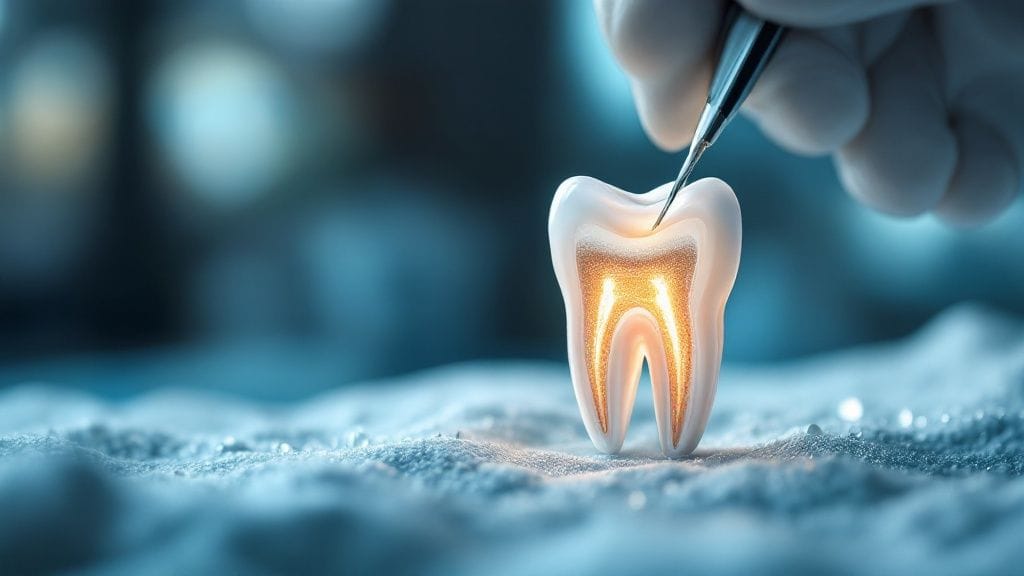
You've probably heard the term root canal before, and let's be honest, it doesn't usually bring up warm, fuzzy feelings. But what if we told you that endodontic treatment—the official name for a root canal—is actually a pain-relieving procedure designed to save a tooth that's in serious trouble?
This treatment isn't about the outside of your tooth; it's all about what's going on deep inside. We're here to walk you through what endodontic treatment is, why it's necessary, and how it can be a comfortable, tooth-saving experience.
Demystifying Endodontic Treatment
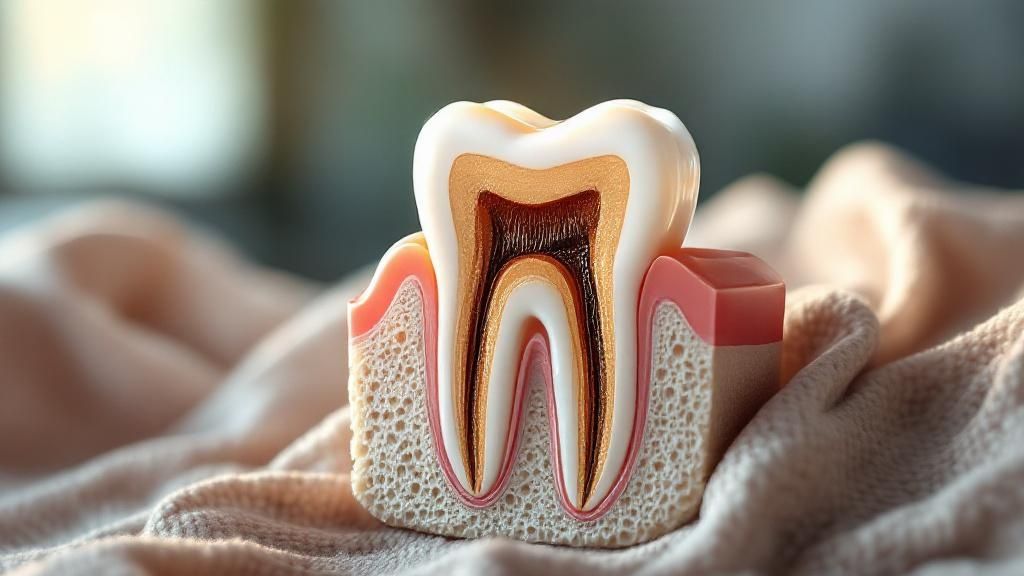
The old myths about root canals being a terrible experience just don't hold up with modern dentistry. In reality, this procedure is one of the most effective tools we have to stop a nasty toothache and prevent an extraction. It’s the last line of defense for your natural tooth.
Think of your tooth as having a small, hollow center filled with soft tissue called pulp. This pulp is made up of nerves and blood vessels—it’s essentially the tooth's lifeline. When bacteria find a way in, either through a deep cavity, a crack, or an injury, that pulp can become inflamed and infected. That’s what causes the intense, throbbing pain that signals a serious problem.
To get a quick overview, this table breaks down the essentials.
Endodontic Treatment At a Glance
| Aspect | Description |
|---|---|
| Common Name | Root Canal Therapy |
| Primary Goal | Remove infected pulp from inside the tooth. |
| Key Action | Clean, disinfect, and seal the tooth's inner chambers. |
| Main Outcome | Eliminate pain and save the natural tooth from extraction. |
| Final Step | The tooth is typically restored with a dental crown for strength. |
This summary highlights how the procedure works to preserve your smile.
The Goal of the Procedure
The mission of endodontic therapy is simple but vital: get the bad stuff out and protect the tooth for the future. We carefully remove the infected pulp, thoroughly clean and disinfect the inside of the tooth, and then fill and seal it to block out any new bacteria.
The results speak for themselves and are all about your long-term oral health:
- Immediate Pain Relief: By removing the source of the infection—the nerve tissue—we stop the toothache in its tracks.
- Keeps Your Natural Tooth: Saving your tooth means you can avoid an extraction and the more involved procedures that follow, like bridges or implants.
- Brings Back Normal Function: Once the tooth is restored, usually with a crown for protection, you can get back to chewing and speaking without a second thought.
We believe that explaining what's happening in clear, simple terms is crucial. It’s a core principle of effective communication in healthcare. Here at Serena San Diego Dentist, we make it our priority to ensure you understand your treatment and feel completely comfortable from start to finish.
Signs You Might Need a Root Canal
How can you tell if a tooth is in serious trouble and might need a root canal? Usually, your body gives you some pretty clear warning signs. Learning to spot these signals early on is the best way to avoid a bigger problem down the road.
One of the most classic signs is a severe, persistent toothache. We're not talking about a little twinge—this is the kind of deep, throbbing pain that can wake you up at night and make it hard to focus on anything else. It’s a definite sign that something is wrong deep inside the tooth.
When to Pay Close Attention
Another major red flag is sensitivity that just won't quit. If a sip of hot coffee or a bite of ice cream sends a jolt of pain through your tooth that lingers for a long time, the nerve is likely damaged. This is very different from the fleeting sensitivity many people experience, which typically goes away in a second or two.
You should also be on the lookout for other physical clues, such as:
- Swelling and Tenderness: Take a look at your gums. If you notice swelling, tenderness, or a small, recurring pimple on the gumline near a tooth, it often points to an infection trying to drain.
- Tooth Discoloration: When the pulp inside a tooth dies, the tooth itself can start to look darker, often taking on a grayish or blackish hue.
- Pain with Pressure: If biting down or even just tapping on the tooth causes sharp pain, it’s a strong hint that the tissues around the root are inflamed and infected.
Ignoring these symptoms is a gamble. The infection can easily worsen, leading to a painful abscess and even causing the bone around the root of your tooth to deteriorate.
Why You Feel These Symptoms
These signs are your body's alarm system, telling you that the pulp has been compromised. This can happen because of deep decay that reached the tooth's core, a crack from an old injury, or even problems from a previous filling or crown.
It's no surprise that when faced with these complex issues, more people are seeking out specialists. In fact, the percentage of root canals performed by endodontists grew from 34.6% to 44.4% in just a few years, highlighting a clear trend of patients wanting to save their natural teeth with expert care. Seeing a specialist often makes all the difference in complex cases.
A Step-By-Step Walkthrough of the Procedure
Knowing what to expect can turn fear of the unknown into confidence. Forget the old myths—a modern root canal is a precise, controlled procedure designed to get you out of pain and save your tooth. Let's walk through it so you can see it for what it is: a clear path back to dental health.
Here at Serena San Diego Dentist, your comfort is our top priority. We make sure you're completely numb and at ease before we even start. For most people, the experience feels a lot like getting a standard filling.
The Treatment Process From Start to Finish
We follow a series of well-defined stages, each with a single goal: to get rid of the infection and secure your natural tooth for the long haul.
This visual guide breaks down how we carefully clean out the inner part of the tooth.
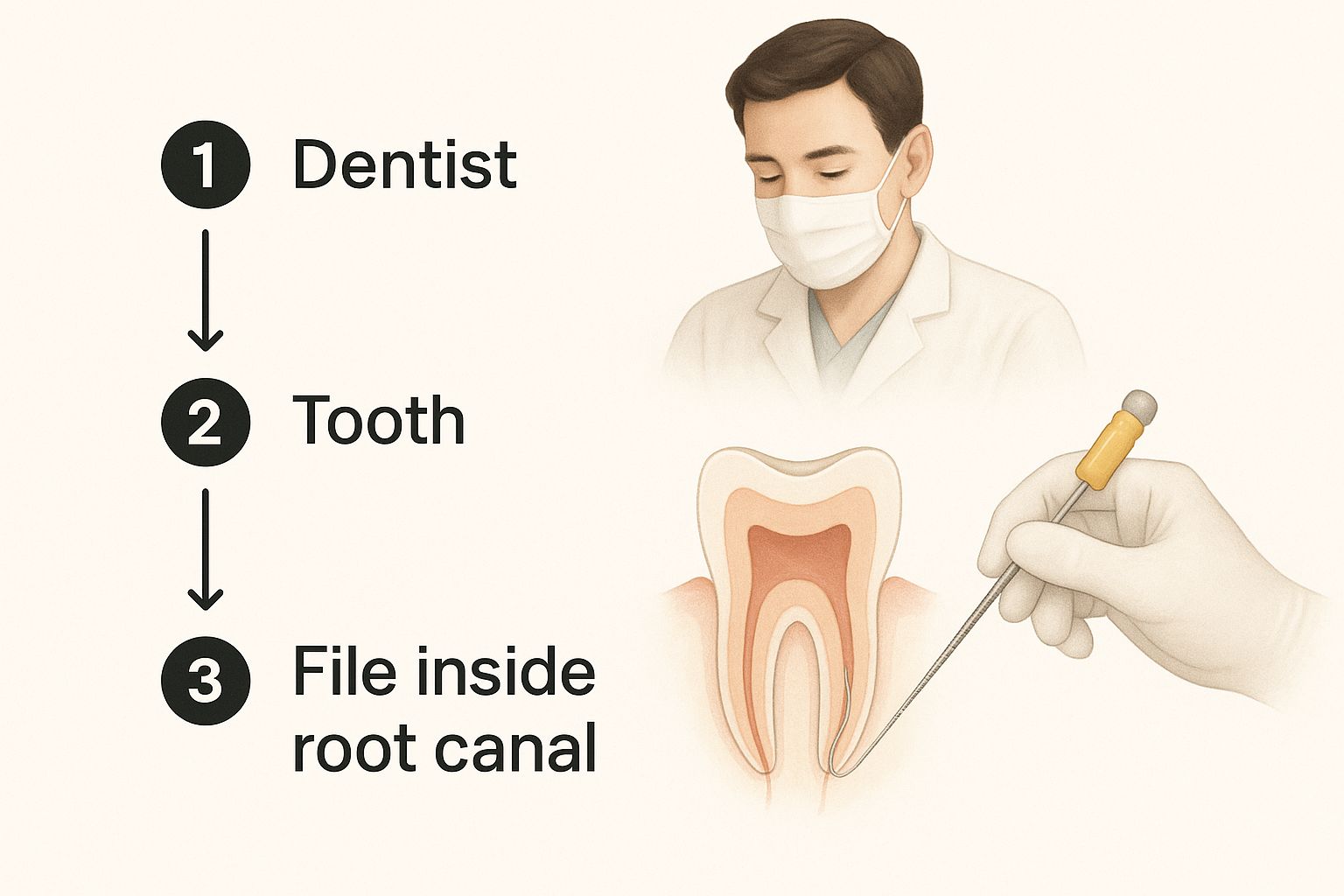
As you can see, the idea is to meticulously clean the tooth's inner root system, almost like clearing tiny, blocked channels to restore them to health.
Here’s what a typical endodontic treatment journey looks like:
- Diagnosis and Numbing: First, we take detailed X-rays to get a clear picture of your tooth’s root structure. Then, we apply a local anesthetic to completely numb the area, so you won’t feel any pain. If you're feeling particularly anxious, we have other options. You can learn all about sedation dentistry and its safety in our detailed article.
- Accessing and Cleaning: We place a small, protective sheet called a "dental dam" around the tooth to keep it sterile and dry. A tiny opening is then made in the top of the tooth to reach the infected pulp. Using very fine, specialized tools, we carefully remove the damaged tissue and thoroughly clean the root canals.
- Filling and Sealing: After the canals are completely disinfected, we fill them with a biocompatible, rubber-like material called gutta-percha. This seals off the canals entirely, preventing any new bacteria from getting in. We finish by placing a temporary filling to close the opening.
Key Takeaway: The whole point of the procedure is to eliminate the source of pain—the infected tissue inside your tooth. By cleaning and sealing the interior, we save the tooth's structure and avoid having to pull it.
Once these steps are complete, the infection is gone. Your tooth is now ready for its final restoration, which is usually a dental crown that protects it for years to come.
What to Expect After Your Treatment

Getting through your endodontic treatment is a fantastic step toward getting your oral health back on track. Now, the goal is a smooth recovery and making sure that tooth stays healthy for years to come. Your aftercare is just as important as the procedure itself.
It’s completely normal to have some tenderness or sensitivity in the area for a few days. Just like a sore muscle after a workout, the tooth and surrounding tissue need a little time to calm down. For most people, this is easily managed with over-the-counter pain medication.
Immediate Aftercare Dos and Don'ts
To set yourself up for a successful recovery, it’s best to follow a few simple guidelines while the tooth is healing and before your final restoration is placed.
- DO wait for the numbness from the local anesthetic to wear off before you try to eat. This is an easy way to avoid accidentally biting your cheek or tongue.
- DON'T chew or bite down on the treated tooth just yet. Stick with soft foods and use the other side of your mouth until your permanent crown is placed.
- DO keep up with your regular brushing and flossing. Just be gentle around the treated area to keep it clean and help prevent any issues.
- DON'T eat anything hard, crunchy, or sticky. These kinds of foods can easily break or pull out the temporary filling that’s protecting your tooth.
The Final and Most Important Step: The Crown
One of the most common questions we get is whether a crown is really necessary after a root canal. When it comes to your back teeth—the molars and premolars that do all the heavy lifting—the answer is almost always yes. A tooth becomes more brittle after endodontic treatment, making it more prone to fracture.
Think of a dental crown as a custom-fit helmet for your tooth. It covers the entire surface, restoring its strength, shape, and function. This final step is absolutely vital for protecting your tooth and letting you chew confidently again.
This permanent restoration is what seals out bacteria and absorbs the intense forces of biting and chewing, giving your saved tooth the best chance to last a lifetime. You can learn more about the crucial role of tooth crowns after a root canal in our detailed guide.
Why Saving Your Natural Tooth Matters
When you’re dealing with a badly damaged or infected tooth, it's easy to think, "Just pull it and get it over with." An extraction can feel like the simplest solution, but when it comes to your long-term health, saving your natural tooth is almost always the better road to take. That's exactly what endodontic treatment is designed to do—preserve your tooth and keep your smile whole.
Think about it: keeping your own tooth is the gold standard for a reason. It means you can continue to chew your favorite foods without a second thought, speak naturally, and maintain the delicate balance of your bite. When a tooth is pulled, the neighboring teeth often start to drift into the gap, creating a chain reaction of crooked teeth and bite problems.
The Long-Term Investment in Your Health
There’s another crucial benefit that happens below the gumline. Your tooth’s root plays a vital role in stimulating the jawbone, keeping it strong and healthy. Once a tooth is gone, that stimulation stops, and the bone can begin to shrink away, which can affect your facial structure over time.
Choosing to save your tooth is a direct investment in your oral health. It’s a proven, long-term solution that helps you avoid the future costs and procedures of replacing a tooth, like bridges or dental implants.
Modern endodontic procedures have an incredibly high success rate. This treatment isn't just about getting you out of pain today; it’s about setting that tooth up for a healthy, functional future. The growing demand for this kind of specialized care shows that more and more people are recognizing its value. In fact, the U.S. endodontics market is expected to grow from USD 0.69 billion to USD 0.96 billion by 2032, as patients increasingly seek out expert care to save their natural teeth.
The choice between a root canal and an extraction can feel like a big one. To help you get a clearer picture, we've put together a detailed comparison in our guide on root canal vs. extraction and how to save your smile.
Got Questions About Endodontic Treatment? We've Got Answers.
Even after walking through the process, it’s completely normal to have a few questions swirling around. Let's tackle some of the most common ones we hear from our patients right here in our San Diego office. Getting these concerns out in the open can make all the difference in feeling confident about your treatment.
Is a Root Canal Painful?
Let’s get this one out of the way first, because it's the biggest myth out there. Thanks to modern anesthetics and refined techniques, a root canal isn't the painful ordeal it’s made out to be. In fact, the whole point is to get you out of the severe pain the infection is causing. Most people say the experience feels a lot like getting a standard filling.
How Many Appointments Will This Take?
Often, we can get everything done in a single visit that lasts about 90 minutes. But sometimes, if the infection is especially stubborn or the tooth has a tricky canal system, we'll schedule a second appointment. This just gives us the time needed to be absolutely certain the tooth is fully cleaned out before we seal it up for good.
What Happens If I Just Ignore It?
Putting off a needed root canal is a bad idea. The infection won't just magically disappear—it will get worse. It can lead to a painful abscess, cause bone loss in your jaw, and even spread to other parts of your body. In the end, the tooth will be lost entirely.
This treatment is incredibly effective at saving teeth, which is why it's so common. The global endodontics market was valued at around USD 1.96 billion and is expected to grow to USD 2.80 billion by 2032. That growth is fueled by new technology making the procedure more successful than ever. You can discover more insights about this growing market if you're interested in the trends.
Do I Really Need a Crown After a Root Canal?
For your back teeth (molars and premolars), the answer is almost always yes. These teeth take a pounding from all the chewing we do, and a tooth that's had a root canal can become more brittle. Think of a crown as a custom-fit helmet that protects the tooth, restores its full strength, and keeps it from fracturing down the road.
If you’re dealing with tooth pain or think you might need a root canal, don't put it off. Contact Serena San Diego Dentist today to schedule a consultation. We’ll figure out exactly what’s going on and show you how we can save your tooth and end the pain. Visit us at https://serenasandiegodentist.com to book your appointment.