
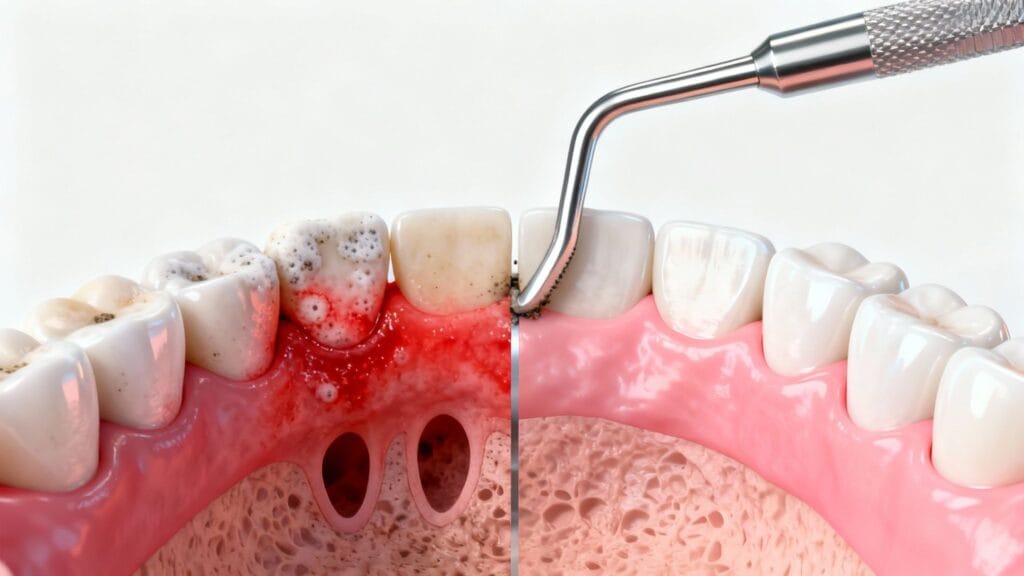
Gum disease treatment is a strategic plan to restore your oral health, stop the infection in your gums, prevent further damage to your teeth and jawbone, and help your gums heal. It's not a single procedure but a tailored approach based on how advanced the disease is.
The primary goals are always to control the bacterial infection causing the inflammation and encourage your gum tissue to reattach firmly to your teeth, creating a healthy, stable foundation for your smile.
Understanding the Goals of Gum Disease Treatment
I often explain to patients that their gums are like the foundation of a house. If that foundation begins to weaken, the entire structure is at risk. This is precisely what gum disease does to your mouth. Treatment isn't one-size-fits-all; it's a series of steps we customize based on the severity of the disease.
For early-stage gum disease, the approach is simpler—like clearing out weeds from a garden before they take over. For advanced cases, it’s more like repairing the foundation and rebuilding the structures that support everything. Regardless of the stage, the treatment plan is built on a few core objectives:
- Controlling the Infection: The first priority is to eliminate the harmful bacteria responsible for the inflammation.
- Reducing Pocket Depth: We aim to shrink the pockets that form between your teeth and gums, as these are ideal hiding spots for bacteria.
- Enabling Healing: The ultimate goal is to create a clean, stable environment where your gums can heal and tighten around your teeth again.
The Foundation of a Healthy Smile
This infographic helps visualize why healthy gums are the bedrock of a stable smile, much like a strong foundation supports a house.
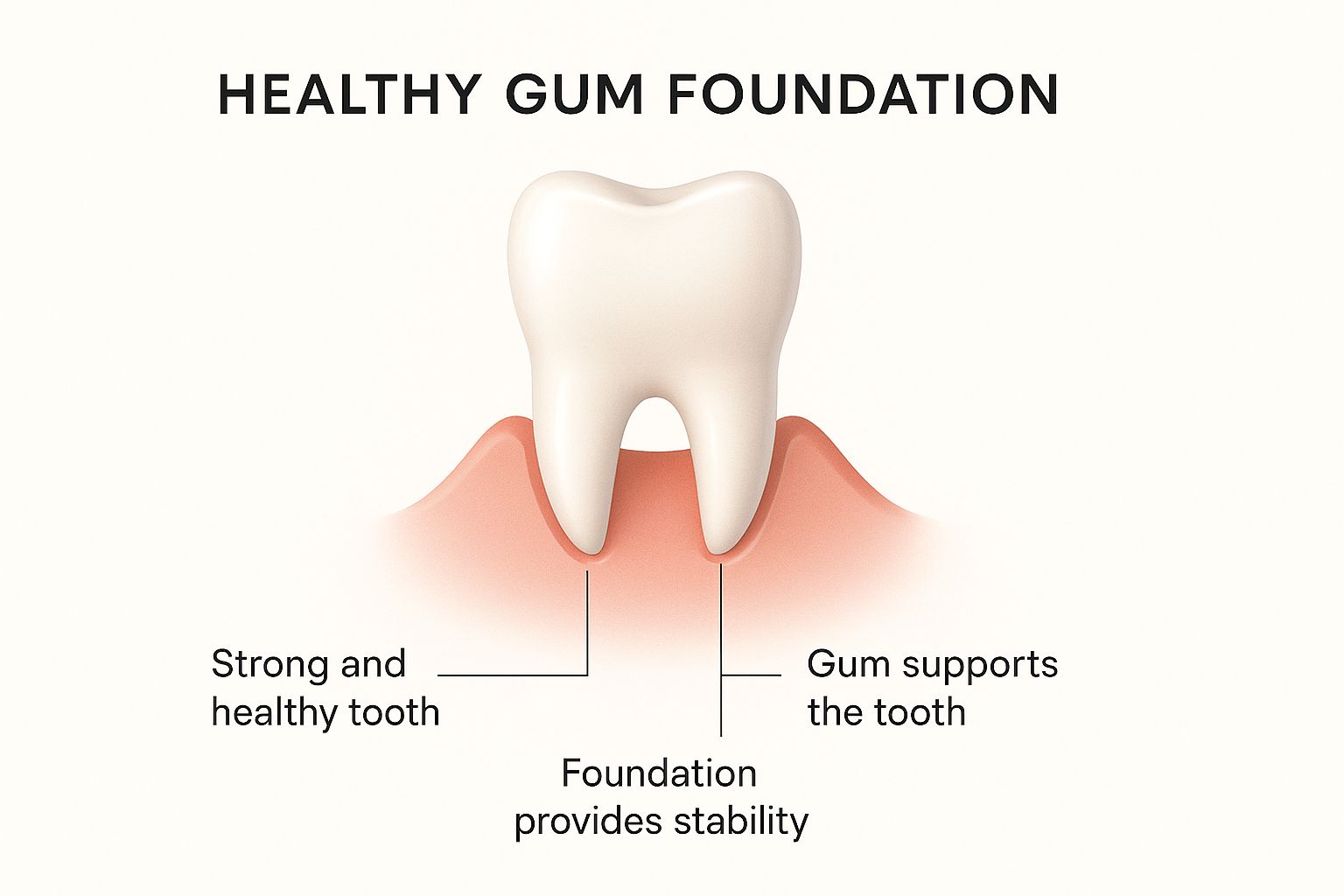
As you can see, the entire purpose of treatment is to restore this crucial support system and prevent the worst-case scenario: tooth loss.
As gum disease progresses, the goals of treatment must adapt. What works for early gingivitis is not sufficient for advanced periodontitis. The table below illustrates how our focus shifts depending on the severity of the condition.
Gum Disease Stages and Treatment Goals
| Disease Stage | Common Symptoms | Primary Treatment Goal |
|---|---|---|
| Gingivitis (Early) | Red, swollen gums; bleeding when brushing. | Reverse inflammation through professional cleanings and excellent home care. |
| Mild Periodontitis | Persistent bad breath; receding gums; pockets of 4-5 mm. | Stop the infection and prevent further bone loss with deep cleaning. |
| Moderate/Advanced Periodontitis | Deep pockets (6+ mm); loose teeth; pain when chewing. | Halt disease progression, reduce pocket depth, and regenerate bone/tissue where possible. |
Understanding these stages helps clarify why a specific treatment is recommended. The key is to intervene as early as possible for the best outcome.
A Widespread but Treatable Condition
Treatment is incredibly important when you consider how common this condition is. Periodontal diseases affect roughly 45-50% of adults worldwide aged 30 or older. This figure rises to nearly 70% in seniors aged 65 and up.
Because it's such a widespread problem, dentists have developed highly effective methods to manage it, from simple professional cleanings to more complex surgical interventions. One of the most common and effective non-surgical treatments is scaling and root planing—a deep cleaning that removes plaque from below the gumline and smooths the tooth roots. For most patients, this makes a significant difference.
Ultimately, tackling gum disease is about more than just saving your teeth—it’s about protecting your overall health. Learning how periodontitis can be ruining your oral health is a critical first step. For more great information on a variety of dental health topics, you can explore their dental health blog.
Your First Line of Defense: Non-Surgical Treatments
When fighting gum disease, we always start with the most conservative yet effective options. Non-surgical treatments are the foundational steps for restoring your gum health. They are designed to stop the disease before it can cause serious, permanent damage.
For anyone dealing with gingivitis or the early stages of periodontitis, this is where the healing journey begins. The goal is to eliminate the source of the infection and give your gums a clean slate to recover.
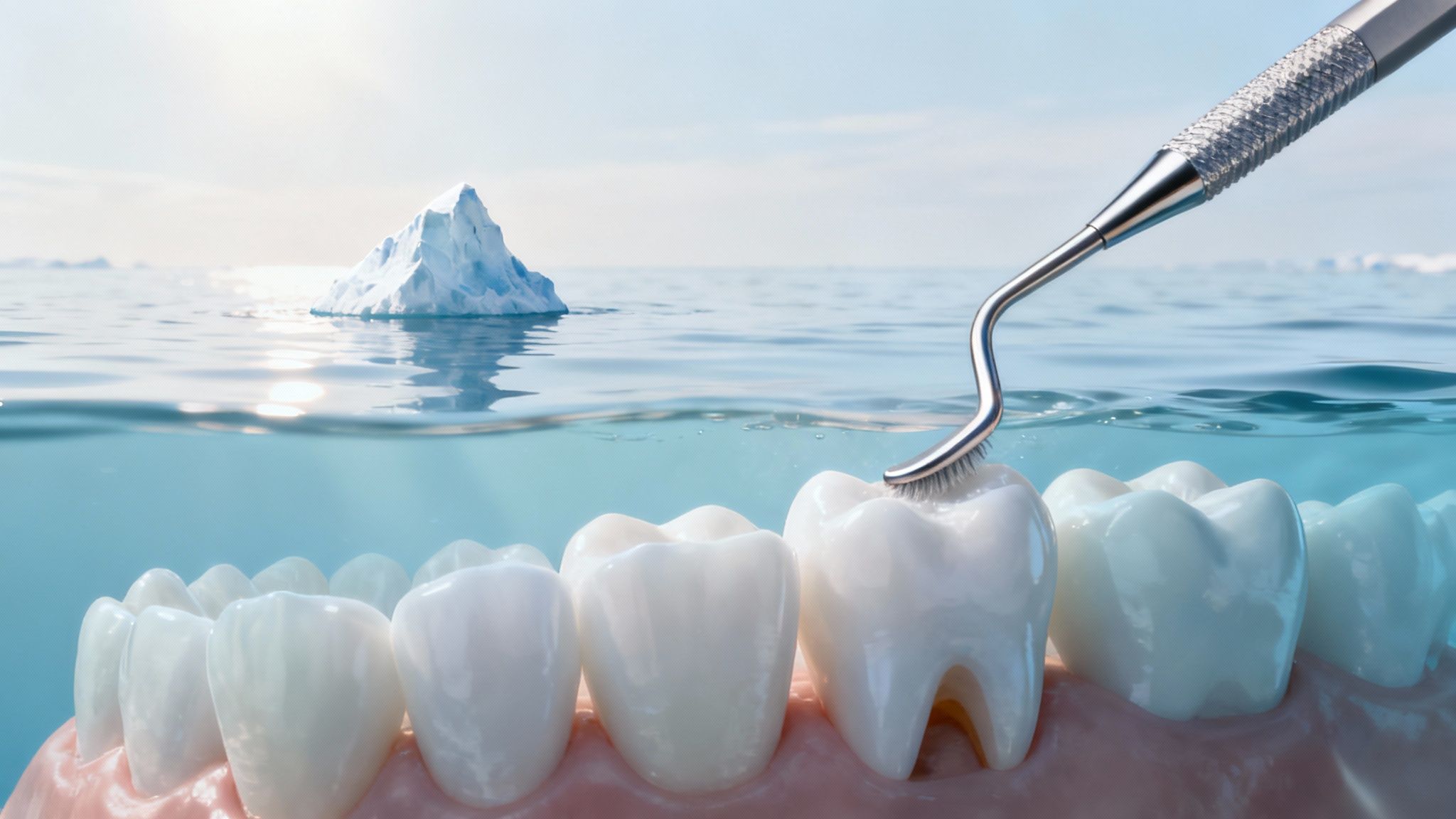
Taking this proactive approach often helps you avoid more invasive procedures down the road. We are essentially creating an environment where your gums can heal naturally and reattach snugly to your teeth.
Scaling and Root Planing: The Deep Clean
The cornerstone of non-surgical treatment is a procedure called scaling and root planing. You may have heard it referred to as a "deep cleaning," but that simple term doesn't quite capture its importance.
Imagine a regular cleaning is like a car wash for the visible parts of your teeth. A deep cleaning, by contrast, is like getting underneath the car to scrub away all the stubborn grime that has built up in hard-to-reach places.
Here’s what a dentist or hygienist does during this two-part process:
- Scaling: This involves meticulously removing all the plaque and hardened tartar (calculus) from your teeth, both above and, crucially, below the gumline.
- Root Planing: After the tartar is removed, the roots of your teeth are carefully smoothed. This eliminates rough spots where bacteria love to gather and helps your gums reattach to the clean, smooth surface.
This procedure is vital for breaking down the bacterial colonies that fuel chronic inflammation. If you want a full rundown, you can learn more about what to expect from a deep cleaning for your teeth in our detailed guide.
By physically removing the buildup of calculus and bacteria, scaling and root planing disrupts the disease cycle, giving your body a chance to heal the inflamed tissues. This is often the most critical step in regaining control over your gum health.
The Role of Antibiotics in Gum Health
Sometimes, even after a thorough deep cleaning, stubborn bacteria can remain hidden deep within the gum pockets. When that happens, mechanical cleaning alone may not be enough to fully eliminate the infection. This is when your dentist might recommend antibiotics.
This doesn't always mean a course of pills. A very common and effective technique involves using localized antibiotics. After your deep cleaning, a small amount of medication—such as a gel, powder, or a tiny chip—is placed directly into the gum pocket. It then slowly releases the antibiotic over several days, attacking the bacteria right at the source.
This targeted method delivers a powerful blow to the infection with minimal side effects elsewhere in your body. It's an excellent complementary treatment that enhances the effectiveness of scaling and root planing, helping to ensure your gums have the best possible chance to heal.
Advanced Solutions: Surgical Treatments for Periodontitis
Sometimes, non-surgical treatments like deep cleanings aren't enough to halt advanced gum disease. When the infection has caused significant damage to the bone and tissues holding your teeth in place, surgery becomes the most effective path forward.
While the idea of surgery can be intimidating, these procedures are precisely designed to control the infection and restore your long-term oral health. They are all about creating a stable foundation for your smile.
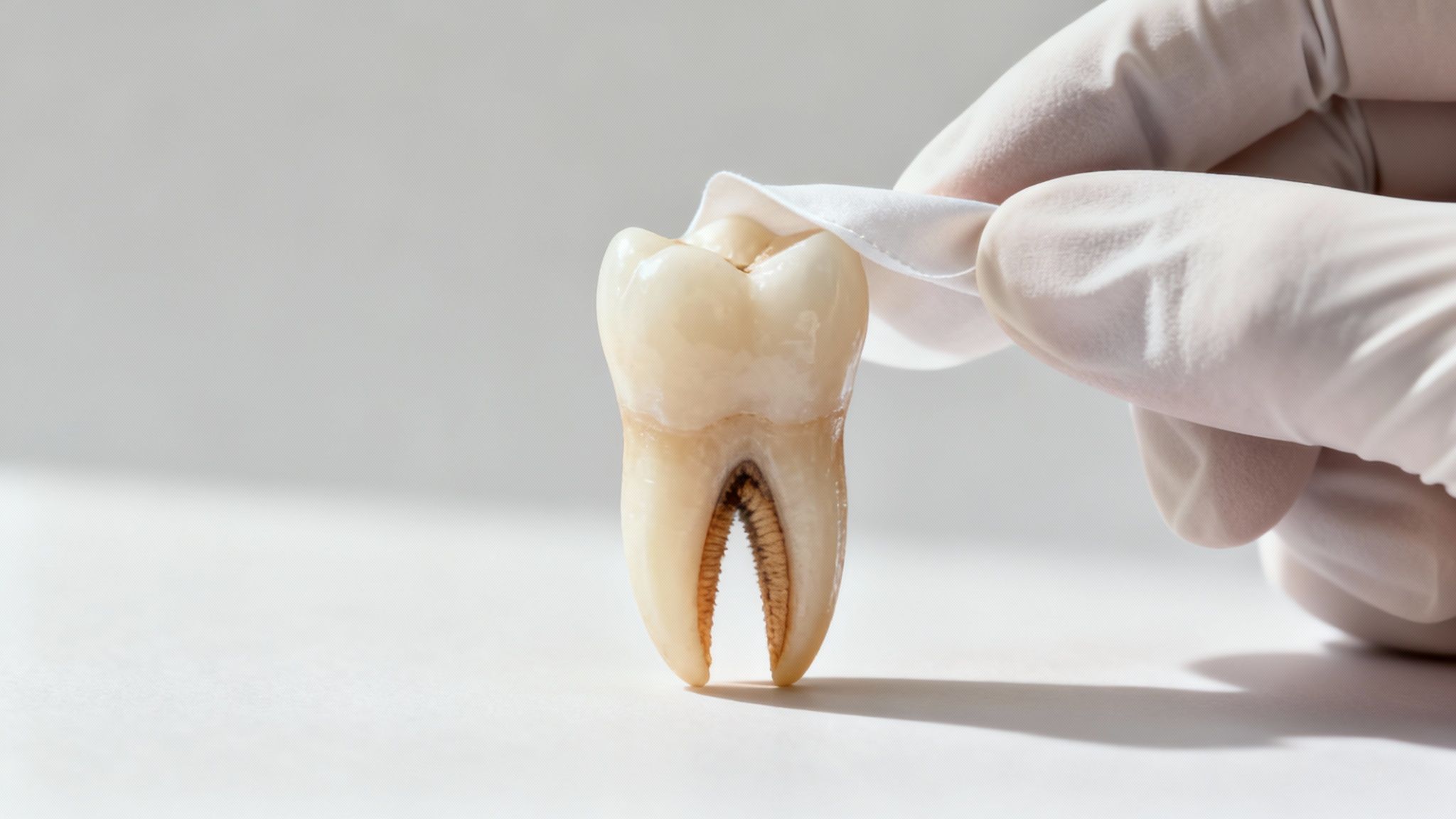
The main goal is to get to the root of the problem—literally. We need to access areas that a deep cleaning cannot reach. By cleaning out the infection at its source and repairing the damage, we can stop bone loss, shrink deep gum pockets, and ultimately save your teeth.
Flap Surgery for Deep Pocket Reduction
One of the most common surgical treatments is pocket reduction surgery, often called flap surgery. Think of it this way: if you can't clean a room properly because the door is closed, you need to open it. That's what flap surgery does for your gums.
During the procedure, the gum tissue is gently lifted back to create a small "flap." This provides a clear view of the tooth roots and the underlying bone.
With this direct access, your periodontist can meticulously remove all the plaque, tartar, and bacteria that have been hiding. They can also smooth down any rough spots on the bone where bacteria tend to collect. Once everything is clean, the gum tissue is repositioned to fit much more snugly around the tooth. This drastically reduces the depth of the gum pockets, leaving fewer places for bacteria to hide and making it easier for you to keep your teeth clean at home.
Regenerative Procedures to Rebuild Support
What happens when the disease has already destroyed significant bone or gum tissue? In these cases, the focus shifts from simply cleaning to actively rebuilding. Regenerative procedures are incredible techniques that encourage your body to regrow the very structures that were lost.
Here are a few of the most common regenerative techniques used:
- Bone Grafts: When bone loss is severe, a bone graft acts as a scaffold for new growth. A small amount of bone material—either from your own body, a donor, or a synthetic source—is placed where the bone has been lost. This graft creates a framework that signals your body to grow new bone in that area. For a deeper dive, you can learn more about the specifics of dental bone grafting on our services page.
- Soft Tissue Grafts: Gum recession is a common side effect of periodontitis, leaving sensitive tooth roots exposed. A soft tissue graft corrects this by taking a small piece of tissue (usually from the roof of your mouth) and attaching it to the receded area. This covers the root, protects it from sensitivity, and helps strengthen thin gum tissue.
- Guided Tissue Regeneration (GTR): This is a highly effective technique. After cleaning the damaged area, a special biocompatible membrane is placed between the bone and gum tissue. Gum tissue naturally grows much faster than bone. This membrane acts as a barrier, preventing the fast-growing gums from occupying the space where bone should be. It gives the slower-growing bone and connective tissues the time and space they need to regenerate properly.
The Global Impact of Gum Disease and Its Care
It’s easy to think of gum disease as a personal problem affecting only your mouth. But when you look at the bigger picture, you see that gum disease is a massive global health issue. Understanding its scale helps explain why taking care of your gums is about more than just keeping your teeth—it’s a key part of protecting your overall health for the long run.
Over the past few decades, this problem has quietly grown, placing a new sense of urgency on both prevention and treatment.
A Growing Worldwide Challenge
Why the sudden surge? A few key trends in modern life have created the perfect storm for gum disease to thrive. It's not one thing, but a combination of factors that dental professionals and public health experts are watching closely.
- An Aging Population: Simply put, as we live longer, our gums and teeth have more time to face wear and tear. This naturally increases the risk of developing chronic issues like gum disease.
- Rising Diabetes Rates: The link here is a vicious cycle. Uncontrolled blood sugar makes it harder for your body to fight off gum infections. At the same time, a severe gum infection can make it tougher to keep your blood sugar in check.
- Tobacco Use: Smoking remains one of the biggest culprits. It weakens your body's immune response, making it incredibly difficult to fend off the bacteria that cause gum disease.
When these risk factors overlap, they create a serious health threat. The inflammation from gum disease doesn't just stay in your mouth—it can travel through your bloodstream and contribute to other health problems.
Think of it this way: the bacteria and chronic inflammation from gum disease are linked to a higher risk of heart disease, stroke, and even respiratory issues. Suddenly, brushing and flossing don't seem like just dental chores; they're a critical part of managing your total health.
The Numbers Tell a Sobering Story
The statistics really drive home how widespread this issue has become. Looking at global health data, the increase over the last 30 years is staggering.
Between 1990 and 2021, the number of severe gum disease cases jumped by roughly 76%, climbing from 50.8 million to 89.6 million people worldwide. That's not a small uptick. This sharp rise is tied directly to a growing and aging global population, along with the spread of risk factors like diabetes and smoking. If you're interested in the data, you can take a closer look at the global burden of periodontal diseases.
The good news is that we're not just standing by. Public health campaigns and better dental care are starting to push back. By focusing on teaching people how to prevent gum disease in the first place, health organizations are working hard to reverse this trend and protect people from its long-term effects.
Life After Treatment: How to Maintain Healthy Gums for Good
Completing gum disease treatment is a fantastic achievement for your oral health. But the work doesn't stop when you leave the dentist's chair. Think of it like finishing a major home renovation—now comes the upkeep to keep everything looking and feeling great.
Your active role is the single biggest factor in preventing gum disease from returning. While professional treatment gets you back to a healthy starting point, your daily habits will protect that investment for the long haul. Here's your game plan for lasting gum health.
Master Your At-Home Hygiene Routine
Consistent, high-quality home care is absolutely essential. Brushing twice a day with a soft-bristled toothbrush is the foundation, but the real secret weapon in the fight against gum disease is cleaning between your teeth every single day.
This is where trouble often starts. The small spaces between your teeth are prime real estate for bacteria, where plaque builds up and inflammation begins. Using floss or interdental brushes gets into those nooks and crannies your toothbrush can't reach, breaking up bacterial colonies before they can cause damage. If you want to make sure you're getting the most out of this crucial step, you can learn more about how to use dental floss and find the perfect type for you.
Commit to Periodontal Maintenance Appointments
After your initial treatment is complete, you'll graduate to a new professional cleaning schedule called periodontal maintenance. This isn't your standard check-up; it's a specialized cleaning designed to keep your gums stable, usually scheduled every three to four months.
Why so often? It's all about the science. The specific bacteria that cause periodontitis are aggressive and can grow back to destructive levels in just 90 to 120 days. Sticking to this schedule allows your hygienist to get below the gumline and disrupt their growth before a new infection can take hold.
Adopt Gum-Friendly Lifestyle Habits
Your daily habits outside of the bathroom have a massive impact on the health of your gums. Certain choices can either support the progress you've made or, unfortunately, work against it.
Making a few smart lifestyle changes is one of the best ways to safeguard your smile. Focus on these key areas:
- Quit Smoking: This is a big one. Tobacco use torpedoes your gums' ability to heal and makes you far more susceptible to infection. Quitting is arguably the most powerful move you can make for both your oral and overall health.
- Manage Your Diet: A diet packed with vitamins and minerals—and low in sugar—gives your immune system the fuel it needs to keep inflammation in check throughout your body, including your gums.
- Control Systemic Conditions: There's a strong link between gum disease and other health issues, especially diabetes. Keeping your blood sugar well-managed dramatically lowers your risk of periodontal flare-ups.
Your Questions About Gum Disease Treatment, Answered
It's completely normal to have questions when facing gum disease treatment. Walking into a dental office can feel overwhelming, but understanding what's ahead is the best way to feel confident and in control. We've put together answers to the questions we hear most often from our patients.
Think of this as a conversation. Our job is to clear up any confusion, address your concerns, and provide the knowledge you need to move forward. After all, this is a team effort, and being well-informed is your first step toward getting your gums healthy again.
Is the Treatment Going to Hurt?
Let’s tackle the big one first. Your comfort is our absolute top priority. For procedures like deep cleanings or surgery that could cause discomfort, we use a local anesthetic to ensure the area is completely numb. You might feel some vibrations or pressure, but you shouldn't feel pain.
After the numbness wears off, it’s common to have some mild tenderness or soreness for a day or two. This is typically manageable with standard over-the-counter pain relievers. Modern dentistry has come a long way, making gum treatments a much more comfortable process than most people imagine.
Can Gum Disease Actually Be Cured for Good?
That’s an excellent question, and the answer depends on how far the disease has progressed.
If we catch it in the early stage, known as gingivitis, the answer is yes! It’s completely reversible. With a professional cleaning and a solid at-home care routine, we can stop the inflammation in its tracks and restore your gums to perfect health.
However, once it advances to periodontitis, the situation changes. At this stage, some of the bone that supports your teeth has been lost, and unfortunately, that bone doesn't grow back. From this point on, gum disease is treated as a chronic condition you manage for life, much like someone might manage diabetes.
The goal with periodontitis isn't a one-time "cure." Instead, we focus on stopping the disease from getting worse and keeping your mouth stable and healthy. With the right treatment and consistent maintenance, you can absolutely prevent further damage and keep your natural teeth for a lifetime.
What Should I Expect to Pay for Treatment?
The cost of treating gum disease is not one-size-fits-all because every patient's situation is unique. The final cost depends on several factors:
- The severity of the disease: A simple treatment for early gingivitis will naturally cost less than the multi-step approach needed for advanced periodontitis.
- The specific treatments you need: Non-surgical deep cleaning (scaling and root planing) is less expensive than surgical options like gum grafts or bone regeneration.
- Your dental insurance plan: Most insurance providers cover necessary periodontal care, but the extent of coverage varies widely.
Before we begin any work, we will provide a detailed treatment plan that outlines everything. It will list the recommended procedures and a clear breakdown of the costs, including an estimate of what your insurance will cover. We believe in transparency, so you have all the information needed to make the best choice for your health.
What Happens If I Just Ignore It?
Putting off gum disease treatment can lead to serious problems that extend far beyond your smile. If left untreated, the infection will continue to destroy your gums and the jawbone that holds your teeth in place. This ultimately leads to loose teeth, pain when chewing, and eventually, tooth loss. In fact, advanced gum disease is one of the leading causes of tooth loss in adults.
But the damage doesn't stop in your mouth. The chronic inflammation from periodontitis has been linked to other major health issues. Bacteria from infected gums can enter your bloodstream, increasing your risk for heart disease, stroke, and complications with diabetes. The World Health Organization takes this seriously, noting that severe periodontal disease affects about 15% of adults worldwide. They have even passed a resolution to integrate oral health into universal healthcare, which you can read about in the WHO's report on oral health.
Ready to take the first step towards healthier gums and a more confident smile? The team at Serena San Diego Dentist is here to create a personalized treatment plan that addresses your unique needs with expert care and compassion. Schedule your consultation today by visiting us at https://serenasandiegodentist.com.