Laser dentistry uses a highly focused beam of light to perform dental procedures with amazing precision. If you're tired of old-school drills and scalpels, this guide explains a smarter, often gentler, way to handle everything from cavities to gum disease, making your dental visit more comfortable while delivering better results.
The Modern Approach to Dental Care
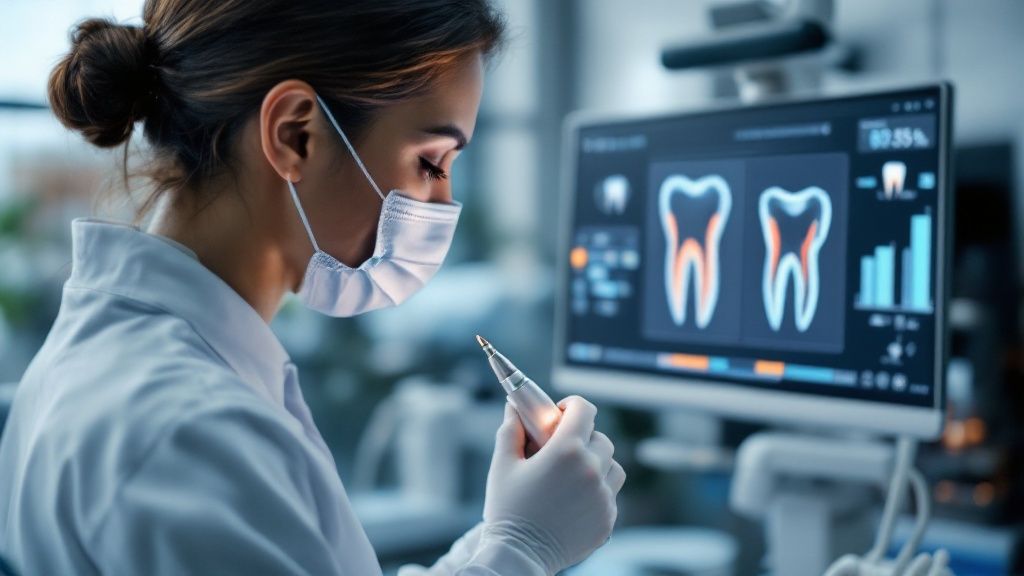
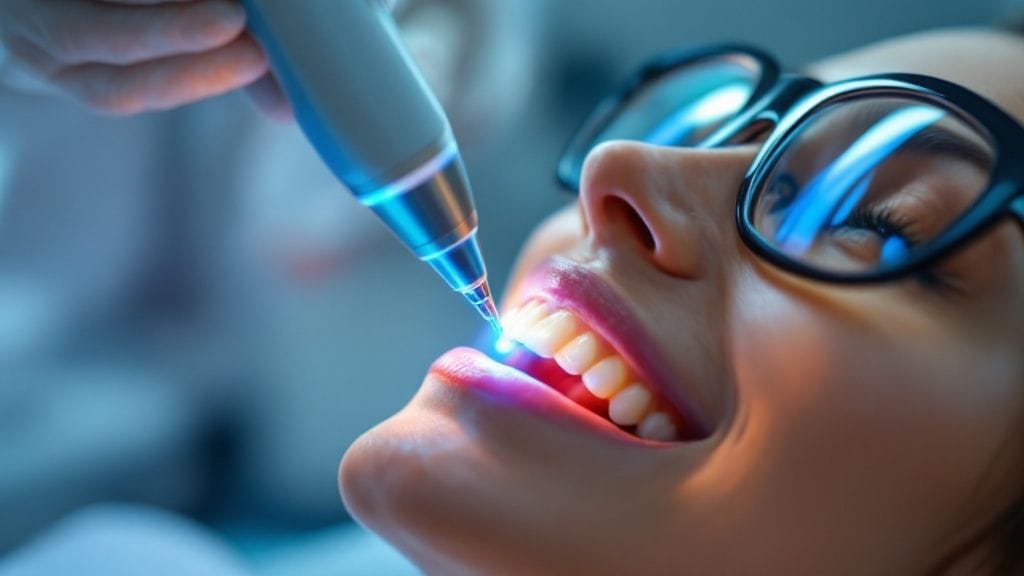
If the high-pitched whine of a dental drill sends a shiver down your spine, you’re not alone. That sound is a huge source of anxiety for many patients. Laser dentistry completely changes the experience by swapping the vibration and pressure of a drill for a concentrated, quiet beam of light.
This isn't sci-fi; it's a proven and safe advancement in oral healthcare. The laser's focused light gives us the ability to treat both hard tissues (your teeth) and soft tissues (your gums) with incredible accuracy, gently removing or reshaping tissue for a cleaner, more comfortable procedure.
Why It Matters for Your Visit
Moving from a physical drill to a beam of light has some major perks for patients. This technology truly improves almost every part of a dental appointment, making treatments go smoother and helping you bounce back faster.
Here’s what that actually means for you:
- Less Discomfort: Worried about pain during your dental work? Many laser treatments require less anesthesia, and in some cases, none at all.
- Minimal Bleeding and Swelling: As the laser works, it cauterizes the tissue. This translates to far less bleeding during the procedure and less swelling afterward, making for a smoother recovery.
- Lower Risk of Infection: The laser's high-energy light beam sterilizes the area as it works, killing bacteria and significantly reducing the risk of infection.
- Quicker Healing: Because there's less trauma to the surrounding tissues, patients almost always heal faster and more comfortably.
Here at Serena San Diego Dentist, we're all about providing care that’s not only effective but also as pleasant as possible. You can read more about our investment in dental technology and how it shapes the patient experience. This commitment to modern tools is a core part of how we deliver exceptional care to our San Diego patients.
How Dental Lasers Actually Work
It’s easy to think of a "laser" as just one thing, but in dentistry, that's not the case at all. Dental lasers aren't a one-size-fits-all tool. The secret to how they work lies in a surprisingly simple principle: different types of tissue in your mouth respond to different wavelengths of light.
Think of it like this: you have a specific key for your house and another for your car. In the same way, one laser is perfectly tuned to be absorbed by water and hemoglobin (what your gums are mostly made of), making it ideal for soft-tissue work. Another laser is calibrated to interact with hydroxyapatite—the mineral that makes up your tooth enamel and bone—letting it precisely work on hard tissues without bothering the nearby gums. This process, where light energy is used to gently remove or reshape tissue, is known as photothermal ablation.
Hard-Tissue vs Soft-Tissue Lasers
This is where we get into the two main categories. The core difference between dental lasers is what they’re designed to treat:
- Hard-tissue lasers are built to cut into tooth and bone with precision.
- Soft-tissue lasers are used for procedures on gums, lips, and other soft parts of the mouth.
This specialization is what makes laser dentistry so precise. The energy goes exactly where it's needed, leaving healthy tissue untouched. It’s a major leap forward in patient care, and the numbers show it. The global dental laser market is expected to grow to about USD 612.7 million by 2033, a clear sign that dentists and patients are embracing these advanced tools. You can dig deeper into this market trend and its impact in recent industry reports.
The image below gives a great visual of how different lasers are assigned to different jobs in the mouth.
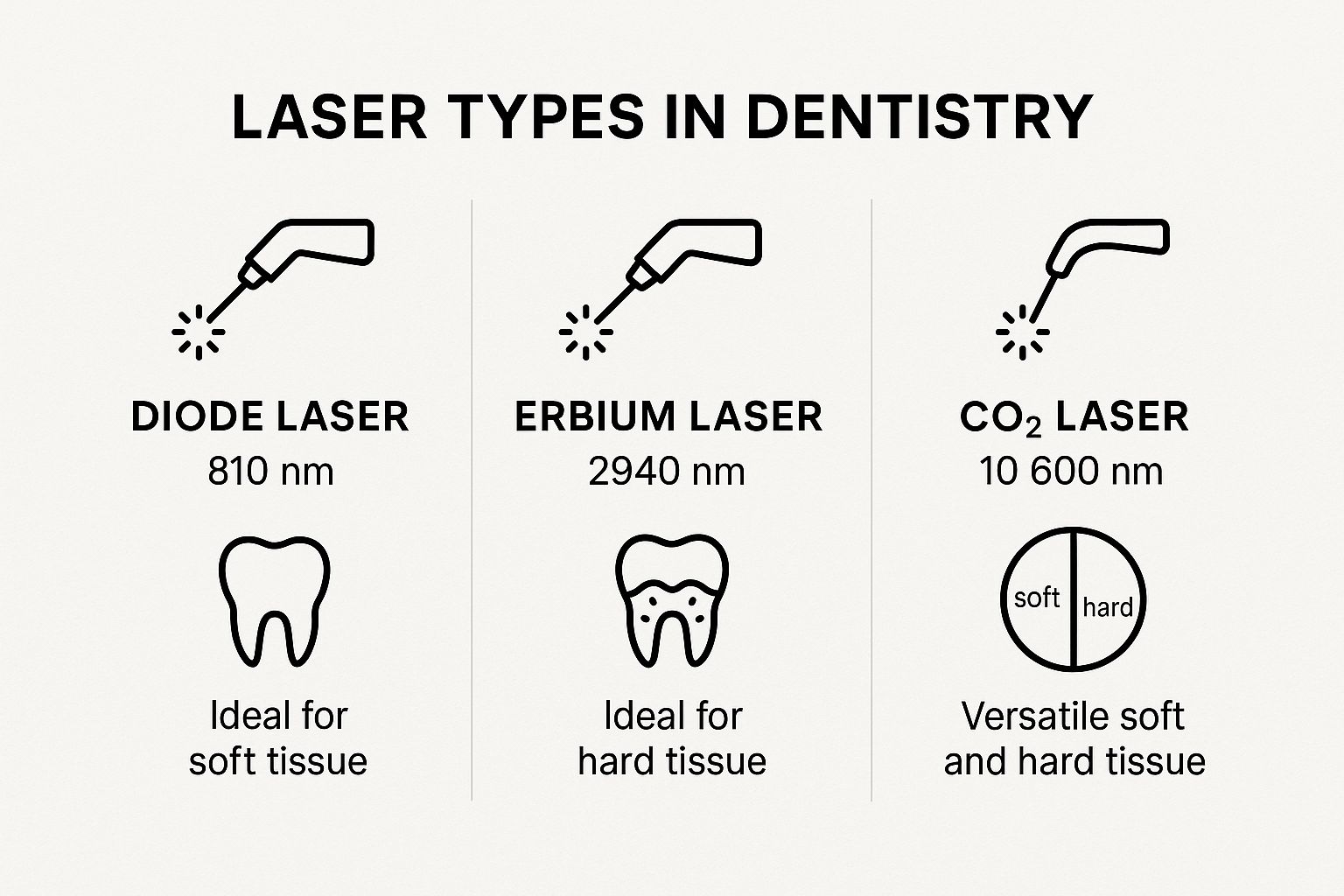
As you can see, lasers like Diode and CO2 are the go-to choices for soft tissue, while Erbium lasers are the experts when it comes to hard tissues like tooth enamel.
How Each Laser Type Functions
To make this even clearer, let's break down the two main laser types and what they're commonly used for.
Hard-Tissue vs Soft-Tissue Lasers
| Laser Type | What It Treats | Common Procedures |
|---|---|---|
| Hard-Tissue Laser | Tooth enamel and bone. | Detecting cavities, prepping teeth for fillings, and treating tooth sensitivity. |
| Soft-Tissue Laser | Gums and other soft oral tissues. | Reshaping the gum line, treating gum disease, and performing frenectomies. |
This adaptability is really the heart of laser dentistry. It's not just one tool, but a whole toolkit that allows dentists to provide treatments that are often safer, more comfortable, and more effective than older, more invasive methods.
Common Procedures Using Dental Lasers
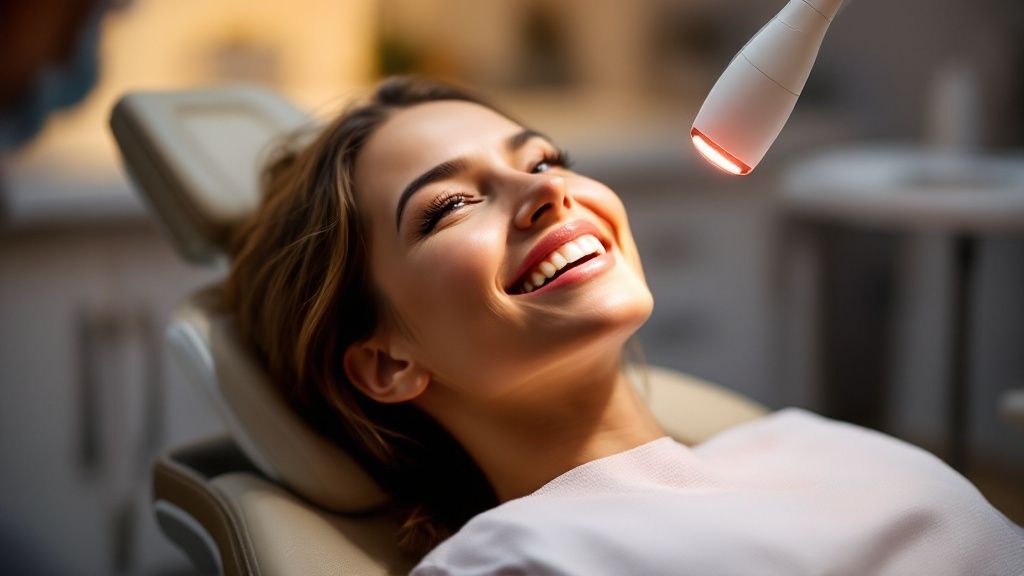
If you've ever wondered what lasers actually do in a dental office, the answer is: a little bit of everything. The applications are surprisingly diverse, covering everything from simple cosmetic fixes to serious surgical work. It's all about giving dentists incredible precision, which translates to a quieter, cleaner, and more comfortable visit for you.
This level of control is a game-changer, especially in cosmetic dentistry where every millimeter counts. Lasers help us achieve results that were much harder to get right with traditional tools alone.
Cosmetic and Restorative Applications
For many people, their first introduction to laser dentistry comes from wanting to improve their smile's look or function.
- Teeth Whitening: You know those in-office whitening treatments? A laser can be used to "activate" the bleaching gel, speeding up the process. This often means you see brighter, more dramatic results in just one appointment.
- Gum Contouring: If you feel you have a "gummy" smile, a soft-tissue laser is the perfect tool. It can painlessly trim and reshape excess gum tissue to reveal more of your teeth, creating a beautifully balanced look. We actually have a whole guide on cosmetic gum recontouring if you want to learn more.
- Cavity Detection and Treatment: Hard-tissue lasers are so precise they can spot cavities in the earliest stages. When it's time for a filling, the laser can remove the decay without the dreaded sound and vibration of a drill. Often, you won't even need to be numbed.
The real beauty of using a laser for cavities is that we can preserve more of your healthy tooth structure. That's always our goal, because it keeps your teeth stronger for longer.
Surgical and Therapeutic Procedures
Beyond making smiles prettier, lasers are workhorses in surgical treatments. They help you heal faster with less pain, and because the laser's light sterilizes the area as it works, the risk of infection drops significantly.
This built-in disinfectant quality is a huge benefit in more complex procedures. For example, a laser can help thoroughly clean out a tooth during a root canal, which can help prevent complications like an abscess after root canal.
Here are a few other common surgical uses:
- Treating Gum Disease: Lasers are great at getting into the deep pockets around teeth to remove infected gum tissue. At the same time, they vaporize the plaque, tartar, and bacteria that caused the problem in the first place.
- Frenectomy: This is a simple procedure to fix a lip-tie or tongue-tie, which we see a lot in babies and kids. A laser frenectomy is so quick and clean—it's practically bloodless—making it a much calmer experience for everyone involved.
What's In It for You? The Patient Benefits of Laser Dentistry
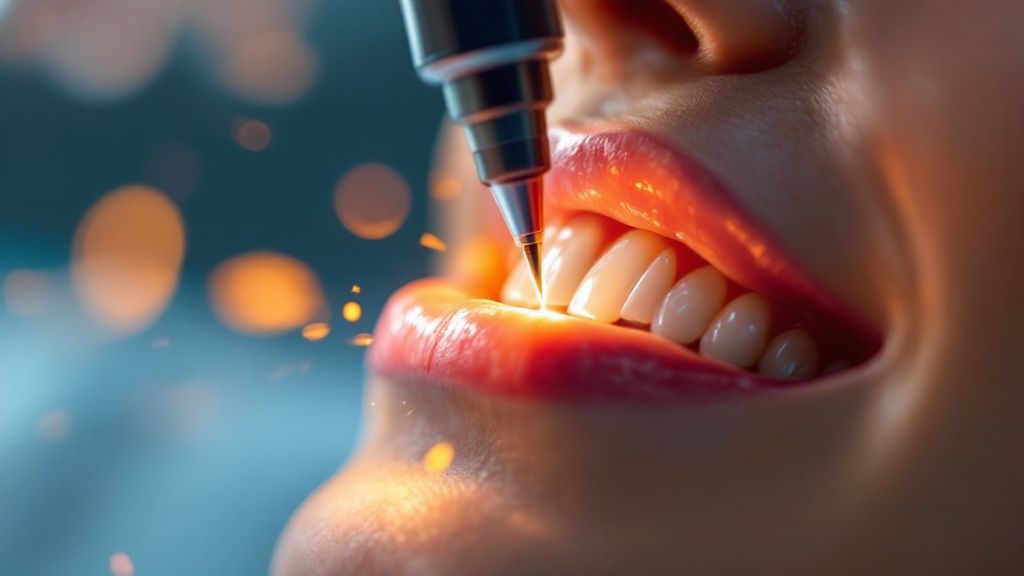
It’s one thing to understand the science, but what does all this laser technology actually mean for your next dental visit? The switch to laser dentistry is all about improving your comfort, safety, and health. It’s changing the patient experience from something to be tolerated into a process that’s impressively gentle and efficient.
The biggest win for patients is a huge reduction in pain. Lasers are incredibly precise, targeting only the tissue that needs treatment while leaving the surrounding areas completely untouched. This often means less—or even no—anesthesia is required. For many common procedures, that means you can say goodbye to the dreaded needle.
A Quieter, More Relaxing Visit
Laser dentistry doesn't just feel better; it sounds better, too. The high-pitched whine and vibration of a traditional dental drill are gone, which is a massive relief for anyone with a touch of dental anxiety.
If the typical sounds of a dental office put you on edge, laser treatments can make a world of difference. For more tips on staying calm in the chair, check out our guide on dental phobia hacks.
Here are a few other key benefits you'll notice:
- Less Bleeding and Swelling: As the laser works its magic, it also seals blood vessels. The result? Minimal bleeding during your procedure and much less swelling afterward.
- Lower Infection Risk: The high-energy light beam from the laser is naturally sterilizing. It eliminates bacteria on contact, which significantly lowers your risk of infection after the procedure.
- Keeps Healthy Tissue Safe: Think of a laser as a surgical tool with pinpoint accuracy. Your dentist can remove decay or diseased tissue without damaging the healthy parts of your tooth or gums nearby.
Faster Healing, Quicker Recovery
Because laser treatments are so minimally invasive, healing is typically much quicker and more comfortable. There's simply less trauma to your tissues, so your body can bounce back faster. You get back to your life sooner, with less downtime.
This powerful combination of less pain, lower risk, and a faster recovery makes laser dentistry an amazing option for a wide range of treatments. It’s all about creating a better, healthier, and more positive experience every time you visit the dentist.
Is Laser Dentistry the Right Choice for You?
Laser dentistry opens up some incredible possibilities, but it's not a one-size-fits-all solution. Figuring out if it’s the right call for you really comes down to your specific dental needs, how you feel about traditional tools like the drill, and what you’re hoping to achieve for your smile.
This modern approach is often a fantastic choice for many people. Let’s take a look at who stands to gain the most from it.
Who Benefits Most From Laser Treatments?
You might be the perfect candidate for laser dentistry if any of these situations sound familiar:
- You get anxious at the dentist. If the high-pitched whine and vibration of a dental drill make your palms sweat, lasers are a game-changer. They offer a much quieter, gentler experience that can help you feel at ease in the chair.
- You prefer minimally invasive options. Lasers are incredibly precise. This means your dentist can target problem areas with pinpoint accuracy, preserving more of your healthy tooth and gum tissue along the way.
- You're aiming for cosmetic perfection. For treatments like gum reshaping, the control a laser provides is second to none. It allows for meticulous sculpting to create a perfectly balanced, symmetrical gum line.
- You struggle with sensitive teeth. Laser treatments can help seal the tiny pathways in your tooth's dentin that lead to the nerve. This can bring significant relief from that sharp zing you feel with hot or cold foods.
Lasers are also a powerful tool in the fight against gum disease. They can meticulously remove infected tissue and sterilize deep pockets around the teeth, which is a key step in understanding how periodontitis can ruin your oral health.
When Traditional Methods Might Still Be Necessary
While incredibly versatile, it's important to know that lasers don't replace every tool in the dental office. For certain jobs, the classic drill is still the best instrument.
For example, traditional methods are often needed for treating very large cavities, removing old metal fillings, or shaping a tooth to receive a crown. The best approach is always a frank conversation with your dentist to weigh the pros and cons for your specific situation.
There's no denying the technology is catching on. The global dental lasers market is expected to grow to about USD 809.93 million by 2034, which shows just how valuable it's becoming in everyday dental care.
Common Questions About Laser Dentistry
Even with all the benefits laid out, it's completely normal to have a few questions about what to expect. Let's walk through some of the things patients often ask us about laser dentistry.
Is Laser Dentistry Safe?
Yes, absolutely. In the hands of a properly trained dentist, dental lasers are incredibly safe. The FDA has approved them for a wide range of dental work, and dentists go through specialized training to ensure they're using the technology correctly and effectively.
As a standard precaution, we’ll always give you protective eyewear during the procedure. It’s just like wearing sunglasses on a bright day—a simple step to keep you completely safe.
Does Laser Dentistry Hurt?
This is where laser dentistry really shines. One of its biggest advantages is how much it minimizes discomfort. Most people feel very little, if anything, which often means we can use less anesthetic—sometimes none at all.
If you have a fear of needles or just feel anxious about dental work in general, this can be a game-changer.
The goal is always a more comfortable visit. By eliminating the vibration and noise of a drill, laser treatments create a calmer, more relaxed environment for everyone.
How Does the Cost Compare to Traditional Methods?
The cost of laser dentistry is often quite similar to conventional dental treatments. While some laser procedures might seem a bit more expensive upfront, you have to look at the bigger picture to see the true value.
Think about it: fewer appointments, less need for post-procedure pain medication, and a quicker, easier recovery. When you add it all up, the value is clear. At Serena San Diego Dentist, we work with you to make advanced care accessible. We accept most major PPO insurance plans for covered services and offer flexible out-of-pocket payment options to fit your budget.
Ready to experience a gentler, more precise approach to dental care? The team at Serena San Diego Dentist is here to answer all your questions and show you how modern technology can transform your smile. Schedule your consultation today by visiting our website.