
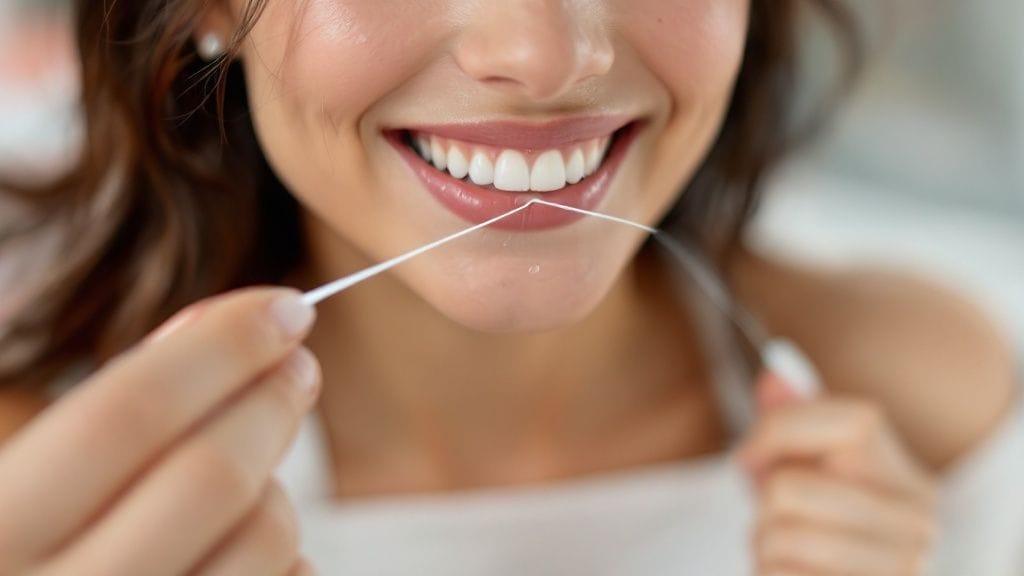
It's a familiar story: you decide to get serious about your oral hygiene, start flossing, and see a little pink in the sink. It's easy to get spooked and think you're doing more harm than good, but that's rarely the case. In fact, it’s often a sign that you’re on the right track to better dental health.
The Real Reason Your Gums Bleed When You Floss
Let's clear this up right away. Bleeding gums are almost always a symptom of inflammation, a condition your dentist calls gingivitis. This is what happens when that sticky film of bacteria—plaque—sets up camp along your gumline and between your teeth.
Your body's immune system sees this plaque as an invader. It responds by sending more blood to your gums to fight off the bacteria, making the tissue tender, swollen, and very likely to bleed with even gentle contact. So when you finally get in there with floss, you’re disrupting the bacteria and seeing the evidence of that inflammation.
Your Quick Guide to Flossing the Right Way
Here are the core actions for effective flossing. We'll break these down in more detail, but this gives you an immediate look at the proper technique.
| Core Action | Why It Matters |
|---|---|
| Use a long strand of floss | Gives you a clean section for each tooth, preventing the spread of bacteria. |
| Wrap it around your middle fingers | Frees up your index fingers and thumbs for precise control and guidance. |
| Gently slide it between teeth | Avoids snapping the floss down, which can injure your delicate gum tissue. |
| Form a C-shape around the tooth | This allows the floss to hug the tooth and clean below the gumline effectively. |
| Slide up and down, not side-to-side | This motion dislodges plaque from the tooth surface and just under the gums. |
Mastering these simple moves is the foundation for turning a potentially painful experience into a productive, healthy habit.
Is It "Good" Bleeding or "Bad" Bleeding?
Think of it like getting back into a gym routine after a long break—your muscles are going to be sore at first. That soreness doesn't mean you should quit; it means your body is adapting. The same principle applies here. A bit of bleeding for the first week of consistent, gentle flossing is just your gums getting back in shape.
However, if the bleeding doesn't stop after a week or two, it could be a sign of something more. You might be flossing too aggressively, or there could be a more advanced issue at play. It's a significant concern, as over 42% of adults in North America over age 30 show signs of gum disease, which all starts with that initial inflammation.
If the bleeding doesn't improve after a week of using a gentle, C-shape flossing motion, that's your cue to see a dentist. It's always better to get a professional opinion than to ignore a warning sign that could develop into a bigger problem.
What to Do Next
Concerned about ongoing bleeding? The first step is to understand the root causes. For a deeper dive, check out our comprehensive guide on how to fix bleeding gums. You can also explore these effective ways to stop your gums from bleeding for more immediate tips and preventative strategies.
Finding the Right Flossing Tool for You
Walking down the dental aisle can feel a bit overwhelming. Shelves are packed with options, and it’s easy to wonder which tool is truly the best for your smile. Here’s the secret: the best floss is simply the one you'll actually use consistently.
If you've only ever reached for standard string floss, you might be surprised to find another option that makes the daily task easier and more effective for your specific needs. Let's look at the most common tools to help you find that perfect match.
Traditional String Floss vs. Dental Tape
This is the classic, go-to choice for a reason, but even here, you have options.
Nylon (Multifilament) Floss: This is what most people picture when they think of floss. It’s made of many thin nylon strands woven together and is available waxed, unwaxed, and in every flavor from mint to cinnamon. The only real downside is that it can sometimes shred or get stuck, especially between very tight teeth.
PTFE (Monofilament) Floss: This is a single-strand floss, often made from the same material found in high-tech Gore-Tex fabric. It glides effortlessly between even the tightest contacts and is practically shred-proof. If you constantly struggle with standard floss breaking or getting frayed, give this a try.
And what about dental tape? Think of it as a wider, flatter version of floss. It's a great pick if you have wider gaps between your teeth, as the extra surface area gives you a more substantial clean.
Water Flossers and Interdental Picks
Sometimes, string floss just isn't the right tool for the job. This is especially true if you have complex dental work.
Water Flossers: You might know these as oral irrigators. They use a targeted, pulsating stream of water to flush out plaque and food particles from between your teeth and below the gumline. They are an absolute game-changer for people with braces, non-removable bridges, or dental implants, where maneuvering traditional floss is next to impossible.
Floss Picks: These little disposable tools are incredibly convenient. They feature a small piece of floss held taut on a plastic handle, perfect for flossing on the go or for anyone who finds wrapping a long strand of floss around their fingers difficult. Just remember the goal is the same: you still need to curve the floss into a "C" shape against the side of each tooth.
The goal is to find a tool that fits your lifestyle and dental anatomy. Someone with tightly packed teeth might love PTFE floss, while a person with braces will find a water flosser indispensable. Don’t be afraid to experiment.
Choosing the right tool is the first step toward mastering your flossing technique. For a deeper dive into the different options available, check out our guide on the types, colors, materials, and flavors of dental floss. Once you find a tool you actually like using, building a solid habit becomes so much easier.
Mastering the C-Shape Flossing Method
Alright, you've picked your weapon of choice from the flossing aisle. Now for the part that actually matters: the technique. Most people think flossing is just about yanking a string between their teeth, but the real benefit comes from how you clean the sides of each tooth. This is where the C-Shape method comes in, and frankly, it’s the technique every dentist wishes their patients would learn.
Think about it this way: just snapping the floss down and popping it back up misses a ton of plaque and can even damage your gums. The goal is to hug each tooth, one by one. It’s like cleaning the corners of a room—you have to get right into the crease where the wall meets the floor. The C-Shape does the same thing for your teeth, right at the gumline.
This infographic shows the simple setup before you even get to the main event.
As you can see, getting the basics right—like how much floss to use and how to hold it—sets you up for success.
Executing the Perfect C-Shape
With your floss ready to go, it’s time to get to work. Gently slide the floss between two teeth with a light back-and-forth motion. Whatever you do, don't force or snap it down; that's a surefire way to hurt your gums.
Once the floss hits the gumline, stop. Now, wrap it into a "C" shape, pulling it snugly against one of the teeth. This is the magic move. Creating that C-shape ensures the floss scrapes the entire side of the tooth, especially that critical area just below the gumline where your toothbrush has no chance of reaching.
Gently move the floss up and down the side of that tooth 2-3 times. You should feel it dislodging that soft, sticky plaque. Then, carefully lift the floss over the little triangle of gum between the teeth (that’s called the papilla) and do the exact same thing on the tooth right next to it.
Quick tip: Make sure you're using a clean section of floss for every couple of teeth. If you don't, you're just moving plaque from one spot to another, which kind of defeats the whole purpose.
Key Motions for Maximum Control
Nailing the C-Shape is all about being deliberate. It’s not about speed; it's about control. Here’s a quick rundown to make sure you've got it right:
- Slide, Don't Snap: Ease the floss in. If it's a tight squeeze, a little wiggle is much better for your gums than brute force.
- Hug the Tooth: The "C" needs to be firm. You're actively scraping the surface, not just gliding over it.
- Dip Below the Gumline: The most dangerous plaque lives just under the gum's edge. The C-Shape is designed to get into that little pocket safely and clean it out.
- Clean Both Sides: This is a big one people forget. Every gap has two sides that need attention. Finish one tooth completely before moving to the other in that same space.
When you focus on these controlled movements, flossing stops being a chore and becomes one of the most powerful things you can do to fight off cavities and gum disease.
Common Flossing Mistakes to Avoid
It’s surprisingly easy to go through the motions of flossing without actually getting the full benefits. Even with the best of intentions, a few common slip-ups can turn this crucial habit into a wasted effort. I see these all the time in my practice, so let's walk through how to spot and fix them.
A classic mistake is treating the floss like a miniature saw. If you're aggressively forcing it back and forth between your teeth, you’re more likely to irritate or even damage your gums than to clean effectively. The goal is to slide, not saw.
Another big one? Using the same little section of floss for your whole mouth. Think about it—you're just moving plaque and bacteria from one tooth to the next. That completely defeats the purpose.
Quick Fixes for Common Pitfalls
Let's turn those bad habits into effective techniques. Here’s what to pay close attention to the next time you floss.
- Skipping the Back Teeth: It's so easy to focus on the front teeth—the ones you see—and neglect the molars. Those back teeth are prime real estate for plaque, so make a conscious effort to reach all the way back.
- Ignoring the Gumline: The most dangerous plaque isn't actually between your teeth; it's hiding in that tiny pocket where the tooth meets the gum. Snapping the floss in and out misses this critical spot entirely. This is exactly why the C-shape is so important.
- Rushing Through It: A quick, 30-second once-over isn't going to cut it. Proper flossing isn't a race. You should aim for about two minutes to give each tooth the attention it deserves. Slow down and be deliberate.
It really helps to shift your mindset. Don't think of flossing as just another chore to rush through. See it as a detailed cleaning mission where every single tooth gets its own special treatment.
Steering clear of these common pitfalls will make your daily routine so much more effective. For more ways to improve your daily dental care, you might want to check out these top tips for stepping up your oral hygiene. Building the right habits is truly the foundation for a lifetime of healthy smiles.
How to Floss with Braces, Implants, and Bridges
Let's be honest—trying to floss around braces, bridges, or implants can feel like a puzzle. Standard string floss just isn't going to cut it, but ignoring these areas is a recipe for trouble. The good news is, with the right tools, you can absolutely keep everything clean and healthy.
If you have braces, a floss threader is going to be your new best friend. It’s a simple, flexible loop that lets you thread floss under your archwire. This is the only way to get between the teeth and clean around the brackets where food and plaque build up fast.
Navigating Bridges and Implants
Bridges and implants need special attention to protect the gums and underlying bone. You're not just cleaning teeth anymore; you're maintaining a sophisticated dental structure.
For Bridges: You have to clean underneath the artificial tooth (what we call the pontic). A floss threader or a product called super floss is perfect for this. Guide it through and gently clean the space between the pontic and your gums, making sure to also clean the sides of the teeth that support the bridge.
For Implants: Keeping the base of a dental implant plaque-free is crucial for its longevity. If plaque accumulates, it can cause an infection called peri-implantitis, which can damage the bone supporting the implant. Water flossers are fantastic for irrigating around implants and flushing out debris that floss might miss.
Cleaning around your dental work is about more than just fighting cavities. It’s about protecting the investment you've made in your smile. Think of great hygiene as the best insurance policy for your crowns, bridges, and implants.
For a deeper dive into caring for your restorations, check out our guide on how to look after dental implants. And if you're using clear aligners, it's just as important to know how to clean teeth straightening aligners to keep your mouth healthy during your treatment.
Got Questions About Flossing? We've Got Answers.
Perfecting your flossing technique is one thing, but a few practical questions always pop up. Let's clear up some of the most common ones so you can feel completely confident in your routine.
The Big Debate: Floss Before or After Brushing?
This is easily one of the most asked questions, and my answer is almost always the same: floss before you brush.
Think of it this way: flossing is like clearing the cobwebs out from between your teeth. It loosens up all that sticky plaque and any tiny food particles hiding in those tight spaces. When you follow up with brushing, your toothbrush and the fluoride in your toothpaste can actually reach those surfaces you just cleaned, making your whole effort more effective.
Key Takeaway: While flossing first is the ideal sequence, the most critical thing is just to do it. If you find you're more consistent flossing after you brush, stick with that. It’s worlds better than skipping it altogether.
Can You Floss Too Much?
For most of us, flossing once a day is the gold standard for keeping gums healthy. It's really all you need.
Going at it too often or being too aggressive can sometimes do more harm than good, leading to irritated or sensitive gums. That said, if you’ve just finished a meal and can feel something stuck, by all means, gently floss to get it out. Just be mindful and don’t make it a habit to vigorously floss multiple times a day.
It's clear that more and more people are getting serious about this step. The worldwide dental floss market is expected to grow to somewhere between $914 and $995 million by 2030. That's a lot of healthy gums! You can learn more about the global dental floss market and its growth.
At Serena San Diego Dentist, we're passionate about helping you build habits that lead to a lifetime of healthy smiles. If you have more questions or it's time for a professional cleaning, we’re here for you. Schedule your appointment with us today and let's get you on the right track.