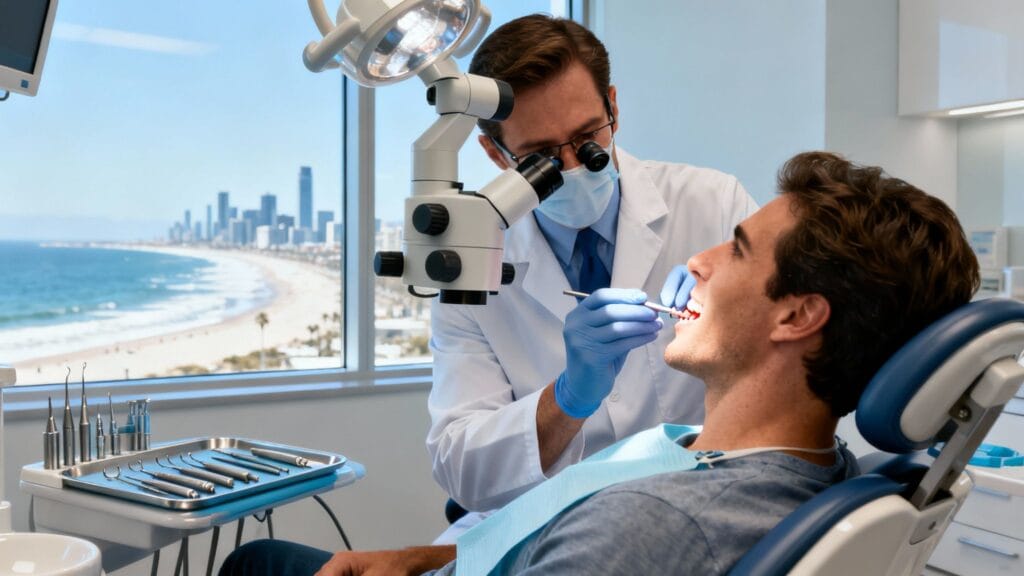
When you're hit with that deep, relentless tooth pain—the kind that makes it hard to think about anything else—it's often a sign you need more than a routine check-up. This is where an endodontist in San Diego comes in. Think of them as the ultimate specialists for problems inside your tooth, dedicated to saving your natural smile.
Unlike a general dentist, an endodontist's entire focus is on diagnosing and treating complex issues within the tooth's root. They're the experts you see for advanced procedures like root canal therapy, ensuring you not only find immediate relief from pain but also preserve your natural teeth for years to come. At Serena San Diego Dentist, we connect you with this level of specialized care to ensure the best possible outcome for your oral health.
Why Your Tooth Pain Might Need a Specialist

One minute you’re enjoying a perfect San Diego day, and the next, a sudden, sharp toothache takes over completely. That throbbing, lingering pain isn't just a nuisance; it's your body's alarm system, signaling that something is seriously wrong deep within your tooth. We understand how disruptive this can be and are here to help you find a solution quickly.
More often than not, this kind of severe pain points to an issue with the dental pulp—the sensitive core of nerves and blood vessels inside your tooth. When it gets inflamed or infected, the discomfort can be intense. This is precisely the moment when an endodontist's specialized skills are not just helpful, but essential.
The Role of an Endodontist
So, what exactly sets an endodontist apart? After finishing dental school, they complete another two to three years of highly specialized training. This advanced education is entirely dedicated to one goal: saving natural teeth. They are, quite simply, the masters of diagnosing and treating complex root problems.
While many general dentists perform root canals, an endodontist does them all day, every day. This high volume builds an incredible level of expertise. They also invest in cutting-edge technology that makes a huge difference in both comfort and success, such as:
- Surgical Operating Microscopes: These allow them to see the incredibly fine details inside a root canal that are invisible to the naked eye.
- 3D Cone-Beam Computed Tomography (CBCT): This imaging provides a detailed, three-dimensional map of your tooth’s anatomy, leaving no room for guesswork.
- Ultrasonic Instrumentation: A more effective and gentler way to clean and shape the root canals.
This combination of focused experience and advanced tools leads to better outcomes and a smoother, more comfortable patient experience. It’s why your general dentist will often refer you to a trusted endodontist for tricky cases.
Choosing Between an Endodontist and a General Dentist
Deciding where to get your root canal can feel overwhelming. This table breaks down the key differences to help you make an informed choice.
| Aspect of Care | Endodontist | General Dentist |
|---|---|---|
| Training & Focus | 2-3 extra years of specialized training focused solely on pulp and root issues. | Broad training in all areas of dentistry. |
| Experience | Performs multiple root canals daily, specializing in complex cases. | Performs root canals occasionally as part of a wider range of services. |
| Technology | Routinely uses advanced tech like surgical microscopes and 3D imaging. | May have standard dental equipment; less likely to have specialized tools. |
| Pain Management | Experts in advanced anesthesia techniques for a virtually painless experience. | Proficient in standard local anesthesia. |
| Case Complexity | Equipped to handle difficult cases: re-treatments, curved canals, or trauma. | Typically handles straightforward, uncomplicated root canals. |
While a general dentist is perfect for routine care, an endodontist offers a level of precision and expertise that is invaluable when it comes to saving a compromised tooth.
The Growing Trust in Specialized Care
It’s not just a gut feeling; the data shows a clear trend. Patients are increasingly seeking out specialists for complex dental work. Between 2020 and 2024, the proportion of root canals performed by endodontists in the U.S. shot up by 9.8%. You can learn more about these findings on specialist dental care. This shift highlights how much people value the advanced training that helps accurately diagnose pain and successfully treat tooth injuries.
Putting off treatment for severe tooth pain is never a good idea. It can lead to much more serious complications, like a dental abscess. To understand the potential risks, check out our guide on why a tooth abscess can be dangerous. Seeing a specialist ensures you get the definitive care you need to resolve the problem for good and protect your overall health.
How to Evaluate San Diego Endodontists
When you need a root canal, picking the right specialist can feel like a huge task. But it doesn't have to be. With a clear plan, you can confidently find an endodontist in San Diego who's the perfect fit. You're not just searching for any dentist; you’re looking for a highly trained partner dedicated to saving your tooth with a gentle and professional approach.
Think of it as a two-part investigation: first, you vet their professional credentials, and second, you get a feel for the patient experience they provide.
Credentials and Advanced Training
Start with the non-negotiables: their education and specialized experience. A genuine endodontist has finished a demanding residency program after graduating from dental school. This extra training is what makes them an expert in treating the complex tissues inside the tooth.
Look for key terms like "board-eligible" or, even better, a "board-certified Diplomate of the American Board of Endodontics." This is the gold standard. It means the endodontist has not only passed rigorous exams but has also submitted a portfolio of complex cases for peer review. It’s a true mark of excellence and a sign of their commitment to the highest standards of care.
Beyond certifications, pay attention to the tools they use. A 2025 study of U.S. practitioners revealed that endodontists are significantly more likely to use advanced instruments like surgical microscopes and ultrasonic tools. This commitment to technology is a game-changer, often making single-visit root canals possible.
Key Takeaway: An endodontist’s investment in technology like surgical microscopes and 3D CBCT imaging is crucial for modern root canal therapy. These tools allow for a level of precision that’s impossible with the naked eye, which has a direct and positive impact on your treatment's success.
Assessing the Patient Experience
Once you've confirmed their expertise, it’s time to see what their patients think. Don’t just glance at the star ratings on review sites—read the actual comments. What are people saying? Do they talk about a comfortable, pain-free procedure? Is the staff described as compassionate, friendly, and clear with communication?
Practical details matter, too. A smooth experience often comes down to these factors:
- Location and Access: Is the clinic easy to get to? A central location with good parking makes a real difference. For example, our modern San Diego dental office was designed with patient comfort and convenience in mind.
- Emergency Care: What happens if you have severe pain after hours? Check if the practice has a clear plan for handling urgent situations.
- Office Environment: First impressions count. A clean, modern, and welcoming clinic can do wonders for easing dental anxiety.
It’s also interesting to see how proactive a practice is. For instance, top clinics often use advanced strategies for local SEO to make sure patients in pain can find them easily online. It shows they're committed to being accessible.
Taking the time to check both the technical skills and the human side of care ensures you find a San Diego endodontist who doesn’t just treat a tooth, but treats you as a person.
Essential Questions for Your Consultation
Think of your consultation as more than just an exam—it’s an interview. This is your opportunity to get a feel for the endodontist and their practice, giving you the confidence you need before committing to treatment. We encourage our patients to be active participants in their care.
Walking in prepared with a few key questions can make all the difference. While any specialist can give you a basic rundown, a truly great endodontist in San Diego will be transparent, detailed, and put you at ease with their answers. Here’s what you should be asking.
Inquiring About Technology and Technique
The equipment and methods an endodontist uses have a direct impact on your comfort and the long-term success of the procedure. Don't hesitate to dig into the specifics.
“What specific technology do you use for diagnosis and treatment?” A top-notch specialist won't just say "X-rays." Look for them to mention things like a surgical operating microscope and 3D CBCT imaging. Even better, they'll explain why these tools matter—how a microscope helps them see tiny, complex canal anatomy that's otherwise invisible, ensuring a more thorough cleaning.
“Will my root canal be done in one appointment or multiple visits?” There's no single right answer here, but an experienced endodontist can explain the factors that influence the decision, like the severity of the infection. A confident response sounds something like this: “Based on what I see, we should be able to complete this in one visit. However, if we find the infection is more complex, we’ll place a temporary medication and have you back to make sure everything has healed properly before we seal the tooth for good.”
That kind of detailed, personalized plan shows they're thinking specifically about your case.
Discussing Comfort and Pain Management
Let's be honest: this is probably what you're most worried about. A specialist's attitude toward pain management says a lot about their approach to patient care.
A patient-focused endodontist operates on the belief that a root canal is a pain-relieving procedure, not a painful one. Their main job is to get you out of pain, and everything they do should reflect that philosophy.
Here are the critical questions to get this conversation started:
“What’s your approach to making sure the procedure is painless?” You want to hear absolute confidence in their anesthetic techniques. A top-tier professional will assure you they won't start until you are 100% numb. They might also talk about having different anesthetics on hand for patients who have had trouble getting numb in the past.
“What should I expect in terms of discomfort after the procedure?” A good endodontist will be straight with you. They’ll explain that some tenderness is normal as the area heals and will give you a clear, practical plan for managing it—usually with common over-the-counter pain relievers. They should also tell you exactly what signs to watch for and when you should call them.
Asking these questions helps you find a specialist with both the technical skill to save your tooth and the compassion to make the entire experience as smooth as possible.
Understanding Treatment Costs and Insurance
Let's talk about the elephant in the room: the cost. No one should have to choose between their financial well-being and getting out of dental pain. When you’re looking at endodontic treatment in San Diego, it helps to know what goes into the final cost so you can plan without stress.
A root canal isn't a one-price-fits-all procedure. Think of it this way: treating a simple front tooth with a single root is a very different ballgame than tackling a complex molar in the back with multiple, tricky canals. The cost naturally reflects that complexity. Another big factor is whether we're doing the first root canal on a tooth or a more involved re-treatment on one that has failed, which requires a whole different level of skill and time.
Navigating Your Dental Insurance
For most people, dental insurance is the first line of defense against treatment costs. The good news is that most PPO plans provide some level of coverage for endodontic procedures. The key word there is some. Every plan is different, so you’ll want to get familiar with your specific policy’s deductible, co-payment, and annual maximum.
Our friendly front office team at Serena San Diego Dentist deals with insurance providers all day long—we're pros at helping patients get the most out of their benefits. We can also help you figure out if your plan requires pre-approval for specialist care. It's a process you might see referred to as what is prior authorization in healthcare, and it's something we can absolutely help you navigate.
To give you a head start, we put together a guide specifically on dental insurance in San Diego. It's a great resource to clear up some of the common confusion around coverage.
What Shapes Endodontic Costs in San Diego?
The cost of specialized dental care is also tied to our local San Diego economy. Running a top-tier endodontic practice here means investing heavily in the best technology and maintaining a state-of-the-art facility. Those operational costs, combined with the high demand for true specialists, naturally influence treatment fees.
The dental field itself is growing, with a projected 4% increase in dentist jobs expected from 2022 to 2032. This steady demand for expertise helps keep pricing competitive in markets like ours.
A Quick Word of Advice: It can be tempting to shop around for the cheapest root canal, but this is one area where you truly get what you pay for. Choosing an endodontist in San Diego based on skill and technology, not just the lowest price, is an investment. A successful, long-lasting treatment prevents the pain—and expense—of complications or tooth loss down the road.
A Look at Your Payment Options
Even with a solid insurance plan, you might have some out-of-pocket costs. We get it. That’s why at Serena San Diego Dentist, we work with patients to make sure finances don’t stand in the way of necessary care. Here’s a quick breakdown of the most common ways to manage treatment costs.
| Payment Method | How It Works | Key Considerations |
|---|---|---|
| Dental Insurance (PPO) | Your insurance carrier pays a percentage of the cost after your deductible is met. | You are responsible for the co-payment, deductible, and any costs exceeding your annual maximum. |
| Third-Party Financing | Companies like CareCredit offer special financing plans, often with low- or no-interest periods. | You apply directly and can use it for various healthcare needs. Approval depends on your credit. |
| Out-of-Pocket Payment | You pay for the full cost of treatment directly using cash, check, or a credit card. | Ask about any potential discounts for paying in full upfront. It offers the most simplicity. |
| In-House Payment Plans | The practice may allow you to split the cost into several manageable payments over time. | These plans are offered at the office's discretion. It's always worth asking about this option. |
The bottom line is that there are always options. Our main goal is to find a clear, manageable financial path for you, so you can focus on what's most important: saving your tooth and feeling better.
The Root Canal Journey From Start to Finish
Knowing what to expect is the best way to quiet any nerves you might have about a root canal. Forget the old myths—modern endodontic treatment is a comfortable, pain-relieving procedure designed to save your natural tooth. Let’s walk through the entire journey together, from the initial prep work to your final, lasting restoration.
The whole process is actually quite straightforward. It all starts with a consultation to confirm the diagnosis, which allows us to create a clear plan for your treatment and sort out any financial arrangements upfront.
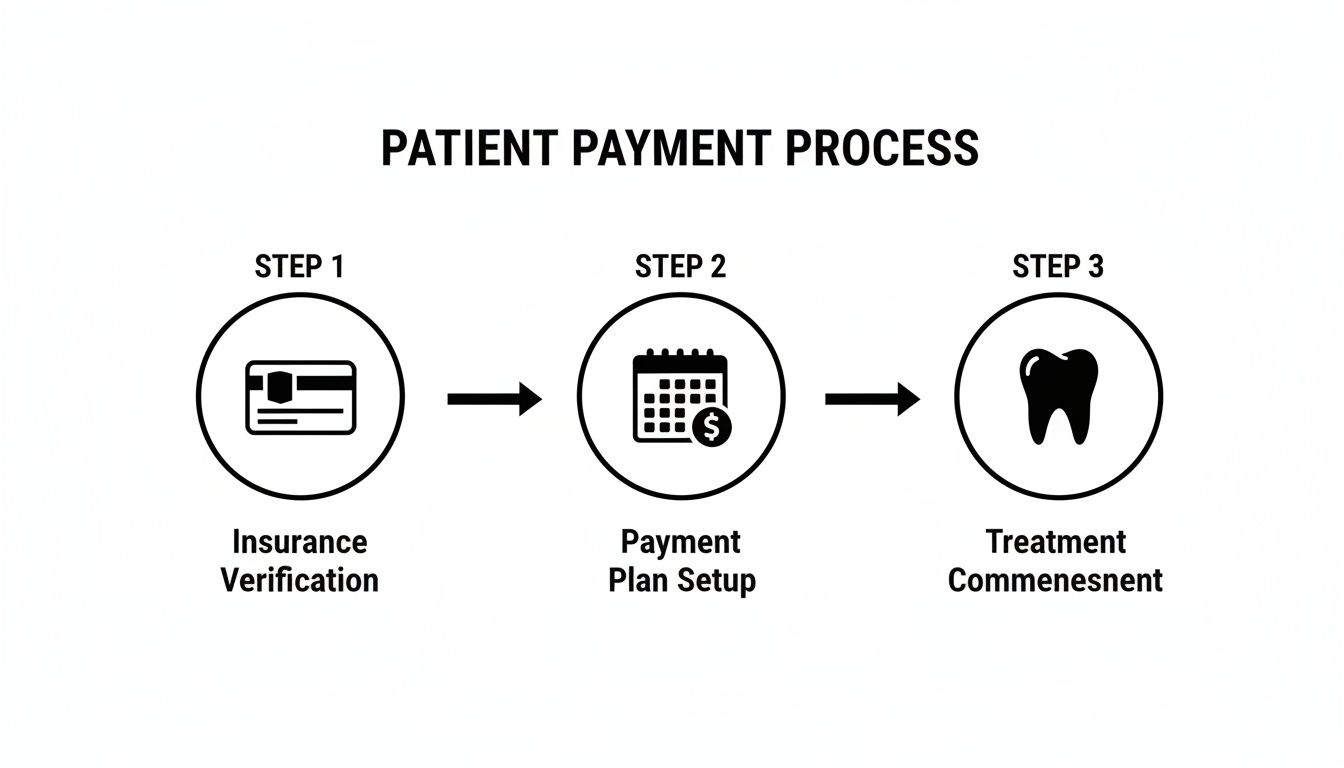
This simple visual breaks down how we handle payments. We start by verifying your insurance and then set up a plan before any treatment begins. The goal is total financial clarity from the get-go, so you can focus on your health without worrying about surprise bills later.
What Happens During the Procedure
Your comfort is the number one priority for your endodontist in San Diego. The first step is always administering local anesthesia to make sure the tooth and the entire area around it are completely numb. We won't even think about starting until you're comfortable and can't feel a thing.
Once you’re fully numb, we follow a very precise, meticulous process:
- Creating a Safe Workspace: We start by placing a small, flexible sheet called a dental dam around the tooth. This simple barrier isolates the tooth, keeping it clean and dry while ensuring nothing goes down your throat.
- Accessing the Tooth's Interior: A tiny opening is carefully made in the top of the tooth. This gives us access to the inner pulp chamber and the root canals where the problem lies.
- Cleaning the Canals: Using specialized, whisper-quiet instruments and a surgical microscope for incredible precision, we gently remove the infected or inflamed pulp tissue from inside the canals.
- Disinfecting and Shaping: After the tissue is removed, the canals are thoroughly cleaned, disinfected, and shaped to prepare them for a protective filling.
- Sealing the Canals: We then fill the clean canals with a biocompatible material called gutta-percha. It's sealed in place to block out any future infection.
- Placing a Temporary Filling: To finish up, a temporary filling is placed to close the opening in your tooth. This protects it until you can see your general dentist for the final restoration.
The entire procedure usually takes just 60-90 minutes. During that time, you shouldn't feel any pain at all—maybe just the gentle vibration from the instruments. Honestly, most of our patients are pleasantly surprised by how comfortable the experience really is.
Aftercare and the Final Restoration
Once your appointment is over, the numbness will wear off within a few hours. It’s completely normal to feel some mild tenderness or sensitivity for a couple of days as the surrounding tissues heal. This is easily managed with over-the-counter pain relievers like ibuprofen.
We usually suggest sticking to softer foods for a day or two and trying to avoid chewing directly on the treated tooth.
But the most critical part of your recovery is getting the final restoration. A tooth that's had a root canal needs a permanent crown to protect it from fracturing and to ensure it survives for the long haul. Think of the crown as a helmet that restores the tooth’s full strength and function. Your general dentist will handle placing this crown.
To understand why this last step is so important, you can learn more about the importance of a dental crown after a root canal in our detailed guide. With proper care and that final crown in place, your treated tooth can last a lifetime.
Answering Your Lingering Questions About Endodontic Care
Even with all the information, it's completely normal to have a few questions buzzing in your head. When you’re thinking about seeing an endodontist in San Diego, you’re probably wondering about the same things most patients do: pain, alternatives, and what happens down the road. Let’s clear those up so you can feel confident moving forward.
So, Does a Root Canal Actually Hurt?
This is easily the biggest myth in all of dentistry, and we're happy to bust it. A root canal isn’t designed to cause pain—it's designed to get you out of it.
That throbbing, can't-think-straight toothache you're feeling? That's the infection. The procedure itself is a different story. Thanks to effective local anesthetics and the incredibly precise, gentle approach a specialist takes, the treatment is usually as comfortable as getting a standard filling. Honestly, most people are shocked at how painless it is and feel a wave of relief as soon as the source of the pain is gone.
Why Not Just Pull the Tooth and Be Done With It?
It's a fair question. On the surface, an extraction seems like a quick and simple solution. But saving your natural tooth is almost always the better long-term strategy, and it’s the entire reason endodontists do what they do.
Keeping your own tooth has some major advantages:
- Keeps Your Bite Stable: It stops the neighboring teeth from drifting into the empty space, which can throw your bite out of whack and lead to jaw problems later on.
- Avoids Costly Replacements: Saving the tooth now means you don't have to pay for more complex restorations like dental implants or bridges down the line.
- Protects Your Jawbone: The root of your tooth stimulates the jawbone, keeping it strong and healthy. When a tooth is pulled, that bone starts to deteriorate.
Think of it this way: your natural teeth are uniquely designed for you. Saving them is a smart investment in your future oral health, preserving the smile you were meant to have.
How Long Will a Treated Tooth Last?
When a root canal is done right and the tooth is properly sealed with a crown, it can last a lifetime. The success rates for treatments performed by a skilled endodontist are incredibly high.
Of course, its long-term survival is a team effort. Your part is crucial. You'll need to stick to great oral hygiene—we're talking consistent brushing, flossing, and not skipping your regular dental check-ups. This keeps the crown, the tooth underneath, and the surrounding gums in top shape, ensuring your restored tooth serves you well for many, many years.
Do I Have to Get a Referral From My Dentist?
While your general dentist will often be the one to spot the problem and send you to a specialist, you usually don't need a formal referral to see an endodontist in San Diego. If you're dealing with the tell-tale signs—severe tooth pain, lingering sensitivity to temperature, or swelling and tenderness—you can absolutely call an endodontist’s office directly.
For most people with PPO dental insurance plans, a referral isn't required. This gives you the power to seek out the expert care you need without any delays.
At Serena San Diego Dentist, our team is here to give you the specialized care you need to save your tooth and put an end to the pain. Don't let the discomfort get worse. Schedule your consultation today and take the first step toward real relief by visiting https://serenasandiegodentist.com.