

You absolutely can improve your gum health naturally. It all comes down to a consistent daily routine, an anti-inflammatory diet packed with the right vitamins, and some safe, effective home remedies like saline or green tea rinses.
The secret? Consistency is key. These natural methods aren't a quick fix; they work by systematically reducing inflammation and fighting off harmful bacteria over time. You’re essentially creating a healthier environment inside your mouth where your gums can heal and thrive.
What Healthy Gums Look Like (And Early Warning Signs to Watch For)
We don't often think about our gums, but they're the foundation of our entire oral health. They do more than just frame your smile—they form a critical seal around your teeth, protecting the roots and jawbone from the bacteria that live in your mouth. If that foundation weakens, the whole structure is in trouble.
So, what does a healthy foundation look like? Healthy gums are typically firm, a nice pale pink, and they hug each tooth tightly. They shouldn't bleed when you brush or floss, and they definitely shouldn't be tender to the touch.
Spotting the Subtle Signs of Trouble
Gum problems rarely show up out of the blue. They usually start with small, subtle changes that are all too easy to ignore. Catching these early signals is your best bet for preventing more serious issues down the line.
Keep an eye out for these early warning signs:
- Redness and Swelling: If you see areas that look red, puffy, or swollen, that's a classic sign of inflammation. It’s your body’s first response to a buildup of bacteria.
- Bleeding When You Brush or Floss: A little pink in the sink is a big deal. Bleeding gums, even a tiny amount, mean they’re irritated and you're likely dealing with the first stage of gingivitis.
- Bad Breath That Won't Go Away: Morning breath is one thing, but if you have persistent bad breath even after you've brushed, it could be a sign of bacteria releasing toxins below the gumline.
- Sore or Tender Gums: Do your gums feel sensitive when you eat, drink, or brush? That's a clear signal that they're inflamed and need some attention.
Catching these signs early is everything. For some practical tips on what to do next, this a practical guide to treating bleeding gums at home is a great resource. If you ignore these symptoms, simple gingivitis can easily escalate into periodontitis, a much more serious condition. We cover this in-depth in our article on how periodontitis can be ruining your oral health.
A Global Perspective on Gum Health
This isn't just a local issue—it’s a global health concern. Oral diseases impact an estimated 3.5 billion people worldwide, and gum disease is a major player.
Think about this: severe gum disease is a serious problem for 15-20% of adults aged 35-44. That number skyrockets to 30% for those aged 65-74, often resulting in tooth loss.
Being proactive is your strongest defense. When you learn to spot the early signs of trouble, you can take action before a minor irritation turns into a major problem, keeping your smile healthy and strong for years to come.
Rethinking Your Daily Oral Hygiene to Restore Gum Health
If you're serious about reversing gum issues, a quick brush and floss just won't cut it. To truly improve gum health naturally, you need a daily routine that’s more deliberate. The goal is to get beneath the gum line where the real trouble starts, clearing out the harmful bacteria that drive inflammation and helping your gums finally heal.
Brush Smarter, Not Harder: The Modified Bass Technique
A great place to start is with your brushing technique. Most of us just scrub back and forth, but the Modified Bass Technique is a game-changer because it specifically targets the sulcus—that tiny, critical pocket between your tooth and gum.
Take your soft-bristled brush and angle it at 45 degrees toward your gum line. Instead of aggressive scrubbing, use gentle, vibrating strokes. This subtle motion is incredibly effective at dislodging the sticky plaque that normal brushing leaves behind.
This chart shows you exactly what to look for, illustrating the difference between healthy gums and those with early signs of disease.
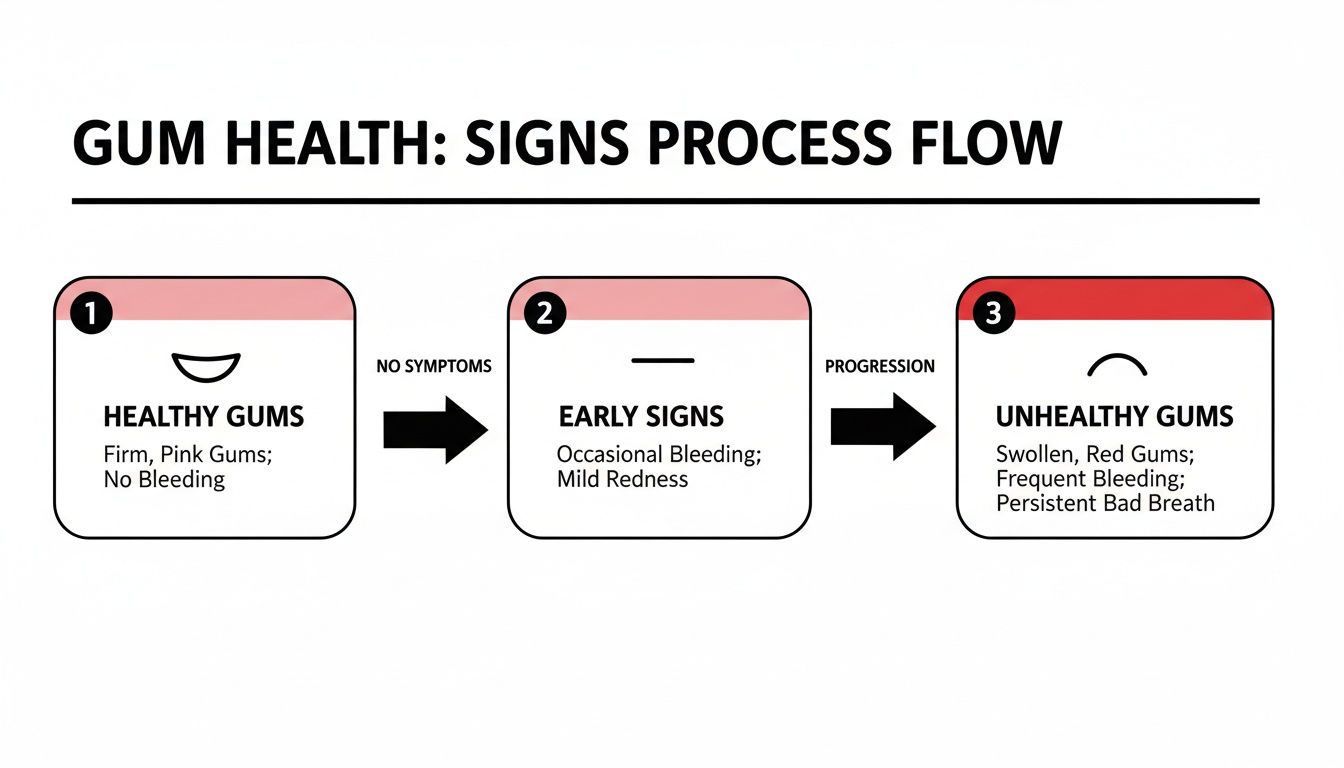
As you can see, healthy gums are characteristically firm and pink. If you're seeing redness, swelling, or bleeding, it's a clear sign your daily routine needs an immediate upgrade.
Master the C-Shape Flossing Method
Flossing is non-negotiable, but how you floss makes all the difference. The C-shape flossing method is designed to clean the tooth surfaces just under the gum line, an area your toothbrush simply can't reach. Don't just snap the floss between your teeth—that does very little.
Gently guide the floss down and wrap it around the side of a tooth, forming a "C." From there, slide the floss up and down, making sure you dip slightly below the gum line until you feel a bit of resistance. This scooping motion physically removes plaque far more effectively than a quick sawing action. Remember to use a fresh section of floss for each tooth to avoid just moving bacteria around.
A Quick Tip from Experience: Don't panic if you see some bleeding when you first adopt this method. That's usually just a sign of the existing inflammation. If you stick with gentle, consistent C-shape flossing, the bleeding should stop within a week or two as your gums get healthier.
Create Your Natural Gum Health Toolkit
Here's a simple, actionable checklist to bring all these daily practices together. Consistency is everything when it comes to seeing real improvement.
Your Daily Natural Gum Health Routine
| Action | Technique | Why It Works | When to Do It |
|---|---|---|---|
| Oil Pulling | Swish 1 tbsp coconut oil for 10-20 minutes. | Reduces harmful bacteria like Streptococcus mutans. | First thing in the morning, on an empty stomach. |
| Brushing | Use the Modified Bass Technique at a 45-degree angle. | Cleans the critical sulcus (gum pocket) where plaque builds up. | Morning (after oil pulling) and before bed. |
| Flossing | Employ the C-shape method to hug each tooth. | Removes plaque from below the gum line, where brushing can't reach. | At least once a day, preferably before your last brush. |
| Tongue Scraping | Gently scrape from back to front 7-10 times. | Removes bacteria that contribute to bad breath and plaque. | After brushing in the morning. |
| Natural Rinse | Swish with a product containing aloe, neem, or tea tree oil. | Soothes inflamed tissue and provides gentle antimicrobial action. | After brushing and flossing. |
Following this routine every day creates a powerful defense system that actively supports your body's ability to heal your gums from the ground up.
Swap Out Harsh Chemicals for Natural Allies
The products sitting on your bathroom counter can either help or hinder your efforts. Many mainstream toothpastes and mouthwashes contain harsh chemicals that can wipe out your entire oral microbiome—the good bacteria along with the bad.
Instead, look for natural alternatives that support a healthy oral environment. Keep an eye out for toothpastes and rinses with ingredients known for their natural antibacterial and anti-inflammatory properties, such as:
- Neem: A staple in traditional medicine, neem is fantastic for fighting the bacteria that form plaque.
- Tea Tree Oil: Its well-documented antimicrobial effects are great for reducing the signs of gingivitis.
- Aloe Vera: This is a wonderfully soothing ingredient that can help calm irritated and swollen gums.
For even more ideas on improving what you do every day, you can step up your oral hygiene with our full collection of practical tips.
Fueling Your Gums with an Anti-Inflammatory Diet
While your daily brushing and flossing routine is your first line of defense, what you eat is just as crucial for healthy gums. Think about it this way: your diet can either feed the inflammation that leads to gum disease or arm your body with the nutrients it needs to fight back. Shifting to an anti-inflammatory diet is one of the most powerful things you can do to support your gums from the inside out.

Before we get into what you should eat, let’s talk about what to avoid. It's impossible to overstate the link between sugar and inflammation. Sugar is the favorite food of the harmful bacteria that cause gingivitis, creating a vicious cycle of inflammation that’s tough to break.
Acidic foods are another culprit, as they can erode your tooth enamel and irritate already sensitive gums. For a detailed list, check out our guide on the most acidic beverages and foods to limit or avoid.
Power Up with Vitamins C and K
A couple of vitamins are absolute superstars when it comes to building resilient gums. Loading up on these gives your body the raw materials to repair tissue and keep infections at bay.
- Vitamin C: This is non-negotiable for producing collagen, the protein that keeps your gum tissue firm and strong. If you’re deficient, your gums become weak and much more vulnerable to bacteria.
- Vitamin K: This vitamin is a powerhouse for blood clotting and bone health, playing a vital role in healing inflamed or bleeding gums.
You can find plenty of Vitamin C in bell peppers, citrus fruits, broccoli, and kale. For a Vitamin K boost, reach for leafy greens like spinach, Swiss chard, and collard greens.
Crunch Your Way to Cleaner Teeth
Believe it or not, some foods work like nature’s own toothbrushes. Their fibrous texture gives your teeth a gentle scrubbing as you chew, helping to dislodge plaque and bits of food stuck between teeth and along the gumline.
Just think of the satisfying crunch from a fresh apple, a stick of celery, or a handful of carrots. These foods don't just add nutrients; they also kick your saliva production into high gear. Saliva is your mouth's built-in defense system, neutralizing acids and washing away bacteria before they can settle in and cause problems.
A simple habit I recommend to patients is to end a meal with a crunchy food like an apple or a few raw almonds. It's a small change that can make a huge difference in how clean your mouth feels, and it helps clear away leftover food particles.
The Power of Probiotics for a Healthy Mouth
A healthy mouth depends on a balanced oral microbiome—that is, having plenty of good bacteria to crowd out the bad, inflammation-causing ones. This is where probiotics shine.
A fascinating 2016 study showed just how effective probiotics can be. Participants who took a daily probiotic saw the number of deep gum pockets drop by an incredible 31.5%, while the placebo group only saw a 17.1% improvement. This is clear evidence that probiotics can help reduce the inflammation and bacterial buildup that harms gums.
Simple Swaps for a Gum-Friendly Diet
You don't need to completely overhaul your kitchen to start seeing benefits. Making small, consistent changes really adds up over time.
Easy Meal and Snack Ideas:
- Breakfast: Swirl a scoop of probiotic-rich Greek yogurt into your morning smoothie or oatmeal.
- Lunch: Add a big handful of spinach to your salad or sandwich for an easy Vitamin K boost.
- Snack: Keep sliced bell peppers and carrots on hand for a crunchy, Vitamin C-rich snack that satisfies.
- Dinner: Grill up some salmon, which is loaded with anti-inflammatory omega-3 fatty acids.
By making these mindful choices, you’re giving your gums the nourishment they need to stay strong, resilient, and healthy.
Soothe Your Gums with Natural Rinses and Remedies
Beyond your daily brushing and flossing, a few time-tested natural remedies can give your gums some extra TLC. Think of these as targeted treatments to calm inflammation and knock back harmful bacteria, especially between dental visits. Best of all, they're simple, inexpensive, and you might already have the ingredients in your kitchen.
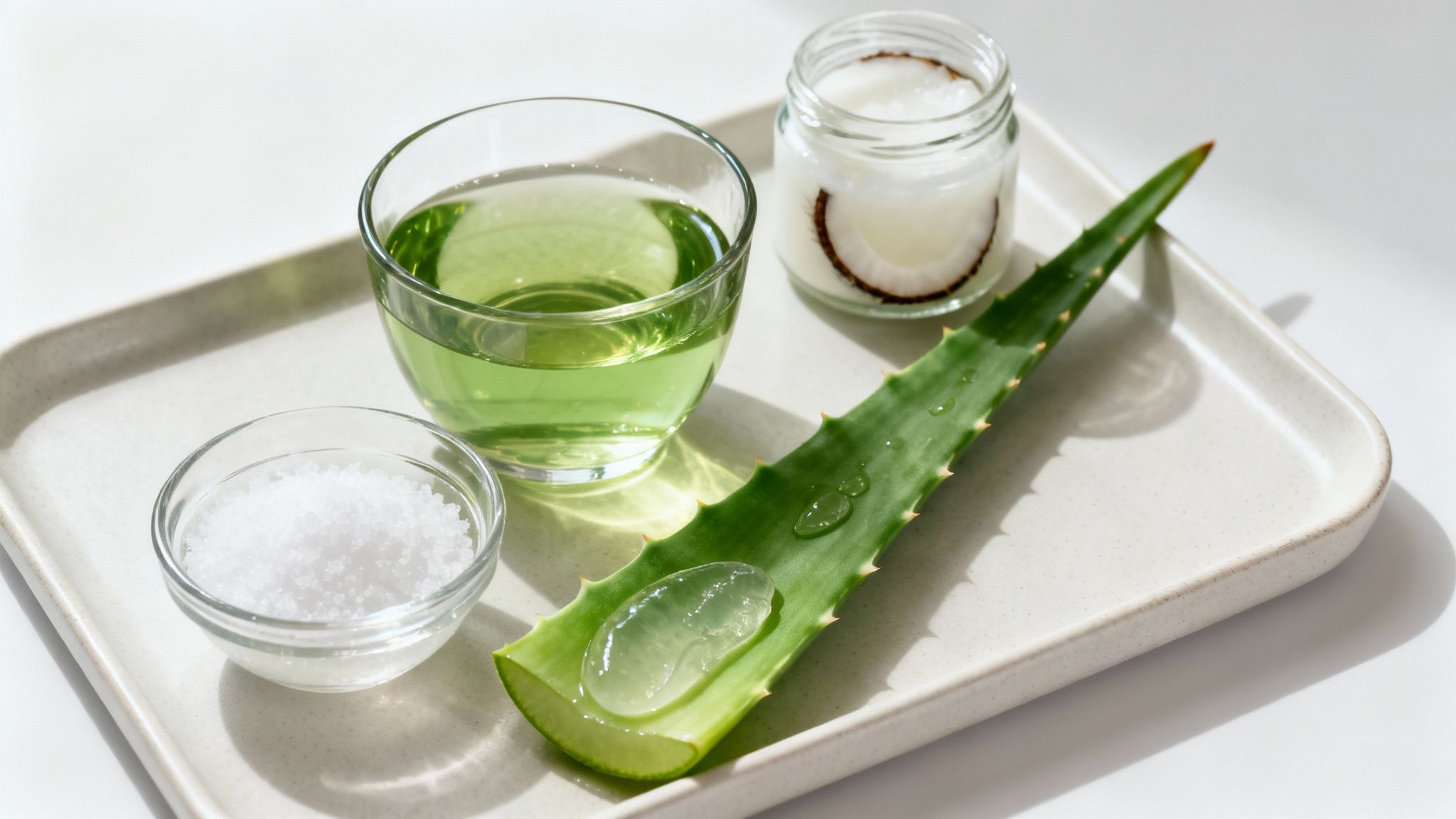
Put Green Tea to Work
That comforting cup of green tea does more than just relax you; it’s a powerhouse for gum health. It’s loaded with catechins, a type of antioxidant with serious anti-inflammatory might, making it a fantastic weapon against the specific bacteria that cause gum disease. Using it regularly can help calm down swelling and bleeding while reducing the overall bacterial count in your mouth.
Don't just take my word for it. Research has demonstrated that a green tea mouthwash can significantly improve scores on both the Gingival Index (which measures gum swelling) and the Plaque Index. One study with 110 participants showed that rinsing with green tea for just one month brought both scores way down. Considering oral diseases impact nearly 3.7 billion people globally, this is a simple, accessible way for anyone to support their long-term gum health. You can dive deeper into the science and explore the full research on green tea's oral benefits yourself.
How to Make a Simple Green Tea Mouthwash
Whipping up your own green tea rinse is incredibly easy and takes just a few minutes. This DIY approach gives you all the antibacterial benefits without the alcohol or artificial stuff found in many store-bought mouthwashes.
- Brew: Steep one green tea bag in a cup of hot water for 3-5 minutes.
- Cool: Let the tea cool down completely. You don't want to rinse with hot liquid!
- Swish: Gently swish the cooled tea in your mouth for 30-60 seconds, then spit it out.
For the best results, make this part of your routine once or twice a day after brushing. Of course, just drinking 2-3 cups of green tea daily provides many of the same anti-inflammatory perks.
The Old-School Saline Rinse for Inflammation
You can't beat the classics. A warm salt water rinse is one of the oldest and most reliable tricks in the book for soothing sore, puffy gums. Salt is a natural disinfectant, and it helps draw out the fluid trapped in swollen tissues, giving you quick relief and making your mouth a less friendly place for bacteria to thrive.
This is my go-to recommendation for patients after a deep cleaning or anytime they feel a little tenderness from gingivitis. It’s gentle, effective, and won’t cause more irritation.
My go-to recipe: Dissolve half a teaspoon of sea salt into one cup of warm (not hot!) water. Swish gently for 30 seconds and spit. Use it 2-3 times a day whenever your gums are feeling angry or sensitive.
Calm Irritated Gums with Aloe Vera
You probably know aloe vera as the go-to remedy for sunburns, but those same soothing properties work wonders on irritated gums. The gel from the aloe plant is packed with compounds that reduce inflammation and can even help damaged gum tissue heal.
When you apply it right to the sore spots, it provides an immediate cooling sensation and can really take the edge off the discomfort of gingivitis. The key is to use 100% pure aloe vera gel—check the label to make sure there are no added sugars, which would defeat the purpose.
Simply dab a small amount of the gel onto the inflamed areas with a clean finger or a Q-tip after you brush. Let it sit for a minute or two before rinsing your mouth with water.
Lifestyle Habits That Make or Break Your Gum Health
What you do at the bathroom sink is only half the battle. Your daily life—the stress you carry, how well you sleep, even what you drink—has a massive impact on your body's ability to fight off the infections that lead to gum disease.
Think of your mouth as a window into your overall health. When your body is under strain, your gums are often one of the first places to send up a distress signal. Let’s look at the lifestyle choices that can either sabotage your efforts or become your best allies for healthy gums.
The Hidden Damage of Stress and Poor Sleep
When you're constantly stressed out, your body is flooded with the hormone cortisol. In the short term, that’s fine. But when it's chronic, high cortisol levels hammer your immune system. This gives gum-attacking bacteria a huge advantage, leaving you far more vulnerable to gingivitis and inflammation.
Poor sleep does something similar. Without enough deep, restorative rest, your body can't repair itself effectively. This weakened state means you have less resilience against oral infections. In fact, numerous studies have confirmed a direct link between sleep deprivation and a higher risk of periodontal disease.
Managing stress isn't just a mental health practice; it's a critical part of oral care. Simple things like mindfulness meditation, deep breathing exercises, or even a relaxing walk along the San Diego coast can lower cortisol and give your immune system a fighting chance to protect your gums.
Why Smoking Is a Deal-Breaker for Healthy Gums
Let's be direct: if you smoke, achieving healthy gums naturally is next to impossible. Smoking is one of the biggest risk factors for severe gum disease, and here’s why:
- It cripples your immune response, making you an easy target for gum infections.
- It constricts blood flow to your gums, which starves them of oxygen and nutrients, slows down healing, and often masks early warning signs like bleeding.
- It accelerates plaque and tartar buildup, creating the perfect environment for harmful bacteria to thrive.
Quitting smoking is the single most powerful lifestyle change you can make for your gums. The moment you stop, your body’s natural healing processes can finally get to work, dramatically boosting your odds of success with any natural care routine.
The Power of Staying Hydrated
Water is such a simple tool, but it's incredibly effective for gum health. When you’re well-hydrated, you produce plenty of saliva, which is your mouth’s built-in cleaning system.
Saliva does much more than just prevent dry mouth. It constantly rinses away food debris, neutralizes plaque acids, and contains natural enzymes that fight bacteria. Dehydration leads to a dry mouth, which is an open invitation for bacteria to multiply out of control.
Red Flags: When to Call a Professional
Natural approaches are fantastic for prevention and reversing early-stage issues, but they have their limits. You absolutely have to know when a problem has gone beyond home care and requires a professional. Home remedies simply cannot reverse advanced gum disease (periodontitis), which involves the loss of bone supporting your teeth.
Don't ignore these warning signs:
- Persistent Bad Breath: If bad breath sticks around even with great oral hygiene, it can signal a deeper infection.
- Receding Gums: Gums pulling away from the teeth, making them look longer, is a classic sign of periodontitis.
- Loose or Shifting Teeth: This is a major red flag. It means the underlying bone structure is being destroyed.
- Pus Between Teeth and Gums: Any sign of pus means there's an active infection that needs immediate professional treatment.
If you’re in the San Diego area and notice any of these signs, please don’t wait. Schedule a consultation at Serena San Diego Dentist for a complete evaluation. We can pinpoint the root of the problem and map out a clear plan to get your gums healthy again.
Common Questions About Natural Gum Care
When you start exploring a more natural approach to gum health, a few questions always come up. You're probably wondering how long this will take, what home remedies can really do, and if there are any hidden risks. Getting straight answers is key to feeling confident and making sure you’re on the right track. Let's tackle some of the things I hear most often from patients.
How Long Until I See Improvements?
Patience is a virtue here, but the good news is you won't be waiting forever. With real consistency, many people start to see the first positive signs within just 1-2 weeks. This usually shows up as less pink in the sink when you floss or a noticeable decrease in that puffy, angry look your gums might have.
The deeper healing—where the gum tissue actually gets firmer and healthier—is more of a long-term project. You’re looking at several months of sticking with a solid routine of good brushing, flossing, and using the right natural aids. The real goal is to turn these actions into everyday habits. Of course, the only way to get a truly personalized timeline is to have a professional take a look.
Can Natural Remedies Reverse Severe Gum Disease?
This is probably the most important question, and the answer requires a crucial distinction. Natural approaches are fantastic for preventing and reversing gingivitis, which is the earliest stage of gum disease. At this point, you're dealing with inflammation, and the damage is completely reversible because the bone around your teeth is still intact.
But when gingivitis is left untreated and progresses to periodontitis, it's a whole different ballgame. Periodontitis means the bone that supports your teeth is actively being destroyed. Natural remedies simply cannot regrow that lost bone. What they can do is play a vital supporting role alongside professional treatment. Think of them as the essential after-care you'll need once a dentist has stepped in with procedures like a deep cleaning to stop the disease in its tracks.
Key Takeaway: Natural methods are your best defense and your daily maintenance plan. But for advanced gum disease like periodontitis, professional dental care is absolutely necessary to save your teeth.
Are There Any Risks With These Remedies?
For the most part, the remedies we've covered—oil pulling, salt water rinses, green tea—are incredibly safe when you use them correctly. The biggest risk isn't from the remedy itself, but from using it as a band-aid for a problem that really needs a dentist's attention.
Take essential oils, for example. They absolutely must be diluted properly. Using them straight can cause irritation or even a chemical burn on your sensitive gums. It's also critical to understand that "natural" doesn't mean it can fix everything. Trying to soothe a painful, abscessed tooth with home remedies instead of seeing a dentist could allow a dangerous infection to spread.
Before you jump into any new routine, especially if you're pregnant or have other health concerns, just run it by your dentist. A quick conversation can ensure you're adding these natural strategies into your care plan in a way that's both safe and effective.
If bleeding gums are a persistent issue for you, our guide on how to fix bleeding gums offers more in-depth advice. It can help you figure out if you're dealing with a minor issue or a red flag that warrants a professional visit.
Ready to get a professional opinion on your gum health? The team at Serena San Diego Dentist is here to create a personalized care plan that combines the best of professional treatment with natural, at-home support. Schedule your consultation today by visiting us at https://serenasandiegodentist.com.