A lot of people start this search the same way. They notice themselves covering their mouth in photos, choosing softer foods at dinner, or postponing treatment because every implant website seems to claim it has the “best” option.
In San Diego, that hesitation shows up in everyday moments. A weekend brunch near the coast, a work event in La Jolla, a family dinner where you want to eat comfortably and smile without thinking about the gap. Missing teeth can affect confidence fast, but they also affect chewing, speech, and the way your bite functions over time.
Dental implants are often the strongest long-term answer. The part many patients don’t hear clearly enough is this: the best dental implants aren’t defined by a brand name alone. The right choice depends on your bone, gum tissue, bite forces, smile line, health history, and whether you need to replace one tooth or an entire arch. The design, material, and placement approach all matter.
Your Guide to a Lasting Smile in San Diego
A patient might come in saying, “I just want the best implant.” What they usually mean is something more personal. They want a tooth replacement that looks natural when they laugh, feels secure when they chew, and doesn’t create a new problem a few years later.
That’s the right question to ask. It just needs a better framework.

What patients usually want when they say best
Some people need a single implant and crown that blends with the front teeth. Others need a full-arch solution because they’re tired of failing teeth or unstable dentures. Someone with strong bone in the lower jaw has different options than someone who’s had years of bone loss in the upper back jaw.
Those differences change treatment planning in a real way.
A good implant plan considers:
- Bone support: The amount and quality of available bone affects implant size, position, and whether grafting is needed.
- Smile appearance: Front-tooth implants demand more attention to gum contour, crown shape, and how the tooth emerges from the gum.
- Bite mechanics: Heavy clenching, grinding, and uneven bite forces can shorten the life of a restoration if they aren’t designed for early.
- Treatment goals: One patient wants the most conservative single-tooth replacement possible. Another wants to avoid a removable denture and restore an entire arch.
The best implant choice is the one that fits your anatomy and your goals at the same time.
Why this decision matters
An implant isn’t just a screw in the bone. It’s a long-term reconstruction that has to function under daily chewing forces and look like it belongs in your smile. When patients understand that, they ask better questions and make better decisions.
That’s especially important in a city where appearance and lifestyle often overlap. People want durability, but they also want confidence. Both are achievable when the planning is individualized rather than rushed.
What Makes a Dental Implant the Gold Standard
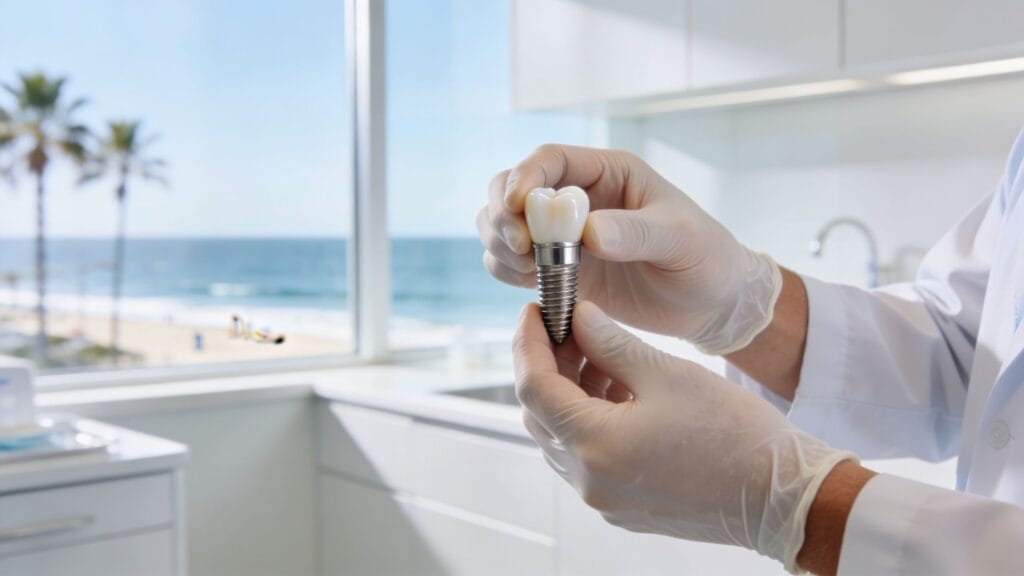
A dental implant has three core parts. The implant post sits in the jawbone and replaces the root. The abutment connects the post to the visible restoration. The crown is the part that looks like a tooth and does the day-to-day work of biting and chewing.

Why the post matters so much
The post is where implants separate themselves from bridges and dentures. Instead of resting on adjacent teeth or removable acrylic, the implant becomes anchored in bone. That anchorage is what gives patients the stable, “this feels like my tooth” experience they’re usually hoping for.
The reason it works is osseointegration. Bone tissue bonds directly to the implant surface, creating a stable union between implant and jaw. Trailhead Advanced Dentistry explains osseointegration and titanium’s biocompatibility and notes that titanium remains the gold standard because the body recognizes it as non-toxic, allowing bone cells to grow directly on the implant surface. That direct fusion is why titanium implants achieve success rates exceeding 95% and can function for over 25 years.
An easy way to think about osseointegration
An implant is similar to setting a strong post into prepared ground. If the site is healthy, the material is compatible, and the post is placed correctly, the surrounding structure secures itself around it. That’s very different from a replacement that rests on top.
This biologic bond is one reason implants are considered the gold standard for missing teeth. They don’t just fill a space. They create a stable foundation for the restoration above them.
Practical rule: The crown gets most of the attention because it’s visible. The post gets most of the credit because it carries the load.
What this means for patients
Patients often focus on the final tooth shape and shade. That matters, especially in the front of the mouth. But long-term success starts deeper than the visible tooth.
Here’s what a well-planned implant is designed to do:
- Stabilize function: A properly integrated implant supports chewing without the movement common with removable options.
- Support the restoration: The crown can only perform well if the implant beneath it is positioned and integrated well.
- Create longevity: Strong biologic integration gives the restoration a much better foundation for long-term use.
The visible result is important. The invisible biology is what makes that result dependable.
Choosing the Right Implant Type and Materials
The best dental implants for one patient may be the wrong choice for another. Material selection matters, but so does the type of case. A single missing premolar is a different problem than a full upper arch with bone loss and failing teeth.
Titanium or zirconia
Titanium remains the most common implant material and has the longest clinical track record. It’s used widely because it integrates predictably with bone and performs well under function. For many patients, it’s the default recommendation because the long-term data is strong.
Zirconia can be a useful alternative in selected cases, especially when a patient wants a metal-free option or has concerns about material sensitivity. It can also appeal to patients who are especially focused on aesthetics in areas where tissue translucency matters. The trade-off is that treatment planning becomes even more case-specific, and the restoration design has to be chosen carefully.
A useful way to compare them is this:
| Option | Often preferred when | Main consideration |
|---|---|---|
| Titanium | Long-term predictability and broad case flexibility matter most | Most commonly recommended because of extensive clinical use |
| Zirconia | A metal-free approach or certain aesthetic preferences matter more | Not every case is ideal for this material |
Single-tooth implant or full-arch system
A patient missing one tooth usually benefits from an implant that stands alone and preserves neighboring teeth. A patient with widespread damage, advanced wear, or many missing teeth may be better served by an implant-supported full-arch restoration.
For full-arch cases, angled posterior implants can be part of the strategy in patients with limited bone, depending on anatomy and goals. If you’re weighing arch-level treatment options, this overview of All-on-6 and All-on-4 dental implants in San Diego is a useful starting point.
Why implant design details change outcomes
Not all implant systems are engineered the same way. The connection between the implant and abutment, the shoulder design, and how forces are distributed all affect bone stability over time.
Argon Dental’s review of K3Pro implant system design describes features such as a deep abutment connection and a beveled shoulder that reduce bacterial micro-gaps and lower crestal bone pressure by 10-15% compared with traditional designs. That helps preserve bone height and reduce the typical 1-2mm first-year bone loss seen with conventional designs.
The “best” implant often comes down to fit. Not marketing fit. Clinical fit.
A smart recommendation doesn’t start with the catalog. It starts with the scan, the bite, the tissue, and the final smile you’re trying to build.
The Implant Procedure Timeline from Start to Finish
Most patients feel better once they know the sequence. Implant treatment is deliberate. That’s one of its strengths.

Research summarized by Omega Dentists on implant success rates reports a 95% to 98% success rate within the first five years, with survival rates exceeding 90% after 20 years. That predictability is one reason many patients view implants as a long-term oral health investment rather than a short-term fix.
Step one, consultation and planning
The process starts with a clinical exam, imaging, and a discussion of goals. During these initial stages, the dentist studies bone volume, gum condition, spacing, bite relationship, and the kind of final result you want.
If bone volume is limited, preparatory treatment may be part of the plan. Patients who need more foundation can learn more about bone grafting for dental implants, which is sometimes recommended before or during implant treatment depending on the site.
Common decisions made at this stage include:
- Whether the site is ready now: Some areas can receive an implant promptly after extraction, while others benefit from healing first.
- Whether grafting is needed: The decision depends on available bone and the ideal implant position.
- How the final tooth should look: The restorative endpoint guides the surgical plan, not the other way around.
Step two, implant placement
The surgical visit is usually more straightforward than patients expect. After the area is anesthetized, the implant is placed into the jaw at the planned position and depth. In some cases, a temporary restoration may be possible. In others, protecting the site during healing is the better choice.
A quick visual overview can help if you want to see the sequence before your visit.
Step three, healing and integration
This is the part patients can’t rush. Bone needs time to integrate with the implant surface. During that period, the goal is stability, not speed.
Healing instructions usually focus on keeping the site clean, avoiding unnecessary pressure, and returning for follow-up evaluation. The exact timeline depends on the case, especially if extraction, grafting, or full-arch treatment is involved.
A smooth implant case usually looks uneventful from the patient’s side. That’s a good sign.
Step four, abutment and final crown
Once integration is confirmed, the abutment and final restoration are completed. This stage is where aesthetics and bite refinement come together. The crown is shaped to match neighboring teeth, support the gum appropriately, and meet the opposing teeth in a controlled way.
That final appointment often feels like the finish line for patients. Clinically, it’s the beginning of maintenance. A well-made implant still needs routine hygiene, bite monitoring, and periodic checks so the bone and soft tissue stay healthy.
Candidacy and Alternatives for Your Smile Restoration
Not everyone walks in as an immediate implant candidate, and that’s normal. The decision usually comes down to whether the mouth can support a stable, healthy result.
Who tends to be a good candidate
A strong candidate usually has healthy enough gums, enough bone for stable placement, and the willingness to maintain the area after treatment. General health matters too. Healing capacity, smoking status, clenching habits, and periodontal history all affect planning.
That doesn’t mean one issue automatically rules implants out. It means the treatment plan has to be honest. Some patients need disease control first. Others need grafting. Others may be better served by a different restoration.
A clinical evaluation often looks at:
- Bone availability: Enough bone is needed in the right position, not just somewhere nearby.
- Gum health: Inflamed or unstable tissue should be treated before implant work moves ahead.
- Bite habits: Patients who grind or overload their teeth may need bite protection and a stronger restorative design.
- Commitment to maintenance: Implants aren’t vulnerable to cavities, but the surrounding tissues can still fail if hygiene is neglected.
When alternatives make more sense
Implants are excellent, but they aren’t the only option. Some patients prefer a shorter treatment path, have budget constraints, or want to avoid surgery. In those situations, a bridge or denture may be reasonable.
Here’s the trade-off in plain terms:
| Option | What works well | What to think about |
|---|---|---|
| Dental implant | Replaces the tooth root and supports a fixed restoration | Requires surgery and enough healthy supporting anatomy |
| Bridge | Can restore a space without implant surgery | Usually depends on adjacent teeth for support |
| Removable denture | Restores multiple missing teeth with a removable appliance | Often feels less stable and may be less comfortable during chewing |
If you’re comparing replacement options directly, this page on dental implants vs dentures gives a practical side-by-side overview.
Good treatment planning includes the option of saying, “An implant may not be your best first step.”
That kind of honesty matters. The right plan is the one that gives you a stable result you can maintain, not merely the most advanced procedure on paper.
Navigating Implant Costs and Financing in San Diego
Cost matters because implant treatment includes numerous elements. You’re paying for diagnosis, imaging, surgical planning, the implant itself, restorative components, materials, lab work, and follow-up care. When a patient gets very different quotes from different offices, it usually means the treatment scope isn’t identical.
What influences the total fee
A straightforward single implant typically costs less than a case involving extraction, grafting, tissue management, and a complex aesthetic crown. Full-arch treatment is a separate category entirely because it involves different planning, prosthetic design, and surgical demands.
Dr. John Patterson’s dental implant market review notes that the average cost for a single implant in the U.S. ranges from $3,400 to $5,000 and that the U.S. market is projected to reach $3.1 billion by 2030, with over 1 million new patients annually. That range reflects the technology, materials, and clinical expertise required for a durable result.
Why cheaper isn’t always less expensive
An implant that needs revision, replacement, or redesign can become more expensive than a carefully planned case from the start. The visible crown is only one piece of value. The planning, placement precision, tissue handling, and restorative design are what protect that investment.
Patients should ask what’s included in any quote. A fair comparison should clarify whether the estimate covers the implant post, abutment, crown, imaging, grafting, temporaries, and follow-up visits.
Helpful questions include:
- What parts of treatment are included in the estimate?
- If grafting or extractions are needed, are those separate fees?
- Will insurance apply to any part of the procedure or final restoration?
- Are payment plans available if I prefer out-of-pocket flexibility?
Insurance and payment options
Coverage varies. Some PPO plans may contribute to portions of treatment, especially related components of care, while other parts may remain out of pocket. Verification matters because implant benefits differ widely by plan.
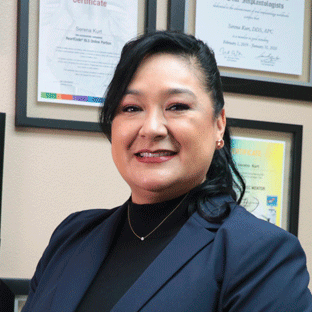
Patients looking into coverage can review options for dental insurance in San Diego. Serena San Diego Dentist is one local practice that provides implant-related treatment and discusses insurance coordination and payment flexibility with patients during planning.
For many people, financing makes the decision more manageable. That can be useful when the choice is between delaying treatment and moving forward with a long-term solution that improves function now.
How to Choose the Best Implant Dentist in San Diego
If you want the best dental implants, focus less on the label on the implant box and more on the person planning and placing it. Precision, judgment, and restorative vision shape the outcome.
The questions worth asking in consultation
A thoughtful consultation should leave you with specifics, not slogans. You should understand why a treatment plan fits your anatomy and what trade-offs come with the alternatives.
Ask questions like these:
- How do you evaluate implant position before surgery? Look for an answer that includes 3D imaging and prosthetically driven planning.
- What determines whether I need grafting or a different implant approach? The answer should connect anatomy to treatment choices.
- Who designs the final tooth or arch, and how is the bite adjusted? A stable implant still needs a well-designed restoration.
- What is your plan if my case has aesthetic challenges or limited bone? Complex cases deserve a clear strategy, not vague reassurance.
Precision is not optional

Burbank Dental Implants’ discussion of surgical angulation and implant success notes that off-angle placement can increase failure risk by 30-50% due to uneven loading. It also describes how elite dentists in markets like San Diego use AI-guided surgery and advanced imaging to achieve near-perfect angulation, which helps support natural emergence and long-term stability.
That detail matters more than patients often realize. A poorly angled implant can complicate everything above it. The crown may look bulky, the bite may load the implant unevenly, and hygiene may become harder.
The implant brand matters. The placement plan matters more.
What to look for in a San Diego office
The provider should be able to show you how they diagnose, plan, place, and restore. You’re looking for clinical process, not just before-and-after photos.
A practical checklist includes:
- Technology: 3D imaging, digital planning, and guided placement when appropriate.
- Case selection: A willingness to recommend alternatives if they’re better for your situation.
- Restorative focus: Attention to crown contour, gum support, and bite mechanics.
- Follow-up care: A clear maintenance plan after the implant is restored.
If you want to evaluate the setting and treatment approach in person, you can review the San Diego dental office before scheduling.
If you’re weighing your options and want a treatment plan built around your bone structure, bite, and cosmetic goals, schedule a consultation with Serena San Diego Dentist. A personalized exam can tell you far more than a list of implant brands ever will.