You’re probably here because something small started nagging at you. Maybe your teeth don’t feel as smooth as they used to. Maybe your gums bleed a little when you floss. Maybe you typed cleaning teeth near me between errands, work, or school pickup because it’s been too long since your last visit.
That’s common in San Diego. Life moves fast, and preventive care is easy to postpone when nothing feels urgent. The problem is that dental buildup doesn’t stay still. Plaque hardens, tartar collects near the gumline, and small issues become bigger ones without much warning.
A professional cleaning is one of the simplest ways to protect your smile before you need more involved treatment. If you’re new to the area, nervous about dental visits, or just want to know what happens during a cleaning, it helps to have a clear explanation in plain language.
Your Guide to a Brighter Smile in San Diego
A lot of patients start the same way. They’re heading to brunch in La Jolla, meeting coworkers in Clairemont Mesa, or catching their reflection in bright coastal light and noticing that their smile looks a little dull. Not unhealthy, exactly. Just not as fresh and comfortable as it should feel.
That’s usually when the search begins. You type cleaning teeth near me, scroll through a long list of offices, and realize most pages don’t answer the questions you have. Will it hurt? What kind of cleaning do I need? Is it just a quick polish, or something more?

For a new patient, the most helpful thing isn’t flashy language. It’s clarity. You want to know why professional cleanings matter, what the appointment feels like, and how to choose care that fits your health, comfort level, and budget. Our San Diego dental cleaning tips go into helpful details, but the short version is simple. A cleaning is not just about making teeth look nicer. It’s about removing buildup you can’t safely remove at home and catching problems early.
What many people get wrong
Some people think a cleaning is only for visible stains. Others assume brushing well means they can skip professional care.
Both ideas miss the point.
- Home care helps daily: Brushing and flossing matter because they disrupt plaque before it hardens.
- Professional care goes further: A hygienist can remove tartar and clean areas that are difficult to manage at home.
- The visit is also diagnostic: Your cleaning appointment often reveals early changes in the gums and teeth before you feel pain.
A good cleaning appointment should leave you informed, not rushed.
In a city where smiles are always on display, that matters. But comfort matters too. If you’ve been putting this off because you’re worried about sensitivity, judgment, or cost, you’re not alone. Those concerns are common, and they’re worth addressing directly.
Why Professional Cleaning is Essential for Your Health
Professional cleanings protect more than appearance. They reduce the bacterial buildup that irritates gums, contributes to decay, and creates the conditions for more serious dental problems. You can brush consistently and still miss areas where tartar forms, especially around the gumline and between teeth.
The scale of the issue is larger than many people realize. According to the CDC, 65.5% of U.S. adults had a dental exam or cleaning in the past year, yet nearly half of all adults suffer from some form of gum disease according to CDC dental health data. That tells us two things at once. Many people do seek care, and many still need better prevention and follow-up.
What a cleaning removes that brushing can’t
Plaque is soft and sticky. Tartar is plaque that has hardened. Once tartar forms, regular brushing won’t remove it.
That matters because tartar creates a rough surface where more bacteria can collect. Over time, that irritation can lead to:
- Gum inflammation: Gums may look puffy, red, or bleed during flossing.
- Persistent bad breath: Bacteria trapped around buildup often contribute to odor.
- Higher cavity risk: Plaque and tartar make it easier for decay to develop along the gumline and between teeth.
If you’ve ever wondered why your mouth still doesn’t feel fully clean after brushing, tartar is often part of the answer. Patients who’ve been told they have bleeding gums can also learn more about that connection in this guide on how periodontitis can affect oral health.
Prevention is easier than catching up
A routine cleaning is one of the few appointments in healthcare where prevention does most of the heavy lifting. When you remove buildup early, you lower the chance that irritation turns into infection or that a small area of decay becomes a larger restoration.
Practical rule: If your gums bleed regularly, your teeth feel rough near the gumline, or it’s been a long time since your last visit, don’t assume you only need a polish. Get evaluated.
There’s also peace of mind in knowing what’s going on. A cleaning visit gives your dental team a chance to look for early cavities, gum changes, worn fillings, and other concerns before they become painful. That’s part of why these appointments matter for busy adults, students, parents, and older patients alike.
Why this matters in daily life
Oral health problems rarely announce themselves dramatically at first. They show up in quiet ways.
| Early sign | What it may mean |
|---|---|
| Teeth feel fuzzy soon after brushing | Plaque buildup |
| Bleeding when flossing | Gum irritation |
| Cold sensitivity near the gumline | Recession, buildup, or exposed areas |
| A “dirty” feeling between cleanings | Areas that need professional attention |
Professional cleanings help reset the mouth to a healthier baseline. That’s what makes them essential, not optional.
Types of Teeth Cleaning Offered at Our Clinic
Not every patient needs the same kind of cleaning. That’s one of the biggest points of confusion when people search for cleaning teeth near me. They expect one standard service, but cleanings fall into different categories based on the health of your gums and the amount of buildup present.

Standard prophylaxis cleaning
This is the routine cleaning generally pictured. It’s meant for patients whose gums are generally healthy and who need removal of plaque and tartar above the gumline.
A standard professional prophylaxis cleaning follows a four-step process:
- Scaling removes tartar from the teeth.
- Polishing smooths the surfaces.
- Flossing cleans between the teeth.
- Rinsing clears away loosened debris.
In practical terms, this is your regular maintenance visit. It’s ideal when you want a fresh start, a smoother feel, and a careful check for early concerns before they grow.
Deep cleaning with scaling and root planing
This is different from a routine cleaning. It’s used when plaque and tartar have moved below the gumline and the gums need more targeted treatment.
People often hear “deep cleaning” and worry it means something extreme. It usually means your dental team has found signs that bacteria are affecting the tissues supporting the teeth. The goal is to clean beneath the gums and create a healthier surface so the tissue can settle down.
Some patients need this after a long gap in care. Others need it because they’re prone to gum disease even with good home habits. If you want a fuller explanation of when this is recommended, this guide on deep cleaning teeth and what to know is a helpful next read.
Guided Biofilm Therapy and modern cleaning tools
Technology changes how cleanings feel. Instead of relying only on traditional scraping, modern techniques can target bacterial biofilm in a gentler and more selective way.
Our standard prophylaxis cleaning uses ultrasonic scalers and professional polishing to remove plaque and tartar with over 95% efficiency, a task that home brushing alone cannot accomplish. For more advanced needs, Guided Biofilm Therapy (GBT) offers a minimally invasive alternative that preserves 100% of enamel integrity while eliminating 99.9% of harmful biofilm according to Cleveland Clinic guidance on scaling and root planing.
That’s a lot of technical language, so here’s the simpler version:
- Ultrasonic scaling: Uses vibration and water to break up hardened deposits.
- Professional polishing: Smooths tooth surfaces after buildup is removed.
- GBT: Uses air polishing and fine powder to target biofilm in a more conservative way.
Patients who dislike the sensation of heavy scraping often find modern biofilm-focused cleaning more comfortable.
Periodontal maintenance
Some patients have already been treated for gum disease and need ongoing maintenance rather than a standard routine cleaning. This isn’t “more of the same.” It’s a structured follow-up approach to keep inflammation under control and monitor how the gums respond over time.
A quick comparison helps:
| Cleaning type | Usually for | Main focus |
|---|---|---|
| Standard prophylaxis | Healthy gums | Removing buildup above the gumline |
| Scaling and root planing | Early or active gum disease | Cleaning below the gumline |
| Periodontal maintenance | Ongoing gum disease management | Keeping disease stable after deeper treatment |
The right cleaning isn’t something you guess from a menu. It’s based on what your mouth needs that day.
Your Professional Teeth Cleaning Appointment Step-by-Step
For many people, the unknown is the hardest part. Once you know how the visit usually unfolds, the appointment feels much more manageable.

You’ll start with check-in and a quick conversation about your history, current symptoms, and any sensitivities. If you haven’t had a cleaning in a while, that’s useful information, not something to be embarrassed about. A good dental team uses that context to tailor the visit.
The first look inside your mouth
Before cleaning begins, your hygienist or dentist examines your teeth and gums. This helps determine whether you’re due for a standard prophylaxis cleaning or need something more targeted.
At this stage, patients often ask the same things:
- Will you tell me if I need more than a routine cleaning? Yes. The recommendation should be explained in plain language.
- Will it hurt? Most routine cleanings feel like pressure, vibration, water, and light scraping. If you’re sensitive, say so early.
- Can I ask questions during the visit? Absolutely. You should know what’s happening as it happens.
The cleaning itself
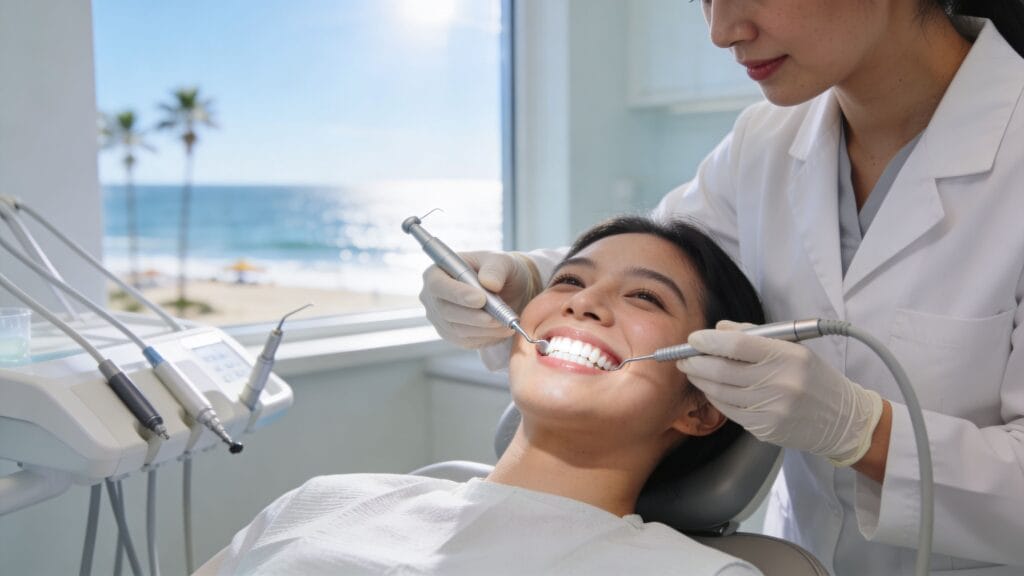
A standard professional prophylaxis cleaning involves a four-step protocol: scaling to remove tartar, polishing to smooth tooth surfaces, expert flossing to clean between teeth, and a final rinse according to this explanation of teeth cleaning service steps. At a modern office, those steps are often supported by tools designed to make the process thorough and efficient.
Scaling is the part people notice most. You may feel gentle vibration from an ultrasonic scaler or hand instrumentation in tighter areas. Then comes polishing, which leaves the teeth feeling smooth. Flossing checks and cleans the spaces between teeth, and the rinse clears away remaining debris.
Here’s a visual overview many patients find helpful before their first appointment:
What happens after the cleaning
Once the cleaning is done, your provider reviews what they found. That could include areas to watch, home care suggestions, or a recommendation for a different cleaning schedule if your gums need closer attention.
If a cleaning is done well, your teeth should feel smoother right away and your home brushing should feel easier over the next few days.
If fluoride is recommended, it may be placed at the end of the visit. You’ll also leave knowing when to come back and whether your current home routine needs any small adjustments.
Understanding Costs and Insurance for Your Cleaning
Cost is one of the main reasons people delay preventive care. That’s understandable. Most patients want to do the right thing for their health, but they also want clear information before they book.
Without insurance, the average cost for a professional teeth cleaning in the U.S. can range from $75 to $400 according to this explanation of professional cleaning costs. The final amount depends on what kind of cleaning you need, whether your visit includes added treatment, and how your insurance plan applies.
If you have PPO dental insurance
Many patients with PPO plans want to know one thing first. Will my plan help with preventive care?
In many cases, preventive services receive stronger coverage than more complex treatment. The practical next step is to verify your benefits before the appointment so you know what’s covered, what counts toward your plan maximum, and whether your visit falls under preventive or periodontal care. You can review options and next steps on our San Diego dental insurance page.
If you’re paying out of pocket
Paying directly can still be manageable, especially when an office offers financing or phased treatment planning. The key is transparency.
- Ask what type of cleaning is recommended: Routine cleanings and deeper periodontal services aren’t billed the same way.
- Request a written estimate: This helps you compare immediate costs with the value of prevention.
- Discuss financing early: Payment options are easier to set up before treatment than after.
A delayed cleaning can become a larger expense if buildup turns into gum treatment or restorative care. Preventive dentistry works best when the financial conversation is open and practical, not confusing.
Why Choose Serena San Diego Dentist
When patients compare offices, they usually look for three things. They want modern care, a convenient San Diego location, and a team that explains treatment clearly instead of making the visit feel impersonal.
That combination matters because a cleaning appointment isn’t just a transaction. It’s ongoing preventive care. The technology used, the thoroughness of the exam, and the comfort of the experience all affect whether patients stay consistent with treatment.

What patients should look for in a local office
A strong local dental office should offer more than basic availability. It should give you confidence that your care is being delivered with current tools and a thoughtful clinical process.
Look for:
- Modern equipment: Digital diagnostics and advanced hygiene tools can make care more precise and more comfortable.
- Clear communication: You should understand whether you need a routine cleaning, deep cleaning, or maintenance visit.
- Convenient access: For people in Clairemont Mesa, La Jolla, and nearby San Diego neighborhoods, location affects whether preventive care stays consistent.
If you’re curious how dental offices talk about technology and patient communication online, this overview of dental practice marketing strategies offers a useful outside perspective on how practices present trust, education, and accessibility to patients.
A practical place to start is reviewing an office’s dental technology and tools so you know what kind of diagnostic and cleaning approach they use. Serena San Diego Dentist provides dental hygiene services in San Diego and uses a technology-forward model for preventive care.
The right office should make it easier to keep up with cleanings, not harder.
Frequently Asked Questions About Teeth Cleaning
How often should I get my teeth cleaned
For most patients, every six months is a common recommendation. Some people need more frequent visits if they have gum disease, heavy buildup, or a history of recurring inflammation. The right schedule depends on your gum health, not just the calendar.
Will a teeth cleaning hurt
A routine cleaning is usually not painful, but it can feel unfamiliar if it’s been a while. You may notice pressure, vibration, cool water, and sensitivity around irritated gums. If your teeth are sensitive or your gums are inflamed, let your provider know before the cleaning starts so the visit can be adjusted for comfort.
How long does a cleaning appointment take
The time depends on whether you need a standard cleaning or more involved periodontal care. A straightforward preventive visit is usually shorter than a deep cleaning appointment. If this is your first visit, expect extra time for an exam, questions, and review of findings.
What if I haven’t been to the dentist in years
You can still start now. That’s far more important than how long it’s been. A good office won’t shame you. They’ll assess your teeth and gums, explain what type of cleaning is appropriate, and help you move forward one step at a time.
Can I get a cleaning if I don’t have insurance
Yes, and this matters for a lot of California patients. A significant gap exists for the 25% of Californians without dental insurance who are unsure about affording premium care. In-house financing and membership plans can help bridge this gap, making state-of-the-art cleanings accessible without compromising on quality according to this discussion of uninsured dental affordability.
What should I do before my appointment
Keep it simple.
- Brush normally: Don’t overdo it or scrub aggressively right before the visit.
- Bring insurance details if you have them: That helps the front office verify benefits.
- Mention any concern upfront: Bleeding gums, tooth sensitivity, or dental anxiety all affect how the appointment should be handled.
Is a cleaning only about making teeth look whiter
No. A cleaning can remove surface stains, but its main purpose is preventive health. The bigger goal is removing plaque and tartar, checking the gums, and reducing the chance that small issues become larger ones.
If you’re ready to stop searching for cleaning teeth near me and get answers, schedule a visit with Serena San Diego Dentist. We’ll help you understand what kind of cleaning you need, review insurance or payment options, and make the process as clear and comfortable as possible.