
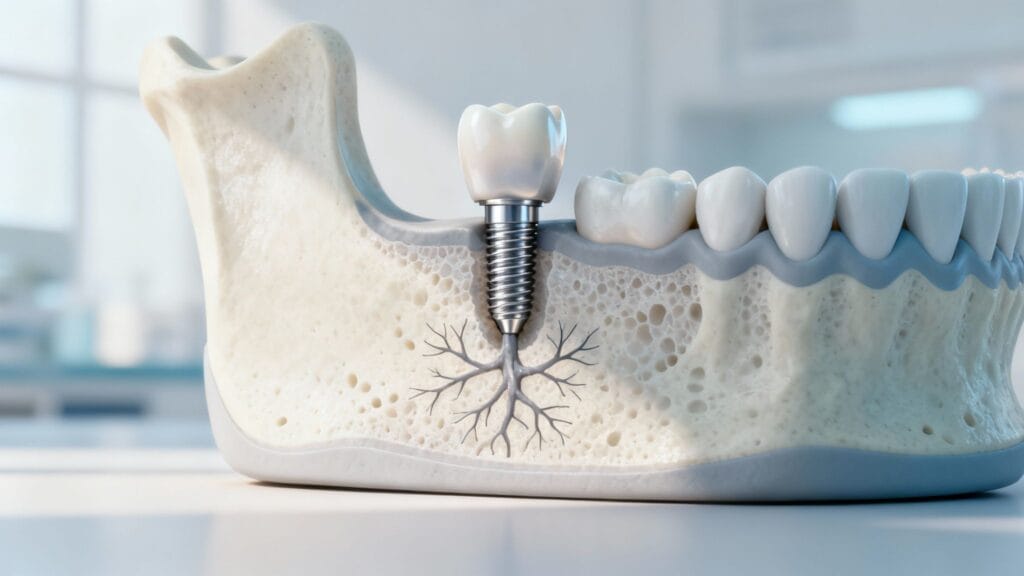
Considering dental implants? One of the most common questions we hear is, "What's the real dental implant recovery time?" It's a fantastic question, and the answer isn't a single number. It's best to think of it in two distinct parts. First, there's the initial healing right after surgery, which is mostly about managing some swelling and soreness for a few days. The second, and most crucial part, is osseointegration—the amazing biological process where the implant actually fuses with your jawbone over a few months.
Understanding this journey helps set clear expectations and puts you in control of your healing process.
Your Dental Implant Recovery Timeline Explained
Knowing what to expect on the journey from surgery to your brand-new tooth can make all the difference. While hearing "months-long" might sound a bit intimidating, the reality is that most of this healing happens quietly in the background without disrupting your daily life. For most patients, the initial recovery is remarkably fast.
The real key to a successful, lifelong implant is patience. Allowing your body to do its work on its own schedule is what creates that rock-solid foundation for your new tooth. Rushing this process can compromise the outcome, so we take our time to ensure it's done right.
The Major Stages of Healing
Your recovery isn't just one long waiting game; it’s a series of clear phases, each with its own purpose and timeframe.
- The First Week (Initial Surgical Healing): This is the phase you'll notice the most. Your primary goal is to manage minor swelling and tenderness and stick to soft foods for a few days. It's a straightforward process focused on comfort and care.
- The Quiet Months (Osseointegration): This is the invisible but most important stage. Over the next several months, your jawbone will literally grow into and around the titanium implant, creating a bond as strong as a natural tooth root.
- The Finishing Touch (Final Restoration): Once that fusion is complete and the foundation is solid, you'll return for the final step: placing your custom-made crown. This is the part that looks, feels, and functions just like a natural tooth.
The dental implant recovery time is different for everyone, but most people are back to feeling normal after the initial surgery in just 3-4 days. The full process from start to finish—including that all-important osseointegration—typically takes between 3 to 6 months.
To give you a quick snapshot, here's a simple breakdown of what to expect and when.
Dental Implant Recovery at a Glance
This table offers a clear, at-a-glance view of the journey, helping you understand what happens at each step.
| Recovery Stage | Typical Duration | Key Patient Focus |
|---|---|---|
| Immediate Post-Surgery | 24-72 Hours | Managing swelling, rest, sticking to liquid/soft foods. |
| Initial Healing | 1-2 Weeks | Following aftercare instructions, gentle oral hygiene. |
| Osseointegration | 3-6 Months | Living normally while the implant fuses with the jawbone. |
| Final Crown Placement | 1-2 Appointments | Getting the permanent, natural-looking tooth attached. |
Each phase plays a critical role in ensuring your implant is a success for years to come.
This visual timeline gives a great overview of the whole process, from day one to the final crown.
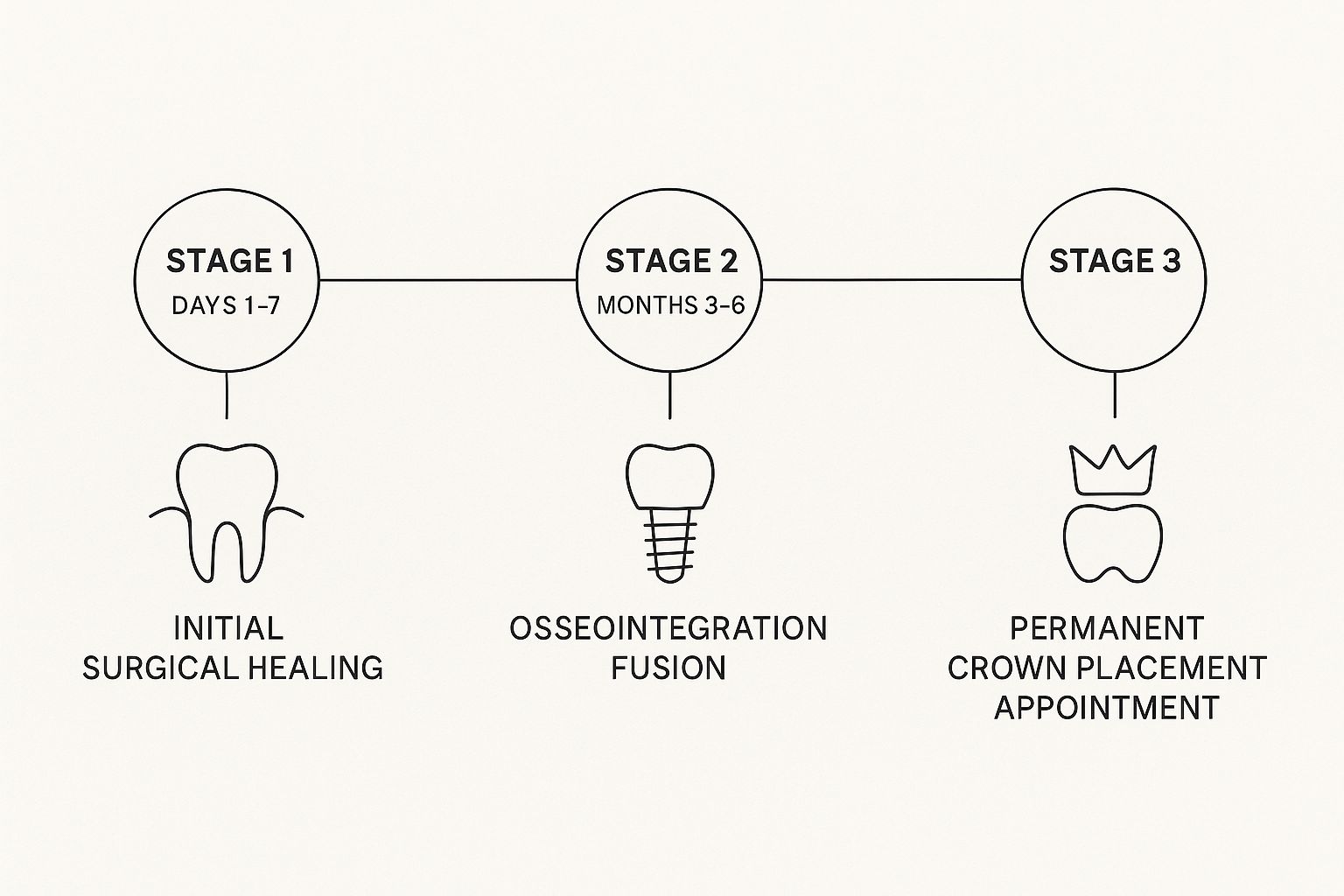
As the infographic shows, the "hands-on" part of your recovery is very short. The longer waiting period for osseointegration doesn't require you to put your life on hold. To get a better sense of the entire procedure, take a look at our complete guide to San Diego dental implants.
Navigating the First Week After Surgery

The first week after your dental implant surgery is really the most hands-on part of your recovery. While the whole process takes a few months, this initial period is where your actions make the biggest difference. Think of it as laying the groundwork for a smooth and successful healing journey.
Your main tasks during these first few days are straightforward: manage any discomfort, keep swelling down, and, most importantly, protect the surgical site. With a solid plan, you can navigate this phase confidently and avoid potential setbacks.
Days 1-3: Your Immediate Aftercare Plan
The first 72 hours are when you'll feel the most immediate effects of the surgery. We understand you might be worried about pain, but rest assured this is a completely normal and manageable part of the process.
- Pain Management: As the anesthetic fades, you'll likely feel some soreness. For most people, over-the-counter pain relievers like ibuprofen are very effective. Your dentist will provide specific recommendations tailored to you.
- Swelling Control: Swelling is your body's natural response to healing and tends to peak around the second or third day. The best way to manage it is by applying an ice pack to your cheek in 20-minute intervals—that’s 20 minutes on, then 20 minutes off.
- Minor Bleeding: A little bit of oozing for the first 24 hours is common. You can control it by gently biting down on a clean piece of gauze. If you notice any heavy or persistent bleeding, please call your dentist right away.
Days 4-7: Turning the Corner
Around this time, you should really start to feel better. The initial discomfort and swelling will begin to subside, and you can slowly start getting back to your normal routine.
Now, your focus shifts to keeping the area clean without disturbing the implant itself. Gentle hygiene is key. You'll need to avoid brushing the implant site directly, but you can—and should—carefully clean the rest of your teeth.
A warm saltwater rinse is your best friend this week. Simply mix half a teaspoon of salt into a glass of warm water and gently swish it around two to three times a day. This simple trick helps keep the area clean and reduces bacteria without any harshness, which is crucial for preventing infection.
Your First-Week Diet and Oral Care Dos and Don'ts
What you eat and how you clean your mouth are critical during this initial phase. Any unnecessary pressure on the new implant can interfere with its ability to anchor properly into your jawbone.
Dietary Guidelines:
- DO stick to soft foods and liquids. Think smoothies, yogurt, mashed potatoes, and soups (just make sure they aren't too hot).
- DON'T eat anything hard, crunchy, or sticky. This means popcorn, nuts, and hard candies are off the menu for now.
- DON'T use a straw. The suction it creates can dislodge the blood clot that needs to form over the surgical site. Losing that clot can lead to a painful condition called dry socket.
Oral Hygiene Rules:
- DO rinse your mouth gently after every meal.
- DON'T brush the actual implant site for at least the first week.
- DON'T use an electric toothbrush anywhere near the area until your dentist gives you the green light.
Many of these aftercare tips are standard for dental procedures. If you want a more detailed look at post-op care, you can learn more about what you should do after a tooth removal, as the core principles of gentle healing are very similar.
Understanding Osseointegration: The Quiet Healing Phase
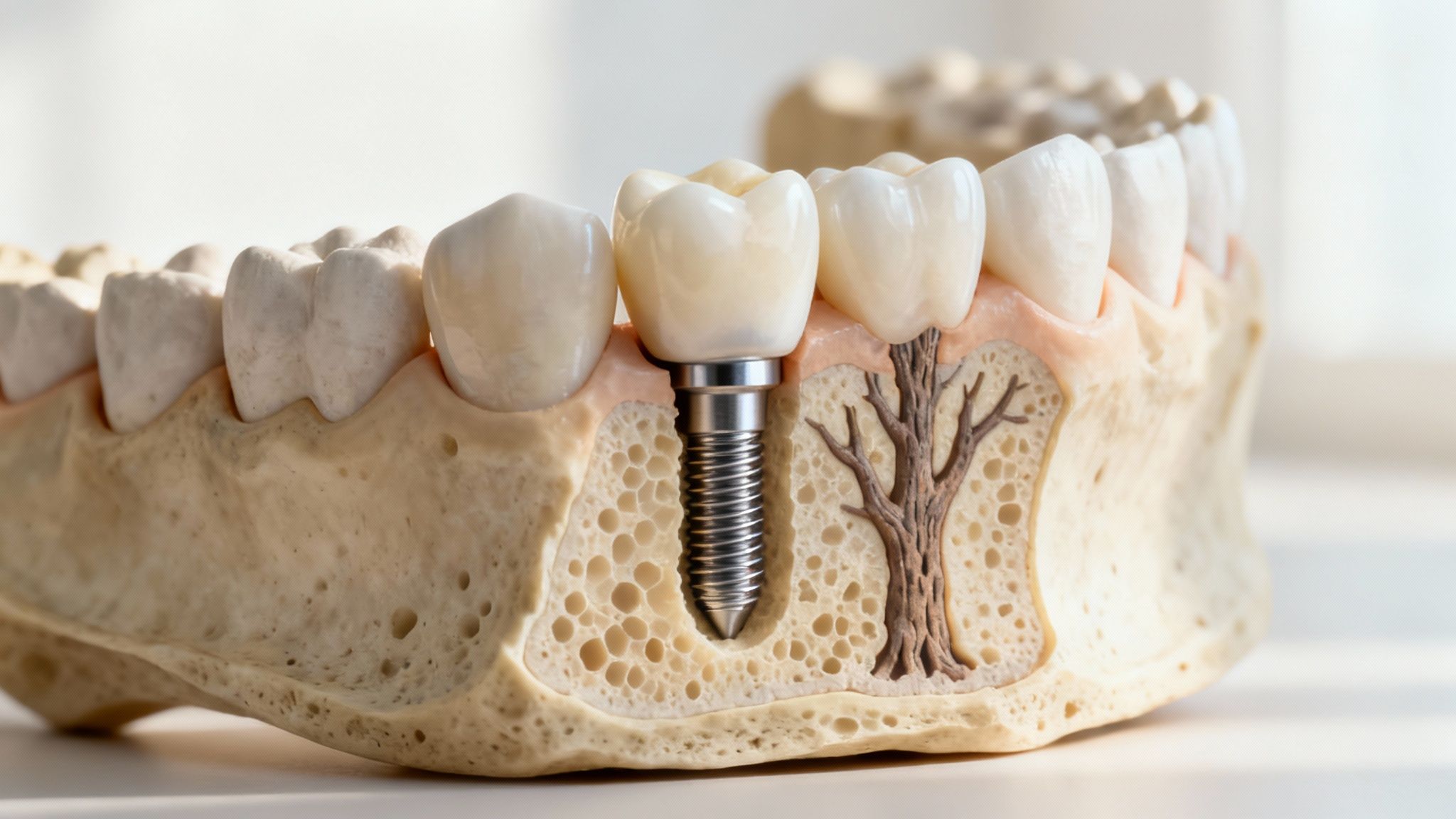
Once the initial post-surgery healing is behind you, the most crucial part of your dental implant recovery time gets underway. This is a silent, background process called osseointegration. While you won’t feel a thing, it’s the remarkable science that makes your new implant a permanent fixture for life.
Think of it like a new tree taking root in the ground. The titanium implant post is the root, and over the next several months, your jawbone will literally grow into and fuse with it. This creates an incredibly strong, stable foundation, turning the implant into a genuine part of your body.
It’s this biological fusion that sets dental implants apart from all other tooth replacement options. It delivers a level of strength and security that bridges and dentures simply can't replicate, allowing your final crown to feel and function just like one of your natural teeth.
Why Does Osseointegration Take So Long?
On average, you can expect osseointegration to take anywhere from three to six months. That might feel like a long time to wait, but it’s an absolutely essential step that allows your body to build a lasting connection with the implant. The exact timeline depends on your body's unique healing speed, your overall health, and the quality of your jawbone.
Trying to rush this phase is a recipe for complications, as it could prevent the implant from ever becoming truly stable. Patience is key. During this time, you'll usually have a temporary tooth replacement, so you can go about your life with confidence.
Osseointegration is the gold standard for dental implant success. The goal is to create a direct, structural, and functional connection between your living bone and the implant. This is what allows it to withstand the forces of chewing for decades to come.
For this process to work, you need enough healthy jawbone to support the implant. If bone density is low, a preparatory step might be necessary first. You can learn more about how we build a solid base for implants in our guide to bone grafting essentials and facts.
Supporting a Strong Bone-Implant Bond
Your role during this quiet healing period is to protect the implant from excessive pressure. You can eat most foods, but it’s wise to avoid chewing very hard things directly on the implant site until your permanent crown is attached. Following your dentist's specific instructions is the best way to ensure the delicate bone fusion happens without any issues.
Of course, great oral hygiene is a must to prevent any infection that could disrupt the healing process. Some patients also explore advanced therapies like Platelet-Rich Plasma (PRP) treatments to potentially give their body's natural healing abilities a boost.
By understanding and respecting the osseointegration timeline, you’re making an investment in a durable, long-term solution. This quiet healing phase is what makes the entire dental implant recovery time worth it, paving the way for a smile that feels as good as it looks.
Key Factors That Influence Your Healing Speed
https://www.youtube.com/embed/X8pouA7I2jw
Ever wondered why your friend who got a dental implant was back to normal in a few months, while an article you read online suggested a much longer timeline? It’s because healing is deeply personal, not a one-size-fits-all schedule.
A handful of specific factors can either accelerate your recovery or slow it down. Knowing what they are ahead of time helps set realistic expectations for your own journey.
Your Health and Your Habits
Think of it like this: your jawbone is the foundation for a new structure. A strong, solid foundation makes for a smooth build, but a weaker one needs more time and support. The same principle applies here. Your body's overall condition and the choices you make every day are the biggest players in how well and how quickly that foundation sets.
Here’s a breakdown of what really makes a difference:
- Overall Health: If you're managing a condition like uncontrolled diabetes or an autoimmune disorder, your body's natural healing systems are already working overtime. This can slow things down. A healthy immune system is your best asset during recovery.
- Bone Density and Quality: The implant needs a dense, sturdy jawbone to lock into. If your bone is on the softer or thinner side, it might just take a bit longer for that rock-solid fusion—what we call osseointegration—to happen.
- Procedure Complexity: A single, straightforward implant placement will almost always heal faster than a more involved surgery. If you need bone grafting or multiple implants, you're asking your body to do more work, and that simply takes more time.
The Impact of Lifestyle Choices
Beyond your body’s baseline, your daily habits have a huge influence on the healing process. This is the area where you have the most control.
Smoking is, without a doubt, one of the biggest roadblocks to successful implant healing. The chemicals in tobacco constrict blood vessels, starving the surgical site of the oxygen and nutrients it desperately needs to repair itself. This can dramatically slow healing and seriously increase the risk of infection or outright failure.
Your diet is just as important. Think of food as the building blocks for a construction project. A diet rich in vitamins and minerals gives your body the high-quality materials it needs to build new bone and repair tissue. On the other hand, poor nutrition is like trying to build that structure with flimsy materials—it just won't be as strong.
The good news is that dental implants have an incredible track record, with a 95% success rate over ten years. That's why around 500,000 implant procedures are performed in the U.S. each year. Following your dentist's post-op instructions to the letter is your ticket to being part of that success story. If you're curious, you can find more fascinating dental implant stats that show just how reliable they are.
Ensuring Your Dental Implant Lasts a Lifetime
Once your final crown is attached, your dental implant recovery time is officially complete, but a new chapter begins: lifelong care. The fantastic news is that maintaining your implant isn't complicated at all—it’s almost identical to how you look after your natural teeth.
While the implant post and the crown on top can't get cavities, the gum tissue surrounding them is still vulnerable. Keeping these gums healthy is the single most important factor in making sure your implant stays secure for years, even decades, to come.
Simple Habits for Lasting Success
Protecting your investment is all about consistency. Plaque and bacteria can still accumulate around the base of your implant, and if left untreated, this can lead to gum inflammation (peri-mucositis) or even bone loss around the implant (peri-implantitis).
A solid daily routine is your best defense.
- Brush Twice a Day: Use a soft-bristled toothbrush to carefully clean around the implant crown, paying close attention to where it meets your gumline.
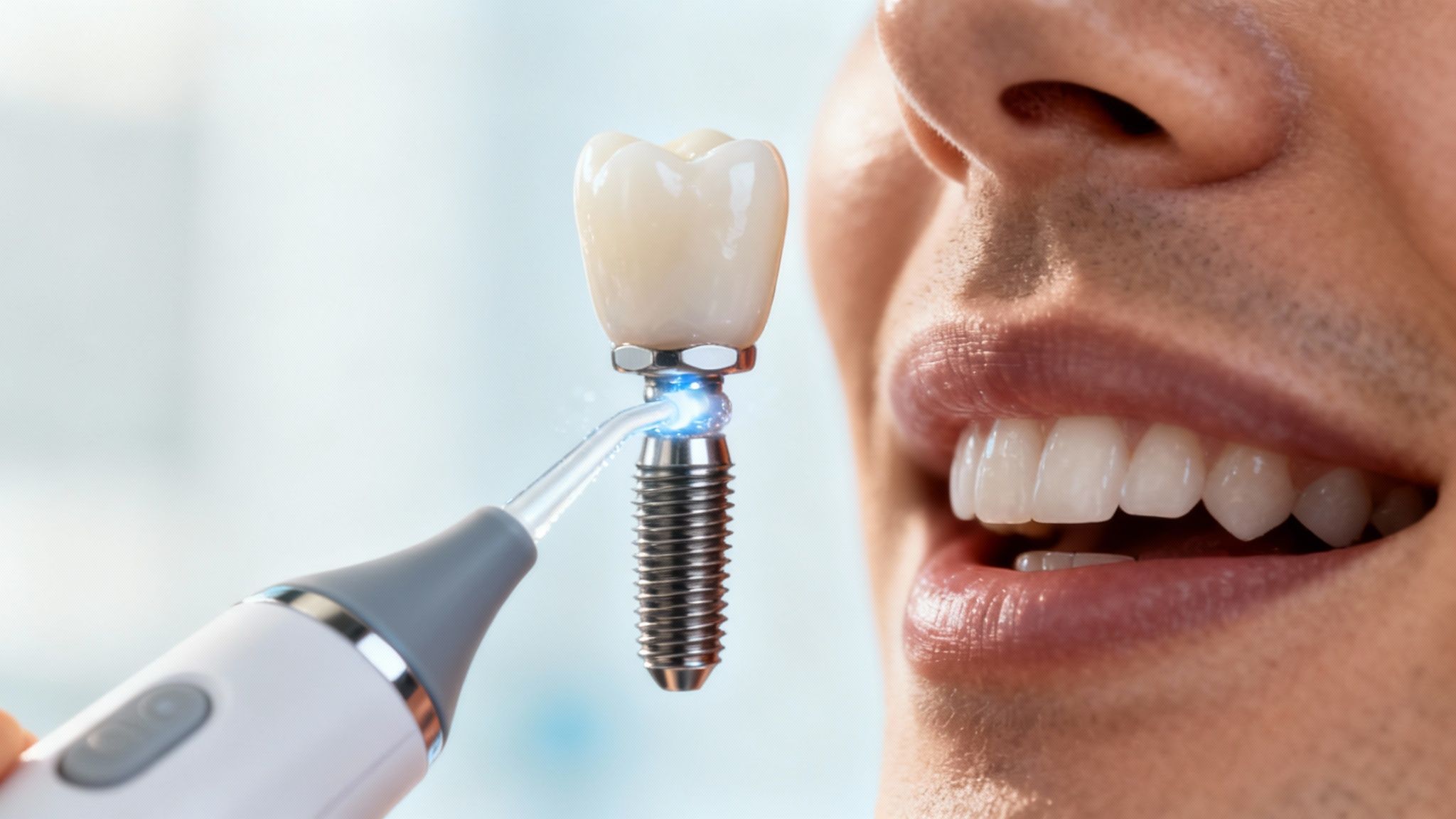
- Clean Between Teeth Daily: Flossing around an implant can sometimes be awkward. Many people find that water flossers or small interdental brushes are perfect for cleaning out those tricky spots.
- Don't Skip Your Check-ups: Visiting your dentist for regular cleanings and exams is absolutely essential. These appointments are our chance to check on the implant, your gums, and the underlying bone to catch any small issues before they escalate.
With proper care, dental implants are designed to go the distance. In fact, research shows a remarkable 98.6% survival rate over an average of nearly 30 years. The titanium implant itself is incredibly resilient, but the crown attached to it may need to be replaced every 15-20 years due to normal wear and tear. You can read more about the long-term success of dental implants in this study.
Think of it this way: by treating your implant with the same respect you give your natural teeth, you're setting it up for a lifetime of success. Good daily hygiene and regular professional check-ups are the simple secrets to a healthy, functional smile.
Proper maintenance is the final piece of the puzzle. For a more detailed look at the best practices, take a look at our guide on how to look after dental implants and your oral health.
Your Implant Recovery Questions Answered
We get a lot of questions about what to expect after dental implant surgery. It's completely normal to be curious and even a little nervous about the healing process. To help set your mind at ease, we’ve put together answers to some of the most common questions we hear from our patients.
When Can I Get Back to Work and Normal Life?
This is usually the first thing on everyone's mind, and the answer really depends on what your "normal" looks like.
If you have a desk job or a role that isn't physically demanding, you'll likely feel ready to head back to work within 1-2 days. You might still have a bit of minor swelling, but it's generally nothing that will keep you from your duties.
On the other hand, if your job or hobbies involve heavy lifting or strenuous exercise, you'll need to take it easy. We strongly recommend avoiding anything that gets your heart rate way up for at least the first week. This helps prevent bleeding and throbbing at the implant site. The best advice? Listen to your body and don't rush it.
What Are the Warning Signs of a Problem?
Knowing the difference between normal healing and a potential complication is key. While problems are rare, being aware of the red flags lets you act quickly if something seems off.
Give your dentist a call right away if you notice any of these signs:
- Pain that’s severe and persistent, and isn’t getting better with the pain medication you were given.
- Swelling that gets worse after day three. Swelling should be at its peak around day two or three and then start to go down.
- Any pus or a bad taste coming from the surgery area, as this often points to an infection.
- A feeling that the implant is loose or moving in your jaw, especially a few weeks after the procedure.
Normal healing means your discomfort and swelling will gradually get better each day. Any symptom that suddenly takes a turn for the worse or just isn't improving is your signal to call your dental team. A quick check-in can solve a small issue before it becomes a bigger one.
If you're still in the research phase, understanding how dental implants compared to bridges can provide valuable context for your decision.
What Should I Avoid Eating While I Heal?
Your diet plays a huge role in a smooth recovery. For the first week, you'll need to be quite strict, but it's smart to be cautious for the entire healing period.
In that first week, stick to soft foods and liquids. Think smoothies, yogurt, soups, and mashed potatoes. The most important rule here is no straws. The suction can dislodge the protective blood clot that’s crucial for healing.
For the full 3-6 month healing window (the osseointegration phase), you can return to a mostly normal diet. However, you'll still want to avoid chewing anything very hard or sticky directly on the implant site.
Foods to Keep Away From the Implant Site:
- Hard nuts and seeds
- Ice cubes
- Hard candies or chewy caramels
- Super crunchy things like pretzels or tough bread crusts
This simple step protects the implant from too much pressure while your jawbone is busy fusing to it.
Is It Normal to Still Have a Little Pain After a Few Weeks?
Yes, it absolutely can be. It's not unusual to feel an occasional, mild ache or a bit of tenderness for several weeks. This is just a sign of the deep healing taking place as the bone and tissue finish repairing themselves around your new implant.
This kind of discomfort is very different from the warning signs of an infection. Normal, lingering healing sensations are mild, they fade over time, and they don't get worse. Pain from a problem tends to be sharp, constant, and might show up with other symptoms like renewed swelling.
If you're ever worried about a sensation you're feeling during your recovery, just call your dentist. A quick conversation is the best way to get reassurance and stay confident on your path to a new smile.
At Serena San Diego Dentist, we are committed to guiding you through every step of your dental implant journey with clarity and care. We accept most major PPO insurance plans and offer flexible out-of-pocket payment options to ensure our services are accessible. We believe everyone in San Diego deserves a healthy, beautiful smile, and we're here to help you achieve it.
Ready to restore your smile with confidence? Schedule your consultation with us today!