
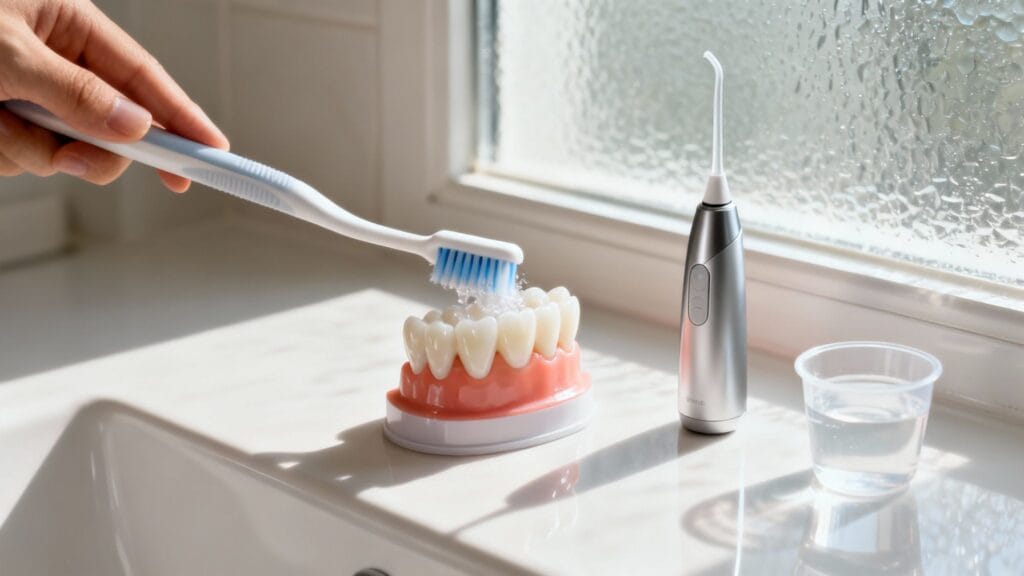
Taking care of your new dental crown starts the second you hop out of the dentist's chair. The first couple of weeks are all about being gentle, allowing the cement to cure completely and giving your gums a chance to heal around the new restoration. Here in sunny San Diego, where smiles are always on display, we want to ensure yours looks and feels its best for years to come.
Your Crown's First Few Weeks: The Essential Care Plan
Getting a new dental crown is a big deal—it’s a major step in getting your smile back to its best. But that initial period right after the procedure is a crucial adjustment phase. It’s perfectly normal to feel some sensitivity to hot and cold at first. Think about it: your tooth and the surrounding gums have just been through a lot. This feeling should start to fade within a week or two.
You'll also probably notice the crown feels a bit… different. Your mouth is incredibly perceptive, and even a slight change in shape can feel foreign when you bite down or talk. Don't worry, this is temporary. You'll get used to it quickly. The most important thing is to be gentle and give your mouth time to adapt. Worried about discomfort during this phase? At Serena San Diego Dentist, we ensure you know exactly what to expect.
Gentle Cleaning Techniques
For the first 24-48 hours, hold off on flossing right around the new crown. The cement needs this time to fully harden without being disturbed. You can and should, however, keep brushing.
- Stick with a soft-bristled toothbrush. Anything harder can irritate your already sensitive gums.
- Use gentle, circular motions when you brush. Pay close attention to that little pocket where the crown meets your gum line—that's where plaque loves to hide.
- Rinse with warm salt water a couple of times a day. Just mix a half teaspoon of salt in a glass of warm water. It’s incredibly soothing for your gum tissue and helps keep the area clean while it heals.
This infographic gives a great visual of how to clean around your new crown without causing any problems.
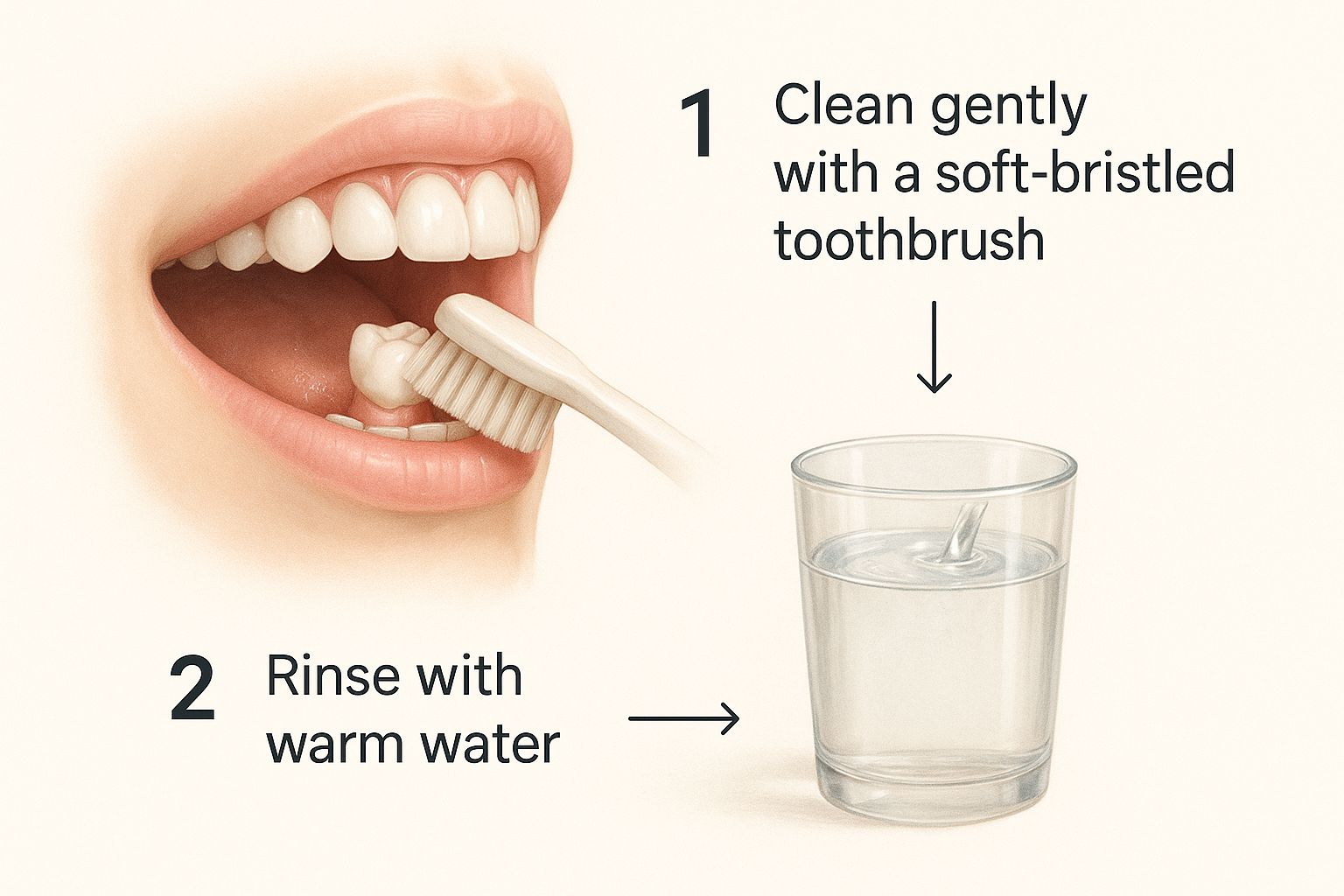
As the image shows, the key is aiming the bristles right at the gum line. That’s the best way to prevent plaque from building up where it can cause the most trouble. To get a better picture of the entire journey, you can see how this all fits into the complete dental crown procedure steps.
Do's and Don'ts for the First Week with Your New Crown
To make things simple, here's a quick guide to help you navigate that first week. Following these tips will help your crown settle in perfectly.
| Do | Don't |
|---|---|
| Stick to soft foods like yogurt, soup, and mashed potatoes. | Chew on hard or crunchy foods like nuts, ice, or hard candies. |
| Chew on the opposite side of your mouth as much as possible. | Eat sticky foods like caramel or taffy that could pull on the crown. |
| Brush gently around the new crown with a soft-bristled brush. | Floss the crowned tooth for the first 24-48 hours. |
| Rinse with warm salt water to soothe your gums. | Ignore any bite that feels "high" or uncomfortable after a few days. |
This isn't forever, just a short-term adjustment to give your new crown the best possible start.
Adjusting Your Diet Temporarily
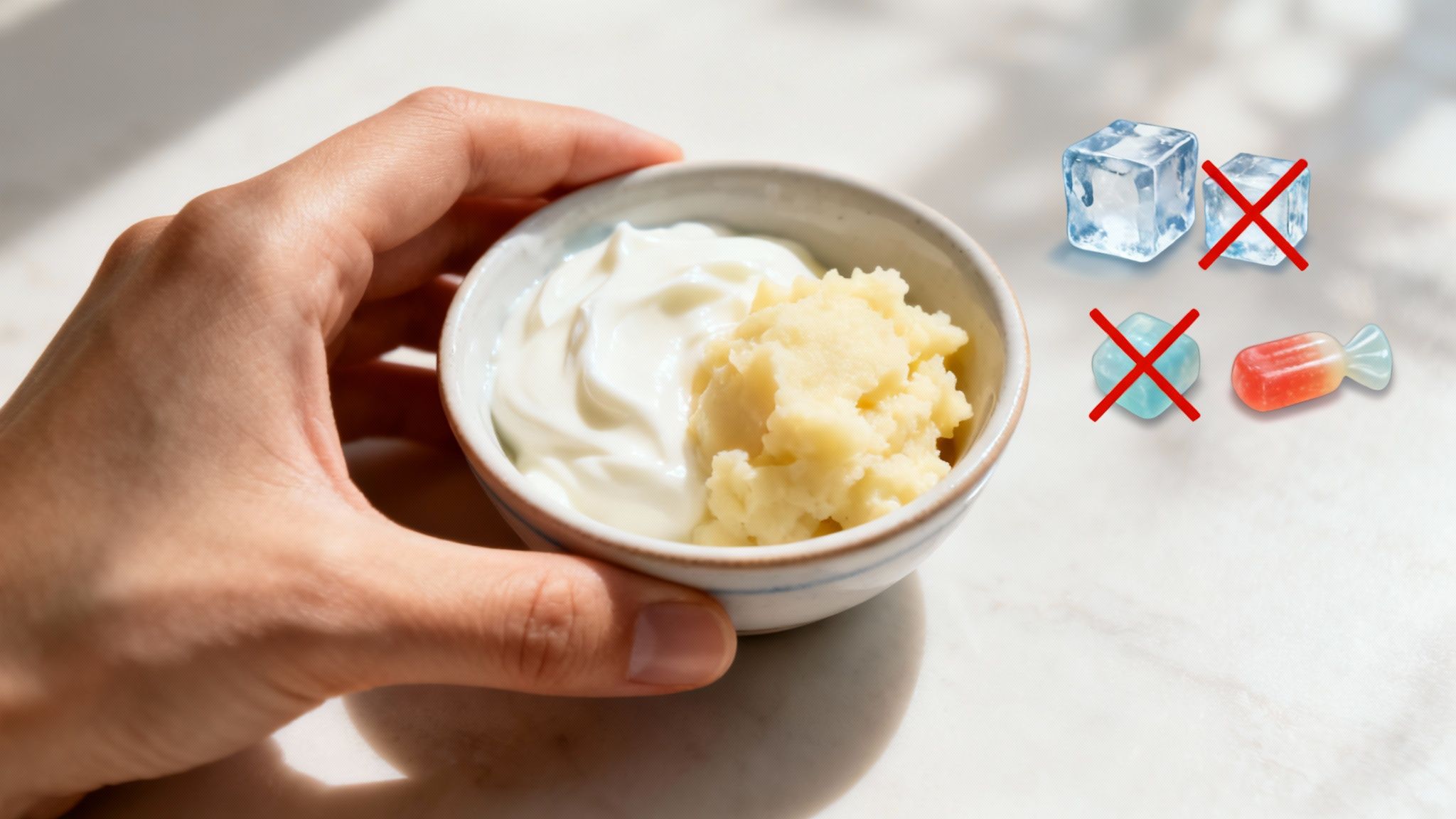
What you eat during that first week really matters. A soft-food diet is your best friend because it keeps you from putting too much pressure on the crown while the cement is still setting. You’ll want to steer clear of anything hard, crunchy, or super sticky. That means saying a temporary "no" to things like nuts, hard candy, chewing on ice, and caramel. The last thing you want is to accidentally dislodge or damage your brand-new restoration.
Crafting Your Daily Crown Care Routine
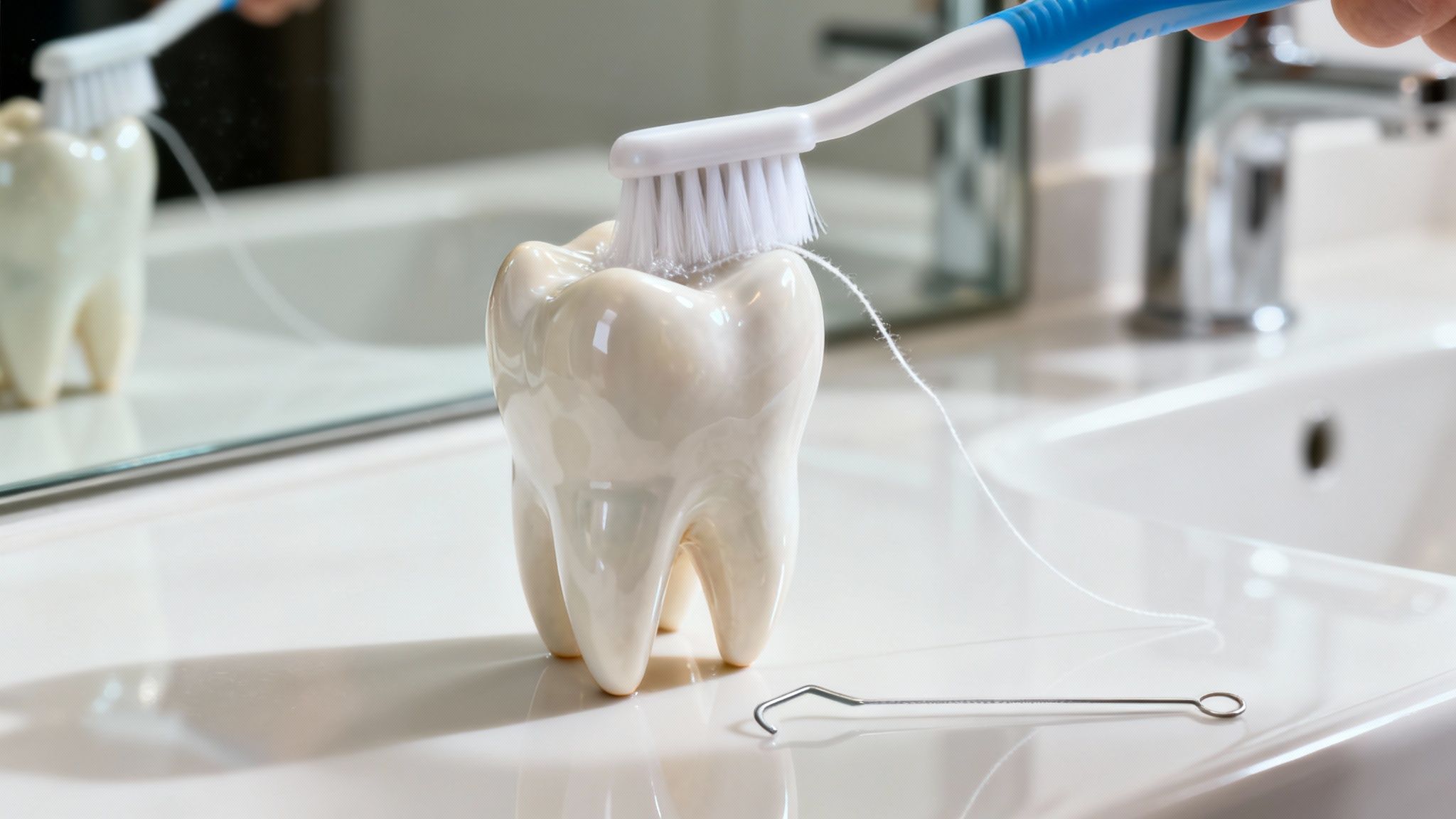
The real secret to making your dental crown last isn't some complex procedure—it's what you do every single day. Think of it like this: your daily oral hygiene is the constant, low-level maintenance that protects your investment. Getting this right is what keeps both the crown and the tooth underneath it healthy for the long haul.
Your routine doesn't have to be a major time-sink, but it does require a bit of finesse. The main goal is simple: clear out plaque and stop decay before it starts, all without harming the crown or aggravating your gums. Striking that perfect balance is everything.
Perfecting Your Brushing Technique
When you have a crown, the how of brushing is just as important as the what. Porcelain and ceramic crowns are incredibly durable, but they aren't invincible; harsh, abrasive materials can cause damage over time.
- Stick with a soft-bristled toothbrush. This is a must. Medium or hard bristles can slowly etch microscopic scratches into the crown’s surface. Over time, this not only dulls its natural sheen but also gives bacteria tiny new places to hide.
- Pick a non-abrasive toothpaste. Gels are often a great choice, and anything with the American Dental Association (ADA) Seal of Acceptance is a safe bet. Be wary of aggressive "whitening" toothpastes, as some contain harsh particles that can wear away the smooth glaze on a porcelain crown.
- Zero in on the gum line. The spot where your crown meets your gum tissue is ground zero for plaque buildup. It's a natural ledge where debris loves to collect. To clean it properly, angle your brush at 45 degrees toward the gums and use gentle, circular motions.
This targeted brushing prevents plaque from turning into stubborn tartar, which is a one-way ticket to gum irritation and potential issues with the crown itself.
Mastering Flossing Around Your Crown
We know, flossing around a crown can feel a bit awkward at first. But it's absolutely critical for clearing out the plaque and food particles your toothbrush just can't reach. If you skip this step, you're leaving the natural tooth underneath the crown's edge vulnerable to decay. For a deeper dive, consider optimizing your oral health with detailed daily hygiene practices to keep everything in pristine condition.
A common mistake we see is people snapping the floss down into their gums. Instead, gently guide the floss down, wrap it into a "C" shape against the tooth's side, and then slide it back up and out. Never force it.
If you struggle with traditional string floss, don't just give up! You have some fantastic alternatives. Water flossers are brilliant for flushing out debris from that tricky margin around the crown. You could also try floss threaders, which help you easily navigate the floss into tight spots without putting any undue pressure on the crown. For more pointers, check out our guide on how to use dental floss effectively.
As a final step, rinsing with an antiseptic mouthwash is a great way to finish your routine. It helps kill off bacteria throughout your entire mouth, giving your gums the healthy foundation they need to support your dental work for years to come.
What You Eat and Do Matters for Your Crown's Lifespan
While your daily cleaning routine is the bedrock of good crown care, what you do the other 23 hours of the day is just as critical. Your diet and daily habits can either protect your investment or put it at serious risk.
Think of your crown as a high-performance part of your smile. It's tough, but it's not invincible. Just like you wouldn’t use your natural teeth to open a package, you need to be just as mindful with your crown. It’s this awareness that can mean the difference between a crown that lasts 5 years and one that’s still going strong after 15 or more.
Foods and Drinks That Put Crowns at Risk
Some foods are just plain trouble for dental work. The ones you really need to watch out for are anything extremely hard, super sticky, or highly acidic.
- Hard Foods: Biting down on ice cubes, jawbreakers, or even an un-popped popcorn kernel creates a sudden, immense pressure. That’s more than enough force to chip the porcelain or even fracture the entire crown.
- Sticky Foods: Things like taffy, caramels, and gummy candies are notorious for getting a grip on dental work. They can latch onto a crown and, with enough pulling force, could loosen it or pull it right off.
- Acidic Items: These are more of a long-term threat. Highly acidic foods and drinks won't break your crown overnight, but they can slowly eat away at the dental cement holding it in place. Understanding the acidic foods and beverages to limit is a smart move for your overall oral health, too.
The Habits That Can Wreck Your Crown
It’s not just about what you eat. Certain unconscious habits can put your crown—and your natural teeth—in the line of fire. A lot of people don't even realize they're doing them.
The most common problem we see in our San Diego clinic is patients using their teeth as tools. Tearing open a bag of chips, cutting tape, holding pins—these actions create sideways, unnatural stress that crowns simply aren't designed to handle. It's a quick way to end up with a chip or fracture that sends you right back to our chair.
Another major culprit is bruxism, the clinical term for teeth grinding. Many people do it in their sleep and have no idea. The force generated is incredible and can cause serious wear and tear. If you often wake up with a sore jaw or a dull headache, that’s a red flag.
A custom-fitted nightguard from your dentist is the absolute best defense. It acts as a protective barrier, absorbing the grinding forces while you sleep. On a related note, biting your fingernails creates a similar kind of damaging pressure and is another habit worth breaking.
Why Professional Dental Checkups Are Non-Negotiable
Your daily brushing and flossing are the bedrock of good crown care, but they can’t do everything. Think of professional dental checkups as your insurance policy—the key to making sure your investment stays sound and healthy for the long haul.
These appointments are so much more than a simple polish. During a checkup, your dentist plays detective, searching for subtle issues you'd never spot yourself. We're meticulously checking the crown for hairline cracks, wear patterns from grinding, or tiny chips near the gum line. We also verify that the seal where the crown meets your natural tooth is still tight and secure.
The Critical Role of Professional Cleanings
No matter how diligent you are at home, plaque will eventually harden into tartar in those tricky spots, especially right around the base of a crown. This is where professional cleanings become absolutely essential.
Our hygienists have specialized tools designed to gently but thoroughly remove that stubborn buildup. A professional dental cleaning is the only way to really clear out the tiny space between the crown and your gum, which is crucial for preventing gum inflammation and decay from starting underneath.
Think of it this way: a professional checkup spots a small problem, like a slightly worn margin, before it allows bacteria to seep underneath and cause a major issue requiring a full replacement.
Maximizing the Lifespan of Your Crown
How long your crown lasts is directly tied to these regular visits. While crowns are built to be durable, studies show their survival rates naturally decline over time. One in-depth study, for instance, saw survival rates drop from nearly 90% at 5 years to about 62% after 20 years. You can see the detailed crown longevity research here.
This highlights just how important ongoing professional care is. Catching problems early is the single best way to beat those odds and keep your smile protected for decades to come.
How to Handle Common Crown Problems at Home
Even with meticulous care, things can go wrong. A crown might suddenly feel loose, become sensitive, or even pop off entirely. The most important thing is not to panic. Knowing how to handle these little emergencies at home can prevent a bigger problem and keep you comfortable until you can get to the dentist.
Your first move should always be to call our office. We've seen too many patients try to fix things themselves with over-the-counter dental cement, and it rarely ends well. These temporary fixes can trap bacteria or mess up the bite, creating more complex issues for us to solve later.
What to Do If Your Crown Feels Loose
A wobbly crown is a tell-tale sign that the cement holding it in place is starting to give out. Don't just hope it gets better on its own. That little bit of movement creates a perfect opening for bacteria to sneak underneath and start causing decay on the natural tooth.
- Stop chewing on that side immediately. This is your best defense. Any pressure could dislodge it completely or, worse, damage the underlying tooth.
- Clean with care. You can still brush the area, but do it very gently. We'd recommend holding off on flossing right next to the wobbly crown, as you could accidentally pull it off.
- Call us right away. A loose crown is something we want to see quickly. We need to figure out why it's loose and secure it properly to seal off your tooth from harm.
When a Crown Becomes Suddenly Sensitive
Wincing from a sudden jolt of sensitivity around a crowned tooth can be unsettling. It could point to a few things—maybe some gum recession has exposed the root of the tooth, or perhaps there's a tiny, unseen fracture in the porcelain.
If you get a sharp, shooting pain when you bite down, that’s a red flag. Stop chewing on that side and call us. This can be a sign of a fracture in the tooth underneath the crown, which needs immediate attention.
While you're waiting for your appointment, switch to a toothpaste made for sensitive teeth. It can really help. Also, try to steer clear of anything that's extremely hot, cold, or sweet.
If Your Crown Falls Off Completely
Okay, take a deep breath. This happens more often than you'd think. The first step is to find the crown and put it somewhere safe.
- Find and clean the crown. Once you have it, rinse it gently under some warm water.
- Store it properly. Pop it into a small, clean container or a zip-top bag. Don't even think about using super glue to put it back in—that's a recipe for disaster.
- Take a quick look at your tooth. It's probably going to be sensitive, so be gentle. The main thing is to keep it clean.
- Call your dentist. We consider this a dental emergency. Let our San Diego office know what happened, and we'll squeeze you in as soon as we possibly can to get it sorted out.
Your Top Questions About Dental Crowns, Answered
Even after getting the rundown on daily care, it's natural to have a few more questions pop up. Let's tackle some of the most common ones we hear from our patients so you can feel completely at ease with your new crown.
Can My Crowned Tooth Still Get a Cavity?
This is a big one, and the answer is a definite yes. Think of it this way: the crown itself is like a helmet for your tooth—it’s made of tough, artificial material that can't decay. But the natural tooth underneath is still very much alive and vulnerable.
The weak spot is the margin line, that tiny little seam where the edge of your crown meets the actual tooth. If plaque gets a foothold there, it can sneak underneath and start a cavity. That's why cleaning right at the gum line isn't just a suggestion; it's the most important thing you can do to protect your investment.
How Long Should a Dental Crown Actually Last?
Everyone wants to know how long their crown will hold up. While there's no single magic number, a well-cared-for crown typically lasts anywhere from 5 to 15 years. We've seen some go for decades when patients are really on top of their game.
A few key things play into its lifespan:
- The Material It's Made Of: Gold and other metal crowns are the workhorses and tend to last the longest. Porcelain and ceramic options look fantastic but can be slightly less durable over the long haul.
- Your Daily Routine: This is the factor you have the most control over. Good, consistent hygiene makes a world of difference.
- Your Habits: Things like grinding your teeth at night (what dentists call bruxism), chewing on ice, or using your teeth to open packages can drastically reduce a crown's lifespan.
My Gums Are Bleeding Around the Crown. Should I Be Worried?
Seeing a little pink in the sink can be alarming. If it happens once in a blue moon, you might have just been a bit too enthusiastic with your floss.
But if you notice your gums bleeding every time you brush or floss around that crown, it's a red flag. This is usually a classic sign of gingivitis, or early-stage gum disease, caused by plaque hanging out at the gum line. Don't ignore it. It's your body's way of telling you to step up your cleaning game and probably give your dentist a call.
Proper care is everything. Crowns are a significant investment in your oral health, part of a global market expected to reach $7.25 billion by 2033. Protecting that investment just makes sense. You can dive deeper into the dental crowns market insights to see just how common this procedure is.
At Serena San Diego Dentist, our goal is to help your dental work stand the test of time. We know that dental procedures are an investment, and we are committed to making care accessible. We accept most major insurance plans, including PPOs, for covered services and also offer flexible out-of-pocket payment options to suit your needs. If you ever have a question about your crown or just want to schedule a cleaning to keep things in top shape, we're here for you.
Contact us today to book your appointment and keep your smile healthy and bright!