You've made a fantastic investment in your smile and your confidence, and protecting it is simpler than you might think. When it comes to caring for your new dental implant, the secret isn't complicated—it's all about keeping the surrounding gum and bone tissue healthy. While your implant is immune to cavities, its long-term success depends on a consistent daily hygiene routine that keeps plaque from building up.
Worried about how to look after your new tooth? You're not alone. Many of our patients in San Diego ask us for a straightforward guide on implant care. This article is your personal handbook, designed to give you peace of mind and the practical steps needed to ensure your smile stays healthy and vibrant for decades. Let’s walk through exactly how you can protect your investment, starting from day one.
Your Guide to a Lifetime of Dental Implant Success
Think of your new dental implant as more than just a replacement tooth. It's a real commitment to your health, your confidence, and how you experience daily life. Here in sunny San Diego, where smiles are always on display, keeping that investment secure is key.
Your natural teeth can decay, but dental implants are crafted from biocompatible titanium that actually fuses with your jawbone. This amazing process, known as osseointegration, is what creates such a powerful and stable anchor for your new crown.
But here’s the crucial part: the long-term success of your implant has less to do with the titanium post and everything to do with the living tissues that hold it in place. The main enemy we're fighting is a condition called peri-implantitis. It’s basically an inflammatory reaction, much like gum disease, that can damage the gums and, if left unchecked, destroy the very bone supporting your implant.
The Foundation of Implant Care
The best news is that preventing peri-implantitis is straightforward and completely in your hands. This guide is your roadmap, covering everything you need to know to ensure your dental implants last a lifetime.
We’ll walk through:
- Immediate Post-Surgery Care: What to do in those first critical days of healing.
- Daily Hygiene Routines: The best tools and techniques to keep your implant and the surrounding area perfectly clean.
- Lifestyle and Dietary Habits: How simple daily choices can make or break your implant's longevity.
- Professional Maintenance: Why regular checkups at Serena San Diego Dentist are non-negotiable.
At Serena San Diego Dentist, our goal is to give you the knowledge and confidence for long-term success. Consider this guide your personal handbook for protecting that beautiful new smile.
We're going to break down the exact steps our San Diego patients—from Clairemont Mesa to La Jolla—use to keep their implants in top shape. By building a simple yet effective routine, you’ll find that implant care quickly becomes second nature, ensuring your smile stays healthy and vibrant for years, even decades.
Ready to enhance your smile? Schedule a free consultation at Serena San Diego Dentist today!
Getting Through the First 48 Hours After Your Implant Surgery
Those first couple of days after your implant surgery are absolutely critical. Your main job is to rest, protect the area, and keep swelling under control. Think of it as laying the groundwork for a successful recovery and letting your body start the amazing process of healing.
What you do in this initial window truly sets you up for long-term success. While implant failure is rare—affecting only about 1.59% in the first year—it's often linked to issues like infection or poor healing right at the start. At Serena San Diego Dentist, we're proud of our patient outcomes, which reflect the 97.79% success rates seen in major studies. Following these first few steps is the best thing you can do to ensure your new implant lasts a lifetime. For a deeper dive into the procedures themselves, check out our guide on what to expect during oral surgery.
Handling Swelling and Discomfort
Don't be alarmed by swelling; it's a completely normal part of healing and usually hits its peak around day two or three. Getting a handle on it right away makes a huge difference in your comfort level.
Your best friend for the next 48 hours is a cold pack. Apply it to the outside of your cheek near the implant site for 20 minutes, then take it off for 20 minutes. Keep this cycle going as much as you can throughout the day. When you lie down, prop your head up with an extra pillow—this little trick helps reduce fluid buildup.
Pro Tip: Never put ice directly on your skin. A thin towel wrapped around the cold pack is perfect. It protects your skin from getting irritated but still lets the cold work its magic.
Understanding the basics of choosing between heat and cold therapy is always helpful, but for this early stage, stick with cold.
What to Eat After Surgery
Believe it or not, your diet is a huge part of the healing equation. For these first two days, you'll need to stick to soft, cool foods that don't require any real chewing. This is all about avoiding irritation and keeping the surgical site clean.
Here are a few great options to have on hand:
- Smoothies and Protein Shakes: Perfect for getting nutrients without any effort.
- Yogurt and Applesauce: These are cool and soothing on your gums.
- Lukewarm Soups: Stick to creamy soups like tomato or butternut squash and make sure they aren't hot. Heat can increase bleeding.
- Mashed Potatoes or Avocado: Simple, soft, and filling.
I can't stress this enough: do not use a straw. The suction it creates can pull out the crucial blood clot that's forming over the site. Losing that clot can lead to a painful complication called a dry socket and will set your healing back.
Your Gentle Hygiene Routine
Keeping your mouth clean is non-negotiable for preventing infection, but you have to be incredibly gentle. For now, you must avoid brushing the implant site directly.
We'll most likely give you a prescription for a special antimicrobial mouth rinse. You'll start using this the day after your surgery, exactly as instructed. When you rinse, don't swish it around forcefully. Just tilt your head side to side, letting the rinse gently wash over the area, and then let it spill out into the sink. You can—and should—brush your other teeth normally, just be extra careful to give the new implant a wide berth.
Your Day-to-Day Guide for Dental Implant Care
Now that you're through the initial healing period, your focus shifts to the long game: lifetime care. This is where you take the reins to ensure your new implant lasts. A dental implant can't get a cavity, but it can be threatened by something called peri-implantitis. Think of it as gum disease for implants. It's an inflammatory condition that can attack the bone holding your implant in place, and the best defense is simply removing plaque effectively every single day.
Let’s walk through how to build a routine that works. The tools and techniques are pretty simple, and once you get into the swing of things, caring for your implant will become second nature, just like brushing your other teeth.
Picking the Right Tools for the Job
That old, stiff toothbrush in your cup probably isn't the best partner for your new implant. The goal here is to be both thorough and gentle, especially right around the gum line where the crown meets the tissue.
Your daily care kit should have a few key players:
- A Soft-Bristled Toothbrush: This is non-negotiable, whether you prefer a manual or electric brush. Soft bristles get the job done without being harsh on your new crown or irritating the gums around it. Many electric models even have pressure sensors, which is a fantastic feature to prevent you from brushing too hard.
- Low-Abrasive Toothpaste: Steer clear of toothpastes with aggressive whitening ingredients or gritty textures like baking soda. Over time, these can actually scratch the surface of your implant crown. A simple fluoride toothpaste without the extra grit is all you need.
- Interdental Brushes: We can't recommend these little brushes enough. They are absolute heroes for implant care, designed to get into the nooks and crannies that a regular toothbrush just can't. They’re perfect for cleaning along the sides of the implant and right at the gum line.
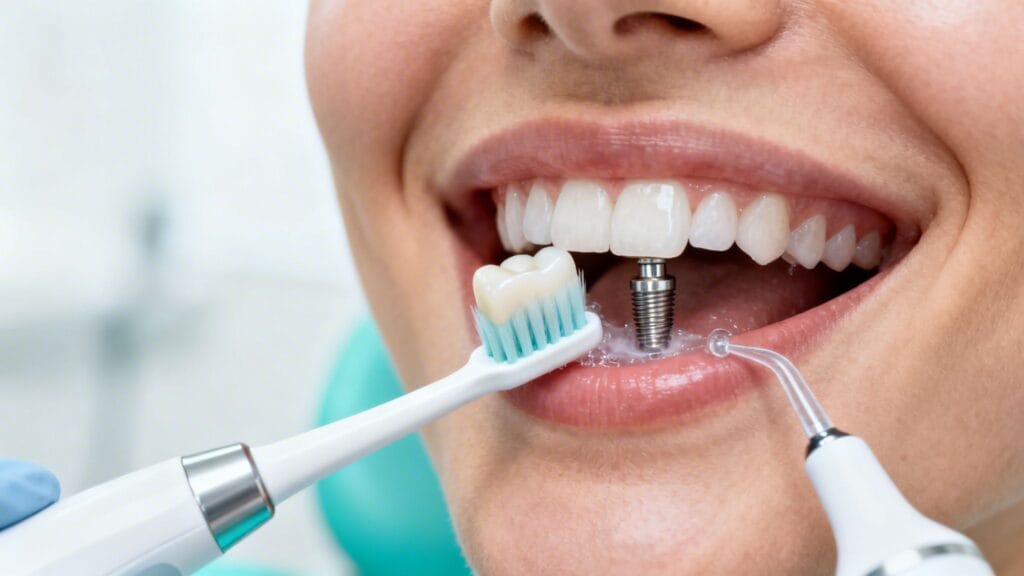
- A Water Flosser: Many of our patients call their water flosser a game-changer. It uses a targeted stream of water to flush out plaque and bits of food from around the crown and just below the gum line—those tricky spots where string floss can struggle.
This visual guide breaks down the core principles of care right after your surgery, focusing on what you can do to manage swelling, what to eat, and how to protect the area.
From using ice packs to skipping straws, every small action helps create the perfect healing environment for your implant to integrate successfully.
Nailing Your Brushing and Flossing Technique
Cleaning an implant isn't complicated, but it does require a slightly different touch. The shape of an implant crown where it comes out of the gum can create a small shelf where plaque loves to accumulate.
When you brush, make sure to angle the soft bristles at about 45 degrees toward your gum line. Use gentle, circular motions, paying close attention to that area where the crown meets the gum. Your implant deserves just as much time and attention as your natural teeth.
Flossing is where you’ll need to be the most intentional. While you can use traditional floss, many people find it awkward to wrap it properly around a single implant. This is where specialized tools really make a difference. If you're looking for a refresher on the basics, check out our complete guide to dental floss.
To make it even easier, here's a simple checklist you can follow to stay on track.
Your Daily Implant Care Checklist
This table breaks down the essential tasks that will keep your dental implant healthy for the long haul. Think of it as your daily cheat sheet for success.
| Task | Frequency | Recommended Tools | Why It Matters |
|---|---|---|---|
| Brush Around the Implant | 2x Daily | Soft-bristled toothbrush, low-abrasive paste | Removes plaque from the crown and gum line, preventing inflammation and infection. |
| Clean Between Implant and Teeth | 1x Daily | Interdental brushes, implant-specific floss | Targets hard-to-reach areas where bacteria build up, protecting the supporting bone. |
| Use a Water Flosser | 1x Daily | Oral irrigator | Flushes out debris from below the gum line that brushing and flossing might miss. |
| Check Gums for Changes | Weekly | Your eyes (and a mirror) | Early detection of redness, swelling, or bleeding can prevent major complications. |
By sticking to this routine, you’re not just cleaning your teeth—you’re actively protecting the investment you've made in your health and confidence. Your daily commitment is truly the most critical factor in your implant's long-term success.
How Your Diet and Lifestyle Affect Your Implant's Future
Keeping your implant clean every day is the absolute foundation of good care, but what you do outside of the bathroom is just as crucial for its long-term success. The food you eat and the habits you keep create the environment where your implant will either thrive for a lifetime or face constant challenges. Think of it as supporting your daily hygiene from the inside out.
That beautiful porcelain crown on top of your implant is tough, but it's not invincible. Honestly, the best mindset is to treat it with the same care you would a natural tooth. It really just comes down to being mindful of what you eat to avoid putting unnecessary stress on your new smile.
Eating Smart to Protect Your Implant
A healthy, nutrient-rich diet is fantastic for your gums and jawbone—the very tissues that hold your implant firmly in place. But some foods are a direct physical threat to the crown itself. Protecting your investment often means steering clear of a few usual suspects.
Here’s a simple rundown of how to eat smart with your implant:
- Avoid Biting Down on Hard Stuff: This is the big one. Chewing on ice cubes, jawbreakers, un-popped popcorn kernels, or even very hard nuts can create a shocking amount of force, potentially chipping or cracking the porcelain.
- Watch Out for Sticky Foods: Taffy, caramels, and similar sticky sweets can create a strong pulling force on the crown as you chew. While the implant itself is rock-solid in your jaw, that constant tugging isn't great for the restoration sitting on top of it.
- Limit Highly Acidic Foods and Drinks: This is solid advice for all your teeth, not just the implant. High acidity can aggravate your gums and lead to inflammation over time. We actually have a great resource on this, so feel free to check out our article on the most acidic foods and beverages to limit or avoid.
The bottom line is simple: if you think something could damage a natural tooth, it's best to keep it away from your implant crown, too.
Smoking: The Single Biggest Threat to Dental Implants
If there's one lifestyle choice that poses a significant, direct threat to a dental implant, it's smoking. The research here is crystal clear. Smoking constricts your blood vessels, which seriously hinders your body's ability to heal and send crucial nutrients to the bone and gum tissue surrounding the implant.
This lack of good blood flow not only slows down the initial healing process (osseointegration) but also raises the risk of infection and makes you far more vulnerable to peri-implantitis later on. For the sake of your implant and your overall health, quitting smoking is the single most important decision you can make.
Why Professional Checkups Are So Important
Your daily home care is absolutely essential, but it’s only half the story. The other half is sticking to a consistent schedule of professional checkups right here at Serena San Diego Dentist. These aren't just routine cleanings; they are vital maintenance appointments that protect your investment.
During a professional checkup, we can spot potential issues long before you would ever notice them yourself. This proactive approach is the key to preventing minor concerns from becoming major problems.
Our team uses specialized instruments made of materials like plastic or titanium that are designed to clean your implant and crown without scratching their surfaces. Using standard metal tools can be too abrasive and cause microscopic damage.
We also take periodic X-rays to see what’s happening below the gum line. This lets us keep a close eye on the health and density of the jawbone supporting your implant, making sure everything is stable. Catching even the slightest hint of bone loss early can make all the difference in the world.
Here at Serena San Diego Dentist, our certified specialists use cutting-edge 3D imaging and computer-guided placement to ensure precise positioning that boosts integration with your jawbone. But your role post-procedure is key—gentle brushing twice daily with a soft toothbrush, flossing around the implant base, and antimicrobial rinses cut peri-implantitis risk, a top failure cause affecting up to 20% of cases long-term if ignored. Regular check-ups every 3-6 months catch issues early; studies show most failures happen in year one, then drop sharply.
Recognizing Warning Signs and When to Call Your Dentist
Staying on top of your implant's health is your best defense against any potential issues down the road. You’re already doing the hard work with your daily care, but knowing what to look for between checkups is just as vital. A healthy implant should feel so natural and stable that you forget it’s even there. If that changes, it's your body sending a clear signal that something needs a closer look.
This guide is here to help you spot those red flags with confidence. Knowing what’s normal and what isn’t removes the guesswork, so you know exactly when it’s time to call our San Diego office. Acting fast can make all the difference, often turning a big potential problem into a simple, quick fix.
Key Symptoms That Warrant a Phone Call
Our advice is simple: if something feels off, don't wait and wonder. It’s always better to be safe and let us take a look. Keep an eye out for these specific signs, as they’re clear indicators that you should schedule an appointment at Serena San Diego Dentist right away.
Here are the big ones to watch for:
- Any Movement at All: Your implant and the crown attached to it should feel rock-solid. If you notice even a tiny bit of wiggle when you chew or push on it with your tongue, that’s not normal and needs to be checked immediately.
- Lingering Pain or Aching: Some tenderness right after surgery is one thing, but persistent pain, a dull throb, or a sharp twinge when you bite down is a definite red flag.
- Inflamed Gums: Healthy gums are pale pink and snug. If you see redness, puffiness, or swelling in the gum tissue right around your implant, it's a sign of inflammation.
- Bleeding When You Clean: A little bleeding is a classic sign of irritation. If you're being gentle but still see blood when you brush or floss around the implant, it could be the earliest stage of an infection called peri-implantitis.
- Trouble Chewing: If it suddenly feels weird or uncomfortable to chew on your implant side, it might point to a problem with the implant's stability or how your teeth are fitting together.
Never ignore pain, looseness, or bleeding around your implant. These are your body's most direct signals that professional attention is needed. Early intervention is the key to protecting your long-term investment.
Understanding What Might Be Happening
When you notice a symptom, it’s natural to wonder what’s going on. While you should never try to diagnose the issue yourself, knowing the possibilities can help you understand why it’s so important to act quickly.
For example, that feeling of looseness could be caused by something as simple as the small screw that connects your crown to the implant post coming loose. That's an incredibly easy fix we can do in just a few minutes here in the office. On the other hand, it could also signal a more serious problem, like the implant failing to fuse properly with your jawbone.
Pain and bleeding are often the first signs of peri-mucositis, a reversible inflammation of the gums around an implant. If we catch it early, a professional cleaning and a few tweaks to your home routine can completely resolve it. But if it's ignored, it can progress to peri-implantitis, a more destructive condition that causes bone loss and can ultimately lead to the loss of the implant itself. For more details on what counts as an urgent problem, feel free to check out our guide to common dental emergencies.
Your job isn't to figure out the cause—it's to be a vigilant partner in your own health. By noticing these signs and letting our San Diego team know, you give us the best chance to step in early and keep your implant healthy and functional for a lifetime.
Payment and Insurance at Serena San Diego Dentist
We believe that world-class dental care should be accessible. That’s why we work hard to make financing your dental implants as straightforward as possible. Serena San Diego Dentist accepts most major PPO insurance plans for covered services. Our knowledgeable team can help you understand your benefits and maximize your coverage to reduce your out-of-pocket costs.
For patients without insurance or those preferring flexible payment options, we offer various financing plans. These plans are designed to fit your budget, allowing you to get the care you need now and pay over time. We are committed to price transparency and will provide a clear breakdown of costs during your consultation, with no hidden fees. Your focus should be on your health, not on financial stress.
Contact us to learn how your insurance can cover dental implants – call or visit serenasandiegodentist.com.
Got Questions About Your Dental Implants? We've Got Answers.
Even with the best instructions, it's completely normal to have a few questions pop up as you get used to your new dental implant. Over the years, we've heard just about every question in the book from our patients here in San Diego. So, let's tackle some of the most common ones right now to help you feel confident in caring for your new smile.
Is It Okay to Use an Electric Toothbrush on My Implant?
Yes, absolutely! In fact, an electric toothbrush can be a fantastic tool for keeping your implant in top shape. The consistent vibrations are incredibly effective at breaking up plaque, especially right where the crown meets the gum line—a critical spot for implant health.
The trick is to use it wisely. Always, and we mean always, use a soft-bristled brush head. There's simply no need for anything tougher; soft bristles get the job done without being abrasive to the crown or your gums. Many modern electric toothbrushes also have a pressure sensor, which is a brilliant feature for implant care. It'll give you a little nudge if you're pushing too hard, helping you avoid irritating your gums and protecting the beautiful porcelain crown.
Are There Any Foods I Should Avoid with Dental Implants?
Your implant is anchored securely into your jawbone, making it incredibly strong. The porcelain crown on top, however, is a different story. It's tough, but it’s not indestructible. The best advice we can give is to treat it with the same common sense you would your natural teeth.
Think about it this way: if it could chip a real tooth, it can chip an implant crown. That means staying away from things like:
- Chewing on ice cubes (a big no-no!)
- Biting down on hard candies or unpopped popcorn kernels
- Using your teeth to crack nuts or chew on bones
Extremely sticky foods like taffy can also put a lot of pulling force on the crown. While the implant itself isn't going anywhere, you don't want to put that kind of stress on the restoration. A little caution goes a long way.
How Do I Know if There’s a Problem with My Implant?
A healthy implant should feel so natural and stable that you eventually forget it's even there. That's the goal. So, if something suddenly feels "off," that's your cue to pay attention. The three biggest red flags are mobility, pain, and gum inflammation.
Your implant should feel 100% rock-solid. If you notice even the slightest wiggle or movement, that’s a sign to call our San Diego office immediately. Other warning signs include gums around the implant that look puffy, red, or bleed easily, or a persistent dull ache, especially when you chew.
A Quick Note from Experience: You are the first line of defense for your implant's health. While we can spot things like bone loss on an X-ray during your check-ups, what you feel and see every day is just as important. Trust your gut—if something doesn't feel right, it’s worth getting it checked out.
Is Flossing Around an Implant Different from a Natural Tooth?
Yes, it is, and this is a really important technique to get right. A natural tooth has a smooth taper as it goes into the gum line. An implant crown, on the other hand, often has a slightly different shape where it emerges, which can create tiny ledges perfect for plaque to hide. Standard floss can sometimes miss these spots.
That's why we often recommend a few specialized tools that make the job much easier and more effective:
- Water Flossers: These are a game-changer. A pulsating stream of water flushes out debris and plaque from around the implant and just below the gum line—areas that are notoriously difficult to clean.
- Interdental Brushes: Think of these as tiny pipe cleaners. They are perfect for scrubbing the sides of the implant where it meets the gums.
- Floss Threaders or Super Floss: This type of floss has a stiff end that helps you guide it underneath an implant bridge or around a single implant, ensuring you clean all the way around.
Finding the right combination of tools that feels easy for you to use is key. The goal is always the same: remove every bit of plaque, every single day, to keep the gums and bone supporting your implant healthy for the long haul.
Your smile is a huge investment in your health and quality of life. By following these guidelines and partnering with our team for regular check-ups, you can ensure it serves you well for a lifetime. If you have any more questions or it's time to schedule a cleaning, please don't hesitate to get in touch with Serena San Diego Dentist.
Schedule Your Consultation Today at serenasandiegodentist.com